

In his book The Art of Travel, literary phenom Alain de Botton says that travel "expresses, however inarticulately, an understanding of what life might be about, outside of the constraints of work and of the struggle for survival." Taiwanese author Li Ang muses succinctly: "Travel is playtime for grownups."
Perhaps you can't muster any enthusiasm for the frenetic pace of the typical packaged tour group, but building your itinerary from scratch seems too arduous an assignment. In recent years, highly specialized expert tours have become an increasingly popular alternative.
In 2010, the Japanese television network NHK showed for its annual Taiga drama Ryomaden, a chronicling of the brief but meteoric life of Meiji Restoration revolutionary Sakamoto Ryoma. The series, which starred pop idol Masaharu Fukuyama in the title role, ignited a craze throughout Japan.
Forty-five-year-old Ken Wu, or Ken Worker as he is known on his popular blog, originally worked in web-related fields before switching to the travel industry at the age of 36. He presently works as community development director at XinMedia, a subsidiary of Lion Travel, in addition to commanding a legion of blog readers and fans.
The inveterate history buff moved quickly to capitalize on the Japanese television drama's popularity before it went off the air, by designing a tour built around the Meiji revolutionary's life. Beginning in Sakamoto's birthplace of Tosa (present-day Kochi Prefecture, Shikoku), the tour traced important geographical markers and historical sites Kochi Castle, Katsurahama, and the Sakamoto Ryoma Memorial Museum, before heading to the southern edge of Kyoto to take in the antiquarian charms of the Fushimi District, home to Teradaya, the boat-lodging where the romance of Sakamoto and his wife first bloomed. Another highlight was the Tosa and Ryoma Expo, held for a limited time in Kochi.
The last stop on the tour was the site of the Omiya Soy Sauce Shop, where Sakamoto fell victim to politically motivated assassination. The original building has been replaced by a succession of different buildings over the years, leading up to the totally unremarkable convenience store that stands there today. But there was still more than enough residual historical gravitas to impress the gathered groups of Sakamoto devotees, who conjured dreams of the late Tokugawa Shogunate more than 100 years ago while feverishly snapping torrents of photographs of the stone marker in front of the store that reads, "On this spot Sakamoto met his demise."
Wu has also organized tours from Nagoya to Kyoto around the life and times of Sengoku-period conqueror Oda Nobunaga and DaVinci Code trips spanning Britain and France that allowed participants to "solve the mystery" on their own while viewing the religious sites and classic works of art referenced in the novel.
He has plans in the offing for an expedition recreating the Latin-American peregrinations of the iconic architect of the Cuban Revolution, Ernesto "Che" Guevara. Since this year marks the centennial anniversary of the founding of the Republic of China, he is considering preparing a commemorative itinerary highlighting all of the locations that played a significant role in the Xinhai Revolution.
In his analysis, traditional tours usually take a city or a region as the basic organizational unit, narrowing the geographical focus as a result. But in a tour inspired by the lives of historical figures, one is bound to find oneself in interesting but seldom-viewed settings full of new discoveries, far from the hackneyed footprints of other travelers. Doing "field research" and visiting exhibits imparts a distinct pleasure that comes from the merging of travel and study, and that pleasure is only magnified when shared amongst sympathetic companions.
Ever since Taiwan's government lifted restrictions on international travel in 1979, the tourist industry has flourished unabated. According to statistics from the Tourism Bureau, the island's residents make over 9.4 million trips overseas annually. The total value of international and domestic tourism this year is expected to clear NT$500 billion for the first time.
Wu observes that in recent years, as consumers have become more jaded, they are less willing to shell out for the typical frenetic itineraries so aptly described by the Chinese expression "like trying to view flowers from atop a moving horse." The preponderance of online information has made travelers savvier than ever, and they are demanding more variety and novelty from tourism professionals. In recent years, there have been trips to Angkor Wat led by aesthetician Chiang Hsun and surveys of the work of Japanese architect Tadao Ando curated by architecture expert Lee Ching-chih.
Having a preeminent scholar serve as docent certainly is appealing, but academics of course have teaching commitments that make them unavailable for most of the year. As a result, when looking for guides, tour agencies have broadened their query to include less prestigious autodidacts whose expertise has been honed in a non-vocational setting.

Well-known culinary blogger Gary Hsu's enthusiasm for the art of fine cuisine is unmatched.
Originally a public relations man for a film company, his natural gastronomic proclivities coupled with a desire to find inexpensive but tasty cuisine led him into blogging his experiences for others to enjoy. Much to his surprise, his blog generated tremendous interest. A year later, after being inspired by a line from a domestic film, Island Etude, that ran, "If I don't do this thing now, I'll never do it in this lifetime," he resolutely parted ways with his employer to pursue his passion fulltime.
Six years into his blog, he has submitted 1500 articles that have attracted an astonishing 40 million visits. In the wake of this initial success came a book, a food column, and innumerable invitations to visit and review restaurants, all of which have cemented his status as food guru to a new generation. Gourmet reviewer Hu Tien-lan once exclaimed: "His involvement with food is just unreal... I mean, when this guy bites into something delicious he gets the same dreamy, far-off expression as the love-smitten girls on the soap operas."
Even though he receives more than 50 review requests every month, Hsu is committed to giving them equal consideration and reserving his endorsement only for the most deserving establishments. In this way, he maintains his credibility and the integrity of his brand. But even being a professional epicurean is not without occupational hazards. Two years ago, he found out that his cholesterol and triglyceride levels were dangerously high. His clogged coronary arteries required three stents. "Of course I'll keep eating," he says. "I'll have to monitor the portions a little more carefully, I suppose..."
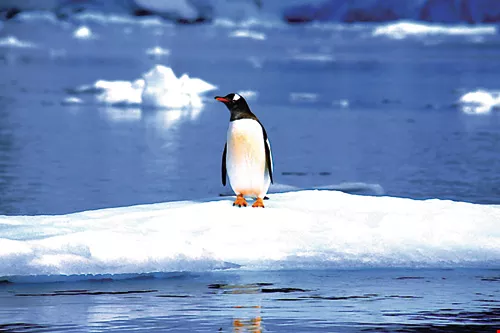
Antarctica: the ultimate travel destination for hard core travel fiends. Very few ever get to experience the perennial daylight of the South Pole more than once.
Hsu sees himself not so much as a gourmet as a food junkie who can't help sharing his tastes with others. Two years ago he set up a "for diners only" club that he takes on culinary tours of Tokyo and Hong Kong.
The majority of tour groups only patronize a number of handpicked restaurants that make their living catering to visitors. Hsu's groups, on the other hand, track down the most authentic, most reputable traditional shops flung throughout a city's streets and alleys. Since the dining costs are not included in the registration fee, the participants order a la carte and pay on the spot after listening to Hsu recommend various signature dishes. Hsu then offers running commentary on the origins and evolution of the dishes.
In his eyes, Tokyo is the city that offers unlimited delights to the gastronome. It may be the most expensive consumer city in the world, but that trivial matter doesn't sap the enthusiasm of Taiwanese tourists.
In order to be able to enjoy excellent food in pricey Japan, it's imperative to do some preliminary budgeting to make sure money is well spent. Hsu's preparations are as thorough as those of a military strategist planning for battle. Even though his Japanese is fairly rudimentary, he nevertheless purchases an average of 15 Japanese travel and culinary magazines per month in addition to reviewing the popular opinion ratings on Japanese television and the Internet.
He targets the more economically priced "B-level" entrees-omurice, pork katsu, unagi, ramen, tempura. A dinner consisting of these items can cost in the ¥8-10,000 range at the well-established traditional restaurants, so Hsu opts for lunch instead, which typically costs around ¥2000. This simple substitution makes it possible to experience the best a place has to offer for a mere quarter of the price.
Hsu is punctilious about giving fair warning to prospective tour participants that they should not expect to be coddled. First of all, many of the well-known restaurants they visit do not accept reservations, and that means long lines. Secondly, though the purpose of the journey is fine dining, in the interest of health, it must be balanced by exercise. Anyone who is averse to waiting and copious amounts of walking every day should consider carefully before signing up.
With no tour bus available, the primary modes of transportation are light rail and walking-in an average day, the number of footsteps is in excess of 15,000. "People invariably want to return after this initial taste. I've basically showed them which trains to take and how to find their way around, so the next time they can come on their own," he says.
The trip to Japan slated for spring this year had to be cancelled due to the tsunami. He wants to make amends by planning a daytrip from Tokyo to Sendai in the northeast via the new bullet train line. In Sendai, they'll eat that region's renowned grilled and fried cow tongue delicacies before heading to one of Japan's three most prolific oyster producing regions, Matsushima, for a three-course meal consisting entirely of oysters. "They are sooo tasty!" Whenever the conversation turns to food, Hsu becomes animated, his eyes sparkling excitedly.
Long before cameras became so entrenched in daily life, veteran photographer Huang Ting-sheng was already leading groups of amateur photographers on trips around the world.
Now aged 52, Huang already showed great promise while still a student. By age 30, he was teaching at colleges and corporate hobby clubs. On occasion, he would take his students off campus to hone their skills. "Photography is an interactive art. You can't experience it vicariously: there needs to be direct dialogue between the camera lens and the subject," he says.
Once one of his students in the photo-graphy club at Formosa Plastics made the following suggestion: We've been almost everywhere in Taiwan-why not organize a trip overseas?
Huang knew from his own experiences traveling abroad how difficult it can be to take good photos while on the move. Packaged tours move at too breakneck a pace-just as you're getting settled into a shoot it's time to get back on the bus. Comfort comes at the expense of autonomy. Traveling alone, however, means problems like carrying 10-plus kilos of equipment everywhere, a nuisance no matter whether on foot or taking public transport. In 1993, he brought 20 of his students to Southeast Asia's most renowned tourist destination, Bali, for a group tour tailored specifically for the photographer as traveler.
For many of these tours, Huang and company train their cameras on traditional cultural celebrations and World Heritage Sites. He especially enjoys delving into exotic, seldom-seen places, and for this very reason he has been instrumental in developing the potential of hitherto unpopular regions. For instance, rugged Papua New Guinea in the southwest Pacific, which has existed in virtual isolation from the rest of the world, offers sumptuous tropical rainforests, stunningly variegated flora and fauna, and villages where the way of life has remained unchanged since time immemorial.
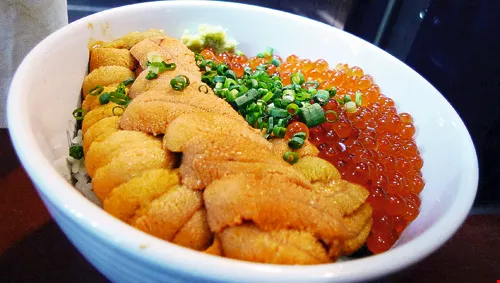
After building up a reputation with his blog, gourmet extraordinaire Gary Hsu (photo by Jimmy Lin) was approached by travel agencies to collaborate on "fine dining on the cheap" overseas culinary adventures that have proven very popular. Pictured here are featured Japanese foods like sea urchin and salmon eggs, Osaka Yaki, and miso ramen.
Huang and his acolytes have left footprints in 90 countries on five continents. Those statistics may not compare to the mileage logged by the most inveterate backpackers, but the highly difficult and unusual nature of his journeys nevertheless places him in rarified company.
He's still working towards his goal of touring all of Africa, though he's made considerable headway. So far, he's taken his charges to North African countries Egypt, Tunisia, and Libya, and has traversed the Sahara Desert en route to Kenya, Tanzania, and Ethiopia in East Africa.
Two years ago while making his first visit to the West African nation of Ghana, he saw the fortresses built by Portuguese slave traders that between the 15th and 19th centuries were used as holding cells for African slaves. The captives were fattened up and their bodies rubbed with oil to create an impression of physical robustness that would catch the eye of traders. After being sold, the slaves would file their way past a heavy wooden door-"the door of no return"-before being transported to the European colonies.
As he contemplated this ignominious legacy, his thoughts also turned to the election of Barack Obama, with his Kenyan ancestry, as US president, and also of the advancement of human rights that had taken place over the centuries. Travel seemed to open a portal between the past and present.
Choosing raw, unexploited travel destinations comes at a price. His 18-day West African trip in January this year, including Senegal, Gambia, and Mali, cost NT$200,000; the tickets alone accounted for half that amount.
He strives to avoid places that pose too great a safety risk. Nonetheless, there have been patches in Yemen and Niger where his groups were escorted by armed soldiers. One night in Kashmir the nearby crackling that he thought was part of a ritual celebration turned out to be rifle shots in an internecine melee. Another time while visiting an aboriginal tribe he aroused mistrust and hostility when he produced his camera. There have been adrenaline-charged moments akin to the heat of combat, and moments where disaster was averted only by the quick reflexes of the leader or timely mediation on the part of the local guide.
"The more of the world I see, the bigger it seems to get," he comments. He feels like he's racing against time, always planning the next expedition in the hopes his camera will document the traditions and natural beauty of each country before they disappear.
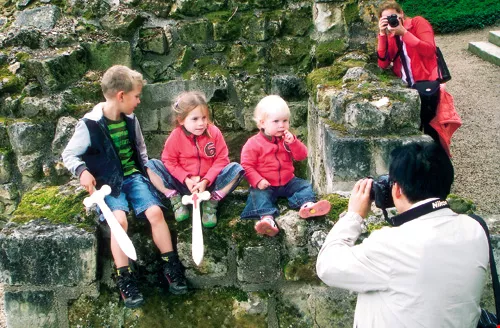
The title on 37-year-old Fiona Chen's business card reads "Circumnavigator-in-Chief." Her job description-traveling around the world-seems too good to be true.
Back in 2003, Chen was eager to leave her marketing job at yam.com before her 30th birthday. She and her sister pooled their savings and borrowed from friends and relatives to come up with NT$600,000 for a journey modeled after Jules Verne's Around the World in 80 Days. As in the book, they embarked from the Reform Club in London on the route outlined by Verne 130 years ago.
The duo passed through France, Italy, Egypt, and Israel before trekking through India, Singapore, Thailand, and Japan. Next was the United States followed by a trip to Brazil, with asides to Shanghai and Finland, before concluding an overseas journey that lasted 113 days and spanned 15 countries on five continents.
"Seeing the influence of globalization was the thing that surprised me the most in my trip." In supermarkets across the planet she saw ice chests stocked with the same carbonated beverages. Bookstores carried the same Harry Potter books, in the regional tongue, of course. Metropolises in disparate parts of the globe were becoming more homogenous in appearance. Back in the 1873 of Verne's famous yarn, the differences were far more profound. How could so much have changed in 130 years? And what will remain of human culture in another 130 years?
Yet as she delved deeper into the countryside of each place, she began to appreciate essential, distinguishing cultural traits. Even climate seemed to influence the peoples' personalities and attitudes, whether they were warm and open or reserved and introverted.
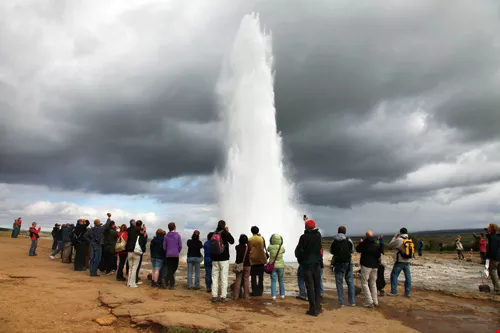
At this juncture in human history there is still a tremendous range of cultural values and social norms. In the Middle East, for example, women enjoy few rights, and when they go out they cover themselves from head to toe. Then there's liberal Iceland where women flock to nightclubs on the weekends in search of a male partner with whom to enjoy a night of ecstasy.
She recalls one hapless lass whose efforts went unrewarded. At around three or four in the morning she called her father to pick her up. When Dad showed up, he consoled his daughter saying, "Never mind. Don't be distraught-you'll do better next week!" "Traveling broadens you in ways that are not possible in a more static existence," Chen observes.
Her life changed dramatically following her journey. She published a book, Around the World in 80 Days Reloaded, which led to invitations to join the lecture circuit-to date, she has given over 100. She also started teaching at community colleges.
In her lectures, Chen preaches the gospel of global travel and shares how she put her dreams into action, as well as reporting on the sights she took in on her trek. After concluding a lecture, someone will invariably approach and ask breathlessly: "So, when are you planning your next trip? Can I come along?" She began to toy with the possibility of leading tours, and eventually she started her travel agency which provides travel information and assists with the planning of itineraries.
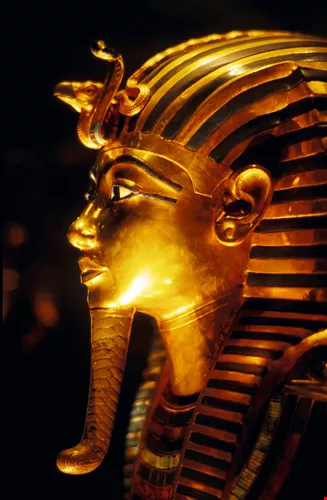
At first, Chen restricted herself to shorter trips in order to hone her skills as a tour guide. In 2008, she finally led her first group of travelers on a global tour, a feat that she has repeated three times since.
The trip spans 60 days and crosses 16 countries in five continents. Depending on the time of year, she'll employ a northern or southern hemispheric route to capitalize on good weather.
From the mysteries of ancient culture to Nature's majestic creatures, from exquisite fine art to polar scenery, Chen's tour covers it all. Her summer itinerary includes the ancient city of Petra in Jordan, one of the seven wonders of the ancient world, a safari in Kenya, the holy sites in Jerusalem, and fishing for king crab and glimpsing the midnight sun in Norway.
The price of the 60-day expedition starts at NT$1 million and includes visa processing fees and tips. In the past participants have included retired civil servants and housewives who paid with money they earned from their private investments, and a mother who received the package tour as gift from her son.
On one trip there was one entrepreneur and his wife who were nearing 60. Over 30 years ago, when the husband had just begun his enterprise, he received a calendar from a German client that featured a stunning view of the bluish-white glaciers of Greenland on the cover. So taken was he with their ethereal beauty that he vowed to his wife that one day they would see them together. On that trip in 2009 he finally fulfilled that vow. As they took in the splendor, he took the now-ancient calendar out from his pack and showed it to his wife, who was moved to tears.
Ever the firm believer in the "gospel of travel," Chen believes that there is no one correct way to get out and see the world. One doesn't have to circumnavigate the globe: trips of any distance will suffice. A person's pockets don't have to be very deep. They don't have to speak the Queen's English. There's never a time that is completely right-better just to cast aside these self-imposed obstacles and take the plunge. "There's just no substitute for travel-it's the best!" she smiles.
If that's true, then what are you waiting for?
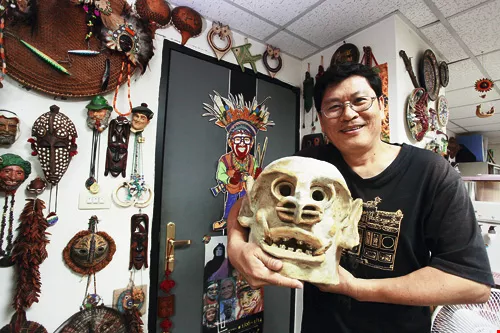
Veteran photographer Huang Ting-sheng loves both taking pictures and traveling. Though his tours often include obscure places, he's never at a loss for intrepid companions. On the left we see the ruins of Shey Palace in Kashmir (photo by Huang Ting-sheng) and on the right we see Huang's collection of masks from cultures around the world. He holds a mask from Papua New Guinea.
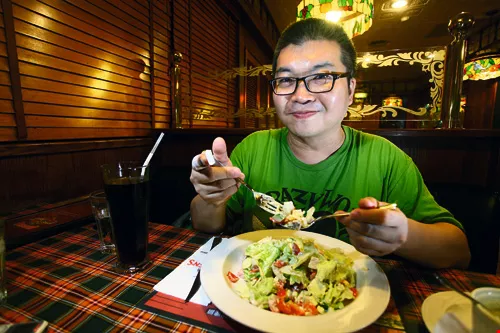
After building up a reputation with his blog, gourmet extraordinaire Gary Hsu (photo by Jimmy Lin) was approached by travel agencies to collaborate on "fine dining on the cheap" overseas culinary adventures that have proven very popular. Pictured here are featured Japanese foods like sea urchin and salmon eggs, Osaka Yaki, and miso ramen.
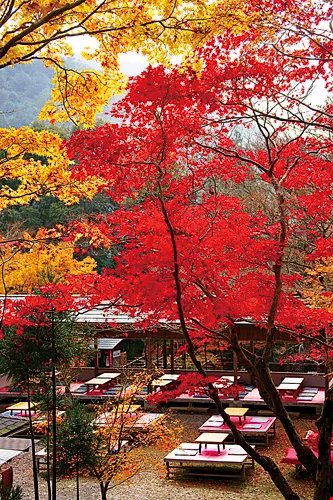
Four clearly differentiated seasons, elegant culture, and magnificent scenery make Japan a popular travel destination, especially when the maple leaves turn a rich crimson in the fall. Here is a glimpse of a tea pavilion where one can marvel at the splendor of the maples at Jingo-ji Temple in Kyoto.
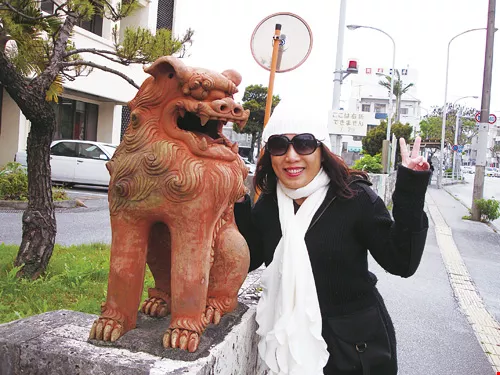
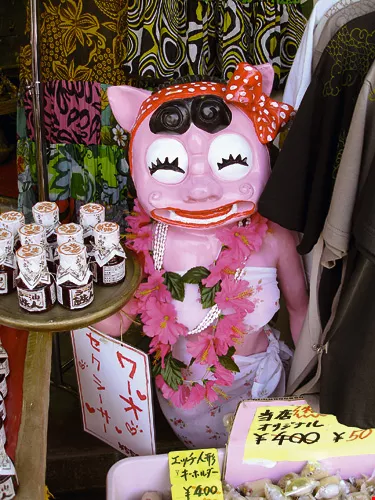
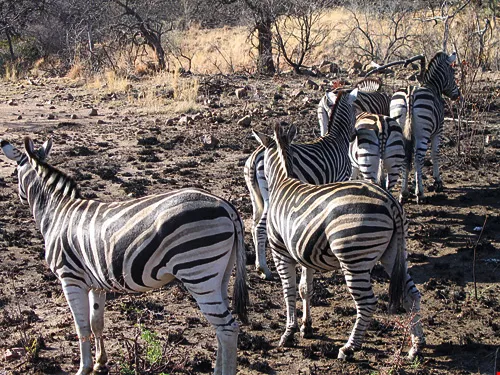
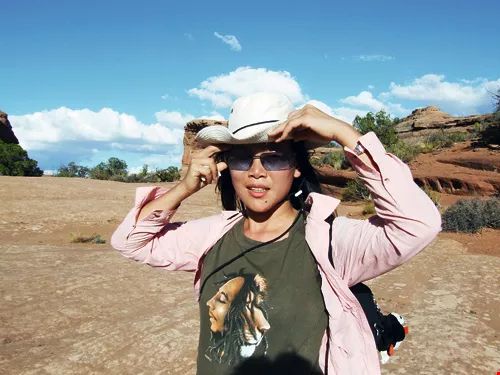
Circumnavigating the globe gave Fiona Chen an entirely new perspective on life. Since that time, she has gone on to lead 4 groups on round-the-world voyages.

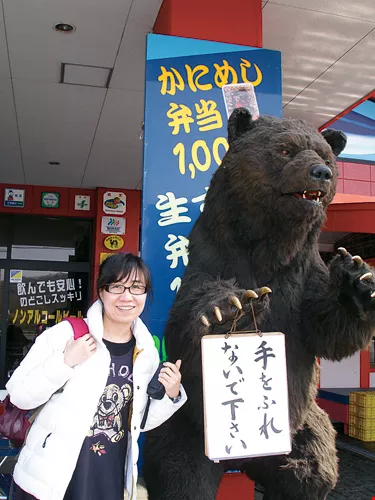
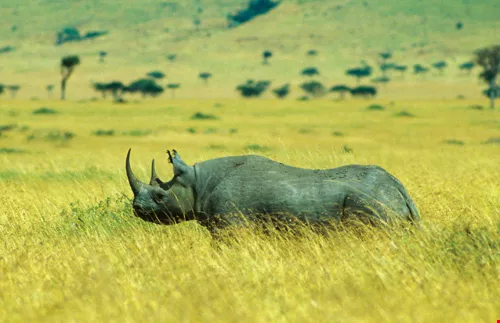
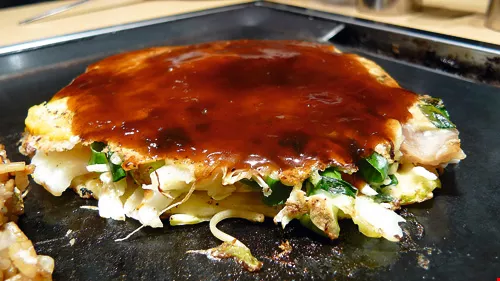
After building up a reputation with his blog, gourmet extraordinaire Gary Hsu (photo by Jimmy Lin) was approached by travel agencies to collaborate on "fine dining on the cheap" overseas culinary adventures that have proven very popular. Pictured here are featured Japanese foods like sea urchin and salmon eggs, Osaka Yaki, and miso ramen.
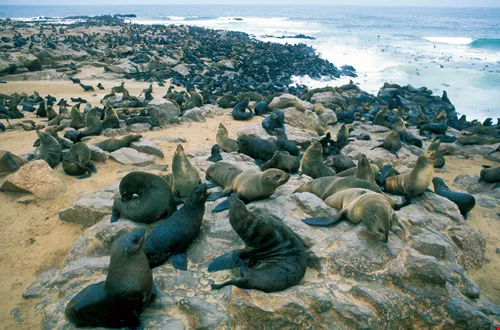
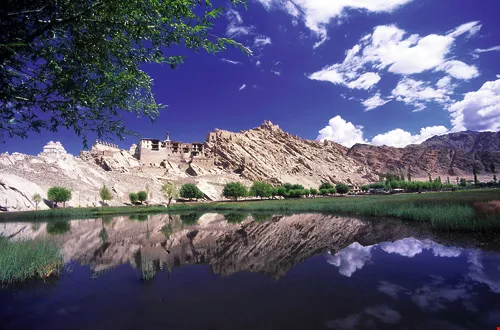
Veteran photographer Huang Ting-sheng loves both taking pictures and traveling. Though his tours often include obscure places, he's never at a loss for intrepid companions. On the left we see the ruins of Shey Palace in Kashmir (photo by Huang Ting-sheng) and on the right we see Huang's collection of masks from cultures around the world. He holds a mask from Papua New Guinea.

攀爬PM1421-2抵達目的地.jpg?w=1080&mode=crop&format=webp&quality=80)
It is a rare privilege for subtropical Taiwanese to experience the austere icy beauty of the Norwegian fjords.
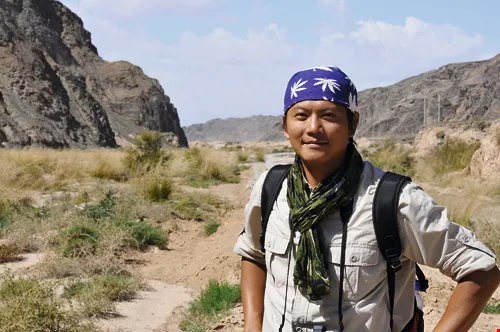
Experienced blogger Ken Worker entered the tourist industry via the Internet. His tours take history as the centerpiece, affording to travelers firsthand experience of the places where crucial events transpired. The scene here is of Shiguan Gorge in western China.
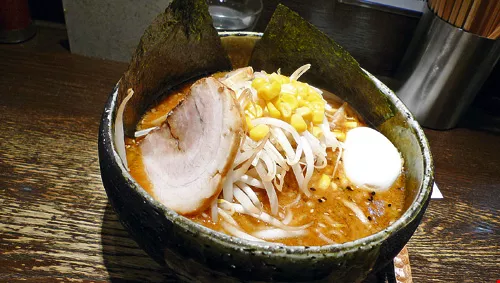
After building up a reputation with his blog, gourmet extraordinaire Gary Hsu (photo by Jimmy Lin) was approached by travel agencies to collaborate on "fine dining on the cheap" overseas culinary adventures that have proven very popular. Pictured here are featured Japanese foods like sea urchin and salmon eggs, Osaka Yaki, and miso ramen.
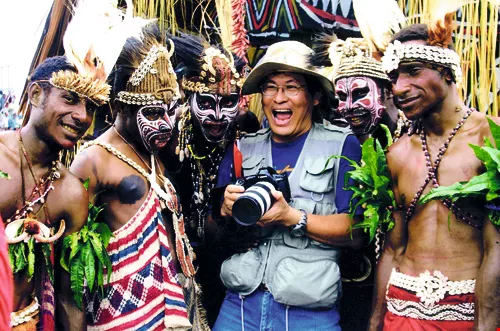
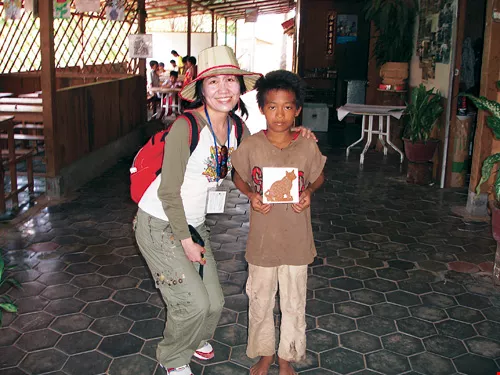
Seeing the world is a chance to learn about diverse human cultures and to create precious memories. Here we see Huang Ting-sheng enjoying a light moment with some people in Papua New Guinea.
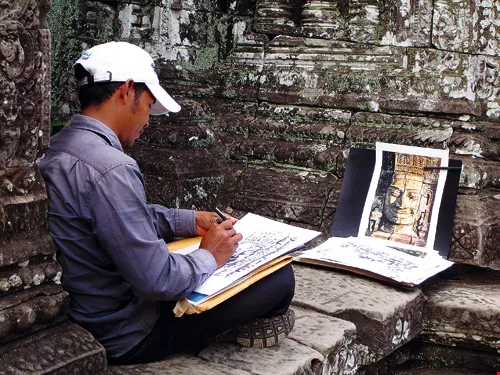
The transition from the more cursory package tours to more focused itineraries reflects Taiwanese travelers' increased demand for creative, detail-oriented travel. This photo was taken at Angkor Wat in Cambodia.
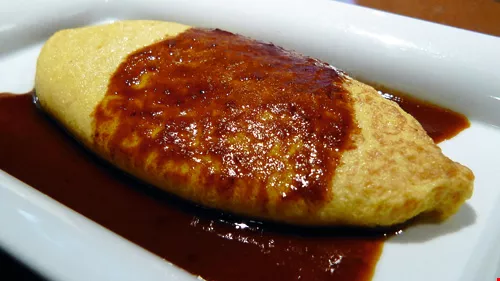
After building up a reputation with his blog, gourmet extraordinaire Gary Hsu (photo by Jimmy Lin) was approached by travel agencies to collaborate on "fine dining on the cheap" overseas culinary adventures that have proven very popular. Pictured here are featured Japanese foods like sea urchin and salmon eggs, Osaka Yaki, and miso ramen.
@List.jpg?w=522&h=410&mode=crop&format=webp&quality=80)

@List.jpg?w=522&h=410&mode=crop&format=webp&quality=80)


@List.jpg?w=522&h=410&mode=crop&format=webp&quality=80)

@List.jpg?w=522&h=410&mode=crop&format=webp&quality=80)
