Theater for Wanhua
In 2009, unable to pay the rising rent on its original location, Shinehouse moved to Wanhua. It has forged a close and lively relationship with the community and become an important conduit for the outside world to understand Wanhua.
Lee says Wanhua is a tightly knit community, with frequent activities that draw participants from all walks of life. The people there warmly take care of each other. Outsiders hold negative stereotypes about the area’s homeless people and sex workers, but locals have more sympathy for them. Likewise, the members of Shinehouse have gradually changed their own views about Wanhua.
For Shinehousers, Wanhua isn’t merely somewhere they come to rehearse. Because the members of the company experience life here, interacting with the locals, they end up reflecting deeply on what is around them. Nina Yeh, Shinehouse’s administrative manager, explains that religious observance plays a big part in Wanhua’s culture. The area is home to Lungshan Temple and to numerous smaller temples and shrines. Shinehousers have made a concerted effort to get out on the streets and listen to locals talk about their tough childhoods. Those talks gave the performers the truest look at locals’ real-life experiences. Consequently, says Lee, “Shinehouse decided to tell stories about what we saw around us.”
In 2012, they put on Navigating Bang-kah (the old Taiwanese name for Wanhua), which drew from six months of discussions with homeless people. Yeh explains that to avoid standard interviews, two or three company members would go out together to engage the homeless in chats. Through these easygoing conversations, they got a true feel for homeless people’s lives. In 2013, Shinehouse put on She Was Kissed by John but Became Hu Lide’s Woman. As well as offering a look at the world’s oldest profession, it described the fantasies and hopes that sex workers, like anyone else, hold on to.
Telling Wanhua stories
After “getting acquainted with Wanhua” and “talking about Wanhua,” in 2014 Shinehouse set a new performance goal: “Wanhua people telling Wanhua stories.”
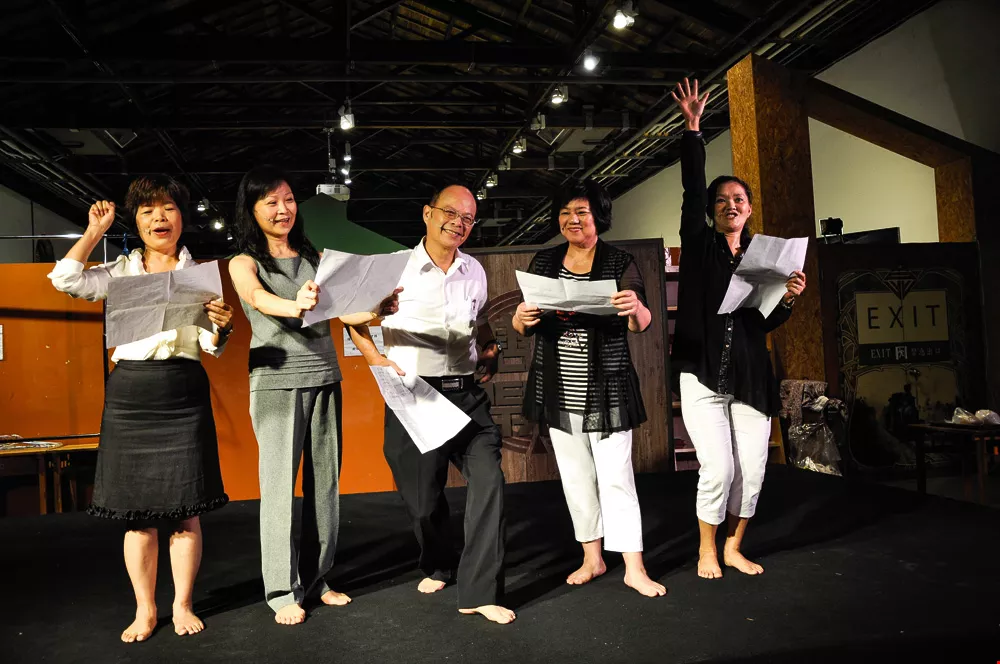
Apart from staging its own shows, Shinehouse also recruited local residents to a theater class, “Navigating Bang-kah.” When the six-month course ended, a half dozen residents in their sixties performed at the Sugar Industry Cultural Park (an old sugar refinery), acting out stories from their own lives.
Shinehouse both appeals to traditional drama buffs and gives residents of Wanhua, who have little exposure to theater, a door to the arts.
The Microwave Afternoon and Midsummer Night’s Chat, plays that respectively had been performed in mainland China and Japan, had runs of 23 performances at Shinehouse over the course of one month, becoming mini-fixtures in the community. “The neighborhood chief chartered a bus and brought more than 100 residents to see one performance,” Yeh says.
Wanhua residents no longer think of theater as something at a remove from their lives. Shinehousers point to the meaning behind the company’s name—that the company will shine a light into dark corners like the sun, becoming an illuminating force for society and the world of theater. Living amid the light and darkness of Wanhua, Shinehouse’s members look forward to continuing to enrich the possibilities of art through the creative wellspring of everyday life as they grow ever closer to their community.



@List.jpg?w=522&h=410&mode=crop&format=webp&quality=80)

@List.jpg?w=522&h=410&mode=crop&format=webp&quality=80)


@List.jpg?w=522&h=410&mode=crop&format=webp&quality=80)

@List.jpg?w=522&h=410&mode=crop&format=webp&quality=80)