The Walled City is located north of Kai Tak International Airport on the Kowloon peninsula. Despite the name, there is no wall or fortifications—just a towering warren of dilapidated old apartment buildings heaped in a pile.
This six-acre district is home to over 40,000 people, making it one of Hong Kong's most densely populated areas. The buildings, constructed to no rhyme or reason other than that of containing as many people as possible, are jumbled so tightly together that they block out the sunlight from above and residents of neighboring buildings can reach out the window and touch hands.
The alleyways inside are dark and narrow, a maze of twisting tunnels and passages unfathomable to the outsider, filled with the stench of garbage and over-hung with a tangle of jerry-rigged electrical tap lines and dripping water pipes.
But the reason the Walled City is known in Hong Kong as a "sink of iniquity" is not just owing to its abysmal standards of environmental sanitation. Because the area is outside the government's jurisdiction, it has become a hideaway for all the riffraff of the city and a hotbed of illegal activities. During the 1950's and 1960's it was Hong Kong's "general headquarters" for gambling, drugs, and prostitution.
Inside the compound, besides Hong Kong's poorest and wickedest class of people, live many refugees who have escaped from the mainland but who lack Hong Kong immigration papers. Outside, no one knows exactly why, the area is ringed with tiny, ill-equipped dental clinics, many of them set up by unlicensed doctors from the mainland.
How did Hong Kong, the prosperous "Pearl of the Orient," come to harbor such a festering sore?
Answering that question requires taking a look back at some history that for most Chinese is rapidly fading from memory. . . .
Eight hundred years ago, during the Sung Dynasty, Kowloon was one of ten major salt-producing regions along the Kwangtung coast. It became a strategically important location for military defense in the wake of the increasing threat from Westerners during the 17th and 18th centuries.
The wall for which the Walled City was named, however, was not built until after the 1842 Opium War, as a defense against the British on Hong Kong island, who were covetously eyeing the mainland from across the water.
The wall—which was 25 feet tall, was six to twelve feet wide, and enclosed an area of 12.3 acres—was completed in March 1847, after four years of construction.
In 1898, when the British leased north Kowloon and the New Territories for 99 years, the Ching court retained the Walled City under its jurisdiction for the use of its officials and functionaries. However, with the Ching Dynasty already on its last legs, lacking appropriations from the court, and harassed by the British, the officials soon abandoned the city and left.
During the Second World War, the Japanese forces occupying Hong Kong tore down the wall to expand Kai Tak Airport for military purposes. Easier access to the district opened the way for more riffraff to settle down there, and made the situation even more problematic.
Without the wall, the borders of the Walled City became ill-defined. Several large fires and subsequent encroachment by the surrounding city have reduced it in area to its present six acres.
The Hong Kong government has repeatedly tried to tear down the Walled City, but has met with persistent opposition from the district's residents. Serious violence erupted over the issue in 1948, and the conflict has been reenacted every few years since.
The announcement this January 14th that the Walled City will be torn was the result of discussions following the joint declaration on the question of Hong Kong signed by the British government and the Chinese Communists three years ago. Although many district residents oppose the demolition, the Hong Kong government has already begun to register households and to construct public housing for them at another location.
As to why the Communists are so eager to tear the district down, many scholars surmise that they hope to have this "hot potato" off their hands before they take over the colony in 1997. The HK$1 billion cost of the project will be paid for through the Hong Kong government by the taxpayers of Hong Kong.
Superficially, tearing down a recognized sink of iniquity would seem to be all to the positive. But many of the people who have taken refuge in this "jurisdictional loophole" think otherwise. For example, the unlicensed dentists and doctors who practice in the district face almost certain unemployment once they are forced to move. And the Hong Kong government has indicated that "undocumented residents" will be sent back to their place of origin, meaning a return to the mainland for many refugees who thought they had escaped.
Tearing down Kowloon's Walled City does not mean that the "problems of the Walled City" have all been solved; nor does it mean that the Chinese people will forget the lessons of the history that happened there!
[Picture Caption]
The notorious Walled City of Kowloon faces demolition.
Despair is more common in the Walled City than happiness.
The Walled City was built a century ago by the Ching Dynasty to defend against the Western Powers; these scenes have long vanished. (photos courtesy of the Hong Kong News Department)
Heating water with coal is still prevalent here.
The bay that once washed up against the Walled City was filled in long ago. (photo courtesy of the Hong Kong News Department)
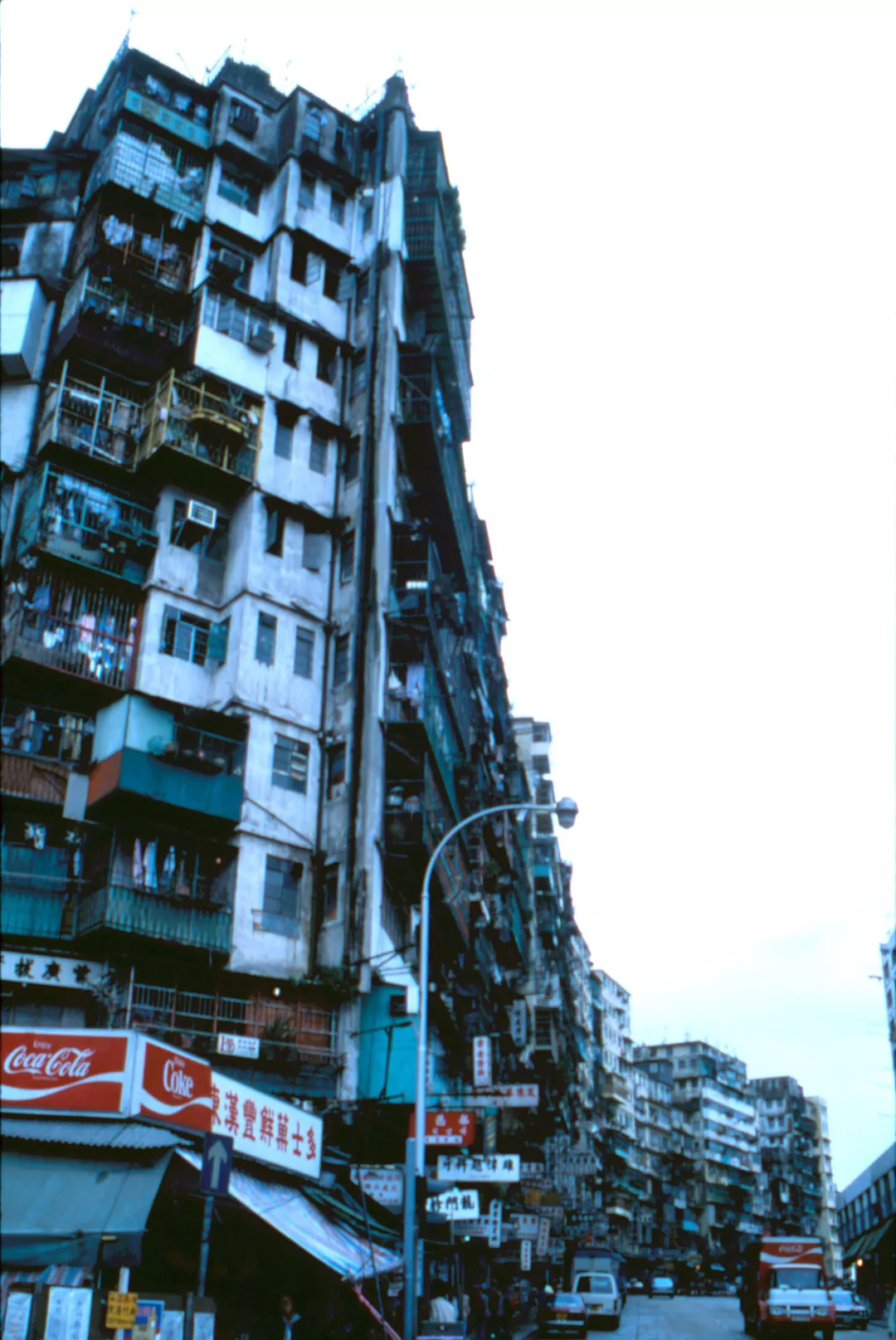
The notorious Walled City of Kowloon faces demolition.




@List.JPG?w=522&h=410&mode=crop&format=webp&quality=80)


