Experiencing Indigenous Life—Dulan’s Mini-Tours
Amber Lin / photos Chuang Kung-ju / tr. by Geof Aberhart
March 2014


What is the point of travel?
Finding some place far from the rat race and the stress of work? Escaping the city for the countryside, but continuing with the same way of life and being the same kind of consumer, albeit in a different location? With cultural mini-tours currently in vogue, it’s worth asking ourselves—after visiting these places, staying in their B&Bs, browsing their handicrafts, and indulging in a latte like any really cultured person would—what is it that we actually learn from it all?
With the Taitung town of Dulan enjoying a booming tourism industry and the commercialization that comes with it, Aboriginal singer-songwriter and Dulan native Suming was inspired to create tours that would showcase the real Dulan. So pack your bags and get ready to experience indigenous life!
Far from the winter cold and rain of Taipei, the sunshine is breaking through the clouds over Taitung. We head north from Taitung City along Provincial Highway 11, the Pacific on one side and the Coastal Mountain Range on the other, and pass Shanyuan Beach. Next stop: Dulan.
Dulan, about 20 kilometers north of Taitung City, is the largest Aboriginal settlement on the southern half of the east coast. Amis legend has it that their ancestors first landed here at the prominent Dulan Cape, and archeological remains here indicate that people have lived in Dulan for at least 3,000 years, as far back as the Neolithic. It being a stony, rocky place, the Amis here built walls using stones and rocks dug up in the course of developing the area—the indigenous name of the area, ’Etolan, even translates from Amis as “place of many stones.”
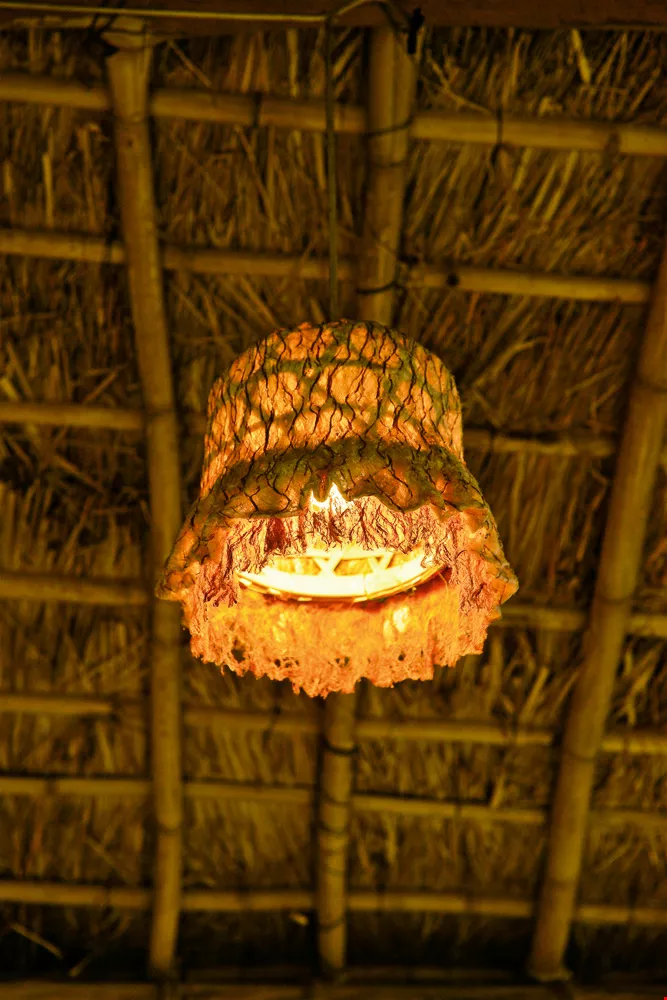
Uncle Panay has spent 20 years studying and passing on the traditional art of making cloth from tree bark. Pictured at right, a bark lampshade.
Since first lady Christine Chow was seen sporting a “Dulan Elementary School” book bag a few years ago, this simple town has experienced a boom in popularity, becoming one of the most popular tourist destinations in Taitung. “Now Donghe, up the road, is worried about being ‘Dulan-ized,’ and Dulan’s worried about being ‘Kending-ized,’” says Rabbit, who moved to Dulan about eight years ago with his wife Fairy, with whom he now runs Moonlight Inn.
Their concerns are far from unfounded. Dulan, which made its name for its culture and scenery, first began really attracting outsiders around 2000, with several artists moving in. With the tourism boom of recent years, more and more outsiders are buying land, renting property, and setting up B&Bs and restaurants in the town. As a result, Han Chinese already outnumber the local Amis 52% to 48%.
“There are restaurants doing French cuisine, Italian pizza, and Japanese yakiniku, and they all have lines stretching out the door. But if a local Amis woman sets up her own restaurant, there’s no guarantee anyone will even go,” says Suming with a hint of despair.
The city folks that visit Dulan tend to continue their usual habits while there, as Suming saw last December when he organized the Amis Music Festival and found that the tourist visitors would still rather head to a major convenience store than buy local.
“If people would head into these local mom-and-pop stores and even just say ‘hello’ in Amis, the old folks running those stores would be over the moon!” he says.
And so he decided to organize “Dulan mini-tours” for March and April, when the spring weather is at its most agreeable. The tours were run on a trial basis in 2013, and the plan is for even more thorough ones this year. These tours are aimed not only at helping people really get to know Dulan, but more importantly, at bringing the community together and creating job opportunities for local youth.
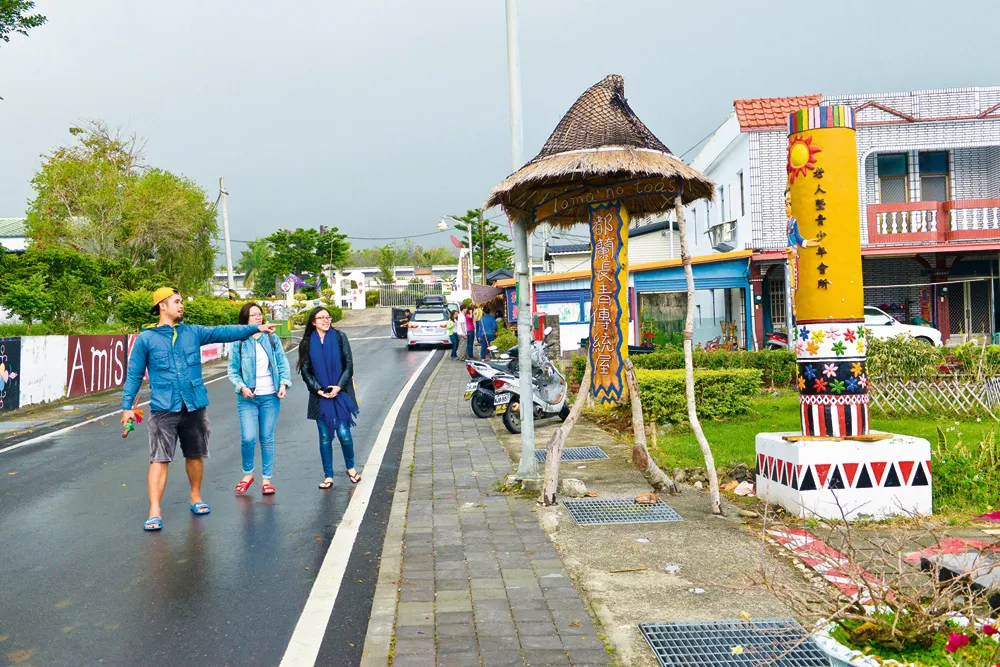
Thanks to non-intrusive tours of the real Dulan, led by local youths, visitors have the chance to experience Amis life more intimately.
Kuciang Miceku meets us in front of Dulan’s 7-Eleven and we head uphill, away from the noise of the highway to where the Amis population of Dulan lives.
Twenty-four-year-old Kuciang is the head of the Lasatong age cohort. (Traditional Amis society groups adult men into five-year age cohorts; the Lasatong are currently the youngest cohort, aged 20–25 years old). After completing his military service, he returned to Dulan, becoming a member of Suming’s team and the person in charge of the Dulan mini-tours.
He leads us along the hillside and into town. The first thing we see is a structure reminiscent of Noah’s ark—the Dulan Catholic church. This simple, beautiful church was designed by a foreign missionary and opened its doors in 2003. Since then, it has been an important meeting place for Dulan’s Catholics, watched over by a massive Indian almond tree.
Next we arrive at the plaza where Dulan holds the Ilisin festival—the harvest festival—on 15–17 July each year. Dulan natives from around Taiwan travel home for the festival, singing, dancing, and celebrating the year’s bounty. The plaza is also a popular place for local weddings, and the neighboring study hall is where the local children go to get their after-school tuition.
From there, we head to the famous Dulan Elementary School. This tiny school was built over a century ago by the Japanese, and has all but become the town’s mascot, with tourists always sure to leave with one of the school’s red or blue book bags.
Tuckered out from the walk, we stop for a break on one of the town’s public benches built with wood that washed in with the flooding that accompanied Typhoon Morakot in August 2009. Sat under thatched roofs, these public spaces not only helped beautify the town, they also offered local youths a chance to learn traditional building techniques from their elders, and have now become a popular hangout for the townsfolk.
After our tour of the town, Kuciang leads us into the mountains in search of the famous Dulan archeological site. Further up, we reach Moonlight Inn, a cafe and gallery run out of a converted wooden Land Bank hostel by Rabbit and Fairy.
Moonlight Inn offers fantastic views of the Pacific, and on a good day you can see out to Green Island, and even sometimes Orchid Island. Hoping to plant the seeds of greater concern for Aboriginal autonomy, the couple started printing a community newspaper. Unfortunately, after just ten issues they ran short of funds and had to stop publication a year and a half ago. Most recently, Rabbit has opened a cafe-cum-second-hand bookshop in the hopes of creating a greater diversity of public spaces.
“Dulan needs tourists, but how do we balance tourism with the simple local lifestyle? That’s the big question Dulan faces,” says Rabbit. While the tourism boom may have brought commercial benefits, it has brought little benefit to the community. Meanwhile, floods of people and cars have disrupted the comfortable pace of life, leaving the local children unable to just go out and play wherever. Perhaps these mini-tours can minimize the impact of these visitors on the lives of the people of Dulan.
Suming stresses that the mini-tours have to go against the usual commercial belief that the customer is always right, instead making the town the priority. Only this way can this kind of tour hope to change tourists’ attitudes.
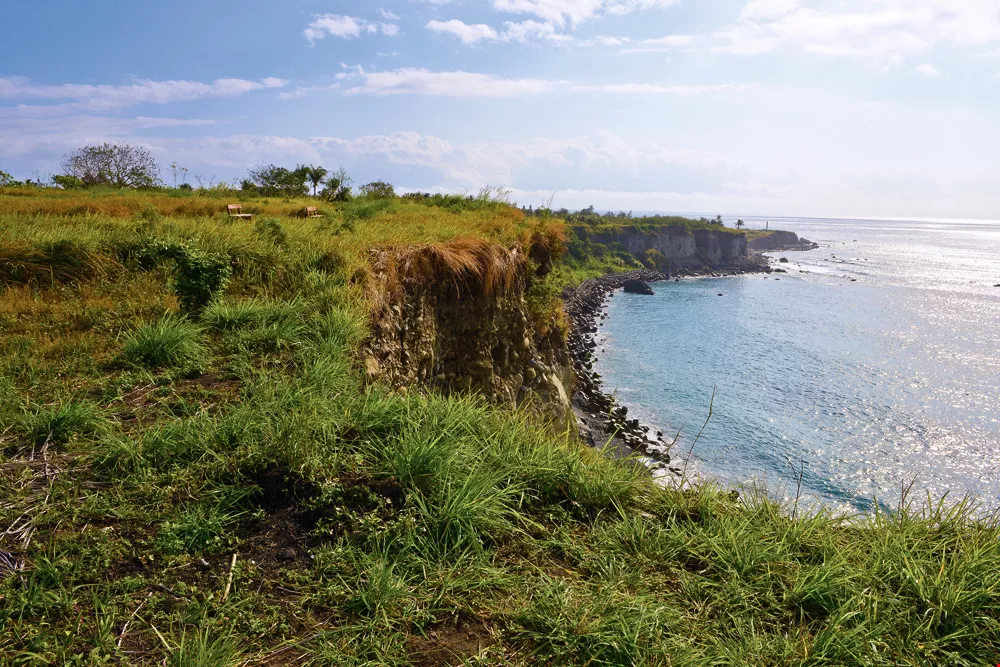
Beautiful Dulan Cape is an important part of traditional Amis territory, being the place where their ancestors legendarily first made landfall.
However, tourist destinations and the like are just one small part of Dulan. Its true treasure is not its scenery, but its people.
Trendy Ah-Xiang, 30, moved back to Dulan from Taipei two years ago to help his mother in the fields. Leaving behind his job as a hairstylist, Ah-Xiang now runs a B&B and works as the town’s hairdresser, making house calls for the low cost of NT$300 or a half-dozen beers.
Sometimes he gives haircuts to the local elderly people, “but they don’t like my haircuts. They say they’re too trendy,” he laughs. Now, with word of mouth spreading, even some of the tourists have begun giving Ah-Xiang a try.
One of the more important aspects of returning to Dulan, according to Ah-Xiang, has been learning traditional skills in building thatched huts, ocean fishing, and night-time spear-fishing, as well as exploring the wisdom of the ancients with like-minded people—wisdom that is in danger of disappearing.
Octogenarian Shen Taimu, known around town as Uncle Panay, was elected kakita’an (chief) of Dulan over 20 years ago. At that time, he decided to emphasize passing Amis traditions down to the younger generations. He remembers listening as a child to his father explaining how their ancestors made clothing from tree bark, but none of the elders then had ever actually seen such clothing, which inspired him to explore this long-lost art for himself.
After 20 years of searching, Uncle Panay has finally found the best kind of tree for the work: paper mulberry. And through constant testing of every step, from hammering out the bark to drying it and weeding out the dead matter, he has not only been able to resurrect the art, but to advance it, creating textiles with almost lace-like lines that have even been used in projects by students of Shih Chien University’s Department of Fashion Design, as well as in things like lampshades and hats.
The handicrafts of the Amis women are also not to be missed.
Gao Xiuxue, who runs the B&B Lakezhan, is a particularly talented artisan. Whether it’s the pom-poms often used in Amis clothing, the beautiful headgear that is part of traditional dress, or even natural materials like areca palm sheaths and pigeon pea pods, her works are full of creative elements that have made them winners with customers. Twenty-six-year-old Hayang is a cross-stitch teacher who creates alofo, or “lover’s bags,” with designs redolent with the memories of generations gone by.

Amis food is very vegetable focused, but not exclusively so. One must-have dish with the locals is siraw, a kind of brined pork.
Futuru C.L. Tsai, assistant professor of anthropology at National Taitung University, is a Hakka from Hsinchu, but was taken on as the godson of an Amis person. Since then, his ties with Dulan have only deepened.
“Life here isn’t nearly as sleepy as people might think,” he says. Many people in the big city have idyllic images of life in the countryside and come to Dulan looking for somewhere to blow off steam, not bothering with the local culture to any real degree. Meanwhile, the local youth are busy holding get-togethers, taking part in public affairs, and studying the traditional ways. Lately, Tsai has become enamored with spear-fishing, heading to the seaside with Amis friends by night to see what they can catch. “Even though it gets pitch black, knowing my friends are nearby is super reassuring,” he says. The Amis, says Tsai, are traditionally a sharing- and cooperation-focused people, something not often seen in contemporary society.
But if you come to Dulan with an open mind, a respectful heart, and a commitment not to intrude, you’ll experience a fascinating difference in cultures. Suming’s Dulan mini-tours are a starting point and provide consumers with valuable, useful information. The hope is that by giving more tourists the opportunity to experience Amis culture, these tours can provide both economic benefits and job opportunities to the local people.
Alliance Cultural Foundation chairman Stanley Yen states in his book Seeds of Hope for the Land that he hopes the tribal communities of Taiwan’s east coast can encourage culturally oriented tourism, because only by increasing its value can Aboriginal culture draw attention and bring stable economic benefits and sustainable development to these communities.
While Suming’s ideals are beginning to take form, Dulan still has a long road ahead. Only with community consensus and action will they truly be able to find and walk that road.
So next time you’re in Dulan, make sure you come with an open mind. If you’re visiting friends, bring some drinks and you’ll get even more in return, like fresh-killed wild pork or the chance to tag along as they go out in the night to catch frogs and crabs at the river and sip on some millet wine. In other words, you’ll get the chance to really experience Amis life.
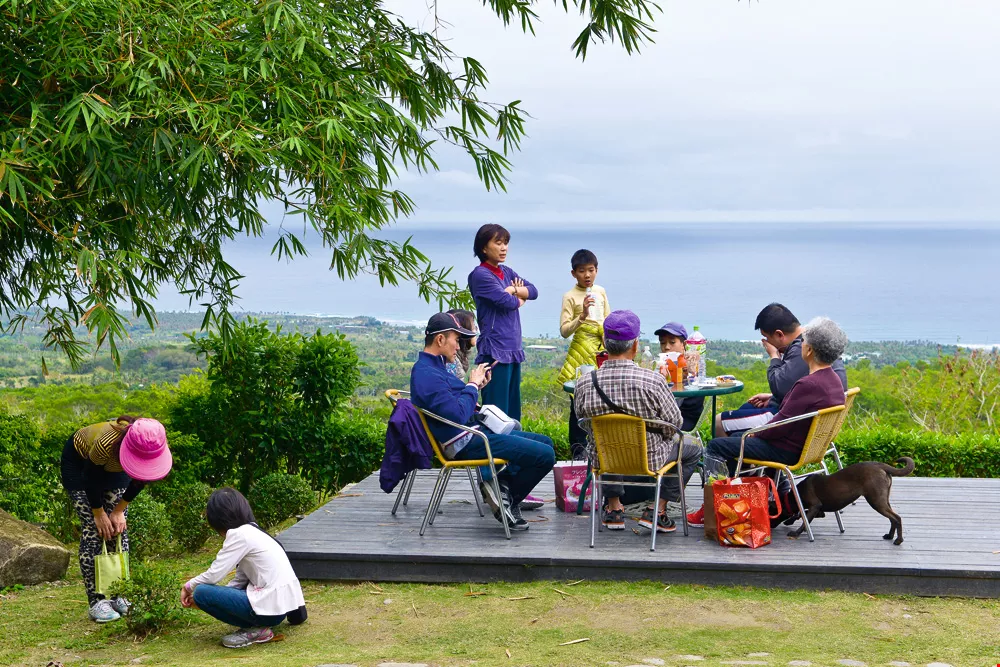
Moonlight Inn, in the foothills of Mt. Dulan, offers amazing views of the Pacific. This café-cum-gallery has given Dulan one more artistic destination.
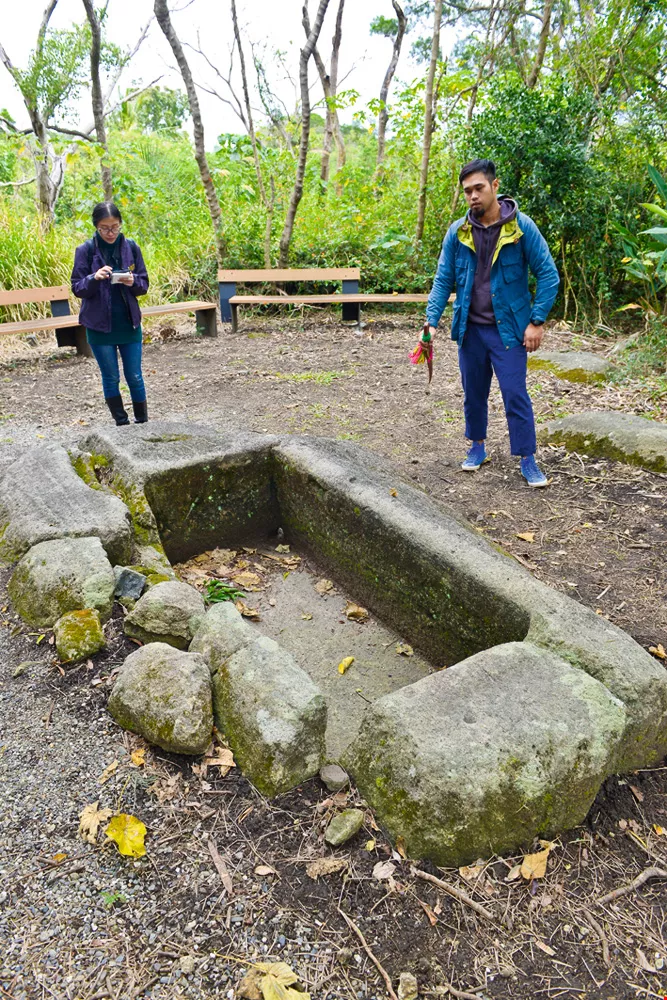
The 3000-year-old megalithic site on Mt. Dulan is a must-see destination for visitors.
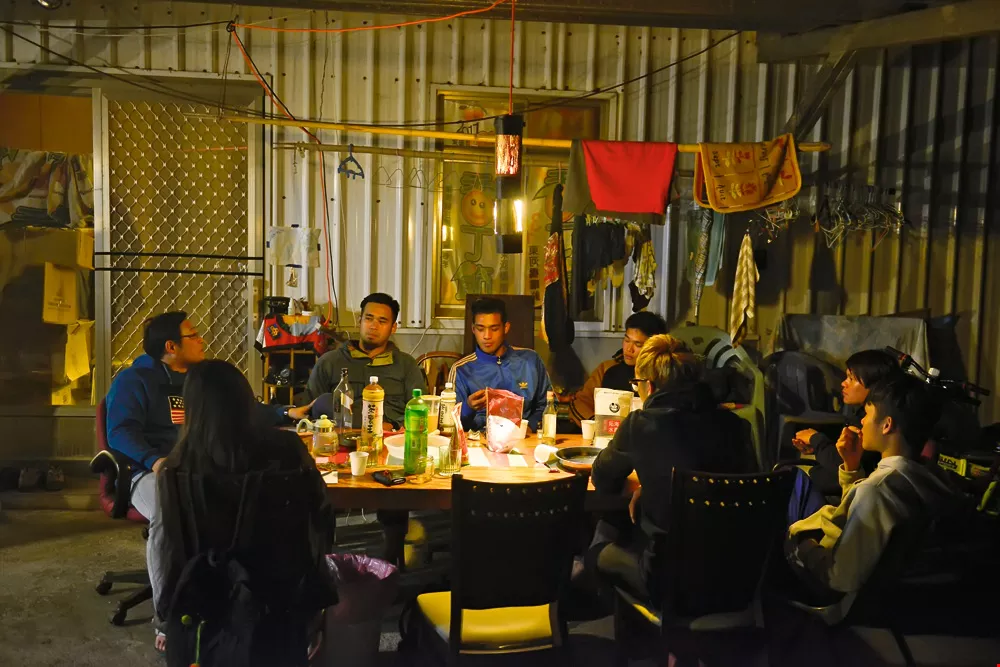
With a cool drink and an open mind, visitors to Dulan will have the chance to experience real Amis life, an experience as fun as it is educational.
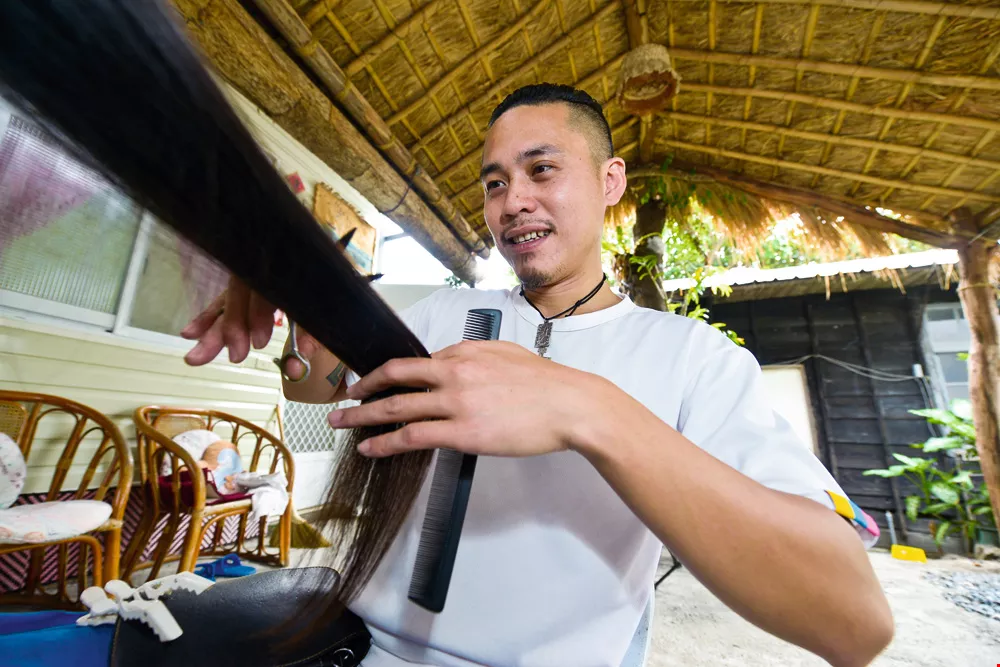
Ah-Xiang, the town’s “mobile hairdresser” and co-operator of a B&B with his mother, helps Dulan’s youth keep up with the latest fashions using his experience as a hairstylist in Taipei.
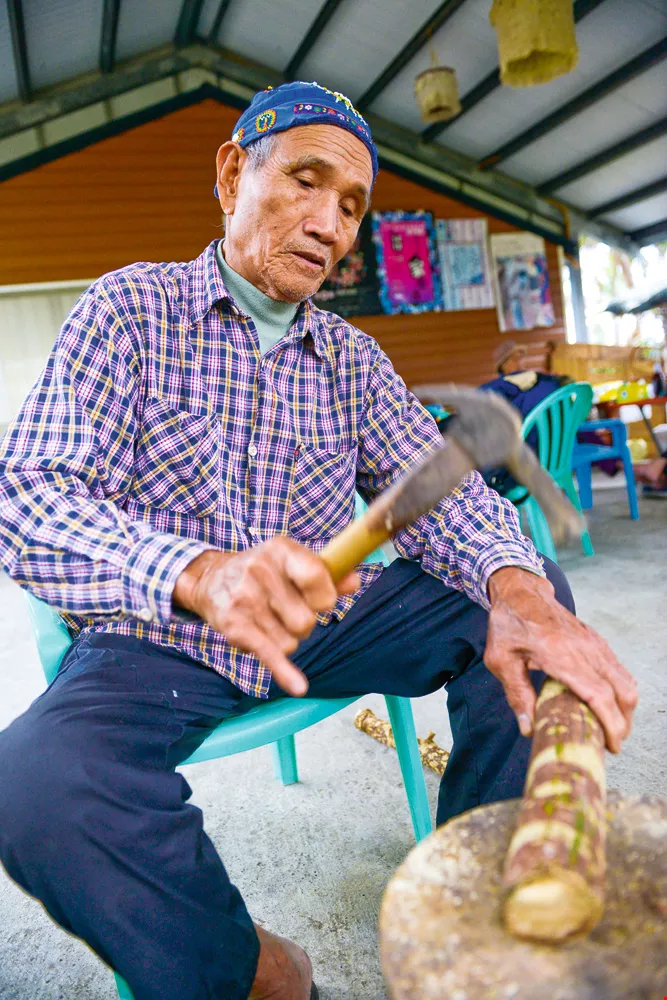
Uncle Panay has spent 20 years studying and passing on the traditional art of making cloth from tree bark. Pictured at right, a bark lampshade.

@List.JPG?w=522&h=410&mode=crop&format=webp&quality=80)


