Livable Communities: Connecting Neighbors into Networks
Kobe Chen / tr. by Scott Williams
December 2014


Modern city life is at once a silent carnival and an enveloping tumult in which people rarely engage with one another. But for all that rural communities offer the friendly sociability cities lack, their young people are leaving and their industries disappearing.
How are we to ease urban isolation, halt the withering of our villages, and make our communities more caring and cohesive?
Taiwan has developed its own unique approach to community development over the last 20 years, and has lately been winning international acclaim for its results. What steps are residents taking to make their communities more livable?
Created by UK charity LivCom Management Company in 1997, the International Awards for Liveable Communities (IALC)—known as the “Green Oscars”—are the world’s only awards recognizing comprehensive environmental management and the creation of livable communities. The organization’s work with the United Nations Environment Programme (UNEP) since 2007 has broadened the awards’ appeal and encouraged communities from all corners of the Earth to participate. Residents take great pride in winning and use the prizes to shine national and even international spotlights on their communities.
Some 43 cities and communities and 52 projects contended in the final round of judging at the 2013 IALC ceremony in Xiamen, mainland China.
Tourist hotspot Bruges, Belgium, took home the gold medal in Category C (communities with a population of 75,000–150,000). The judging committee felt that the city’s use of telephone hotlines, email, and an advisory council to encourage community participation made its development process highly efficient, exceptionally transparent, and well worth the consideration of communities in other nations.
Taiwanese communities did exceptionally well at the 2013 awards, with a total of 18 winning awards. Yilan’s E-Wang Community, which has a population of less than 800, was perhaps the most surprising victor. E-Wang’s residents and master artisans alike were thrilled with the community’s Criteria Award for Arts, Culture and Heritage, earned for their outstanding work preserving their traditional handicrafts and culture. Yilan City and Kaohsiung also won Built Project Awards, the former for its old town preservation program and the latter for the Kaohsiung Exhibition Center, while Taichung earned a Natural Award for its Calligraphy Greenway.
More than just a source of national honor, the awards provide tangible benefits to the winning communities themselves. On the one hand, they stimulate tourism. On the other, they are tremendously helpful addenda to government grant program applications. Perhaps more importantly, they also give residents pride in their communities.
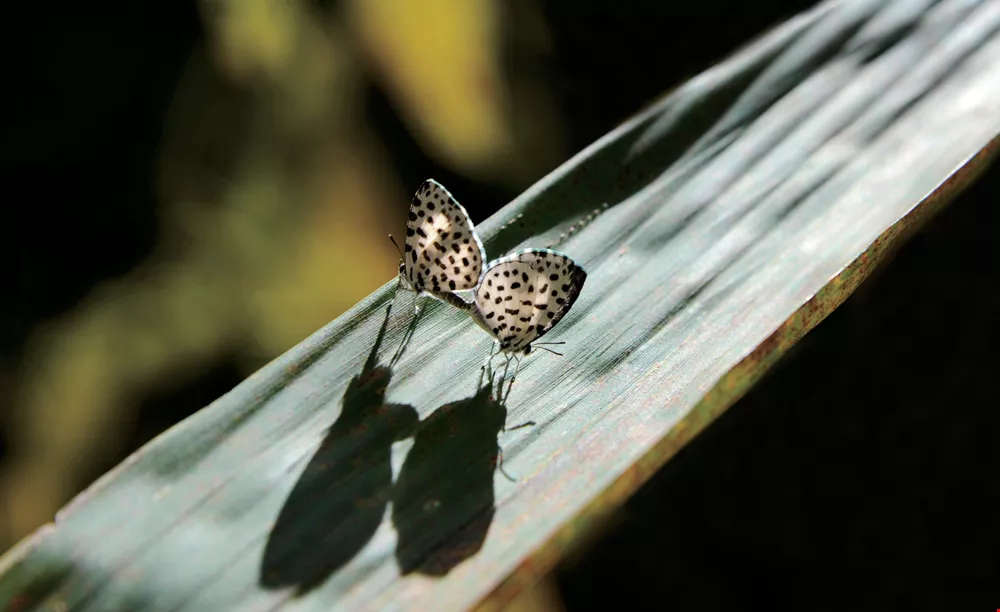
Taiwan’s community development efforts date back to the economically vibrant 1980s. Taiwan was awash in money in those days, yet many people worried about the cost of that wealth. They feared that modern society had become too cold and impersonal, and longed for the warm communities and closer social ties of earlier days.
When martial law was lifted in 1987, the government also eased restrictions on the media and the formation of opposition political parties. Those changes to Taiwan’s social and political environment enabled some individuals to start exploring the possibilities for grassroots democracy in Taiwan, typically beginning with their own communities.
In response, the Council for Cultural Affairs (now the Ministry of Culture) proposed the concept of “comprehensive community development” in 1994. The council hoped the approach would foster civic awareness and reknit the close ties that used to exist between neighbors.
But the long years under martial law and an authoritarian system had left Taiwan with a relatively “docile” citizenry that preferred to keep its distance from public issues, making it difficult for the CCA to cultivate the public awareness and engagement it was seeking.
Community development plans introduced by the government and academia, including the Townscape Renaissance Project, as well as programs aimed at promoting community restoration and community health and at revitalizing commercial districts, got the public involved but turned community redevelopment into a top-down process.
“This is a unique aspect of community development in Taiwan,” says Jeng Hoang-ell, an associate professor with the Department of Architecture at Tamkang University. He explains that because the US has a long history of democracy and local control, its government hasn’t needed to promote community development: its citizens have done it themselves. But Taiwan’s lower levels of civic awareness and involvement meant that the preliminary stages of redevelopment were usually initiated from the top down rather than from the bottom up. It wasn’t until communities began rebuilding in the aftermath of 1999’s Jiji Earthquake that Taiwan’s public began to take the initiative.
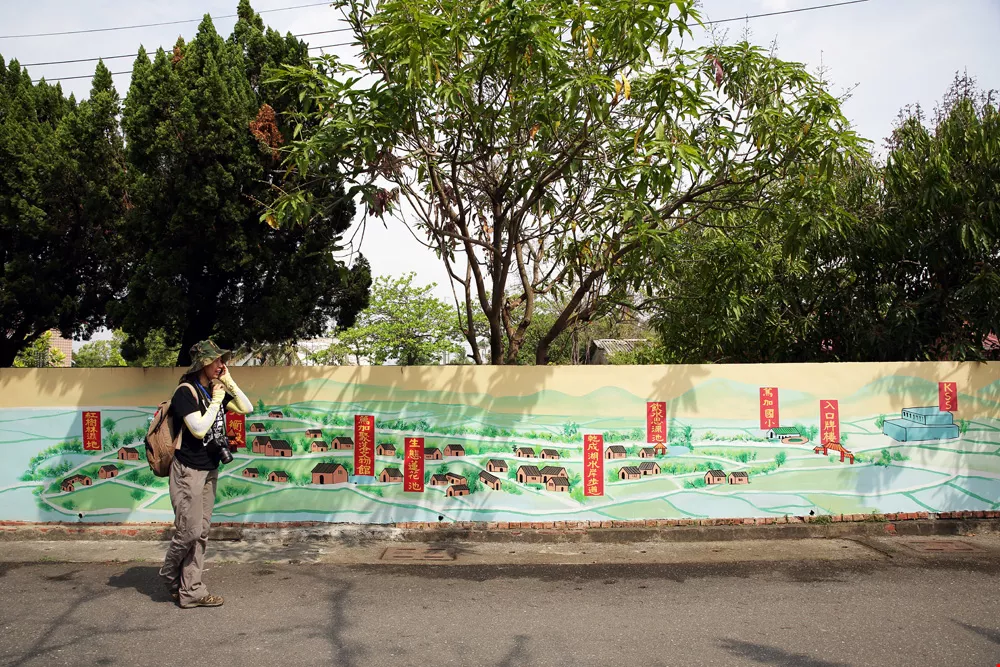
In Tainan’s Dujia Community, all residents share a single surname. Having drawn on those family ties to power its redevelopment, the community won a silver medal from the International Awards for Liveable Communities in 2012.
Chen Chin-huang, who chairs the Hsin Kang Foundation of Culture and Education, says that the earthquake awakened the public to its own strength. In its wake, communities began stating their needs and proactively proposing solutions, leaving the government to play a complementary role. “You could say that 1999 marked the ‘inauguration’ of community redevelopment in Taiwan.”
While many Taiwanese had probably heard the term “life community,” it was the post-quake reconstruction effort that truly brought home its meaning.
The disaster struck without regard to administrative district, ethnicity, religious belief, or gender. People confronted with the destruction of their homes learned to lean on their neighbors for support. Communities pulled together and tackled their problems on their own rather than await rescue by the government.
When Typhoon Morakot struck Taiwan in 2009, communities drew on the resilience that had been developed when rebuilding from the quake by quickly bringing local rescue and reconstruction efforts online, demonstrating an initiative that has made them models for communities around the world. Kaohsiung’s Xiaolin Village is one example.
“We’ve been visited by teams from Mainland China, Japan, the Philippines, and Haiti, all to study our reconstruction efforts,” says Zhou Jinyuan, head of the Xiaolin Development Association. Zhou argues that the government can help rebuild physical infrastructure, but the community itself has to take care of the social infrastructure.
This social infrastructure is, of course, people. The key to getting Xiaolin back on its feet wasn’t the establishment of an award-winning memorial park or tourist-friendly factories, but finding a way to get residents out of temporary housing.
“When you’ve got a large group of people suddenly relocated, heartbroken, missing family members, and all crammed together in identical temporary housing, who’s thinking about rebuilding?” Zhou says that the development association responded by creating the “Taivoan Dance Theatre,” then going house to house to encourage people to learn to dance. The group helped the community regain its vitality by teaching residents the traditional dances of the area’s Plains Aborigines, which got them holding hands, moving in rhythm, and shouting together.
Over time, the group has become a pillar of Xiaolin’s spiritual support: residents still gather regularly to dance even though their local industries—plum buns and cross-stitching—have recovered.
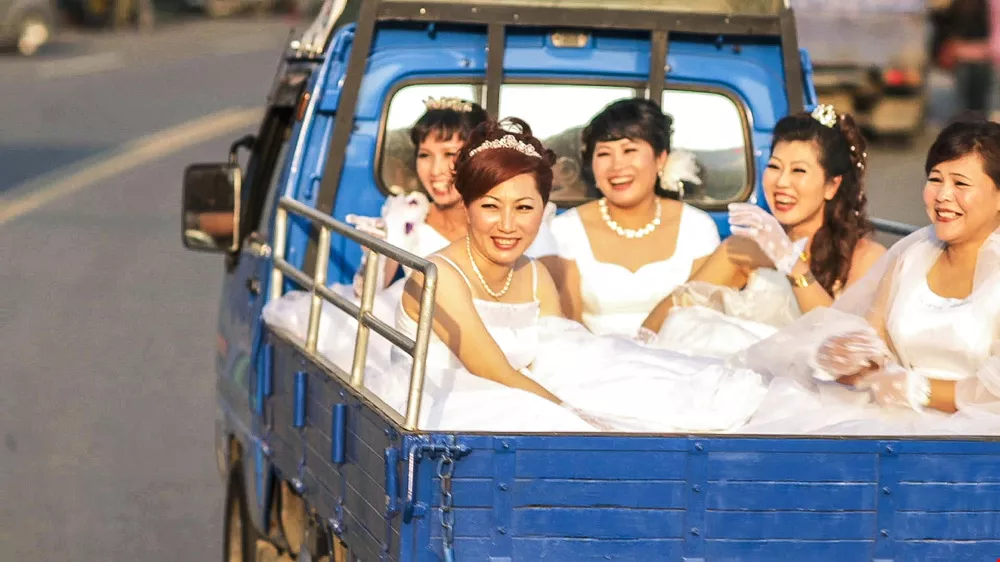
Immigrants have become central to the redevelopment of many Taiwanese communities. Kaohsiung’s Jiaxian Community arranges “second weddings” for its foreign brides to make up for the hastily arranged ceremonies most had when they got married.
In Qigu Township, Tainan, it’s kinship that keeps the Dujia Community together. Dujia has preserved the cultural traditions of a single clan for some 200 years, giving the community’s redevelopment a unique character and earning it a 2012 silver medal from the IALC.
The long-standing customs of marrying daughters outside the village, and not permitting sons to take their wives’ surnames to continue their in-laws’ family line, have kept Dujia a single-surname community for its entire existence.
Qiu Yingzhe, president of the local development association, says that the community formed more than two centuries ago, and that the clan has kept it largely unchanged ever since. The key to doing so has been holding its land in common. “Our pioneering ancestors passed 600-some hectares of land down to us. The generations since have never left. They’ve made their livings from it and are buried in it.”
One of the interesting aspects of the community is that all decisions concerning it, both major and minor, are made by a committee of a dozen or so elders. Another is its winter solstice festival. For the last 193 years, everyone who has left the community to pursue a career or education elsewhere has returned at the winter solstice to make offerings to their ancestors. Newlyweds and children born in the previous year must also kowtow and be introduced to the clan’s ancestors. Having done so, they receive the ancestors’ blessings, are entered into the family genealogy, and become formal members of the clan.
Dujia’s redevelopment has benefited greatly from the power of the clan. Projects have included consolidating the local mullet industry, building a mullet production and sales platform, and promoting tourism through the revitalization of old buildings and the creation of aquaculture-oriented activities for visitors. This unique community redevelopment effort has helped make local industries competitive again, and brought residents still closer together.
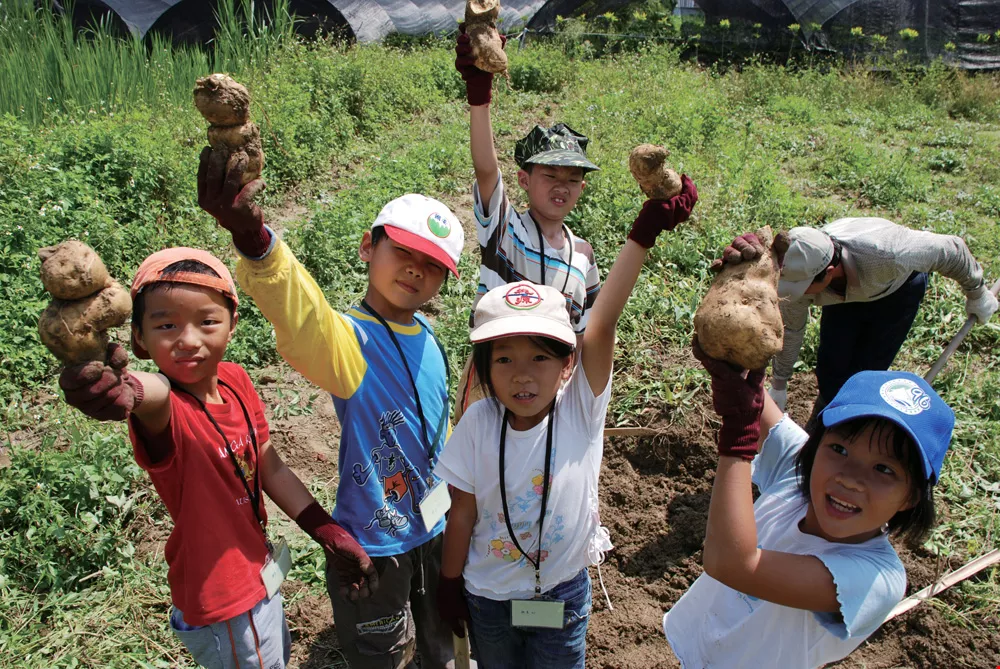
Nantou’s Taomi Borough has used local resources to build an eco-tourism village that is a fantastic place to see butterflies and frogs.
Outside of Dujia, many communities are dealing with immigration-related issues. With the number of new immigrants and foreign brides on the rise, some have struggled to find ways to integrate their new citizens.
Tran Chi Kim Le is a Vietnamese woman who came to Taiwan 16 years ago when she married a Taiwanese man. Having found self-confidence through her community, New Taipei City’s Bali District, Tran is committed to giving back. She’s become an important source of advice and support for women new to the community and was named a “model mother” by Bali in 2013.
“Bring your troubles to the community; take happiness and solutions home.” Nian Yajun, head of Bali’s Happy Family Life Advancement Association, says that her association was created to help people, especially those new to the community, solve problems. Bali has many immigrants. Nian pegs their number at more than 1,000 and says that one in ten households includes a spouse who is new to the country.
“Bali’s immigrant women really stick together and pass news among themselves very quickly,” says Nian. “Women who become part of their network have a much easier time getting things done.”
Nian says that Tran is a critical node in that network and a source of strength within the community.
Tran recalls that she was afraid of offending anyone when she first came to Bali. She simply agreed with everything everyone said and kept a bellyful of grievances to herself. As her Mandarin improved, she regained her confidence and began to rise through the ranks at a big-box retailer, eventually becoming store manager.
Tran also began visiting new residents with community workers, encouraging them to get out of the house by participating in community-organized karaoke outings, trips, and feasts.
In addition to taking the lead in arranging activities, she offered advice to a number of women who were considering divorcing their husbands or leaving their families. “Many weren’t very attached to their husbands, but couldn’t abandon their children.” She typically advised them to think about how they would make their way in the world, what kind of work they would do, and where they would live. She also warned that getting involved with drugs or the sex trade would likely be the end of them.
Tran has helped resolve problems with mothers-in-law and children alike, and her mediation has enabled the majority of these women to maintain good relationships with their families. Her efforts have not only earned her the gratitude of these women, but also of their Taiwanese families, who praise her contributions to the stability of the community.
The joint efforts of government, scholars and locals over the last 20 years have given rise to a uniquely Taiwanese approach to community redevelopment, one that has created a large number of interesting communities and resolved numerous social problems. But the older generation of community redevelopers sees much that can still be done.
At a forum on the next 20 years in community redevelopment, former cultural affairs minister Chen Chi-nan described the ideal setting for community redevelopment as one in which “the public decide matters for themselves, identify problems in their neighborhoods and use their own strength to deal with them.” He stressed that the ideal is to build a bottom-up, localized, grassroots democratic society in which communities resolve community issues for themselves. To date, community redevelopment in Taiwan has largely involved interventions by community planners, university professors, and government agencies. Outsiders have been setting the course, and local voices have largely gone unheard.
The paperwork associated with community redevelopment has also gotten in the way. Writing plans, filling out forms, submitting official documents, and auditing receipts is mentally wearing for community redevelopers and slows down the “real” work.
Chen Kuan-fu, director of the Ministry of Culture’s Department of Cultural Resources, notes that while more than half of Taiwan’s communities have already gotten involved with community redevelopment, some have only done so in a superficial fashion. He says that the MOC is addressing the problem by introducing a simpler redevelopment process, one that eliminates much of the paperwork in hopes of shifting the focus back to redevelopment’s actual objectives.
Fortunately, though grassroots democracy and civic awareness are slow to grow, once they get up a head of steam they are nearly unstoppable. With Taiwan having won several IALC medals, Taiwanese are growing more aware of the strength of their communities and putting that strength to use. Taiwan’s Aborigines are looking back to their roots to develop their distinctive tribal cultures; immigrants are striving to integrate into local society and becoming pillars of their communities; agricultural villages are developing sales platforms and farm tourism; and urban neighborhoods are working to improve their environment and public safety.
When the general public cares about and contributes to its neighborhoods, livable communities naturally arise.

@List.jpg?w=522&h=410&mode=crop&format=webp&quality=80)


