Eaten out of House and Home--Swallowing Up the Swiftlet
chang Chin-ju / photos Cheng Yuan-ching / tr. by Phil Newell
September 1994


Not long ago the Council of Agriculture commissioned the private environmental group Beautiful Taiwan Foundation to go to Vietnam and do a survey of the consumer habits of Taiwan visitors there. Although this report, on which the ROC government took the initiative, showed that some Taiwanese visitors did indeed buy up wild animals, the report itself was taken by international environmental groups as a sign that the government had begun to devote more attention to conservation issues. This is critical,because only by understanding the facts can a counter-policy be formulated.
After the rhino horn controversy, international conservation organizations plan to try to ban the consumption of other conservation-related items like bear paw, shark fin, and swiftlet nests. In April of this year CITES published a report entitled "The Consumption of Swiftlet Nests Around the World." The report stated that each year Asians around the world--including those in Japan, North America, Korea, mainland China, and Taiwan -- consume more than 10 million swiftlet nests per year.
Although Taiwan is by no means the largest consumer of bird's nests, there are many questions that should concern all Chinese both in Taiwan and abroad: Will the consumption of nests affect the survival of the swiftlet? If swiftlet nests are to be used in a sustainable fashion, how should Chinese adjust their culinary culture? Do the nests have, in the end, any real medicinal value? In this issue Sinorama offers three articles related to this issue so that for Chinese everywhere the swiftlet nest may become food for thought, as well as belly.
By the end of this year at the latest, the Convention on International Trade in Endangered Species (CITES) will formally propose placing the swiftlet (genus Collocalia, family Apodidae), which produces the culinary delicacy "bird's nest" (often called swallow's nest), on the list of endangered species. Yet the consumption of swiftlets' nests in Chinese societies has reached an all-time high. Will swiftlets' nests be the next center of attention in "the war between environmental protection and the traditional Chinese diet"?
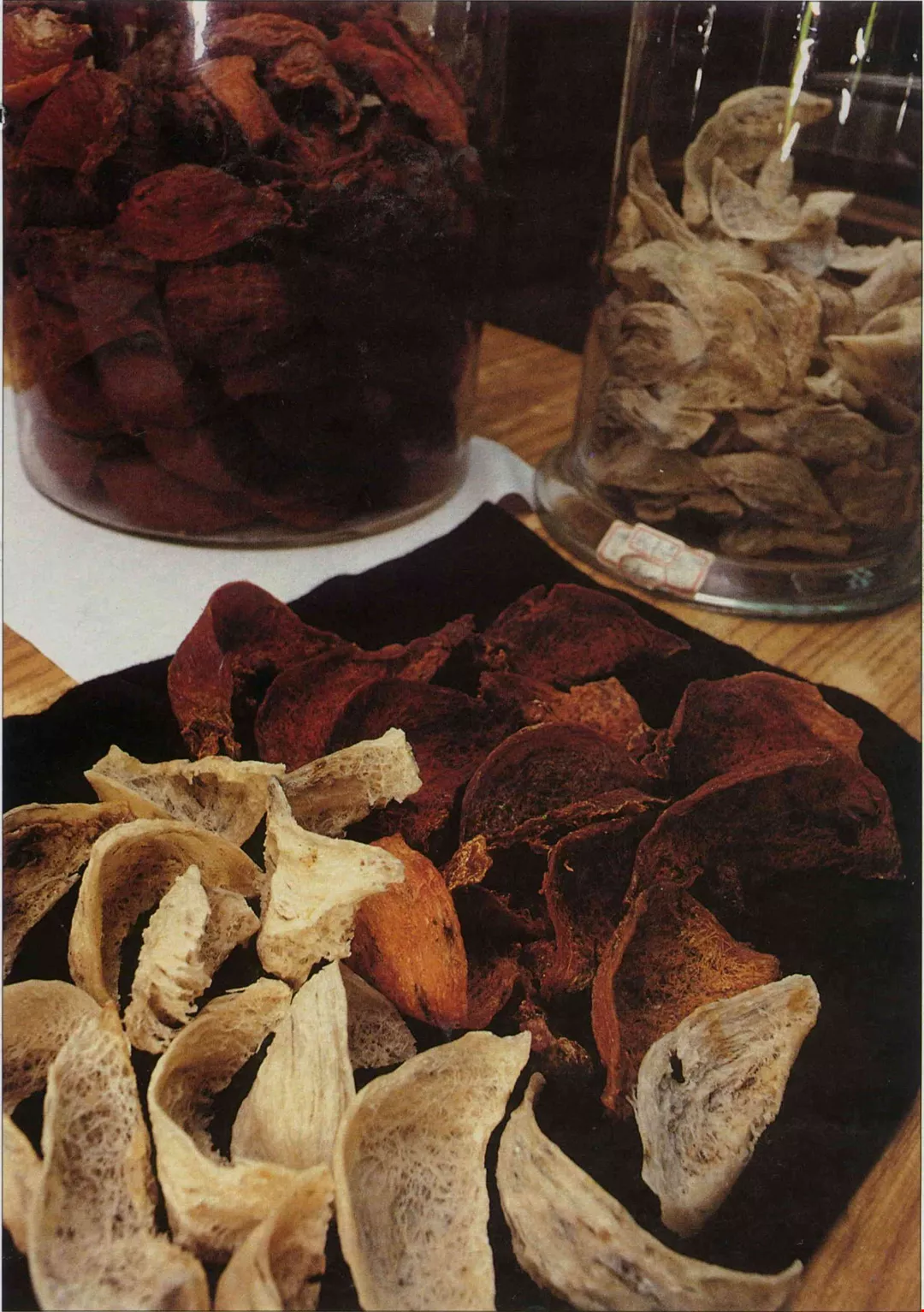
In the market, the swiftlet nests are divided into three levels of quality, including one allegedly made with swiftlet blood; in fact, the three types are made by three different types of swiftlet.
Why eat bird saliva?
According to a CITES survey, about 180 tons of swiftlets' nests enter the market each year. If an average nest weighs six grams, that's equivalent to more than 26 million of them. People in Hong Kong consume the most, while Chinese in North America are second. In recent years, the consumption of swiftlets' nests has gone up sharply in Taiwan and mainland China as the two places have become increasingly wealthy.
According to customs statistics, last year Taiwan imported 2.3 tons of swiftlets' nests. This figure reflects day-to-day experience: Recently many shops have appeared in Taipei City which specialize in swiftlets' nests. Many "high-class" (and of course high-priced) restaurants compete with each other to attract customers with swiftlet-nest dishes. On television, there is an ad for canned bird's nest in which one of the characters says, "It's very precious and expensive, so I give it to you as a gift." The advertising is especially intensive around the Chinese New Year and Mid-Autumn Festival.
Meanwhile, however, international environmental groups are calling on Chinese to eat fewer swiftlets' nests. Already Taiwan is facing criticism and potential economic embargoes from domestic and international conservation groups because there is illegal smuggling of rhino horn and elephant ivory. Amidst all the sound and fury, last year the "Beautiful Taiwan Foundation" started a campaign to refuse to eat swiftlets' nests. And there are even more people who can't stand to see the exaggerated emphasis the people of Taiwan place on wealth and say, "Bird's nest is just a relatively high protein bird secretion. You've got the same thing in your saliva, so why steal from the birds?"
Is it possible that the swiftlet is following in the footsteps of the rhino and is on the edge of extinction? If this be the case, how can they be imported in such large volume? Eating a swiftlet's nest is not getting ivory or rhino horn, which has to betaken off the dead animal, so why is it a conservation issue?
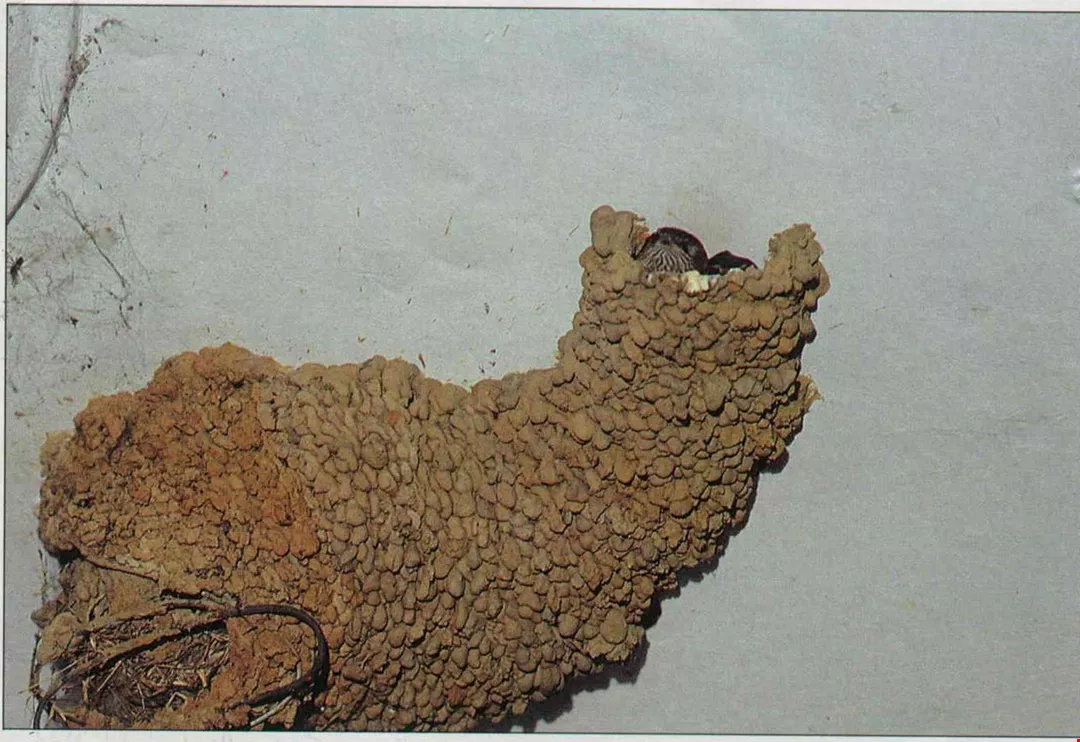
The barn swallow, which is frequently mentioned in traditional Chinese poetry, uses mud to build its nest in a human environment, but their nests can't be eaten. The swiftlet, on the other hand, builds its nest with its own saliva far up on cliff sides; though it is too far off for us to see, it has become a delicacy for human consumption.
A serving of heartlessness
The most popular nests for eating are contributed by four varieties of swiftlets living in seaside cliffs and caves throughout the countries of Indonesia, Thailand, Malaysia, and Vietnam. Some scholars believe that other varieties of swifts make edible nests, but these are largely ignored, because they are too few in number.
Swiftlets in different places have their reproductive seasons at different times, but all of them, before giving birth to their young, will move their heads back and forth rapidly and expectorate stream after stream of sticky, rubbery secretion on the rocks to build their nests. In this process, the adult birds neither sleep nor eat, and they only complete their work after moving their heads continuously tens of thousands of times.
If the nest is taken away, the adult swiftlet will persevere and build a second and third one. Because of the added expenditure of effort and calories, however, the female's productivity is lowered, and the number of eggs laid will not compare to the number that would have been laid in the first nest. By the end, exhausted adult birds with inadequate nutrition can only use natural hollows in the cliff to make up haphazard nooks, and the eggs or the chicks often fall down the cliff and are smashed to bits.
No wonder sympathetic observers consider that each bowl of cold and sweet bird's-nest soup is one serving of heartlessness.
Why are Chinese so enamored of swiftlet saliva? In fact, though Chinese medicine goes back over 2000 years, it was only at the end of the Ming dynasty and the beginning of the Ching (the mid 17th century) that people began to widely come to the conclusion that the nests have nutritional value. At that time the four great tonic foods were said to be "ginseng, downy antlers, swiftlet, and cinnamon."
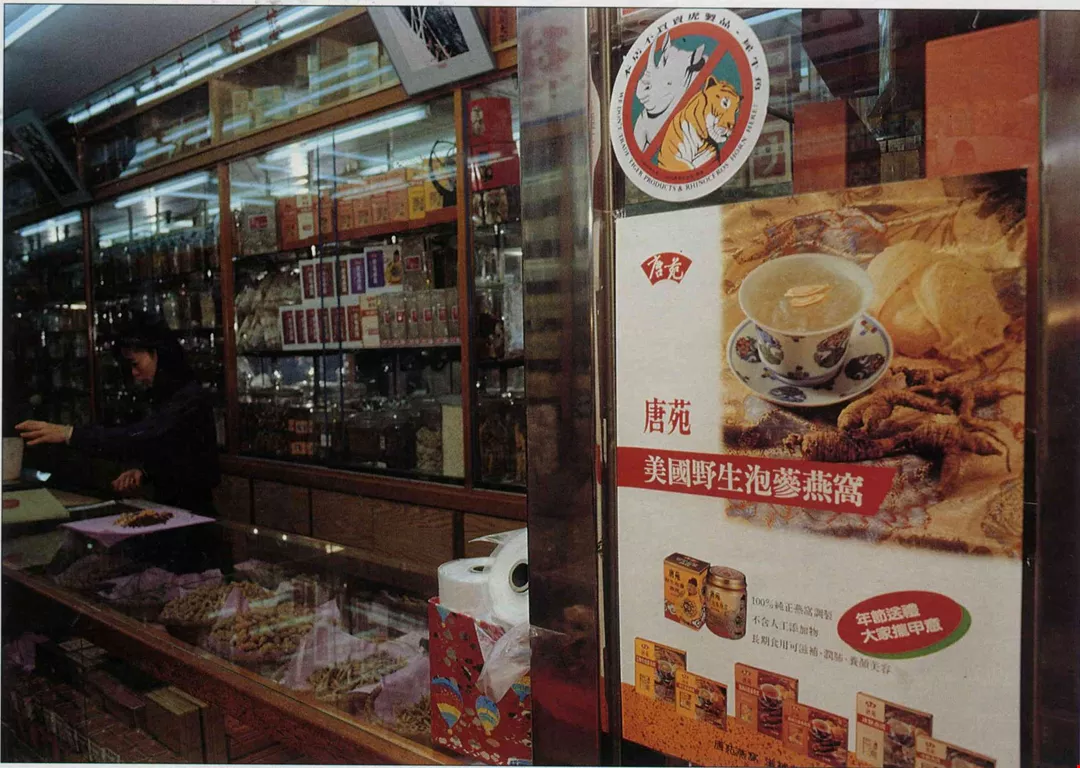
"We don't trade tiger products & rhinoceros horn here!" Will law-abiding Chinese medicine shops have further problems because they sell swiftlets' nests?
The solution to pollution?
The Sui Yuan Shih Tan (a work on edible substances, dating from the Ching dynasty) records: "Swallow's nest is a valuable item, not to be used carelessly." In former times people did not consume the nests the way we do today; even nobles and high officials did not eat them very often. During the Kuang Hsu reign at the end of the Ching dynasty, the Empress Dowager Tsu Hsi dined on thirty different dishes for breakfast, of which seven included bird's nest. But the actual consumption by the imperial household was limited, and was indeed mostly intended to demonstrate status by having this dish that few others could afford.
As for the curative powers of swiftlet's nest, in the work Pen Tsao Feng Yuan, a book on medicine also dating from the Ching dynasty, swiftlet nest is listed as the most tractable and versatile of foods. Although the words "slightly sweet, nourishes the lungs, stops colds, is tonic and clears up the chest" imply that the taste is not very outstanding, they suggest it is very beneficial for the respiratory system. Also, during the Ching dynasty swiftlet's nest was seen as a natural health food and beauty aid.
In the Ching dynasty classic Dream of the Red Chamber, heroine Lin Tai-yu has a weak constitution, suffering from coughing and asthma. In Chapter 45 of the book, Hsueh Pao-chai comes to visit and suggests that Tai-yu take a high-quality nest each day upon arising, add half a tael of rockcandy, and cook it into a broth; after getting used to it, it turns out to be more effective than medicine. When Chia Pao-yu found out that Tai-yu ate swiftlet's nest daily, he told his mother and she sent her maid to deliver one each day. Bird's nest and ginseng are the two most frequently depicted tonic foods in Dream of the Red Chamber; though Tai-yu consumed the most, others ate swiftlet nest as well, for health or for beauty.
Even today, some people still buy bird's nest to improve their respiratory organs or to enhance their beauty. The Huang Chang Sheng medicine shop on Tihua Street in Taipei reveals that among those who buy the nests are factory workers who inhale dust and particles all day. Also, given the current seriousness of air pollution, many children have respiratory problems. But it is hard to improve the air quality; how much easier it is to munch down a swiftlet's nest. Many pants spare no expense to buy birds' nests for their children.
Unable to cure Lin Tai-yu
The problem is, can eating swiftlet saliva really improve one's constitution, make one more beautiful, or extend one's life?
The main ingredient in swiftlet's nest is protein, accounting for more than 90%. As far as bio-nutritionists are concerned, there are many sources of protein, so why do people have to eat bird's nest? Moreover, other scholars indicate that the protein in swiftlet nest is one which cannot be broken down by the human digestive system, so that it has no real nutritional value to speak of for human beings.
As for whether it has some medicinal value, Kong Yuncheung, a professor of biochemistry at the Chinese University of Hongkong, has made a startling discovery: He suggests that swiftlet's nest includes something which can prevent or cure AIDS. "But the active ingredient in the nest is very minuscule, and it is difficult to extract. Only when the active ingredient is more clearly identified and synthesized will there be any possibility of having an impact on the disease. It is still too early to talk about this step," he says.
It is also noted in classic texts: "It is useful in the early stages of an illness, but when symptoms worsen, it is of no use, because it is too gentle and lacks strength." In other words, eating swiftlet's nest is like improving the air quality; it can only be of gradual value, and has no short-term impact. Therefore, for people who can only eat a few bits of food at a time, it is even less worthwhile to consume bird's nest. Local nutritionists occasionally advise that it is not nearly as useful as eating inexpensive Tremella fuciformis, an edible fungus, which, according to traditional medical texts, has the same effect as bird's nest.
Made with blood?
Swiftlet nest doesn't have nearly the miraculous curative powers many claim for it, and in fact people today have many misunderstandings about it.
In the marketplace, people distinguish quality (and therefore price) by looking at the color, or the amount of feathers and other odd bits in the nest. Those in the know say that the first nests built by swiftlets are the highest quality, and they call these "official nests." A second kind of nest, which is believed to be the second nest built by a swiftlet and therefore supposedly having less saliva and more feathers and plant bits, is commonly called a "feather nest." It has the lowest price. There is a third type of nest, said to be the third nest built by a swiftlet. Some people say that because by that time the swiftlet has too little saliva, it must expectorate blood to complete the nest, and in the marketplace this "blood nest" is seen as the highest form of swiftlet's nest.
But according to ecologists, in fact the official nests, feather nests and blood nests are made by three different types of swiftlet. Of these, the nest of the Collocalia fuciphaga is made almost entirely with saliva. The nest of the Collocalia maxima includes about 10% feathers. And the "blood nest" made by the Collocalia vestita is in fact different because of different materials and because the environment in which it is found has higher concentration of copper oxide. The Chinese superstition that the more unusual something is the more tonic it must be has driven up the price of "blood nests" beyond all reason; it has even led to the rise of an industry which dyes white nests red, and it is the businessmen who really end up having the sweetest deal.
Perhaps the story that these nests are made with blood derives from well-intentioned nature lovers, in hopes that they might win a little sympathy for the birds. Or maybe it's a reflection of how people would feel if their hand-built home had been stolen twice without a trace so that they had to build it yet a third time. Whatever the reason, though the blood nest is a complete fiction, the effort required for a swiftlet to build any nest is still prodigious.
Born of necessity
But why would the swiftlet choose to build its nest in such a masochistic way? In fact, most birds simply collect some materials from the surrounding area, and don't use saliva at all. But the swiftlet is a member of the Apodidae family of birds. There are more than 90 species of Apodidae around the world, and the special feature which unites them is that they all use saliva mixed with feathers and plant matter to build nests.
The swiftlet differs from the barn swallow of traditional Chinese poetry that one sees flying around carved pillars or people's homes. The barn swallow is more at ease around human beings; it enjoys coming to the ground to scrounge for mud, then flies back up to the eaves or rafters of a house to build its nest. Swifts, on the other hand, almost never touch the ground for their entire lives. From the time they first open their eyes they know how to fly and, except for resting or reproducing in the nest, they spend all their time playing, courting, mating, and catching bugs for meals in the air.
Since swiftlets spend their lives airborne, they make their nests hundreds of feet above ground in cliffsides. Some swiftlets have sonar to guide them, like bats, and can fly several miles into dark caves to produce the next generation. Chiang Ming-liang of the Wild Bird Society of the ROC explains that, living as they do high in the air, where there are no materials for nests, the swiftlets must build their nests on cliffsides, and thus use their own sticky saliva to bind together plant matter that has been blown up into the air by the wind, or some of their own feathers, to make a nest. But for the swiftlets living along the coasts and islands of Southeast Asia, because there are even fewer materials blown into the air from below, their job is even harder, and they must secrete even more saliva. It's because of the fact that the saliva content in the nests is so high that these birds have had the misfortune to have the Chinese see their nests as an especially tonic food.
The reason swiftlets keep their distance from life on the ground is for safety. Little could they know that no matter how high they go, this little extra bit of saliva would threaten their very existence.
Eating birds out of house and home
Some people believe that China originally also had swiftlets' nests, but that these were completely consumed by previous generations. The text Min Hsiao Chi (Notes on Fujian) from the Ming dynasty describes the swiftlet's nest as a delicacy found on islands along the coast of Fujian and Guangdong provinces, collected by fishermen and sold inland. But today there are only a very few swiftlets along the Fujian-Guangdong coast. Professor Kong Yun-cheung relates that he saw swiftlets' nests in Zao-qing in Guangdong, and suggested to local officials that they should carefully protect them, and even wrote an article about it in a mainland publication. But upon returning for another visit he found they had all been taken away, and there was no trace of the swiftlets.
In fact, historically only a very limited number of people had the means to eat delicacies, and most ordinary people just stuffed their bellies with whatever they could find. Few people could, like Lin Tai-yu, sit around every day taking bird's-nest soup. But things have changed with the rise of capitalism in the twentieth century, and more and more "average people" can afford to dine on swiftlet's nest.
Ten years ago, when the Sun Tung Lok Shark's Fin Restaurant of Hong Kong opened a branch in Taipei, it sold less than ten orders of bird's-nest soup per month. Today, with each cauldron of soup going for over US$35 a shot, "in just one day we sell many times more orders than we sold in a whole month back then," says Ho Ying Kam of Sun Tung Lok. "It's fast becoming a mass consumption product," says the Huang Chang Sheng medicine shop. Compared to a group serving of bird's nest soup at a restaurant which can cost over NT$10,000 (about US$400), one chin of swiftlet's nest costs NT$40,000, which is enough to make a bowl of bird's nest soup each day for three months. Therefore there are plenty of customers and no fear that business will dry up. Many food processing companies have been moved by the recent competition to invest in development of canned bird's nest soup.
According to a report by TRAFFIC International, which monitors trade in flora and fauna, the nest collecting industry was not very large in Southeast Asia in the 1930s. But by the end of the 1980s social and economic standards had become quite high in Hong Kong, Taiwan, and Japan, and demand for birds' nests soared. The struggle to get the product led not only to inflated prices, but also to intensification of destruction. Eric Valli, a French photographer who spent more than a year at Rimau (Tiger) Cave in Thailand recording the nest-collecting situation, frequently saw great numbers of chicks and eggs discarded like garbage in a pile, covered with crawling cockroaches.
Supply on demand
The TRAFFIC report also pointed out that long-term studies by ecologists have discovered that over the last twenty years, in Thailand, Burma, and Sarawak in Malaysia (the greatest swiftlet nest producing area in the world), the number of two types of swiftlet nests has dropped by about 40% due to excessive collection and theft.
This is not the only reason for the dramatic fall in the number of swiftlets. Mining in caves, destruction of the rain forests, and collection of guano have also disturbed the birds' habitat; all of these have been a blow to the existence of the swiftlet. "But undoubtedly, the greatest direct threat to the swiftlet is the gathering of nests," concludes the report.
Because swiftlet nests are mainly found in nations that are chronically short of foreign currency, it is difficult to control the scavenging of the nests. In Thailand, where the government has the right of ownership of all the nests, they are seen as an important export product, and businessmen are subcontracted to collect them.
In 1989, the Malaysian government announced a complete ban on gathering of nests in Sarawak in hopes that the number of swiftlets would return to their former level. But demand for nests has continued to rise, and the price went from M$140 per kilo in 1987 to M$4000 in 1991, leading to constant illegal scavenging. Since efforts to protect the birds had little effect, the only thing was to lift the ban after three years.
Eating 7000 insects per day!
The place of the swiftlet in the food chain is by no means to provide nests for consumption by a "higher" life form--human beings. Hsieh Ching-huang, a middle school teacher from Puli and a founder of the Wild Bird Society of the ROC, points out that the mouth of the swiftlet is short and broad, so it is an expert at scooping up insects; it must eat more than half its body weight in bugs every day. Calculated at a rate of 1400 insects per gram, a 10-gram swiftlet must eat 7000 insects a day; over the course of a lifetime, the figure becomes astronomical. This is very beneficial for maintaining the ecological balance. A decrease in the number of swiftlets means an increase in the number of insects, with a consequent need to increase pesticide use, leading to damage to the entire local environment.
"It will be impossible to maintain swiftlet flocks under the current unmanaged system of nest gathering," says the World Wide Fund for Nature (WWF). Recently it published the latest report on international trade in swiftlet nests, and is preparing to propose at its meeting in Florida this November that the swiftlet be listed as a Class 2 endangered species and be protected. Further, following along the same pattern as for rhino horns and elephant ivory, conservation organizations may ask the wealthier consuming nations to restrict imports. Environmentalists feel that swiftlets' nests are not typical medical products, and that there is even less reason to come with excuses for importing them if one is criticized.
The sequel to rhino horns?
However, some in the food industry argue that, from a cultural point of view, European and American conservationists are always ready to call for trade boycotts of others, but have no respect for the significance and origins of the culinary habits of other cultures. "If you want to criticize the fact that Chinese put too much emphasis on showing off their wealth, that I could accept. But if for this reason you say that Chinese are cruel and will eat anything they can get their hands on, that's not fair," says Humphrey Wen, marketing director for Cerebos (Taiwan) Ltd. If swiftlet nests are properly controlled, there is no reason to ban people from eating them altogether.
In fact, WWF plans to list the swiftlet nest as a Class 2 protected item, and not as a Class l item (which is to say one in urgent need of protection). They simply want to have appropriate management of nest collection in order to achieve the goal of sustainable use.
For swiftlet nests, the main focus of conservationists is on the inappropriate way in which the nests are gathered. Thus there are many scholars studying the best way to collect the nests, in order to propose alternative strategies. But any change in how the nests are collected that is likely to reduce total intake is not likely to be accepted by the financially-strapped nest producing countries, so there are many obstacles to promoting new policies. At the same time the WWF is asking people to reduce consumption so that the nest-gathering industry will slow down in response to the drop in demand. Only then will the swiftlet get a chance to catch its breath.
From a humanitarian point of view, previous generations of Chinese said, "Even the rat and wren take only what they need to fill their bellies." Today, people have no trouble filling their stomachs, and in fact often eat too much. Is it really necessary to keep this dish on our already varied menus?
Otherwise, given the enormous current appetite for these nests, there can only be two possible outcomes: The swiftlet will disappear, or the birds nest will replace the rhino horn as a new nightmare for Taiwan.
[Picture Caption]
p.84
Who eats bird's--nest? Swiftlet nest is now widely accessible and is no longer the preserve of high officials; many restaurants are today serving ten or twenty times as many nests as they did a decade ago. (photo by Vincent Chang)
p.87
In the market, the swiftlet nests are divided into three levels of quality, including one allegedly made with swiftlet blood; in fact, the three types are made by three different types of swiftlet.
p.88
The barn swallow, which is frequently mentioned in traditional Chinese poetry, uses mud to build its nest in a human environment, but their nests can't be eaten. The swiftlet, on the other hand, builds its nest with its own saliva far up on cliff sides; though it is too far off for us to see, it has become a delicacy for human consumption.
p.91
"We don't trade tiger products & rhinoceros horn here!" Will law-abiding Chinese medicine shops have further problems because they sell swiftlets' nests?

@List.jpg?w=522&h=410&mode=crop&format=webp&quality=80)
@List.jpg?w=522&h=410&mode=crop&format=webp&quality=80)


