A Tranquil Alternative to New Year’s Noise
Sam Ju / photos Chuang Kung-ju / tr. by Phil Newell
February 2014


Noise and bustle should not be the only soundtrack to the Chinese New Year, and celebrating doesn’t necessarily mean frivolity. Most people spend the extended Lunar New Year holiday watching TV, catching up on sleep, shopping, or traveling abroad on tours whose itineraries are all too packed. Is that really all there is to do?
In brief, no! There is another choice.
What can we filter out of the preceding year? What should we aspire to in the forthcoming year? Some people elect to go to temples or monasteries where, in a religious atmosphere, they can embark on an internal dialogue and look back without distraction on the past year—their emotional ups and downs, their gains and losses in life. It is an opportunity to find balance and tranquility, as well as the energy and determination to start the new year afresh. As a case in point, let’s take a look at some of the activities organized by the Dharma Drum Mountain Buddhist organization....
Let’s start at the plaza outside Taipei City Hall as midnight of December 31 approaches: Five, four, three, two, one, “Happy New Year!!!”
In the first second of 2014, the 24,000 pyrotechnic devices on the Taipei 101 skyscraper simultaneously explode into action, beginning a four-minute light and sound extravaganza that breaks all previous records. The Taipei City Government estimates that more than 2 million people are present, equivalent to about 80% of the city’s resident population.
At the same time, ten kilometers or so away, in the Dharma Drum Mountain Nung Chan Monastery, located on the road heading out from downtown Taipei to the mountain district of Beitou, a very different kind of event is being held. The ambience in the monastery is very quiet; in the background you can vaguely hear the sound of a light breeze wafting through the trees.
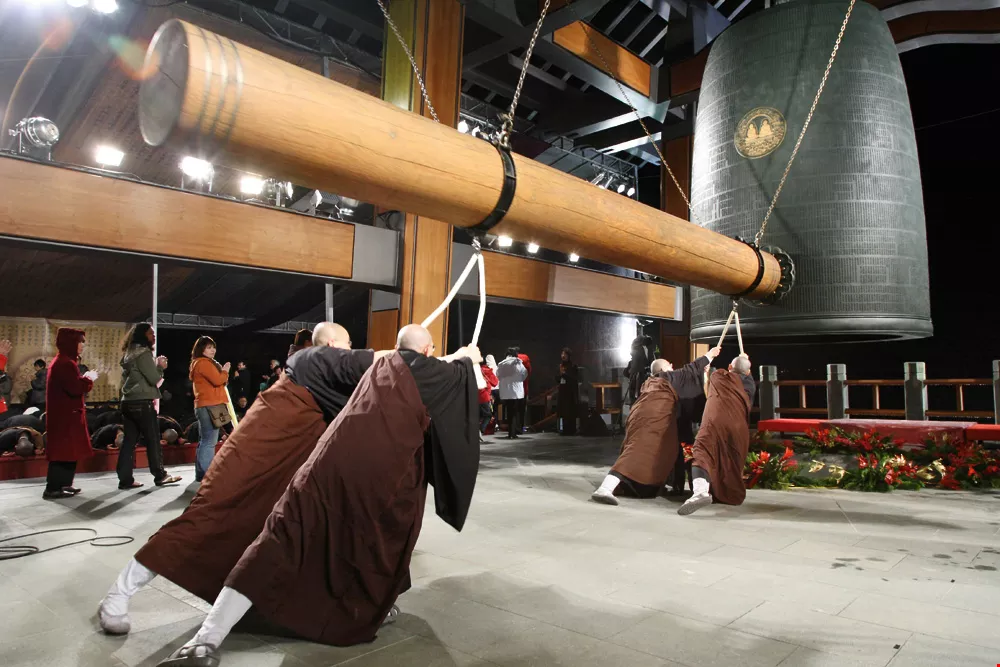
The ringing of the ghanta (temple bell) at Dharma Drum Mountain’s World Center for Buddhist Education is the most popular religious activity to mark the Lunar New Year. Each of the 108 tones of the “Lotus Bell” cleanses the mind of past vexations to pave the way for the future.
When the moment comes to say goodbye to 2013, the monastery is filled with the simple sound of the striking of a daqing (singing bowl). Each of the seven strokes reverberates for half a minute. The refined timbre of the sound flows into the boundless night sky, like ripples caressing the shore, bringing tranquility to the minds of all present.
After the sounds fade away, a chant of “Amitabha” (one of the names of the Buddha) arises. The sound of the voices of the 1700 people attending the New Year’s Eve Buddhist assembly rises and falls in waves.
“There’s nothing wrong with noisy festivities on New Year’s Eve; they give young people a chance to get together and have some fun. But we also thought that there must be other people out there who wanted to celebrate the incoming year in some other way,” says Nung Chan Monastery prioress Guo Yi, explaining what lay behind the idea to have their New Year’s Buddhist assembly.
She relates that these “other people” include both devout Buddhists as well as non-Buddhists who are simply looking for a quiet way to greet the new year. In both cases, they celebrate New Year’s Eve in a mood of thanksgiving, peace of mind, and best wishes for others, regardless of faith. She adds that it is quite common in Japan and other lands for non-Buddhists to go to temples and monasteries on January 1.
As the gathered participants sit tranquilly on futons, repeatedly chanting “Amitabha” in low, earnest tones, Guo Yi explains that the name of the Buddha represents countless prayers and limitless enlightenment. The process of chanting is a way of expressing goodwill toward all living things and the hope for one’s own well-being.
The chanting is followed by paying respects to the Buddha, a ritual “circuit” conducted by a statue representing the Buddha, and a lecture by Dharma Drum abbot Guo Dong.
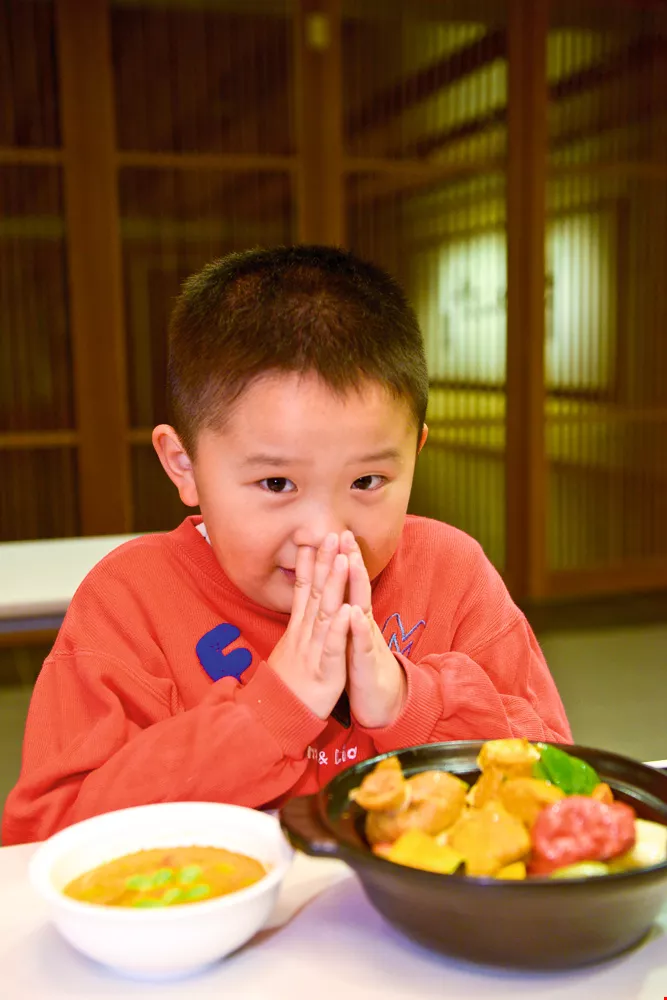
The Nung Chan Monastery designs creative vegetarian menus for the Lunar New Year holiday, and invites ordinary people to participate in preparing the food. Visitors to the monastery at this time of year can enjoy meals made with an unusual ingredient: dana, the Buddhist practice of giving.
In the Chinese tradition, “New Year’s Day” refers to the first day of the first month under the lunar calendar, preparation for which begins as early as the Winter Solstice. January 1 is merely the first day of the year under the Gregorian calendar, whose official use began in China only in the early 20th century. Since the Lunar New Year falls in late January or February, January 1 is, to traditionalists, nothing more than a reminder that the real annus novus is just around the corner.
Following this logic, January 1 is a signal for Nung Chan Monastery to start preparations for the influx of visitors expected during the Lunar New Year.
Guo Yi says that when Dharma Drum Mountain founder Master Sheng Yen was alive, he exhorted his successors to ensure that when people visited the monastery, they would find good food, would have a good time, and would find the monastery aesthetically appealing. Therefore, New Year’s food can’t be merely passable. To this end, the monks, nuns, and chefs at the monastery have devised three creative vegetarian menus for the food to be served on the first three days of the Lunar New Year.
Nung Chan allows ordinary people to be part of the process as well, inviting volunteers to come to help prepare foods, especially things that need labor-intensive wrapping up, like vegetarian dumplings and vegetable boxes. This spreads the opportunity for sharing in the meritorious act of dana, the Buddhist practice of giving.
Guo Yi states that modern people already enjoy sumptuous food in daily life, so when they come to the monastery, they are not looking for haute cuisine, but for a spiritual experience, something that will enhance their sense of well-being. From the point of view of the monastery and the volunteers, meanwhile, the important thing is the Buddhist concept of the “Threefold Wheel” comprised of donor, acceptor, and gift. All three are necessary to share in the meritorious act of dana.
Besides preparing food for the Lunar New Year period, Nung Chan also organizes a series of family activities for kids. This being the Year of the Horse, they will offer classes making jigsaw puzzles, origami, and DIY greeting cards with equine themes.
The Nung Chan Monastery Dharma Center was constructed based on the idea of “the moon in the water and flowers in the sky” that Master Sheng Yen, Dharma Drum’s late founder, envisioned while doing Chan (Zen) meditation. Its design last year received a Taiwan Architecture Award, and it has become a well-known scenic destination, with hundreds of visitors per day coming to experience the beauty of the temple’s architecture and the Zen mindset it reflects.
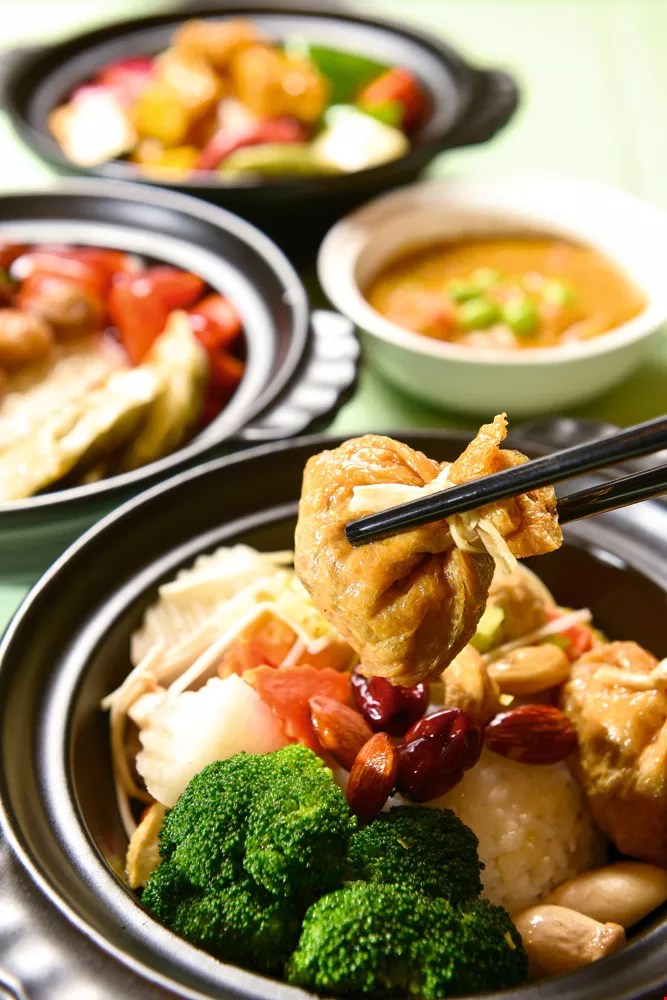
The Nung Chan Monastery designs creative vegetarian menus for the Lunar New Year holiday, and invites ordinary people to participate in preparing the food. Visitors to the monastery at this time of year can enjoy meals made with an unusual ingredient: dana, the Buddhist practice of giving.
The most important of Dharma Drum Mountain’s Lunar New Year activities has to be considered the New Year’s Eve bell ringing ceremony at the organization’s World Center for Buddhist Education; the event is now entering its eighth year.
The Center’s ghanta (temple bell) is called the “Lotus Bell,” because the Lotus Sutra, one of the most important of Buddhist texts, is cast in relief on the bronze bell, as is the Great Compassion Mantra (more than 70,000 Chinese characters in all!). This impressive ghanta has a weight of 25 metric tons and height of 4.5 meters, and it requires four to six people to swing the striker. Each strike produces a deep, rich tone that reverberates for one and three quarter minutes, extending through space and time like an echo across a valley, symbolizing Dharma Drum Mountain’s mission to spread Buddhist philosophy and doctrine.
Master Sheng Yen said, “To hear one ring of the Lotus Bell is equivalent to one reading of the Lotus Sutra.” On New Year’s Eve the ghanta is struck 108 times, each stroke representing one of the 108 worldly desires (sometimes called “defilements” or “impure thoughts”) that cause people to suffer spiritual confusion. Each sounding of the bell—whose tone is solemn, reassuring, and calming—symbolizes the uprooting of one of these inner vexations, and the displacement of the old to pave the way for the new. What a joyous way to ring in the New Year!
For this year’s event, the organization has also specially made wooden hanging ornaments in the shape of the Lotus Bell Tower, inscribed with auspicious four-character idioms for the New Year, so visitors can depart with a physical reminder of their shared spiritual experience.
For the whole period of the Lunar New Year, beginning right from the first day of the first month on the lunar calendar, Dharma Drum Mountain will hold lectures on Buddhist philosophy, lantern lighting events, or offerings to the Buddha, at their various temples, monasteries, and Buddhist studies venues all around Taiwan. At overseas locations, such as the Chan Meditation Center in New York, they will likewise organize lectures by Buddhist masters and other Lunar New Year activities of a spiritual nature.
Regardless of whether you observe January 1 or the first day of the lunar year as the start of another trip around the sun for our planet, what matters is that the old is passing to make way for the new.
The extended Lunar New Year holiday in Taiwan is a transitional period between old and new. After another busy year, you get a little breathing space and the chance to get yourself reorganized and refocused. Even more importantly, you get the chance to do an accounting of the past year, and to reflect on what has gone right and what has gone wrong for you, in life and in work, over that time.
It seems like in the past few years more and more people have been choosing to attend tranquil, reflective New Year’s activities like those organized by Dharma Drum Mountain. Even if you plan to “party hardy” during the holiday, there would be no harm in taking a few hours to visit a temple or monastery. There is every likelihood that you will come away with a special feeling that not only are you laying the spiritual foundations for a new year, you are also laying the spiritual foundations for a new you.

Seventeen hundred people attended the 2014 Buddhist assembly at the Dharma Drum Mountain Nung Chan Monastery, passing New Year’s Eve in an atmosphere of gratitude and tranquility. The assembly included chanting, paying respects to the Buddha, and a ritualistic “circuit” by a statue representing the Buddha.

@List.jpg?w=522&h=410&mode=crop&format=webp&quality=80)

@List.jpg?w=522&h=410&mode=crop&format=webp&quality=80)


