Eslite Comes to Songshan Cultural and Creative Park
Sam Ju / photos Jimmy Lin / tr. by Scott Williams
October 2013


The opening of an Eslite store at Taipei’s Songshan Cultural and Creative Park was the event of the summer, one which joined Taiwan’s most iconic creative-cultural brand with Taipei’s largest municipal historic site.
When new and old rub shoulders like this, what fires might they kindle?
The Eslite group raised the curtain on its Spectrum Songyan Store in the Songshan Cultural and Creative Park on August 15. More than 100,000 people poured through its doors during its first three days in business, drawing the city’s usual circulation northward from the Taipei 101–Vieshow Cinema area to Civic Boulevard and the Taipei New Horizon building.
Designed by Japanese architect Toyo Ito, the slightly curved Taipei New Horizon towers 14 stories above its surroundings. Eslite has gone all in at the location, opening its first movie theater and dedicated performance space in addition to its more usual bookstore and “fashion market.”
As both a brand and a lifestyle, Eslite is an expert at shaping cultural venues. In contrast, the Songshan park began life 76 years ago as a tobacco factory and has only recently transformed into a design and exhibition hub. As such, the park would be well served by considering how to turn Eslite’s arrival in the neighborhood into a win-win for itself and the store.
Eslite’s new Songshan branch also has the potential to provide something to Taipei itself. The city is a candidate for the World Design Capital 2016 designation, and the store’s arrival in the park will provide the world with a concrete example of Taipei’s transformation.
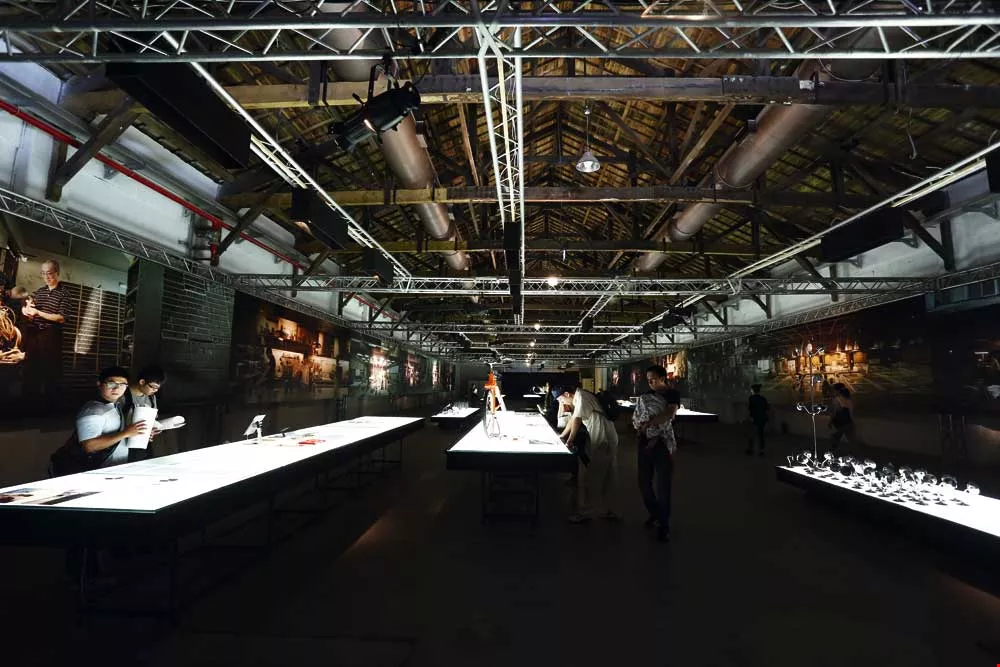
The former tobacco factory’s manufacturing facilities have been turned into exhibition halls. Among them is the Red Dot Museum Taipei (lower right), which is just the third Red Dot museum in the world.
The Taipei New Horizon building stands on the northeast side of the Songshan park in an area just outside the “historic site” that was once home to government warehouses.
The park itself occupies what was once the Songshan Tobacco Factory. The Japanese authorities built the factory, their first overseas tobacco rolling facility, in 1937. It was taken over by the Taiwan Provincial Monopoly Bureau (which later became the Taiwan Tobacco and Wine Monopoly Bureau) after Taiwan’s retrocession and eventually shuttered in 1998.
The site originally consisted of 18 hectares in a prosperous and easily accessible part of eastern Taipei, and was long viewed as a prime spot for a large, multipurpose indoor sporting arena.
But its Japanese-era factory buildings and mix of human and natural ecosystems made it a focus of intense debate between conservationists and developers.
In 2001, the Taipei City Department of Cultural Affairs (DOCA) decided to preserve the administrative building, factory proper, boiler room and five warehouses by designating them the city’s 99th municipal historic site. This move effectively divided the Songshan Tobacco Factory site into two parts.
Ten hectares of the site along Guangfu South Road were zoned for the construction of the Taipei Dome, and the remaining eight hectares, including the historic buildings, for a cultural park.
The DOCA then spent three years and NT$600 million renovating the old buildings to bring them into line with their original blueprints. It also removed ten warehouses that had not been part of the original Japanese-era complex, and began seeking businesses interested in utilizing the cleared space on a build-operate-transfer (BOT) basis.
Fubon Land and Taiwan Mobile responded by forming the Taipei New Horizon Co. in 2010. After acquiring the BOT rights to the site, the new company invested NT$8.6 billion in the construction of the Taipei New Horizon building.
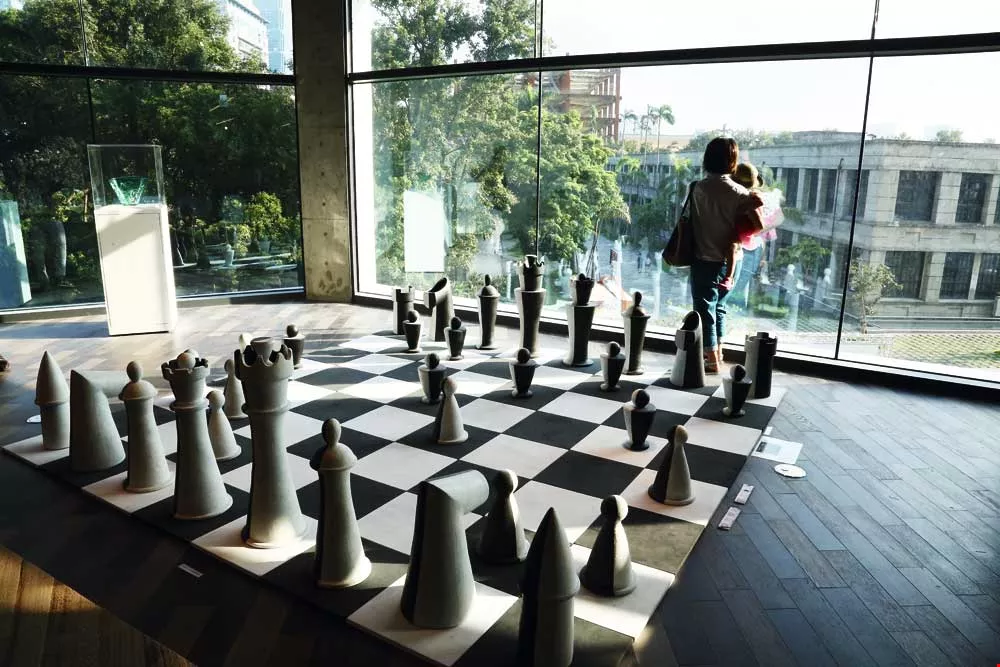
Eslite has built a trendy space at its Spectrum Songyan Store, one that incorporates exhibitions, dining, handicrafts, fashion shops and a bookstore.
Mercy Wu, daughter of Eslite president Robert Wu, has been leading a rapid expansion of Eslite Spectrum, an Eslite subsidiary. The company deployed a hybrid operational model on its four floors of the Taipei New Horizon building, one that combines a bookshop with a cultural-creative shop, a handicrafts workshop, and dining outlets that include a branch of world baking champion Wu Pao-chun’s bakery chain.
Considering that the company also plans to open a hotel in the building at the end of the year, it’s no wonder that Mercy Wu refers to the Spectrum Songyan Store as a “modern cultural and creative factory,” a “cultural and creative performance venue,” and a “cultural and creative tourism destination.”
Though the Taipei New Horizon building is far smaller than the park (it occupies just 1.2 hectares), it is doing much to increase the latter’s popularity. And while the historic site itself focuses primarily on exhibitions and study, it’s doing its bit to help the design industry put down deeper roots.
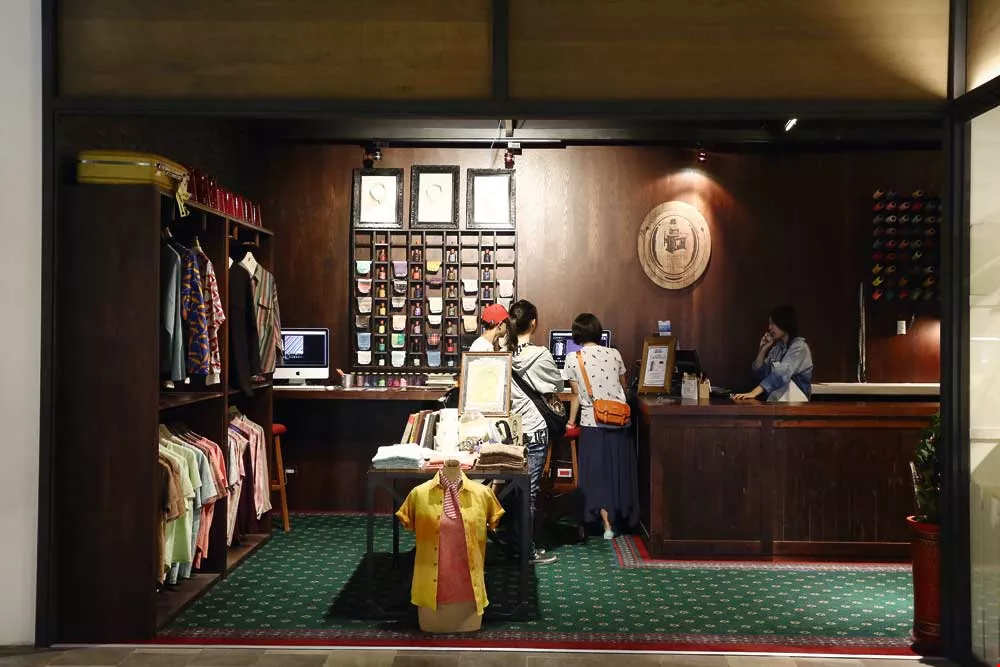
Eslite has built a trendy space at its Spectrum Songyan Store, one that incorporates exhibitions, dining, handicrafts, fashion shops and a bookstore.
The bulk of the Songshan Tobacco Factory historic site consists of a west-facing administrative building and three factory buildings. Two stories tall, they form a quadrangle surrounding a Baroque garden. As constructed by the Japanese, the facility included everything its workers would need to manage their daily lives, from a canteen and baths to a clinic, daycare facilities, and a pharmacy. Built on the notion of the “industrial village,” it was a virtual city within a city.
Jimmy Wu, a section chief with the Taipei DOCA, says that although the facility dates to the Japanese era, it remains remarkably sound. He notes that during the renovation work, you could even smell the hinoki wood used for the windowsills. The Taiwan Design Center (TDC) moved in after renovations were completed in 2011, and has been using the space as a base from which to incubate, develop and guide Taiwan’s design industry.
As part of its effort to make the park a venue for classes, education, exhibitions and creative/cultural exchanges, the DOCA has created the No. 133 Cooperative, a mechanism which permits design-related groups and professional organizations to utilize space free of charge provided they offer regular exhibitions.
Songshan’s strategy is to attract businesses by cultivating a “creative atmosphere.” The approach seems to be working. Encouraged by the TDC, iF and Red Dot, two of the world’s most renowned design organizations, have already established offices here.
The former tobacco factory’s manufacturing facilities have been turned into exhibition halls. Among them is the Red Dot Museum Taipei (lower right), which is just the third Red Dot museum in the world.
The opening of the Red Dot Design Museum Taipei on August 30 was yet another feather in the park’s cap. It makes Taipei just the third city in the world (with Essen and Singapore) to host a Red Dot museum.
While in Taiwan for the ribbon-cutting ceremony, Peter Zec, Red Dot’s president, announced that Red Dot would also be opening a Taipei branch of the company at Songshan, sharing office space with TDC.
Taiwanese design teams have done very well at the Red Dot awards in recent years. In fact, Taiwanese designs competing among more than 6,800 designs from 49 nations came away with four “best of the best” and 42 “red dot” awards in this year’s competition.
“I’ve been even more impressed with Taipei’s design culture and its increasing acceptance of design,” says Zec.
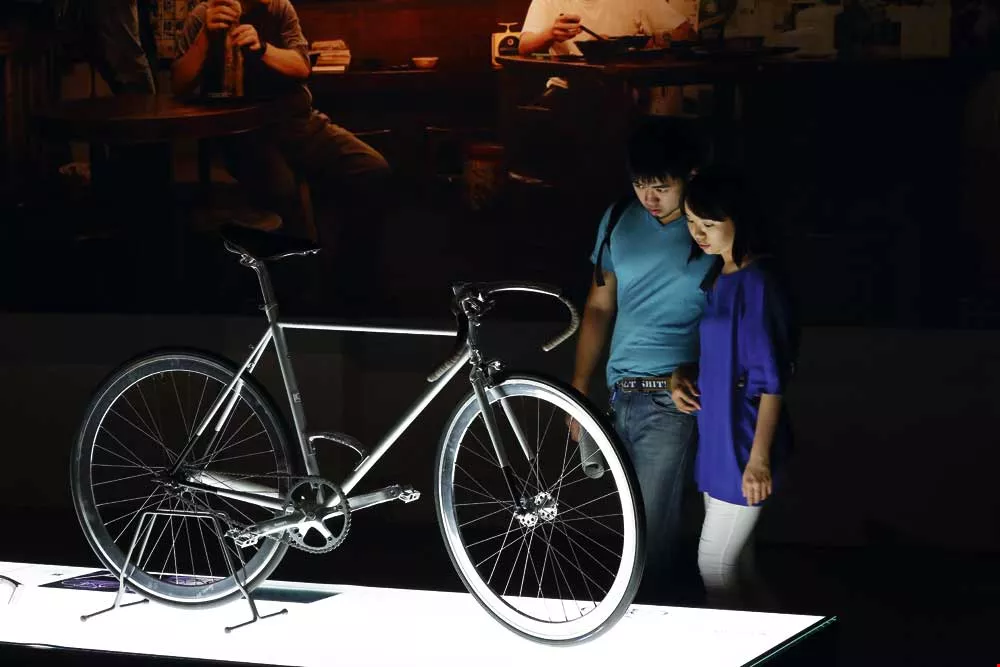
Although the Red Dot Museum Taipei isn’t especially large and is just one of the park’s exhibition spaces, Zec nonetheless expects it to be influential. He cites the “Every Product Tells a Story” and “Style Your Life” exhibitions that accompanied the opening as examples, noting that they enabled the Taiwanese public to see award-winning designs at first hand without leaving the country.
For its part, iF opened a Taipei office in 2007 and moved into Songshan at the start of this year. The new office, which oversees its Greater China region awards competition and handles the commercialization of award-winning products, is intended to serve as a portal linking Taipei with global design.
Sean Lee, iF’s director for the Greater China region, was previously employed by the Taiwan External Trade Development Council (TAITRA). He argues that Taipei is the best place in Taiwan in terms of the acceptance of designed cultural and creative products, and the number and quality of design-related events, as well as for design education. Taipei designers have also done incredibly well in international design competitions. National Taiwan University of Science and Technology is a case in point, having been at the top of iF’s university rankings for many years.
But the “Eslite-ization” of Songshan isn’t necessarily a good thing. Says Lee: “If the focus remains on business and profits, this space is ultimately going to be completely dominated by high-end brands, events, and restaurants.”
The challenge for the park is finding a way to use Eslite’s arrival to enhance the city’s design capabilities.
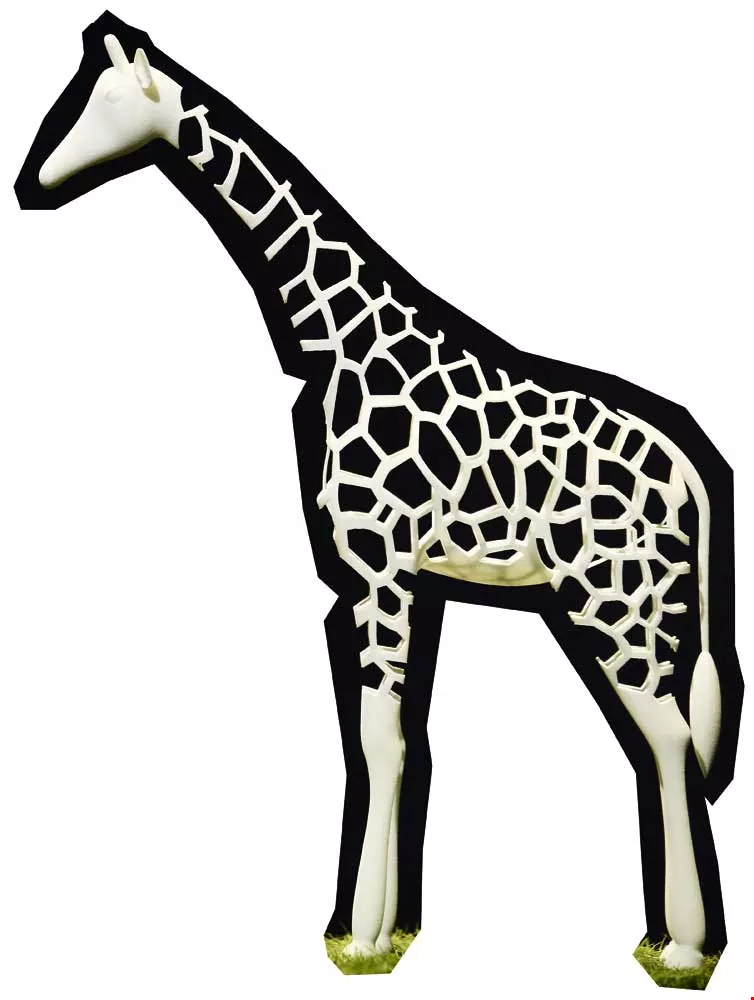
The Songshan Tobacco Factory historic site frequently hosts design exhibitions. The photo shows iF-award-winning designer Kevin Chou’s “Giraffe in the City” on display at the park’s ongoing 3D printing design exhibition.
The Taipei DOCA is hoping that the Songshan Eslite will function as a showcase, exhibiting and selling work produced by the No. 133 Cooperative, and encouraging the creation of new designs.
Lin Rungtai, president of the TDC and dean of the College of Design at the National Taiwan University of Arts, takes a different view, hoping instead that Eslite’s arrival will make Songshan more of a venue for bringing “moving experiences” to the public. Lin sees this as the only way to lay the groundwork for the design and production of products with a feeling of quality and create a space for their consumption.
Can the crowds that Eslite will bring to Songshan drive Taipei’s design trend even further? How do we transform a defunct industrial site into a cultural and creative showpiece? Eslite’s real challenge will begin once the initial fervor surrounding its opening has waned.
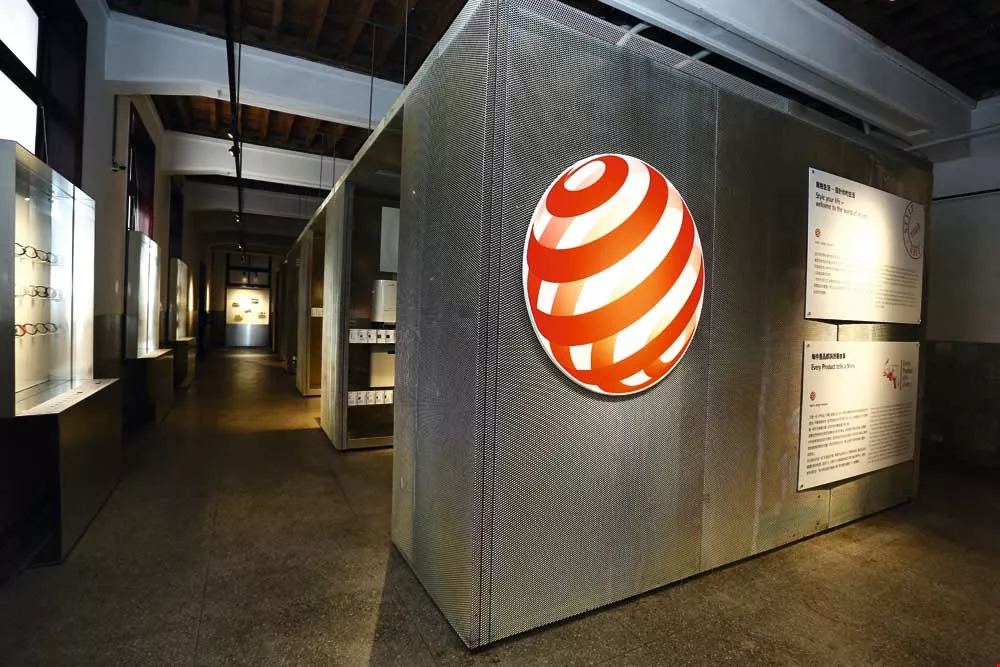
The former tobacco factory’s manufacturing facilities have been turned into exhibition halls. Among them is the Red Dot Museum Taipei (lower right), which is just the third Red Dot museum in the world.
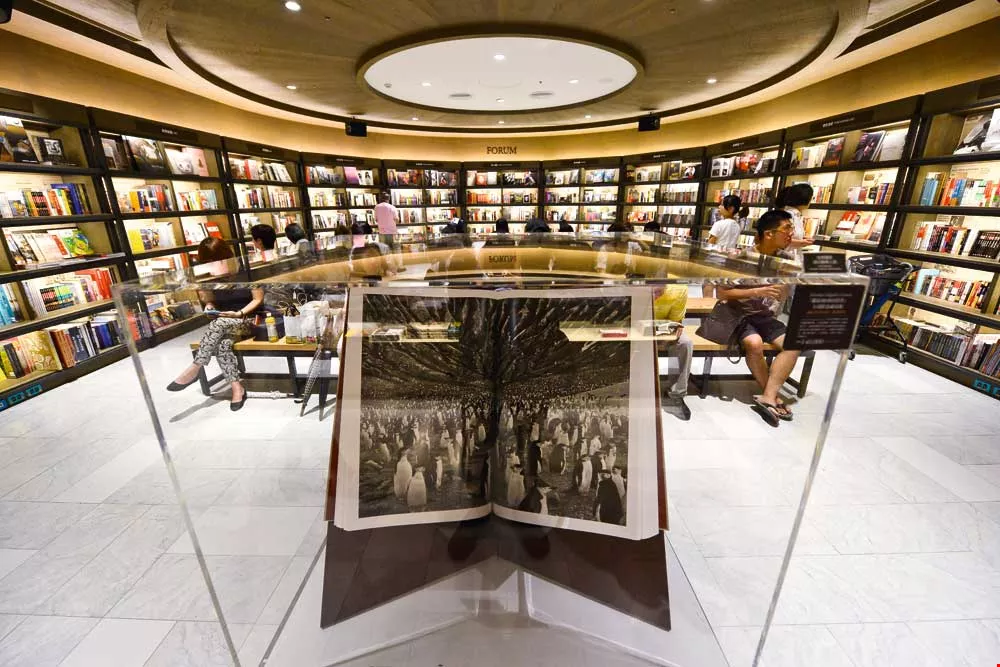
Eslite has built a trendy space at its Spectrum Songyan Store, one that incorporates exhibitions, dining, handicrafts, fashion shops and a bookstore.
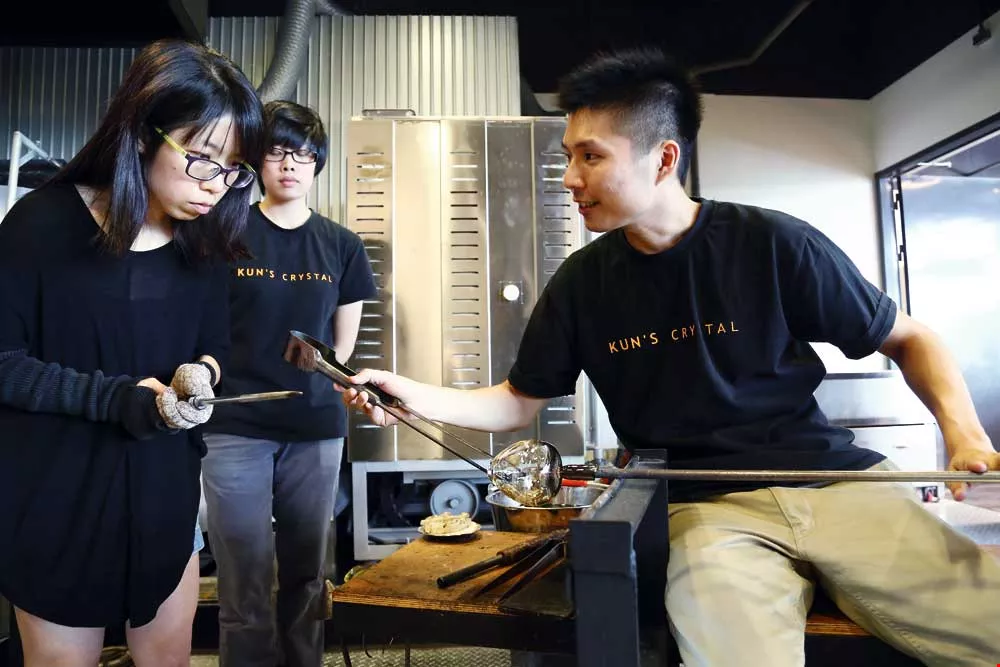
Eslite has built a trendy space at its Spectrum Songyan Store, one that incorporates exhibitions, dining, handicrafts, fashion shops and a bookstore.
The former tobacco factory’s manufacturing facilities have been turned into exhibition halls. Among them is the Red Dot Museum Taipei (lower right), which is just the third Red Dot museum in the world.
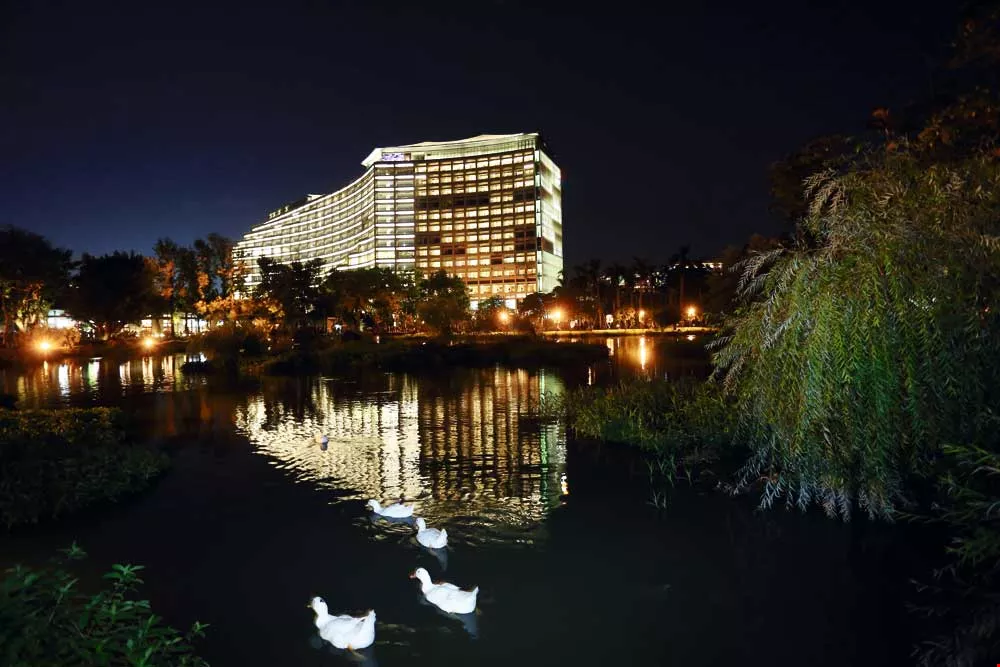
The Taipei New Horizon building rises in the Songshan Cultural and Creative Park. Designed by Japanese architect Toyo Ito, the building is beautifully lit at night and has become a hot eastern Taipei destination since Eslite opened a store inside.
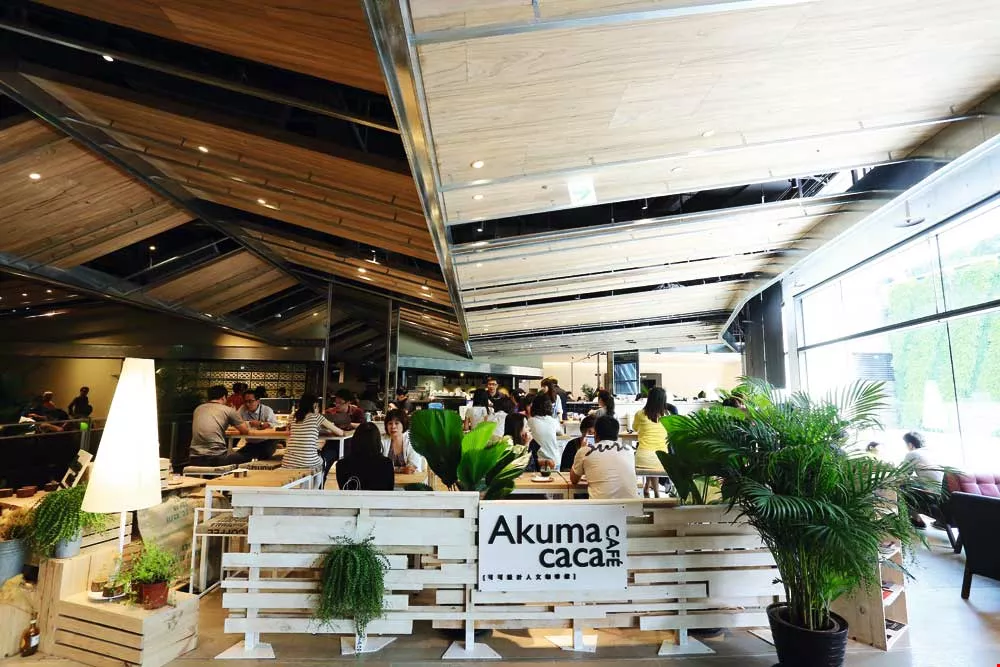
Eslite has built a trendy space at its Spectrum Songyan Store, one that incorporates exhibitions, dining, handicrafts, fashion shops and a bookstore.
@List.jpg?w=522&h=410&mode=crop&format=webp&quality=80)

@List.jpg?w=522&h=410&mode=crop&format=webp&quality=80)


@List.jpg?w=522&h=410&mode=crop&format=webp&quality=80)

@List.jpg?w=522&h=410&mode=crop&format=webp&quality=80)
