From the Margins to the Center-The Metamorphosis of Taiwan's Night Markets
Teng Sue-feng / photos Hsueh Chi-kuang / tr. by Scott Williams
November 2010


People say that the Tourism Bureau's recent 2010 Specialty Night Market Selection contest has helped legitimize the island's night markets.
At the most basic level, night markets are places where vendors gather. Though some vendors have licenses, far more are unlicensed and have simply occupied their spaces forever.
For as long as street vendors have existed, police have been banning them or giving them the boot in the name of keeping traffic moving. Taipei's establishment of its first "tourist night market" 20-some years ago brought this game of hide and seek to an end and for the first time recognized night markets as a unique cultural asset.
Can the government succeed with its newest night-market plan, which once again aims to raise the status of these markets in the name of tourism?
"Doesn't anyone notice how filthy Shilin Night Market is?" asks veteran journalist Chang Tien-wan on her blog, voicing a thought many have had.
"The ground underfoot is sticky. Your nose is assaulted by horrible smells when you get near the toilets. You often hear startled tourists shouting about spotting rats playing hide and seek. There are cockroaches everywhere."
Zhang notes that Shilin Night Market, Taipei's biggest "tourist night market" has few signs in English or Japanese, much less vendors who can talk about their products in either of those languages. If we really want tourists to appreciate the charm of Taiwan's night markets, why haven't we cleaned them up a bit?
Zhang's blogpost was made in reference to a specific building: the Shilin Temporary Market. A vegetable market in the early part of the day, it attracts dry-goods and snack vendors in the afternoon. The 2002 demolition of an older market brought stallkeepers here en masse. They were originally supposed to move to a new market on Jihe Road, but revisions to the plans for that market have delayed its completion until 2011.
This collection of old stalls hawking both vegetables and snacks was the predecessor to the night market. From the late Qing Dynasty through the 1960s, Shilin was at the heart of the distribution of agricultural goods in Taipei, a market for vegetables, fish, meat, and flowers. Surrounded by crude brick structures, the market sprawled across several streets and included a dozen-odd food stalls in front of the Cixian Temple. Local residents used to visit these for late-night snacks before the market closed at 9 p.m. As more and more vendors set up shop in front of the temple, some even began erecting their own temporary structures.
With the construction of Soochow University, the Chinese Culture University, and Ming Chuan University, the Shilin Night Market, which sits beside an important transit hub, became even busier.
In 1970, the city government assumed oversight of small vendors. In Shilin, it put a roof up over the brick structures and divided the area into more than 500 stalls for vendors. It then held a lottery for the available spaces, creating morning and afternoon slots for each. Vendors whose names were drawn had the right to use a designated space, a right that could be inherited by a lineal relative. But the city continued to hold the rights to the land itself and to the structure. The limited space inside the vegetable market resulted in vendors of hot foods simply registering with the police and continuing to do business without a license at their original locations.
When people today speak of Shilin Night Market, they typically mean the 20,000-square-meter area bounded by Wenlin Road, Dadong Road, Jihe Road, and Anping Street. Comprised of more than 1,000 street vendors and more than 300 storefronts, the market attracts 15-20,000 people daily and is Taiwan's top night market.
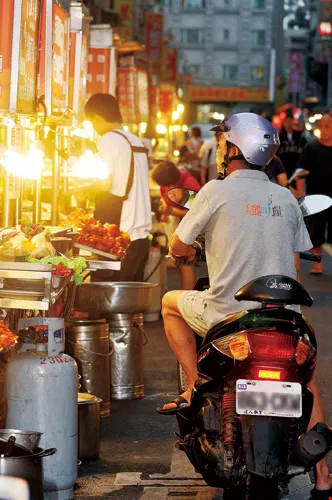
Night markets are pedestrian areas, but some motorcyclists nonetheless ride right in, making shopping uncomfortable.
The problem of how to manage a crowded chaotic night market has long been a headache for local governments. Taipei currently has roughly 30 night markets. The Snake Alley (Huaxi Street) and Raohe Street night markets are the oldest of these, and have been flourishing beside the Longshan and Ciyou Temples since these were founded in 1738 and 1757 respectively.
You could argue that all of Taipei's best-known night markets are located near old temples. Moreover, the two settlements from which Taipei ultimately grew-Bangka (today's Wanhua District) and Siah-khau (today's Songshan District)-themselves originated as small markets. These began attracting more and more people, grew to be large markets, evolved into cities in their own right and eventually became parts of our present-day metropolis.
In the old days, the hawkers and peddlers in front of the temple were all just poor folk eking out a living.
The "Taiwan Police Offenses Ordinance" of the Japanese era included the earliest attempts to regulate the street vendors and stated that police could fine or detain "those obstructing traffic by displaying food or other goods by the roadside."
In 1952, the Taiwan Provincial Government promulgated its own set of regulations governing street vendors, establishing principles for their licensing and management: vendors were limited to market areas designated by city and county governments; new markets could only be constructed when old markets lacked sufficient space for all the vendors; and police departments were assigned to handle vendor permitting.
The government revised these regulations in 1975. In addition to ordering the construction of more markets, the revisions included a new provision that required vendors to meet one of the following criteria: to be of low income, to have a license or have registered with the police, to be handicapped, or to be certified by their borough chief as having familial responsibilities but no regular employment. Those that met one of these criteria would be granted vendor status as a social welfare measure. This provision reinforced the public's perception of street vendors as marginal, disadvantaged members of society.
In 1980, during his tenure as mayor of Taipei, Lee Teng-hui initiated a lightning campaign against the city's street vendors but gave it up a few days later when then-president Chiang Ching-kuo stated: "Street vendors are a product of the rapid development of our society and economy. They'll disappear naturally once our citizens' incomes reach a certain level. The goal in managing street vendors is not to eliminate them. We have to address the problem of the livelihood of our low-income citizens. We cannot simply ban these activities and fail to provide guidance."
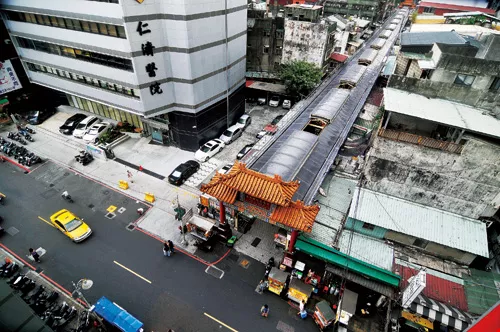
Night markets have long struggled with their reputation for "occupying the streets and obstructing traffic." But when Taipei created the first of Taiwan's tourist night markets in 1987, it began transforming night markets into tourism assets with cultural value. The photo shows Huaxi Tourist Night Market-better known as Snake Alley-without the bright lights and bustle of its nighttime existence.
But street vendors don't "disappear naturally" without government intervention.
In preparation for the 1975 widening of Bade Road at Raohe Street, the city government decided to relocate local street vendors to Nansong Market under the MacArthur Bridge. But some vendors resisted and came into conflict with the police. In the end, all of the vendors were forcibly relocated.
But Raohe Street saw less traffic after the widening of Bade Road and shops on both sides of the street began to struggle.
In 1986, the shop owners formed the Raohe Street Development Association. At the group's urging, the borough chief and city councilors petitioned the city to establish a "tourist night market" in the area. The city government responded by holding four rounds of public hearings with neighborhood residents. It also conducted a survey that found 98% of first-floor shop owners and 92% of second-floor residents favored the establishment of the night market.
The city government therefore decided to move forward with the project, rerouting Raohe Street's buses to Bade Road and designating a 500-meter-long stretch of Raohe Street beginning near the Ciyou Temple for the market. It assigned the first section to vendors of incense, folk arts, and sundries; created a space for activities and a tourist rest area in the middle section; designated the final section the food and fruit area; and gathered 140 licensed vendors from the neighborhood into the final section. Area shop owners themselves recruited vendors for the 600 slots located in the arcades between their storefronts and the street.
The Raohe Street Tourist Night Market officially opened for business in May 1987, to much popular acclaim.
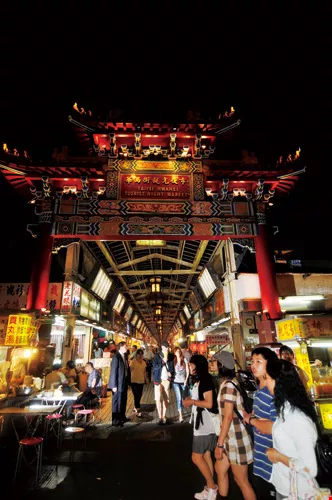
Night markets have long struggled with their reputation for "occupying the streets and obstructing traffic." But when Taipei created the first of Taiwan's tourist night markets in 1987, it began transforming night markets into tourism assets with cultural value. The photo shows Huaxi Tourist Night Market-better known as Snake Alley-without the bright lights and bustle of its nighttime existence.
While planning for the market was underway, then-mayor Hsu Shui-te made a tour of Huaxi Street, where live snakes were killed on the street. On seeing that market's crude stalls and poor drainage, he decided to turn it too into a tourist night market.
To ensure that the policy benefited the market, representatives from the Huaxi Street vendors' self-management association visited the Asagaya Pearl Center at their own expense. Developers then used this covered Japanese shopping arcade as a model when carrying out the renovations to the Snake Alley market.
Some 146 vendors spent NT$24 million building a new roofed structure, improving drainage and firefighting equipment, constructing three tall Chinese-style archways at the market's entrances on Guangzhou Street and Guilin Road, and lining the street with old-style lanterns, making a beautiful swan of what had once been an ugly duckling.
The renovated Huaxi Street Tourist Night Market opened in October 1987. With the help of the nearby Longshan Temple, a class-one historic monument, it soon began attracting large numbers of Taiwanese and foreign visitors.
Inspired by the success of the Raohe and Snake Alley markets, Taipei's other night markets quickly formed their own management associations, and 19 applied for tourist night market status between 1992 and 1995.
Surprisingly, one year after the Snake Alley market reopened, some citizens filed a complaint with the Control Yuan arguing that the new structure the vendors had built was illegal: "How can persons be permitted to occupy a 12-meter-wide roadway? The government... should tear down the obstruction in the name of fairness."
The city government subsequently "defused" the issue by designating the market building a "temporary structure," but thenceforth it became far more cautious about using the "tourist night market" designation to justify "semi-legalization" of street vending.
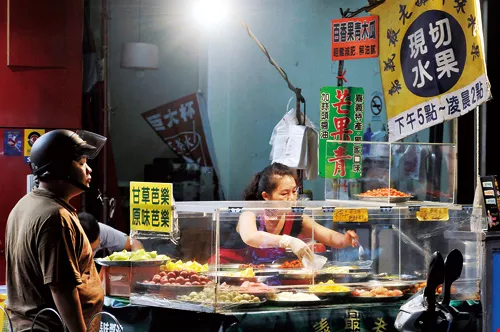
Vendors handle both money and food. They need to wear gloves to ensure their customers' peace of mind.
Will the recent reintroduction of the tourist night market model succeed?
Take the Raohe Street market, for example. Its success depended in no small part on the use of public hearings to relieve doubts and garner the support of 92% of residents. But by 1995, when the Taipei City Market Administration Office surveyed the street's 265 residents to understand how the market was impacting their lives, opinions were more divided. Some 57% felt that the large number of people pouring through the market created serious noise issues in their homes, while 26% thought the noise problems were not severe. Only 43% of residents fully supported the continued existence of the market, while 29% offered conditional support, and 37% wanted it abolished.
Opinions split depending on whether residents were profit-making first-floor shop owners or second-floor residents who gained no benefits from the market.
The interests of stallkeepers and first-floor shop owners are closely intertwined. Stallkeepers utilize public spaces in the ground-level arcades to do business and compete with shop owners for customers. Shop owners pay high rents and a variety of taxes, but also rake in rent from the vendors operating in the arcades. The stallkeepers know that it isn't legal for the shopkeepers to charge them rent for occupying a public space, but have little choice but to pay.
Though shopkeepers are happy to have the vendors there as long as they pay rent, second-floor residents have to deal with the noise from the market, the smoke from hot cooking oil, the poor sanitation, and the traffic congestion. Those who live above food stalls are also concerned about the risk of fires and lodge frequent, forceful complaints with the authorities, souring relations between vendors and residents.
Shida Road offers another example of residents' disaffection. The road used to have night-market vendors, but residents of the university district valued their quality of life and constantly complained to officials. In 1989, the police took action and removed the vendors from Shida Road. Unfortunately for residents, some of the vendors just moved into the alleys and lanes off of nearby Longquan Street.
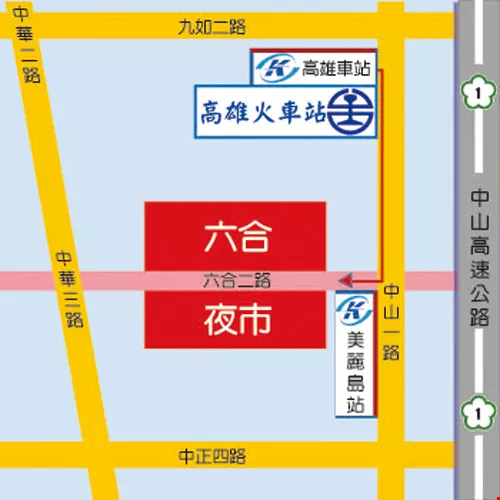
Liuhe Night Market, Kaohsiung
The question of whether to remove vendors presents police with a real dilemma.
When Yu Shuenn-der, an associate research fellow with the Academia Sinica's Institute of Ethnology, was studying the Shilin Night Market, an individual with the Shilin police precinct told him, "There's no way we would chase off all the night market vendors; it would just cause more problems the next day. We're not worried about street vendors protesting, but about increasing the number of burglars and criminals. Street vending has a kind of social utility, allowing those who can't find regular work to get by without resorting to crime."
Yu says that everyone who's been to a night market comes away impressed by the vendors' skill at dodging the police. Under Taiwan's traffic laws, it is illegal to peddle goods in a public space without the police's permission. Generally speaking, the police make only symbolic appearances and vendors can pack up at a leisurely pace while waiting for customers to pay for their purchases. Once packed, vendors take refuge in a shop or a dark corner and wait for the police to leave before setting up again. On occasions when senior officers are conducting an inspection, the vendors seem to get advance notice and "cooperate" by hiding early or taking the day off.
Yu asks: if peddling goods in the street is illegal, why do shopkeepers who put their own wares on display in arcades or on the street, acts which are equally in violation of traffic laws, so rarely get fined? "There are a lot of contradictions in night-market management because across-the-board prohibitions are tough. But when the law is applied differently in different circumstances, it's likely to make problems worse and result in greater public disaffection," he avers.
Seeking to settle vendors at fixed locations, the government created space for them in new markets and relocated vendors from major thoroughfares to secondary streets, eliminating traffic obstructions and eyesores. But there were problems: public markets provided only limited space; downtown land was costly, making it expensive to erect new structures; and many vendors were unwilling to relocate to less traveled side streets. For example, many vendors on Roosevelt Road in the Gongguang district have preferred paying fines to stay where they are to relocating to the alleys off Keelung Road in the Minzu Junior High School area.
Climate and environmental factors have also contributed to the different results produced by new-market planning efforts in northern and southern Taiwan.
"Street vendors hate rain," says Zhan Jinhan, a consultant to the management association at Kaohsiung's Liuhe Night Market. "Since it rains a lot in Taipei, vendors there have been more willing to move indoors, helping make the city's public markets a success. Kaohsiung, on the other hand, is hot. Since indoor markets lack air-conditioning, vendors much prefer to do their business outdoors." Zhan says that Taipei's more stringent enforcement of parking regulations is also a factor. In Kaohsiung, drivers who stop by a night market for a bowl of noodles frequently double- or triple-park. As long as traffic doesn't become too badly obstructed, the police don't write them tickets. Simple prohibitions won't eliminate such customs. People have to be educated over time.
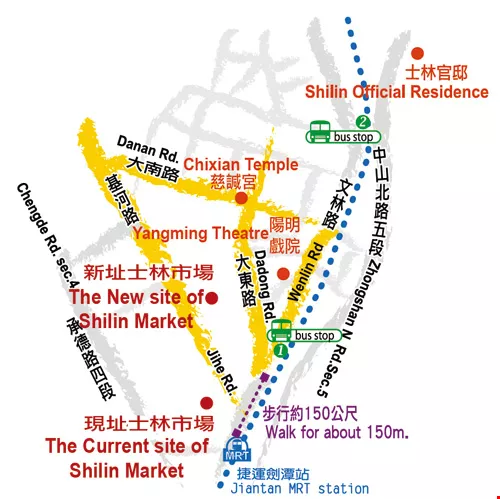
Shilin Night Market, Taipei
Does this mean there's no good way to "clean up" night markets?
"That depends on what shape the government wants night markets to take," says Yu. "Can we tolerate a little traditional atmosphere when we start modernizing our night markets? How do we incorporate modern practices and how many do we incorporate to achieve a good balance? These are things we need to think about."
Take Singapore's Smith Street, for example. Like the Shilin Night Market, Smith Street is a snack lover's paradise that was packed with food stalls until 1982. But the stalls were virtually eliminated when the dirtiness of the area drove the Singaporean government to conduct a vigorous cleanup campaign.
In 2001, the government implemented a model very like that used by department stores in their food courts: it established unified guidelines making everything from vendor licensing criteria to the kinds of snacks that food trucks and stalls were permitted to sell subject to review.
The style of night market that Singapore created through the exercise of its state power may suit that city, but isn't likely to succeed in Taiwan. Taipei's Jiancheng Circle ("Yuanhuan") is a case in point.
Originally a rough, corrugated steel building located at the center of the busy Nanjing West Road-Chongqing North Road traffic circle, Jiancheng Circle was rebuilt from the ground up, reopening in 2003 as a circular, glass-curtained structure. The reconstruction project changed virtually everything about the building except its location. It also resulted in numerous problems, including poor interior circulation and the fact that the structure's glass curtain made it prone to overheating in the afternoon sun. Few of the businesses that had occupied the original Jiancheng Circle moved into the new building, and those that did discovered that few customers were willing to cross multiple lanes of traffic to get to them. As a result, the project went out of business in just three years.
Clearly, identifying how much to modernize and how many traditions to maintain requires some thought.
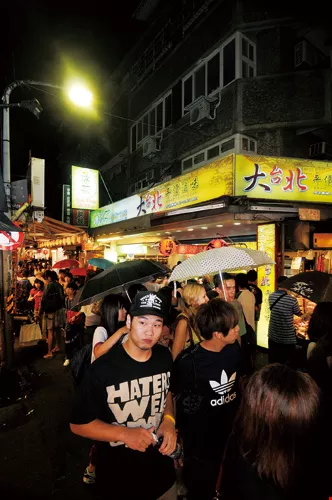
When vendors obstruct narrow alleys, it makes it impossible for the fire department to get in and put out fires. Residents worry about these kinds of safety issues. The photo shows Taipei's Shida Night Market.
What about the urgent need to resolve the public health issues? Yu says that if the government will set standards, it won't be that big a problem because all of the well known night markets have self-management associations. Association members pay a NT$2,000-5,000 management fee every month that includes cleanup costs.
"Night markets spur local prosperity, but impact the city's look," says Xie Wenxian, chief representative of the food and beverage vendors at Keelung's Miaokou Night Market. "We know this, so we look for ways to minimize the negative effects. Our efforts include round-the-clock cleaning, volunteer firefighters, and donations of ambulances and fire trucks." Xie says that taking care of your neighbors is a very important part of doing business.
Zhan says it's remarkable that Miaokou Night Market has been able to get 64 stallkeepers to wear white uniforms and create a professional look. Liuhe Night Market had attempted to do the same thing, but vendors found it too much trouble and felt that white uniforms would too easily become soiled. Faced with only superficial compliance-vendors only put on the uniforms for inspections-the management association switched to green uniforms that the vendors eventually accepted.
"Change has to come through low-key environmental changes," says Zhan. "Putting on events like the ROC Tourism Bureau's 2010 night market selection contest makes vendors take more pride in what they do. Everyone recognizes that top honors are not won easily. The management associations can also use the opportunity to encourage vendors to act like top prize winners, and not look grumpy."
"The key thing is for vendors to put smiles on their faces," says Wayne Liu, deputy director-general of the Tourism Bureau. "Business is so good in some night markets that vendors get lost in their work and forget to smile." Liu says that Tainan's Huayuan Night Market makes frequent announcements in Taiwanese warning visitors to watch out for pickpockets. While the market has good intentions, the announcements aren't necessarily that effective. "Tourists don't understand Taiwanese," says Liu. "It's the self-regulation association's responsibility to work out a means of addressing the pickpocket problem. At the very least they should do what other night markets do: establish more patrols to make patrons feel safer."
The government's attitudes and policies towards night markets have evolved greatly over the years, from banning them to managing them and now to promoting them as a tourist attraction. Vendors too are adjusting to their new role. The reemergence of night markets amply demonstrates the tenacity of our street vendors. Having survived the many twists and turns of their hard road, Taiwan's night markets are transforming themselves into something wonderful.
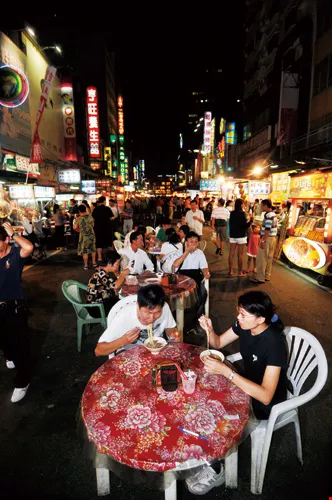
A few tables and chairs are set out on the road to make a shared eating area where visitors can sit and enjoy their food at leisure-just one of the ways in which Taiwan's night markets are catering ever more attentively to consumers' needs. Shown here, Kaohsiung's Liuhe Night Market.
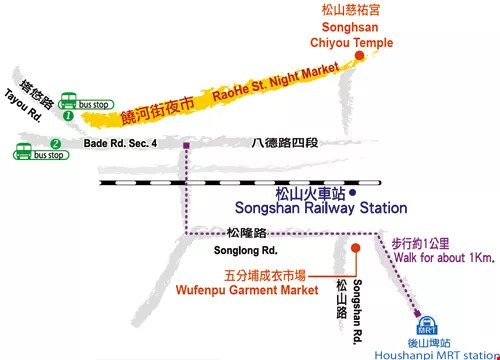
Raohe Street Night Market, Taipei
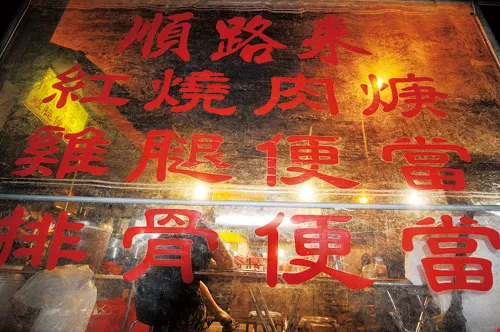
Most foreign visitors can't make head or tail of Chinese characters. If Taiwan's night markets really want to attract tourists, they need to become more tourist-friendly.

@List.jpg?w=522&h=410&mode=crop&format=webp&quality=80)

@List.jpg?w=522&h=410&mode=crop&format=webp&quality=80)


@List.jpg?w=522&h=410&mode=crop&format=webp&quality=80)
