Hey, Big Spenders-Promoting Taiwan to Malaysia
Soon Thean Bee / photos Soon Thean Bee / tr. by Geof Aberhart
January 2011


October 26, 2010. Kuala Lumpur. An intersection on Jalan Imbi, a road in the city center normally crawling with slow-moving traffic. Today, though, something is different. Inside and out of the landmark Imbi Monorail Station hang huge drawings of Taipei 101, Taiwanese scenery, and night markets, from British magazine Monocle. Around them hang signs in English, Malay, and Chinese, each inviting prospective travelers to visit Taiwan. All told, it is an eyecatching sight for those who drive or walk along this road.
Stepping into the station, all around you are scenes and images of Taiwan, much like those on the outside, accompanied by "TAIWAN" in big, colorful letters. A train pulls into the station, and the train itself bears a similar design. Below the station, six minivan taxis are adorned with sketches and shots of scenes, snacks, and culture from Taiwan, a distinctive sight against the usual green, yellow, and red-and-white taxis around the city.
This is all part of a NT$15-million effort by the Kuala Lumpur office of the Taiwan Visitors Association to promote travel to Taiwan.
So why choose Imbi Station out of the 11 stations along the Kuala Lumpur Monorail? TVA Kuala Lumpur office director Chang Fu-nan explains that it was because each month, Jalan Imbi sees as many as 5.5 million vehicles and 2.1 million pedestrians pass by. Additionally, the size and prominence of the station mean you can see the beautiful advertisements from just about any angle. The snarled traffic also generally means people stuck waiting can't avoid the adverts, greatly increasing visibility. With a laugh, Chang says that if even 1% of those people who've never been to Taiwan get drawn in by the adverts, the campaign will have reached its goal.
Additionally, TVA's Kuala Lumpur office has also decked out one monorail train and 100 taxis with images of Taiwan's beauty. Over the next year, this train will weave its way down its 8.6 kilometers of track through the "Golden Triangle," Kuala Lumpur's most bustling area, while those taxis ferry visitors to and from Kuala Lumpur International Airport and Malaysia's financial heart, the Klang Valley.
Chang reveals that the next step will be for TVA KL to set up a 55-foot-high, 17-foot-wide billboard in the pedestrian underpass at the Kuala Lumpur Convention Center, expanding the campaign into a three-pronged promotional attack.
He also notes that in 2007, before his office was established, only 115,202 Malaysian visitors visited Taiwan, but in 2009 that increased to 166,987. For 2010, the number is expected to grow again, reaching as high as 250,000.
And Chang's confidence is not without foundation. Between January and September 2010, there were 185,000 Malaysian visitors to Taiwan, an increase of 11% on the same period in 2009.
This rapid growth has been fueled in no small part by Malaysian airline Air Asia starting direct KL-Taipei flights in April 2009. Air Asia offers 5,000 budget one-way tickets at a price of only NT$1000 per person, as well as regular ticket prices some 20-30% cheaper than their competitors.
Chang says that many Malaysian visitors were undoubtedly attracted by these low prices. This has sparked a fad amongst Malaysian Chinese to make the trip, which has undoubtedly helped increase demand amongst other groups. From the end of 2010 China Airlines has increased its number of weekly flights from seven to 10, and EVA Air is also looking at increasing its Malaysia-Taiwan flights. If anyone in Malaysia is thinking about a trip to Taiwan, book now or you might miss out!
In addition to all this, TVA KL began early in 2010 to hand out seasonal gift boxes to Malaysian visitors, including Easycard smart cards for transport, tickets to theme parks, gift vouchers, and night-market discount vouchers. They also offered special packs of tealeaves for any visitor to the MATTA travel fair who booked a tour to Taiwan. "Giving away freebies has undoubtedly helped improve Malaysians' desire to visit Taiwan!"
Nevertheless, says Chang, this current promotion is almost at saturation with its target audience, Malaysian Chinese. Thus with a target of 300,000 visitors in 2011, efforts to promote to the predominantly Malay Muslim community will be vital.
Malaysia has a population of 28.27 million, of which ethnic Malays account for 50.4%. The primary language of communication is Malay, followed by English, and then a very small minority of Chinese speakers. Article 160 of the Malaysian constitution states that to qualify as Malay, one must be a Muslim, and the Muslim population of Malaysia, including both Malay and non-Malay believers, accounts for approximately 17 million people, or over 60% of Malaysia's total population. With only 5,000 Malaysian Muslims having visited Taiwan in 2009, clearly this is a market with tremendous room for growth.
Although the Taiwan Visitors Association has been actively promoting Taiwan to the Muslim community in Malaysia, Malaysian Muslims are not especially familiar with Taiwan, and their desire to visit Taiwan is low.
Civil servant Norazrin Shamsudin, an ethnic Malay, says that he saw a Taiwanese film on an international flight before, and he knew there was a dispute between Taiwan and China, but that was far from enough to entice him to bring his family on a trip to Taiwan.
He says that getting information in Malaysia about trips to Taiwan is not easy, and he rarely sees any kind of advertising, so Taiwan is still fairly alien to him. Add to that the fact that Malaysia has never really had especially close links with Taiwan-unlike with Britain, of which Malaysia was once a colony, or influential countries like the US and China-and he says he's never really felt much desire to visit Taiwan.
Amin Shah Iskandar, a Malay who works in a high-level position in an NGO and has traveled to several countries, agrees that the attraction of Taiwan is fairly limited at the moment, and that it needs to be packaged better. "If I want to see historical relics, I'll think of China; if I want to go shopping, Hong Kong. Taiwan doesn't really stand out, so I've never really thought about going."
On the other end of the spectrum, media staffer Wong Meo Yee, an ethnic Chinese, is very much interested in visiting Taiwan, and in fact plans to visit soon to see the Tai-pei International Flora Expo. She says that the promotional materials at Imbi Monorail Station have made her even more interested in going.
The TVA in Kuala Lumpur, she believes, has already done much to promote Taiwan to Malaysians, and the massive, beautiful advertising campaign at the station gave her a better appreciation for Taiwan's culture and art. As a result, she began to think even more seriously about visiting. Now the only thing holding her back is the slightly high price of plane tickets, but when they get a little cheaper, she'll be on her way.
But if Taiwan is to attract more Muslim visitors, then the most pressing issue is that of Muslim dietary restrictions. In response, Taiwan's Tourism Bureau has produced a brochure for Muslim visitors, including a listing of around 20 halal restaurants from Taipei to Kaohsiung, websites with vegetarian dining information, and information on tourist destinations around the island.
In order to build up the image of Taiwan amongst Muslim travelers, in 2009 the TVA office in Kuala Lumpur invited Malaysian media to visit the island, as well as running a large-scale advertising campaign in print and electronic media. So far, results have been good, including having Taiwan named "Most Promising Overseas Tourist Destination" in Malaysia's only Malay-language travel magazine, Libur.
In 2011, Chang reveals, TVA KL will begin working together with Malaysian travel agencies to promote special packages to Muslim travelers, including a six-day, five-night "north and west" package, and a five-day, four-night "north and east" package, priced at NT$30-35,000.
Of course, with Muslim travelers largely not Chinese speakers and unfamiliar with Taiwan's culture, Chang acknowledges, this promotional effort is going to need to be much stronger.
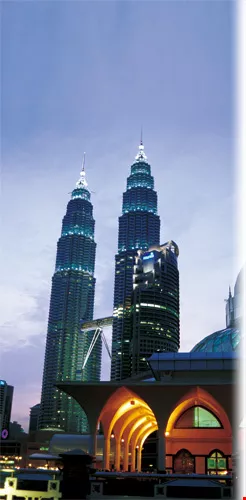
Malaysia's population is large and generally well-off, and Taiwan hopes to tap into this market and inspire Malaysian travelers to visit Taiwan. Here we see Kuala Lumpur's iconic Petronas Towers.
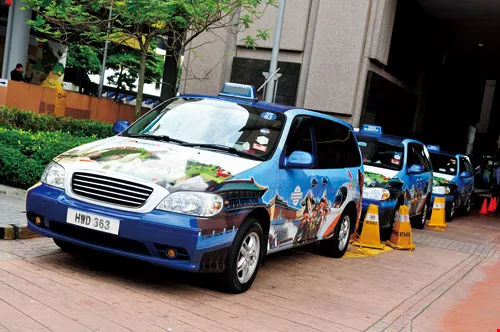
One hundred taxis have been adorned with prints of scenes of Taiwan, including Taipei 101, the National Palace Museum, and night markets. Thanks to this strength in numbers, Taiwan is getting a massive boost in visibility.
@List.jpg?w=522&h=410&mode=crop&format=webp&quality=80)

@List.jpg?w=522&h=410&mode=crop&format=webp&quality=80)


@List.jpg?w=522&h=410&mode=crop&format=webp&quality=80)

@List.jpg?w=522&h=410&mode=crop&format=webp&quality=80)
