Two Years of Recovery from Typhoon Morakot
Chang Chiung-fang / photos Hsueh Chi-kuang / tr. by David Smith
September 2011


August 8 marked the second anniversary of Typhoon Morakot, which cruelly chose Father's Day to rip homes apart and send family members to their deaths.
Typhoon Morakot was the second great natural disaster to strike Taiwan in recent years, coming just shy of a decade after the Jiji earthquake of September 21, 1999. In flooding triggered by the typhoon, most of Xiaolin Village in Kao-hsiung County disappeared from the face of the earth. The King Shai Hotel in Taitung County tumbled into the raging waters of the Zhiben River. The drainage basin of the Chenyoulan River in Nantou County was scoured by landslides. One locality after another resembled shocking scenes from The Day After Tomorrow. The memories will not soon fade.
The Executive Yuan set up the Morakot Post-Disaster Reconstruction Council just seven days after the disaster. The Legislative Yuan moved quickly to pass the Special Act Governing Reconstruction after Typhoon Morakot. NGOs joined forces in mobilizing for an aggressive recovery effort in the disaster-stricken areas. Thanks to lessons learned after the Jiji earthquake, reconstruction in the wake of Typhoon Morakot proceeded more quickly. With an outpouring of assistance from all sectors of society, people soon became hopeful about the prospects for rebuilding their homes and communities.
With the two-year anniversary of the typhoon swift approaching, a ceremony was recently held to mark the completion of 118 permanent housing units at Jiadongjiao in Nantou City.
The only landlocked county in Taiwan, Nantou County has sustained damage in all 12 typhoons that have made landfall in Taiwan since the Jiji earthquake, including Typhoon Morakot, which caused great damage in Xinyi Township.
Nantou County magistrate Lee Chao-ching points out that the Xinyi Township villages of Shenmu, Tongfu, Wangmei, and Luona are all located near the confluence of the Chenyoulan, Heshe, Shenmu, and Namagaban rivers, which means they experience landslides every time a typhoon hits. Experts studied the area after Typhoon Morakot and classified it as a designated hazardous area.
But, as the saying goes, "he who suffers from a chronic disease will become an expert physician." Lee Chao-ching comments that because Nantou County has so much experience dealing with natural disasters, it wins recognition annually for being the best in the nation in disaster preparedness drills. In the wake of Typhoon Morakot, Nantou County has achieved 100% of its reconstruction goals.
In order to relocate people living in designated hazardous areas, the Nantou County Government (with support from the ROC Red Cross and the Chang Yung-Fa Foundation) built a total of 165 permanent housing units in Shuili Township (at sites in Jugong and Yongfeng), Mingjian Township, and Jiadongjiao. The site in Jiadongjiao, just completed in late July, is the biggest by far with 118 units.
The Jiadongjiao site is located south of the Bagua Mountains on 5.5 hectares of land where the Taiwan Sugar Corporation once grew pineapples. The ROC Red Cross donated NT$250 million to build the housing, while the central government appropriated another NT$250 million to fund construction of roads, a community activities center, parks, and other public infrastructure.
According to Tony Chang, director of the Department of Disaster Relief at the ROC Red Cross, the entire Jiadongjiao site employs a green architecture design. Every home has a yard outside, an inner courtyard, and a parking spot. The design of the homes is simple and airy. A household of six, for example, is provided a 34-ping residence (1 ping = 3.3 square meters). In a house this size, the first floor has an open floor plan, with a living room, dining, and kitchen, while the second floor has four bedrooms.
In addition to building the homes, the Red Cross has also donated moving-in gift certificates of NT$56,000 that the residents can use to buy furniture and appliances of their own choosing.
A huge majority (95%) of residents at the Jiadongjiao site come from Shenmu Village in Xinyi Township, which is why the site has been named Shenmu Community. However, the two places are 60 kilometers apart, or about 90 minutes by car, and most residents continue to grow tea and fruits in Shenmu Village, so a daily commute is quite a hardship.
Chern Jenn-Chuan, deputy CEO of the Morakot Post-Disaster Reconstruction Council, explains that they had no choice but to choose a site farther away. There simply wasn't anything safe enough near Shenmu Village. The Reconstruction Council is helping the residents find other ways to make money closer to their new homes, and is working with local governments and NGOs to find nearby agricultural land that can be leased for farming.
Lee Chao-ching reports that the county government has drawn up plans to lease 10 hectares of nearby land from Taiwan Sugar to provide residents with a way to make a living by planting pineapples to sell to pineapple cake factories. He is also working hard to get Sunny Hills, a locally well-known maker of pineapple cakes in Nantou, to build a factory near the new community that would double as a tourist attraction and spur local economic activity.
For the residents of other newly built permanent housing projects that are similarly far removed from the original villages, the Reconstruction Council is working in the same manner to arrange for the leasing of a combined total of 71.6 hectares of agricultural land. World Vision Taiwan has leased 2.6 hectares in Pingtung County's Neipu Township for the residents of nearby Linali Village to plant with dragon fruit, and the Pingtung County Government has leased 20 hectares of agricultural land for the residents of Baihe Village in Changzhi Township to engage in pesticide-free farming. Once those uprooted by the disaster have a place to call home again, they can start making a living for themselves.

Construction of the Habilan Bridges re-established the vital traffic way between Heshe and Dongpu, reigniting the business of the local hotsprings resorts.
Two years after the typhoon, the people of Shenmu Community are embarking upon a new life. But painful memories remain vivid.
Typhoon Morakot caused 699 deaths, 76 disappearances, and 45 injuries, destroying 1,766 homes, and leaving 24,950 persons homeless.
The government set aside a budget of NT$138.5 billion to help victims of the disaster to rebuild their lives. On top of that, Tzu Chi Buddhist Compassion Relief Foundation, the Red Cross, World Vision Taiwan, and other NGOs raised an additional NT$25.1 billion, making for a total of NT$163.6 billion that will be spent over the course of three years to rebuild infrastructure, homes, and local economies.
"The top priority is to get people relocated to someplace safe," says Chern, who explains that typhoons are different from earthquakes in that the latter do not occur with any great frequency, but typhoons come every year. As another typhoon season fast approaches, the reconstruction effort has become a race against time.
After the Jiji earthquake they built interim residences for short-term relocation, but after Typhoon Morakot, in contrast, they avoided the double expense of that approach, not to mention the attendant environmental consequences and administrative headaches, by focusing primarily on the building of permanent housing.
The earlier experience also taught a lesson about the importance of acting quickly.
Chern remarks that "by joining hands and working together, the central government, local governments, NGOs, and the business community have created a reconstruction model that is innovative and can be quickly implemented," explaining that the central government has budgeted funds, passed the Special Act Governing Reconstruction after Typhoon Morakot, provided land, streamlined procedures for environmental impact assessments and land rezoning, and taken the lead in finding the resources needed for reconstruction. In the meantime, local governments have conducted eligibility screening for persons hoping to move into the permanent housing projects, streamlined building code enforcement, and carried out maintenance and management of housing sites. And finally, highly efficient NGOs have taken up the task of raising charity donations, designing the permanent housing, contracting out the construction projects, and getting the homes built. Each sector provided something different in a coordinated effort to quickly rebuild homes and communities.
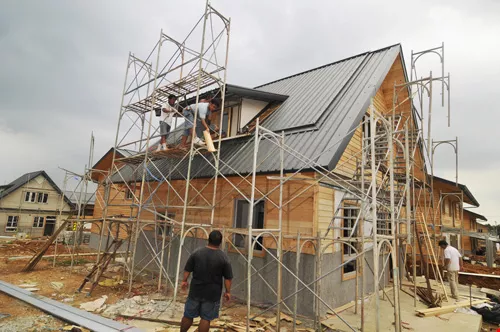
With homes destroyed, roads washed out, and bridges collapsed, the Herculean task of post-disaster reconstruction is a race against time. Shown here are construction crews in high gear, working in Pingtung on the Ailiao River floodway (facing page) and the Majia permanent housing site (above).
"People need to be in homes before they can feel settled enough to begin contributing again to economic development," says Chern, who points to the permanent housing project named Rainbow Sustainability Community as the place where it all began.
Chur Chi-fang, director of the Reconstruction Council's Department of Community Reconstruction, feels that relocation to permanent housing projects must proceed in line with three key principles: "allow residents to remain in their villages if possible," "allow them to remain in the same township if the village must be abandoned," and "make sure that everyone in a village is moved together to the nearest possible location."
To obtain the land for building permanent housing, in addition to providing 57 hectares at no cost, the government also exercised eminent domain over another 159 hectares, quickly arranging the necessary land and rezoning it. NGOs then got the housing built. The entire process of obtaining a construction permit, from application to the award of the permit, only took 52 days. All of these things would have been "mission impossible" in an earlier time.
The permanent housing units come in three sizes: 14 ping for one or two occupants; 28 ping for three to five occupants; and 34 ping for six to 10 occupants. The land still belongs to the state, but residents enjoy free use of the home on it. The home can be inherited, but not sold or rented out.
According to information from the Construction and Planning Agency, plans were drawn up for 39 post-Morakot permanent housing sites with 3,309 units in Nantou, Yunlin, Chiayi, Tainan, Kaohsiung, Pingtung, and Taitung. A total of 2,584 units at 22 sites had been completed as of the end of July.
Unlike after the Jiji earthquake, when it took the government three-and-a-half years to complete the first group of permanent housing units in Nantou, following Typhoon Morakot it took just a half-year to rebuild 601 homes.
But the difficulty of rebuilding mountain roads, and the urgent hope of indigenous peoples to stay in their original villages, have completely prevented progress at some permanent housing sites. Chern notes that construction will have been completed by 2012 (ahead of the lunar new year) at all sites except those at Leye and forest district No. 152 in the Alishan Mountains.

Mother Nature can be heartless, but people need sentimental attachments. It takes more than the rebuilding of homes to bring communities back to life; even more important is the task of restarting local economies. The grapes and plum wines of Xinyi Township, and the waterfalls and traditional Bunun slab houses of Shuanglong Village, can all spur tourism and get the economy moving again.
Slow progress at some permanent housing sites has forced some typhoon victims to wait longer than others to move in. Those fortunate enough to move in earlier, however, have felt a terrible longing for their old villages.
"Missing your old village is natural," says Chern, but he also observes that despite such longing, most disaster victims have been able to make a new life for themselves.
Zhong Wenfang, deputy chairperson of the residents' committee at Good Day Community in Chiayi, moved with his mother, wife, and son last November into a 28-ping unit in the community.
"The environment here is great. The Red Cross really went to great pains to build it well," says Zhong. None of the units had an extra bedroom on first floor for elderly parents, then the Red Cross noticed that everyone was putting in an extra room, and designed the rooms in during phase 2 of the project.
Zhong acknowledges that the residents miss their old villages. Because there are no job opportunities near the new community, most residents still return to the old villages to do the same work they were doing before.
Typhoon Morakot destroyed the house and one or two hectares of rice paddies that Zhang once called home in Meishan Township. He still grows tea and summer vegetables in Mei-shan despite the three-hour round trip, which he concedes "is a double waste, of both energy and time." Some people are loath to do all that traveling and simply stay in the mountains for several days at a time. During the weekdays it's mostly old folks and young children in the newly built community, but when a typhoon approaches everyone hunkers down in the permanent housing.
Zhang Yujun, president of the Chiayi branch of the ROC Red Cross, points out that there are 86 units in phase 1 of the Good Day Community. The residents are from Fanlu Township, and moved in on September 12 last year. Phase 2 is scheduled for completion this coming October.
"It's extremely important to see the disaster victims through the pain of their loss," says Zhang, who recounts the story of an old woman in Good Day Community who lost three children during Typhoon Morakot. She was deeply depressed when she moved into the community with a daughter-in-law and grandchild, but is doing much better now thanks to the encouragement and support of neighbors and the Red Cross. "We stay by their side until they are emotionally recovered."

Mother Nature can be heartless, but people need sentimental attachments. It takes more than the rebuilding of homes to bring communities back to life; even more important is the task of restarting local economies. The grapes and plum wines of Xinyi Township, and the waterfalls and traditional Bunun slab houses of Shuanglong Village, can all spur tourism and get the economy moving again.
Building homes for the displaced is only part of the picture. In addition, roads, bridges, and other infrastructure must be rebuilt to support local economic activity.
Habilan Tunnel, which is located on Nantou County Highway 60 and links Heshe to the Dongpu hotsprings district, sustained heavy damage during Typhoon Morakot, when the road base eroded away.
With the road washed out, tourists stopped coming in and agricultural products couldn't be shipped out. The Dongpu hotsprings, once a major vacation hotspot, overnight became a ghost town, while the task of transporting Xinyi Township's superb cabbages, tomatoes, plums, and grapes to markets become highly problematic.
The Reconstruction Council responded by providing NT$270 million for the construction of a pair of bridges right next to the Habilan Tunnel. With their long spans and bright red arches, the Habilan Bridges make for a gorgeous view framed against the surrounding green mountains.
From the Habilan Bridges one can see the main peak of Mt. Jade (Yushan). Moreover, the bridges' design shows respect for the people of the Bunun tribe, who make up half the population of Xinyi Township, by incorporating their legend of the Bunun warrior who shot the earth's "second sun" with an arrow and turned it into the moon. This detail has made the bridges very popular with the locals.
Construction of the Habilan Bridges began in October of last year and was originally to be completed after a year, but the bridges will open to traffic in August, well ahead of schedule.
According to Xinyi Township mayor Jane Istanda, the opening of this key traffic artery will bring a revival of business at Dongpu's hotspring resorts.
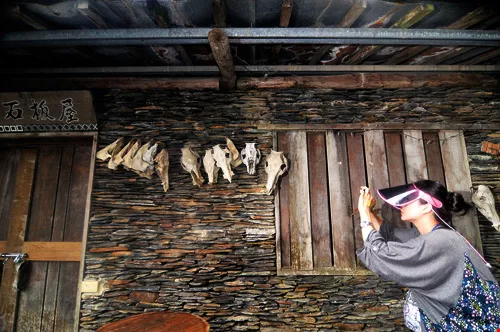
Mother Nature can be heartless, but people need sentimental attachments. It takes more than the rebuilding of homes to bring communities back to life; even more important is the task of restarting local economies. The grapes and plum wines of Xinyi Township, and the waterfalls and traditional Bunun slab houses of Shuanglong Village, can all spur tourism and get the economy moving again.
To bring tourists back, the Reconstruction Council drew up plans for more than 10 different tour routes. In addition to stimulating consumption, the tours are also an educational experience for participants, who learn why the disaster occurred and what steps have been taken to prevent a repeat.
Cindy Lin, chief of the tourism promotion section at Nantou County Government's tourism office, points out that her department specially provided NT$2 million in subsidies for a bus tour between the townships of Shuili and Xinyi. During the promotional period, participants paid just NT$88 for the entire tour (including the cost of activities). The promotion was run on weekdays (Monday to Thursday) and successfully drew in a lot of extra visitors.
The bus tour from Shuili to Xinyi follows one of two different routes. On Mondays and Wednesdays it departs on a two-day circuit through Sun Moon Lake, the Dongpu hotsprings district, Shuanglong Village, and the Shuili recreational farms district. On Tuesdays and Thursdays it departs on a two-day circuit through Jiji, Checheng, a local waterfall, hotsprings, Zinan Temple, and the Zhushan tourist factory. Over the course of two years a total of more than 2,000 persons in 56 tour groups have taken the Shuili-to-Xinyi bus tour, and it is estimated that they have spent more than NT$2.5 million in the local area.
According to Gu Ziyong, chairman of the Shuanglong Community Development Association, the local area enjoys the double blessing of scenic beauty and the distinctive Bunun indigenous culture. Waterfalls flow strong the whole year round, and are excellent places to escape the summer heat, while the traditional stone slab houses and delicious roasted piglets provide a unique local flavor. Four or five travel agencies arrange in-depth tours that make use of the Shuili-to-Xinyi bus line, which is clearly yielding significant benefits.
Rebuilding homes and communities is important, of course, but it is also true, as Tony Chang of the Red Cross says, that while the built environment is the most basic building block of stability, the final and most meaningful goal is emotional healing. Still awaiting us are the tasks of restarting local economies and helping victims get over the emotional scars left by the carnage.
Looking back on the past 700-plus days, we salute the government and NGOs for joining hands so effectively in achieving significant preliminary progress toward reconstruction. At the same time, we hope to see continued perseverance. Helping hands must not let go. Caring hearts are still very much needed.
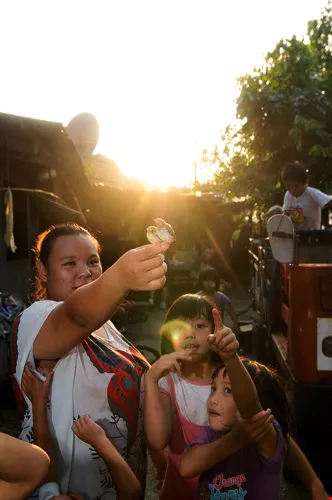
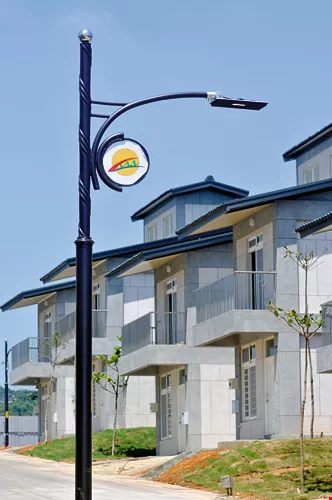
Typhoon Morakot ripped apart the mountain villages of indigenous peoples, but thanks to an outpouring of support from people in all walks of life, the victims are putting their pain behind them and feeling hopeful again about the future. Shown here is Shenmu Community in Nantou City, a permanent housing project just completed at the end of July.
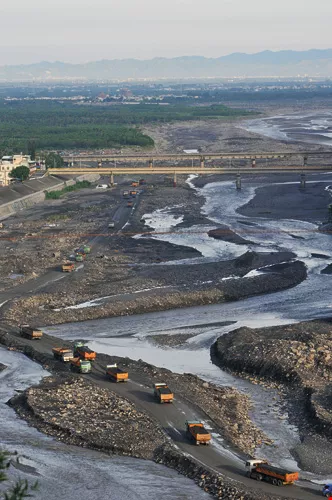
With homes destroyed, roads washed out, and bridges collapsed, the Herculean task of post-disaster reconstruction is a race against time. Shown here are construction crews in high gear, working in Pingtung on the Ailiao River floodway (facing page) and the Majia permanent housing site (above).

@List.jpg?w=522&h=410&mode=crop&format=webp&quality=80)
@List.jpg?w=522&h=410&mode=crop&format=webp&quality=80)


