Tiehua Music Village: A Haven for Local Music
Kobe Chen / photos Fu Fu, Lovely Taiwan Foundation / tr. by Chris Nelson
August 2012

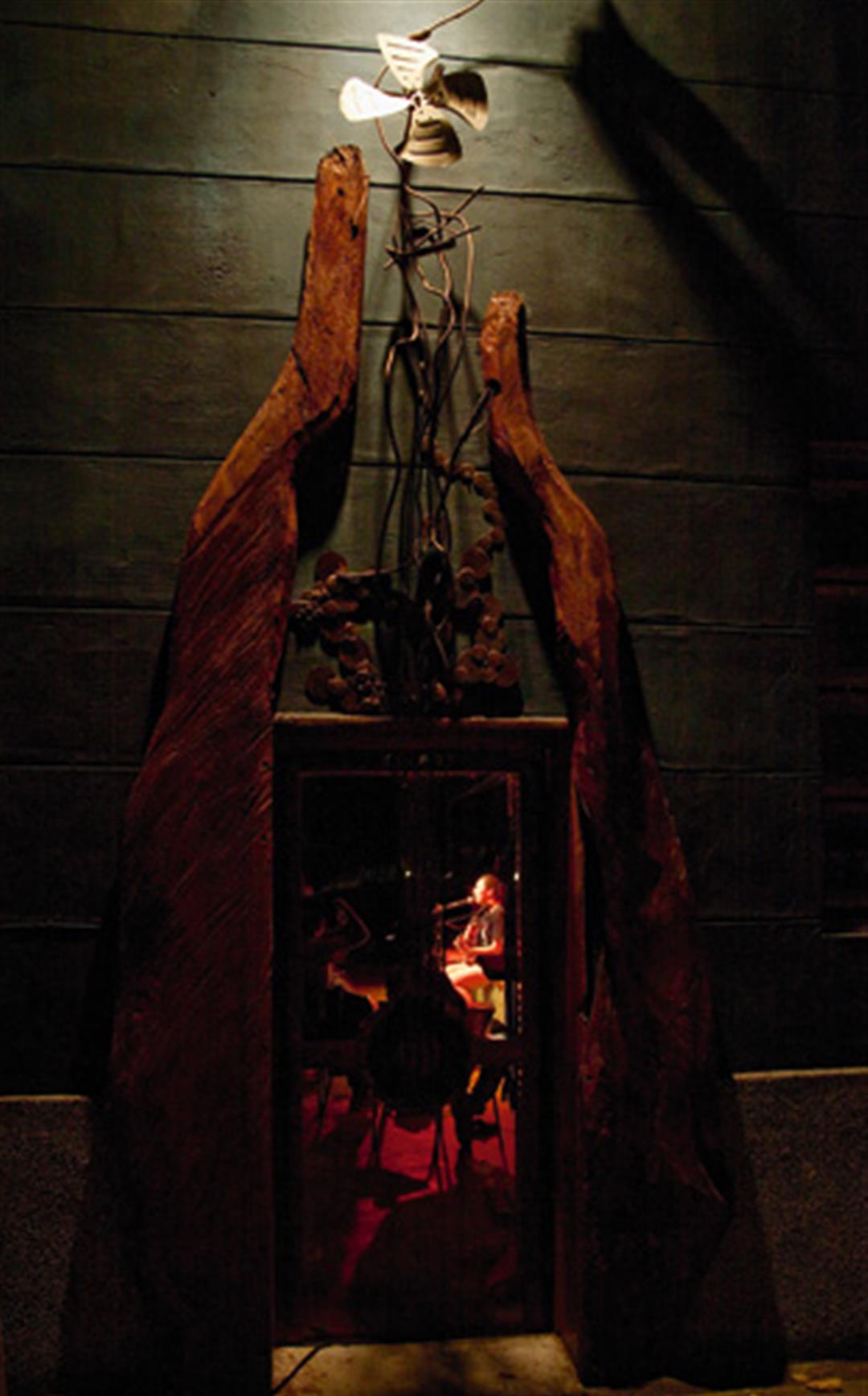
There’s a witty saying describing the east coast of Taiwan: “Pretty as heaven, but dull as hell.” But Tiehua Music Village, located adjacent to the old Taitung train station, may change this. Over the last couple of years, Tiehua Music Village has become a draw for tourists from Taiwan and abroad, averaging over 3,000 visitors a month. It’s fast becoming one of Taitung’s most famous sites.
Under foliage swaying in the sea breeze and amid the enchanting sounds of strings, people from all over come to enjoy an evening at Tiehua Music Village, losing themselves in the gentle sound of music, and forgetting all their cares.
The naming of Tiehua happened as spontaneously as much of the music here. It’s said that three years ago, a local antiquarian who worked there noticed everyone endlessly discussing what to name the place, with no resolution. So he said, “The road out front is Tiehua Road. How about just calling it Tiehua Music Village?”

Won Fu’s outside performance attracts an enthusiastic crowd.
To build up tourism on the east coast, the Tourism Bureau joined forces with private enterprise in 2008, integrating their local tourism resources to promote eastern Taiwan as part of the International Spotlight Project. Tiehua Music Village sits at the heart of this project: it is its earliest and most successful model. It is expected to be able to run completely independently by next year, no longer requiring government assistance.
Yet in the early planning stage, the idea of music did not enter the picture. It wasn’t until the Aboriginal singer Panai suggested, “Why not give musicians a good place to perform?” that the overall concept began to form.
Panai, who has both Amis and Puyuma cultural roots, experienced the harshness of life on the road during her youth, performing in folk music restaurants and bars in Kaohsiung, Taichung and Taipei while looking for her chance to realize her dreams.
Many of the more famous Aboriginal singers started out performing in folk music restaurants and so-called “live houses” in the cities. If Taitung had such a venue where promising local up-and-comers could be seen and heard, this would certainly foster even more musicians.

An important promoter behind Tiehua’s successful linking of music with local culture is senior music producer Cheng Chieh-ren. He has been a producer for the Aboriginal singers Kimbo Hu, Samingad, Purdur and Panai, and has won the Golden Melody Award numerous times.
His passion for music has kept Cheng constantly on the road, traveling weekly between Taitung and Taipei.
“I’d like to set down roots here, allowing different musical elements and crossover artforms to intermesh, to see what naturally emerges,” says Cheng, who not only wishes to see more tourists flock here, but also to see Taitung’s music scene gain a new lease on life and continue to grow.
With their innate musical gifts plus the rich inspiration provided by Taitung’s “pretty as heaven” mountains, rivers and sea, Taitung’s Aborigines have always enjoyed their rightful place in Taiwan’s music scene.
The Taitung band Matzka, Best Band winner at the 22nd Golden Melody Awards, is made up of Paiwan and Puyuma members, and is one of Taiwan’s few reggae bands. The combination of Aboriginal enthusiasm and close-to-nature lifestyle plus the peace-and-love-advocating reggae music form a natural combination. They have performed many times at Tiehua Music Village, always drawing crowds of spectators.
Hao-En and Jia Jia, Suming, Purdur, Panai, and Kimbo Hu have all performed at Tiehua Music Village. Ilid Kaolo, who won Best New Artist, Best Aboriginal Singer and Best Aboriginal Album this year at the 23rd Golden Melody Awards, is also a regular.
In addition to these successful singers, Tiehua Music Village is a great place for rising stars to debut themselves. To give undiscovered performers the chance to emerge, Tiehua allows very few repeat performances on its program schedule. No matter what their connections are or how great their celebrity standing, the same performers will not be allowed to play for at least six months between gigs.
Aboriginal music is a part of life, but because the languages have become disconnected from modern life, there are few opportunities to use them, and they’re gradually being forgotten by the younger generation. “Some youngsters are starting to write music in their tribal languages,” says Tiehua’s “village chief,” Fong Cheng-fa. Most young people are not very fluent in their tribal languages, but they still try hard. Despite often forgetting the lyrics or not being able to express themselves freely, they still insist on composing in their tribal languages.
Tiehua Music Village passionately promotes the transmission of Aboriginal music and culture, but within the village there are no Aboriginal totems or traditional garb to be seen: the reason for this is to avoid being seen as a place just for Aborigines. Non-Aboriginal performers such as Deserts Chang, Cheer Chen, F.I.R. and Won Fu have also been honored guests at Tiehua, and Mandarin, Taiwanese and Hakka performances are all welcomed with open arms here.
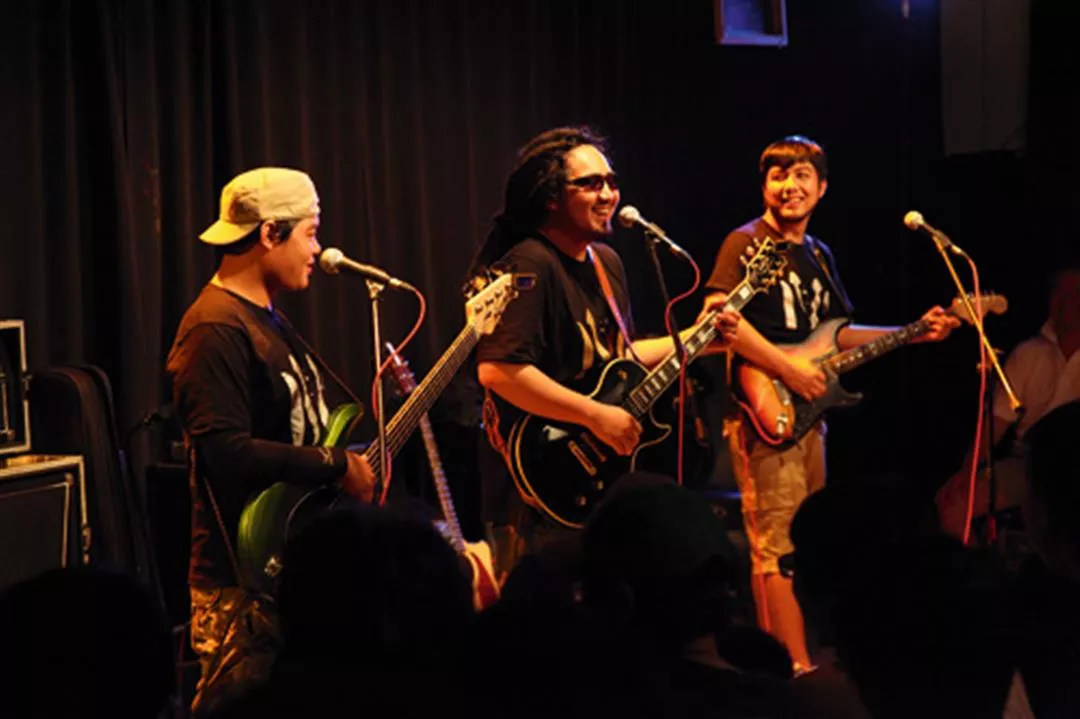
Matzka’s reggae music, loudly proclaiming peace and love, always evokes smiles and applause.
After finishing his military service, Taitung native Fong worked in theater in Taipei for several years, amassing ample management and administrative experience. He was one of the first people recruited for the Spotlight Project.
After receiving his invitation, Fong immediately decided to leave his work in Taipei, and return to his hometown to work. He wanted to give local culture fertile soil for opportunities to emerge. As village chief, he is responsible for Tiehua’s management affairs, big and small. As to future independent operation, he confidently states, “The first year we broke even, and this year we’ve begun to see a profit. Next year there’ll be no problem.” Government-subsidized projects are intended to bring good results, but past experience shows that they often fail quickly due to poor management. Tiehua Music Village, on the other hand, has not only grown robustly, it shows excellent prospects; this is something not easily achieved.
Music is the soul of Tiehua, but adding to the scene are three sales outlets: Taitung Good Goods, Good Buy, and Tiehua Bar.
Taitung Good Goods sells local specialties: the rice cakes and rice ice cream that have become a hit online can be purchased here. Good Buy is just like the name implies: it’s a little shop where good products, such as tribal artworks, are on display for purchase.
Thirsty? Tiehua Bar offers a variety of beverages and snacks. You can enjoy a lovely, quiet time in the shade of trees listening to music and feeling the sea breeze.
Each weekend, the bustling weekend market adds ambience to Tiehua. The Slow Fair operates in harmony with Taitung’s LOHAS atmosphere. Vendors come from all over Taitung selling artwork and agricultural goods from the area, including Aboriginal woodcarvings and woven goods, as well as tea, rice, honey, roselle and other local goods, to the great delight of visitors.

Village chief Fong Cheng-fa signals the start of the performances.
Thursday through Saturday evenings from eight to 10 and Sunday afternoons from four to six are the scheduled performance times.
But the fixed performance schedules that help bring in visitors can also be a problem for the booking department. “You’ll be frozen stiff if you sit for an hour outside in the wintertime,” says Fong. The winds here are strong, and when cold winds blow in, even an A-list singer won’t bring in much of an audience. And when it rains, the performers are protected by a canopy, but the viewers need umbrellas and rain gear, taking away from their enjoyment.
Despite this, Tiehua Music Village remains committed to outdoor weekend performances, in order to flaunt the characteristic charm of the venue: unrestrained and back to basics.
Wednesday evenings from eight to ten is open-mike night. This is a totally free time, when anyone wishing to perform can go on stage as long as they sign in first.
The unrestricted performance format is often filled with surprises: a self-taught piano neophyte, having studied the instrument for not even two months, might be followed by a master guitarist.
The rise of Tiehua Music Village from obscurity is thanks to the skills that everyone, from the lowliest part-timer to the village chief, contributes. At any time, one of them may perform a piece on stage; it’s not a place for professional musicians only.
“Look! Isn’t that girl on stage with the guitar the same waitress who just served us our tea?” But also lurking in the audience may be a virtuoso: one moment he’s a stranger sitting next to you, and the next he’s on stage showing off his skills. “Once the middle-aged guy sitting next to me ran onto the stage and stunned the audience when he started playing the guitar,” says Tiehua Music Village regular Tu-Tu. It turned out that the stranger was none other than master guitarist Dong Yun-chang. The audience really lucked out that day!
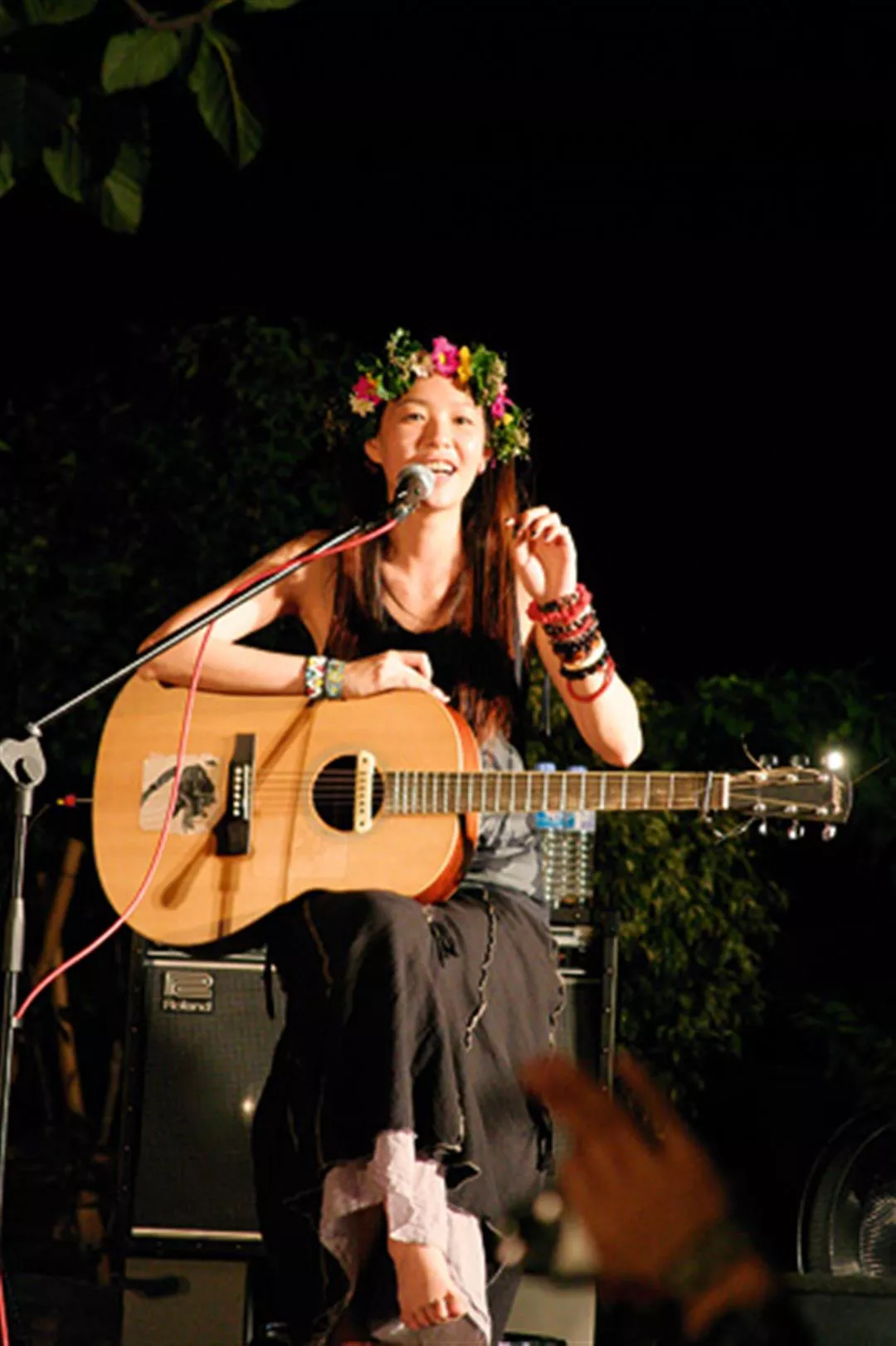
Singer-songwriter Deserts Chang, barefoot and crowned with flowers, has a gentle, natural singing style, a perfect fit for Tiehua Music Village.
A great performance can change the world. The common dream of musicians is to have their own stage on which to perform with unbridled expression as they please.
The chief performance venue for indie bands and non-mainstream musicians is the “live house.” In 2011, after a fire at Taichung’s Ala Pub, numerous live houses were shut down in the city due to inadequate fire safety, a severe blow to underground bands.
Masa, bass player of the band Mayday, wrote on Facebook, “What hurts isn’t losing part of our past; what hurts is: where can bands yet to come find a chance to sing the songs they write?”
Amid the dwindling number of performance stages, Tiehua Music Village is like a haven for the music world, providing a place where good music can have a new lifeline.

The musical feasts of Tiehua Music Village offer ample hope for the east coast of Taiwan.

Rukai nose flute player Gilra Gilrao Lraakaroko plays an instrument he built himself, channeling the intoxicating beauty of nature.


@List.jpg?w=522&h=410&mode=crop&format=webp&quality=80)
