A Test of Will: Taiwan’s Frogman Training
Taiwan’s Frogman Training
Chang Chiung-fang / photos courtesy of FOX International Channels / tr. by Scott Williams
August 2013


On scorching summer days, most of us want nothing more than to hide indoors with a cool drink and an air conditioner running full blast. Yet at Toshien Beach in Kaohsiung’s Zuoying District, a group of tanned young men are training like mad, drilling in the blazing sun while sweat pours down their faces.
The men are students in the Marine Corps’ amphibious search and rescue training program. “Frogman” training is unrelentingly grueling. What prompts soldiers to volunteer for it? How does the metamorphosis from “tadpole” to “frogman” change their lives?
Gong Mingxiang was among the principal dancers in Le ballet du siècle de Taipei’s early July performance of Stravinsky’s The Firebird ballet in Taipei. Watching his fluid, graceful movements on the stage, it was hard to believe that Gong had graduated from the Marine Corps’ amphibious search and rescue training program just six months previously, a distinction that marked him as one of the military’s most elite soldiers.
Gong is a physically powerful man, 177 centimeters tall and 70 kilograms in weight, but his years of dance training (he is a graduate of the dance program at National Taiwan University of Physical Education and Sport) and the extensive time he has spent in the company of women have given him a somewhat feminine air.
Gong’s slight femininity led his grandparents to wonder about his sexuality, making him determined to prove he was a “real man.” To that end, he volunteered for “frogman” training during his military service.
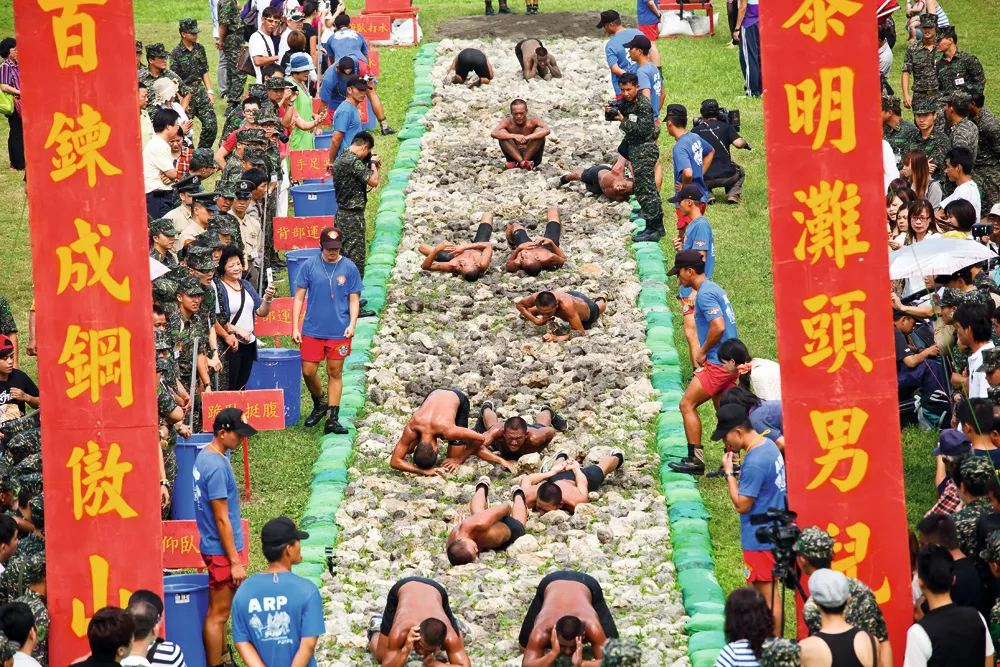
The last stage of frogman training is the jagged “road to paradise.” Students crawl along the road while performing a variety of actions, including assuming the guiwo tingfu position, the frogmen’s difficult take on yoga’s “reclining hero” pose. Only 50 meters in length, the road can feel interminable.
While many people believe that today’s young people are fragile “strawberries” incapable of coping with challenges or rough treatment, the truth is that quite a few aspire to be frogmen.
Zhang Xuhui is a muscular young Amis man from Taitung who has enormous respect for his father, a former member of the special forces. Wanting to be as “awesome” as his father, he set out to become a Marine Corps frogman.
Zhang Kaidi had somewhat different motivations. A graduate of the English department at National Taiwan Normal University (NTNU), he says that his academic career was so smooth and uneventful that he never felt he had achieved much. Annoyed by the things happening around him and questioning his own capabilities, he decided to sign up for frogman training. “I thought the hard work and discipline would help me discover my core values and potential.”
The Marine Corps has a 62-year history in Taiwan, and established its amphibious search and rescue (ASR) unit in 1968. The unit’s roots actually go back even further, to an American underwater bomb disposal team based in Taiwan after World War II.
Luo Jinzhong, a sergeant major with the ASR unit, says that the ASR training program recruits at least two classes per year, the “winter frogs” and “summer frogs,” each of which faces its own particular challenges. For example, the winter class must be able to tolerate cold, and the summer class, heat.
Registration in the program is voluntary, and open to all marines. Applicants have to prove their physical fitness by passing a battery of basic tests before being accepted into the program. “About half of the applicants fail to meet the physical fitness standards,” says Luo. Those accepted into the program, whether fresh-faced privates straight out of bootcamp or grizzled sergeants, go on train together without regard to rank.
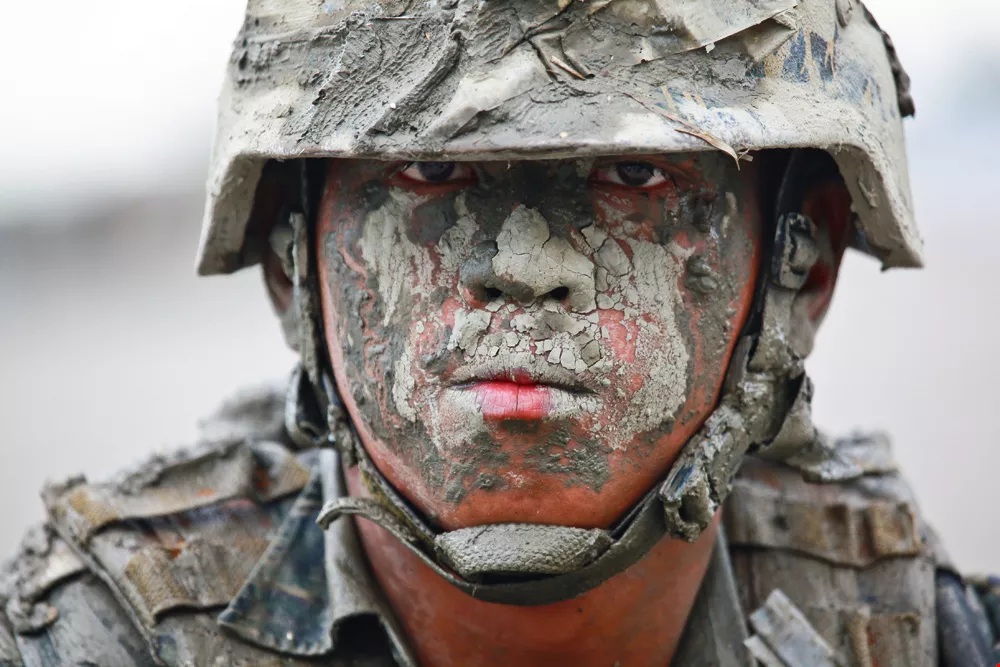
Would-be frogmen must learn a variety of diving and amphibious assault techniques, as well as alpine and urban warfare skills.
An alarm blares at midnight, startling students out of their sleep. They stagger into formation wearing only their shorts, get doused with icy water, then slurp some bitter tea to wake themselves up. Their eight- to 12-week frogman course is now underway.
The program’s curriculum includes segments on land-based, alpine, urban and maritime warfare, in addition to teaching students skills such as reconnoitering, searching, negotiating difficult terrain, diving in light and heavy scuba gear, outdoor survival, and free climbing.
Sgt. Luo, a 20-year veteran who has trained 30 frogman classes, says that the course’s first three weeks seek to separate the wheat from the chaff.
“One of the key things, and also the hardest, is breaking through the students’ mental defenses.” Luo says that everything in the frogmen’s training focuses on the importance of obedience. Individuals who have problems with authority almost always wash out in the first round of cuts.
The curriculum’s every detail has a purpose, and every student his own Achilles heel.
Zeng Hanlin, a graduate of National Kaohsiung University of Hospitality and Tourism, struggled with swimming, a crucial skill for a frogman.
Prior to enrolling in the program, he was uncomfortable in the water unless he could touch the bottom and had trouble swimming even five meters. Nowadays, he can swim for five hours without a break.
Zeng says that the whole training program is amazing in ways that those who haven’t been through it can’t really understand. Even those who’ve experienced it have a hard time describing it. “Maybe it just brings out your fundamental will to live!”
Zhang Xuhui, who started out relatively stiff, struggled with the program’s infamous guiwo tingfu, a knee-torqueing stretch similar to yoga’s “reclining hero” pose. On the other hand, years of dance training have made Gong Mingxiang quite limber and he had no trouble at all with the stretch.
Zhang had to have three people pile atop him to help him stretch, causing him such severe pain that he considered bailing out of the program. But, as Sgt. Luo likes to say, you can stretch muscles out eventually. Over time, Zhang learned to hold the pose for hour-long “naps” in the sun on Toshien (Taoziyuan) Beach with his fellow students.
Gong, meanwhile, hated marching with the frogmen’s 135-kilogram rubber dinghy. With the addition of four wooden support boards, a dinghy makes a 239-kilo package that its seven-man crew have to carry on their heads. Gong says that the problem comes from the differing heights of the crew members: the taller guys end up with all the weight on their heads because the shorter guys’ heads don’t reach the boat.
“You carry it for so long that your scalp swells and thick layers of skin begin peeling off.” Gong says he eventually learned to march and sleep simultaneously all the way to their destination, adding that people are capable of amazing things when pushed to their limits.
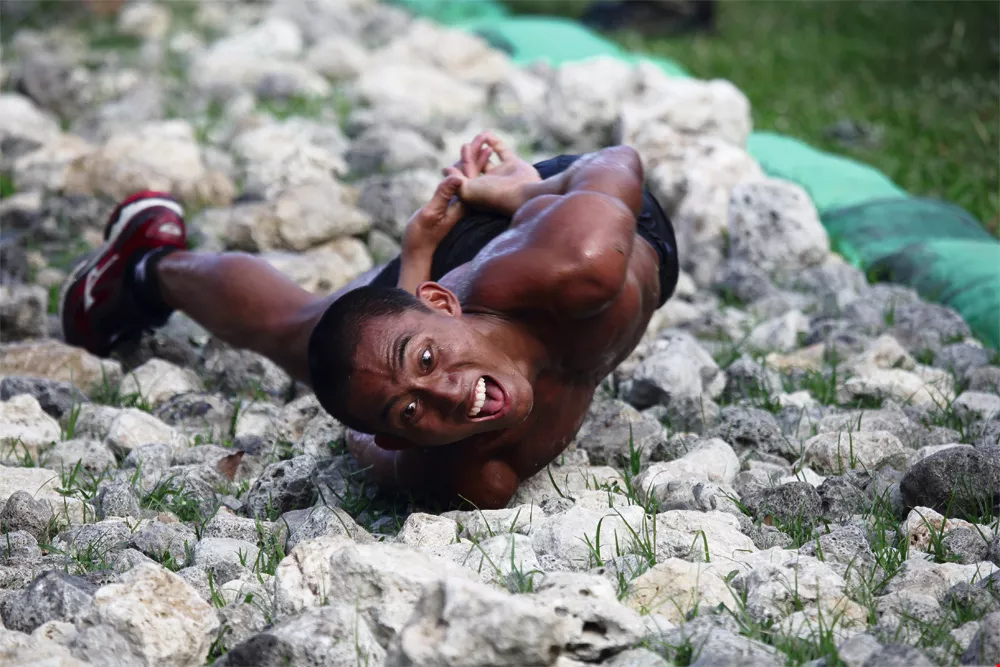
The Marine Corp’s amphibious search and rescue course (aka “frogman” school) is a daunting undertaking, a trial by fire for young men testing their limits.
Frogman training is grueling, but students get a couple of days off each week to visit home just like the nine-to-five crowd. Gong laughingly recalls that as the end of their weekend loomed closer at seven or eight o’clock Sunday evening, moods would sour and faces fall.
Gong adds that the training itself was somewhat different from how people imagine it, noting that some of the hazing that earlier generations of frogmen went through, such as training in a graveyard or swimming in a latrine, are no longer part of the program. “I guess frogmen today just aren’t the same kind of supermen!”
Reflecting back on his own training, Luo says that it used to be much more challenging. “Nowadays, safety is a consideration.”
Citing sea swims as an example, he recalls that in the old days students were required to swim for eight hours without a break. Lunch consisted of onigiri (rice balls) eaten while still in the water, meaning that those who couldn’t tread water well washed their onigiri down with a large helping of seawater. That, in turn, often led to gastrointestinal discomfort, which further sapped the swimmers’ strength.
“Everyone was exhausted, so no one was likely to notice if someone were to suddenly go under. You really had to depend on yourself.” Luo says that nowadays safety considerations limit the sea swim to five hours, and meals wait until the swim is complete.
Other changes include the shortening of the underwater swim from 50 meters to 35 meters on a single breath, and allowing students to use their hands to keep their chins from getting bloodied while doing a “frogman suicide,” a maneuver involving flinging their bodies flat on the ground.
Though the training may not be quite as punishing as it used to be—the fact that today’s lower birthrates make every young man in the program his family’s treasure almost ensures that it cannot be—Luo feels great respect for the young men who challenge themselves and temper their wills by volunteering for the program.
Their shared suffering fosters the development of trust and strong ties between them. As Luo puts it, “They become more than brothers.”
The program is structured to punish everyone for the mistakes of any individual, which can be an almost unbearable burden for the young frogmen.
“You’re afraid that the whole team will be disciplined if you give up,” says NTNU graduate Zhang Kaidi. “They’re working hard for you, so you have to work hard for them, too.” Though forced to leave the program by a chronic knee injury, Zhang still fondly recalls the camaraderie that existed on his team.
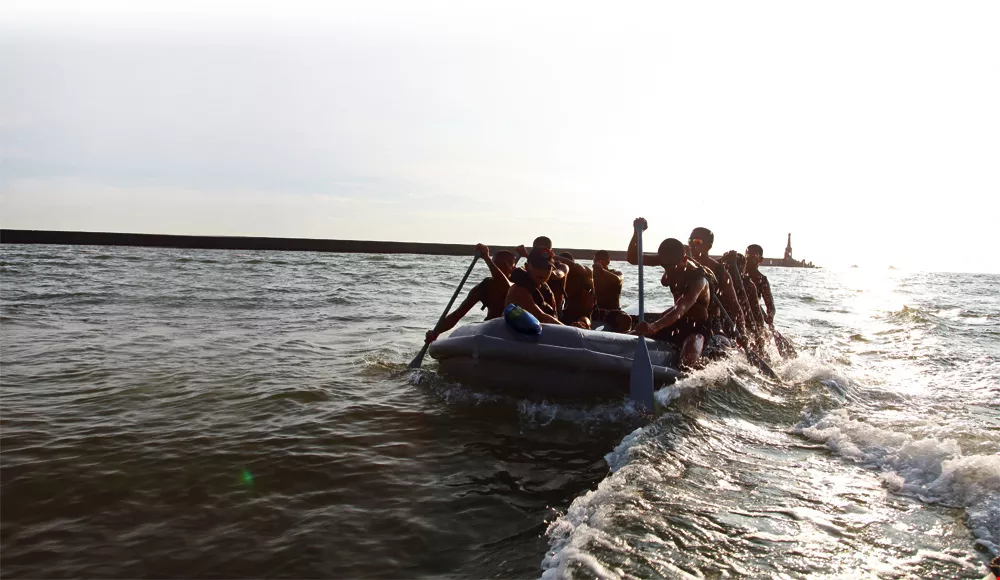
Students train in dinghies to learn to operate them and to improve their physical conditioning. The training also builds their esprit de corps and ability to work together.
Having made it through the first eight to 10 weeks of training, students come to the culmination of their course: a six-day, five-night hell week in which they revisit all 21 segments of the program’s curriculum, including land, alpine, and maritime warfare, Each day consists of alternating drill and rest sessions, the former running nonstop for five hours, the latter lasting just one.
The first part of the week tests their physical fitness, the middle part, their endurance, and the last part, their will. “Day three is the tipping point,” says Luo. Already exhausted and therefore vulnerable to thoughts of quitting, they give up in greater numbers on this day than any other.
Hell week’s final test is the so-called “road to paradise.”
“The road is very short, but also very long.” Students build the road, which is only 50 meters in length, themselves from sandbags and rocks. In spite of carefully selecting stones for their smoothness, the road always seems incredibly jagged the following morning, as if their sergeants have deliberately rearranged them pointy side up. The soon-to-be frogmen must now crawl painfully down their handmade road while carrying out a variety of maneuvers.
Gong describes crawling the length of the road as feeling like sliding across asphalt after falling off a motorcycle; you do it again and again until you’re completely numb.
Zhang Xuhui says that he was weeping before he even started down the 50-meter road, moved by the tears of teammates who had already completed their journeys and received their frogman insignia. When his own turn finally came, he was completely dazed. His instructor had to shout instructions at him repeatedly before they sank in, with the result that his journey along paradise road took nearly an hour.
Having scraped and scrambled all the way to the finish line, the frogmen’s reward is a piece of hard candy offered by the battalion commander to symbolize the sweetness that comes of completing a difficult challenge.
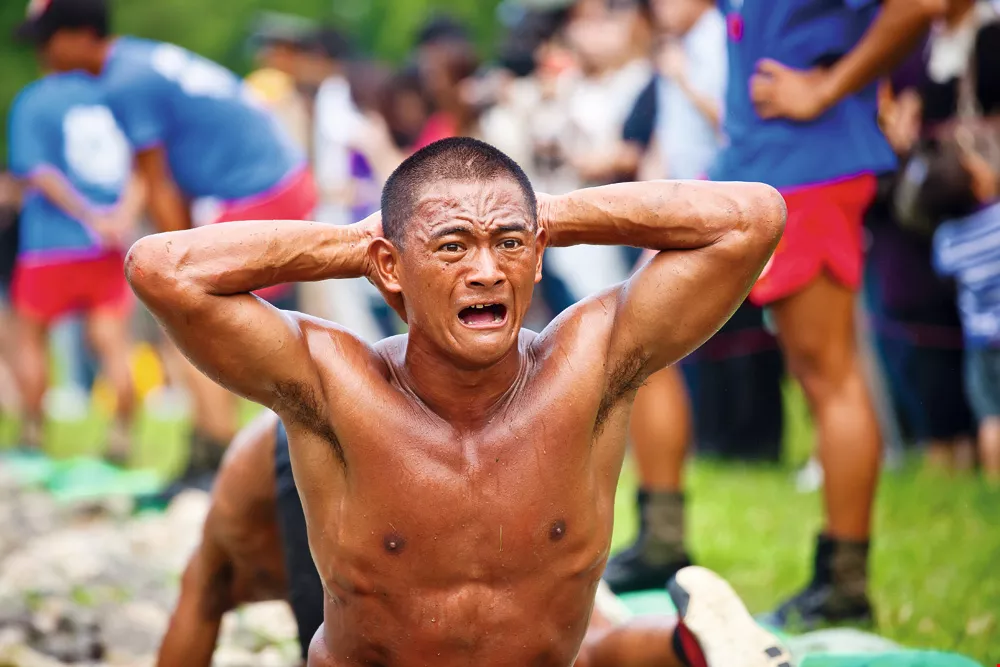
The last stage of frogman training is the jagged “road to paradise.” Students crawl along the road while performing a variety of actions, including assuming the guiwo tingfu position, the frogmen’s difficult take on yoga’s “reclining hero” pose. Only 50 meters in length, the road can feel interminable.
Reflecting on their grueling journey, students become more conscious of human frailty and perseverance. At every stage of their training, they watched as some of their number bailed out while others endured leg injuries and soldiered on.
Zeng’s leg injury caused him pain when even doing nothing more than walking. The base medical officer originally diagnosed gout, but when Zeng saw another doctor after leaving the military, he learned he had a dislocated ankle.
While in the program, Zeng relied on injections to deal with the pain, but by day four of hell week, which involved a long run, the shots were no longer helping. Even so, he never considered withdrawing; there was simply no way he was going to drop out while in the home stretch. Doing so, he says, would have meant that all his earlier suffering had been for naught.
But some do fail within sight of the finish line. Wu Mingzhang made it all the way to the fifth night of hell week and was set to ascend to paradise when he was cut. Exhausted and flagging in the 36°C midday heat on day five’s distance run, he was asked by an instructor if he wanted to get into the ambulance. Not thinking, he accepted the offer.
Coming back to himself, he was filled with regret at having failed to achieve his goal. His teammates wept with him. In retrospect, Wu feels that he gained much from the experience even though he didn’t have the opportunity to take the “road to paradise.” And he’s thrilled that his time in the military enabled him to transform himself from a chunky 108 kilograms into a muscular 78 kg.
Sgt. Luo says that roughly 20% of students complete frogman training. In the 137th class, for example, 27 out of an original 74 students graduated.
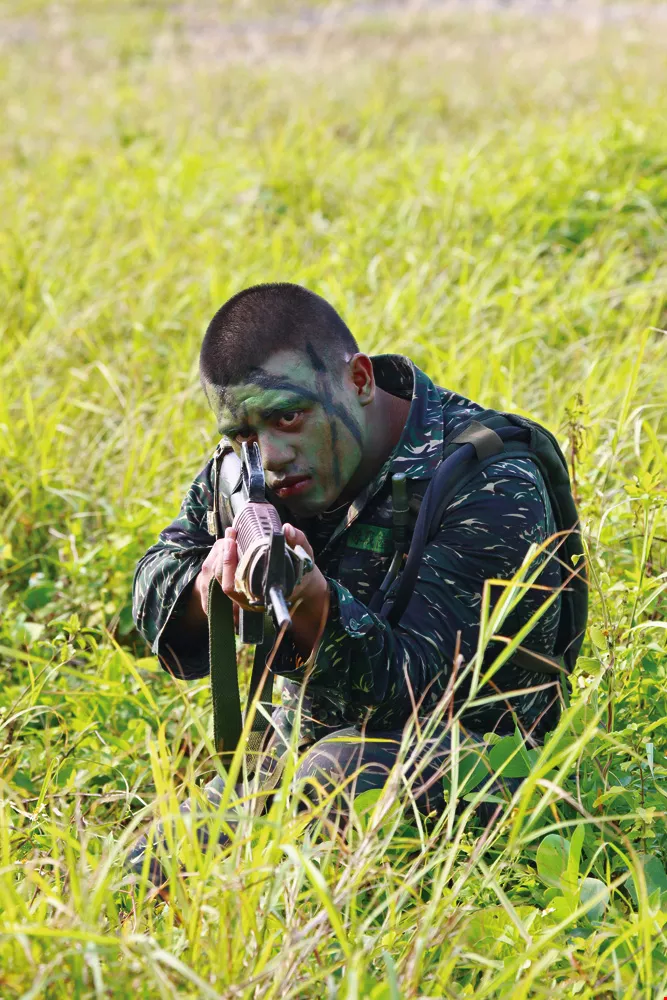
Would-be frogmen must learn a variety of diving and amphibious assault techniques, as well as alpine and urban warfare skills.
The renowned American general Douglas MacArthur once said that he wouldn’t have traded his military experience for a million dollars, but that you couldn’t have paid him a million dollars to do it again.
If you asked the 137th frogman class if they’d be willing to do the course again, their answer would surely be the same as MacArthur’s.
All of the students felt their transformation from tadpole to frogman was a profound experience.
Zeng, discharged six months ago and now an apprentice chef with a French restaurant in Kaohsiung, says that while his frogman training doesn’t help him cook, it has completely changed his attitude. “I used to flee from situations I didn’t know how to resolve. I’d just let someone else take care of them. Nowadays, I ask for advice, then find a way to deal with them.”
Zhang Xuhui says that he now appreciates everything more. Things that he couldn’t enjoy while in the program, even things as trivial as a cold drink or a bag of snacks, are precious to him now.
Discovery Channel and National Geographic Channel programs revealing just how grueling Taiwan’s special forces training is have engendered new respect for these elite soldiers. As Sgt. Luo says: “The most important thing these soldiers take from their training into the rest of their lives is the determination to persevere.”
Their sweat and tears have not been shed in vain. Hereafter, these young men will face every challenge life throws their way with an iron resolve to overcome it.
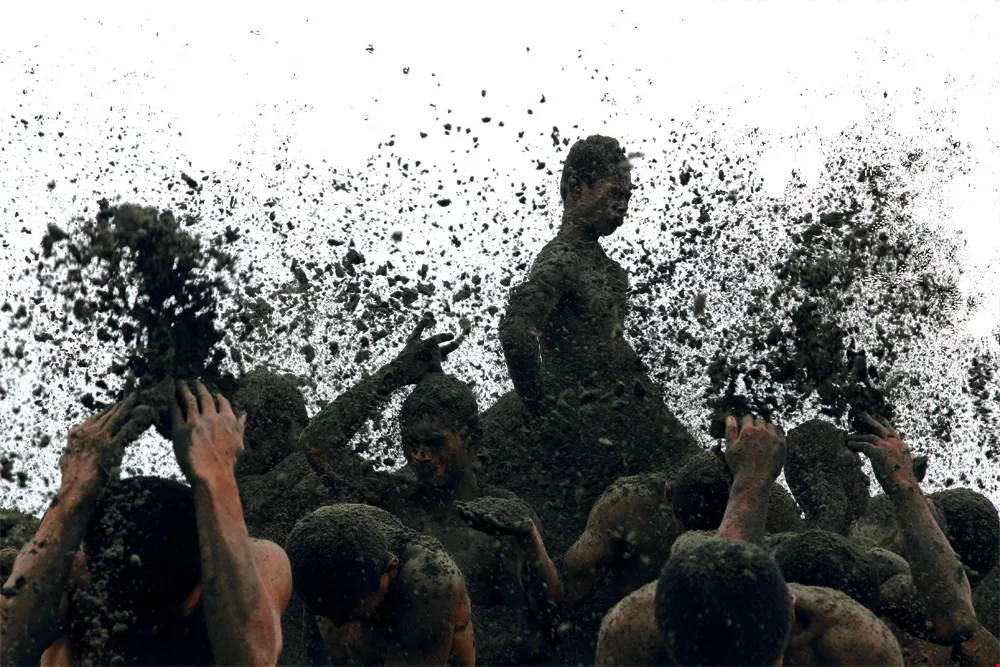
Once a frogman, always a frogman. Having survived their grueling training program, frogmen are fearless in the face of life’s challenges.
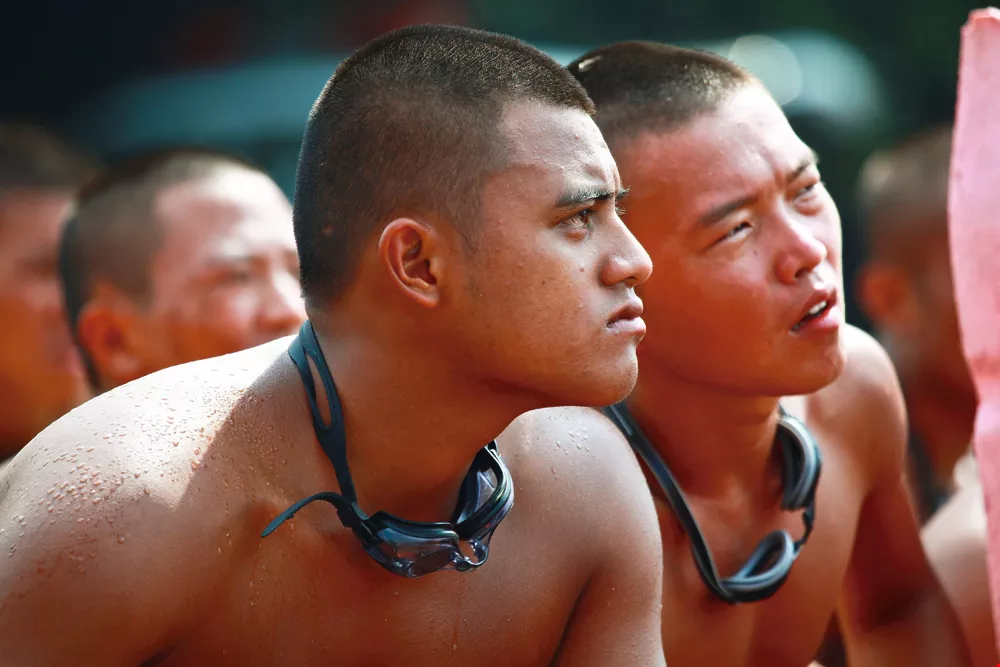
The program attracts young people who want to test themselves. When pushed to their physical limits, there is no thought, only willpower.
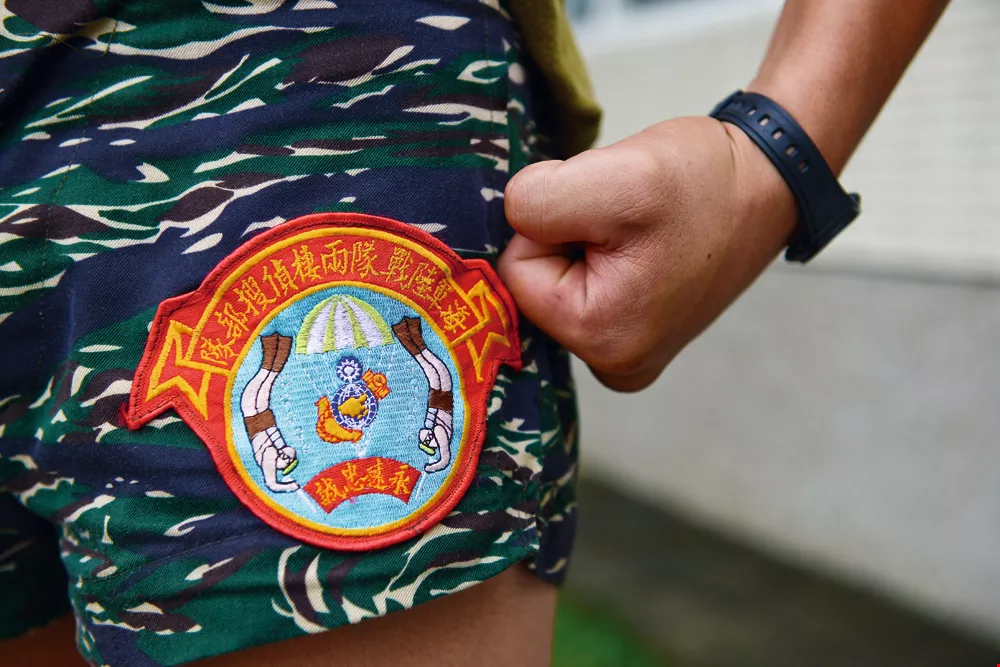
Earning the frogman insignia requires enduring a grueling 12-week training course.
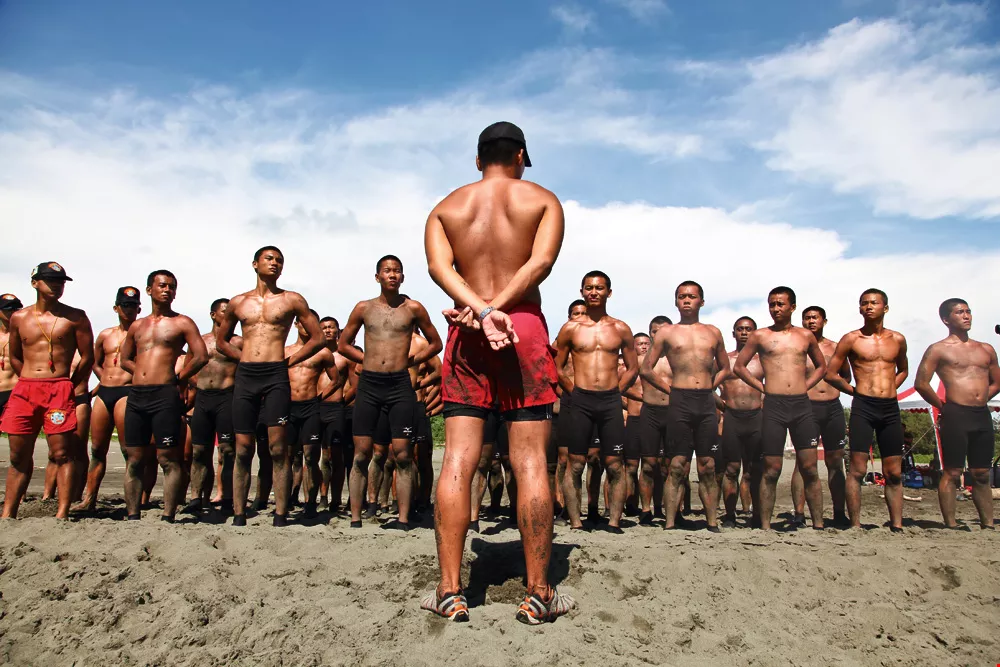
Beach training can be torturous for the programs’ “summer frogs,” who must endure having their heads baked in the broiling sun and their feet cooked by scorching sand.

@List.jpg?w=522&h=410&mode=crop&format=webp&quality=80)

@List.jpg?w=522&h=410&mode=crop&format=webp&quality=80)

@List.jpg?w=522&h=410&mode=crop&format=webp&quality=80)
@List.jpg?w=522&h=410&mode=crop&format=webp&quality=80)

