Hollywood Looks East- And Chinese Movie-Makers Claim a Foothold in The West
Teng Sue-feng / photos Hsueh Chi-kuang / tr. by Christopher MacDonald
July 1999


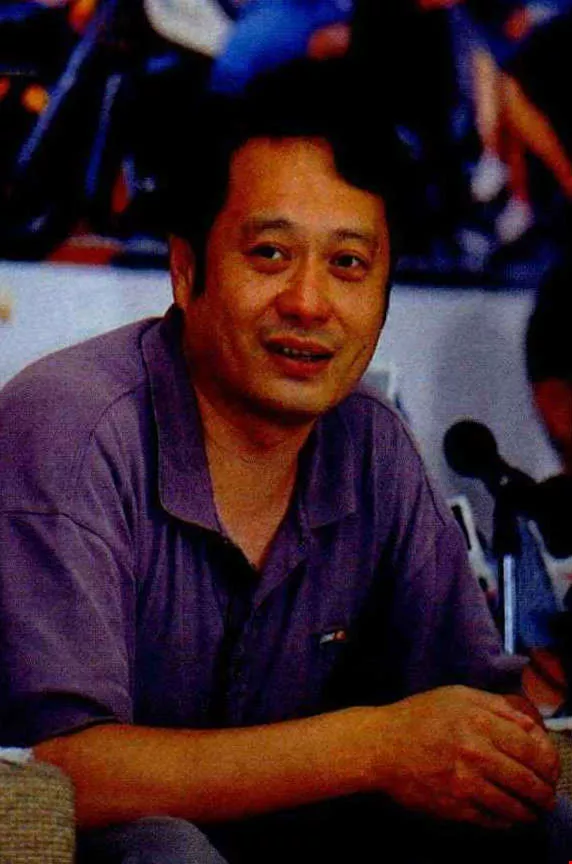
Ang Lee at a press conference with Taiwanese movie-fans. Taiwan-born Lee rose to prominence with his trilogy of films about Chinese families, winning the Golden Bear award in Berlin for The Wedding Banquet before moving into Hollywood. (photo by Diago Chiu)
An eye-catching billboard for the Disney animation Tarzan, looking down over Hollywood Boulevard. With its attractive climate, Los Angeles became a magnet for movie companies in the 1920s, and steadily developed as the base for the world's leading film industry.
"Can a vampire resist fresh blood?" Three years ago, after the release of Ang Lee's Sense and Sensibility and John Woo's Broken Arrow, Newsweek magazine commented that in today's world of increasingly global entertainment, Hollywood was "bound to discover Hong Kong."
Instead of "discover Hong Kong" they perhaps should have said "discover the East," or "discover the Chinese," because the latest invasion of Hollywood includes actors and directors from Taiwan, Hong Kong and the mainland. But in particular, it is the kind of action-packed cops-and-gangsters films in which Hong Kong excels that have taken Hollywood by storm.
The market for Chinese-language films has shrunk since its heyday, when some 200 pictures were produced every year. So is "going West" now the only way out for skilled filmmakers? What reverberations can we expect from this injection of Chinese movie talent into the huge machine of the US film and television industry?
"East is East and West is West..." is how Rudyard Kipling, writing 100 years ago, referred to the gulf between the cultures of the two hemispheres. Today, however, a fusion of Eastern and Western cultures can be found in the world of the movies.
Los Angeles, California: home of the world's largest production line for films. The sun burns as brightly as ever-perfect weather for going out to spot a few stars and take in some movies. Mann's Chinese Theater on Hollywood Boulevard is one of the city's best known tourist attractions. Outside it is the Walk of Fame, where generations of superstars like Marilyn Monroe, Clint Eastwood and Sean Connery have left cement prints of their hands, feet and autographs in the sidewalk.
Though styled like an oriental temple, the theater in fact has nothing to do with China. In the 1920s, cinema owners felt that with the American public still recovering from the trauma of the First World War, fantastically decorated movie-houses built to resemble palaces would help to cheer people up. Hence the construction of an "Egyptian" theater, and a "Chinese" theater, the latter featuring a large gong in the courtyard, hand-woven rugs in the interior, and intricately carved dragons on its ceiling.
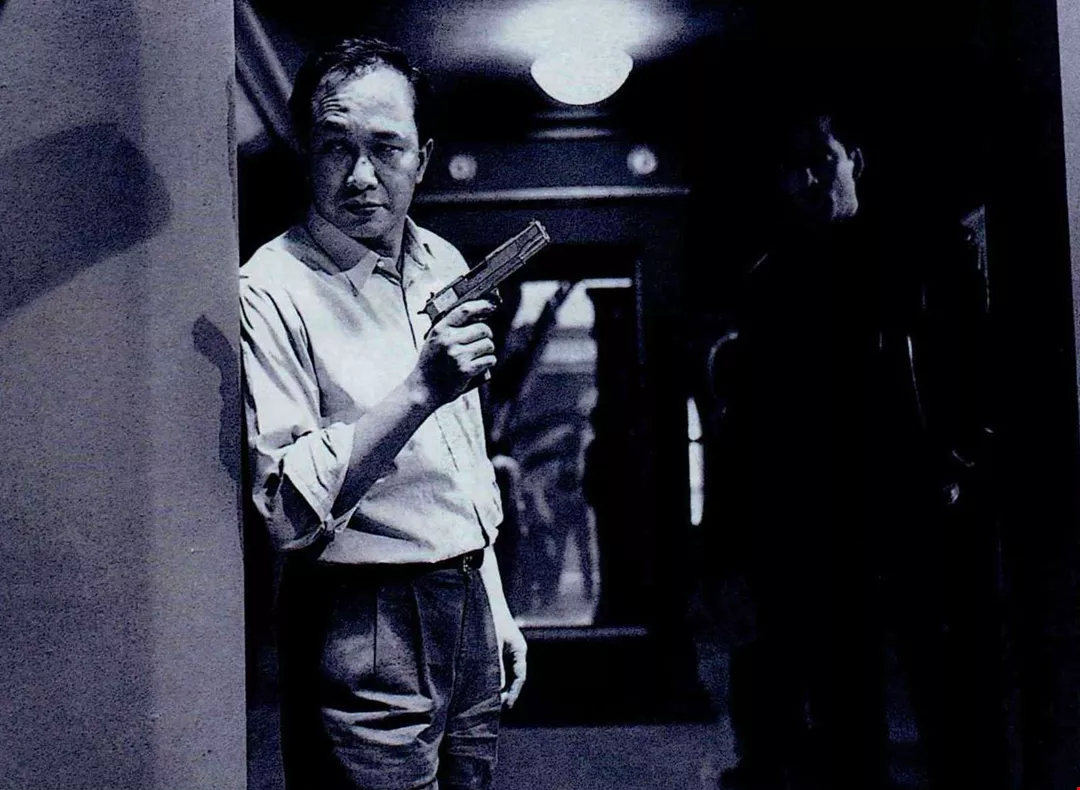
Hong Kong director John Woo, known for action films with a strong dose of male bonding, grabbed international attention with A Better Tomorrow. In the wake of recent high school shooting tragedies in the US, Woo now says that he doesn't want to make any more ultra-violent movies. Here he is shown directing Nicholas Cage in Face/Off--perhaps Woo's last foray into the genre. (courtesy of Terence Chang)
Nevertheless, plenty of familiar sights from the East can be seen in the films themselves. Outside, next to the Planet Hollywood restaurant on the Walk of Fame, there is a poster for the Jet Li film Black Mask -made in Hong Kong three years ago but now released in a dubbed version in the US. And at a video rental store two blocks away, fans are enticed inside by a large Jackie Chan billboard. New faces
In the entertainment industry, which is constantly in search of new ideas and new subjects, one way of stealing a march on your competitors is of course to discover a "new face." Because of its geographical and historical connections to the continent, Hollywood discovered Europe very early on. Now it seems that the tide has turned towards Asia, beginning with action heroes.
Hong Kong superstar Jackie Chan made his first bid for Hollywood glory 19 years ago, but the time wasn't right and he didn't have the necessary momentum. Chastened, Chan returned to Asia and continued cultivating his trademark style-real fighting action, plenty of pratfalls, and no obscenity.
Three years ago, Chan's film Rumble in the Bronx was released simultaneously at 2000 cinemas across North America. Having broken into the US mainstream, he now criss-crosses the Pacific, making films in both Asia and America. In last year's Rush Hour, backed by US filmmakers New Line Cinema, Chan played a top Chinese detective sent to help US police catch the kidnappers of the Chinese consul's daughter.
Hollywood likes making action movie sequels because they fill seats, but as time goes on they tend to run out of new ideas. And as Time magazine commented last year, there seems to be a temporary shortage of new action talent in Hollywood. Steven Seagal has seen better days and Jean-Claude Van Damme is on the downside, while Schwarzenegger and Stallone cost too much. Now is the time for heroes of the East to make their mark in the West.
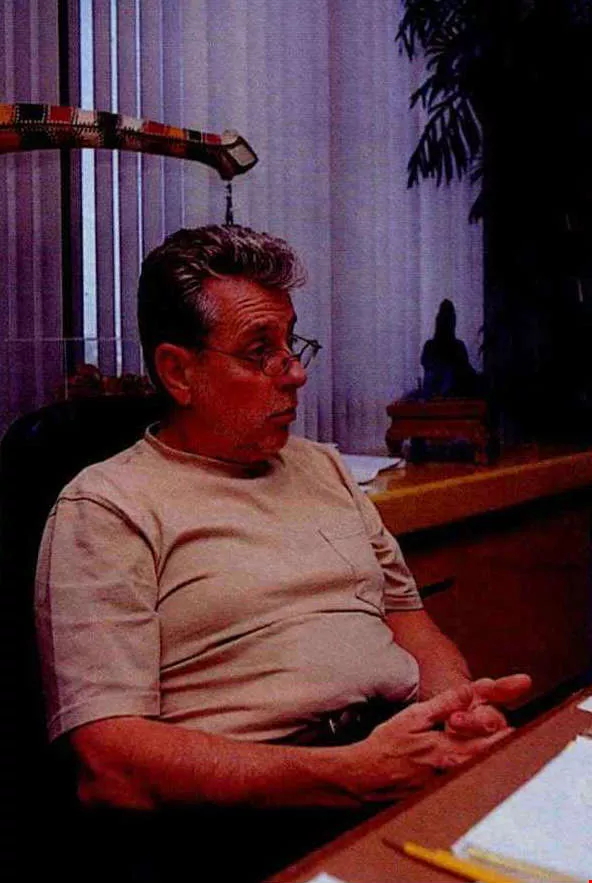
Los Angeles-based independent producer Andre Morgan, whose ties with Chinese- language cinema go back over 20 years, and who was producer on Bruce Lee's last film, Enter the Dragon. More recently, he helped usher Hong Kong's Sammo Hung and Stanley Tong into the US film and television community.
When Jet Li, the "emperor of kung fu" became an Asian phenomenon for his starring performance in Once Upon a Time in China, he attracted the attention of Lethal Weapon director Richard Donner, who cast him in Lethal Weapon 4. The film grossed US$125 million in North America. As Donner says: "I knew I was getting a martial arts genius." And for the new Bond girl, producers of the latest "007" movie recruited Michelle Yeoh, one of the handful of movie actresses in Hong Kong actually able to do kung fu. Heroes looking West
It's not just Hong Kong's on-screen stars who are being welcomed to Hollywood. There is a lot of interest in the people who make the movies too.
Director John Woo burst onto the Hong Kong movie scene in 1986 with his film A Better Tomorrow, launching a vogue for action films with affable male heroes and earning lead actor Chow Yun-fat his first major Hong Kong movie award. Woo went on to direct a number of films like The Killer and Bullet in the Head, featuring the heroic exploits of police and gangsters, along with endless shootouts and chases. He also triggered a wave of similar films that held audiences in thrall.
One day in 1989, John Woo's agent Terence Chang received an international call from a script reader at TriStar Studio, inquiring if Woo would be interested in doing some work in the US. But the Hong Kong film industry was riding high at the time, and Woo's response was: "Who needs Hollywood?"
Ten years later, John Woo's home in Hollywood is the gathering place for Hong Kong movie emigres. In April of last year, Asiaweek ran a photo of Woo on its cover to illustrate a feature about this group of filmmakers, people who had left their home to take on the world. Woo says that he moved to Hollywood because he was feeling "stuck" in Hong Kong, ground down by the multitude of problems concerning actors, locations and limited funds, and having exhausted the technical options that were on offer.
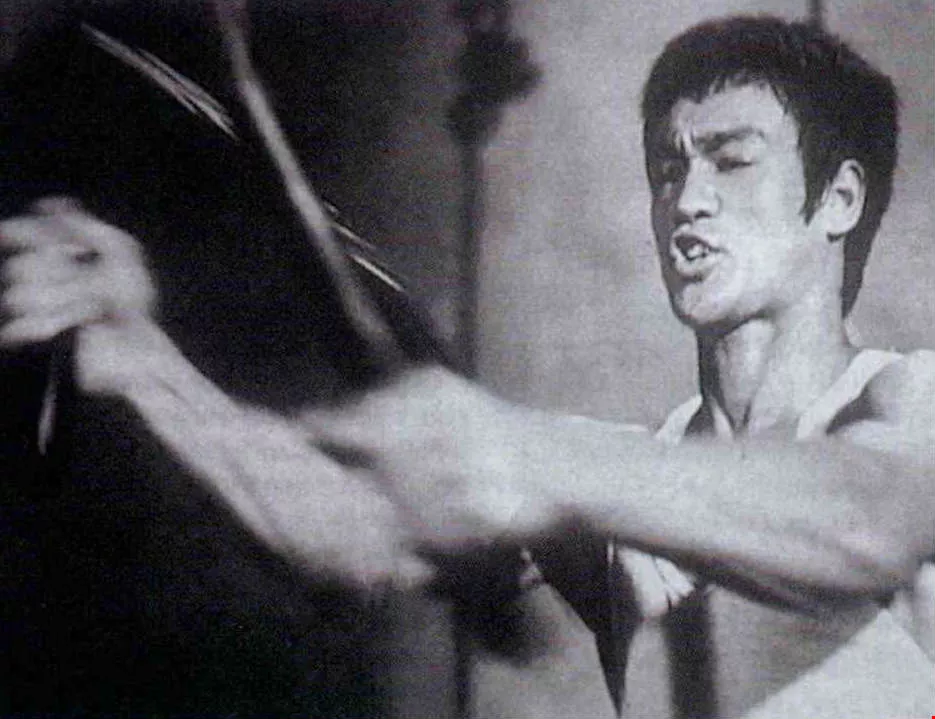
Bruce Lee's meteoric career ended prematurely, but he has been immortalized as the emblem of Chinese heroism. (Sinorama file photo)
Woo, a native Hong Konger, established his reputation in the US with three Hollywood-filmed movies: Hard Target, Broken Arrow and Face/Off. Ang Lee, who hails from Taiwan and is distinguished by his mastery at depicting the minutiae of human nature, has now made three major films for Hollywood: Sense and Sensibility, The Ice Storm and To Live On. Fighting to get in
John Woo and Ang Lee: one based on the West Coast of the US, one on the East Coast; one known for action films, one for dramas. And both of them already on the Hollywood A-list.
One difference, however, is that while Ang Lee is so far the only Taiwanese director to have moved to the US to pursue his work, a whole string of Hong Kong directors have now followed in John Woo's footsteps, including Tsui Hark, Stanley Tong, Ronnie Yu, Ringo Lam and Peter Chan. There is a trend in the Hong Kong movie industry for people to relocate to the US, and this is particularly true of action film directors.
"Action films use a relatively international language," says Stanley Tong, who has worked with Jackie Chan for many years and has been executive director on a number of Chan pictures including Rumble in the Bronx and First Strike. According to Tong, the reason that such films became the mainstream in Hong Kong was that with that with a population of only 6 million, it was necessary to make films that would also win audiences elsewhere, in order to make money. Drama films, on the other hand, are hard to sell abroad, as people from different nationalities and cultures do not necessarily share similar attitudes to love, or have the same sense of humor.
"If you know about the movie environment in Hong Kong," he says, "then you know that there are distinct differences between action films in Hong Kong and in the US." In Hong Kong, when they wanted to shoot street scenes involving gunfire and explosions, the colonial government wouldn't close off the roads and wouldn't grant permission for filming. "We could only film down by the quay, or in a warehouse-areas that we controlled ourselves. When you film a hand-to-hand fight scene, it takes about a minute to show most of the possible kicks and punches-but you need 40 minutes of fighting for each film. We had to strive for new ideas. As a result there is a much wider variety of fighting action in Hong Kong films than in American films, and the movement of the combatants is far better."
In addition to the unique action style of Hong Kong movies, another reason for the American interest is that there are certain similarities between the output of both Hollywood and Hong Kong.
Comparing the movie systems in Taiwan, Hong Kong and mainland China, Edmond Wong says that the Hong Kong industry is nearest to Hollywood in its commercialism, and also notes that "the sensitivity of those working in film in Hong Kong, and their level of practical flexibility, is far greater than in Taiwan. Hong Kong has also had the most success in terms of attracting outside support, and its push towards Hollywood is going to become increasingly evident."
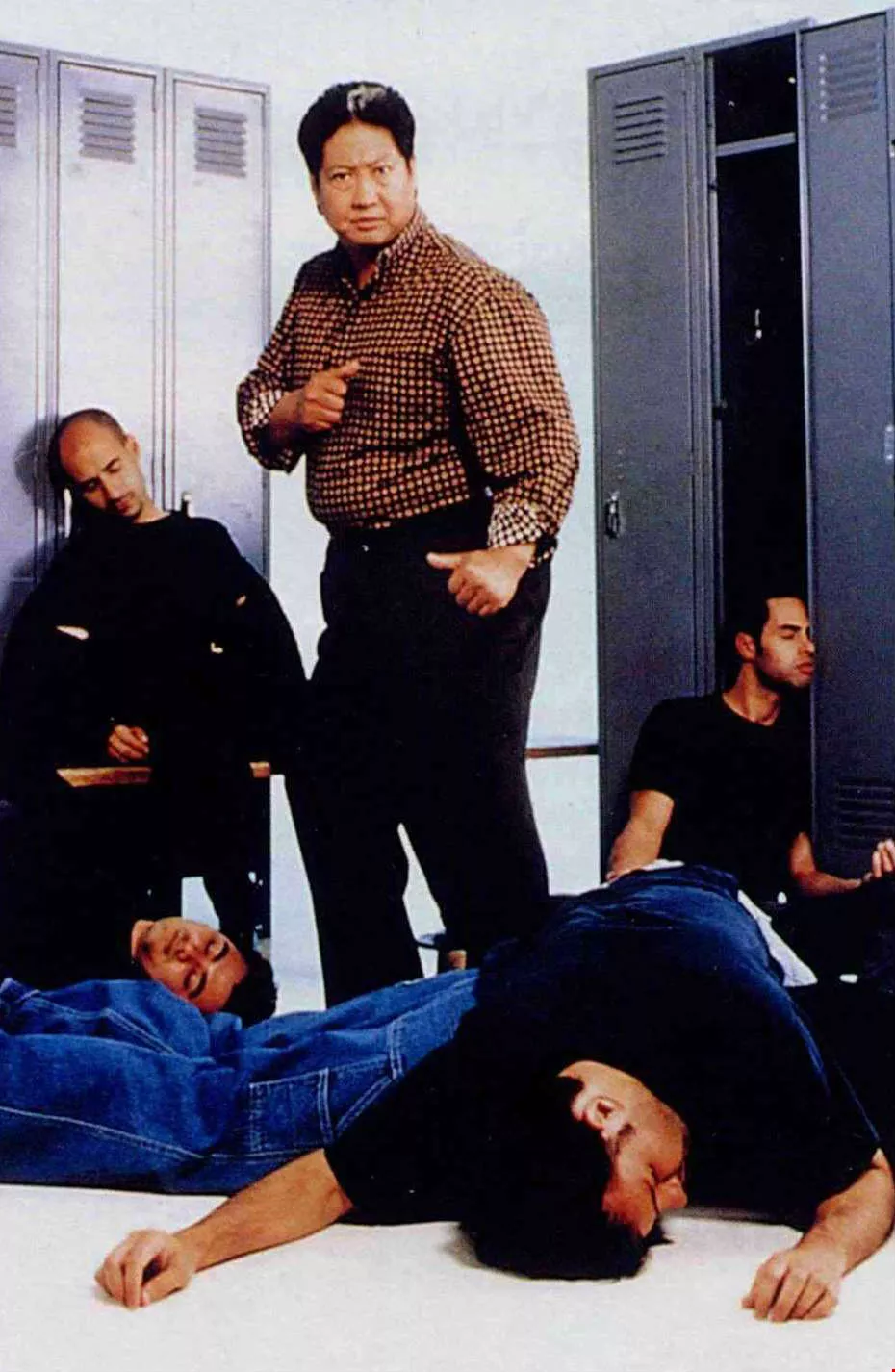
Sammo Hung, the roly-poly actor, director and producer, is a merry character who is also surprisingly nimble. Martial Law, the television series in which he stars, is one of the most popular shows on American TV. (courtesy of CTS)
For Hong Kong movie-makers, a prerequisite for moving to work in the US is that they are invited there by a production company. But what prompts top directors to abandon their home turf and start afresh in a distant land, where the audience barely knows them? The collapse of Hong Kong movies?
"Six or seven years ago I sensed that something was not right," says Sammo Hung, known as "Big Brother" in Hong Kong movie circles. What happened was that the underworld began to get involved in Hong Kong's film industry, corrupting the filmmaking system and causing many people to feel that they "just didn't want to make films any more." "Cinema in Hong Kong is bankrupt," says independent Hollywood producer Andre Morgan, who has deep-rooted connections with the Hong Kong industry. He cites a host of reasons that have contributed to the decline of Hong Kong movies, such as the continual rehashing of old ideas, the loss of profits due to sales of pirated videos and laser discs, the continued imposition of film censorship in parts of Asia, and the regional financial crisis of the last couple of years-with big falls in the value of Asian currencies leading to shrinking revenues at the box office.
Sammo Hung, who started out as a stuntman and performed in 140 films before moving into the production side of the industry, says that he was half-retired and thinking of buying a ranch in the state of New York, when Columbia Pictures asked him to star in a television series about a kung-fu-kicking Chinese cop. Hung felt his English wasn't up to it, and only agreed to do the show after three months of coaxing by the series director, Stanley Tong.
The 22-part series, Martial Law, was aired last year and became an unexpected hit. TV Guide named it one of the most popular programs on television, and a second series is already in preparation.
The program has already been shown on television in Taiwan. Hung was in Taiwan earlier this year on a publicity visit, and when he was asked about the biggest pressure for him filming in the US, he replied: "I'm nearly 50 and I still have to do martial arts training, it's tragic! And I have to remember all that English dialogue. I even speak English in my dreams."
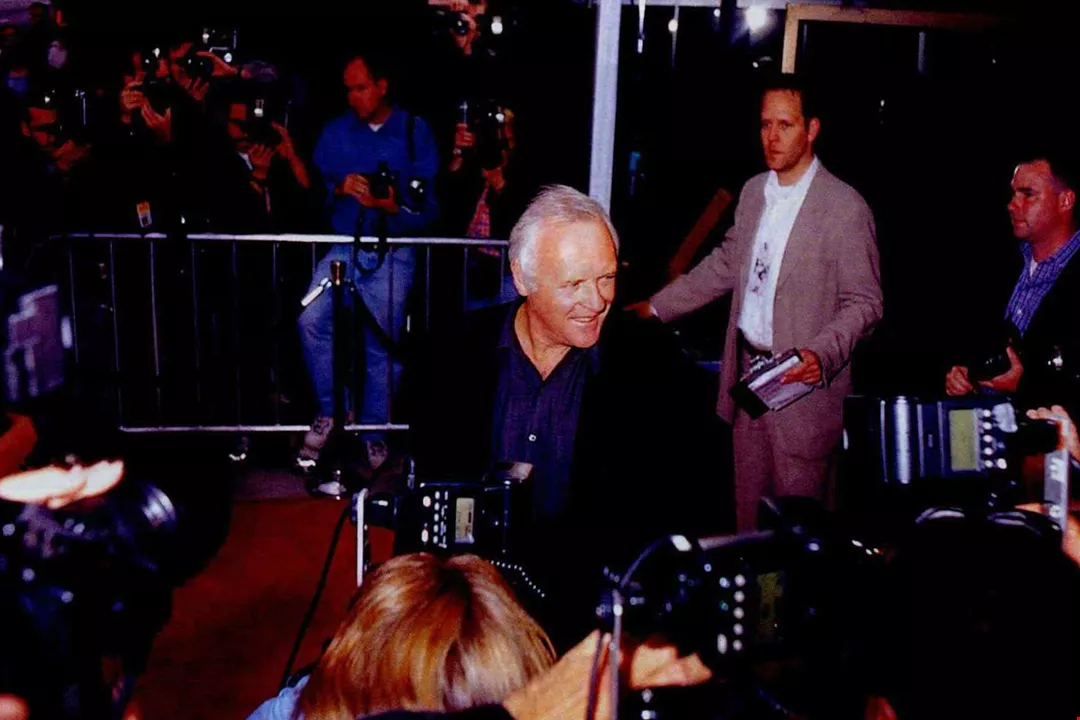
How does Holly wood, which produces several hundred movies every year, whip up public interest? The premiere of a new movie is always good for attracting media attention. The picture shows the premiere, at the Academy of Motion Picture Arts and Sciences, of Instinct, starring British actor Anthony Hopkins.
The series producers are evidently very happy with his work, however. Halfway through filming the company raised his performance fee, and it has also signed him to a 6-year contract. Tong recalls that on the first day the president of Columbia Pictures came to watch them filming. He was stunned to see the 230-lb lead actor roll nimbly off the roof of a car. Giving Tong a shove on the shoulder, he asked: "Did you see what he just did?" Behind the silver screen
In addition to practical considerations concerning the market, and box office revenues, says Edmond Wong, "the reason that film-makers want to be in Hollywood is that they can get 100% of the resources that they need." Particularly in recent years, there have been clear signs of deterioration in the film markets of Taiwan, Hong Kong and the mainland, with serious piracy problems in Hong Kong and the mainland, and a dearth of themes in Taiwan movies. "Almost inevitably, people are looking for a way out."
To be even more pragmatic about it, the fact is that only American films can be seen in all 180-plus countries of the world. Says Wong: "No matter how well Ang Lee films are made, without the Hollywood distribution network they wouldn't make their money back."
Morgan takes gambling as a metaphor, explaining that in Las Vegas you can play at different tables according to the value of the chips that you want to use. "Hong Kong's movie business started out at the $100 table, and having made some money it naturally wants to move up to the $1000 table. At the moment though, it's only got as far as the VIP room."
It was 1972, during the Vietnam War, that Morgan, who majored in Chinese at university, went to Hong Kong and took a temporary job at newly established Golden Harvest Films. It was there that he met Bruce Lee, himself just back from Europe where he had been filming The Way of the Dragon. Later, Golden Harvest decided to collaborate with an American studio in order to propel Bruce Lee into the international limelight, and Morgan acted as representative for the Hong Kong side during the negotiations. He was also producer on Lee's final film, Enter the Dragon.
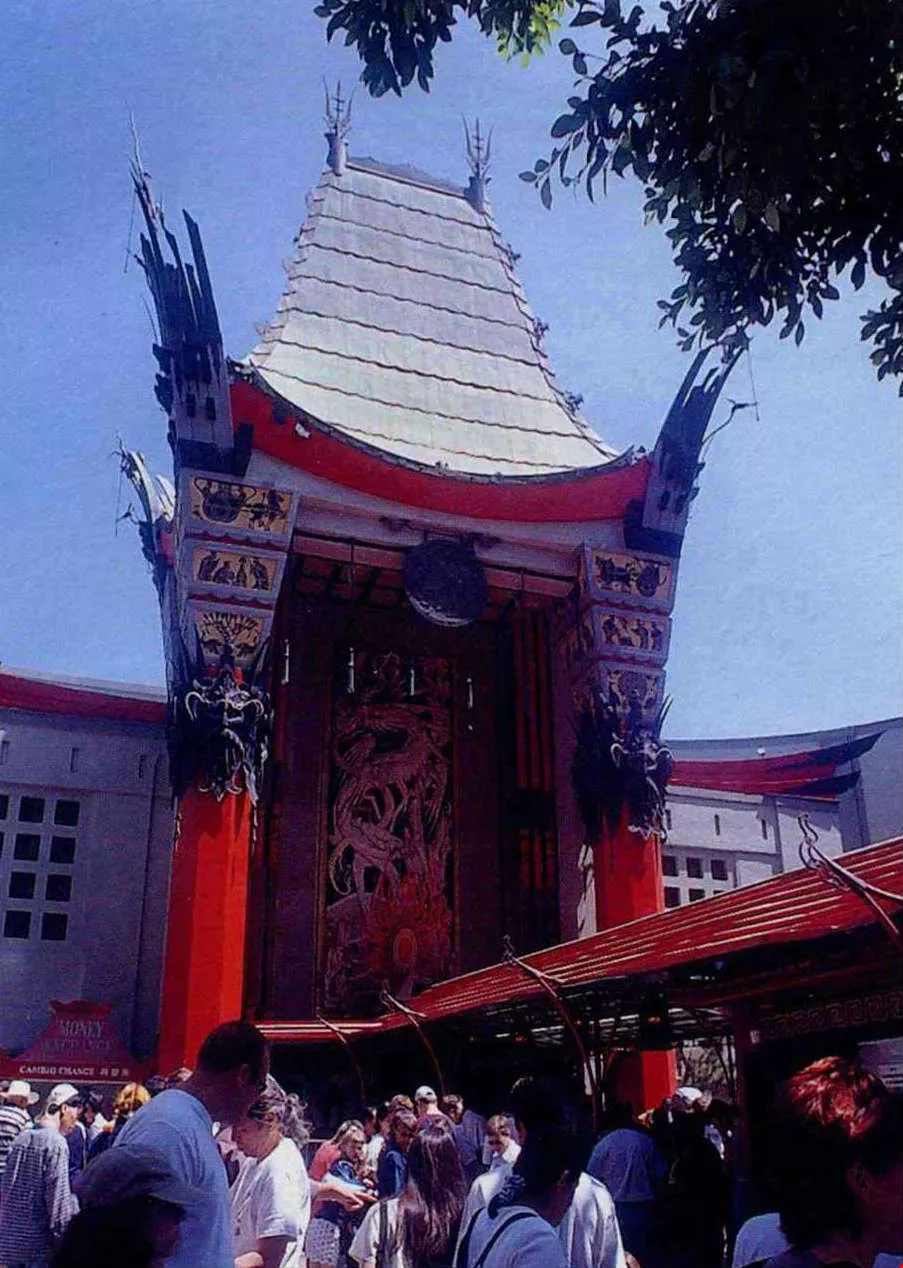
Mann's Chinese Theater was opened in 1927, making it one of Hollywood's oldest cinemas. The name reflects the oriental style of its architecture.
In 1984 he left Golden Harvest and returned to the US to set up his own independent production company. When Hong Kong movie people began to embrace Hollywood, it was Morgan's production company that provided them with a channel to the big US studios. Not just a cultural problem
Hollywood has enormous power to soak up talent, but what are the limitations facing ethnic Chinese filmmakers in Hollywood, given the wide differences, in terms of both scale and cultural outlook, that exist between Hollywood on the one hand, and Taiwan and Hong Kong on the other?
When Farewell to My Concubine-backed by a Taiwanese producer-won the Golden Bear at the Berlin Film Festival, it brought international renown for male lead Leslie Cheung. But Cheung insisted on remaining in Hong Kong, where he hopes to realize his dream of becoming a director by the year 2000.
Cheung feels that Chinese actors in Hollywood will always be confined to Chinatown roles, with particularly lowly parts-often as prostitutes-on offer for women. "Chinese actors have shone out at film festivals around the world during the past few years. They are not lacking in quality, so why is their status always belittled?" Chow Yun-fat and Jodie Foster recently filmed Anna and the King, a re-make of a familiar story that attracted much media interest. But Cheung points out that when the original was made, starring Yul Brynner, it was called The King and I. The way the title has been inverted for the re-make clearly shows how the two roles were prioritized.
"I agree that opportunities are not evenly distributed" says Morgan, who acknowledges that the US film industry has always been controlled by white people, and that its films cater largely to the white mainstream. But he adds, "This is not just a matter of culture and history. It's also a question of mathematics."
Morgan says Asian-Americans make up 10% of the country's 240 million population. Ethnic minorities may not get fair treatment, but then there are not many Asian-Americans involved in film acting, let alone Asian-American screenwriters producing scripts for them. "I often say to my Asian friends, you should film and act in stories everyone wants to see," says Morgan, adding that they shouldn't make the experience of growing up Asian-American their only theme.
"Perhaps Hollywood is not changing quickly enough, but change of this kind always has to start small," says Morgan. In 1971, Bruce Lee returned to Hong Kong because one of the US television networks had chosen not to cast him in the series Kung Fu. Twenty-seven years later, that same organization is making the series that has Sammo Hung in the lead role.
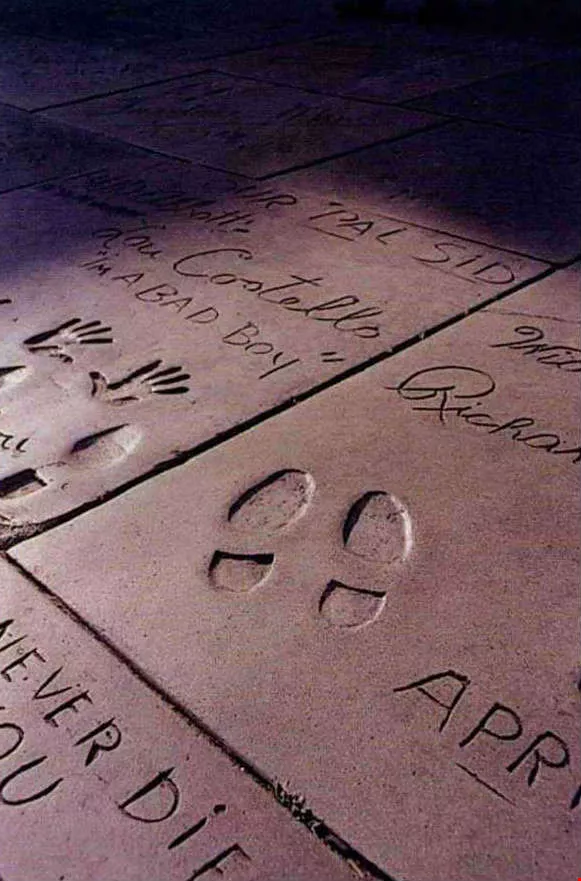
On Hollywood Boulevard outside the Chinese Theater, nearly 200 Hollywood stars are honored with spaces for their handprints, footprints and autographs. Who will be the first Chinese inducted into the Walk of Fame?
Different ways of operating
While Chinese actors have yet to achieve their breakthrough in Hollywood, directors have found they have to adapt to certain differences.
Sense and Sensibility, taken from Jane Austen's 19th-century novel of the same name, was Ang Lee's first production for a Hollywood studio. The main challenge that he faced was dealing with his cast. While shooting in Britain, he found that he always had to give people a clear account of his ideas, on matters both large and small. This partly reflects the high standards that British actors work to, but it was also a trying experience for someone from Taiwan, where the education system is not known for equipping people with the ability to express their own opinions. "It's not odd for Hollywood to get a foreign director in," says Lee, "but it is rather odd for them to pick a Chinese director." Because of the lack of precedents, he had to give himself a lot of encouragement.
There is also a big difference between work attitudes in Hollywood and the East. As Morgan puts it, Hong Kong and Hollywood each have their own ways of operating.
The way it is done in Hong Kong is that the New Year release slot is always reserved for Jackie Chan's latest movie. Only once the dates are confirmed do they begin to think about a script. For First Strike, director Stanley Tong came up with a storyline, then flew to Canada to check out locations. Shooting began in August and wrapped up in January, and with the finished product due by early February, there were just two weeks left for post-production work.
"Hollywood, on the other hand, is willing to put money and time into developing the script," says Tong, adding that they don't start recruiting a production team until the writing is finished. And post-production can stretch on for up to six months. Also, there are plenty of A-list and B-list actors to choose from, so it isn't always necessary to plan things around one particular star. After breaking into the mainstream
However, as Edmond Wong points out, "The industry system in Hollywood may crush individual creativity, because directing power is not vested in a single person but rather in a vast commercial system."
"Hollywood is a big machine, and its hard for little cogs like us to change it," admits Peter Chan, director of the DreamWorks-funded film The Love Letter. But Chan also believes that directors can use the system to attain success, then start making pictures for independent production companies and choose more alternative stories. According to Chan, John Woo and Ang Lee are already in that position.
After making the hit action film Face/Off, John Woo said "I don't want to make any more big films. I really want to make pictures for an independent production company in the US." Having established a foothold for himself in the mainstream, he now hopes to start making movies with a more individual style.
Ang Lee has always made a point of keeping his distance from Hollywood. Even after making Sense and Sensibility, which ends with the happy pairing off of the good-looking lead couple, and which caters nicely to mainstream tastes, Lee believed that he "hadn't moved any closer to the Hollywood mainstream." He approaches movie-making with a non-Hollywood mindset, and his method of production involves "filming abroad (in the UK, for example), then editing back in New York."
After Sense and Sensibility Lee chose an even "colder" subject for his next film, The Ice Storm, which is set in the 1970s and depicts the crumbling values in an American family. It was a theme that put even more distance between him and Hollywood. Says Lee, "It's an art film that overshot its budget-just what movie bosses are most afraid of." As graceful as dancing
As Hong Kong's movie-makers continue their advance on Hollywood, how can their success best be measured?
In the early 1980s, Jackie Chan tried to bust into Hollywood but returned chastened to Asia. Over a decade later, he was so successful in his second attempt that Time magazine crowned him "the real action hero." Hong Kong director Tsui Hark made two films in the US during the last two years, but they didn't do well enough at the box office and he has now returned to Hong Kong.
Perhaps it is not completely fair to measure a filmmaker's value by how much his movies gross. Even top directors have the occasional box-office flop, like Steven Spielberg's recent slavery film Amistad, which wasn't even screened in many countries.
If box office is not the criterion for being a hero, then what kind of impact can Hollywood's ethnic Chinese contingent, less than a dozen in number, have on the US film industry-which has an annual output of some 400 feature films? Perhaps the answer is to be found in the movies themselves.
One of this summer's blockbusters is The Matrix starring Keanu Reeves. It topped the US rankings for three weeks when it came out, and was released in Taiwan in early June. Previews on television showed Reeves, dressed in a Chinese outfit, going through a familiar-looking kung fu routine. The film's martial arts consultant was Yuen Woo-ping, a well-known figure in the Hong Kong movie industry, who worked on Drunken Master and choreographed the classic routines in the Once Upon a Time in China movies.
Discussing the film, Yuen says that he was greatly interested by the producers' idea of blending "Eastern martial arts" with "Western special effects." Six months before filming began, he and his assistant went to America to begin training the actors, beginning with basic martial arts techniques. In a television interview the film's director said: "We absolutely love the slow motion stuff in Hong Kong movies, it looks so graceful, so poetic."
Cinema has cleverly created a fusion of East and West, and for Hong Kong filmmakers, the strategy of "pulling each other across" to Hollywood, one at a time, seems to be working.
The premiere for Peter Chan's The Love Letter was a star-studded affair, with actors and directors like John Travolta, Warren Beatty and Steven Spielberg on hand. But Chan says: "Nothing made me so happy as having Jackie Chan there. For Americans, it represents a lot to see two Chinese together like that. And it was not only a sight for the Americans, but for Hong Kong people too." Chan says that it would be good to get a few more people across.
John Woo, who together with Terence Chang has set up Lion Rock Productions, loves to cook big meals for his compatriots. When he goes down to the supermarket to buy lobster, he has to get ten at a time. Meanwhile, in Peter Chan's brightly lit office, the sound of voices speaking English with a sprinkling of Cantonese can occasionally be heard from next door. It turns out that fellow Hong Konger Stanley Tong has the neighboring office.
United as they are, Hollywood's Hong Kong filmmakers are unlikely ever to find themselves orphaned in America.

@List.jpg?w=522&h=410&mode=crop&format=webp&quality=80)

@List.jpg?w=522&h=410&mode=crop&format=webp&quality=80)


