Reforming the NHI Payments System
Chang Chiung-fang / photos Chuang Kung-ju / tr. by Phil Newell
September 2012


Pediatrician Lin Binghong describes the difference between Taiwan’s National Health Insurance (NHI) system and those of other countries thus: “In other countries they eat the eggs, only in Taiwan do we eat the chickens!”
When people in Taiwan pay their health insurance premiums, it’s as if they get a “no-limit credit card” in return, and they can consume in the healthcare market without any bottom line to worry about.
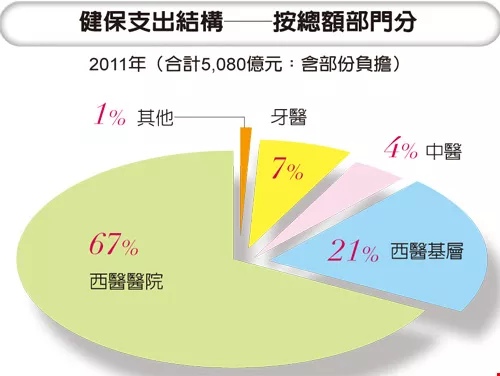
For the last 17 years, the Bureau of National Health Insurance (BNHI) has had to frugally use its limited resources and ensure their reasonable distribution in an effort to see that all citizens get their fair share of healthcare. Although the NHI “global budgeting” system has effectively controlled increases in the total amount the BNHI spends in a given year on healthcare, the payments system for hospitals and doctors has distorted the “medical ecosystem.” It has been said that, “rather than working in a hospital making people healthy, it’s more profitable to open a clinic and make them more beautiful!” It’s no wonder that so many doctors take the path of least resistance, or even decide regretfully to “pack it in.”
The BNHI has created this problem, and it is up to the BNHI to solve it. To restore the medical ecosystem, there will have to be reform to make the NHI payments system fairer and more reasonable.
An old Chinese proverb declares: “You can’t ask a horse to gallop but feed it only half its fill.”
When you only pay 50 cents on the dollar, naturally it’s going to affect the career paths that doctors will choose. Hung Hao-yun, who has for the time being abandoned general surgery to focus on cosmetic surgery, says: “Taiwan has unemployed workers, so why is there demand for foreign labor to be brought into the country? Similarly, there is no shortage of doctors, it’s just that no one will take jobs in the ‘Big Five’ [surgery, internal medicine, OBGYN, pediatrics, and emergency medicine]. In both cases the low compensation being offered is failing to attract the available people into the available jobs.”
Former legislator Shen Fu-hsiung, who is also a well-known physician, explains how the payment system distorts the medical ecosystem. Although Taiwan’s physicians are not state employees, they work under a system with only a single payer. The BNHI buys services on behalf of all citizens, while medical providers are restricted to the single payer. But the payer and the providers are not in a symmetrical relationship: what the BNHI says is, literally, the law.
The insurance payment system even has altered test reports in Taiwan, creating the false impression of a remarkably high incidence of many types of illnesses.
Hung Hao-yun takes endoscopy as a for-instance. In order to apply for payment, these days there are almost no negative test results (i.e. results in which the patient’s condition is normal). “If you know the tricks of the trade,” says Hung, “any endoscopy can show an inflammation, ulceration, or shadow.”
The NHI payment system even has created the possibility that some skills could completely disappear.
Shen Fu-hsiung notes that there are currently only two hospitals in all of Taiwan that do surgery for pancreatic cancer. The procedure is very complex, starting at eight in the morning and going until eight at night. Since it is impossible for one surgical team to finish the job, another has to take over. But the BNHI doesn’t pay enough, so over time more and more hospitals have dropped out until now National Taiwan University Hospital and Taipei Veterans’ General Hospital are the only ones left. Obviously medical students who study at other institutions won’t have any chance to observe this procedure, and in the future maybe no one will be capable of doing it.
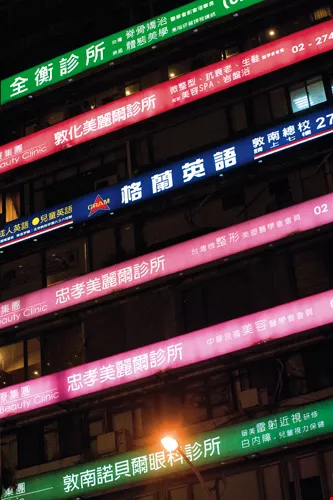
The current trend in Taiwan is for hospitals to become either very large and comprehensive or very small and specialized; the mid-range regional hospital is becoming a thing of the past. Meanwhile, the streets of Taipei are crowded with the offices of cosmetic surgeons and ophthalmologists.
“The BNHI uses every trick in the book to cut payments,” says Shen Fu-hsiung. But this kind of excessive “micro-management” has left doctors feeling like their profession has lost its dignity and autonomy.
One doctor wrote an essay online, entitled “It’s Like Talking to a Wall,” in which he criticized all the unreasonable things that the BNHI does in the interests of cost-cutting.
Because the payments are reviewed after the fact, the system will not pay for medical procedures that appear, in retrospect, to have been unnecessary or redundant. But the criteria they use for cutting such items out of the final bill often leave doctors mystified.
For example: A patient spends 30 days in intensive care, but the BNHI cuts out payments for 10 days of use of a respirator. Surgery for lung cancer includes both removal of the lung lobe and radical lymph node dissection, but no payment is forthcoming for the latter.
A lot of doctors feel that “package payments” that take no account of the level of complexity or difficulty of care are unfair, so that you get paid the same for each and every procedure of a certain category, regardless of how much effort or skill was actually applied.
Obstetrician Zheng Yinhao points out that no matter whether a birth goes naturally and smoothly, is by C-section, or is a difficult birth, the BNHI pays a single flat fee (which comes to about NT$30,000) to cover everything right up through the mother’s discharge from the hospital.
According to Zheng, last month a teenage girl came into the ER with a stomachache, and after testing her blood and urine, it was found that she was in an advanced stage of pregnancy. An ultrasound scan showed that the fetus was in an abnormal position and the girl needed emergency surgery to save the baby. “The BNHI ended up paying us for a routine birth, which is supposed to cover all the costs incurred at any time during the mother’s hospital stay. That means that there was no extra payment for the emergency room visit or all the tests we had to run, so the hospital essentially ended up losing money by caring for a critically ill patient and saving her baby’s life. That’s simply unfair. Who is going to willingly provide emergency care under these circumstances?”
Payments for pediatrics are likewise “on the cheap.”
Recalling that many hospitals and doctors make up for low consultation payments by turning a profit on medications, pediatrician Lin Binghong points out that in pediatrics there isn’t much call for complex prescriptions, so there’s little money to be had there. The same applies to all other medical materials. For example, whereas an adult needs four bottles of intravenous drip per day, a child uses less than one.
But dealing with children is in fact more difficult and time-consuming. For example, to do a blood transfusion for a newborn—including preparing the blood, confirming that the blood type matches, drawing blood, and infusing the new blood—takes two doctors and three hours, but NHI credits the caregivers with only 3000 points. For shots for children—which are always a real hassle for doctors as they involve lots of coaxing, fidgeting, and even kicking and screaming—NHI offers only 37 points per shot. (In 2010, one point was equal to NT$0.92, or only about three US cents.)
Another thing that really draws the ire of physicians is the standard for the “reasonable number” of patients that doctors should see during their clinic hours.
Hung Hao-yun points out that the BNHI sets limits on the “reasonable number” of patients that doctors can see in a given time period, and pays a reduced fee for any in excess of that. The problem is that when too many patients show up for clinic hours, are doctors just supposed to turn them away? At National Taiwan University Hospital, for example, which is located in Taipei City, half the patients come from outside of Taipei—will a doctor really have the heart to refuse to see a patient who has made a long journey? “The hospitals just dump the problem onto the doctors. Why don’t they simply stop registering additional patients once the ‘reasonable number’ has been reached? And why does the BNHI leave to the hospitals and doctors the unpleasant task of making patients angry by turning them away, yet the doctors who do so end up earning less overall?”
A reasonable payments system“There is no problem that doesn’t have a solution!” optimistically declares BNHI director-general Day Guey-ing about reform of the NHI system. Although public policy cannot be dramatically transformed overnight, as long as there is a basis in law and sufficient public attention to and discussion of the issue, there is a great deal that can be done, whatever the issue. For example, in the past if a patient preferred to get a higher-quality implant than the one paid for by the NHI, the patient would have to pay 100% of the cost of their preferred option. A lot of people complained that the BNHI should at least cover an amount equivalent to the NHI-funded implant, with the patient only having to make up the difference. But the way the law was then written there was nothing the BNHI could do. Now, however, the necessary legislation has been passed.
As for the unreasonable aspects of payment standards, Day says that the standards used for the current NHI system were originally based on those set for the much earlier health insurance schemes covering only civil servants and laborers, with gradual increases year by year. The BNHI has already adjusted some excessively low payments, such as for neonatal nursing care or gynecological laparoscopic surgery. Also, the BNHI will cover NT$23 billion in payments out of the Department of Health’s three-year, NT$30-billion healthcare reform plan.
The BNHI will also raise payment levels to attract more doctors to enter the “Big Five” specializations. Day points out that in addition to the NT$320 million being invested this year alone as part of a plan to upgrade the quality of emergency medicine, a further NT$2.1 billion will go toward consultation fees for the fields of surgery, OBGYN, and pediatrics.
Day states that the Big Five problem is intricate and complex, and although the BNHI will do its best to raise payments to help solve it, they want some kind of evidence that they are not wasting their money. To this end, the BNHI commissioned an “Evaluation of Healthcare Resources Used in Various Medical Specializations.” The report was completed in August, and after a review by an impartial panel, it is likely that the government will invest NT$4 billion to increase payment levels for currently undervalued surgeries and treatments.
“Increasing payments for the Big Five will definitely not squeeze out payments for the other specializations,” adds Day. The limit for total growth of the global NHI budget has been raised from 4.7% last year to nearly 6% this year. When the second generation of NHI comes online next year, the insurance premiums for any given year will be set based on the healthcare expenses of the preceding year, so there is hope for improvement in terms of the shortfall in total funding of the program.
As for the problem of healthcare on offshore islands and in remote areas, the BNHI has proposed an incentive program under which local and neighborhood clinics will get minimum guaranteed “points” in the system. For hospitals with responsibility for emergency medicine in areas with inadequate healthcare resources, the BNHI will provide minimum guaranteed emergency medicine points, and an added incentive of 30–50% per consultation.
Quality-weighted, patient-centeredThe BNHI has also been taking measures to change the reality that payments are calculated on the basis of quantity of treatments without regard to quality or difficulty. The most effective measure has been a program for calculating payment based on quality, which first came into effect in 2001 and has been gradually extended over time.
The program bases payments on the quality and effectiveness of medical treatment. It has been implemented on a trial basis in phases, covering such illnesses as diabetes, asthma, breast cancer, high blood pressure, schizophrenia, liver cancer, and early-stage chronic kidney disease.
Day Guey-ing says that the system has been most effective with diabetes, for which there are clear quality indicators. The number of people in the program has grown from 79,000 in 2003 to 284,000 today, and 66% of all patients have shown improvement in their glycated hemoglobin (HbA1c) within one year of joining the program. The BNHI plans to formally incorporate quality-weighted payment for diabetes treatments into the payments system starting in September of 2012.
In August of 2011, under the direction of then minister of health Yaung Chih-liang, the BNHI also began three-year trial implementation of a “patient-centered payment program.” Rather than paying hospitals to treat individual illnesses, the program rewards them for keeping the individual healthy.
Here’s how it works: First a group of people is identified. (The trial program includes three different types of groups: residents of a specific region, residents of a specific community, or regular “loyal” patients at a specific hospital.) The BNHI calculates an average sum per person per year (e.g., NT$22,000) as a total budget for the group. The healthcare providers for each group provide comprehensive services to the patients in their jurisdiction. If a patient ends up needing less than NT$22,000 in healthcare for the given year, the surplus is given to the institutional providers as a bonus.
This program undermines the old logic of “the more patients that come in, the more money you make.” Instead, as Yaung puts it, “The healthier people are, the more money hospitals make!”
So there you have it: On one hand, the BNHI will increase payments for the Big Five and for healthcare in remote locations, and on the other will use more diversified payment systems to change incentives that distort the behavior of healthcare providers. BNHI director-general Day Guey-ing says that out of all of this they hope to evolve the most effective system possible, nudge providers toward comprehensive care of the whole individual, and restore Taiwan’s “medical ecosystem” to health.

@List.jpg?w=522&h=410&mode=crop&format=webp&quality=80)

@List.jpg?w=522&h=410&mode=crop&format=webp&quality=80)


