An identity of its own
The cover of Made in Taiwan features a dark green frame that pays tribute to Taiwan Beer, around a photograph of three-cup chicken (sanbeiji) and chilled bamboo shoots, two staples of local stir-fry eateries.
“Like me, many people of Taiwanese descent form their views of Taiwanese food through their parents. But their parents’ impressions of Taiwanese food may be stuck in time, dating back to when they left Taiwan 30 years ago,” Wei says. With Taiwanese food treated as a branch of Chinese cuisine or reduced to stinky tofu, beef noodles, and pearl milk tea, “few people really understand what Taiwanese food means.” “As no book had been published on the subject, I thought I’d write one myself.”
Through firsthand interviews, as well as historical and cultural research, Wei has proven that Taiwanese food is as complex as Taiwan’s history, and has come into its own. For example, while soy sauce, rice vinegar, and rice wine originated in China, their production in Taiwan was gradually standardized and industrialized during the Japanese colonial era (1895–1945).
Chinese immigrants brought black soybean soy sauce to Taiwan in the 18th century, but the kind most commonly sold today in Taiwan is made from soybeans and wheat, as in Japan. Meanwhile Taiwan’s most popular rice, Penglai, is a japonica variety developed by the Japanese in the colonial era to suit Japanese palates and Taiwan’s subtropical and tropical climates. Taiwan is the southernmost place in the Northern Hemisphere where this short-grain rice is grown and consumed on a large scale.
“These insights all demonstrate that Taiwanese food can’t be subsumed under Chinese cuisine. It has an identity entirely its own,” says Wei. “My parents’ families put down roots in Taiwan several hundred years ago. It’s just like the USA, which is only 250 years old, but that’s enough to make the country what it is now. My white friends don’t say they’re eating ‘British’ food, because the recipes and flavors have changed so much over the centuries.”
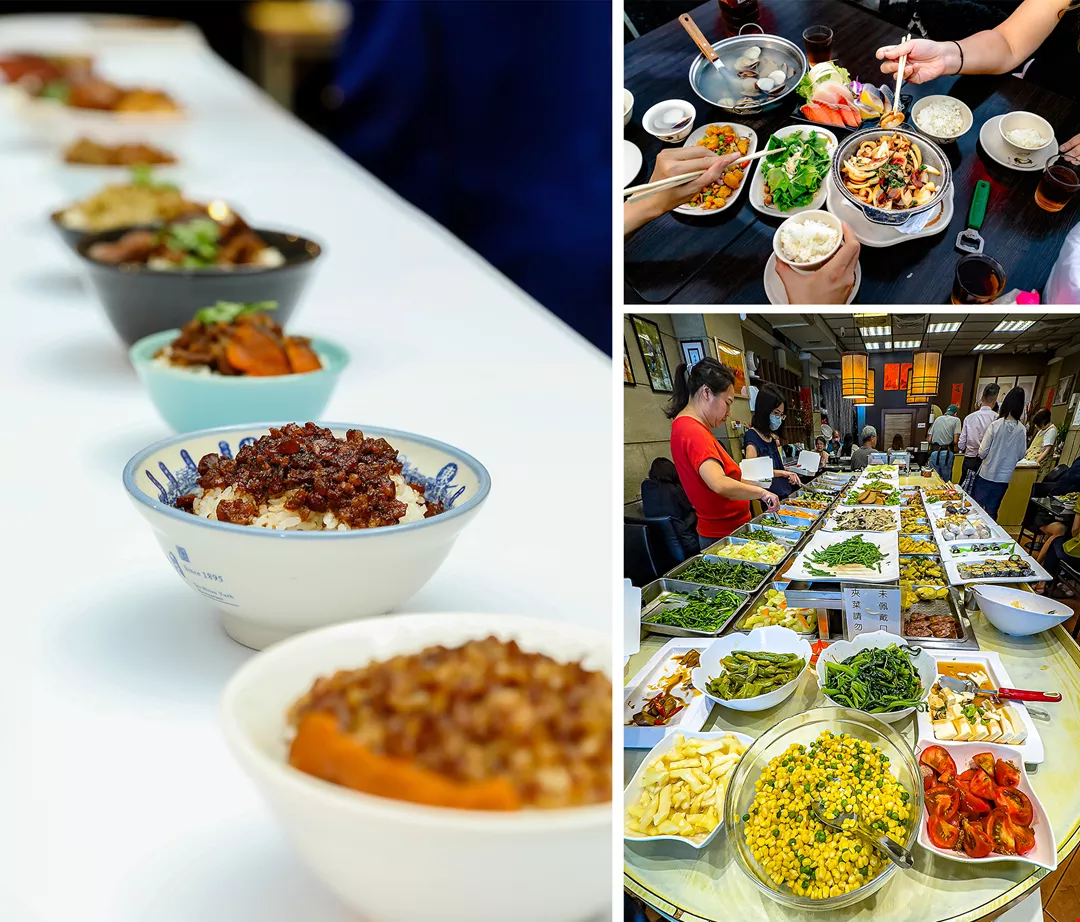
Clarissa Wei believes that once stereotypes are set aside, much of Taiwan’s rich culinary culture is worth introducing to people from other countries: for example, the diverse range of rice foods, vegetarian dainties, and stir-fried dishes that reflect the spirit of modern Taiwanese cuisine. (MOFA file photo)