Above Flame: Eco-Author Wu Ming-Yi Discusses Photography
Maudlin Yeh / photos courtesy of ThinkingdomMedia Group / tr. by Scott Williams
June 2014


In a way, there are four Wu Ming-Yis: the nature essayist, the fiction writer, the photographer, and the university educator. But each of his identities complements the others. Together, they help Wu integrate thought and action in a way that enables his work to break free of the Taiwanese literary scene’s pursuit of the merely pretty.
Above Flame is Wu’s first collection of essays on photography. In pieces ranging from the history of photography to the relationship between photography and nature, and from individuals to urban and rural light, Wu combines the acts of photography and writing with thoughts and photos in a way that redraws the boundaries of the essay format.
Wu Ming-Yi is a creative force to be reckoned with. Over the last ten years, he’s published eight books and three scholarly treatises. Whether producing stories, essays, or academic pieces, Wu always first goes out into the world to experience his subject matter at first hand, then applies his tremendous focus and self-discipline to the act of writing. His award-winning results include the likes of The Way of Butterflies, Lord Tiger, and Man with the Compound Eyes.
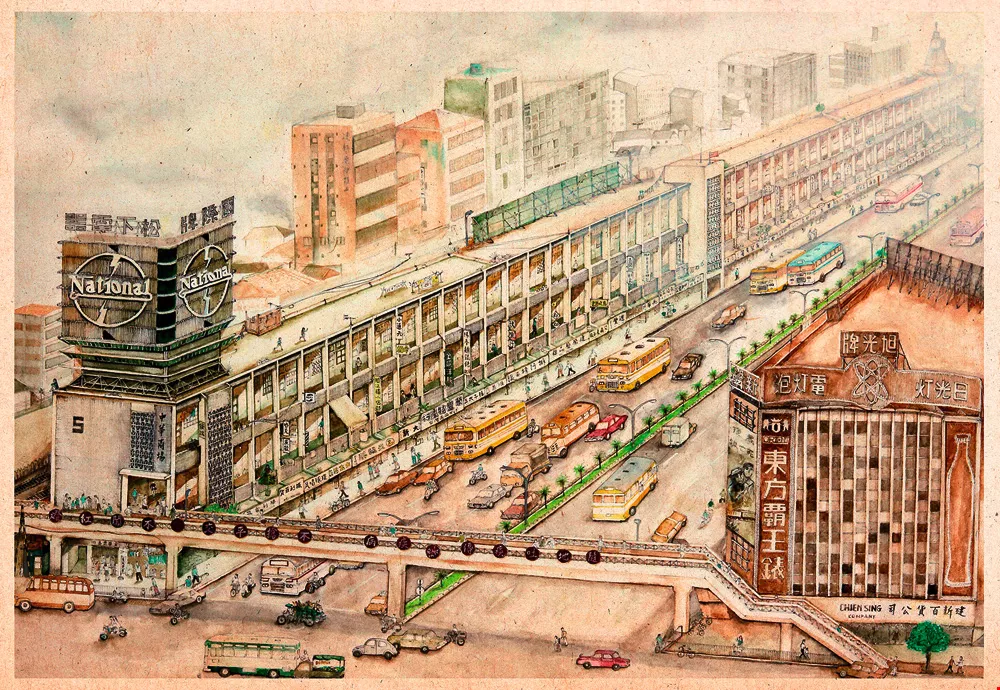
After combing through nearly 200 photos, Wu ended up drawing on his own faulty memory to sketch Taipei’s Zhonghua Market, which was demolished in 1992.
Wu may have made his name as a writer, but he has been fascinated since his teen years by beautiful things and interested in how that beauty is made manifest. As a result, painting, photography, design and film have all influenced his approach to aesthetic expression.
Wu always incorporates elements of nature writing into his fiction and essays. Once he had completed The Way of Butterflies, his book on Taiwan’s butterflies, he turned his attention to the history of photography in a collection of essays he entitled Above Flame. The book explores questions such as: How does the human act of capturing an image of nature change the world? What significance do the photos he took as a student—photos not praised by his teachers, made obsolescent by time, and never turned into art—have for him and his writing?
For all that Wu pursues simplicity in his everyday life, he never takes the easy route when writing. Instead, he becomes a pioneer venturing down previously untrodden paths, pen and camera in hand. His photo essays range beyond images of butterflies, landscapes, rivers, and seas to also include shots of broken-down roll-up doors, strangers on roadways, and vendors on the streets. There’s no self-indulgence in his landscape photos, no empty beauty. Wu’s real challenge is turning his images into words, and finding hope within them.
We spoke to Wu about his new essay collection and asked him about his passion for photography.
Q: What is photography to you?
A: Naturalists involved with nature writing always have a few tools of the trade on their persons, things like a sketchpad, a camera, and a microscope. I’m the same way. I carry them with me when I’m writing on nature, which is how I ended up getting involved in photography.
Photography is very gear-oriented. It’s easy for photographers studying up on their equipment to fall down the rabbit hole of thinking that the gear is everything. Nature photographers are especially prone to this. When you visit the kind of places where you can photograph endangered species like the Mikado pheasant, you often see millions of NT dollars’ worth of equipment. But for all that it seems like every photographer there is using an ultra-expensive camera, most don’t take good pictures. The reason is that rather than blending into the forest, really inhabiting it, to get their pictures, most are probably using food to attract the birds. Their process is flawed.
To me, photographs need a motivation. With that in mind, I sometimes ask myself, “Why do I want to take this shot?”
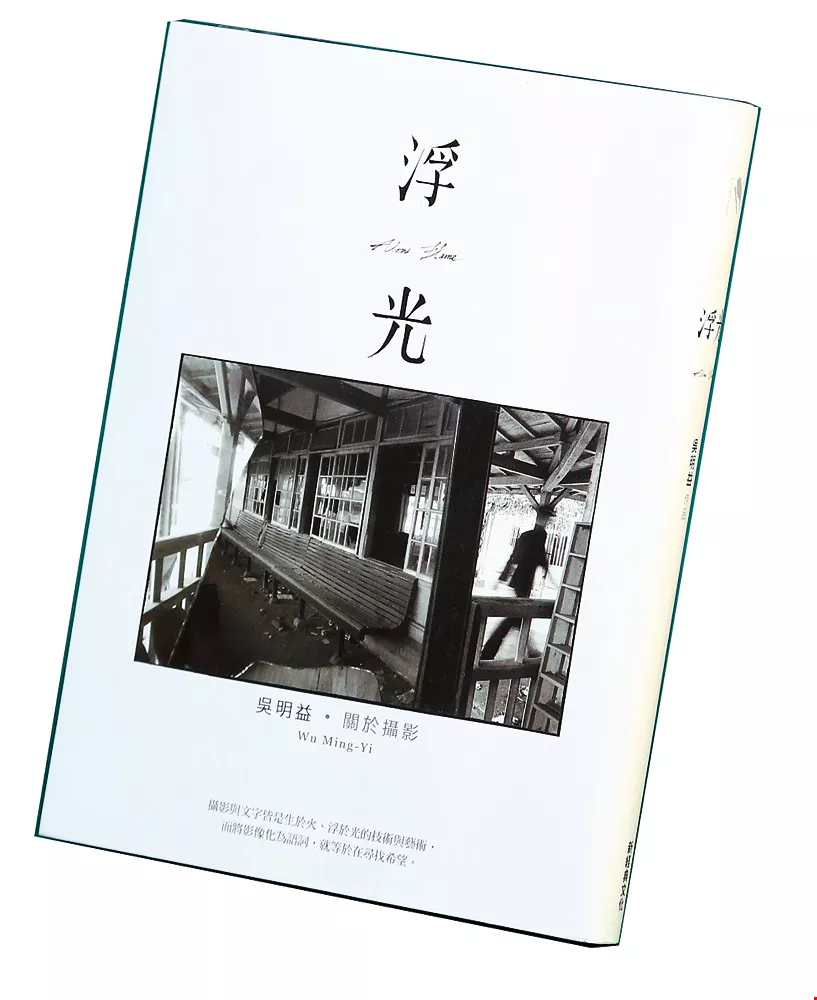
Title: Above Flame/Author: Wu Ming-Yi/Publisher: Thinkingdom Media Group/Publication date: January 2014
Photographs need to have the kind of fire that sets hearts aflame. My hope is that I won’t be the only one seeing an image, that others who aren’t in my particular corner of the world will see it too.
I grew up in the age of shooting photographs on film. When I was young, every press of the shutter cost me money. While that trained me to not waste shots, you sometimes have to waste film to get that one good photo from a series. Rather than do that, I would try to anticipate the good photo. If it wasn’t going to appear until the third press of the shutter, I’d wait until that moment to press the shutter rather than shooting three photos. I want that kind of intuition and sensitivity.
Q: What do you see as the relationship between writing and photography?
A: I majored in broadcasting at university and spent an enormous amount of time watching art films that weren’t widely available. I was particularly drawn to the artistic techniques used in those films. When I later began writing fiction, it was only natural that I would express myself in a filmic fashion in my work. In fact, readers often tell me they find my novels to be cinematic in character.
Also, having someone interpret an image makes a huge difference in how an audience views it, which touches on questions of interpretive authority. If I use words to precisely constrain the interpretation, the words and images will join together to form something completely new. I believe that both these art forms have the same objective in that both take things you think are rarely seen or largely ignored, refine them in some fashion, and present them afresh.
Q: Did you write Above Flame based on this idea?
A: As I originally envisioned it, the book was to be half a discussion of photography and the philosophy of nature photography, and half a discussion of how science has changed eco-awareness. Halfway through writing the book, I took a look back at my own photographic history. It was very moving, especially when I thumbed through family pictures. I found that I didn’t know who had shot many of our old family photos, and came across one in particular that really sucked you in. It was like the photo was pulling the viewer into a black hole in time. For all that it was shot by an unknown photographer who wasn’t aiming to create a portrait that would live on for posterity, it has aged well. It reminded me of a piece of coral left exposed on the shore after the tide has receded.
That led me to wonder whether the passage of time had lent any photos of mine such unexpected power. I can’t bear the thought that they would just fade away. Most people think of me as a novelist and a nature writer, but I’d like to bring my photographic history out of the darkroom, too.
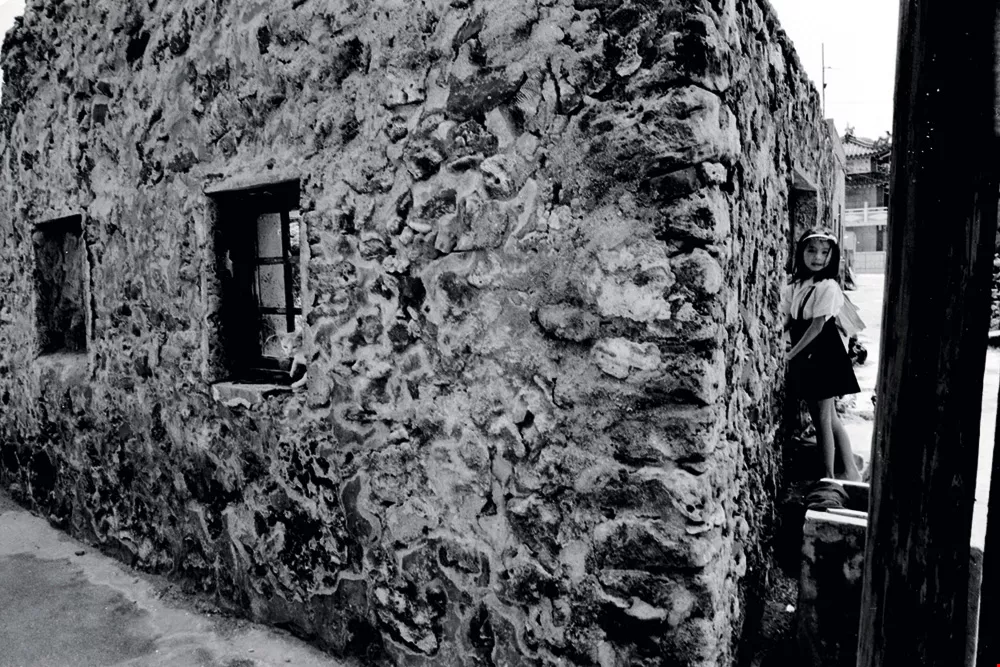
Wu’s shots of Keelung’s traditional market (left) and a coral-stone wall on Penghu (right) evoke loneliness and changing times.
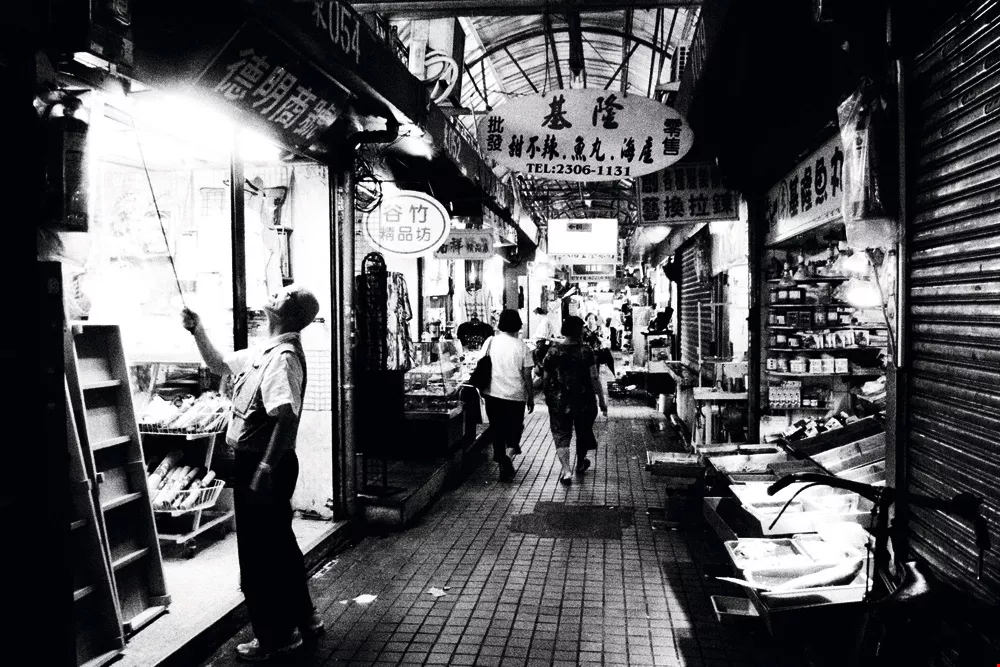
Wu’s shots of Keelung’s traditional market (left) and a coral-stone wall on Penghu (right) evoke loneliness and changing times.

@List.jpg?w=522&h=410&mode=crop&format=webp&quality=80)
@List.jpg?w=522&h=410&mode=crop&format=webp&quality=80)


