

Dadaocheng holds a special place in Taipei history. As the 19th century came to a close, Dadaocheng began to replace Mengjia as Taipei’s most prosperous area. After Taiwan moved into the Japanese era, Dadaocheng came to play an essential role in the island’s economy, politics, culture, and transportation.
However, over the past century the heart of Taipei has moved east, and Dadaocheng and western Taipei have lagged behind, their glory days past.
The last two years, though, have seen a group of local history buffs and artists turn their attention to Dadaocheng, livening up the streets and lanes with creative little stores and kickstarting a cultural renaissance.
If you head through Taipei from east to west, the further you go, the more cramped and old the streets become. While the east is on the rise, the west can feel like a spent force.
But this autumn Dadaocheng has become a portal to another time with Bookstore 1920s’ Dadaocheng 1920s Costume Parade. In front of Yongle Market, people dressed as famous Eastern and Western figures from the 1920s mill around and dance the Charleston in an atmosphere of days gone by.
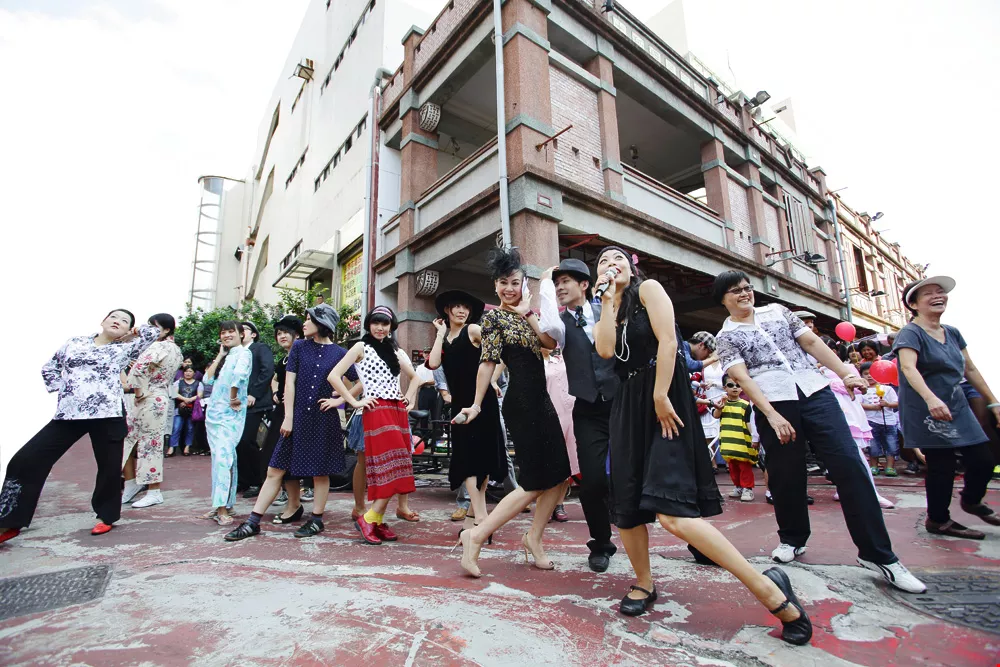
The Dadaocheng 1920s Costume Parade filled the area’s streets with lively, nostalgic scenes.
The 1920s Costume Parade is also a tribute to early-20th-century Taiwanese revolutionary Jiang Weishui. In 1921, Jiang, together with Home Rule Movement leader Lin Xiantang and author Lai He, founded in Dadaocheng the Taiwanese Cultural Association, which sought to raise Taiwanese cultural consciousness through newspapers, bookstores, theater, and speeches. The association had a lasting impact on Taiwanese society at all levels, becoming one of the most important cultural enlightenment groups in modern Taiwanese history and cementing Dadaocheng’s place in the history books.
The area’s massive cultural and historical impact, though, belies its small physical size.
Situated in western Taipei’s Datong District on the banks of the Danshui River, Dadaocheng grew out from a large plaza on which harvested rice would be sun-dried, hence the name—dadaocheng literally translates to “large rice plaza.”
During the Japanese occupation of Taiwan, the commercial center of northern Taiwan began to migrate from Mengjia to Dadaocheng, which became the heart of Taiwan’s tea trade. But over time the port silted up, and after the 1949 Nationalist decampment to Taiwan, Taipei’s focus moved east and Dadaocheng gradually fell behind after nearly a century of prosperity.
Then, in 1998, the Taipei City Government announced a plan to try to revive western Taipei, revitalizing the historical sites and the quaint streets to bring life back to the area and balance to Taipei’s urban development. Thanks to this, Dadaocheng has had an image makeover.
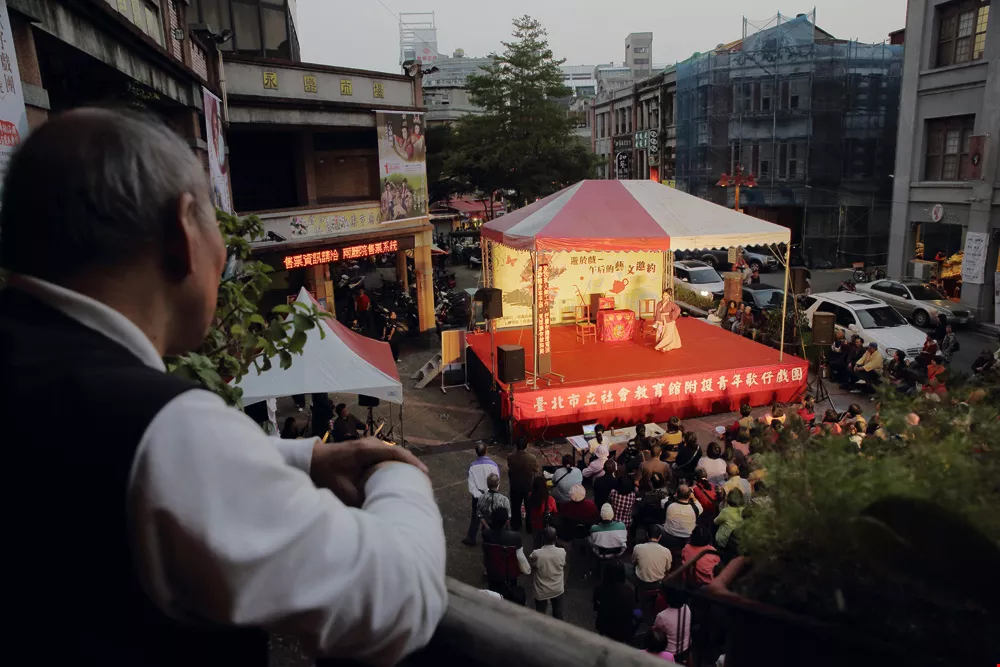
Dadaocheng Theater, located in front of Yongle Market, is frequently host to stage shows on weekend afternoons, attracting crowds of theater fans.
In 2008, Chou Yi-cheng set up shop in Dadaocheng, founding pottery brand Hakka Blue with a group of friends. Since then, Chou has been a driving force behind the creation of ArtYard, a collection of three renovated buildings that now house various retro spaces, making him a leading figure in the area’s cultural renaissance. In fact, the 1920s Costume Parade is his brainchild.
“Dadaocheng used to be the commercial heart of Taipei, and it’s still the essence of Taiwan’s entrepreneurial spirit,” says Chou over a cup of white-tip oolong, his passion for the area’s cultural renaissance clear.
In 2011, Chou rented the largest old building on Dihua Street, the A.S. Watson & Co. building near Yongle Market. He then set about transforming it into the first part of ArtYard and a base for small-scale young entrepreneurs. The building is home to a diverse variety of businesses, with an independent textile brand and a 1920s-themed bookstore on the first floor, a classy café on the second floor, and a theatrical and performance space on the high-ceilinged third floor.
In 2012, Chou expanded ArtYard into a second building, one kitty-corner from the original and beside the Xiahai City God Temple. It is home not only to Hakka Blue’s products, but also to pieces from Japanese product design guru Sori Yanagi. On the second floor, meanwhile, is South Street Delight teahouse, which aims to recreate the tea culture of the old literati.
This August, a third part of ArtYard was opened on Minle Street, a quieter street behind Dihua Street. This additional building is home to a collection of brands from nine young designers, including a fashionable clothing store, a creative drinks store, a bicycle shop, an izakaya, a leather goods shop, and stores selling second-hand cameras, children’s books, and laser engravings. It truly is a hive of creativity.
Inspired by Chou’s move, over the past two years more and more design studios, workshops, cafés, restaurants, and art studios have opened up in this traditionally commercial area, the old and new mingling to create an atmosphere that is drawing in more and more of the youth.
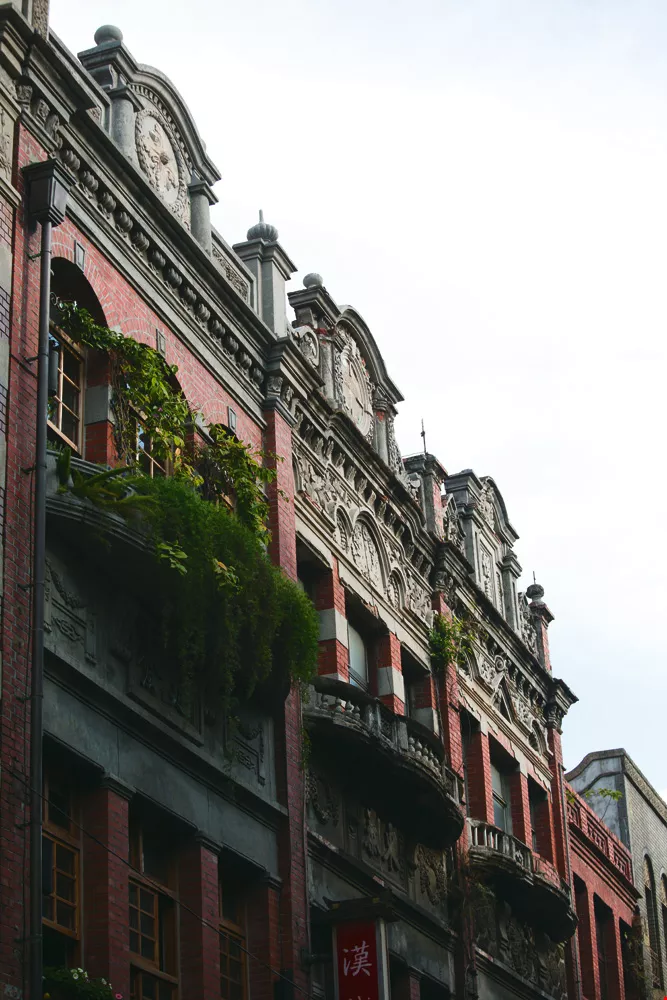
The Dadaocheng 1920s Costume Parade filled the area’s streets with lively, nostalgic scenes.
In late June Tommy Tan, former writer for CBN Weekly, Global Entrepreneur, and the Chinese edition of Newsweek, joined together with second-hand bookstore Eirakuza to rent premises at the intersection of Yanping North Road and Bao’an Street. This location, on the second floor of a building that once housed Taiwan’s first Aboriginal-run surgical clinic, is now home to BB Antiques, which serves as a base from which Tan explores the area for pieces of interest.
BB Antiques occupies a small space by the window, up a flight of narrow stairs past Eirakuza’s second-floor location. In the middle of the space are a simple wooden table and chairs, at which Tan and guests sit sharing a drink amid an atmosphere that feels as much like a living room as a store.
Surrounded by old wooden cabinets showing off china, clothes, books, and other sundries dating back to the Japanese era, along with old anti-Communist propaganda posters from the 1950s, being in BB Antiques can feel like being in another time.
The store is Tan’s attempt to get a foot in the door of Dadaocheng; his bigger aspiration is to work on digging up the history of the area and promoting cultural exchange between Taiwan and mainland China.
Tan visits local elders and collects oral histories, capturing the almost-forgotten stories of everyday people and putting to use his flair for writing history to compile articles for publication in mainland Chinese media. His hope is that by doing so, he will be able to give mainland readers a better understanding of the history of Taiwan from the local, ground-level perspective. To help in these efforts he is currently planning to make a documentary film, in addition to the documentary screenings, seminars, and exhibitions he has been organizing.
In late August, Tan invited Chou Yi-cheng, mainland author Xu Zhiyuan, and Jiang Weishui’s grandson Jiang Chaogen for a seminar entitled “Dadaocheng—What Taiwanese History Has to Teach Mainland China.” In early October, he enlisted well-known Chinese public intellectual Xiao Shu to give a speech on “Chinese Civil Society—Problems and Solutions.” Through these seminars, Tan hopes to encourage both sides to reflect on cross-strait relations.
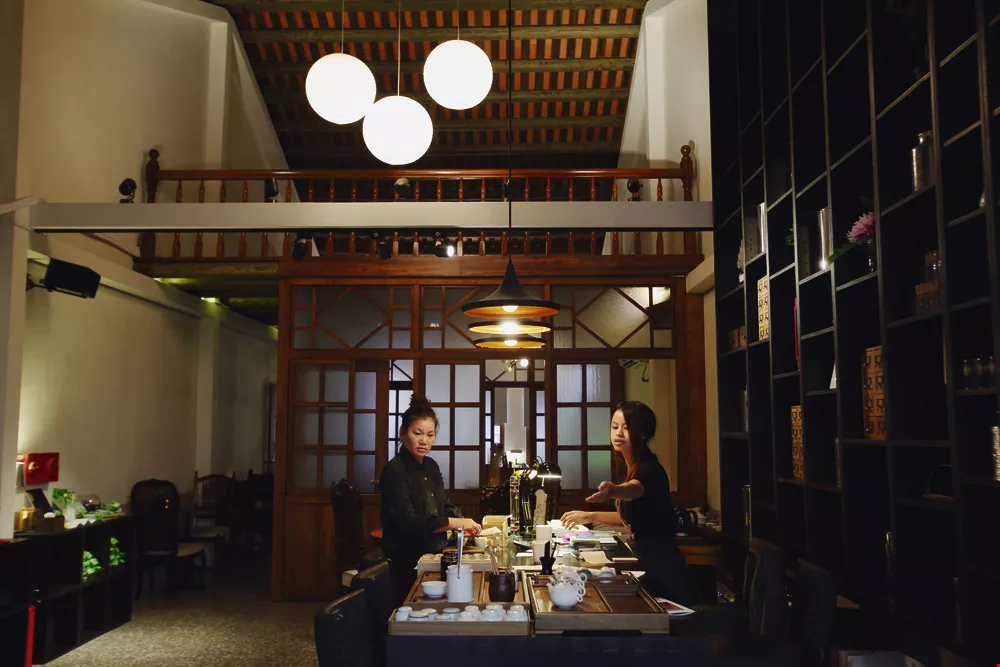
South Street Delight teahouse, on ArtYard’s second floor, sells a range of distinctive Taiwanese teas, drawing in a crowd of discerning literati.
There are others, like 33-year-old Qiu Yi, who are more interested in the stories of the ordinary folk of the area. Qiu, born and raised in Dadaocheng, has rented a second-floor apartment on Guisui Street near his home to open Vintage Travel & Hostel.
Walking into the old apartment, your eyes are met by the retro terrazzo flooring, leather sofa, and 1950s furniture. The wood-framed, frosted-glass windows and modern lighting add to the relaxing atmosphere, while the traditional couplets and red lanterns add an extra touch of Taiwanese flavor.
Qiu has maintained a sense of spaciousness in the living room and dining room, giving guests places to hang out, and the attention to detail and thoughtfulness with which he has renovated the hostel makes it hard not to be won over by it.
Already experienced in the travel industry, Qiu Yi set up a blog to give people a grassroots perspective on Dadaocheng, and has worked on developing guided tours of the area in Chinese, English, and Japanese. In 2012, to further help people get to know his beloved Dadaocheng, Qiu opened his hostel to serve foreign travelers.
“Generally my guided tours of Dadaocheng only last about two hours, but if you’re at a hostel like this, you get to experience the area 24 hours a day,” he explains.
Dadaocheng is a very different place in the nighttime than the bustling face it presents by day. In the evenings, Qiu will take his guests to the neighboring Ningxia and Yansan Night Markets for a taste of Taipei street food, while around noon he’ll take them to the food stalls near Cisheng Temple for lunch, where they can sample sparerib soup, pigs-feet vermicelli, and sishen soup.
He has also been working closely with local businesses, culminating in this August’s “Vintage Market,” held in front of Yongle Market. This flea market event brought together street stalls, speeches, and stage performances to provide a lively weekend activity.
“Dadaocheng shouldn’t just be ‘that place you go for Chinese New Year goodies.’ Each year, outside businesses just set up shop for a couple of weeks around New Year, but they don’t really help the area develop in the longer term,” says Qiu. He hopes that in the future the Vintage Market will grow and become a mecca for treasure hunters, like similar events in Paris. “Tourists could come here to explore, and so discover what an amazing place Dadaocheng really is.”
Such activity is bringing back more and more of Dadaocheng’s devotees. Old neighbors Qiu remembers moving away when he was young are slowly returning, glad to see the organic evolution the area is undergoing.
“What makes Dadaocheng special is its grassroots culture and connection to Taiwan’s history. I want to help bring the area into a new era of that,” says Chou Yi-cheng, who hopes that over the next decade, a new glory will light up this historic area.
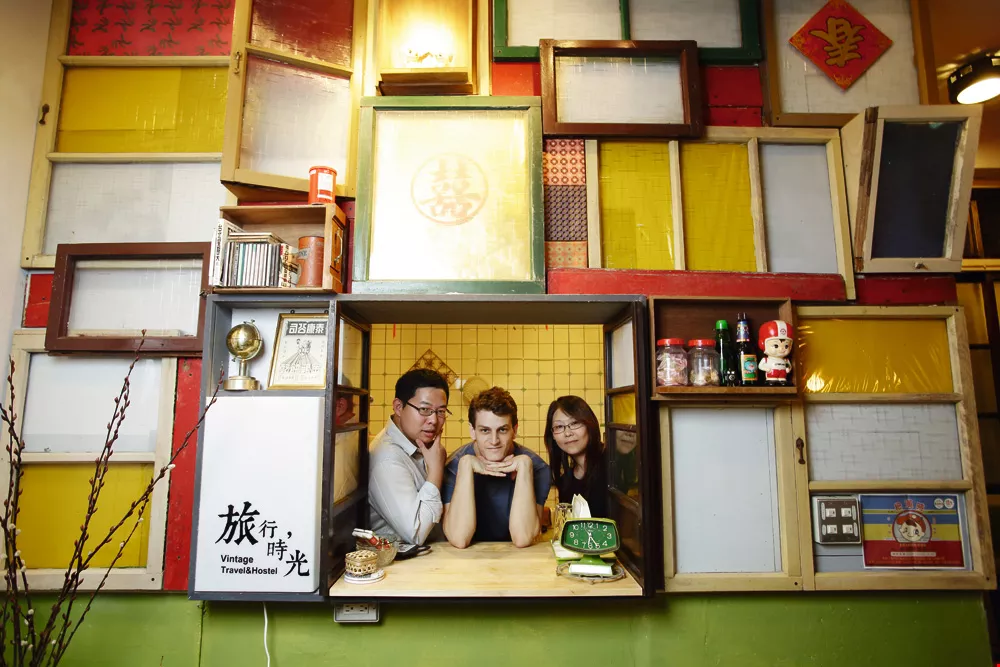
Qiu Yi, who grew up in Dadaocheng, opened Vintage Travel & Hostel out of a desire to offer a local living experience along with tourist activities like flea markets.
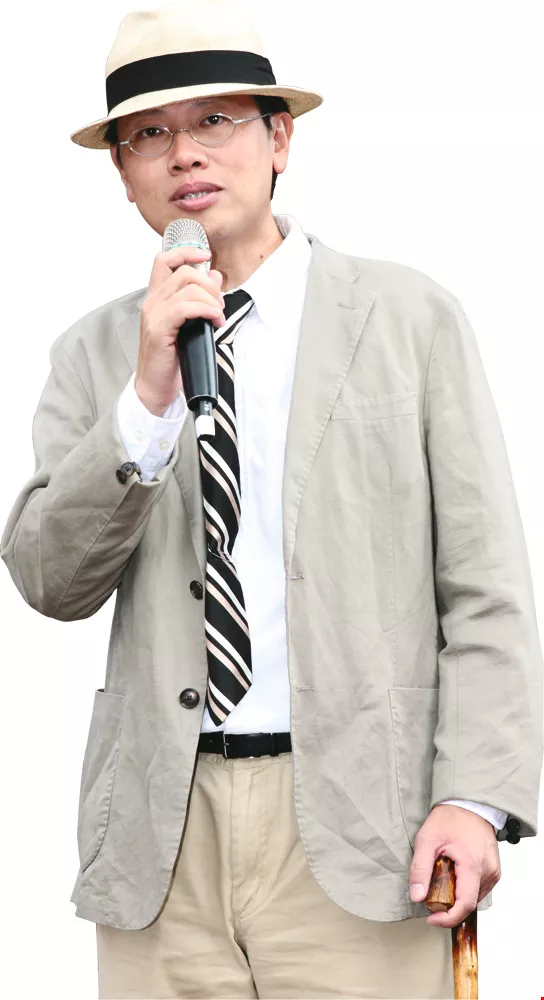
Chou Yi-cheng’s ArtYard endeavor has provided a base for aspiring young entrepreneurs.
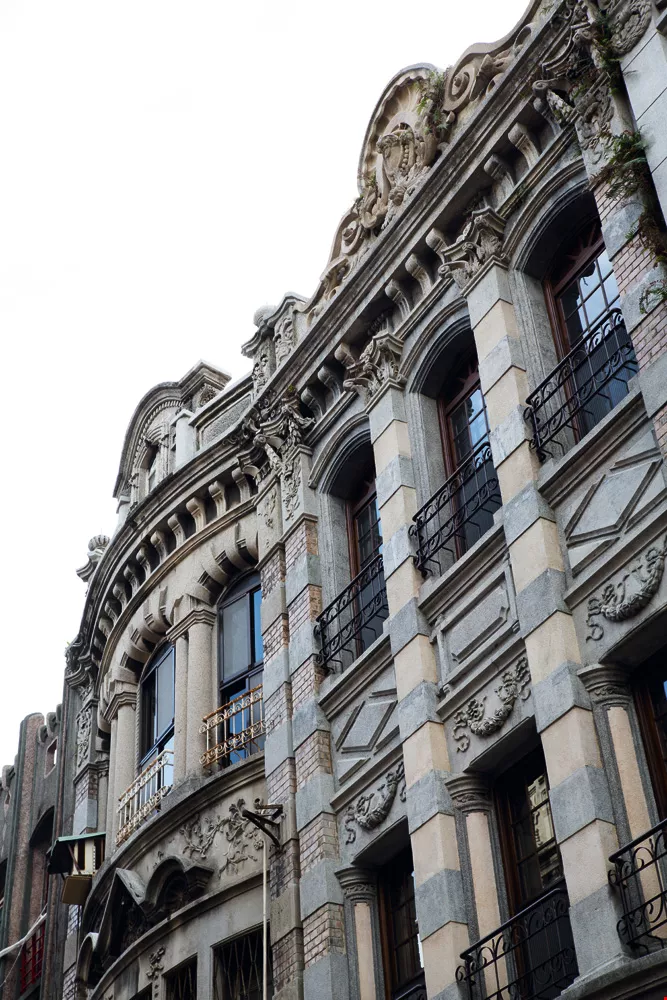
The Dadaocheng 1920s Costume Parade filled the area’s streets with lively, nostalgic scenes.
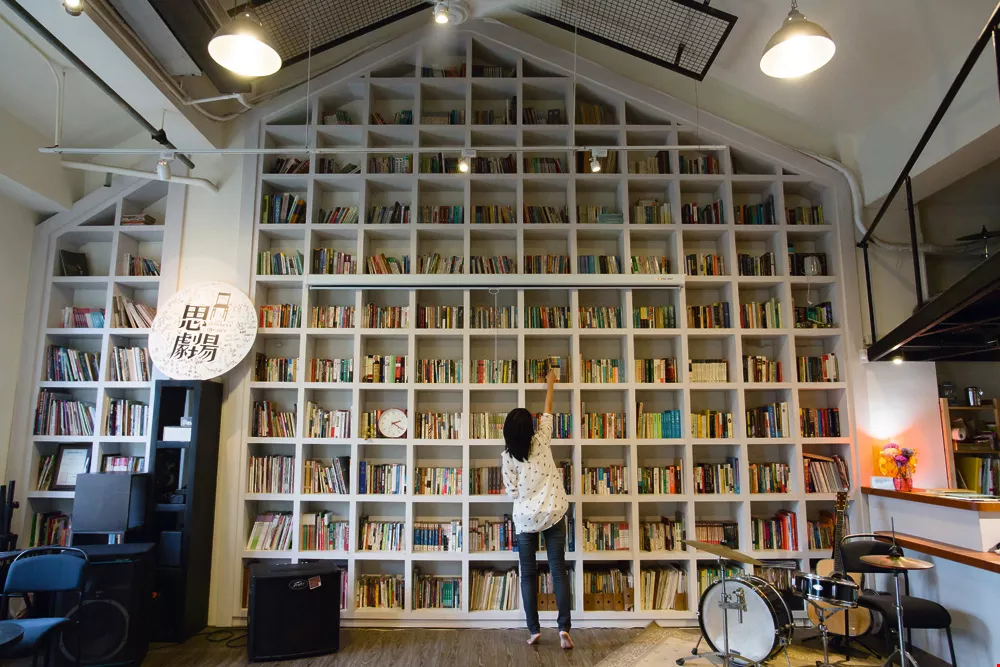
ArtYard’s high-ceilinged Thinkers’ Theater is home to seminars and theatrical performances.

@List.jpg?w=522&h=410&mode=crop&format=webp&quality=80)

@List.jpg?w=522&h=410&mode=crop&format=webp&quality=80)

@List.jpg?w=522&h=410&mode=crop&format=webp&quality=80)
@List.jpg?w=522&h=410&mode=crop&format=webp&quality=80)

