Cultivating Business Opportunities-Flower Breeders in Taiwan
Chang Chiung-fang / photos Hsueh Chi-kuang / tr. by Jonathan Barnard
July 2010


Do you know what flowers are popular this year? Can you predict which varieties will find favor in the market next season?
"Whoever controls flower varieties can corner the market," says Chen Wen-huei, chairman of the Institute of Biotechnology at National University of Kaohsiung. Flower varieties and cultivars are the core thing of value in the flower industry. If you don't own them, then producing plants and flowers is reduced to the level of mere "industrial processing."
But how do you go about breeding new cultivars to capture the market? Apart from the use of expert techniques, breeders must also possess a keen sense of the winds of fashion to grab hold of sales opportunities.
Flower markets hold an abundance of species and varieties and are the best place to enjoy flowers from countries all over the world-roses from France, chrysanthemums from Holland, Gerbera African daisies from Italy, and baby's breath and petunias from Israel.
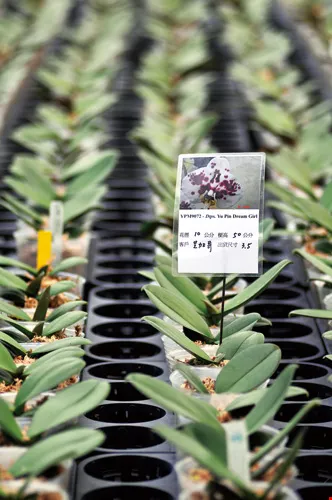
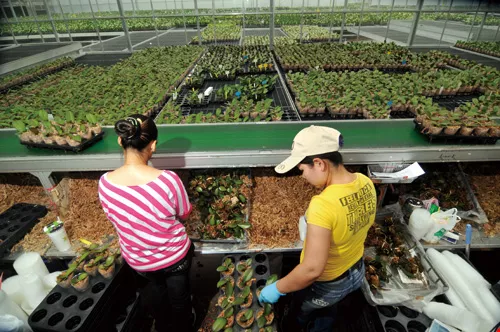
From the stage of tissue cultures, to plantlets in vitro, to young seedlings, to transplanting to a pot and then a larger one, to finally shipping plants out, the cultivation of moth orchids occurs in bacteria-free tissue culture rooms and strictly controlled greenhouses. Cloistered and coddled, these young plants are kept out of harm's way.
The flower industry is an "aesthetic industry." Like clothes designers, those in the field aim to keep ahead of trends and are constantly looking to innovate.
Take, for instance, the recent Chinese New Year's season. Apart from moth orchids (Phalaenopsis), which are traditional for Chinese New Year's in Taiwan, the colorful double-petaled Kalanchoe blossfeldiana also made a big splash, and Foreport Enterprises introduced a new variety of chrysanthemum from Holland-"Delifuego"-which is golden yellow on the outside and dark red on the inside. It creates a splendid and luxurious effect.
These are all regarded as outstanding varieties by importers and expert breeders from various nations.
Yet fashion is fickle, and breeders must constantly innovate.
In 1997, when breeders from Taiwan succeeded in registering a poinsettia variety in America, Chu Chien-young, a professor of horticulture at National Chung Hsing University, who at the time was helping to revise the Plant Variety and Plant Seed Act, advocated that Taiwan ought to start breeding plants and patenting new cultivars. Otherwise, other nations would divide up the market.
The breeding of flowers includes creating new varieties and cultivars through hybridization or mutation, as well as planting, artificially selecting and cultivating pre-existing varieties to create new varieties.
Early on, most breeders were simply selecting desirable qualities. For instance, to create Taitung's "Dong Selection No. 1 Day Lily," a selection of day lilies were imported from the United States, which then underwent selection for traits suited to Taiwan.
Selective breeding of fruits and vegetables aims for disease resistance, high yields, desirable harvest periods and so forth. On the other hand, when breeding flowers, apart from selecting for ease of cultivation and disease resistance, the main goal is to find something new and different to pique the interest of consumers and spark a buying frenzy.
Take, for instance, the moth orchids. Chen points out that the moth orchid that wins at an orchid exhibition isn't necessarily the prettiest flower-but rather the one that shows the greatest uniqueness.
"Whether you're talking about flower color or shape, the greater the differences in the 'character' of the new variety, the more likely it will win awards."
In recent years no new variety of flower has caused as much of a sensation as the "Suntory blue rose Applause" from Japan.
Whiskey maker Suntory employed more than 100 PhD-level researchers and spent 14 years and ¥3 billion (NT$1.6 billion) to extract the genes for blue coloration from pansies. It implanted those extracted genes into a rose and thus attained the flower breeder's holy grail: a blue rose.
At ¥3000 (about US$33) a stem, this genetically engineered flower hit the market in 2007. The first blue bloom among the 2500 varieties of roses, it has made people recognize the enormous amount of work that goes into flower breeding.
Chu Chien-young crossbred Kalanchoe garambiensis, which grows on southern Taiwan's Eluanbi Peninsula, with K. blossfeldiana, a native of Europe, to create early-flowering, bushy cultivars. Shown here is NHCU No. 3, a double-petalled K. blossfeldiana variety.(courtesy of Chu Chien-young)
But never mind the enormous difficulties involved with breaking genetic codes; the traditional hybridization employed by most modern breeders-a long road on which one "encounters rather than seeks"-is indeed quite tough enough.
Take, for instance, moth orchids. Among the 50 different species in the world, the only ones native to Taiwan are the pink Phalaenopsis equestris and the white P. aphrodite. But breeders in Taiwan have collected species from around the world and engaged in long-term hybridization to create more than 2000 cultivars. That's more than any other country. Holland, which currently produces more moth orchids than anywhere, was only able to achieve that position by coming to Taiwan to obtain cultivars 10 years ago.
Chen points out that there were two keys to the development of the moth orchid industry in Taiwan: First, Lee Nean, a professor of horticulture at National Taiwan University who is known as the "mother of the moth orchid," began to promote production of the moth orchid in association with the Council of Agriculture in 1986. Two years later Taiwan Sugar, with its deep pockets, got into moth orchid production, putting its resources and energy behind creating seed banks, tracing lineages, preserving plants and engaging in hybridization.
The hard work of private-sector businesses was also essential. "Raising orchids was a skill passed down through generations in Taiwan. Among breeding companies that were family affairs, there were often grandfathers in their seventies who had accumulated abundant skills in crossbreeding," says Chu. These old masters are a priceless treasure for Taiwan's moth orchid industry.
Yet it's not uncommon for breeders to succeed in creating only one new cultivar in a decade-and even for that, things have to go fairly smoothly. What's more, you've got to be quite lucky to come up with a new variety that has real market value.
For "Tainung No. 1, Pixie," developed by Tsai Wei-ting of the Floriculture Research Center of the Council of Agriculture, the whole process-from artificial selection, to creating the cultivar, to patenting it and beginning production in April of this year-took six years, and it will take another two years for "Pixie" to actually hit the market.
Apart from being forced to bear with this long slow process, breeders also have to endure repeated failures.
Chuang Keng-chang, chairman of the center's Flower Breeding Department, spent 15 years researching flamingo lilies. At first, he worked with tissue culture from the young leaves, and in the early period of "zero production" he had to bear with repeated demands for quick results from higher-ups. In the last five years he has succeeded in releasing an assortment of new varieties, such as "Pink Panther," "Orange Storm," "Green Elf," "Pink Girl," and "Amber." Some of these have a spadix that is green or red, and a spathe that is pink, white or light burgundy, and in some cases green around its edges. They meet a variety of potted or cut-flower needs, and they have finally taken the pressure off Chuang from his superiors.
After the petals fall, the seed heads continue to grow. Each contains countless thousands of tiny seeds.
Taiwan has highly skilled horticulturalists, and breeding and cultivation skills both in government institutions and in the private sector are clear to see. In recent years, successes-both in market terms as well as in the continued development of new cultivars-have been made with moth orchids, flamingo lilies, amaryllis, colored elephant ears, Kalanchoe blossfeldiana, poinsettia, chrysanthemum and others.
Of course, the greatest number of cultivars developed have been for moth orchids.
NUK's Chen Wen-huei spent more than 20 years developing countless moth orchid cultivars, and in 2007 the American Orchid Association made him an honorary member in recognition of his contributions.
Chen points out that early on his work in breeding moth orchids was largely focused on changing the shape or color of flowers. But with growing commercialization, breeders have also begun to show concern about ease of cultivation, hardiness, flower stem length and curve, bloom number, flowering season and so forth.
The most common method for breeding flowers is through heterosis, which is also called "outbreeding enhancement." This involves taking outstanding examples of a cultivar, and then cross-pollinating with another cultivar to create a hybrid that demonstrates traits that are superior to both of its parents.
In recent years "chromosome doubling," which allows for self-fertilization, has also been applied to breeding moth orchids in order to resolve fragrance issues.
Taiwan moth orchid cultivars already represent great achievements, Chen notes. There are large-, medium- and small-bloom varieties. Their flowers show a great variety of shape and color, from pure white, to blooms tinged with pink, to those that are speckled or striped. But the "delicate fragrance in the valley" that used to characterize wild orchids has been lost over generations of hybridization. So the focus of recent breeding efforts has been on fragrance.
Wild moth orchid species that are yellow or are fragrant are "diploid"-they have two sets of macrochromosomes-whereas the large-bloomed hybrid cultivars now on the market are "tetraploid," having four sets of microchromosomes. The vast differences in the number and size of the chromosomes makes it difficult to crossbreed them.
The so-called chromosome doubling method uses a colchicine solution to stop the chromosomes in embryonic cells from splitting after duplication, so that the diploid chromosome complement (with 19 pairs and 38 individual chromosomes) can become a tetraploid chromosome complement (with 76 individual chromosomes). In this way, wild species once again can be crossbred with fertile cultivars. Chen's laboratory has already patented this technique. In other words, cultivating orchids with that delicate wild fragrance is no longer a distant dream.
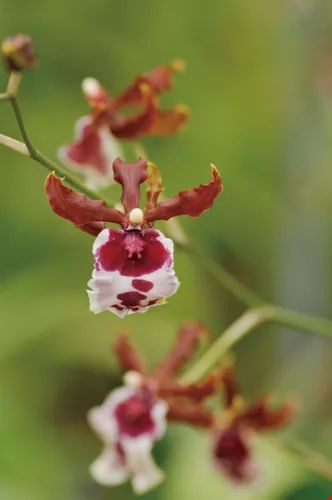
In order to overcome Oncidium Gower Ramsey's incompatibilities for crossbreeding, Tsai Tung-ming of the Floriculture Research Center of the Council of Agriculture racked his brain and spared no effort. The cultivar in his hand, "Snow White," hasn't been officially launched yet. The inset photo above shows Odontonia Lorraine's Fourteenth WOC.
In contrast to moth orchids, flamingo lilies, which are Taiwan's second-best-selling cut-flower export, are just beginning to yield outstanding cultivars.
Chuang Keng-chang points out that of the nearly 100 varieties of flamingo lily in Taiwan, more than 90% of them represent the achievements of Dutch breeders. Over the past 10 years, both research institutions and industry here have been working hard to close this gap.
Currently, those working on flamingo lily cultivars are mostly using traditional methods of crossbreeding. Red, white, pink and green varieties are all common. Because yellow flamingo lily parents are hard to come by, they are difficult to cross.
"Tainung No. 1, Pink Panther" was Chuang's first flamingo lily cultivar, developed in 2006. It was licensed to Yu Lin Gardening for an upfront fee of NT$120,000, with an additional NT$2 paid for every plant sold.
"Green Elf," on the other hand, represents the realization of a dream in the cut-flower market.
Chuang points out that among the current varieties of flamingo lilies, although "Emerald" is green, it doesn't reliably have an attractive appearance. And although "Green Fire Red" is easy to grow, it contains some red within the green; it's not pure green.
The rights to "Green Elf," a cultivar developed by Chuang in 2009, were purchased by Kaohsiung's Green Flower Transportation and Sales Cooperative, whose CEO is Lin Chin-shan. It is expected to hit the market in July of this year. Light green with a red tinge around the edges, it's Taiwan's first green flamingo lily cultivar. Although it's very pretty, it's not pure green. Chuang admits that it doesn't represent perfection-but he's working on it.
As for the orchid Oncidium Gower Ramsey-known as "the yellow miracle"-its irregular number of chromosomes (which make it incompatible for crossbreeding), and the propensity for its pollen not to germinate, mean that very few private-sector breeders have shown any willingness to work on cultivars.
After several years of delving into the research of tiger head orchids, Tsai Tung-ming, a researcher at the Floriculture Research Center, switched part of his research focus in 2006 to Oncidium Gower Ramsey. He has already achieved good results.
Oncidium Gower Ramsey comes in a lot of colors. Apart from the most eye-catching bright yellow, there are also red, white and green varieties, but there are not many long-stemmed varieties suitable for cut flowers. Tsai has bred a white flamingo lily cultivar ("Snow White"), which has attracted a lot of interest within the industry. He plans to release it next year.
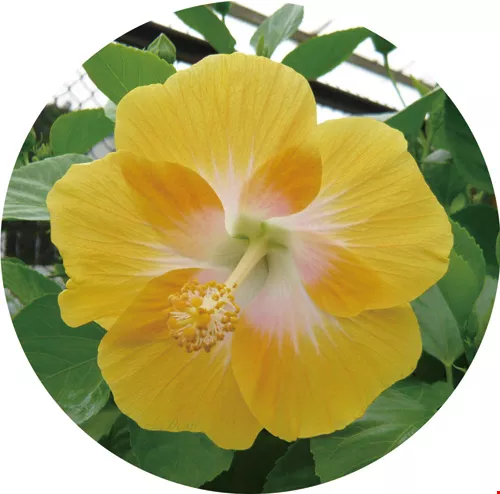
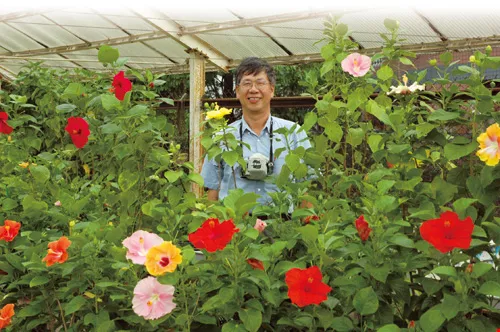
Large flowered and heat tolerant, these new varieties of hibiscus are fruits of Chu's research. From left, "Oriental Moon," "Emily," "Sierra," and an as yet unnamed variety.
Breeding flowers is not all about "competing about beauty or novelty." Even after mass production, not all new cultivars can find favor on the market. A poinsettia that NCHU's Chu Chien-young put great energy into developing is an example of a cultivar being developed at the wrong time.
Early on, Chu was breeding roses and chrysanthemums. In 1996, a student that was researching the juvenile period of poinsettias was continually unable to acquire seeds, so Chu ended up helping him grow seeds. As a consequence, Chu became the first person in Taiwan involved in the breeding of poinsettias.
In breeding poinsettias, there are two stages, making the process both laborious and time-consuming. That's because poinsettias are trees and only become shrubs (with a low habit and many branches, making them suitable for pots) as a result of a phytoplasma infection. But as a consequence of this infection, poinsettias won't produce seeds for the next generation. The traditional way of breeding them is to remove the disease from some of its tissue, and then allow that to grow into tree, from which seeds can be gathered. The infection is then reintroduced to the following generation-so as to turn them into the shrubs that are so highly valued among the public.
Although poinsettia is native to Mexico, poinsettia cultivars have become adapted to Europe and America and are no longer heat tolerant. As Japan's climate has warmed in recent years, it has forced poinsettia growers there to move toward higher altitudes, raising costs. Consequently, the Japanese company Hanakongou had great interest in Chu's work to breed poinsettias that could withstand heat. But unfortunately, when the company took cuttings back to Japan, they didn't grow well in that climate. What's more, the poinsettia market in Japan is shrinking. So none of the five poinsettia varieties that Chu had developed, including "Red Earth" and "Yellow Ancestor" were able to gain a foothold in the Japanese market.
Nevertheless, in 2007 Chu began research on multi-colored, double-petaled Kalanchoe blossfeldiana cultivars and hibiscus with habits suitable for pots. These have met with market success in Japan and Taiwan.
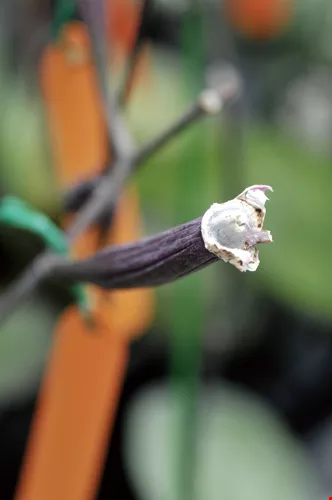
From the stage of tissue cultures, to plantlets in vitro, to young seedlings, to transplanting to a pot and then a larger one, to finally shipping plants out, the cultivation of moth orchids occurs in bacteria-free tissue culture rooms and strictly controlled greenhouses. Cloistered and coddled, these young plants are kept out of harm's way.
Chu's success with Kalanchoe blossfeldiana cultivars was a result of discovering Kalanchoe garambiensis, a nearly extinct species of the same genus that now grows only on the Eluanbi Peninsula of Southern Taiwan. Chu crossbred this Taiwanese endemic species with European K. blossfeldiana, and the resulting cultivars showed the excellent potting traits of K. garambiensis, such as a low-to-the-ground habit, early flowering, and multiple shoots coming from the same root. The "Eluanbi Series" of cultivars includes "NCHU No. 1, Beacon" (bright red petals with an outer circle of yellow) and "NCHU No. 2, Sunrise" (orange). These cultivars have thick foliage with abundant blooms, raising their value as ornamentals. They represent the first instance of a cultivar developed and patented in Taiwan being commercially licensed to a Taiwanese grower. It caught the attention of both academia and industry.
And a hibiscus is the first example of a cultivar from Taiwan to be "produced for export."
Breaking the model of not being able to export cultivars that have been developed with the help of a government institution, these hibiscus cultivars were developed under a model of cooperation between Taiwan and Japan.
Hibiscus is native to various places along the Pacific rim, including southern China. But Dutch cultivars of these hibiscus species do not bloom in the summer in Japan. Consequently, Hanakongou president Narimitsu Ochiai provided some European species and asked Chu to conduct research on them in Taiwan.
Unexpectedly, Chu grew them for three years without any success at bearing seeds. A big sticking point was that the fatty lining around the embryo did not close properly after fertilization, and consequently it would dry out from the sun (native Pacific Rim species don't dry out because of afternoon thunder showers, temperatures that rarely surpass 30°C, and their own ability to store water). Only after sealing the embryos with lanolin or petroleum jelly was Chu able to produce large quantities of seeds.
Nine years into developing them, Chu selected 50 cultivars from among 700-800 plants, took cuttings and gave them to Hanakongou to try out in Japan. The results were excellent. Not only did the cultivars show an outstanding ability to withstand the heat, but the blooms were large, the flowering season was long, and the flower shapes were outstanding. This became the first successful example of cooperation between Taiwanese research institutions and Japanese industry.
Three years ago four hibiscus cultivars from the "Asia Series" hit the market in Japan. This was the first Taiwan cultivar to be patented in Japan. The rights are held jointly by NCHU and the Japanese company Hanakongou. NCHU didn't put up any money for the patent, but it is receiving ¥10 for each plant sold.
In June of next year, Chu plans to launch a "counterinvasion" of Holland: "If market reaction is good, there's still time to apply for patents in the Netherlands. In addition to the expense involved (some NT$20,000 for the patent application, plus an annual fee), you have to apply for new cultivar rights within four years of the cultivars hitting the market. Hence, it's challenging to determine whether and when to apply.
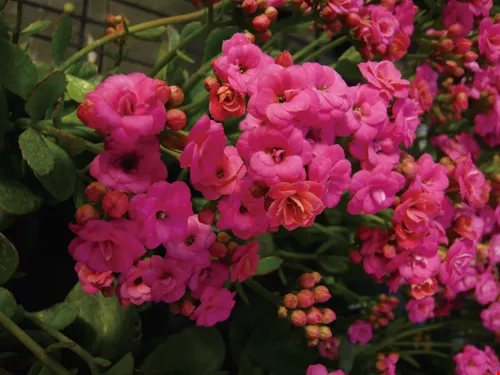
Chu Chien-young crossbred Kalanchoe garambiensis, which grows on southern Taiwan's Eluanbi Peninsula, with K. blossfeldiana, a native of Europe, to create early-flowering, bushy cultivars. Shown here is NHCU No. 3, a double-petalled K. blossfeldiana variety.(courtesy of Chu Chien-young)
Breeding hybrid cultivars may not be all that difficult, but you've got to have a talented eye to know which cultivars will end up as hits in the market. It all begins with selecting the varieties to cross.
Horticultural firms in Taiwan have always tended to follow the herd, but Chu is more inclined to swim against the current. He's always on the lookout for plants with a future.
"When breeding cultivars, whoever does something first, wins," he says, citing his experience of giving up on breeding roses early in his career. Roses are favorites of Europeans, and they've been breeding them for 300 years, he says. Taiwan is never going to be able to catch up. Likewise, Taiwan was a champion at moth orchids long before Holland, developing cultivars 60 years before Holland got in the game.
In that case, what sort of flowers have futures worthy of investments of time and energy?
Chu has visited wholesale flower markets in Holland, Denmark and Japan, and predicts that the future of the flower market lies in tropical plants, potted plants, CAM plants (photosynthesis occurs in three ways-C3, C4 and CAM-and CAM plants have thick leaves and are drought resistant). Moth orchids, Kalanchoe blossfeldiana, ornamental bromeliads, flamingo lilies, and spurge are all examples of plants that possess those qualities.
What's more, Chu explains that apart from meeting production-related needs and aesthetic and market demands, it is also best for cultivators to establish recognizable brands. A unique style is the best selling point.
He cities his own hibiscus cultivars: Very few of the cultivars he has developed have single-color flowers. This gives them richness and depth. The petals are thick and don't droop, and the outer edge of the blooms have a slight wavelike shape. "Breeders are like artists, but they express themselves through plants!" he says.
Breeding flower cultivars is work that aims to surpass nature. In their quest for perfection, breeders find no greater motivation than the public's gasps of appreciation.
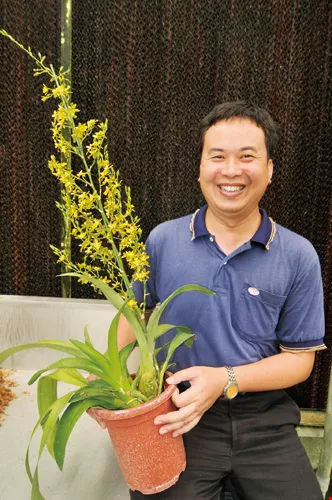
In order to overcome Oncidium Gower Ramsey's incompatibilities for crossbreeding, Tsai Tung-ming of the Floriculture Research Center of the Council of Agriculture racked his brain and spared no effort. The cultivar in his hand, "Snow White," hasn't been officially launched yet. The inset photo above shows Odontonia Lorraine's Fourteenth WOC.
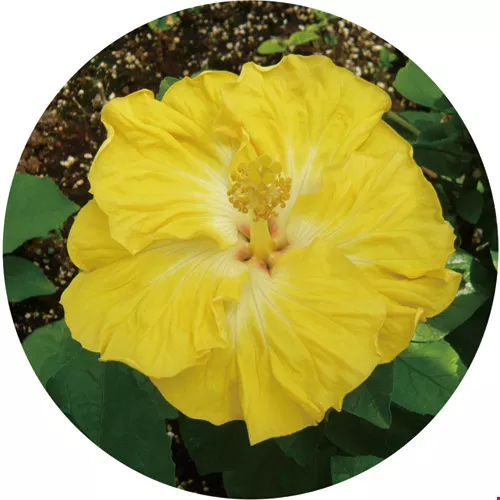
Large flowered and heat tolerant, these new varieties of hibiscus are fruits of Chu's research. From left, "Oriental Moon," "Emily," "Sierra," and an as yet unnamed variety.
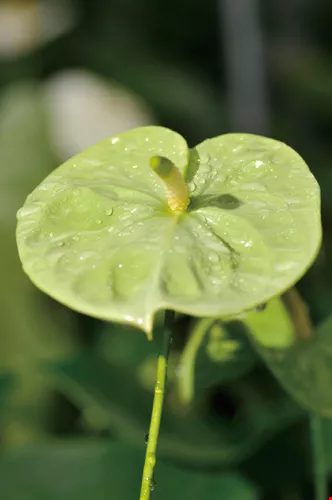
"Green Elf"
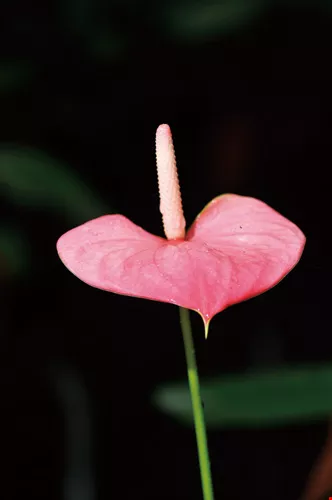
"Pink Girl"
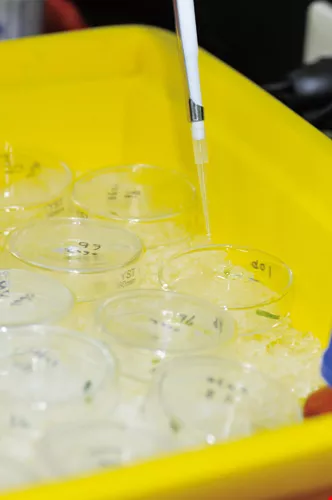
From the stage of tissue cultures, to plantlets in vitro, to young seedlings, to transplanting to a pot and then a larger one, to finally shipping plants out, the cultivation of moth orchids occurs in bacteria-free tissue culture rooms and strictly controlled greenhouses. Cloistered and coddled, these young plants are kept out of harm's way.
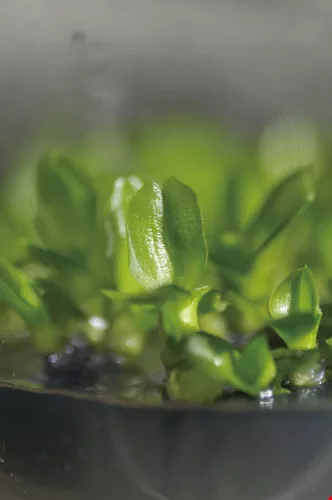
From the stage of tissue cultures, to plantlets in vitro, to young seedlings, to transplanting to a pot and then a larger one, to finally shipping plants out, the cultivation of moth orchids occurs in bacteria-free tissue culture rooms and strictly controlled greenhouses. Cloistered and coddled, these young plants are kept out of harm's way.
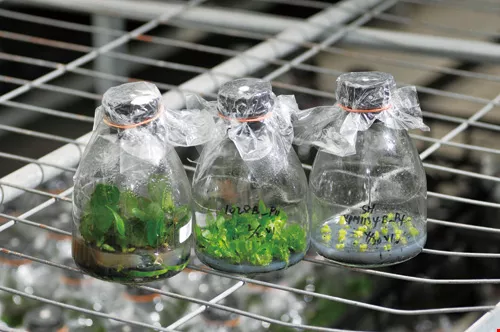
From the stage of tissue cultures, to plantlets in vitro, to young seedlings, to transplanting to a pot and then a larger one, to finally shipping plants out, the cultivation of moth orchids occurs in bacteria-free tissue culture rooms and strictly controlled greenhouses. Cloistered and coddled, these young plants are kept out of harm's way.
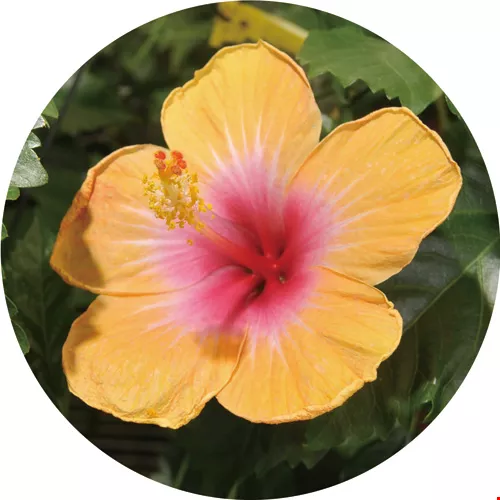
Large flowered and heat tolerant, these new varieties of hibiscus are fruits of Chu's research. From left, "Oriental Moon," "Emily," "Sierra," and an as yet unnamed variety.
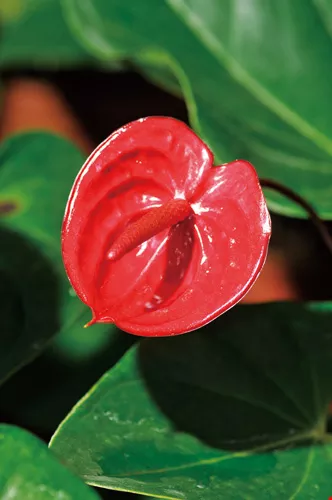
Red, white, pink, green-the blooms of flamingo lilies are both vibrant and slow to wilt.
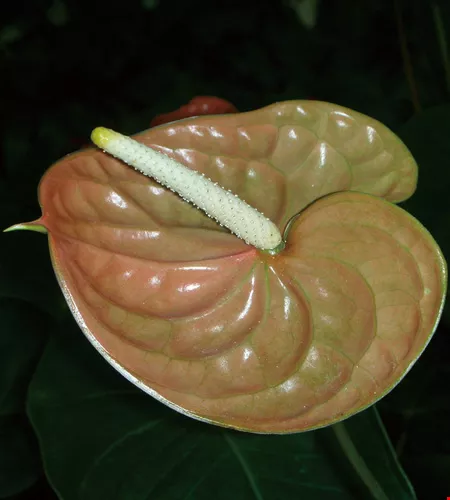
"Amber"
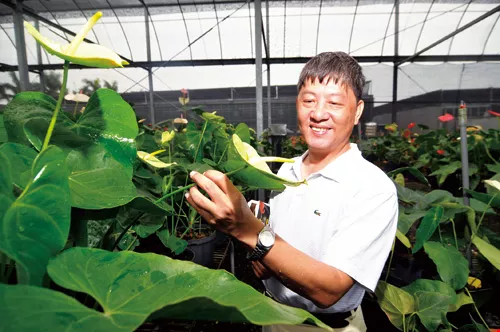
(facing page, bottom) After throwing himself into researching flamingo lilies for more than a decade, Chuang Keng-chang was finally able to create "Green Elf." A green flamingo lily had long been a dream of those producing for the cut-flower market.
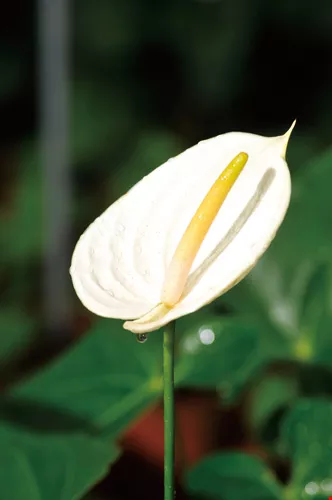
Red, white, pink, green-the blooms of flamingo lilies are both vibrant and slow to wilt.
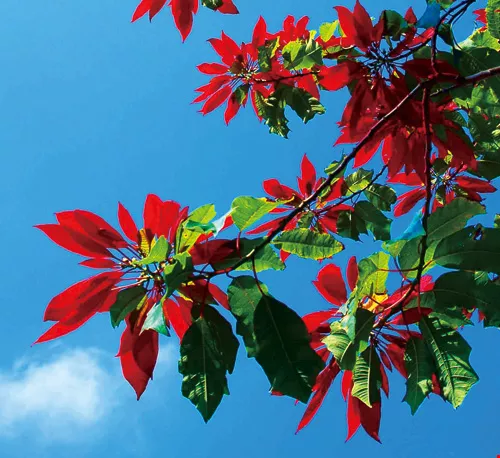
Poinsettias are originally trees that are turned into bushes through the introduction of a phytoplasma infection. Although poinsettias are consistently leading sellers among potted plants, the infection makes them tricky to breed.

@List.jpg?w=522&h=410&mode=crop&format=webp&quality=80)

@List.jpg?w=522&h=410&mode=crop&format=webp&quality=80)


