A Life in Books
Bookstore Entrepreneur Li Minghui
Su Hui-chao / photos Jimmy Lin / tr. by Scott Williams
October 2013


When the Zhengda Bookstore chain opened its Tainan branch on July 18, the new store’s display wall featured a phrase from the work of Tainan author Yeh Shih-tao: “Strolling through an old city via literature’s beautiful imagination.”
Book lovers had lamented the closure of Zhengda’s National Taiwan Normal University shop back in 2010, and, moved by their dismay, owner Li Minghui had resolved to keep the company alive. Li went on to do just that, opening a string of ever larger shops as he branched out from Taipei to Kaohsiung, Hualien, and Tainan.
Li has been buying and selling books for nearly 40 years, a business that at one point had him more than NT$100 million in debt. Given our digital-era preference for online retailers over brick-and-mortar shops, are traditional bookstores even viable nowadays? Why has Li chosen to remain in such a difficult industry?
Li’s first attempt to run a bookstore got off to a disastrous start.
It was 20 years ago. Then 38 years old and the vice president of Li Ming Book Co., Ltd., Li bought the book cooperative on the National Chengchi University (NCCU) campus, also known as the “Zhengda Bookstore.”
Li remembers the day—December 25—very well. Christmas carols were playing everywhere, but all Santa left him was a bounced check that saddled him with nearly NT$10 million in debt.
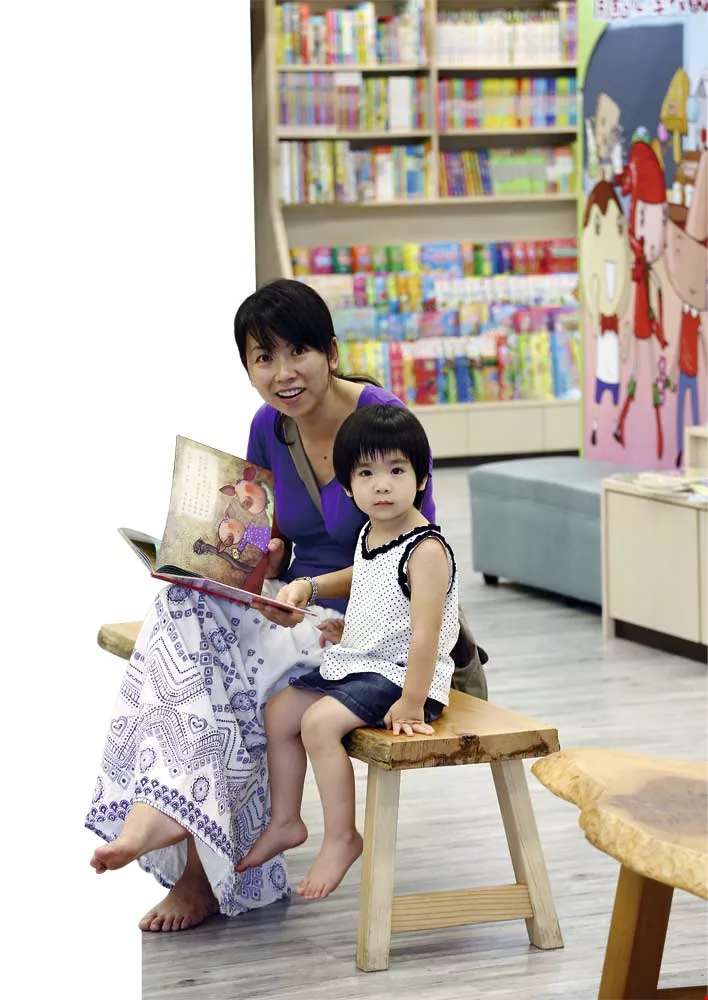
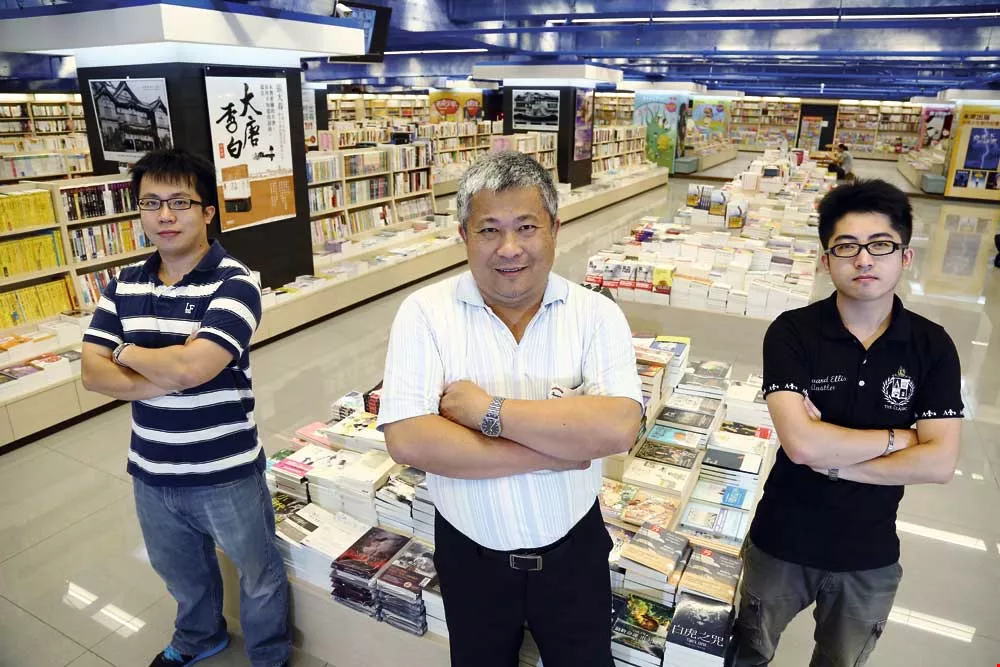
Untroubled by the economic downturn, Li Minghui (center), the owner of Zhengda Bookstores, and his sons have thrown themselves into building an oasis for both booklovers and the publishing industry. The photo shows the company’s new Tainan store, which opened in July 2013.
Deeply in debt just a few days after becoming his own boss, he suffered through a year of mostly sleepless nights. He kept the shop’s costs down by declining to hire any staff, instead taking turns with his wife minding the store.
The debt also prevented him from availing himself of the four-month revolving credit line used by most booksellers. But there was an upside to being compelled to operate on a cash basis: he was able to buy stock at a 5–10% discount and pass those savings on to customers, earning the shop a reputation as an inexpensive place to buy books.
Li paid off what he owed bit by bit, chipping away at the debt every month for three years until it was finally gone. In the process, he earned the publishing industry’s respect and turned Zhengda into a profitable business. The experience informed the first of “Li’s axioms”: “If you’re going to fail at something, do it before the age of 45, while you still have the strength to get back on your feet.”
Born in a rural village, Li graduated from middle school and bid adieu to his Changhua home at the age of 16. He then made his way to Taipei, where he went to work bundling and delivering books for Li Ming Book Co.
With that, books became the center of his life. He soon began applying his business acumen to developing the outlines of his own entrepreneurial tale, that of bookshop owner.
But his very rough first foray into those waters and the massive debt it saddled him with has informed his approach to business ever since. He went on to become an exceptionally cautious businessman, one who carefully considers his every move.
Having succeeded in transforming Zhengda from a money loser into a cash cow, he became concerned that his campus location could be taken away from him any time. In an effort to address this concern and leverage the thin profits he was earning from bookselling, he used a downturn in real estate to acquire property.
Li bought a location in the bustling business district around National Taiwan Normal University (NTNU) in 1998, at a moment when the publishing industry was doing quite well. During this early heyday, Li’s three Taipei shops (NCCU, NTNU, and Nanjing West Road) together generated annual sales of NT$140 million.
In 2005, when the concession agreement for Li’s original NCCU location came up for renewal, the business environment was still reasonably favorable, and Li chose to leave the warm embrace of the campus in order to strike out elsewhere. But in less than three years, the rise of mobile devices fundamentally changed the focus of the reading public, and the NTNU store began flirting with losses resulting from a 15% plunge in its once stable revenues. The problem was that for all that books were everywhere you looked in the Greater Taipei area, readers were largely buying them online and competition among brick-and-mortar booksellers was becoming ferocious. With even Chongqing South Road’s famous “bookshop row” struggling with a lack of customers, Zhengda’s discount strategy ceased to be effective.
In an effort to stem the flow of red ink, Li sold the Nanjing West Road store in 2007, and then the NTNU store in 2010. The closure of the NTNU store hit booklovers particularly hard, and cost the shopping district a landmark that had been its only cultural outpost.
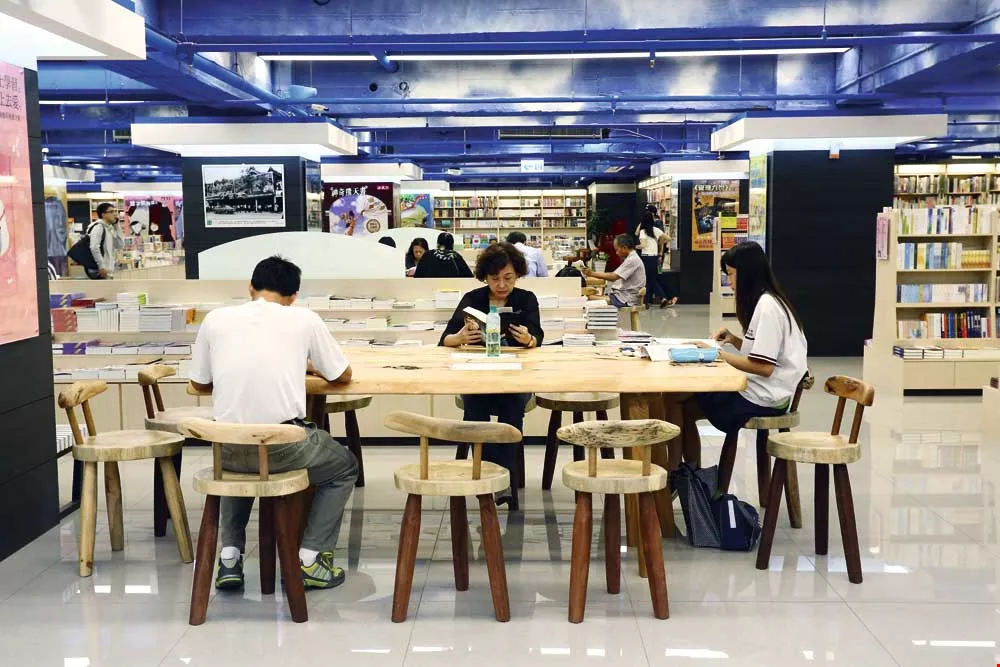
With their abundance of space and lovely wooden furnishings, bookstores have become part of Taiwan’s cultural landscape.
As Li has repeatedly explained, “Bookstores really weren’t viable anymore.” But even as he was selling the NTNU shop, he was thinking about the future of the brick-and-mortar bookshop.
Li wasn’t unduly saddened at the closure of the NTNU shop. Instead, he was excited about opportunities in Yilan and Hualien.
He turned his attention away from Taipei and directed it to the rest of Taiwan. Observing that in rural areas, convenience stores and campus distributors had replaced small and medium-sized booksellers, that reference books and stationery were fading industries, and that independent bookshops in Taiwan’s largest cities were being driven out by chains, he concluded that Taiwan’s second-tier cities were an independent’s only option.
He waffled between Yilan and Hualien for a time before choosing the latter, where he introduced a hybrid business model. The store marked a turning point in his career.
The new Zhengda, all five stories and 3,300 square meters of it, opened its doors on Hualien’s Zhongshan Road within a year.
Li is a businessman who “gets” culture. When he found the Hualien location, he immediately began picturing it as a “mini Eslite.”
With the exception of costing NT$180 million—tens of millions more than originally budgeted—the new Zhengda Bookstore was almost exactly as Li had envisioned it. Acting on his hybrid business strategy, he leased the first floor to a convenience store and the second to a stationer, placed the bookstore on the third, and turned the fourth and fifth into a hostel. He also introduced a loyalty program that rewarded customers who spent NT$2,000 with a free night in the hostel, spurring tourism to Hualien. He even removed the wrappers from boxed sets of children’s books so young and old could better peruse them.
The Hualien store has done booming business since it opened. Though the area’s large population of military personnel, civil servants, and educators provide the foundation of its business, the store’s top-selling genre is children’s books. And the fact that no other bookstore has been able to make a go of it in the area leaves Li without any competition.
As Li likes to say, the further you are from Taipei, the more beauty and opportunity you find. He’s also fond of telling anyone he hears complaining about the recession that “‘recessions’ are for people like you, the ones without any drive.”
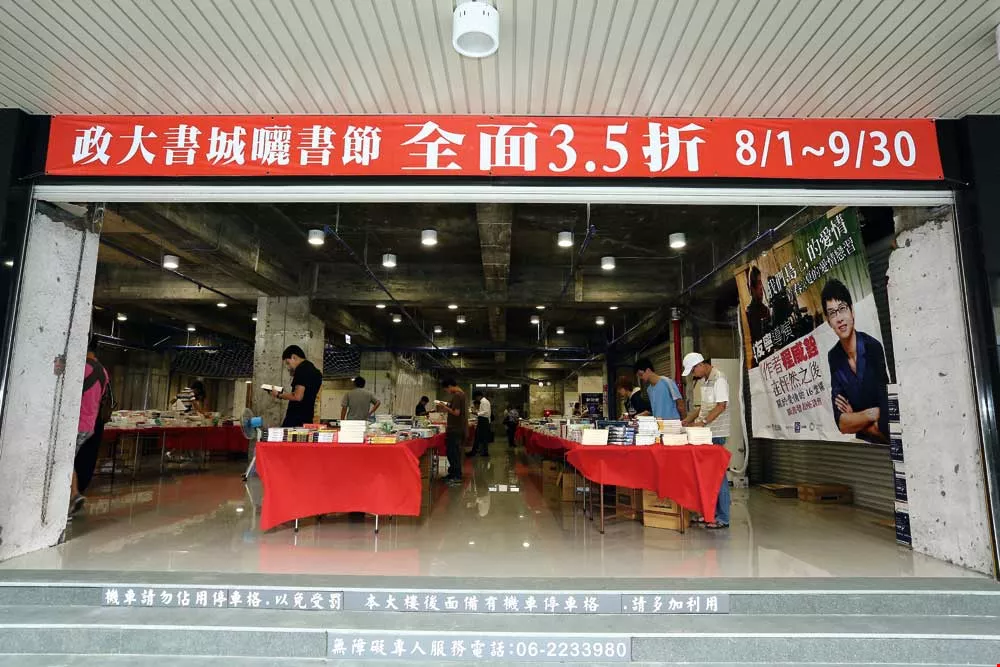
Zhengda is known for offering discounts and other perks. The photos show a recent blowout sale at its Tainan location. Li plans to turn the first floor into a cultural center that will be made available at no charge to local arts and culture organizations.
One of Li’s core values is “Taiwan first.” His Taiwan is far broader than just Taipei, incorporating facets such as local restaurants in Yilan, orange groves in Chiayi, organic rice paddies in Taitung, and the Japanese “immigrant villages” of Hualien. Hence his dissatisfaction with “Taipei’s superior attitude.”
Li has spent more than a decade crisscrossing Taiwan. When he began looking for new locations outside of Taipei where Zhengda could prosper, he chose to stop first in Kaohsiung before moving on to Hualien. Nowadays, his chain extends into Tainan as well.
In fact, Li’s Tainan story begins with Provincial Highway 86. While taking the expressway into downtown from the Tainan High Speed Rail Station, the first thing he noticed was the Ten Drum Culture Village smokestack. The next was the Chimei Museum, built by Tainan industrial magnate Shi Wen-long and then donated to Tainan City.
Li found himself moved by Tainan’s culture and spirit, but wondered where it came from.
On exploring further, he felt that the city’s Zhongxi District was remarkably like Taipei’s Yanping North Road, Dihua Street, and Ximending areas. His imagination was especially fired by Ximen Street’s old Yanping Theater. Then closed, run down, and beyond its owner’s ability to maintain, he saw it in his mind’s eye as a bookstore and performance space. After mulling the possibilities for three days, he resolved to resurrect it.
At the time, there were three major obstacles to the revitalization of the Wutiaogang area of Zhongxi District: a failed underground mall project that cut off Hai’an Road, the condemned Cooperative Building, and the old Yanping Theater itself.
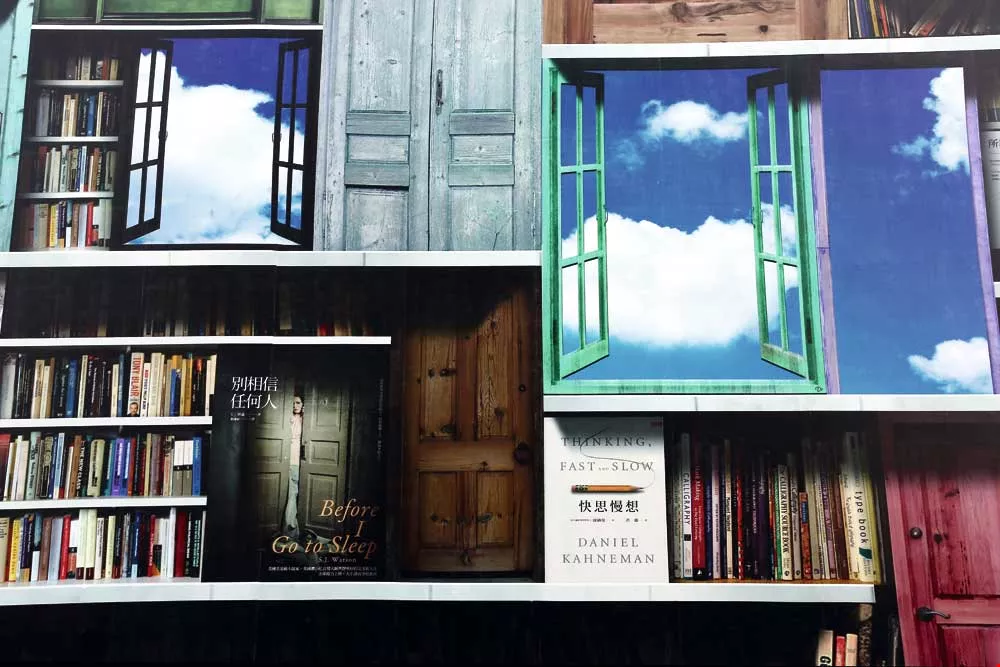
Reading opens our minds and encourages us to embrace the breadth of human experience. Zhengda has adopted a hybrid business model in its new stores outside of Taipei, one that incorporates restaurants and hostels as well as books.
Nowadays, things are different. Hai’an Road has been revived by the construction of an arts district, and the government has taken over the Cooperative Building.
Li’s purchase of the theater’s first floor and basement resolved the last of the blights. When he completed renovations to the site the following year, he seeded the property with texts, transforming it into a veritable garden of knowledge and feelings.
But what about Eslite, Zhengda’s most obvious competitor? Though there are no Eslites in Hualien, the chain is well established in Tainan. How does Li view the company? Is he worried about competing against his giant rival in an environment in which brick-and-mortar bookstores are already struggling?
“Whether you succeed at what you do is up to you, not your competitor.” Li isn’t worried about Zhengda being compared to other bookstores because “every bookshop has its own spirit.”
“What Taiwan needs nowadays is encouragement, not criticism,” says Li. “It’s idiotic for people to snipe at each other.” What he has in mind is a kind of “altruistic symbiosis,” that is, doing things that help others and benefit Taiwan. We all live here, so we should all encourage one another.
Li is now waiting for the opportunity to buy the theater’s second through twelfth floors. Once he gets them, he plans to turn the whole into an energy-efficient structure with solar panels on the roof, and a hostel and restaurants inside. In short, he’s dreaming big.
The times being what they are, Li believes that there’s no future in single, independent bookshops. Instead, he thinks that Taiwan should have about 300 conglomerate-owned stores utilizing a hybrid business model, and that Taiwan’s cultural institutions need to come up with ways to encourage the public to buy more books.
“We could convert the National Travel Card into gift certificates for books, which would bring more than NT$1 billion into bookstores,” he explains. “The government wouldn’t have to worry about people jockeying for gain because gains to the publishing industry would be gains to the public as a whole.”
Li is hopeful about the prospects for his “experiments with engineering the bookstore of the future.” It is our dreams that make us great, and Li is already at work on his next: a Zhengda on Kinmen.
Untroubled by the economic downturn, Li Minghui (center), the owner of Zhengda Bookstores, and his sons have thrown themselves into building an oasis for both booklovers and the publishing industry. The photo shows the company’s new Tainan store, which opened in July 2013.
@List.jpg?w=522&h=410&mode=crop&format=webp&quality=80)

@List.jpg?w=522&h=410&mode=crop&format=webp&quality=80)
@List.jpg?w=522&h=410&mode=crop&format=webp&quality=80)


