An East-West Tug of War--Hong Kong Embraces the Chinese Language
Jackie Chen / photos Diago Chiu / tr. by Robert Taylor
August 1998


Studying English has lately been a focus of media attention in Taiwan. In mid-July, ROC education minister Lin Ching-chiang announced that starting from the 2001 academic year, English would be a compulsory subject in elementary schools. At a meeting of the members of Academia Sinica, Lin's predecessor Wu Ching and others suggested that to prepare Taiwan's workforce for internationalization, university teaching should be in English.
People both inside and outside the government agree in one major respect: their dissatisfaction with the results of English teaching in Taiwan, and the need to improve it. But across the sea in Hong Kong, a different reappraisal of English teaching is taking place.
When the new school year starts in September, three-quarters of Hong Kong's more than 400 secondary schools will go over to teaching in Cantonese. This policy has not had an easy ride, and has become one of the most controversial issues in Hong Kong society since the smooth transfer of sovereignty in 1997. The issue reflects Asian countries' problematic relationship with the English language, and involves elements of history, education, economics, and of course-but most vexingly for ordinary people-politics.
On television, a neatly-suited, middle-aged gentleman appears.
At an elegant conference table, he is presiding over a meeting-in Cantonese. In the next scene, a building site where construction of a tall edifice is under way, the same man is talking with several white-skinned, blue-eyed foreign engineers-in English. The setting then changes to a secondary school classroom, where our hero is assisting pupils seated at computers. Finally, we see a group of schoolchildren wearing headphones and practicing English, and the caption: "Proficiency in both Chinese and English makes for more effective people."
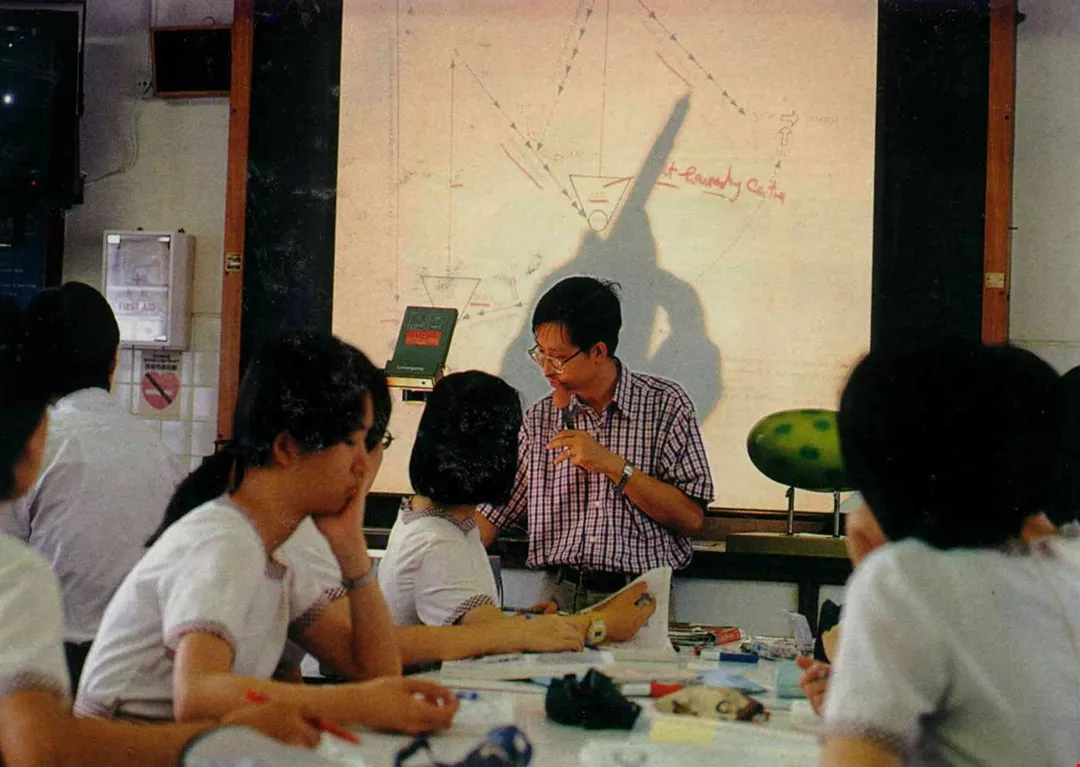
Pupils at Sha Tin Government Secondary School in a science class, held in English. To improve pupils' mastery of English, Ma Siu-leung, principal of this traditional English medium school, deliberately speaks English with them, even in school affairs meetings.
Hearts and minds
This was a TV advertisement put out by Hong Kong's Education Department to promote its "mother-tongue [i.e. Cantonese] instruction" policy. The middle-aged gentleman is a university president who attended a secondary school where most teaching was in Cantonese, and the thrust of the entire advert is that if you are willing to study in your mother tongue, then you too, like this dapper university president, can be "fluent in Chinese and English."
It is not only television ads which impart this message. At bus and MTR stations in Hong Kong a year after its return to Chinese rule, amid adverts for suits, ties and mobile phones, slogans such as "Without the language barrier, they learn better with less effort," and "This way all subjects are easier to understand and I learn to read, write and speak Mandarin, Cantonese and English faster" vie for people's attention, and cannot fail to catch the eye of visitors.
Since 1982, when China and Britain reached agreement on the future of Hong Kong, policy on the language used for teaching in Hong Kong's schools has received widespread attention both inside and outside the territory. Today, a year after Hong Kong's reversion to Chinese rule, the new language policy has at last been finalized, and when the school year starts in September, most secondary schools in Hong Kong will replace English with Cantonese as their medium of instruction.
Educators in Hong Kong view this project as a tremendous change. It means that textbooks have to be rewritten in Chinese, along with related materials such as teaching guides, reference books, test papers and so on. Teachers previously accustomed to teaching in English must readjust to teaching in Cantonese. The task is seen is particularly onerous in mathematics and the natural sciences: "The Chinese translation of some English terms still needs to be carefully reviewed," says one secondary school teacher.
However, it would appear that the most difficult challenge facing the Hong Kong government in promoting its mother-tongue instruction policy is not an educational one, but rather that of "how to wean the public away from its long-standing obsession with English," says Lee Kwok-sung, the Education Department's principal education officer for planning and research. He says with a smile that the task before them is one of "changing people's hearts and minds."
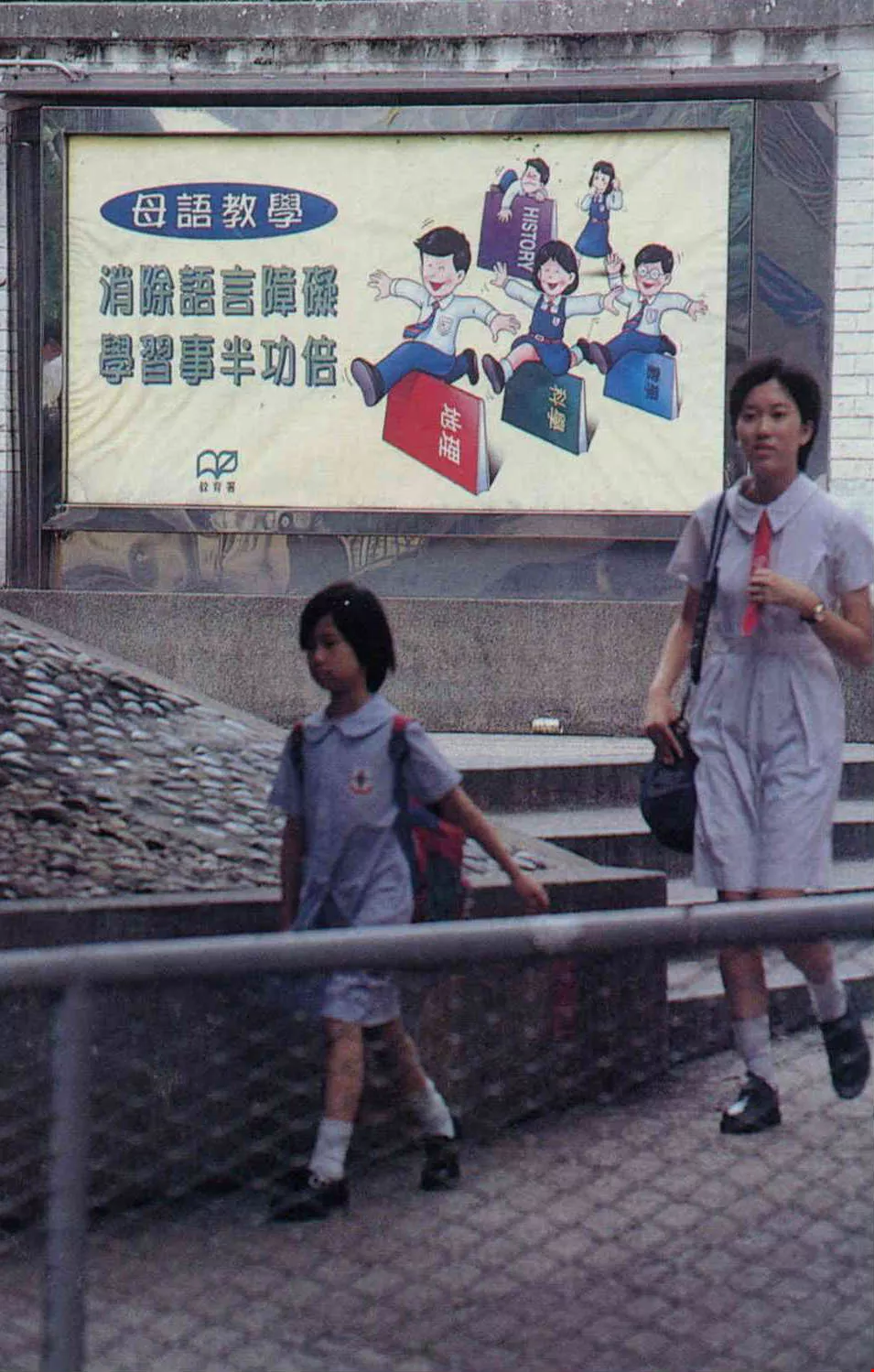
For many Hong Kong people, the biggest barrier to changing schools' medium of instruction from English to Chinese is psychological. Hence the Hong Kong government has placed many advertisements on the territory's streets to persuade the local public.
A motley linguistic mix
Hong Kong was once part of Guangdong Province's Shao'an County, and most of its residents came from the coastal regions of southeast China; Cantonese was their main language of communication. But after British rule over Hong Kong began in 1842, there was a sea change in the territory's linguistic environment.
The effect of British colonial rule was that "English became not only a lingua franca, but also an indicator of status." Au Pak-kuen, vice-president of the Hong Kong Professional Teachers' Union, says candidly that even today, people with good English can gain easier entry to the civil service, and are preferred by private-sector employers. They enjoy higher salaries and rise to higher positions. As Hong Kong author Liang Bingjun puts it: "In this society, English has become a measure of a person's worth and status."
But Hong Kong society is also thoroughly Chinese. "When you compare a person from Hong Kong to a foreigner, of course he is Chinese. But when you compare him to Chinese from the PRC or Taiwan, he seems to carry more foreign influence. Perhaps he speaks some English or Mandarin, but that is not the language he grew up learning. He is most at ease with Cantonese, but it has no proper written form. He memorized some classical Chinese in school, but in the world of work he has to become familiar with the forms of commercial correspondence, and the short and catchy slogans of advertising." This is Liang Bingjun's analysis of the complex linguistic mix which prevails in the written and spoken language of Hong Kong.
This complexity in Hong Kong's society and culture seems to be reflected in the current state of education in the former crown colony.
Pan Yuqiong, a doctoral candidate in the Graduate School of Education at the University of Queensland, notes that the situation with respect to the medium of instruction in Hong Kong's schools is somewhat similar to the "pilot schools" in the European Union. In these, primary-school children are taught in their mother tongue and learn one or two foreign languages; but in secondary school, their first foreign language becomes the medium of instruction. However, the situation in Hong Kong is more complicated, for as well as "English-medium" secondary schools, which use English as their medium of instruction, there are also some "Chinese-medium" secondary schools which continue to teach in Cantonese, the language used in most Hong Kong primary schools. But in higher education, most students are taught in English.
Before 1997, most secondary schools in Hong Kong-irrespective of whether their teaching staff were genuinely competent to teach in English-defined themselves as English-medium schools. According to Hong Kong government figures for the 1980s, of over 400 public-sector secondary schools throughout the territory, Chinese was the medium of instruction in only 20. In the 1990s this number has gradually grown to 79.
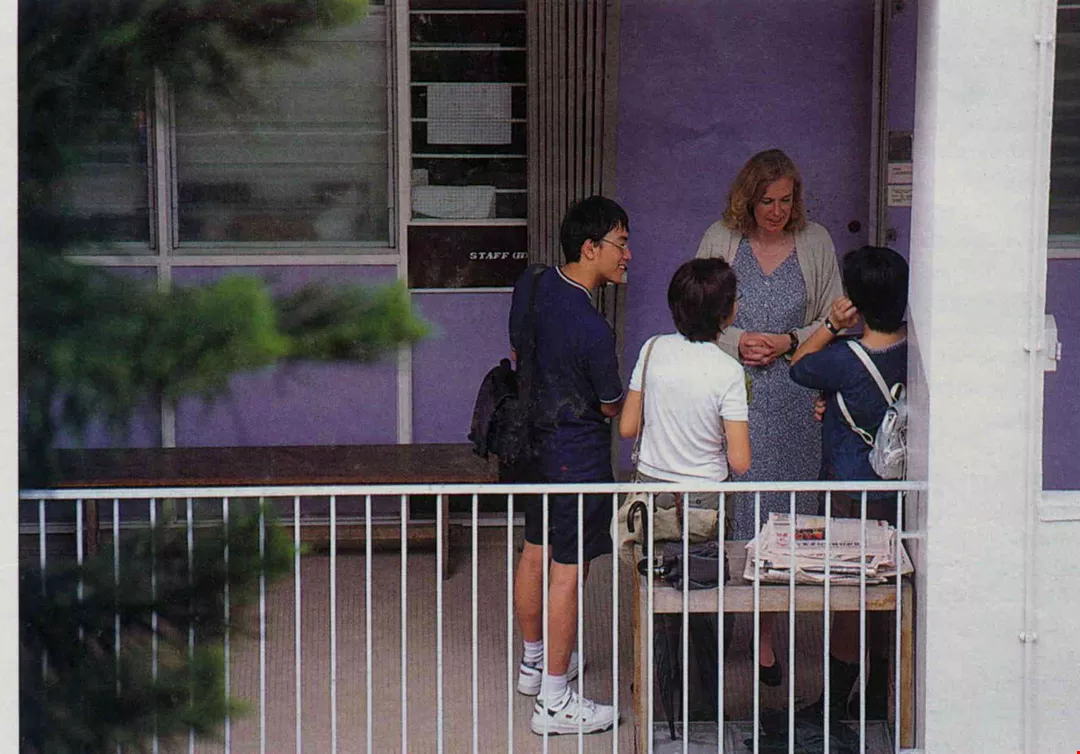
Why is the standard of English among Hong Kong's schoolchildren falling? Some believe that one reason is the departure of many British teachers from the former colony.
Trying to recruit the best
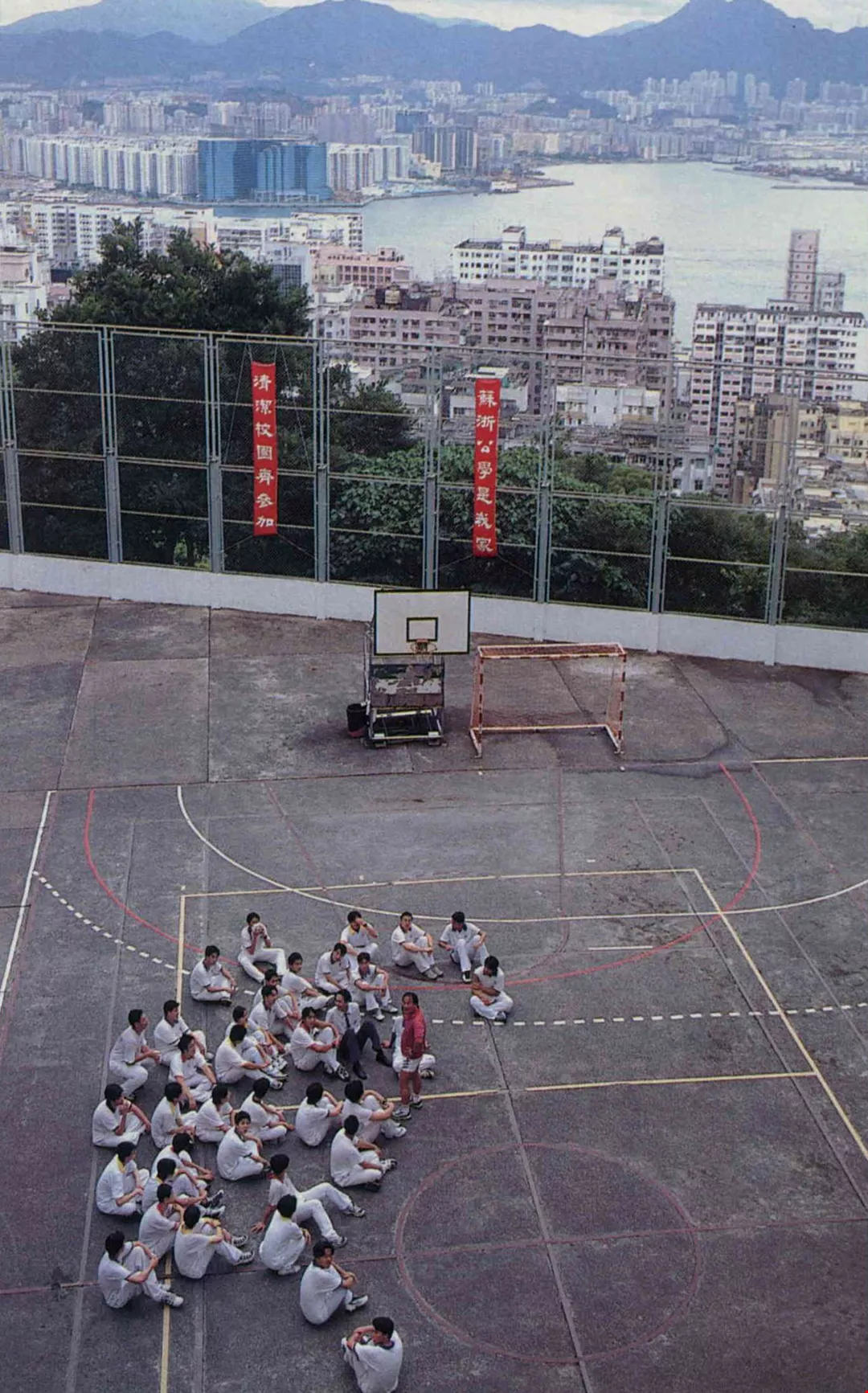
Why are educators in Hong Kong so keen on English-medium schools? "To enable the schools to recruit the ablest pupils!" says Cheung Shiu Yip, principal of Kiangsu-Chekiang College in North Point. He admits candidly that the main reasons are demand from parents and children, and schools' wish to recruit talented pupils. Kiangsu-Chekiang College is one of the few private secondary schools in Hong Kong which receive a "direct subsidy" from the government. Founded in 1948, it initially taught in Mandarin, but later changed to presenting itself as an English-medium school-"in the hope of attracting more good pupils to study here," as Cheung says.
Secondary schools in Hong Kong fall into three broad categories: government schools, run by the Education Department; "aided schools," independently run but supported by government grants; and private schools.
In 1978, the Hong Kong government began to implement a compulsory education system comprising both primary and secondary schools, similar to Taiwan's nine-year compulsory education system. One difference between them is that in Taiwan, pupils are recruited into schools according to catchment areas, whereas in Hong Kong, except for the small number of pupils who go to private schools, all places are "allocated" by the government.
"At the end of Form 6 of primary school, all schoolchildren in Hong Kong receive a letter," describes secondary-school teacher Liu Nianren. This document details the children's academic and other performance both inside and outside school throughout their six years of primary education, and based on their academic ability and place of residence, the government suggests nearby secondary schools for their parents to choose from.
The Education Information Compendium published by the Hong Kong Education Department states that the Hong Kong government "allocates" suitable students to schools, but this does not necessarily mean that all schools can recruit the pupils they want. In the 1980s, the Carmel Secondary School in Kowloon, which had previously been an English-medium school, announced that it was changing to a Chinese-medium school, with instruction in Cantonese. But after doing so, it was unable to recruit enough pupils to fill all its places. This is indicative of the strength of Hong Kong parents' preference for English over Chinese.
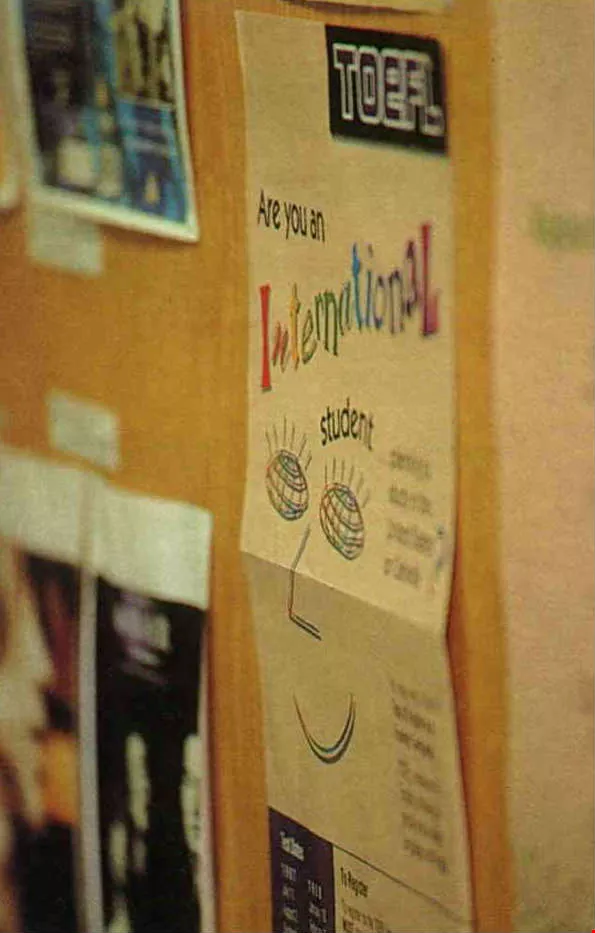
Want to study in an English-speaking country? Posters like this are a common sight in Hong Kong schools.
Reality outweighs sentiment
Why would Hong Kong parents "reject" Chinese in favor of English? "Hong Kong was ruled by the British, and there are practical factors such as employment opportunities." Au Pak-kuen notes that such reasons as wanting their children to "acquire the language of university education" might on their own be enough to make parents choose English-medium schools.
From the practical, educational point of view, this choice by Hong Kong parents seems almost inevitable. A teacher at Hong Kong's Clementi Secondary School says that although she teaches at a Chinese-medium school, she still sends her children to an English-medium school, because "in terms of the quality of teaching staff, the approach to education and even the design of the buildings and facilities, many English-medium schools are indeed better than Chinese-medium ones." She says this is a fact that "even the Hong Kong government cannot easily deny."
Of course, in multicultural Hong Kong, not all parents choose English-medium schools. Chan Lik Hang, vice-principal of the prestigious Pui Ching Middle School, which was established over a century ago, says: "Out of ethnic sentiment, many parents wish their children to learn Chinese properly." For this and other reasons, many parents make a deliberate choice to send their children to Chinese-medium schools.
The timing of the announcement of the mother-tongue policy, a year after Hong Kong's return to Chinese rule, has caused many people overseas to link it directly with politics, but the post-handover Hong Kong government has repeatedly stated that the policy is mainly "based on educational reasons." Lee Kwok-sung says plainly that it has nothing to do either with instilling a sense of ethnic identity or with cultural transmission: the Hong Kong government's reason for promoting mother-tongue instruction "is simply to allow children to study more effectively."
Actually, the "language problem" is nothing new for Hong Kong. The territory was ruled by the British for well over a century, but although everyone was aware of the importance of English, the number of people in society who could "really use English with complete ease" was probably still a minority, says Dr. Anthony Cheung, head of the Department of Public and Social Administration at the City University of Hong Kong. Cheung says that instruction in English is not only difficult for students-it taxes the abilities of some teachers too.
This has given rise to a bizarre phenomenon: although the vast majority of secondary schools in Hong Kong claim to use English as their medium of instruction, in fact a "half-English, half-Cantonese mixture"-known as "mixed code," or less flatteringly "Chinglish"-is what is really spoken in most of their classrooms. This linguistic mish-mash "doesn't produce very good results either in terms of language learning or of subject learning," says Ip Kin Yuen, a lecturer at the Hong Kong Institute of Education. Au Pak-kuen also comments: "This is the origin of the way Hong Kong people mix English words into their Chinese sentences, producing something which is 'neither Chinese nor Western.'" This habit is often criticized in Hong Kong cultural circles.
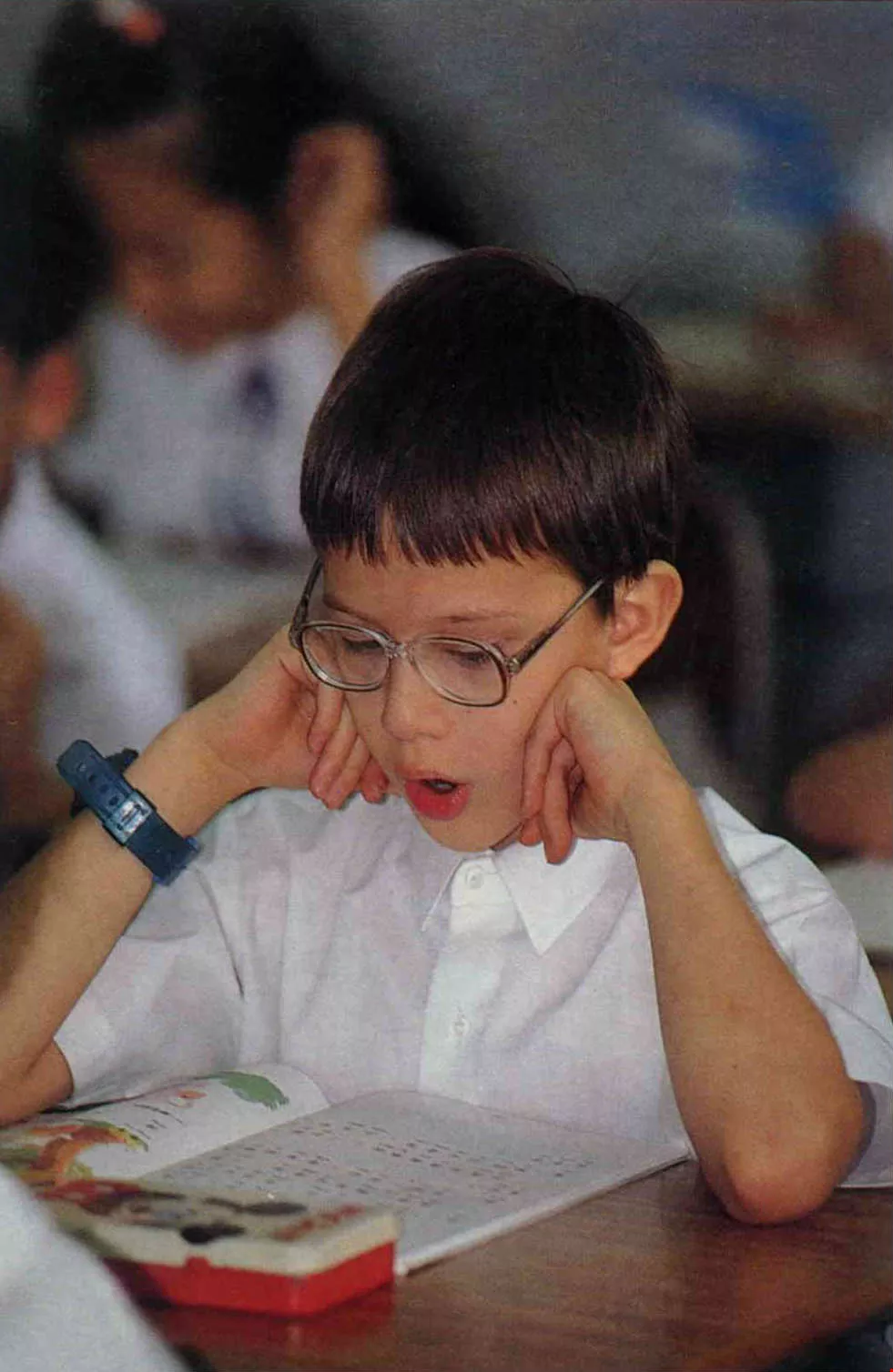
In Hong Kong schools, which are meeting points of Chinese and Western culture, foreign children also diligently study Chinese.
Poor English?
When one mentions the standard of English among schoolchildren and students in Hong Kong, professors at leading local academic institutions such as the Hong Kong University of Science and Technology (HKUST) generally express the view that it often leaves much to be desired. "More class time is spent explaining English than teaching subject matter," says Professor Chi Hsi-sheng of HKUST's Division of Social Science.
In particular, during the rapid expansion in tertiary education in Hong Kong in the late 1980s, the standard of English among newly recruited students fell year by year. "Students have too many extracurricular activities, and aren't willing to concentrate on studying such things as language," says Keith Tong, associate director of HKUST's Language Centre. He also comments: "Although the ability of Hong Kong students at HKUST to understand and speak English is not inferior to that of students from Taiwan or Beijing, when you compare the amount of time they have spent learning English you have to conclude that the Hong Kong students really do not study efficiently."
Many Hong Kong people lament that since the 1980s the overall standard of English among local students has declined, but sadly their Chinese has not improved commensurately, despite the increasing number of opportunities to use Chinese in the run-up to Hong Kong's return to the "motherland." Since the 1980s the Hong Kong media have repeatedly voiced the concern that unless something was done soon to improve on the mixture of Chinese and English spoken in Hong Kong, not only would students have language problems, but the quality of the workforce would also be impaired.
In fact, the Hong Kong government has long been trying to clean up the territory's linguistic mish-mash. In a 1974 education document, the Hong Kong government explicitly encouraged all schools to use mother-tongue instruction. But, says Au Pak-kuen, "This call was not backed up with active measures, so it had little effect."
In the 1990s, with the return to Chinese rule drawing closer, the mother-tongue instruction policy was pursued more actively. The Education Department introduced measures to reward schools which chose mother-tongue instruction, such as providing audio-visual teaching materials and teacher training. A 1996 report from the Education Commission, the Hong Kong government's main advisory body on education policy, even proposed that the Education Department should set up a system of "sanctions" against schools which did not adopt mother-tongue instruction.
In September 1997, Hong Kong's new mother-tongue instruction policy was formally adopted. The Education Department published a document entitled Medium of Instruction Guidance for Secondary Schools, which stipulated that secondary schools throughout Hong Kong should go over to mother-tongue instruction, and could no longer teach in English or in "mixed code" purporting to be English. But this stipulation had a let-out clause: if a school believed its teachers' skills and pupils' aptitude were sufficient, they could apply to continue teaching in English. Subsequently, 124 of Hong Kong's 400 publicly funded secondary schools applied, and after assessment 100 were approved to continue teaching in English.
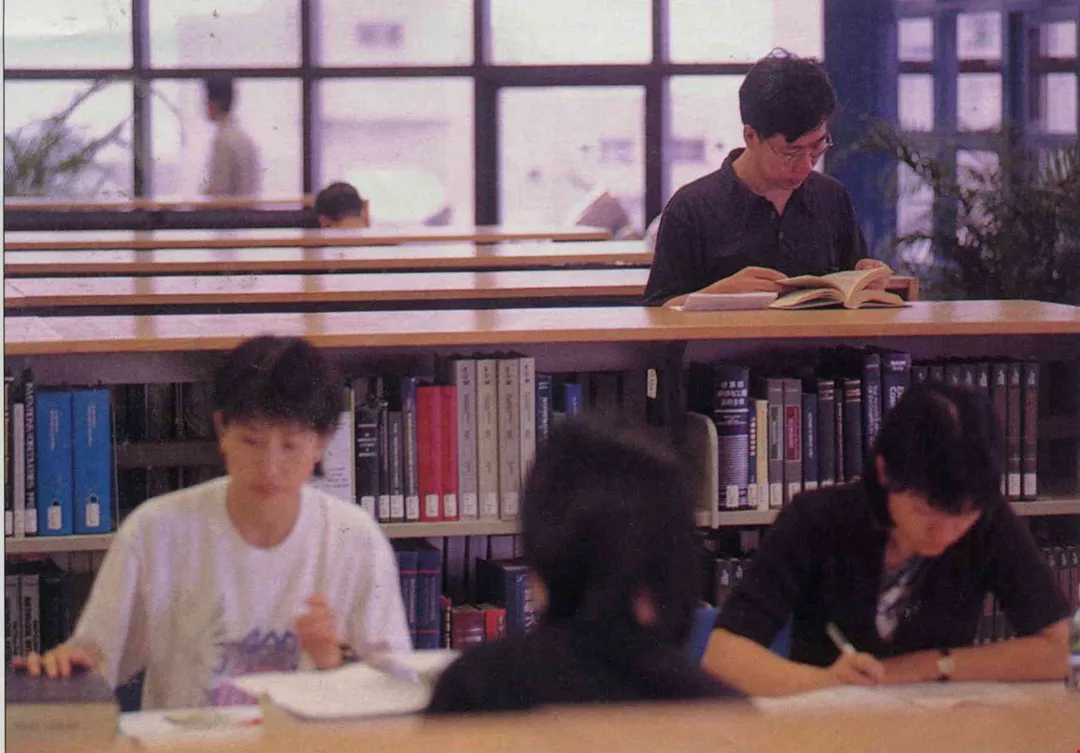
Higher education has grown rapidly in Hong Kong in the last two decades, absorbing a large portion of the territory's education resources. Most Hong Kong universities and colleges teach in English, and their libraries are well stocked with English-language books.
Controversy over elite schools
Having announced a complete changeover to mother-tongue instruction, why did the government then permit some schools to continue teaching in English? The explanation given by Principal Education Officer Lee Kwok-sung is that because Hong Kong is an international city, the important status of English must be maintained. Furthermore, he says, "assessment has shown that these 100 schools are indeed adequately equipped to use English as their medium of instruction, and on the principle of respecting schools' autonomy, the government could not easily refuse them."
Be that as it may, many people still question this "ambivalent" policy. "This is a deliberate attempt by the Hong Kong government to create an elite school effect, and it shows they have not broken free of the mindset that English is 'better' than Chinese," says Dr. Anthony Cheung, head of the Department of Public and Social Administration at the City University of Hong Kong.
However, Hong Kong cultural figure Leung Man Tao feels that what the policy reveals is that although the government wishes to go over to mother-tongue instruction, it is not willing to face up to the public reaction and is therefore attempting to "please everybody." He also feels the government's approach is likely to increase "elitist" thinking among the public. "Hong Kong had prestigious schools in the past, but their reputations were based on their history or their style of teaching-they were never designated by the government," he says. Today, with the Education Department unashamedly "labeling" elite schools for parents' benefit, Leung quips that he feels like mobilizing Hong Kong's cultural circles to create a "cram school for the 100 elite schools"-to give schools which didn't make it onto the list some "tutoring" so that they needn't "miss the boat."
Hong Kong people's reaction is not confined merely to sarcasm and derision. In March of this year, following the publication of the list of 100 approved English-medium schools, most of the other 24 schools which had applied but not been accepted appealed to the Education Department, and eventually 14 of them were approved. On the day their names were released, teachers and parents at the schools which passed muster were jubilant, while at the others there were tearful scenes, and many school principals openly criticized the approval procedure as unfair. "Making such a song and dance over being listed as an English-medium school is a terrific negative example in itself," exclaims teacher Liu Nianren.
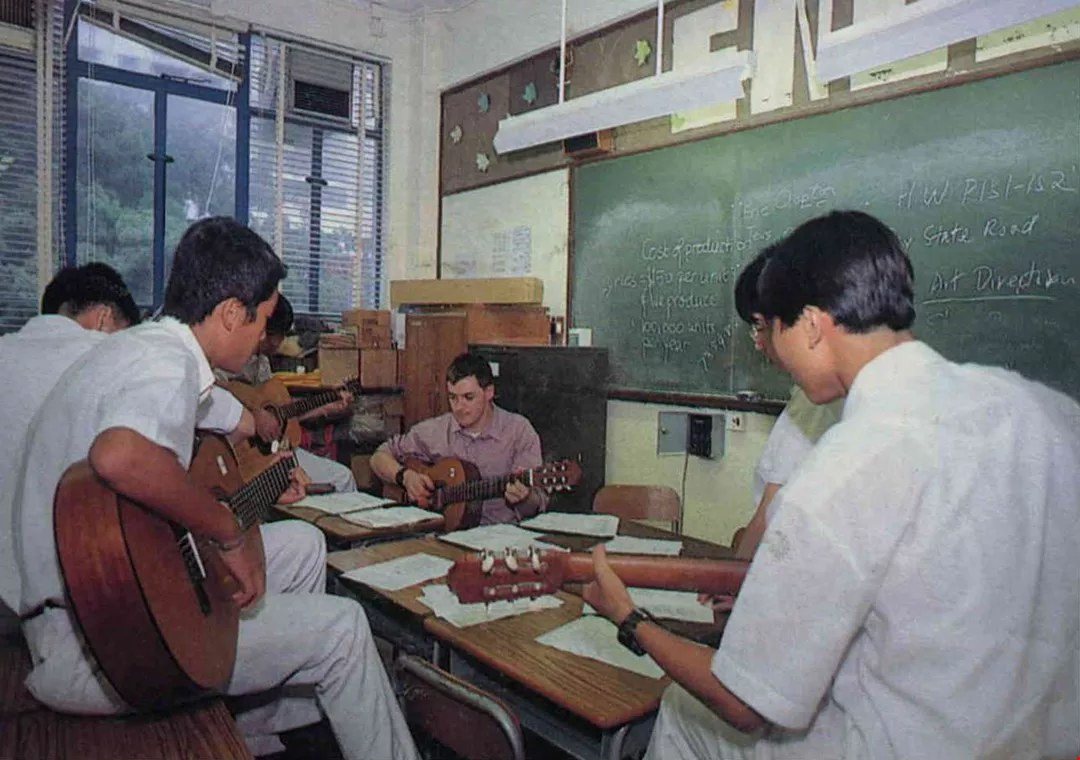
To improve the standard of English at Chinese-medium secondary schools, the Hong Kong government allows schools which have changed their medium of instruction from English to Chinese to employ an additional expatriate teacher. However, this has caused discontent at existing Chinese-medium schools. How do foreign teachers influence Hong Kong schoolchildren when they bring Western cultural values into the classroom? This too is a topic much aired in the Hong Kong media.
The spirit of "one country, two systems"?
Before the 1997 handover, Education Commission member Cheng Jieming once said that Hong Kong people's sense of unease about the return to Chinese rule was not due to concern over whether there were British elements in Hong Kong's education system, but over "what methods would be proposed for eliminating those elements." He also said: "People need to think deeply about whether everything originating from Britain needs to be done away with. Are all the things which served colonialism in the past 'evil'? Can none of them serve the future?" In Cheng's view, people "should analyze the British factors in a matter-of-fact way, based on the real future needs of education. What people in Hong Kong fear is a blanket purge."
Despite the Hong Kong government's repeated denials, the timing of the introduction of mother-tongue instruction relative to the handover of sovereignty seems to point directly to a political relationship. But strangely, today's policy seems to be only going halfway. Professor Chi Hsi-sheng of HKUST says this seems to reveal the Hong Kong government's ambivalent psychology with regard to "one country, two systems."
"English is one of Hong Kong's most important linguistic tools, and if the status of English is eroded, then Hong Kong's special status under 'one country, two systems' will also be at risk." Anthony Cheung says frankly that although keeping Hong Kong as an international city with a relatively good standard of English may be slightly detrimental to ethnic sentiment and the transmission of culture, "from Beijing's point of view this should be no great loss." Professor Chi Hsi-sheng asks: "If Hong Kong were to lose its special skill in English, then how would it be different from other port cities such as Shanghai, Xiamen or Guangzhou?"
A more damaging aspect of the Hong Kong government's decision to retain English-medium schools is that it has increased Hong Kong people's impression of a link between English and academic ability. Professor Hau Kit-tai, chairman of the Department of Educational Psychology at the Chinese University of Hong Kong, says that if we were to make appearance and bearing the criteria for selection into elite schools, then in 20 to 30 years' time we would be apt to discover that all Hong Kong's professionals and high government officials were extraordinarily good looking, and this would mislead us even further into believing that appearance is a good basis for selecting people of talent.
"When Hong Kong people see that every graduate of an elite school who then goes on to high position in society speaks excellent English, this will further reinforce the public's reverence for the English language. But in fact with this system we will sideline many highly creative, insightful people whose Chinese is excellent but whose English falls slightly short of the mark, and this may not be conducive to raising the quality of Hong Kong's workforce," says Hau Kit-tai.
"Today, in a situation where Hong Kong is ruled by Hong Kong people rather than foreigners, but the economy is growing ever more complex and the quality of the personnel trained under the old system fails to meet its demands, we are faced with the question of what kind of people the new system should produce." These words from a leading article in Hong Kong's Xin Bao newspaper go to the heart of the problem underlying the mother-tongue policy.
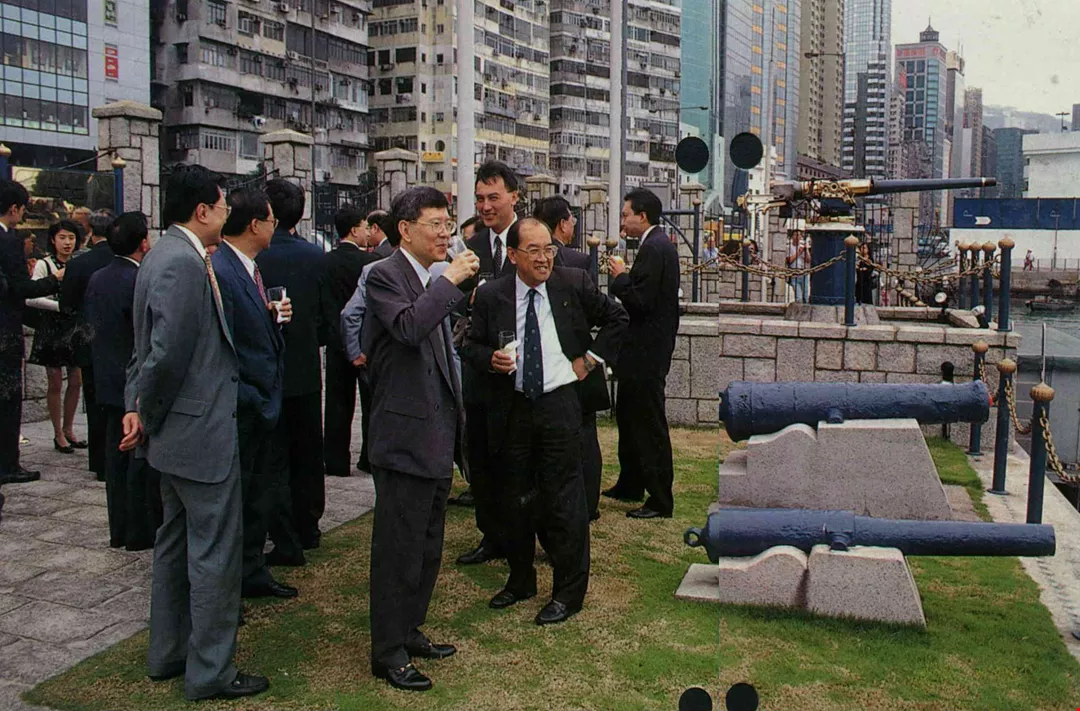
The firing of Jardines' gun each day at noon is part of the British historical legacy in Hong Kong. The well-shod members of the social elite seen taking cocktails here are almost all fluentn both English and Chinese.
A linguistic seesaw
Now that Hong Kong has returned to Chinese rule, what path should its people follow? Language policy is a touchstone. The linguistic standard now unfurled by the Hong Kong government is one of "biliteracy and trilingualism"-they hope that Hong Kong people can be proficient in reading and writing both English and Chinese, and in speaking Cantonese, English and Mandarin. From September 1998, the Hong Kong government explicitly requires all primary schools to start teaching Mandarin in Form 1, and secondary schools to start teaching it in Forms 1 and 4; in subsequent years it is to be gradually extended to all forms. The government is also considering adding Mandarin to the subjects tested in the secondary school Hong Kong Certificate of Education Examinations (HKCEE) from next year.
Is "biliteracy and trilingualism" achievable? In the view of many Hong Kong scholars, the goal set by the Hong Kong government is no more than an ideal. Professor Wang Gungwu, former vice-chancellor of the University of Hong Kong, has said that to expect every Hong Kong schoolchild to achieve a high level of proficiency in all these varieties of language is not practicable. "If five to ten percent can gain a good mastery of the written forms of both Chinese and English, we will be doing pretty well," he wrote in an article in the Ming Pao Monthly. But others have said that because of Hong Kong's colonial past, it already possesses a multilingual environment similar to that of Europe or nearby countries such as Singapore, so promoting written and spoken multilingualism in Hong Kong is not beyond the bounds of possibility.
Will the goal of biliteracy and trilingualism bring with it the problem that individual pupils will master none of the languages fully? For the purposes of school education, which language should be the main one, and does this choice imply precedence of one over another? Also, will the languages interfere with one another?
Ip Kin Yuen observes that except in a very natural linguistic environment, "for instance where the father is English and the mother Chinese," language learning theory suggests that a foreign language is best studied on the basis of a "mother tongue," especially in adulthood. The firmer the grounding in the mother tongue, the more successful study of the foreign language is likely to be. Furthermore, despite the fact that humans have unlimited language learning potential, and in some European countries children naturally become fluent in three or four languages and can use them appropriately in different linguistic situations (thus, to return to Ip's example, a child growing up in a bilingual environment will naturally speak Chinese with its mother and English with its father, in what linguists refer to as "code switching"), this depends on the linguistic environment, complemented by school training. Ip is very doubtful whether Hong Kong does indeed provide such a multilingual environment.
It seems that only time will tell whether the goal of fivefold linguistic proficiency can be attained, and currently what most worries the Hong Kong public at large is whether the promotion of mother tongue instruction in Cantonese will be at the expense of English teaching. "If we lose the former linguistic environment in which teaching and textbooks were all in English, will our standard of English go into a terminal decline?" This is one of the doubts raised in Hong Kong's newspapers by people in favor of retaining the system of English-medium schools. This has prompted the Hong Kong government to repeatedly cite statistics which suggest that mother-tongue instruction need not lead to a decline in English.
A research report quoted by the Education Department indicates that in "language-loaded" subjects (subjects with a strong linguistic component), such as geography, history or science, the performance of pupils taught in their mother tongue is clearly better than that of those taught in English, yet their grades in English do not fall behind those of pupils in English-medium schools as a result.
Education is one source of Hong Kong's vitality. Many Hong Kong people f eel that the coastal territory's special skills in English help make it an asset which mainland China should value.
Opening wide the eyes of history
Many people see the Hong Kong government's mother-tongue instruction policy as part of an all-out campaign to promote Cantonese over English, to symbolize Hong Kong's return to the Chinese world. But is such a campaign advantageous for Hong Kong's future, or disadvantageous? So far, Hong Kong society at large has not reached a consensus on this issue.
If we say that the colonial government's policy of favoring English over Chinese led to many people of ability being unfairly selected out of the education system because their English was not up to scratch, will today's policy of biliteracy and trilingualism make amends in any way? Hong Kong's geographical position as a gateway between China and the rest of the world has not changed, and we can foresee that in future, as the mainland develops, Hong Kong's political and economic relations with it will grow ever closer. But in most of mainland China, Cantonese is not current. A question which has been raised in the Hong Kong media is: "Isn't Hong Kong taking a step backwards by adopting Cantonese instead of Mandarin for its return to 'Chinese'?"
"Apart from the pedagogical question of how to teach 'biliteracy and trilingualism,' something we need to get clear today is whether the low standard of English among Hong Kong schoolchildren is something that comes about in primary school or in secondary school, and whether it is because our English teachers are not up to the job, or because of the use of mixed code in the classroom. Most importantly, by going over to mother-tongue instruction and this two-plus-three policy, in just what direction are we trying to move Hong Kong?" asks Leung Man Tao. He also wonders whether, as long as basic educational questions such as how to improve the quality of teaching have not been clarified, simply implementing a mother-tongue policy will be a merely cosmetic measure.
Many people believe that the widespread discussion of mother-tongue instruction in Hong Kong is actually an expression of an overall reexamination of all kinds of attitudes towards language in the wake of the territory's return to Chinese rule. This involves historical, political, educational and other factors, and the final outcome will be for history to decide.
But one thing we can be sure of is that it is Hong Kong's "mixed" history which has made it what it is today.
"Yes, Hong Kong's language is impure, but it is precisely this impurity which has helped it to open itself to all kinds of different influences," says US-resident Hong Kong author Luo Feng. From "heterogeneity" to "homogeneity"-or even a "homogeneity which cannot escape from heterogeneity"-one can say that Hong Kong's language policy also seems to be following such a path. Is this a "burden" or an "asset" for Hong Kong? History is watching with eyes wide open.

@List.jpg?w=522&h=410&mode=crop&format=webp&quality=80)


