West vs. South:Taiwan Investors Do Have a Choice
Chang Chiung-fang / tr. by Phil Newell
November 2001


When the government held its Economic Development Advisory Conference in August of this year, all business leaders who attended, from the venerable elders of the industrial sector to the Young Turks of high-tech, asked that the government relax the "no haste, be patient" policy for investing in mainland China. Does this mean that there is now no way to stop the westward flood of capital? If so, whatever happened to the "Go South" policy once strongly touted by the government, in which Southeast Asia was the first stop in the global deployment of Taiwan enterprises?
Amid today's rousing chorus of cries to Go West, we should ask: Is mainland China really the only choice for outward investment? What kind of outward investment policy would best serve Taiwan's interests in the face of globalization? And what about the Taiwan companies that, on their own or in response to the government's Go South policy, invested in Southeast Asia? Where are they now?
It seems that the term "Go South policy," which had its day in the limelight, is now but a rarely heard historical term. However, the Taiwan companies that invested in Southeast Asia at that time have by no means become history. Though they consider themselves "a forgotten group," they are still there working as hard as ever so that their companies can survive and thrive.
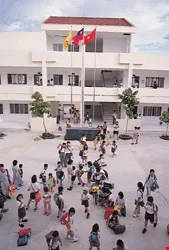
Education of their children is often a headache for Taiwanese people abroad. The Taiwanese school in Ho Chi Minh City has more students than any Taiwanese school in Southeast Asia.
An extension of power
These Taiwan companies all had their reasons for southward investment.
Back in the 1980s, when the New Taiwan dollar sharply appreciated in value, many firms began to move abroad. It was also just at that time that countries in Southeast Asia were reforming and opening their economies to foreign investment.
The earliest to do so were Malaysia and Thailand, so they were the first stops for Taiwan companies.
Taiwan investment in Malaysia peaked before 1990. Chu Chia-I, director of the 3rd Division in the Industrial Development and Investment Center of the Ministry of Economic Affairs, noting that Malaysia's economy is virtually entirely in the hands of ethnic Chinese, says that Taiwanese mainly invested in the electronics industry, and at the peak there were about 400 Taiwan firms there.
Beginning in 1990, the ROC began to relax the ban on indirect investment and trade with mainland China. Investment in the mainland by Taiwan companies increased sharply, until it accounted for about half of all ROC investment abroad. To balance out this swarm affect, and to reduce the reliance of Taiwan's economy on mainland China, in 1993 the Ministry of Economic Affairs produced a formal platform to encourage the strengthening of economic relations with Southeast Asia. Under this "Go South policy," the government actively encouraged Taiwan companies to invest in Southeast Asia.
In fact, the Go South policy by no means only applied to investment, but was a larger effort to build stronger political and economic ties with Southeast Asia. "Investment is an extension of national power, and through investment, you can increase bilateral interaction," explains Chu, aptly summing up the Go South policy.
P.K. Chiang, a former minister of economic affairs who is now director of the National Policy Foundation, was one of the key proponents of the Go South policy. He points out that the policy has to be seen against the background of that time period.
"At that time Taiwan's economy was booming, and every year there were huge surpluses. After the NT dollar began to appreciate, labor-intensive industries needed to move overseas. Southeast Asia was in the early stages of economic development, needed capital, and offered a stable political environment, making it suitable for Taiwan's transitional economic structure. So it was really in our interests to encourage companies to invest there," says Chiang. At that time mainland China had only recently begun economic reform. Given the cross-strait political situation, the government wanted to reduce market concentration and diversify risk, while at the same time improving relations with countries of the Association of Southeast Asia Nations by being a "good neighbor."
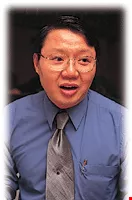
Wu Jing-chang, executive vice president of Taian (Subic) Electric Inc.
Good neighbors
Even before the government began promoting southward investment, Taiwan firms were already moving overseas in droves. As P.K. Chiang explains, "The government stepped in to play an advisory role, providing information, to avoid leaving Taiwan companies entirely on their own." This was also the reason behind the establishment of industrial zones abroad. Rather than leave each Taiwan company to struggle in isolation, it was better for the government to provide a convenient place to do business.
You could say that the Go South policy was a case of "leading a (very thirsty) horse to water."
In a study examining commercial networks involving Taiwan businesses and ethnic Chinese in Southeast Asia, which was part of a series of studies on Southeast Asia sponsored by the Academia Sinica, scholars Michael Hsin-huang Hsiao and Kung Yi-jun wrote: "To be sure, investment abroad by businesses is an economic activity driven by the profit motive. But this does not mean that economic factors alone can explain it. This is because economic behavior is embedded in a social system, and is affected by various social structures, and not determined simply by market supply and demand. Government policies, the special features of multinational capital, and the political, economic, social, and cultural features of the host country are all important factors in the development of transnational economic cooperation."
After many years of encouragement from the government, there is now a total of US$43 billion of investment by Taiwan in Southeast Asia, including: US$13 billion in Indonesia, US$10 billion in Thailand, US$10 billion in Malaysia, US$7 billion in Vietnam, and US$1 billion in the Philippines.
The International Economic Cooperation and Development Fund (IECDF) of the Ministry of Economic Affairs has, in addition to taking many groups of Taiwan businesspeople on visits to Southeast Asia, also lent substantial help to Southeast Asian countries. For example, it has raised capital for projects such as a water supply system in Manila, an industrial park in Subic Bay (also in the Philippines), a highway between Hanoi and Haiphong in Vietnam, and an industrial park in Hanoi, and also provided funding for projects in cooperation with the Asian Development Bank. For example says Chu Chia-i, the IECDF provided a loan of US$23.5 million for the first phase of development of the factory area in Subic Bay.
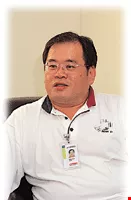
Wu Jing-chang, executive vice president of Taian (Subic) Electric Inc.
Help others, help yourself
The promotion of the Go South policy has not caused Taiwan to experience "deindustrial-ization." Indeed it has made Taiwan stronger. Taiwan exports have increased from US$40 billion 15 years ago to US$148.4 billion last year. P.K. Chiang says that this is because, as the NT dollar appreciated and traditional industries found it impossible to survive at home, a new batch of high-tech industries took their place, so that the departure of traditional industries did not have a very deleterious impact in Taiwan.
At the same time, foreign economic policy certainly had the effect of "drawing neighbors closer together."
As Huang Hsien-yung of the Taiwan Economic and Cultural Office in Thailand, says: "It was the right thing for the government to promote the Go South policy 10 years ago. After Thailand broke off diplomatic relations with the ROC in 1986, investment in Thailand by Taiwan firms kept substantive relations between the two sides good, and Taiwan business people enjoy such privileges as diplomatic passports and tax-free vehicle purchasing.
P.K. Chiang says that on the two occasions when he participated in APEC conferences, the leaders of Southeast Asian countries were all anxious to arrange bilateral meetings. When the financial meltdown hit Southeast Asia, Chiang found himself a welcome guest on visits to the Philippines, Thailand, Malaysia, and Indonesia.
Nonetheless, as the international and domestic environments have changed, expectations of Taiwan among Southeast Asian countries have gradually fallen.
As P.K. Chiang puts it, "Times have changed incredibly rapidly." The mainland has been fully devoted to economic development these past few years. PRC has been building lots of new infrastructure, and administrative efficiency is steadily rising. The mainland is not only attracting capital away from Taiwan, Japan, and Singapore, it is also attracting capital from Taiwan investors in Southeast Asia.
At the same time, the situation in Southeast Asian countries has also changed significantly in the past few years. The Asian financial crisis caused massive shrinkage in their economies. There's also been political and social instability, such as the Anwar Ibrahim incident in Malaysia, a change in regime in Thailand, a decline in law and order in the Philippines, and anti-Chinese violence in Indonesia, further reducing the willingness of Taiwan companies to invest in Southeast Asia.
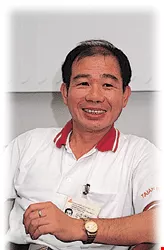
Wu Jing-chang, executive vice president of Taian (Subic) Electric Inc.
Financial earthquake
"The financial crisis was a watershed," says Chu Chia-I. The Asian financial crisis was like an economic earthquake, coming suddenly and leaving people feeling helpless. Beforehand, Taiwan investment in Southeast Asia was roughly equivalent to that in mainland China. But since then, there has been a decline in Taiwan investment in virtually every Southeast Asia nation, particularly in Indonesia, which was also darkened by anti-Chinese riots.
Indonesia was in fact the leading recipient of Taiwan investment in Southeast Asia, and even as of March of this year, Taiwan investment there totaled 857 projects worth US$12.8 billion. However, since the anti-Chinese riots in 1999, there has been a sharp decline in the number of projects going to Indonesia, while the number of Taiwan businesspeople living there has fallen from a peak of at least 15,000 to the current level of about 6000.
Currently, the only country in Southeast Asia which is showing positive growth in Taiwan investment is Vietnam. Vietnam only began to open up to the outside world in the 1990s. Chu describes it as "currently the only country in Southeast Asia where the investment climate appears to be developing in a positive direction." Most Taiwan investment in Vietnam tends to be in the labor-intensive manufacturing sector.
According to a survey by Shiu Wentang of the Institute of Modern History at the Academia Sinica, Vietnam has become the host country of choice for Taiwan investors in recent years for four reasons: (1) It has a large supply of low-cost labor, and employees tend to work hard and learn quickly. (2) It has a rich variety of natural resources in agriculture, forestry, fishing, and mining. (3) The government offers investment incentives, and has repeatedly amended the foreign investment law to make it more attractive. (4) There is considerable market potential, and both domestic consumption and exports are steadily growing.
In addition, notes Shiu, Vietnam is a member of ASEAN and maintains good relations with the European Community. Moreover, it is expected that a US-Vietnam trade agreement will pass this year, at which point the US will give Vietnam normal trading status plus quotas for textiles and other goods. This development will be a big plus for Taiwan investors in Vietnam.
In fact, the Asian financial crisis has not had a purely negative impact for foreign businesses. Chu Chia-I points out that after the financial crisis hit, Southeast Asian countries were forced to make some adjustments to their investment policies. Countries such as Thailand and Malaysia found that many of their domestic companies were deep in debt, and they sought foreign investment or foreign buyers, including for some areas that had previously been off-limits to foreign investment. In order to win back foreign investors, the authorities were forced to lift some restrictions on access to the domestic market in such sectors as banking and retail sales. Chu concludes: "There have been signs of an economic recovery in Southeast Asia over the past year, and Taiwan investment there has been increasing somewhat."
Wu Jung-hui, vice-director of the Thai-Taiwan Business Association, points out in a similar vein that there are new opportunities in the service sector in Thailand, and a number of Taiwan insurance companies have already been there to check the situation out.
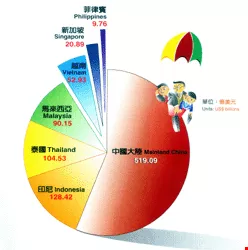
Taiwanese Investment in China and Southeast Asia as of June/Sources: Indonesia: BKPM; Thailand: BOI; Malaysia: MIDA; Vietnam: MPI; Singapore: EDB; Philippines: BOI and SBMA.
Corporate life expectancy
Taiwan investors, who investigate carefully before jumping in, all have their own views about the advantages or disadvantages of investing in Southeast Asia as opposed to mainland China. Tsai Hsien-cheng, general manager of the Hokei Corporation, whose company has built a factory at Subic Bay in the Philippines, says that while at present it looks more profitable to manufacture in mainland China, within a few years you'll find that mainland enterprises have copied your product and become your competitors. In contrast, this is not much of a problem in Southeast Asia or other countries, "so your company has a longer life expectancy."
Chu Chia-yi says that anyway export processing can be done anywhere. "There's no real difference from mainland China in the way our investors employ human resources and land in Southeast Asia." What's more, mainland China is now moving in the direction of developing high-technology industries, and no longer welcomes sunset industries. Right now, average wages are lower in Vietnam than in mainland China, and Thailand, Malaysia and the Subic Bay Industrial Park remain attractive locations for investment in export processing industries.
The investment environments in Southeast Asia and mainland China each have their strengths and weaknesses. But one thing mainland China offers is its huge domestic market, and that is why it has a fatal attraction drawing investors in droves. P.K. Chiang says that most Taiwan companies that invested in Southeast Asia in the past mainly exported products from their host countries. Most of the firms now investing in mainland China, though also mainly exporting at the moment, are in fact thinking about the future domestic market. "The attraction of this market cannot be ignored," says Chiang.
It is up to business, government, and academia in Taiwan to figure out the best global deployment of resources which are based in Taiwan. Vice premier Lai Ying-chao has proposed the idea of a "global blueprint" for the direction of development for Taiwan's economy, in order to guide thinking about adjustment of individual enterprises and entire industries to put resources in the places they will be most profitable. He also reminds us that Taiwan is now in an economic recession, so it is necessary to work even harder "against the wind" to overcome difficulties.
P.K. Chiang, who over the last ten years has led many groups of Taiwan businesspeople on visits to Southeast Asia, and who hopes Taiwan investment will not be overly concentrated in the PRC, suggests that if foreign investment really is an extension of national power, then besides the three existing export processing zones already in Taiwan, you could see Subic Bay as a fourth export processing zone, and mainland China as a huge factory. "It is up to the government to create an environment in which the profits stay in Taiwan and taxes are paid in Taiwan."
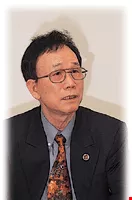
Wu Jing-chang, executive vice president of Taian (Subic) Electric Inc.
Second class citizens
Chu Chia-I suggests: "Our country now has more than 20 years of international investment experience. In terms of our scale and experience, we are capable, but we also need to diversify investment sites so as to reduce risk." He says that although mainland China's cheap labor and large domestic market are attracting Taiwan firms like a magnet, because of the special cross-strait situation and the nature of politics in mainland China-arbitrary rule rather than rule of law-risk diversification is essential. Taiwan firms who long ago invested in Southeast Asia have found their own ways to adapt.
Take for example Vedan Enterprise. Besides operations in Taiwan, it also has factories in Vietnam and mainland China. Joel Wang, director of the Vietnam factory, says that the company can not only diversify risk with this investment, but can make adjustments among the three locations. For example, if Europe accuses Taiwan of dumping products, you can ship out of Vietnam. On the other hand, so long as the US and Vietnam lack any tax or customs agreement, Taiwan factories can supply products to the States.
Taian Electric has separate operations in Malaysia, Indonesia, mainland China, and Subic Bay. Executive vice president Wu Jing-chang says that the operations at each location are targeted at different markets, and produce different products, so there is no conflict between them.
There are even some companies that are determined to stay in Southeast Asia and wouldn't build a factory in mainland China for anything in the world. For example, Hokei, which has a factory in Subic Bay, only buys raw materials from mainland China, but does not undertake any production activities there. Tsai Hsien-cheng says: "You have to plant deep roots for production, and plan for a 10 or 20 year period, so you cannot act rashly."
Johnson Wu, managing director of the New North South Tea Corporation, whose company has invested in a tea factory in Vietnam, recently visited Shanghai to check out the situation there. After a close look, he decided: "People in Shanghai are not very friendly to Taiwanese, and there you feel like a second class citizen. But in Vietnam, we are ' foreign investors,' and get more respect."
Taiwan was forced to withdraw from the APEC conference held in Shanghai in October because of a dispute over Taiwan's nominee as informal leader of its delegation. Minister of Economic Affairs Lin Hsin-I has subsequently called on Taiwan investors to understand very clearly the fundamental nature of mainland policy toward Taiwan. As Lin declares: "Enterprises should be even more alert and more cautious in investing in mainland China in the future."
Both Southeast Asia and mainland China can be considered links in the global deployment of the Taiwan economy, and Taiwan firms themselves are the most sensitive barometer. The need to be flexible and act in a timely fashion will test the wisdom of both the government and the private sector.
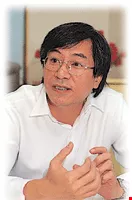
Sean Chen, vice president of Subic Bay Development and Management Center
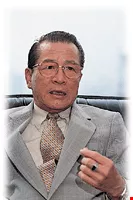
Sean Chen, vice president of Subic Bay Development and Management Center
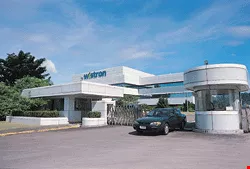
Acer Information Products, located in Subic Bay, is the largest Acer factory in the world. Its exports account for 70% of all Subic Bay exports.
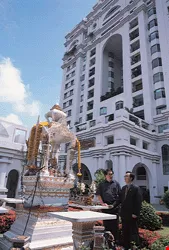
The Thai-Taiwan Business Association is a large organization with 14 branches throughout Thailand. Its members come together to collaborate and enjoy excellent and close relations with the Thai government and business community.
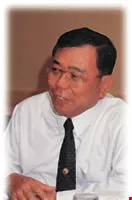
Sean Chen, vice president of Subic Bay Development and Management Center
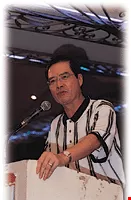
Sean Chen, vice president of Subic Bay Development and Management Center

Wu Jing-chang, executive vice president of Taian (Subic) Electric Inc.
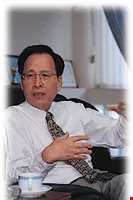
Sean Chen, vice president of Subic Bay Development and Management Center

@List.jpg?w=522&h=410&mode=crop&format=webp&quality=80)

@List.jpg?w=522&h=410&mode=crop&format=webp&quality=80)


