Calligraphic Wanderings:
Chu Chen-nan’s Pursuit of Art
Joanna Wang / photos Nan Art Space / tr. by Brandon Yen
February 2026

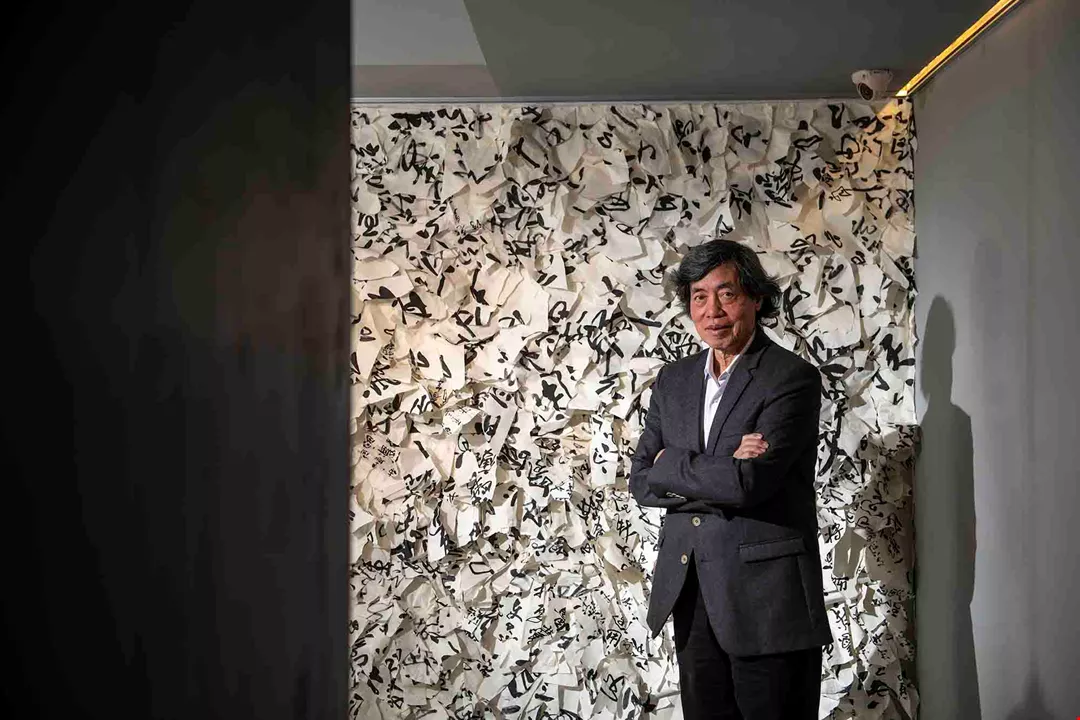
Calligrapher and painter Chu Chen-nan has the courage to venture beyond his comfort zone. As a mature artist, he plunged himself several times into unfamiliar environments in Europe and America to pursue knowledge and inspiration. His gentle and affectionate temperament belies a self-scrutinizing soul ever yearning to transcend boundaries and attain new vistas. These strikingly vivid, if also paradoxical, personal traits have enabled him to breathe a distinctively modern vibe of untrammeled freedom into an art form deeply rooted in tradition.
Chu Chen-nan’s Scattered Glimpses of Beauty on display at Nan Art. (photo by Kent Chuang)
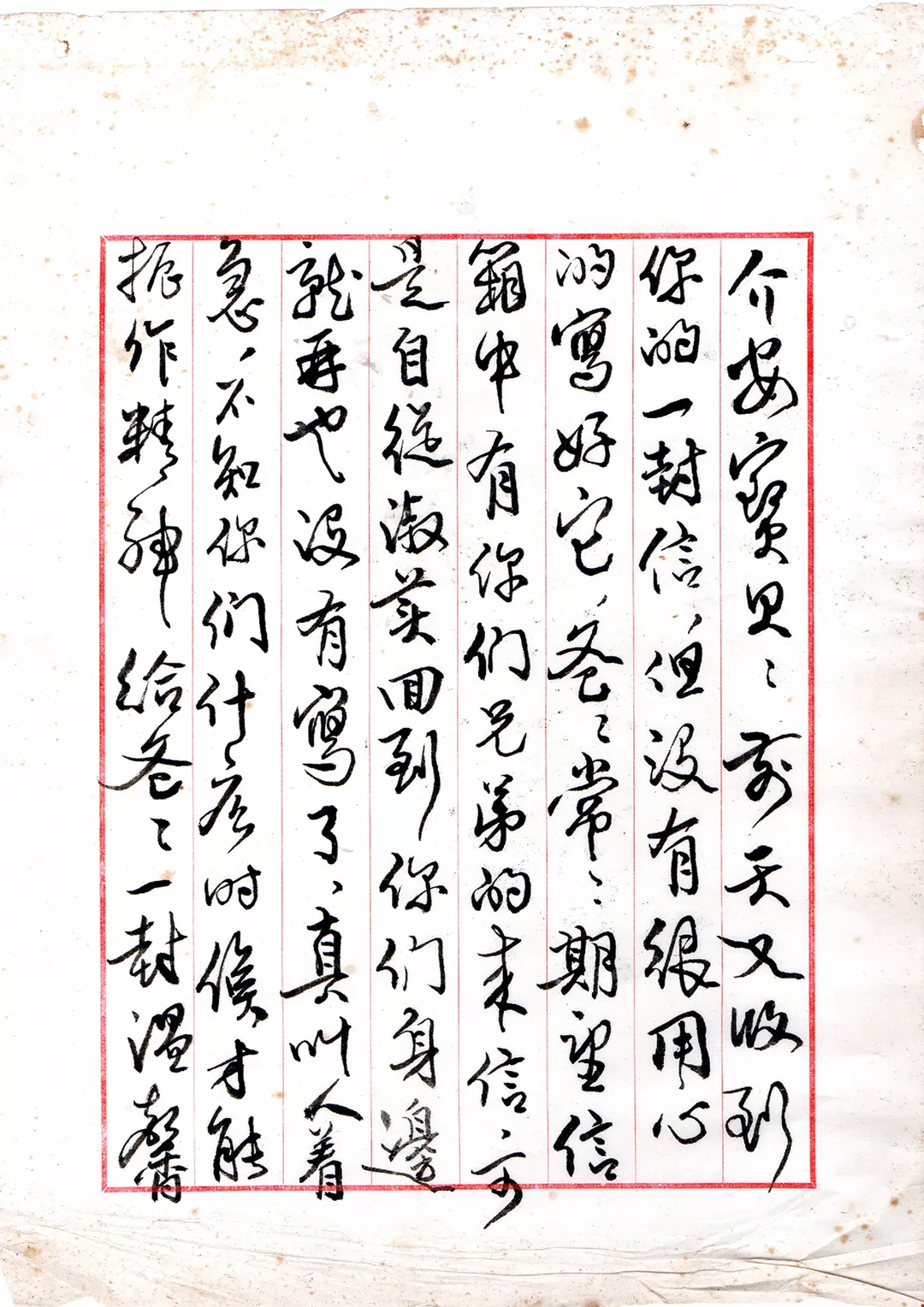
During his time abroad, Chu Chen-nan wrote heartfelt letters home in brush and ink.
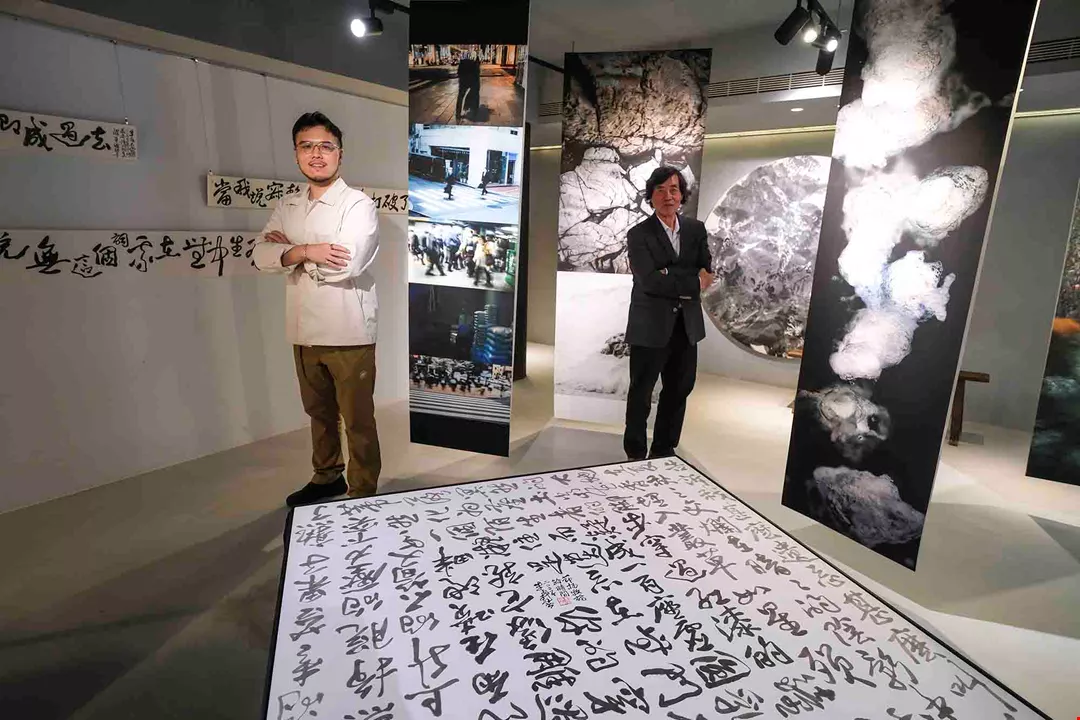
On view at Nan Art in Taipei, The Eternal Flow of All Things features Dodi Chu (left) using photography to respond to Chu Chen-nan’s (right) calligraphy. The exhibition is an intermedial and intergenerational dialogue between father and son. (photo by Kent Chuang)
Solitary breakthroughs
In 2025 Chu returned to the Cité Internationale des Arts in Paris to host an Open Studio. Over the course of just two hours, some 200 artists and members of the general public from more than 40 countries visited, bearing witness to Chu’s 30-year relationship with France, which had nurtured both his art and his life. It was in 1996 that Chu—then aged 45 and already an established figure in Taiwan’s calligraphy and painting circles—first traveled to Paris to pursue a “solitary journey of art.” Leaving behind his family, teaching post, and professional engagements, he threw himself with fierce resolve into the forlorn solitude of living alone in a foreign country.
For a person who dearly loved his family, this was a difficult decision to make, but Chu knew that basking in the comforts of home and a lively social life would blunt an artist’s sensibilities. To preserve his artistic acumen, he chose to embrace solitude, striving for creative breakthroughs and rebirths in faraway places.
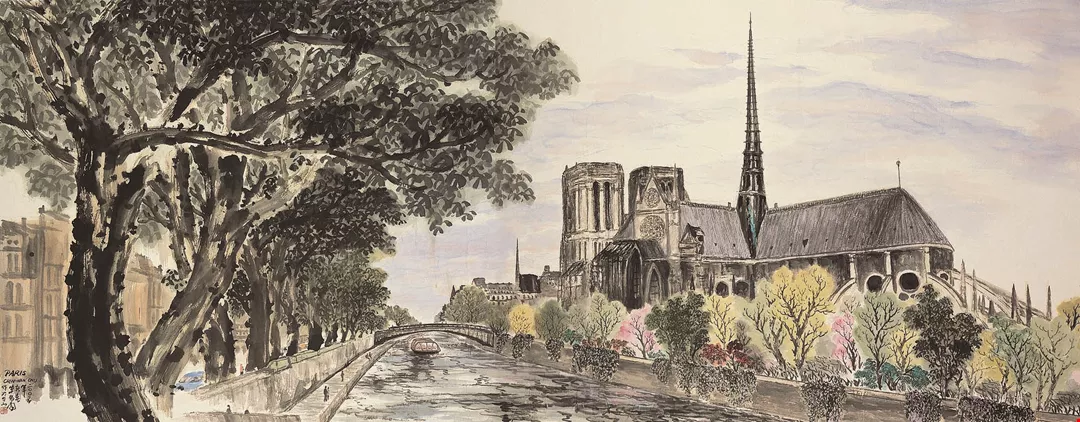
The Seine and Notre-Dame commemorates Chu Chen-nan’s time as a poor, homesick student pursuing creativity in Paris. In 2023, in a ceremony witnessed by Jean-François Casabonne-Masonnave, then director of the French Office in Taipei, the painting was donated to the French government, symbolizing the cultural ties and friendship between Taiwan and France.

At an exhibition in Japan, Chu Chen-nan and Keiun Minami perform calligraphy together, captivating their audience.
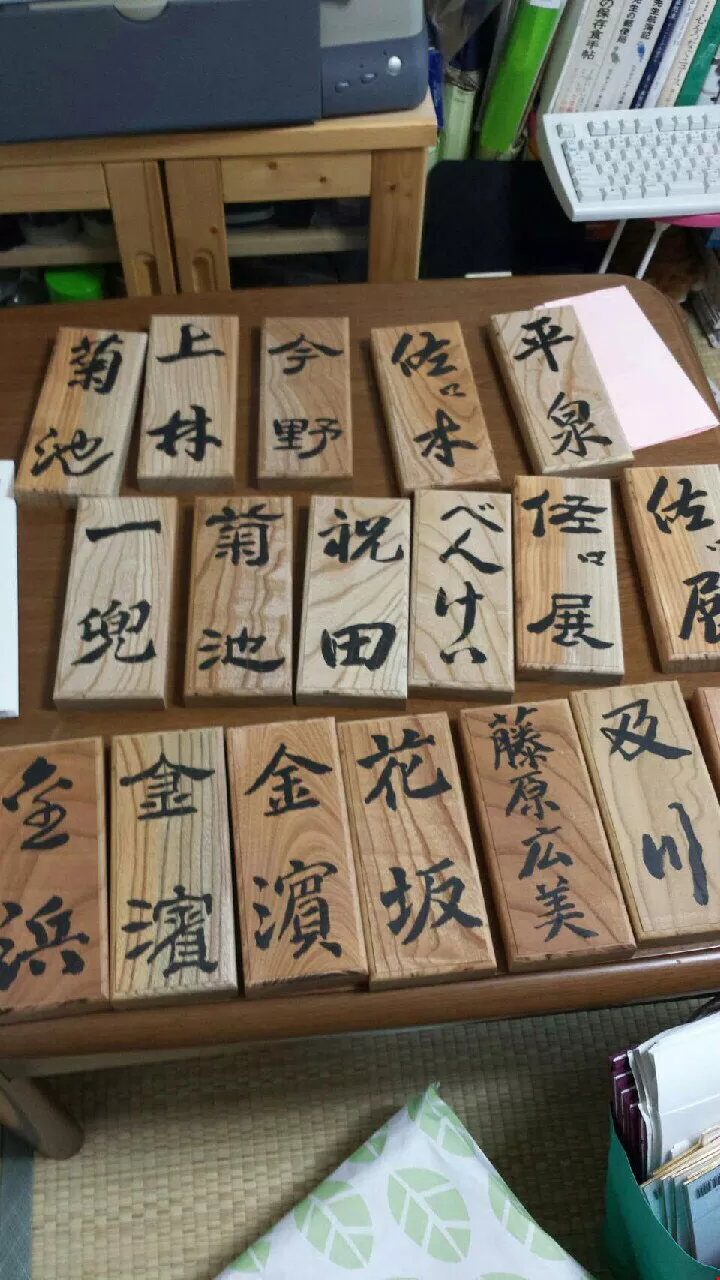
In the wake of the Tohoku Earthquake and Tsunami in 2012, Chu Chen-nan sold his works to raise funds for relief efforts, and traveled to Yamada in Japan’s Iwate Prefecture to deliver the funds and to write door plaques for survivors living in temporary housing, offering them solace through ink.
Oriental abstraction
Chu’s international experience inspired him to cast a boldly revisionary light on his own creative practice. He began to combine black ink with acrylics for brighter colors, endowing his calligraphic lines with more vitality. The resulting style brings modern aesthetics to bear upon traditional East Asian sensibilities, embodying Chu’s belief that “calligraphy and painting have a common root.”
Chu’s Western audience do not all understand Chinese characters, and they sometimes hang his works upside down, but for them, his flowing lines and subtle deployment of space are charming examples of “Oriental abstraction.” Chu says that when Chinese characters are abstracted from their semantic content, the twists and turns of their visual structures can, surprisingly, speak to a viewer in more visceral ways.
Chu has also created impromptu art in Japan with a local painter-calligrapher: by turns, one artist painted, while the other furnished an inscription on the same sheet of paper. The works not only tested the artists’ skills but also offered a platform for the collision and interaction of creative ideas. Overcoming national and cultural boundaries, activities like this give traditional ink-wash art a modern relevance as they forge dynamic worldwide links.
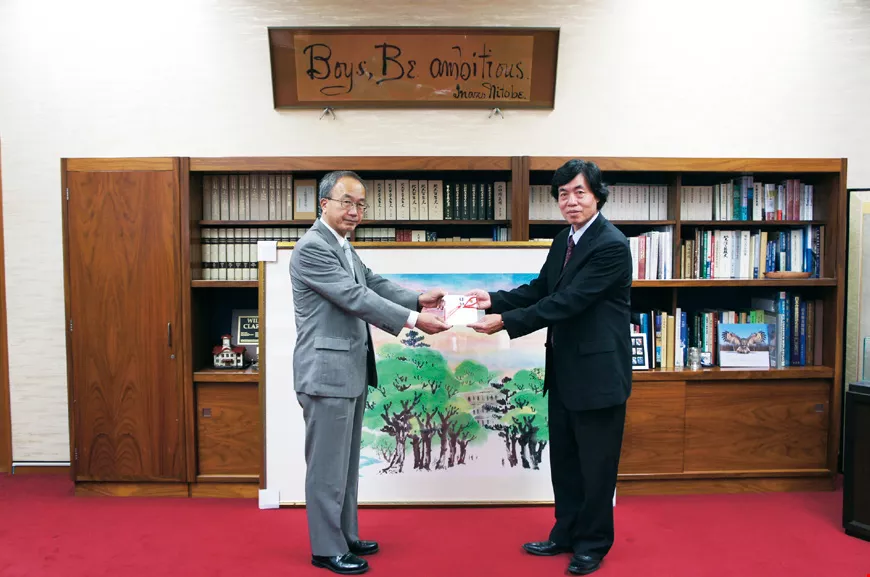
Chu Chen-nan donates a painting to Hokkaido University in 2014.
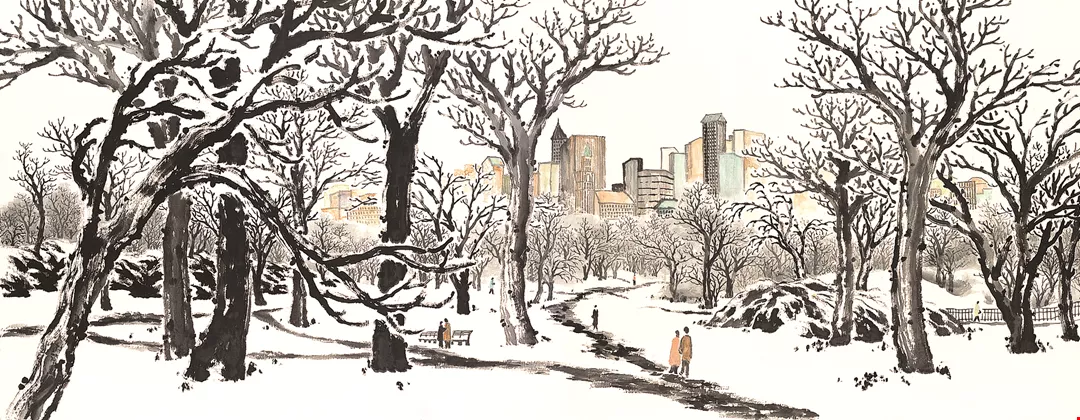
Chu Chen-nan went abroad for his studies only after his mother’s passing. Once, feeling troubled because he had left her photograph behind, he sought solace by taking a walk in Central Park. Struck by the snow scene there, he completed Winter of New York within just two weeks. He hopes to exhibit this important painting in New York one day.
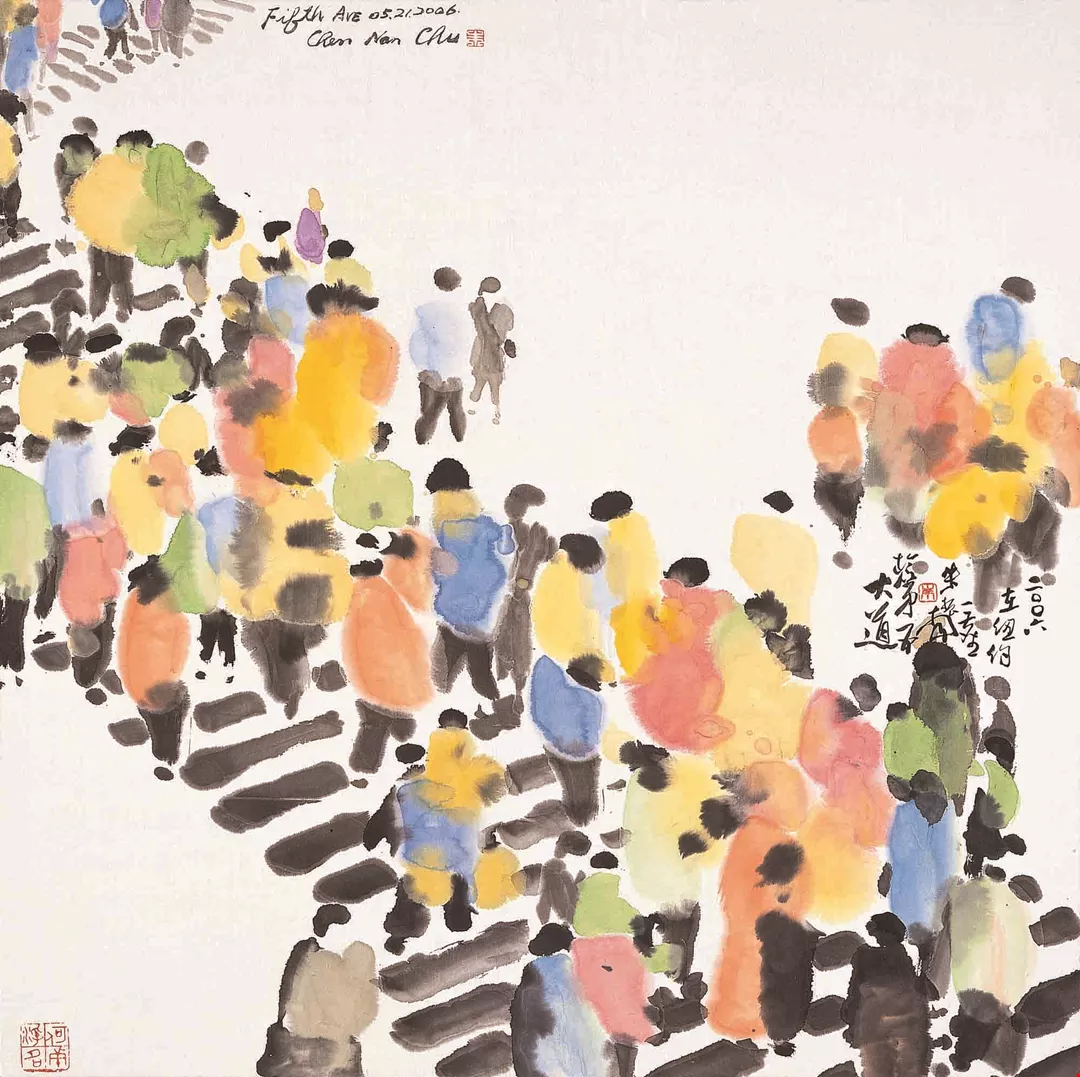
Fifth Avenue is inspired by Chu Chen-nan’s observations of pedestrians in New York. Some follow the signs and signals, others step off the crossings, and still others pause and hesitate. Asked which category he belongs to, Chu says, “I probably wander along the margins, not always abiding by the rules.”
Fresh starts
The familiarity derived from decades of assiduous work does not detract from Chu’s reverence for his art. Each of his projects represents a conscientious break with its predecessors. “What has already been done must be consigned to the past,” he says. He always remembers what his child said many years ago when seeing him working in his studio: “Dad is doing photocopying again.” The innocent remark turned out to be a sobering insight for Chu: the most challenging thing about art is not technical perfection but the ability to break free of repetition, to surpass oneself in an honest way.
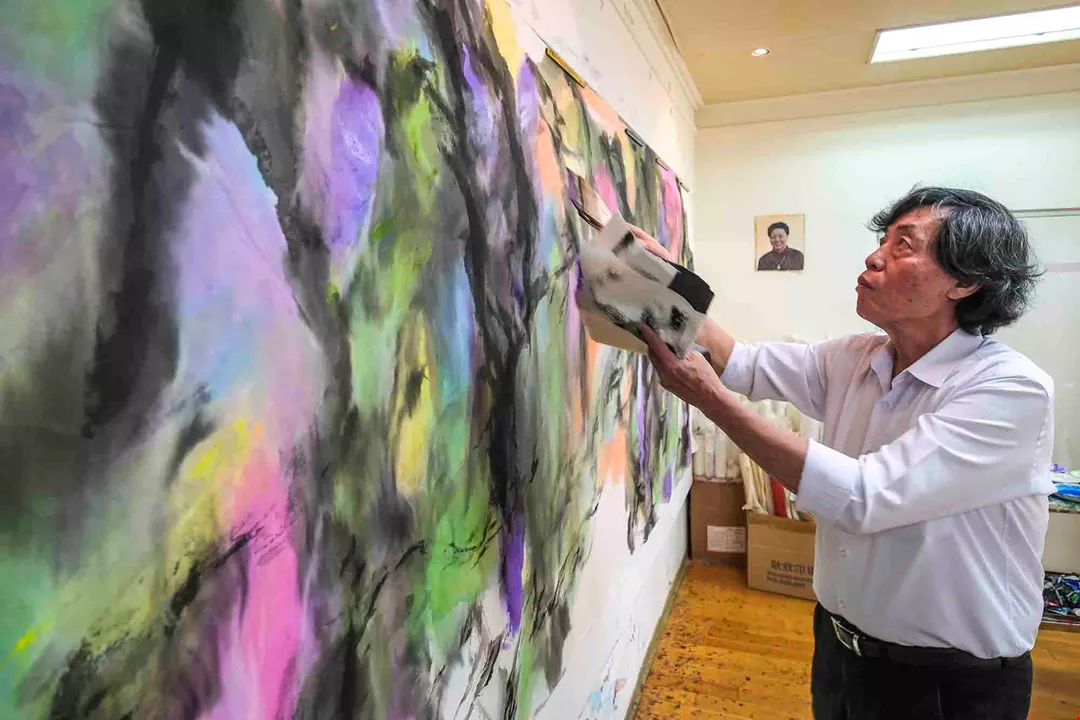
Chu Chen-nan at work in his studio. (photo by Kent Chuang)
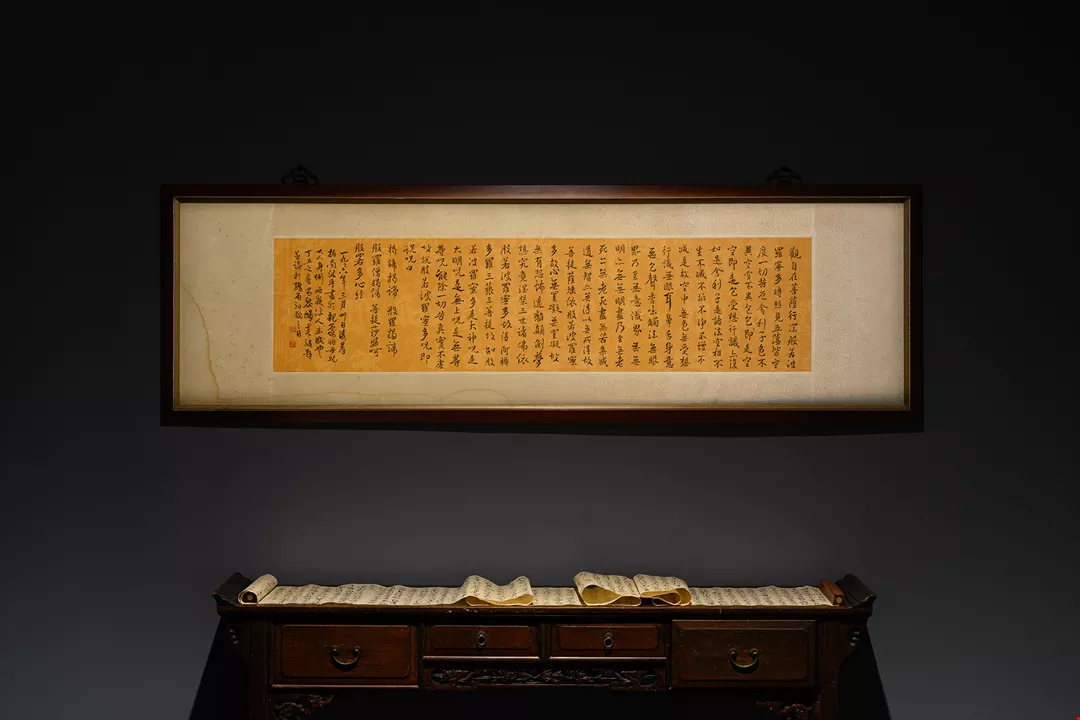
The night before his mother’s funeral, Chu Chen-nan kept watch in mourning next to the coffin. He wrote out The Heart Sutra in the middle of the night. This photo shows the work on display in his 2025 exhibition Breath and Brushstrokes.
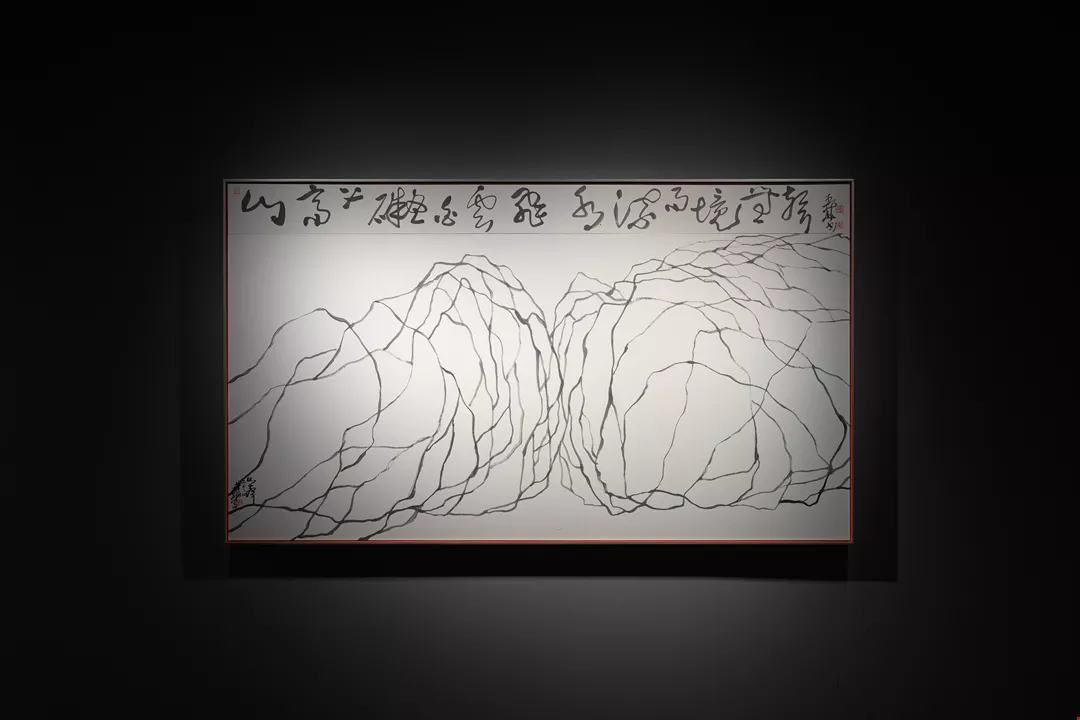
The Voice of the Mountain
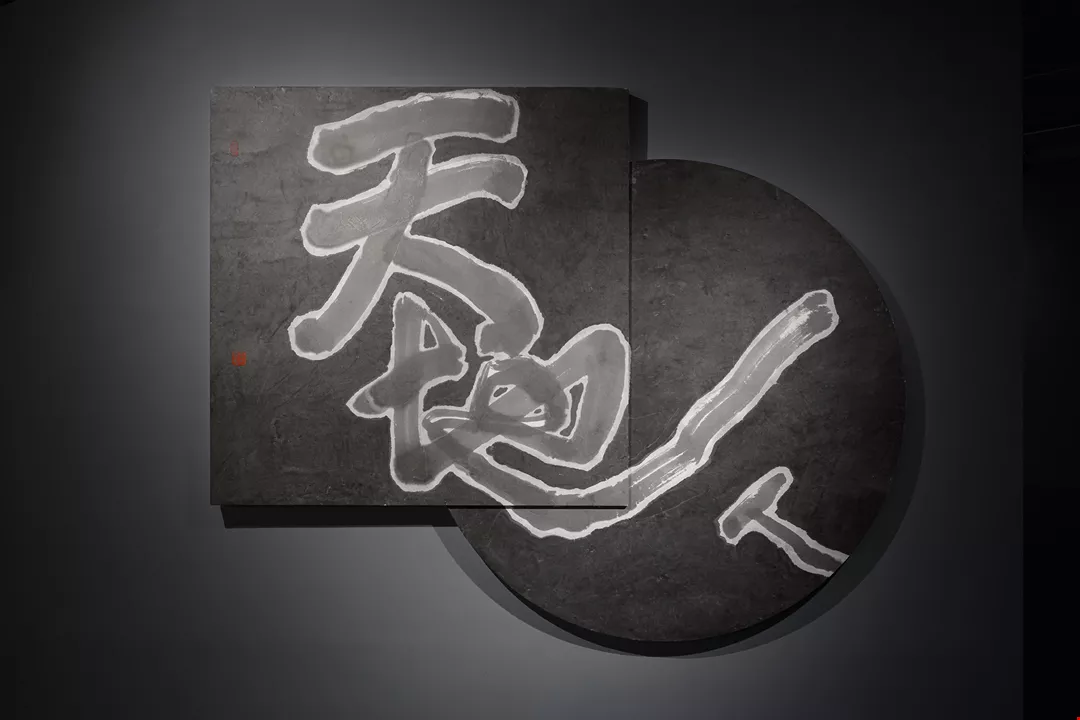
Heaven, Earth, Humanity
Feel for the moment
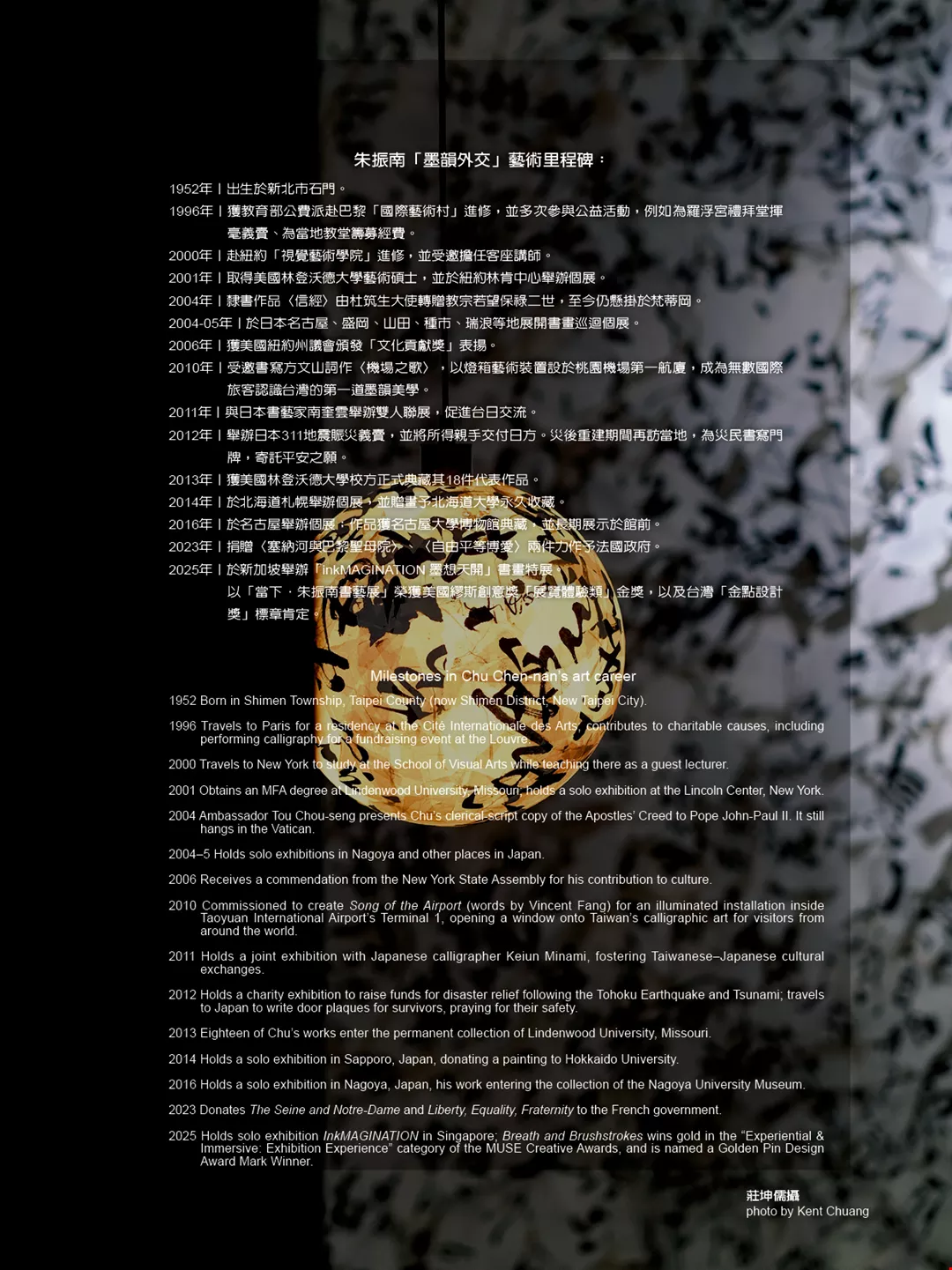
In 2025 the Hengshan Calligraphy Art Center in Taoyuan launched Breath and Brushstrokes, an exhibition of nearly 60 of Chu’s works, including Song of the Airport, which features lyricist Vincent Fang’s words; The Heart Sutra, which Chu created for his mother; Laozi’s Dao De Jing, an 18-meter-long handscroll completed in France; and Scattered Glimpses of Beauty, composed of imperfect practice sheets Chu tore apart, reassembled, and layered on top of one another. These masterpieces tell us how Chu, with his strong grounding in tradition, came into contact with foreign cultures and how he eventually returned to the very nature of writing to reinvent calligraphy for the modern age.
Browsing through his albums, which preserve visual records of his sojourns in France, America, Japan, and other places, Chu says with a smile that he’s a wanderer in pursuit of ideals. “There are just too many stories.” Thanks to these memories scattered across the world, he is convinced that “if an artist can invest his feelings in every fleeting moment and give expression to these feelings in his works, then it’s all worth it.”
Chu’s son Dodi, director of art at Nan Art Space, says, “My father’s works always carry hope. Even when they portray solitude and silence, we still find light in them.” That beam of light perhaps attests to Chu Chen-nan’s years of peregrinations in liminal zones, where he remained awake to his artistic ideals, cultivating self-discipline even as he wandered. Each of his brushstrokes evinces a poise and perspicacity born of his far-flung voyages.

Dodi Chu transformed his father’s Judicature for the People into a 3D sculpture whose shape evokes the scales of justice. A small version of the work has been turned into gifts presented by the Judicial Yuan, bringing art into public life.

Chu Chen-nan created Judicature for the People for the Judicial Yuan building in 2020. Displayed in the atrium, these Chinese characters are executed in a vigorous, unbroken motion. They capture the calligrapher’s boldness and gravitas.
定稿-1@List.jpg?w=522&h=410&mode=crop&format=webp&quality=80)
@List.jpg?w=522&h=410&mode=crop&format=webp&quality=80)


