Fighting the Good Fight: The Bloody Battleground of Seediq Bale
Polly Peng / photos courtesy of ARS Film Production / tr. by Geof Aberhart
September 2011


"Freaking out, I was completely freaking out!" Such is the response of Wei Te-sheng, director of Taiwan's largest cinematic production ever, Seediq Bale, of the challenge of filming such an ambitious project.
Before starting the project, he admits, Wei had little in the way of experience in handling the complexities of a film of such scale, so much of his time was spent simultaneously shooting and wondering what he might have to do if anything went wrong. "Fortunately we got through the whole process just fine."
Although NT$130 million of Seediq Bale's NT$700-million budget was covered by a strategic grant from the Government Information Office, finding the rest was no small challenge for Wei. But every step of the way has drawn more and more attention to the film, from the script through casting and location scouting, and finally that attention has started to pay off, with the film being accepted into competition in this year's Venice International Film Festival and having its Taiwanese release dates finally announced.
Telling a bloody tale of a group of Aboriginal warriors, the film has equally been a fight for survival for director Wei Te-sheng, as well as the realization of a long-held dream on his part.
Seediq Bale is named for a phrase in the Aboriginal Seediq language meaning "a real man."
After reading a comic book by Qiu Ruolong on the Wushe Incident some 12 years ago, Wei Te-sheng was touched by the story and decided it should be committed to film. To help in raising funds, in 2003 he spent NT$2 million shooting a five-minute trailer, which continued circulating on the Internet for a good five years. But the fundraising effort remained difficult, so Wei put his work on the script to one side to first film Cape No. 7.

Released in 2008, Cape No. 7 took a record-breaking NT$530 million at the domestic box office, and Wei believed that this would make things easier going for his other project. He finally began shooting Seediq Bale in 2009, but he soon found out things were going to be many times more difficult than he'd anticipated.
"Like a lot of people, I figured after Cape No. 7 raising funds for a new film would be pretty easy, so I got a little cocky to start off with. But I quickly realized that potential investors were looking more for Cape No. 8 than Seediq Bale."
"When I was shooting Cape I felt kind of helpless," Wei continues, "because the only people I knew didn't really have any money. All I could borrow was about NT$50,000, and some who wanted to help out just couldn't. On Seediq, though, I felt a bit angry, because even people with tons of cash wouldn't help out. But I also understood they had their own interests to think about."
The main reason potential investors were hesitant was because they thought something like the Wushe Incident wouldn't pull in the types of audiences Cape did, and with Wei aiming to shoot Taiwan's biggest film yet, they were worried it might have trouble breaking even at the box office.
"Come on, you saw how high the numbers were for Cape No. 7, there's no reason to worry that no-one will go see Seediq Bale!" remarked Wei, trying to convince funders. In the end, they responded that Cape was a fluke, and that Wei shouldn't expect lightning to strike twice in the same place.
Wei was well aware, though, that Cape No. 7 had been considered a "miracle," and miracles by their nature don't tend to repeat themselves.
"That made me want to make Seediq Bale even more though, so I could give more people confidence in Taiwan's ability to make bigger, more ambitious films."
He likens it to blowing up balloons-"Some people get worried that you can only blow a balloon up so big or else it'll pop." Holding his hands out in a four-inch circle, he continues, "And so when they haven't even got to three inches, most people will give up, scared it'll go at any moment, but I just kept blowing and blowing without a care, and now we've got ourselves a balloon that's practically a foot wide." Such is Seediq Bale.
As for the NT$700-million budget, Wei figures that if they can get 3 million tickets sold, that will total up to about NT$1.4 billion in box-office takings, at which point once theaters and distributors take their cut the film might at least have a shot at breaking even. Given the size of the Taiwanese audience and the scale of the film industry here, this is not exactly a low bar to set.
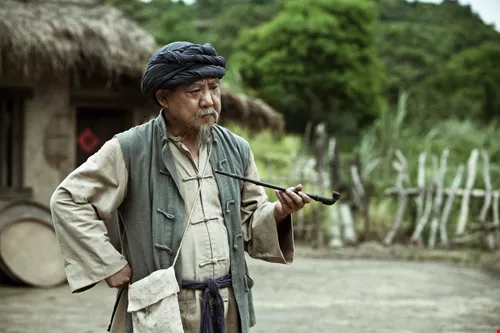
Seediq Bale boasts a wide variety of acting talent; not only does it feature veteran Taiwanese actor Ma Rulong and Japanese actress Chie Tanaka, the leading role is played by two Aboriginal newcomers to film, who successfully portray the bravery and determination of the Atayal men of the time.
But back when the film was still shooting, the slow pace of funding made things tough going, especially for Wei, who was both filmmaker and fundraiser. Often he had to do the work of multiple men, heading out into the mountains for shooting by day, then rushing back north to Taipei for dinner with "possible" investors.
This process was repeated over and over, leaving Wei physically and mentally fatigued, and yet the money still refused to flow. The combination of concern and anger he felt, says Wei, led him to "all but break down on several occasions."
While shooting, Wei would get mad and complain, "almost like I was going to burst a blood vessel," he says. "It was worst at the end of each month, when I had to pay everyone. I had no idea where the money was going to come from. I wished I was dead." Because of the cash flow problems, Wei's film company frequently couldn't pay the crew on time, which didn't go down well with the contracted labor: the Taiwanese scenic designers went on strike, the Korean action team just left, and the Japanese art team refused to hand over completed designs. But despite this, Wei drew on the surprising resources underneath his refined facade, finding ways to push through.
Of course, one of the most important sources of that strength was the support of his team, support that even extended to handing their ATM cards to Wei.
But the lack of money also helped cultivate a feeling amongst the crew like that of a band of revolutionary brothers; when the funding dried up, several of them even volunteered their bank cards despite not getting paid themselves, while others forked out for meals for the hard-working cast and crew.
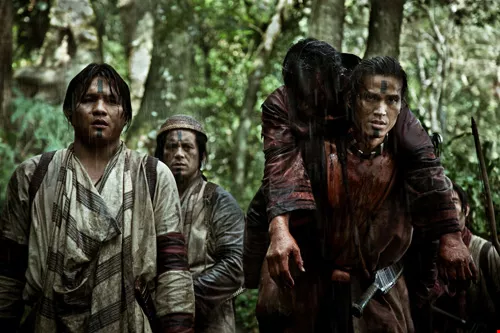
Seediq Bale boasts a wide variety of acting talent; not only does it feature veteran Taiwanese actor Ma Rulong and Japanese actress Chie Tanaka, the leading role is played by two Aboriginal newcomers to film, who successfully portray the bravery and determination of the Atayal men of the time.
Wei admits that the filming process was somewhat unusual, with the incomplete funding making things a matter of worrying about money at the same time as actually shooting.
The pressure on him, his company, and the production team was tremendous. Some of the props were quite expensive, and each time something broke, Wei would worry about the costs and pray that the actors would be just a little more careful, although he never said so to their faces. For example, just one little piece of sugar glass could cost over NT$2000, and they would go through several of those for just one fight scene. So tight were the funds that they couldn't even afford blanks for the prop guns used in the war scenes.
But what really had outsiders in cold sweats was choosing his cast, especially the most important role, that of chief of Mahebo, Mona Rudao. In the end, he settled on two newcomers, Da Qing and Lin Qingtai, playing the young and middle-aged versions of the famous chief respectively.
Hundreds of millions of NT dollars and the efforts of 20,000 participants rested on these two pairs of completely inexperienced shoulders. How did Wei come to such a gutsy decision, and wasn't he afraid they wouldn't be able to stand the pressure?
"They were perfect physically, personality-wise, and in the looks in their eyes, so they didn't have to worry so much about 'acting,' they just had to be themselves," says Wei, explaining the logic behind his choices.
Portraying the raw power of the young Mona Rudao fell to the 20-something, 185cm-tall Da Qing, whose fierce gaze and powerful physique are a remarkably close approximation to those of the historical Mona Rudao; the middle-aged version is played by Lin Qingtai, who is a member of the Atayal tribe like Da Qing, and is a priest in his home village. What Lin aimed to portray was a different Mona Rudao, a man who had already experienced two decades of Japanese colonial rule.
Wei remarks that Lin has the same calm demeanor as the middle-aged Mona Rudao, which made him the perfect choice once he was able to channel that into the "serene strategist" of the film.
The real challenge was his lines, which were not only numerous, but were a mixture of Japanese and Seediq. At first Lin had trouble memorizing his lines, which left both him and Wei in a bind, but fortunately Wei was able to move the more complex scenes to later in the shooting schedule. This way, Lin would have an easier time once he was more familiar with the whole process.
"When he got his lines coming out nice and fluidly, you could just tell that no matter how he approached it, he'd nail the role. He completely became Mona Rudao."
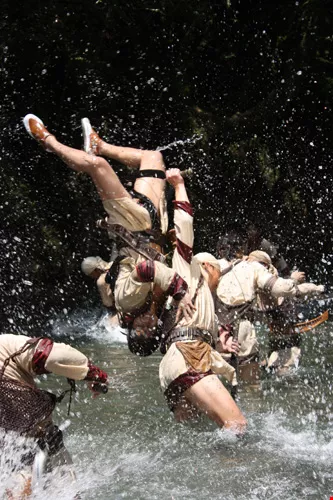
Seediq Bale boasts a wide variety of acting talent; not only does it feature veteran Taiwanese actor Ma Rulong and Japanese actress Chie Tanaka, the leading role is played by two Aboriginal newcomers to film, who successfully portray the bravery and determination of the Atayal men of the time.
Those new faces aside, Wei also hired a number of professional actors, giving them roles that were more variable and complex in personality and emotion.
The professionals would approach the scenes from a variety of angles, while the newcomers would take the naturalistic route, and the combination of these two approaches is part of what gives Seediq Bale its power. Reflecting on the shoot, Wei says he was "really fortunate to have chosen the right people."
According to Wei, another aspect of his good fortune was, paradoxically, "not having found all the money at the start."
This meant that they didn't have anyone hovering over them holding the purse strings, so there was no-one there to put limits on them or tell Wei how to shoot. This meant that Wei had all the room he needed creatively to make the film he wanted. Then, once things were going, he was able to get Central Pictures involved as an investor.
All of the uncertainty in the shoot meant that "some of the crew ended up going to hospital, some broke up with their partners, and pretty much everyone had a really hard time," says Wei with a touch of sadness.
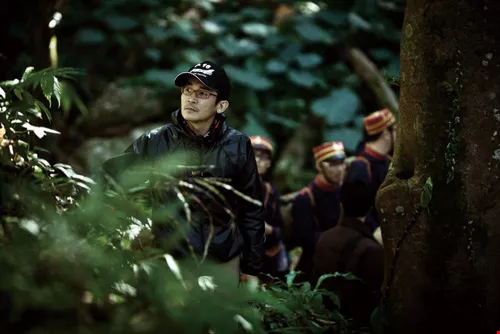
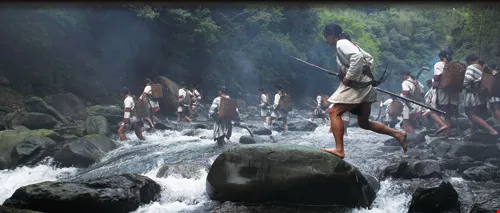
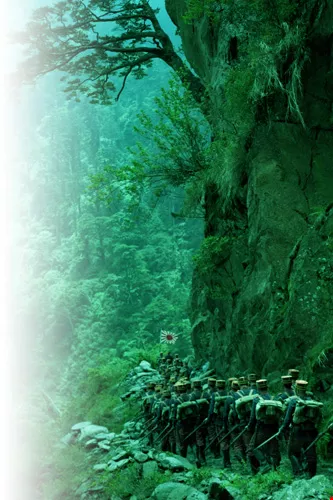
This epic war film cost over NT$700 million, employed a cast and crew of thousands, was shot in the magnificent vistas of the soaring mountains of Taiwan, and represents the final realization of a long-held dream for director Wei Te-sheng (right). This photo shows the Japanese forces on their march to invade Wushe.
The difficulties of the shoot also led to Wei finding talented crew from a variety of fields, whether artistic, mechanical, stunt related, or the martial arts. "I hope they'll have the opportunity to keep working together in the film industry," says Wei, "because the way they came together here really made shooting much more efficient."
One particular member of the crew, an electrician who could river-trace, rock-climb, and set up cables for river crossings, is subject to almost endless praise from Wei. After winter had begun, the temperature when they were shooting by the rivers could drop below 10°C. Some of the crew had some water boiling off to one side, hoping to give the actors something to warm them up, but this one man went above and beyond-he went back up to Taipei, bought some copper piping, returned to the shooting location, and set up a water heater. Later, he was recommended to Ang Lee for his project The Life of Pi, and even the experienced crew there were impressed.
Wei says that Seediq Bale has over 1000 stunt and special-effects scenes, and where many directors would go straight to CGI, he found that practical effects could give the results he needed and at a lower cost. Such experience with thinking about different approaches to effects are something that the Taiwanese film industry could do with more of, Wei believes.
Seediq Bale is opening the door on new possibilities for the Taiwanese film industry. "We can't just try to copy Hollywood! We need to create a film industry that suits Taiwan, and this is something future film funders and producers need to consider," Wei says. "This film is testament to the level of ability Taiwan has available-if we could do it, anyone can!"
Seediq Bale boasts a wide variety of acting talent; not only does it feature veteran Taiwanese actor Ma Rulong and Japanese actress Chie Tanaka, the leading role is played by two Aboriginal newcomers to film, who successfully portray the bravery and determination of the Atayal men of the time.
Seediq has been a breeding ground for new industry talent in Taiwan, and with the support of Yuan Liou Publishing, it has also become the first Taiwanese film to have its creation fully documented and published-already there are upward of five separate books related to Seediq Bale available. What Wei hopes people take away from the books is that "making a film isn't as romantic as it might seem, but it's absolutely worth it."
Distribution rights for the film in the UK and France have already been bought, and while the two-hour international version might not have as much detail to the story as the two-part Taiwanese release, Wei believes it will still touch the hearts of the international audience. This is because the story Seediq Bale tells is one of an indigenous people fighting back against colonialism and struggling for their right to live with dignity.
This is an experience common to many countries around the world, and Wei believes that the story, conflict, and human choices the film involves are "something everyone can understand, absolutely everyone."

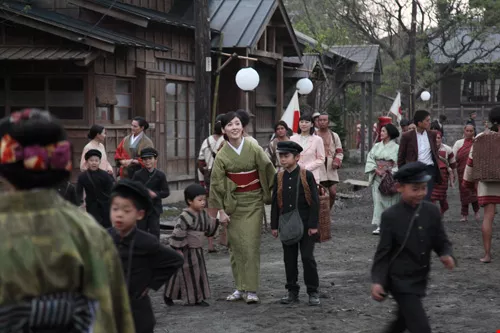
For historical accuracy, the film even includes a reconstruction of an early-20th century Aboriginal village, an unusual level of dedication for a Taiwanese film. This photo shows crew celebrating on a Wushe street setting at the end of shooting.
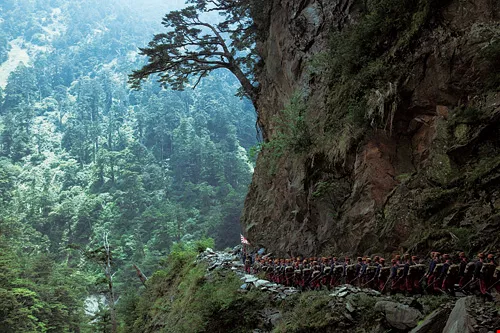
This epic war film cost over NT$700 million, employed a cast and crew of thousands, was shot in the magnificent vistas of the soaring mountains of Taiwan, and represents the final realization of a long-held dream for director Wei Te-sheng (right). This photo shows the Japanese forces on their march to invade Wushe.
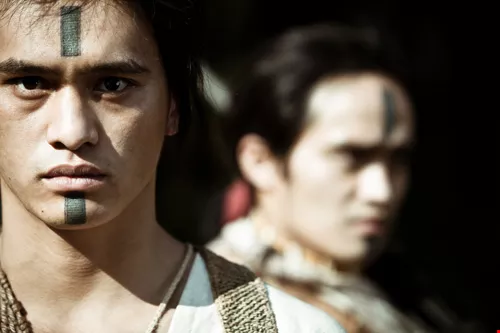
Seediq Bale boasts a wide variety of acting talent; not only does it feature veteran Taiwanese actor Ma Rulong and Japanese actress Chie Tanaka, the leading role is played by two Aboriginal newcomers to film, who successfully portray the bravery and determination of the Atayal men of the time.

@List.jpg?w=522&h=410&mode=crop&format=webp&quality=80)

@List.jpg?w=522&h=410&mode=crop&format=webp&quality=80)


@List.jpg?w=522&h=410&mode=crop&format=webp&quality=80)

@List.jpg?w=522&h=410&mode=crop&format=webp&quality=80)
