Seriously Joking--Won Fu
Wang Wan-chia / photos courtesy of Wonder Music / tr. by Geof Aberhart
March 2010


Outside it is a cold, drizzly winter night; inside live music club Legacy in Taipei City's Huashan Creative Park, though, is a packed crowd of over 1000 fans, brought here by their unquenchable enthusiasm for the band playing tonight, Won Fu.
Tonight Won Fu are sharing a bill with friends Cosmos People, and the theme of the show is the Olympics. As the gig starts, Won Fu's vocalist Mami and bassist Twiggy set off a roar from the crowd as they cartwheel onto the stage. Later, during their exotic song "Indian Lover," lead vocalist and guitarist Xiao Min picks up a sitar and sits cross-legged on the stage, transforming himself into a yoga guru; then suddenly he is carried out into the crowd, the fans helping him float through the room, with squeals and screams of surprise pealing throughout the club.
And in the gaps between songs, as he tunes his guitar, Xiao Min, seeing the crowd watching and waiting in anticipation, says dryly, "God, I always get so embarrassed during tuning," eliciting a huge laugh from the audience. This dry, yet amiable style, combined with the infectious happiness it creates, is why so many find Won Fu's performances so enjoyable.

Last summer, Xiao Min launched his own line of accessories called "I Me Mine," named after the well-known Beatles song. The brand revolves around concepts of simplicity, passion, and humor. From left to right, this photo shows bassist Twiggy, drummer Dupi, vocalist Mami, and guitarist/vocalist Xiao Min wearing "Won Fu Loves You" T-shirts.
Rock music was born in the mid-1950s, growing through bands like The Beatles and the Rolling Stones and blossoming from there into a variety of subgenres. In Taiwan, rock didn't really take root until the 1980s, as a few bands (maybe 500) emerged, each with its own style-some melancholic, some brutal, some psychedelic, some fresh and upbeat. Won Fu, though, are hard to label; the first impression most get of the band is one of mischief, youthful exuberance, and almost foolish innocence.
Formed in 1998, Won Fu have released five full-length albums in their 12 years. They began when Xiao Min, then a student at Tamkang University, met bassist Twiggy and (now former) vocalist Judy online, and then later was introduced through an older student to drummer Dupi.
After recording three albums with the band from 2003, Judy left the band to "pursue different plans" in 2006, after which former Sound of Taipei (now Hit FM) DJ Mami joined, finalizing the current lineup. As for the band's name, that came from the "happy" name Twiggy gave to a chubby stray dog she used to see at school-Won Fu.
Long-haired, gaunt Xiao Min, with a penchant for playful winking, is the soul of the group, not only writing all of the band's music, but even deciding based on the song he hears in his head whether the vocals should be the sweet sounds of Mami or his own ebullient voice.
Whether it's the youthful summer anthem "Miniskirt" or "An Elegy for Peaches" (featuring lyrics like "I'm not a radish / And I'm not a cherry / I might look like an ass / But I don't smell crappy"), Won Fu's irreverent, borderline-absurd style often leaves people wondering on first listen what on Earth these weirdos are singing about. But even then, listeners can't help but feel a smile creep across their face.
Take as another example the song "Liver Failure." While the main lyrics seem to be on theme-"Liver failure / Don't drink too much / One-third drunk is good enough / Don't spend the night in the drunk tank"-in the background runs a constant chant of "Gan gan gan...," a playful pun on both the Mandarin drinking equivalent of "Chug, chug, chug" and a certain unprintable copulatory curse word.
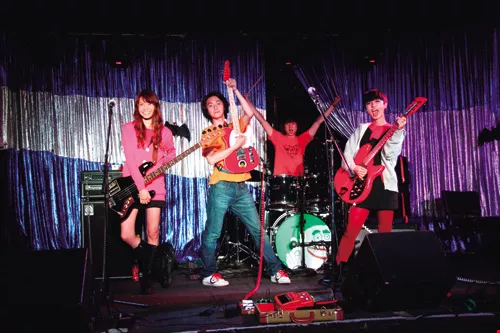
A month-long tour of the west coast of the US last fall was a tremendous learning experience for the band. On the left, we see their visit to the Rock and Roll Camp for Girls, and on the right a performance in a local club.
From small clubs to massive music festivals, Won Fu are experienced performers. In 2003, they earned huge plaudits from the judges at the Ho Hai Yan Music Festival, who wrote that the band's music was "childlike and playful, but technically complex and creative," echoing the feelings of the band's fans.
Before releasing their debut album that year, Won Fu already had several years' experience playing in the relaxed, casual environment of Kenting's Spring Scream festival. At the festival, the band sold self-produced, burned copies of their single, with hand-drawn sketches by band members on each CD. Thinking back, the ever-playful Xiao Min says they were so busy making the CDs that eventually they were drawing in a half-asleep, half-awake state, creating weird pictures that Xiao Min jokes were "terrible artistically."
For both festivalgoers and performers alike, the party atmosphere of Spring Scream frequently trumps the desire to relax and enjoy some live music. One year, off his face on Chinese spirit erguotou, Xiao Min took to the stage nonetheless, but unable to overcome the power of alcohol, he slurred his way through the performance, even falling asleep standing up halfway through a song at one point! He was eventually woken up again by the riotous laughter of his bandmates in what he calls "the most humiliating moment of my life."
This openness, self-deprecation, willingness to play the fool, and happy-go-lucky outlook are all hallmarks of what Xiao Min calls "the Won Fu spirit."
Another example is the song "Humiliated," the music video for which tells a tale from Dupi's youth, when in front of a crowd of people at the seaside he asked the girl he was infatuated with "I really like you, would you be my girlfriend?" only to be met with a blunt, cold "No."
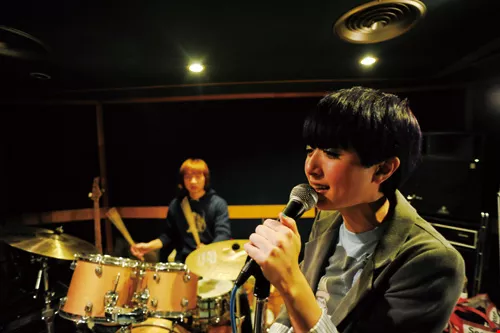
With their mischievous attitude and solid musical fundamentals, Won Fu have earned a reputation as Taiwan's best band at combining fun and good music.
While their jokey side is well known to music fans in Taiwan, there is also a hidden depth to Won Fu's music. In Xiao Min's analysis, given his tendency to be a bit preachy, often little life lessons or buried bitter memories will stow away in his lyrics. Not wanting to be too earnest or serious, though, he wraps everything in a layer of sweetness and joy. While there is depth beneath that coating, Xiao Min is also OK with the idea that fans might not get those "hidden messages"-at least they're having fun.
For example, in the light, vibrant song "Every Day," Xiao Min recollects his time as a student of the Department of Aerospace Engineering at Tamkang University, when he would spend every day hanging out with his friends from the Western Music Club, making the clubrooms a second home and living his youth large.
But then one summer vacation a fire struck, burning down the corrugated iron shack attached to the clubrooms. With their "secret hideout" going up in smoke, along with the decades of treasured photos and messages inside it, some of the students could do little more than fall to their knees and cry in front of the flames.
The new clubrooms were set up further away and their popularity dropped off, and soon enough pretty much everyone was graduating and having to worry about military service and getting jobs. As they all said their goodbyes and went their separate ways, Xiao Min was left alone, his graduation postponed.
One of his friends from that time was a dedicated music fan, buying records even when he could barely afford to feed himself, and practically filling entire rooms with his CD collection. Meeting him again later, Xiao Min was surprised to find out this friend didn't even bother with music anymore, and wasn't interested in sharing the latest additions to his collection. His friend was still there, but the shared love of music that had brought them together had been worn down by the realities of life, and Xiao Min couldn't help but feel something of a sense of loss remembering those days gone by.
Similarly, while in "Every Day" there is a repeated cheerful refrain of "Every day, woo woo, every day we meet / Every day, woo woo, today, tomorrow, the day after..." this is followed by "Every day we slowly change / But no matter how I change / Every day I will remember / And wish we could go back to the past." The song doubles as a confession of love to the past, as well as a way for Xiao Min to express his realization of the changes time can bring.
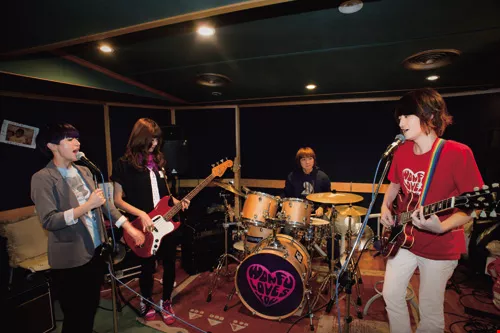
With their mischievous attitude and solid musical fundamentals, Won Fu have earned a reputation as Taiwan's best band at combining fun and good music.
If you've never seen a Won Fu performance, it can be hard to really grasp their philosophy of placing humor above all; both on stage and off there is raucous laughter and a party atmosphere, with occasional improvised talk-show-esque interjections by Xiao Min. Of particular note is their long-running annual Halloween gig, where the band members have been known to dress up as all kinds of figures from Chinese culture, from Justice Bao to Old Master Q, completely overturning the usual "cool" image of rockers.
They have even ironically taken on the guise of an "idol" band on stage, declaring that "we, as idols, must be willful! The worship of our fans must be blind faith!" They even had the audience obsequiously cry, "My idol!," some just doing what they were told, but plenty of others smiling inside at how Won Fu were subverting the idol concept by playing with it.
How is Won Fu able to harness that positive energy during their shows? The band's method is one of just being upfront with the audience. A few days earlier, they had been playing a gig in Taichung, and as they were about to start the upbeat song "Living Large," Xiao Min first explained the background of the song to the crowd-his hearing the news of a friend's older brother taking his own life. Then he leads the crowd in a chant of "Death has just one road, life has millions!," hoping that each will remember the lesson and not let bad times make them give up hope.
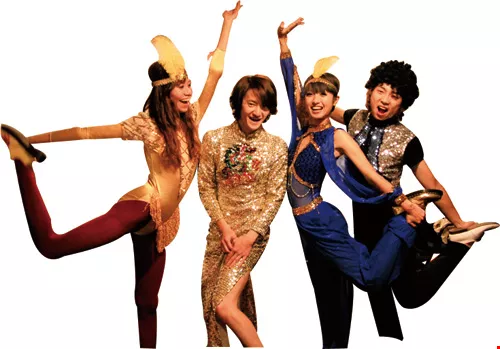
Hard rock, Middle Eastern, painted-on eyebrows and facial hair, British-Invasion-style retro.... Won Fu's looks have been just as creative as their music.
With their bright, cheery style, Won Fu have already had invites to perform in Japan, Hong Kong, Singapore, and Canada, and in October 2009 they also received a massive US$90,000 sponsorship from the Government Information Office for a "foreign offensive," playing shows in four cities on the US west coast-Los Angeles, Portland, San Francisco, and Seattle-in a month-long tour.
On this tour, the band traveled with their instruments in a bus, accompanied by local indie band agent Daniel Lee. While they joke that they started off their 2,000-mile trek with the carefree happiness of the cast of a road movie and ended it run ragged, they nevertheless all say they learned a lot from the experience.
While in the US, Won Fu played at 10 clubs and campuses. Playing at UC Berkeley and UCLA, particularly during lunch breaks, was a far harsher test for the band's appeal than the clubs they were more used to, but fortunately the response was quite enthusiastic. "After we finished playing at UCLA, even the old Mexican lady who'd been cleaning nearby came over and said she wanted a copy of our CD," recalls Twiggy.
Twiggy says that she found the whole indie scene in the US much tougher than Taiwan's due to the large number of bands and the fierce competition. In Taiwan, for example, it's taken as a given that clubs will provide their own drums, soundboards, and so on, and band members only need to bring whatever instruments they need, but in the US, things are completely different.
"We got to one venue and opened the door to find out that not only was the stage on the second floor, the eight of us had to haul a soundboard and heavy drum set up the tall, narrow staircase ourselves. My legs turned to jelly just looking at it!" jokes Xiao Min.
Won Fu were accompanied on the tour by local indie band United States of Electronica. Xiao Min says that USE, unlike Won Fu, had hauling gear down to a fine art, without even breaking a sweat, and even settled down for an hours-long drive home for work in the morning just as easily after finishing their gig. Even more, they accepted the whole thing as no big drama.
The band's visit to the famous Rock and Roll Camp for Girls in Portland was also a shock for Xiao Min. The camp, which is for girls between the ages of eight and 18, began as something similar to camps held by cram schools in Taiwan, a week-long summer camp, but since then has expanded, now running courses up to a year long and with sister camps in New York, Philadelphia, and Atlanta.
At the start of each new course, signs for different music genres-punk, funk, folk, metal, etc.-are set up, and students can freely choose which genre they want to work in. Once there are enough students in a genre, they then quickly set about forming bands, practicing, and performing.
"I was completely blown away when I saw the place," says Xiao Min. "If they were Taiwanese kids, there wouldn't be many who even knew most of those genres, or even about Asian music for that matter." On top of the musical knowledge gap, the biggest difference is that parents in the West gladly encourage their children to embrace and develop their interests. If these kinds of educational elements don't change, Xiao Min says, "If they were Taiwanese today, even The Beatles would probably starve to death."
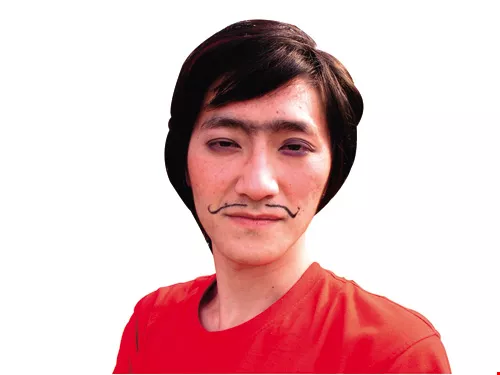
Hard rock, Middle Eastern, painted-on eyebrows and facial hair, British-Invasion-style retro.... Won Fu's looks have been just as creative as their music.
Released in the fall of 2009, Won Fu's latest album Won Fu Loves You is several degrees warmer than past efforts. The peaceful, love-filled single "What's Wrong with Love," with lyrics like "How beautiful is love? / Just say it and you'll know / Love is a hug / Love is a smile," is Beatlemaniac Xiao Min's homage to The Beatles' classic "All You Need is Love."
He says that everyone's already seen the humorous, fun-loving Won Fu, and maybe it's also partly because the band members are getting older and going soft, but the band has realized that there's nothing wrong with a plain old sweet love song. If they can get more of their fans to really let their feelings out and make the world a nicer place, that's a beautiful thing.
Thinking about what makes Won Fu so appealing-their mischievousness, their mildly foolish enthusiasm, their use of humor to share a little wisdom, their warmth and fun-doesn't it seem like these are all things we could all do with a little more of?
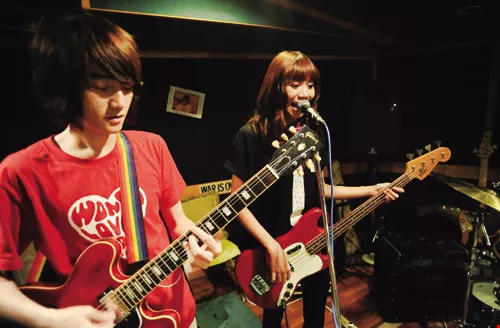
With their mischievous attitude and solid musical fundamentals, Won Fu have earned a reputation as Taiwan's best band at combining fun and good music.
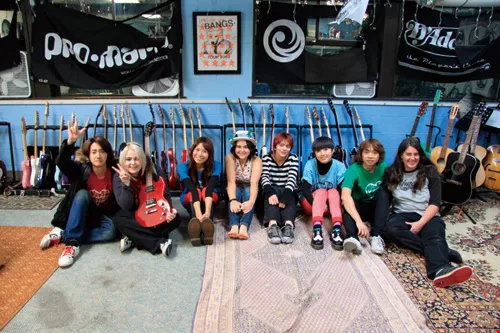
A month-long tour of the west coast of the US last fall was a tremendous learning experience for the band. On the left, we see their visit to the Rock and Roll Camp for Girls, and on the right a performance in a local club.

Hard rock, Middle Eastern, painted-on eyebrows and facial hair, British-Invasion-style retro.... Won Fu's looks have been just as creative as their music.
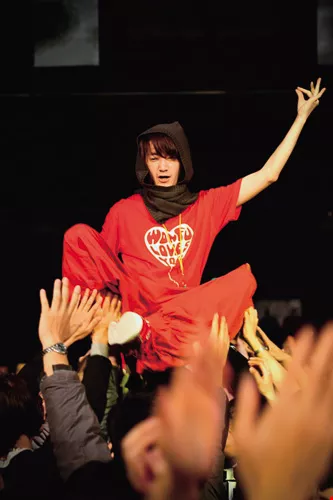
The party atmosphere and banter between band members are what make a live performance by Won Fu so enticing. The photo below shows "yoga master" Xiao Min at an Olympics-themed show.
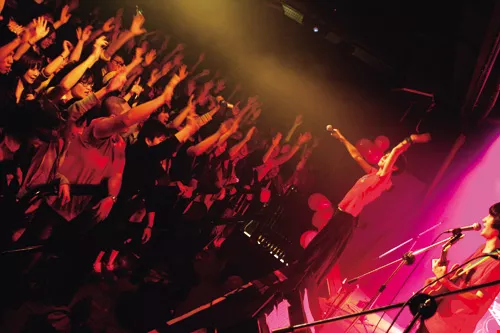
The party atmosphere and banter between band members are what make a live performance by Won Fu so enticing. The photo below shows "yoga master" Xiao Min at an Olympics-themed show.

With their mischievous attitude and solid musical fundamentals, Won Fu have earned a reputation as Taiwan's best band at combining fun and good music.
@List.jpg?w=522&h=410&mode=crop&format=webp&quality=80)

@List.jpg?w=522&h=410&mode=crop&format=webp&quality=80)
@List.jpg?w=522&h=410&mode=crop&format=webp&quality=80)


