The Cradle of Taiwanese Independent Music
Ten Years of The Wall
Amber Lin / photos Chin Hung-hao / tr. by Geof Aberhart
November 2013


For three summery days in August, Taipei’s Flora Expo Park was again home to thousands as the Formoz Festival made its triumphant return after a four-year hiatus.
In addition to a host of independent Taiwanese acts, the stages of Formoz also featured international acts like Suede, Mercury Rev, and The xx. The organizer of this year’s festival was The Wall Music, an outfit that has grown from a small grassroots operation into a major force for independent music in Taiwan, and is now entering its tenth year on the scene.
It is a route that many of Taiwan’s rock fans are well familiar with: leave Gongguan Metro station through exit 1, pass the fashionable clothing stores and continue on to Keelung Road, head across the pedestrian crossing under the heavily trafficked highway bridge, and then go down into a hole in the wall.
The sign at the entrance is hard to miss, with “The Wall Live House” writ large. Until the late-2009 opening of Legacy at Huashan Creative Park, The Wall was Taipei’s largest live house, and it remains one of the most important sites in local music.
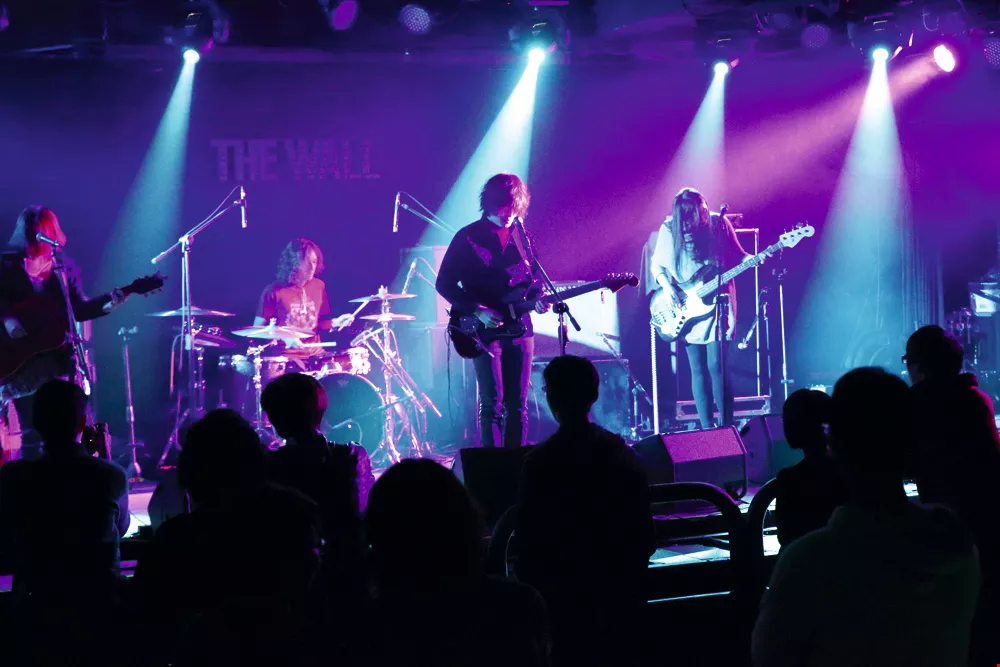
The Wall’s Gongguan venue, which nowadays holds 800 people, has been a training ground for many of Taiwan’s independent acts, with now-big names like Deserts Chang and Sodagreen having taken the stage there well before they had ever released an album.
Like all legendary rock venues, The Wall began with a passion and an idea.
In 2003 Freddy Lim, lead vocalist of Taiwanese metal band CthoniC, discovered that the basement of the Broadway Theater, in the Gongguan area and not far from National Taiwan University, National Taiwan Normal University, and National Chengchi University, was for rent, and cheaply at that. He talked to a couple of like-minded friends, convincing them to work with him to scrape together NT$3 million and transform the space into a venue capable of holding 500 people.
They called it “The Wall.” Many people think the name comes from the Pink Floyd classic, but in fact it was originally inspired by the wall they put up to divide the basement space into a performance area and a commercial area.
But this boldness and passion alone weren’t going to ensure their success. Although as early as 1998, Luantan Ascent proclaimed at the Golden Melody Awards, “The age of the rock band is here!” and the following year Mayday’s debut album blew up the sales charts, drawing new attention to Taiwan’s blossoming “underground” music scene, an initial lack of identity meant The Wall’s first three years were rough.
In 2005, Lim sought out Orbis Fu, who had just finished his national service, to help as a planner. The following year, Fu took over management of the Gongguan venue, and today the 34-year-old is director of The Wall.
“The lack of identity was the result of different opinions and tastes among the various stakeholders, so from the start I knew I would have to be firm,” says Fu, with the directness characteristic of a Kaohsiung native and a firmness rare among young artistic types. A music fan, although not a musician himself, Fu has become one of the sharpest managers in Taiwanese music.
The moment he took the reins, Fu instituted radical reforms. He moved performance times forward, and took inspiration from the Japanese live house booking model, which requires scheduled bands to take responsibility for selling a certain portion of tickets themselves. This took some of the pressure off The Wall, but also led to many bands complaining about how “inflexible” The Wall could be. In just two years, however, Fu was able to reverse the nearly NT$3 million in debt the venue had incurred through renovations and restructuring, ultimately getting The Wall back on track and into a period of sustained growth.
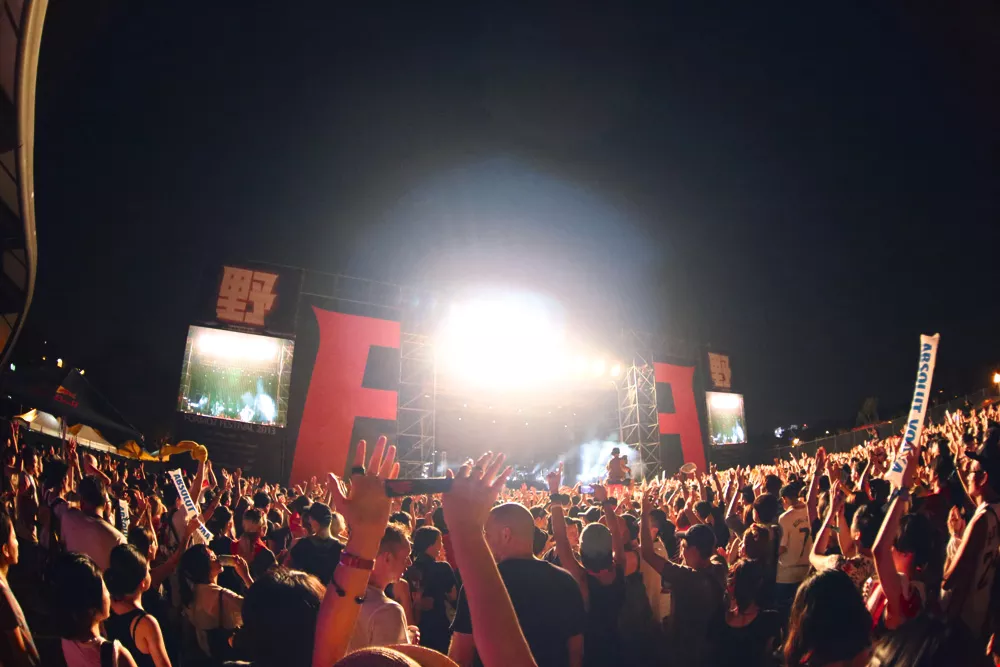
In 2013, The Wall Music was the main organizer behind the return of the Formoz Festival, making it bigger and higher-budget than ever before, with the hope of making it a truly world-class music festival.
After seeing how ticket sales in Taipei stabilized in 2008, Fu set about trying another tack—booking international acts to come perform in Taiwan, including touring to southern Taiwan.
Cultivating the music scene in cities outside Taipei, to Fu’s thinking, would help build the market and encourage other bands. “This way more young people would get interested in forming bands and focusing on musical creativity,” he says. He decided to make Kaohsiung, his home town and old stomping ground, the focal point of his southern strategy.
Starting with occasional bookings and moving on to regular monthly arrangements with local live houses, Fu was able to bring popular independent acts like 1976 to Kaohsiung, fostering a southern music scene. This strategy began to really bear fruit in 2010, as the city’s Mega Port Festival successfully launched and The Wall officially opened Pier 2, a 900-person venue, in the city. At the same time, the scene in Taichung also began to blossom.
The following year, The Wall partnered with the Yilan County Government to convert a historic site, an old Japanese-style tobacco store, into a combination cafe/art space. The result, called UriSabakiJo, has become a must-see destination for the young and artistic.
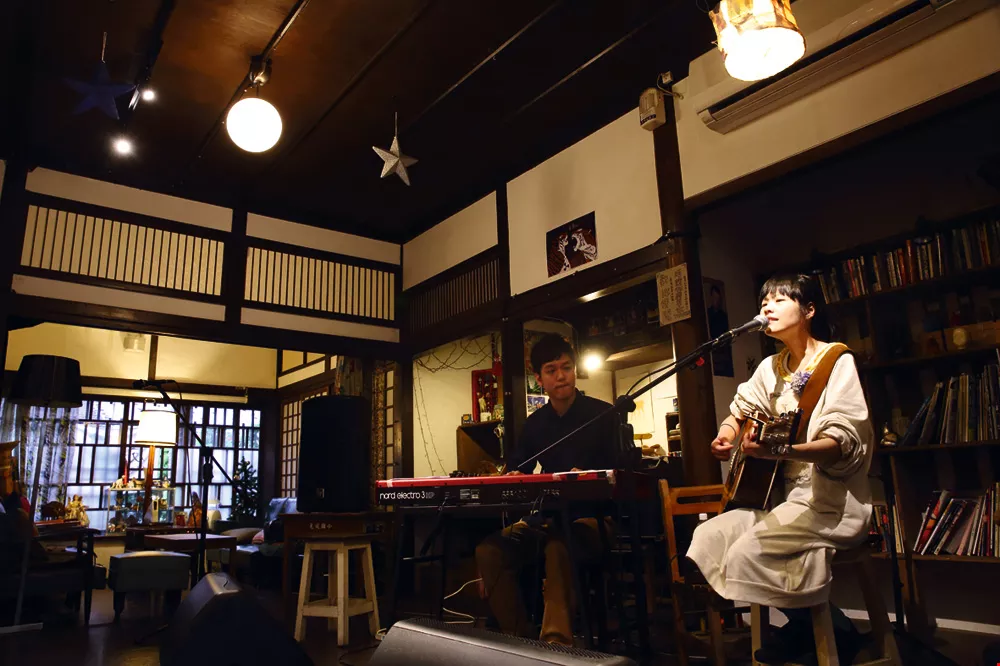
Rising indie star Misi Ke performing at UriSabakiJo in Yilan. Converted from an old Japanese-style retail building, UriSabakiJo has become known for its acoustic performances.
For over a decade, the rise of the MP3 and digital downloads has led to physical album sales taking a tremendous hit. Natasha Chu, who joined The Wall’s team as head of strategy in 2011, decided that the future had to be in live music.
The one thing the digital experience cannot replace is the feeling of a live performance, and as the numbers of bands and music consumers have grown, so too has Taipei’s live performance venue market seen explosive growth, covering sites of every size from a few dozen people to hundreds.
Changes in the market have also spurred The Wall to new, higher levels. In 2010, the Taipei venue completely overhauled its sound system and physical space, with the redesigned space now capable of holding as many as 800 people.
Respected music critic Ma Shifang remarks that in the past, live venues in Taiwan didn’t consider things like lighting a particular concern, but The Wall was and is one of the few willing to invest in high-quality facilities and in training professional staff. “They are a team of true music lovers, and tremendously driven,” he comments.
While the live venues are still the central focus of the business, The Wall has also expanded into other, related areas.
In 2007 the company founded Uloud Music, helping indie bands with album distribution and event planning. It was thanks to Uloud that Fire EX was able to gradually become the first-class band that it is today. And two years ago, Fu changed his stance on government contracts, concentrating a small part of his business efforts on the low but steady profits of government-sponsored events, including sending Taiwanese acts to perform abroad and getting independent bands playing campus gigs.
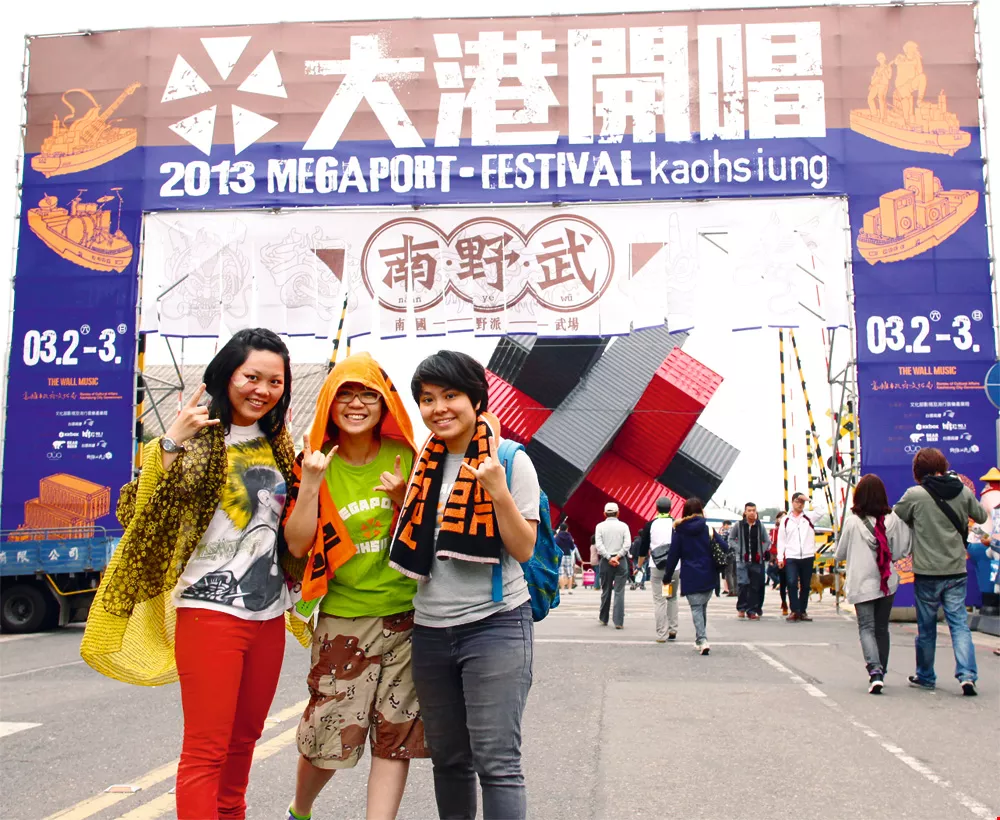
Kaohsiung’s Pier 2 has become not only the home to the Mega Port Festival, but also to a venue run by The Wall featuring regular performances and spurring a new wave of musical creativity in the city.
Since starting out as a simple performance space, The Wall has never forgotten its origins—a desire to give music fans the best independent acts. As such, the company is also actively working on branching out into promotion and music festivals.
The rise of the promoter in Taiwan is already bearing fruit, with the booking of major acts like Radiohead and Oasis entertaining music lovers and making news. Working as a promoter is not without significant risk, though, entailing a delicate cocktail of vision, finances, venues, publicity, and other factors.
At present, The Wall is booking some 100 international acts a year, while also sending Taiwanese acts to locations around Europe, North America, and East Asia for festivals and exchanges, promoting independent Taiwanese music abroad.
Music festivals, though, are even more challenging. When speaking of festivals, Fu’s eyes light up; “This is the most rewarding part of the industry, and where branding really comes into play.”
The Wall was the main organizer of this year’s Formoz Festival, driven by a do-or-die spirit and the cumulative ambitions built up over the festival’s four-year absence. It was held at Taipei’s Flora Expo Park, an area some three to four times the size of the past venue. The change of venue brought with it changes in pedestrian traffic and stage planning considerations. With some 80% of the total available tickets sold and some 20,000 people speaking with their wallets, clearly The Wall’s team had made the right choice.
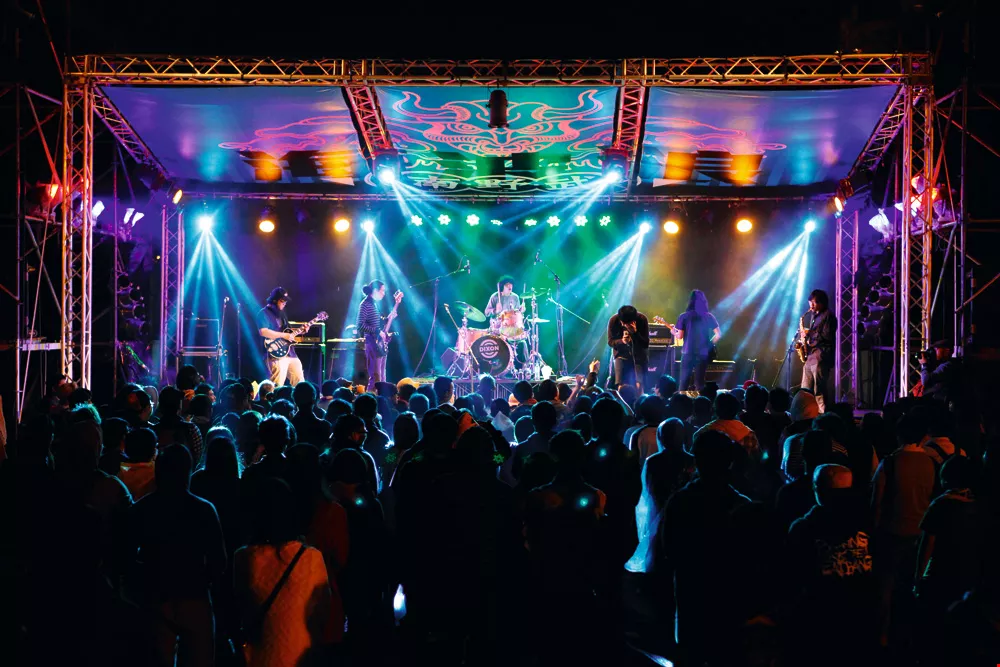
Kaohsiung’s Pier 2 has become not only the home to the Mega Port Festival, but also to a venue run by The Wall featuring regular performances and spurring a new wave of musical creativity in the city.
Like all small businesses in transition, The Wall’s transformation has been a mixed bag for the company. In the course of that transformation, there have been differences of opinion on whether the company should conservatively focus on its core business, or courageously try to push forward.
Some think that The Wall should avoid the tremendous risks of investing in a developing market. They feel that The Wall needs to get back to basics and focus on running the Gongguan venue, and that trying to grow the entire live music industry virtually solo is too much for the company.
Fu, on the other hand, is taking a longer-term view. He believes that creating a comprehensive independent music industry requires constant expansion, because only with a future open to them will artists be able to focus on their music.
Fu is still looking for larger venues in Taipei, and he has vowed to create a music festival in Taiwan of truly international caliber. At the same time, he continues to want to expand performance opportunities in central and southern Taiwan. “Our team is still young, and we have a lot we want to try out,” says Fu.
@List.jpg?w=522&h=410&mode=crop&format=webp&quality=80)

@List.jpg?w=522&h=410&mode=crop&format=webp&quality=80)


@List.jpg?w=522&h=410&mode=crop&format=webp&quality=80)

@List.jpg?w=522&h=410&mode=crop&format=webp&quality=80)
