Indonesian Students Flock to Taiwan Universities
Liu Yingfeng / photos Jimmy Lin / tr. by Phil Newell
February 2014


There are already extensive investment, trade, and cultural connections between Taiwan and Indonesia, and we can now look to education to be another major avenue of cooperation and exchange.
In the past, through the ROC government’s preferential policies for Overseas Chinese, Indonesia was once a leading country of origin for Overseas Chinese students in Taiwan. Today, Indonesia is the fourth ranked source of international students.
As they complete their studies and return home, these Indonesian alumni, who have a greater familiarity with Taiwan than anyone else in their land, are the ideal spokespersons to promote Taiwan’s education system to their countrymen and women.
In 2008, then 18-year-old Lin Zhongxian came to Taiwan from Indonesia, and in 2009 entered National Ocean University in Keelung, one of the busiest harbors in the world. Struggling with the still unfamiliar Chinese language, he ground his way through his classes and muddled through daily life.
Today, there are more and more people like Lin on university campuses in Taiwan. Fresh-faced and upbeat, they study hard in class and, bit by bit, build up reservoirs of memories of their “Taiwan experience”—the good and the bad, the harsh and the heartwarming.
In 2011, Taiwan and Indonesia signed a memorandum of understanding on higher education, opening a new chapter in bilateral educational exchange.
For the 2013–14 academic year, there are a total of 3223 students from Indonesia studying in Taiwan (including those on short-term exchanges), an increase of 10% over the previous year. This puts Indonesia fourth, behind only Malaysia, Vietnam, and Japan. Of these students, more than 1000 who are categorized as “Overseas Chinese students” and over 1000 classified as “international students” are in degree programs in universities and colleges.
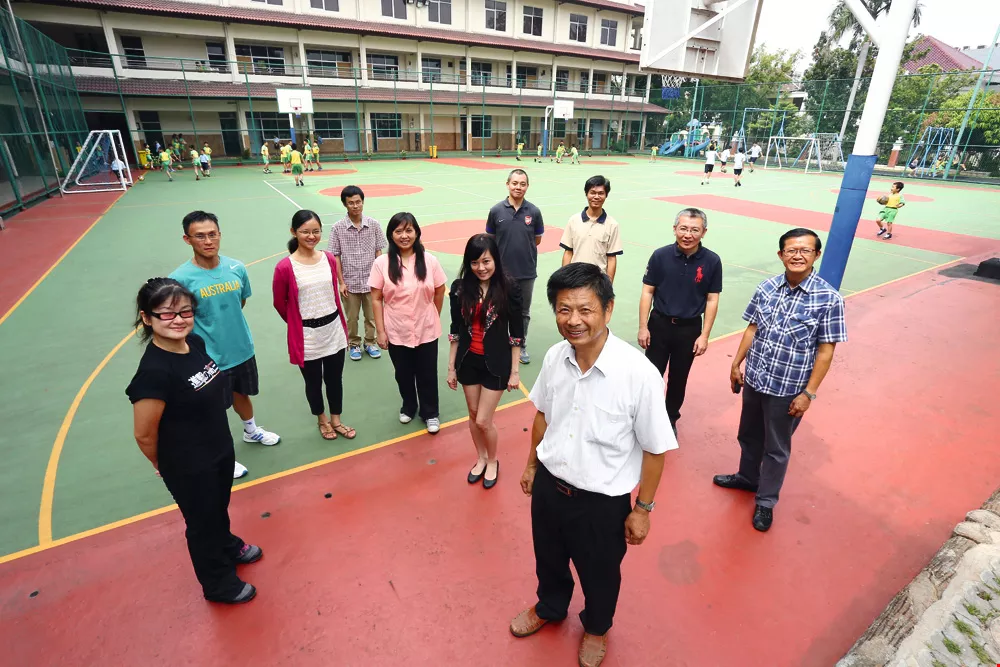
Staying abreast of the rising tide of globalization, the Jakarta Taipei School has hired top-flight teachers from Taiwan as part of an impressive team of bilingual (Chinese and Indonesian) educators.
If you go back into the past, you will see that the history of Indonesian Overseas Chinese coming to Taiwan for university education goes back quite a long way. During the Cold War era, when the US was worried that Southeast Asia would go communist, Chinese from the region were actively encouraged to study in Taiwan. In fact, the ROC government had as early as 1947 put policies in place to attract Overseas Chinese to study in Taiwan.
In those days, anti-Chinese sentiment in Indonesia was a major factor in students coming to Taiwan.
Early migrants to Indonesia from the mainland Chinese provinces of Fujian and Guangdong, aiming to keep cultural traditions alive, founded many schools with Chinese as the language of instruction. The first such institution was established in Jakarta in 1900, and a half-century or so later there were more than 1000 Chinese primary and secondary schools with nearly 400,000 students.
The enthusiasm for Chinese education set off alarm bells in the Indonesian government, which was concerned that these posed a threat to Indonesian culture and identity; the government therefore limited the number of such schools.
When General Suharto came to power in 1965 in the midst of an anti-communist purge, his right-leaning government, fearing percolation of the ideological influence of the Communist Party of China into Indonesia, ordered the closure of all Chinese schools and banned the used of the Chinese language. Despite this, many people of Chinese ancestry employed home tutors to teach their children in Mandarin. Given the restrictions that were placed on access to higher education, it is not surprising that many Overseas Chinese ended up studying in Taiwan, while others opted for the US or Australia.
The father of Rini Lestari, the 58-year-old current president of the Indonesian Federation of Taiwan Alumni Associations (IFTAA), migrated to Indonesia from Guangdong Province back in the 1940s. In 1980 Rini, whose high school grades were outstanding, was herself about to reach university age. Knowing that it would not be easy to gain entry to a local university, she took a suggestion from her uncle and came to Taiwan, entering the Department of Chemical Engineering at National Taiwan University (NTU).
Johan Iskandar, secretary-general of the Jakarta branch of IFTAA, relates that when he was still in middle school he headed off to Malaysia, where Chinese education has deep and strong roots, and then in 1967 entered the Department of Electrical Engineering at NTU. His classmates included a number of people who are now public figures, including high-tech industry celebrities like MediaTek CEO Tsai Ming-kai and DynaComware founder Lee Chen-yin.
Forty-nine-year-old Jiang Zemin recalls that in the old days studying in Taiwan was kept more or less hidden. When you returned home, if Indonesian customs found any books written in Chinese in your luggage, they would confiscate the lot. “To have Chinese books on you was almost as serious an offense as smuggling drugs!” he proclaims.
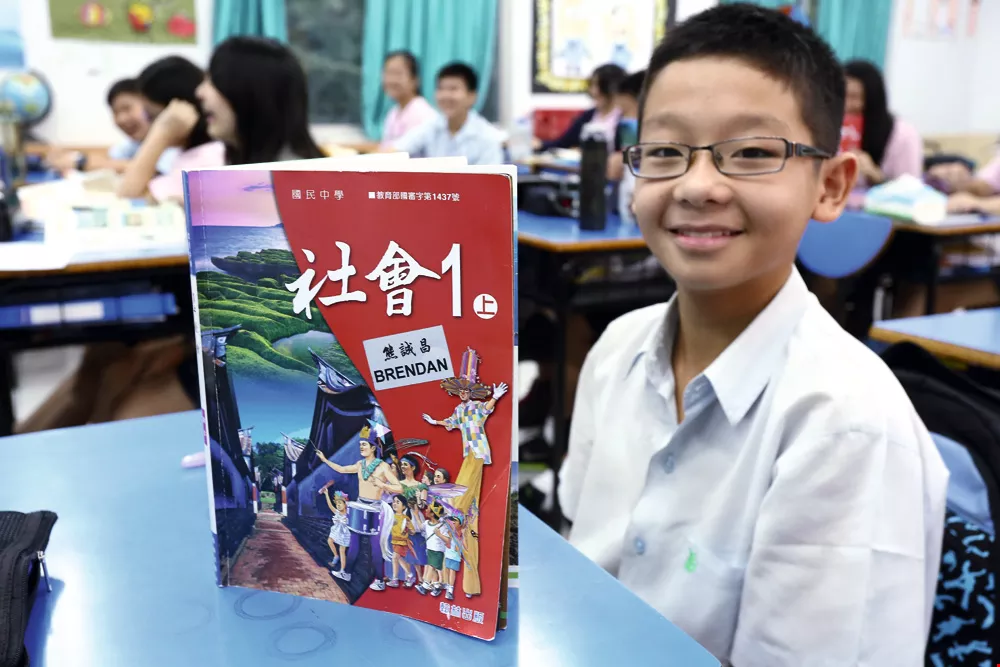
The Jakarta Taipei School has imported a comprehensive curriculum from Taiwan, making it a valuable bridge for educational exchanges between Taiwan and Indonesia.
It was only in 1999, during the administration of President Abdurrahman Wahid, that the Indonesian government once again permitted the opening of private schools using Chinese as the language of instruction, and the long-moribund world of Chinese-language education started to gradually come back to life. The current generation of Indonesian students, given the liberalization of access to information about overseas study, now have more choices.
Lin Zhongxian, the Overseas Chinese student from Indonesia whom we first met at the beginning of this article, had two elder brothers who studied in Taiwan. As his high-school graduation approached, he was of two minds as to whether to go abroad or stay in Indonesia. He was ultimately won over by the relatively inexpensive tuition in Taiwan along with faculty quality that gives nothing away to mainland China, Japan, or Singapore. After spending 2008–9 in the National Taiwan Normal University Division of Preparatory Programs for Overseas Chinese Students, he entered the Department of Marine Environmental Informatics at National Ocean University.
Guo Yiling, currently a senior in the Department of International Trade at Chung Yuan Christian University, began to think even in high school about coming to Taiwan to study Mandarin, and while still in Indonesia spent all day watching Taiwan-made soap operas as a form of intensive listening practice. Since arriving in Taiwan, she has found the open classroom atmosphere, in which students are encouraged to express themselves freely, very refreshing. Moreover, the emphasis on practical training in her marketing courses has given her the opportunity to get off campus and propose marketing ideas directly to corporate clients, allowing her to get a lot of useful experience.
Hengky Lau, deputy director of IFTAA’s Jakarta branch, who is in charge of recruitment of students to study in Taiwan, says that now that Indonesia’s economy has taken off, job opportunities are no longer limited to the manufacturing or industrial sectors. Whereas students from earlier generations of Indonesians to study in Taiwan chose majors like civil, chemical, and mechanical engineering, students in the current generation are entering a wide of variety of departments, including design, tourism, food processing, and business administration.
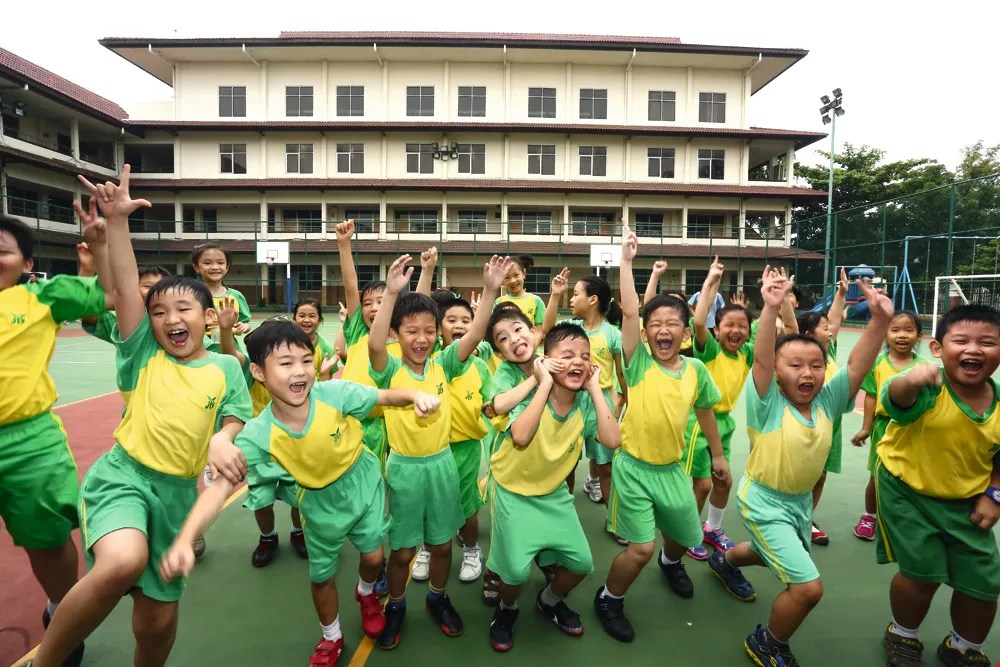
The Jakarta Taipei School has been going through a transformation in recent years. It now has students from Taiwan, Indonesia, and even the Netherlands.
Conservative estimates suggest that over the past 60-plus years, tens of thousands of Indonesian students have completed degrees in Taiwan and returned home. In particular, many Indonesian Overseas Chinese who returned with degrees from top-ranked National Taiwan University are now among the elites of their society.
Jiang Zemin says that Indonesian alumni from Taiwan universities who are now in their 40s and 50s returned home just in time to hit the takeoff of the Indonesian economy, and most have been able to put their studies to good use and enjoy successful careers.
After returning to her country, Rini Lestari took a job as a researcher at the Indonesian food company ABC. Two years later she left that post to help her family’s business. Then after getting married she struck out her own, founding an independent building materials firm, and today she has more than 50 employees working in her factory.
Johan Iskandar first took a job in the air conditioner industry after graduating from NTU’s Department of Electrical Engineering. Later he went in with his brother-in-law in an investment in a factory to make suitcases. At their peak, they had over 2000 employees and an 80% market share in Indonesia. In 2000, unable to compete with cutthroat price competition from mainland China, they downsized the plant to today’s level of 500 employees.
Although many Indonesian students have studied in Taiwan over the past six decades, and the first alumni association was founded in Indonesia in 1963, over many years these alumni have scattered to the four winds, and at no point has their influence been concentrated and channeled.
When Rini Lestari was elected president of IFTAA’s Jakarta branch in 2008, she decided to restructure the association. She started by seeking out alumni from NTU, National Cheng Kung University, and National Chengchi University—these three schools accounting for the largest number of Indonesian alumni—and spread the word about alumni activities through their interpersonal networks. She also advertised in Indonesia’s largest-circulation Chinese publication, hoping to recruit more people to join. After five years of hard work, there are nine regional alumni associations (including in Jakarta, Surabaya, and Medan) with more than 5000 alumni.
Rini took over the job of president of IFTAA in 2012, and began to strongly promote exchanges between Taiwan and Indonesia. She says that alumni who have graduated from Taiwan universities are more familiar than anyone with the environments in the two countries, and thus should play a key role in promoting bilateral cultural and educational exchange.
In addition to helping Chung Yuan Christian University, NTU, and other schools hold recruitment seminars, she has successfully urged Tunghai University, Chinese Culture University, and other tertiary educational institutions to sign memoranda of understanding with Penabur and other middle schools in Indonesia, providing scholarships so that outstanding graduates can go on to study in Taiwan.
Rini states that because education using Chinese as the language of instruction was banned for such a long time, Indonesian students made Australia or the US their preferred destinations for study abroad. In recent years, Singapore, Japan, and Korea have also been actively recruiting, and some universities from mainland China have even set up branch campuses in Indonesia. It is clear that the brand visibility of Taiwan universities needs to be seriously upgraded.
Bilingual benefitsMany universities in Taiwan have already become conscious of the fact that the pool of international students for recruitment is simply not large enough, and they are taking more aggressive measures to seek them out. Shawn Kao, dean of the Office of International Education and Programs at Tunghai University, says that the school already has come up with a plan to increase its name recognition in Indonesia: They will offer their Chinese majors practical training opportunities by sending them to teach Chinese at cooperating high schools in Indonesia.
When Kao went on a fact-finding mission to Indonesia ten years ago, he discovered that there were not enough teachers in Indonesia qualified to teach the Chinese language, so he came up with the idea for the Chinese language courses. After two years of running around, it looks like Tunghai will this year launch a program for training and certifying teachers with Chinese language skills.
The craving for Chinese speakers in the wake of mainland China’s rise has yet to abate. Jiang Zemin says that students who study in Taiwan—capable of operating in Chinese, English, and Indonesian—are coveted by many Indonesian firms as well as Taiwanese and mainland Chinese enterprises. As a result, starting salaries for alumni from Taiwan universities are 20–30% higher than those of their competitors in the job market.
Lin Zhongxian already had job offers even before graduating in 2013, and he has begun working at INDEX, a Taiwanese company that offers services to Indonesian workers in Taiwan. Lin says that a degree from Taiwan is a big advantage in the job market in Indonesia. Each time he returns home he transforms himself into a spokesperson encouraging friends, relatives, and schoolmates to study in Taiwan.
Conservative estimates put the number of Indonesians of Chinese ancestry at about 7 million. If universities in Taiwan, who are having trouble filling their departments because of the secular decline in the local birthrate, can recruit more students from Indonesia, then higher education in Taiwan will benefit from an infusion of fresh vitality and enthusiasm.

@List.JPG?w=522&h=410&mode=crop&format=webp&quality=80)


