Summer Sports Camp
Making Kids Smart and Fit
Lin Hsin-ching / photos Chin Hung-hao / tr. by Scott Williams
September 2013


How do you get your kids out of the house during the long summer vacation? It’s a question that plagues many families with school-age children. The answer for many is an athletically oriented summer camp, which holds out the prospect of a “healthy summer” for the kids. The most popular of these are sports camps, which introduce kids to the joys of competition and teamwork. How does a few short days of intensive activity transform lumpy couch potatoes into trim athletes?
It’s four o’clock on a July afternoon, and the sun is still scorchingly hot. A large group of kids scampers across a brilliant green soccer field on the campus of Tatung University on Taipei’s Zhongshan North Road, seemingly impervious to the heat.
The kids, who are neatly dressed in shorts and jerseys and who range in age from tiny kindergarteners to burly high-schoolers, are kicking around a professional-quality soccer ball. They’re here as part of the Tatung Company’s summer soccer camp, an intensive month-long training camp that immerses nearly 300 children in the internationally beloved sport.
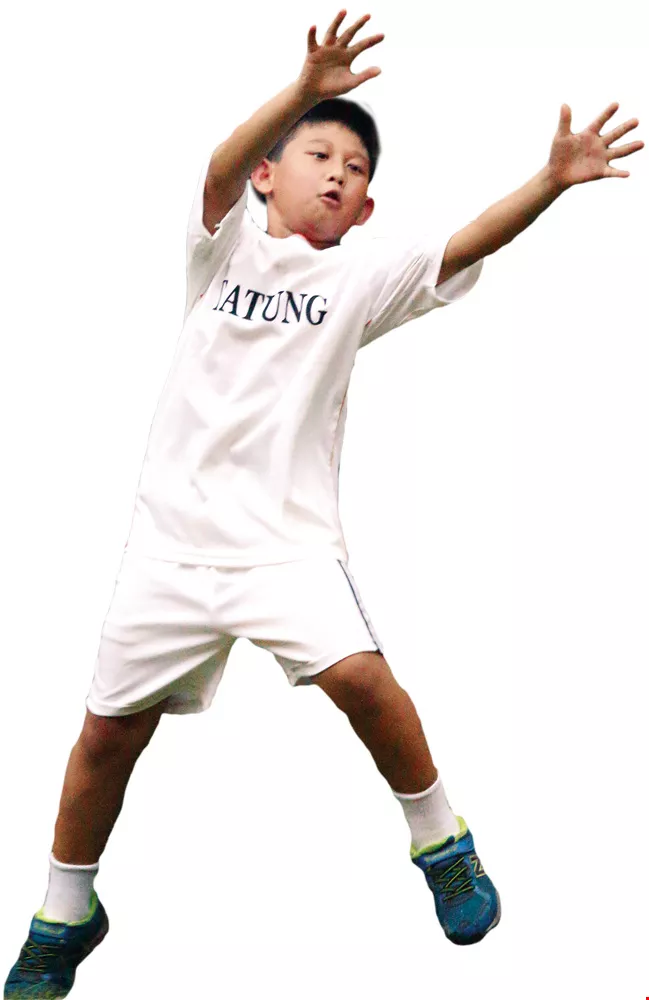
Tatung’s summer soccer camp teaches kids the game’s basic techniques, gives them plenty of exercise, and develops their lower-body coordination, providing them with a healthy, happy summer vacation.
What on earth prompted a company better known for its rice cookers, fans and TVs to establish a soccer camp?
Those in the know will tell you that Tatung has had a team of its own since 1963. In fact, it’s Taiwan’s oldest amateur soccer team, has won numerous national championships, and has even represented Taiwan in several important Asian competitions. The team turned in its most impressive performance in 2001, when it won both the World Chinese Cup Invitational Championship and the Hawaii Challenge Cup.
Taiwan isn’t big on soccer and consequently devotes relatively few resources to it. Why is Tatung attempting to irrigate this virtual desert?
Dr. T.S. Lin, the company’s former chairman, was the driving force behind its promotion of soccer.
Lin, a dedicated proponent of education and a key figure in Taiwan’s industrialization, believed that playing soccer was very similar to managing a corporation: both required teamwork and careful thought to score goals and counter opponents.
A lover of the sport, Lin encouraged his employees to watch and even play the game. He also established a company team and invited Taiwan’s best players to join. Hoping to foster interest in soccer among the younger generation, Lin created the summer camp in 1991.
Open to kids from five to 18 years of age, Tatung’s camp runs for four weeks, during which participants receive two hours per day of training four days per week from coaches who are themselves professional players. It’s also a great bargain, costing just NT$1,500 for the entire four-week session, with two jerseys and two pairs of socks thrown in.
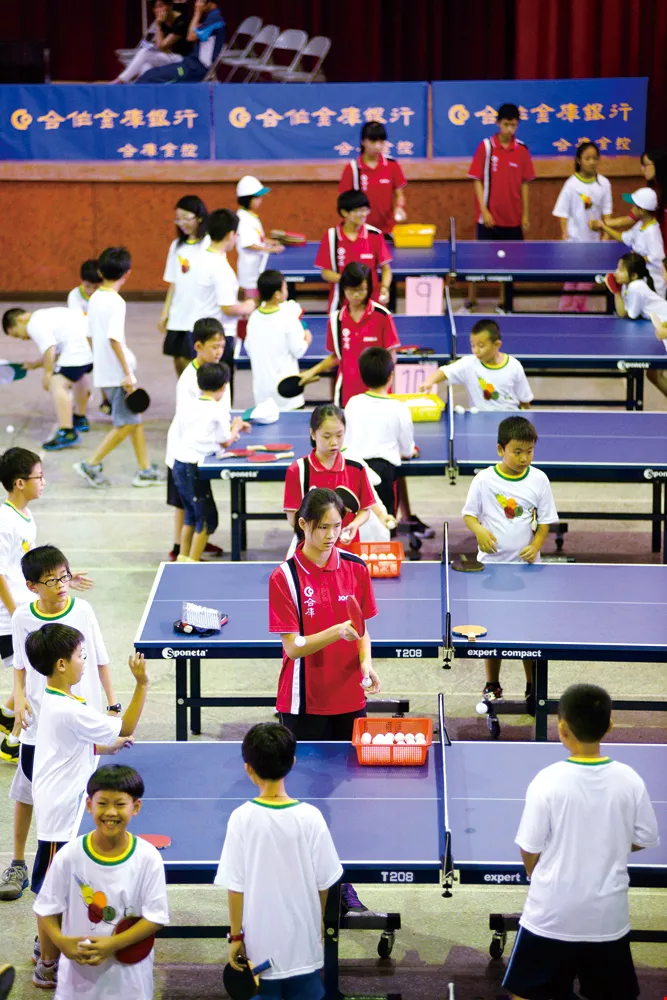
Students at the Taiwan Cooperative Bank’s summer table tennis camp cultivate an interest in exercise while learning how to play the game properly.
Chiang Mu-tsai, the head coach of Tatung FC, says that soccer trains the body’s large muscle groups, emphasizing physical coordination, balance, and control over the lower body. Even young children who haven’t yet developed fine motor control can enjoy the sport.
The camp trains kids by age group. Young children play simple games aimed at getting them into condition—hopping on one foot, running a winding course, and navigating obstacles—and then are gradually introduced to basic soccer skills such as dribbling, passing, running with the ball, and controlling the ball. Middle- and high-school students who already have a foundation in the game play matches that teach them additional skills such as attacking, passing, positioning, heading, and dribbling past defenders, as well as shooting and defending.
For most parents, the most important aspect of the camp is that it provides kids with the physical activity that most lack in their daily lives.
Mrs. Huang, who has three children enrolled in the camp, is a case in point. The older two, a second grader and a third grader, are both hyperactive with mood control issues. She has long been filling their schedules with large amounts of physical activity at the recommendation of their doctor and has found that all the running they do when playing soccer yields the best results.
Noting that physical activity stimulates the secretion of dopamine and other neurotransmitters, which helps with attention and mood stabilization, she says playing soccer always leaves her kids in an especially good mood, and better able to manage quiet activities like reading and study.
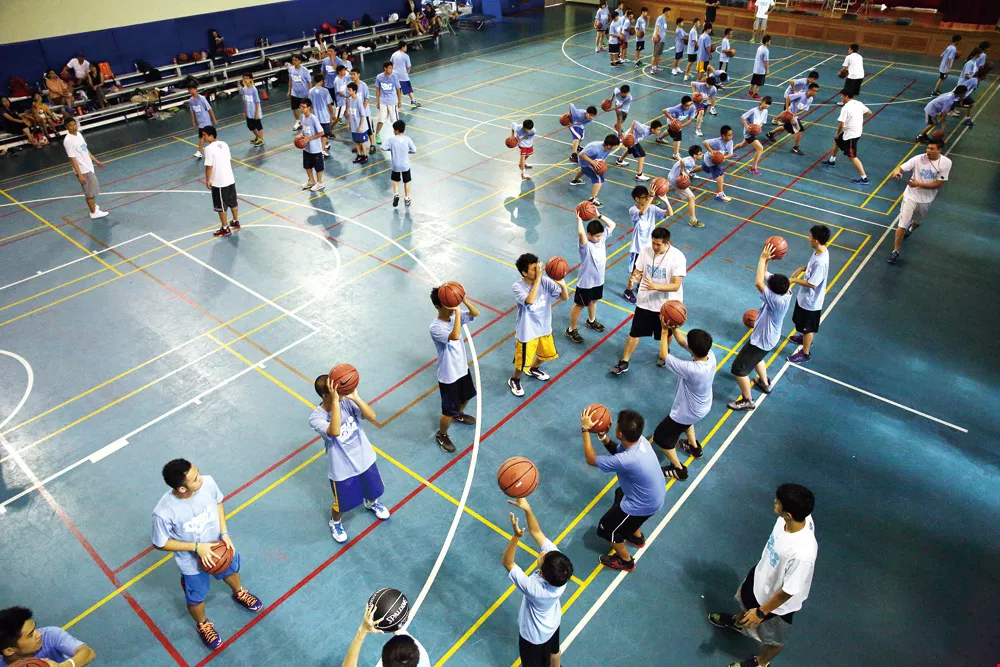
Taiwanese teens love basketball, which makes the basketball camps organized by Taiwan’s professional teams very popular summer events. The photo shows the Dacin Tigers’ camp.
Tatung’s high-energy soccer camp has been very well received. With Taiwanese ping-pong players doing well at international competitions, summer table-tennis camps are now becoming popular as well.
Ping-pong has an obvious advantage over most sports in that it requires little space to play, barely more than enough for the table itself, and has long been popular in Taiwan. But the vast number of ping-pong classes and camps on offer can be daunting to parents.
Happily, a little digging soon reveals the best reviewed, best priced entry-level option: the summer ping-pong camp organized by the Taiwan Cooperative Bank.
The bank’s camp draws on the talents of its table tennis team, which was founded some 66 years ago and has nurtured the talents of many of Taiwan’s elite players. Those include Wu Wen-chia, Chiang Peng-lung, and the world’s reigning men’s doubles champions Chuang Chih-yuan and Chen Chien-an.
Not only does the camp have an outstanding reputation, the bank also charges participants next to nothing to attend in an effort to give back to the community. In fact, it costs just NT$100 (the price of insurance for participants) to take part in five days of introductory and advanced training.
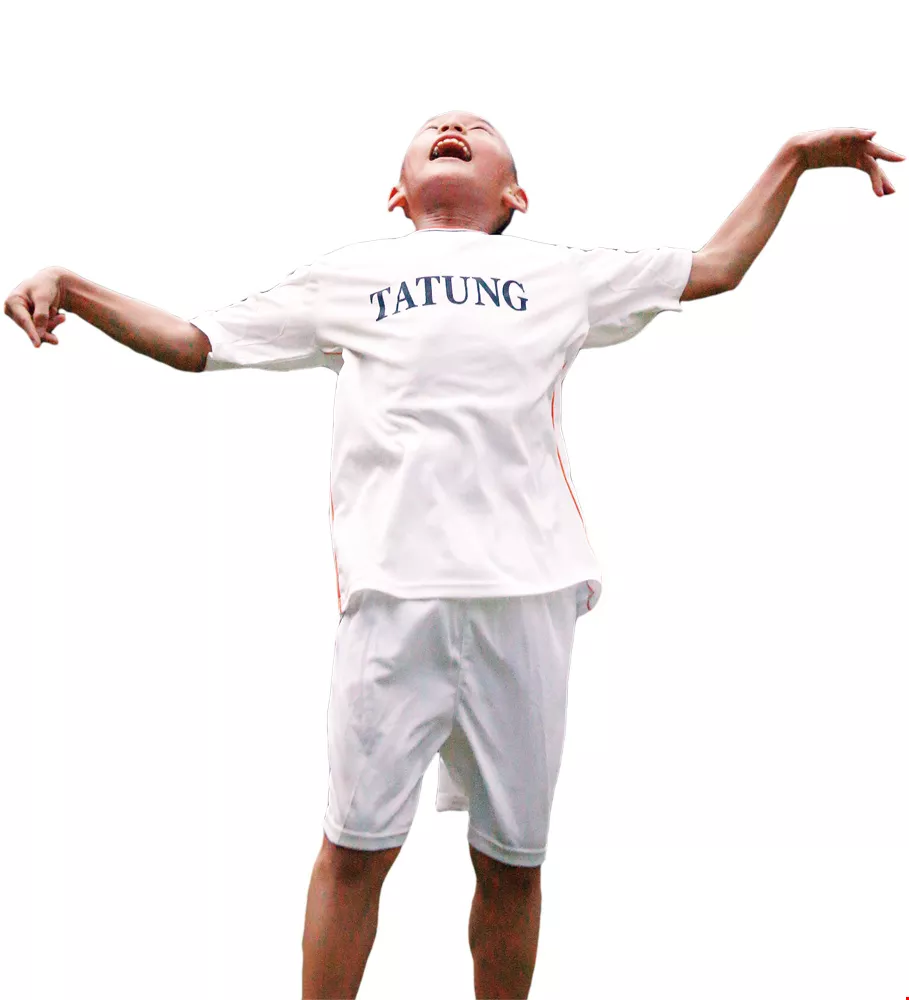
Tatung’s summer soccer camp teaches kids the game’s basic techniques, gives them plenty of exercise, and develops their lower-body coordination, providing them with a healthy, happy summer vacation.
The camp is so popular that the bank runs two sessions every year. This year, there’s one in Yuanlin, Changhua County, and one in Taipei City, which together will train more than 850 kids ranging in age from third graders to high schoolers.
The camp groups students primarily on the basis of age, but also takes skill level into consideration. As a result, you often see solidly built older students getting trounced by children half their height.
Participants unfamiliar with the game are first taught the handshake and penhold grips, as well as basic rules and techniques. For example, that when serving, the ball must be tossed vertically at least 16 centimeters above the free hand without imparting any spin; that when striking the ball, the player should pull the paddle hand back by turning at the hips, then turn the body and legs with the shot; and that when executing a cut the player should hold the paddle face at 45° to the surface of the table and strike down forcefully, aiming for the lower part of the ball.
Chen Qingyan, the camp’s lead coach, says that because ping-pong requires such precise movements of the hand, beginning students have to learn proper posture and positioning to prevent injuries later on.
Chen also strongly agrees with the notion that “table tennis prevents nearsightedness,” which is the impetus for many parents to get their kids into the sport. He argues that because you often need to react in as little as 0.5 seconds, the game tests players’ agility, reactions, and vision.
“Very few big name players are nearsighted, probably because they’ve been giving their eyes plenty of exercise ever since they were children,” jokes Chen.
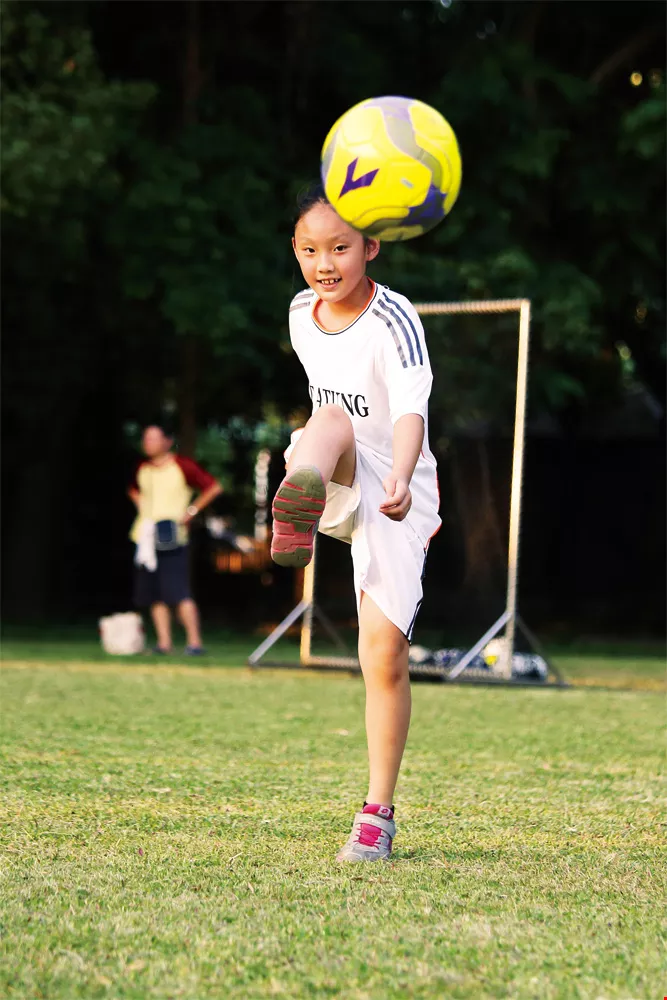
Tatung’s summer soccer camp teaches kids the game’s basic techniques, gives them plenty of exercise, and develops their lower-body coordination, providing them with a healthy, happy summer vacation.
Summer basketball camps are also extremely popular. While the kids at most summer sports camps are there at the behest of their parents, those at basketball camps have usually chosen to be there out of their own love of the sport.
In fact, basketball is Taiwan’s second most popular sport after baseball, and both our Super Basketball League (SBL, the men’s semi-pro league) and our High-school Basketball League (HBL) have thousands of diehard fans.
Basketball is also the favorite sport of Taiwanese high schoolers. With courts practically everywhere, the physically demanding game provides teens with a great way to burn off their excess energy while strengthening ties between friends and fostering cooperation.
With opportunities to practice so readily available, why do kids need a summer basketball camp?
“Because basketball camps let you get close to your heroes!” jokes Lin Yujun, PR director for the SBL’s Dacin Tigers.
During the SBL’s winter break and summer offseason, which coincide with school vacations, the league’s seven teams—Dacin, Taiwan Beer, Bank of Taiwan, Yulon Luxgen, Kinmen Kaoliang, Taiwan Mobile and Pure-Youth Construction—run basketball training camps for young players, enlarging the teams’ fanbases and fostering relationships among fans.
Because the camps are coached by top-tier players, the kind most of us usually see only on TV or from afar, they provide fans with an opportunity to meet their heroes. For example, this year’s Dacin camp featured stars such as Chang Chih-feng, Wang Chih-chun, and Yueh Ying-li. Taiwan’s top men’s international player, the 202-cm-tall Tien Lei, also put in an appearance, posing for photographs with all the attendees on the camp’s final day.
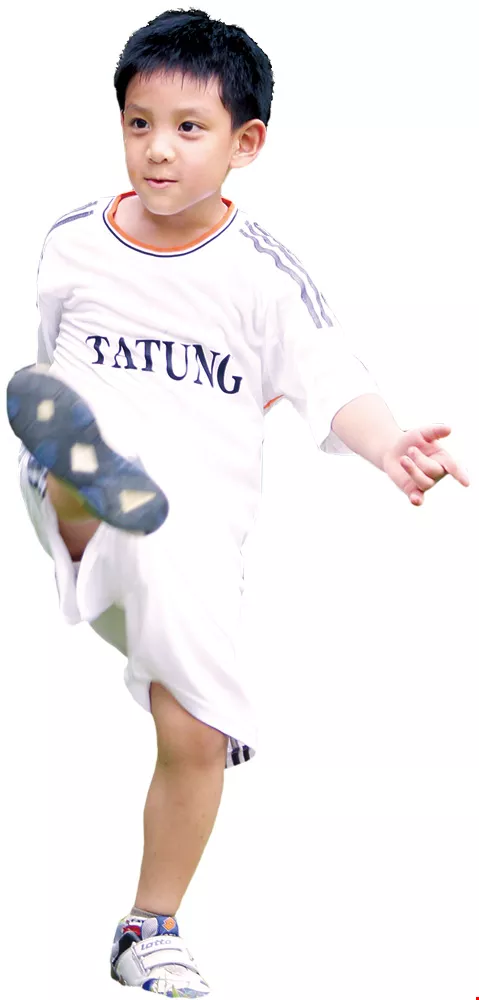
Tatung’s summer soccer camp teaches kids the game’s basic techniques, gives them plenty of exercise, and develops their lower-body coordination, providing them with a healthy, happy summer vacation.
Two of the most important aspects of the camp are that it establishes good exercise habits and teaches students how to execute basic moves properly.
Fan Gengxiang, the lead coach at Dacin’s camp, notes that basketball’s mixture of running, jumping, and bumping makes it a very intense sport. Unfortunately, most kids are in the habit of just grabbing a ball and playing without first warming up. The camp teaches kids that stretching to warm up and cool down before and after playing can help them avoid sports-related soreness, inflammation and injury.
The camp also emphasizes playing with proper technique to reduce the likelihood of injury. This covers everything from basics such as dribbling, passing, catching passes, and controlling the ball to more advanced techniques such as positioning, screening, and driving the basket. With professionals sharing their experience, the kids make noticeable progress.
Lin Pocheng, a middle-school student who has attended the Dacin camp several times, says that he got so excited the first time he was coached by defender extraordinaire Chang “Beast Master” Chih-feng that he couldn’t get to sleep that night. “Practicing in front of my idol made me more determined than ever to learn how to defend properly.”
Though only a few thousand kids attend these camps every year, the professional instruction they receive is sparking interest and spreading skills far beyond their boundaries. They’re also giving kids who spend most of their time buried in books or glued to a computer screen a mental and physical outlet, and helping them build healthy exercise habits.
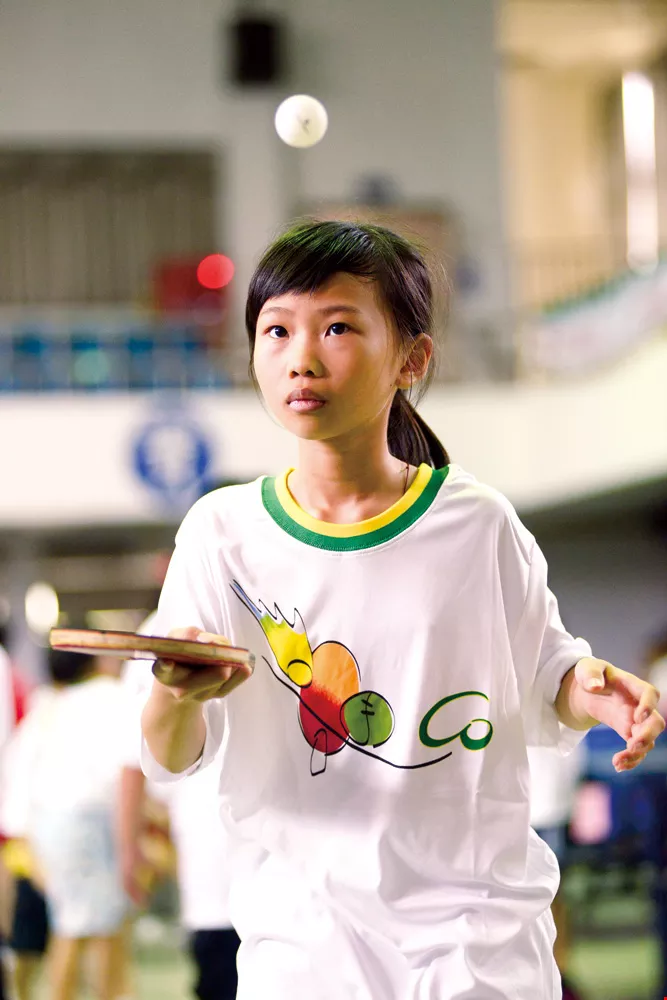
Table tennis demands focused attention and great hand control. Even something as seemingly simple as bouncing a ball on the paddle takes practice.

@List.jpg?w=522&h=410&mode=crop&format=webp&quality=80)


