

Throughout history and across the world, the popular image of prison is of a dank, savage, gang-ridden setting run by prison administrators who are corrupt, cold-hearted or strict disciplinarians, invoking a sense of dread in all who see them.
However, visitors to Taiwan's prisons will find a world behind bars altogether different from what they imagined. Most inmates spend their prison days working in orderly workshops. To these cons, who had once taken the wrong road in life, the regimented work life of correctional institutions can not only help them change their life habits, but can also teach special skills in preparation for reentering society.
One may be surprised to find that these long-scorned convicts are in fact replete with talent and potential, and the sauces, creative desserts, home-style treats and exquisite handicrafts they manufacture have been in great demand in recent years due to their high quality and low price, with an annual output of more than NT$260 million. This economic miracle behind bars has done more than open up a new source of revenue for the national treasury: it has built a bridge linking inmates to the general public.
Set off from Taipei, go south on the Sun Yat-sen Freeway to the Nankan Interchange, turn off onto Chunri and Sanmin Roads, skirt the Taoyuan Arena, then continue on for a little stretch, and you'll see the notorious Taipei Prison. Some 3,800 inmates are sequestered within its lofty walls, the vast majority of them repeat offenders, with drug, sexual assault, and robbery charges being the top three categories of lawbreaking among those confined here.
"No temptation, no crime," says Department of Corrections director Wu Shyan-chang, who has 36 years of experience in corrections. He believes that criminality is corrosive to the soul, causing people to become unwittingly trapped in a vortex of enticement, which once experienced engenders a lifelong struggle against temptation.
This statement may well hit home with most inmates in Taipei Prison. Tracing back on what leads to lawlessness, we find that behind every criminal is a long string of stories: perhaps they grew up in a twisted environment, perhaps they ran around with the wrong crowd in their youth, and of course there are plenty who trod the wrong path because they couldn't bear economic or psychological stress.
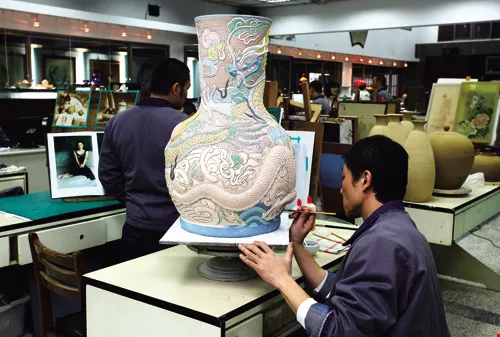
Taipei Prison's proximity to the renowned pottery center of Yingge makes it an ideal place for inmates to reform their character through ceramics training. This has become an important rehabilitation program.
Undoubtedly, prison marks the epitome of the dark problems from the bottom rungs of society. Yet this closed environment, long marked with a negative label, is not as cold or harsh as outsiders imagine. Requisite behavioral restrictions notwithstanding, modern prisons stress reform, educating through psychological counseling, further education, skills training, and religious instruction, aiming to gradually guide inmates onto the right path, helping them learn to resist future temptations to commit crime, and paving their re-entry into society.
The regimented work life is an important part of rehabilitation. Here, whether you were once an all-powerful mob boss or a petty hooligan, you must put away your past indolence and re-learn diligence, responsibility and professional ethics.
During the five-day, eight-to-four workweek at Taipei Prison, inmates are scattered among workshops of different categories. Some are hunched all day before a sewing machine or stand amid the vapors of industrial steam irons making uniforms for prisons and public agencies; others have traded in their knives and guns for pots and spatulas, preparing tasty meals like stewed dried tofu, braised ribs with herbs, and Japanese-style bento boxes in aroma-filled kitchens; still others show surprising artistic talent fashioning exquisite decorative lanterns, copying complex Chinese and Western style paintings, or applying time-honored skills fitting together hand-made furniture.
If not for the grey prison uniforms worn by the workers, if not for the ominous armed guards stationed in the workshops, if not for the iron bars and heavy locks, those visiting for the first time might think these were ordinary factories, vocational training classes or artists' studios.
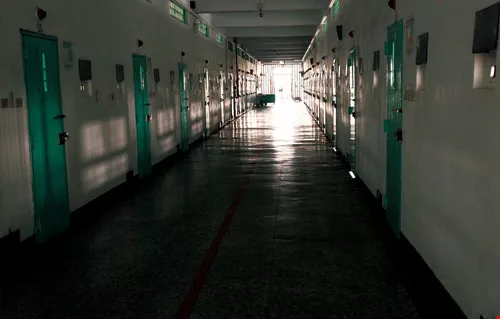
The spotless, orderly setting in which prisoners' habits are reformed through regimented living is a concrete manifestation of the human-based management system within modern prisons. Shown here is a Pingtung Prison cell block.
Currently the labor distributed among Taiwan's 49 prisons is roughly divided into three categories: general prison labor (laundry, sweeping, etc.), contract work (shopping bags, clothes racks, hair clips, tea caddies and so forth made to order for traditional smaller-scale businesses); and self-run enterprise, with products developed, produced and sold by the prison. Excluding those undergoing drug detox or treatment for communicable diseases, most inmates are assigned to different workshops according to individual skill, length of sentence, conduct record and health condition.
Half of the profit left over after deducting expenses from work income is paid to the inmates on a pro rata basis according to performance, and the rest goes into the national treasury or into a reserve fund for upgrading prison facilities.
These prison workshops have been in existence since the enactment of the Prison Act in 1946. What's different is that in the past, more than half of revenue from prisoner labor came from contract manufacturing. But local demand has shrunk significantly since most of Taiwan's traditional industries moved to China or Southeast Asia, and prison income was not as before.
To tackle this problem, former justice minister Shih Mao-lin proposed in 2005 that each prison specialize in a certain field, encouraging prisons to stimulate creativity and develop self-run enterprises tied with local culture or traditional crafts. While opening a new revenue stream, this proposal would also help improve the general public's outlook toward prisons and prisoners.
The transition to self-run enterprise required plenty of personnel training, meeting the inmates' needs for special skills instruction. In the last half of 2005, the prisons carried out an aggressive skills training program, and now dozens of courses are available including auto repair, home wiring, drafting, baking, drinks preparation and computer hardware repair, as well as traditional handicrafts such as lacquerware, bamboo weaving, ceramics, and even Wang Ye boat building and crafting Kinmen-style wind lion god statues.
"Inmates first undergo technical training, then gain practical skills in the workshop. It's quite similar to factory internship programs organized by schools," explains Lin Chih-pei, who heads the Operation Section at Taipei Prison.
After four years of effort, the self-made goods produced by prisons have become more diverse. Current hot sellers include spicy dried tofu developed at Taipei Prison, lacquerware created at Taichung Prison, chocolates painstakingly handcrafted at Taichung Women's Prison, soy sauce fermented according to age-old methods at Pingtung Prison, and handmade noodles made at Kinmen Prison, which are must-buy tourist gifts.

Art therapy is an effective means of treatment. For example, in Taipei Prison's drug rehab program, inmates are required to create sketchbooks so they can express their inner weaknesses or disquiet, having a dialogue with these feelings so as to better deal with them and break the drug habit.
The positive reviews from consumers are reflected in the sales figures. From 2005, the revenue of prison self-run enterprises has grown by a stunning 20-40% a year; even in sluggish 2009, the growth rate came to 35%, with receipts for January through November totaling almost NT$260 million.
In the workshops for the more popular products, such as Pingtung Prison soy sauce, chocolates from Taichung Women's Prison and noodles from Kinmen Prison, convicts make over NT$15,000 a month each, and this can exceed NT$20,000 during the Chinese New Year gift-giving season.
"That's more than university students on the outside can make in these tough times," say some prison officials privately.
Inmates eligible to work in these successful workshops are usually those with exemplary behavior, who have passed health screening tests, and who have less than two years left of their incarceration, to help them re-enter the job market after their release. For them, this work is more than a moneymaker; it's a rare privilege. Such inmates tend to be more protective of their image, rarely stirring up trouble: even the slightest infraction such as snacking on the sly can result in a reprimand or expulsion from the workshop. Each jump in product orders requires overtime work, and this group of inmates rarely complains; on the contrary, the greater the workload, the happier they are.
"The fact that consumers are willing to shed their prejudices is an affirmation of the products we make. This makes us beyond happy; how could we feel exhausted?" says inmate Cai, a skilled nougat maker at Pingtung Prison. Prior to Chinese New Year 2009, he developed an edema in his calf from varicose veins caused by standing for too long at his work station and was sent for medical treatment; even then he insisted on staying to complete his work.
"I've never done any honest work before this. I had no idea I could make money by using my own two hands and standing with my feet planted firmly on the ground. It's a very good feeling," he says. In for robbery, he now holds a class C baking license thanks to the arrangement of the prison authorities, and plans to build a new living in this area after his discharge.
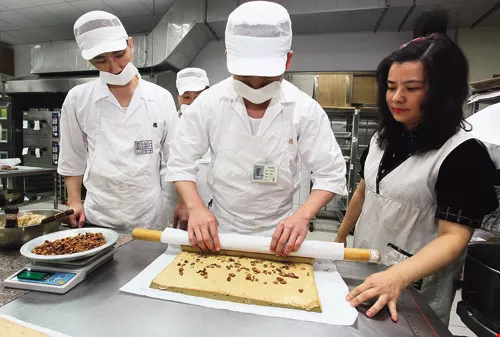
Baking class also teaches skills to prisoners. Here, Taipei Prison inmates are making coffee-walnut cakes for bulk sale.
The two-pronged tactic of skills training and business activities has had a surprising effect, but regrettably, cultivating a skill in an inmate does not necessarily achieve the goal of character reform.
According to a March 2009 survey by the Ministry of Justice, 80,192 inmates were released from prison in 2007 and 2008, among them 5,411 who had received skills training related to these self-run enterprises. But among these convicts on whom so much hope had been pinned, the recidivism rate was as high as 23.8%, only slightly lower than the rate of 25.5% among ex-cons in general.
Regarding this finding, Chang Ping-wu, professor of security management at Ming Chuan University and an authority on criminology, believes that there are misgivings and discriminatory sentiments among the general populace toward those who have served time; thus, even if they have marketable skills, they face barriers everywhere in their job searches after release. Under the twin pressures of economic reality and psychological pain, it's easy for them to return to their old "professions."
"In criminology we call this 'labeling.' The more people refuse to accept these people, believing them to be dangerous, the more it becomes a self-fulfilling prophecy as they're forced back into a life of crime. Thus we have recidivism," explains Chang.
To improve the results of skills training and help mitigate the ex-con's dilemma of having a fishing pole but nowhere to fish, the Ministry of Justice is planning to invite private businesses to join together in an effort to counsel inmates on how to rejoin society.
For example, this January, the ministry is partnering with Microsoft Taiwan in spearheading the Digital Phoenix project with the women's prisons in Taoyuan, Taichung and Kaohsiung, in which front-line IT personnel teach computer and Internet skills needed in business.
Wu Shyan-chang points out that recruiting technicians and professionals is only the first step; in the future he expects other businesses willing to help the corrections system to chip in, building a cooperative education system. As such, inmates with good conduct and learning performance will have the opportunity to work with these companies after release, so that they will not become mired in criminality once again from not finding work that matches their skills.
Besides this, those who have served their time or are out on parole can also find job-hunting assistance from the 19 branches of the Taiwan Aftercare Association, or apply for an interest-free business loan from NT$400,000 to NT$1 million, giving them the chance to grow a business using their skills and build a new life.
"Never give up!" says Wu with sincerity. The results of corrections work, whether involving skills training, self-run enterprise or spiritual education, are hard to evaluate from superficial numbers, because helping just one more bad person turn good is a commendable result.
It may be hard for onlookers like you and me to put aside our set views, but we can support inmates and ex-cons by purchasing the products they've painstakingly made. A little more positive acclaim, a little less negative labeling, and perhaps we can help more people regain their confidence and muster the power to walk the straight and narrow path.

@List.jpg?w=522&h=410&mode=crop&format=webp&quality=80)

@List.jpg?w=522&h=410&mode=crop&format=webp&quality=80)


@List.jpg?w=522&h=410&mode=crop&format=webp&quality=80)

@List.jpg?w=522&h=410&mode=crop&format=webp&quality=80)
