Giddens Ko: This Ain’t No Foolin’ Around
Han Qian / photos courtesy of Star Ritz Productions / tr. by Phil Newell
January 2012


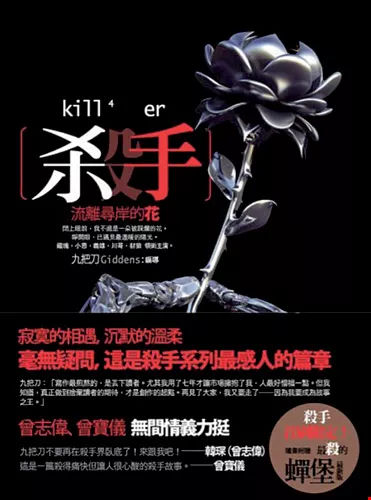
Giddens Ko is Taiwan’s best-selling author—and that’s no exaggeration! For five straight years, his books stood at the top of bestseller lists year in and year out. It was only in 2011 that he yielded the top spot to someone else, because he was too busy exploring another genre: filmmaking.
The film You Are the Apple of My Eye, which he directed (and for which he wrote the screenplay, based on an earlier novel), was structured around the themes of “love” and “youth.” It also served as a vehicle for him to broadcast his—as he often puts it—“passionate pursuit of my silver-screen dream.” The film did incredibly well in Taiwan, with box-office returns of NT$460 million, as well as in Hong Kong, where, despite the slump in the local film industry, Apple earned HK$60 million. Ko is relentlessly self-promoting, vulgar, and deliberately provocative and combative online, so how has he been able to get so successful?
For the 2011 Golden Horse Awards, the film You Are the Apple of My Eye was nominated in four categories: best director, best actress, best newcomer, and best title song. Although when the envelopes were opened in November, it won only “best newcomer,” Giddens Ko still stole the media limelight. As the program hosts said, “That’s just the way life is, Giddens: you can have fame or honor but not both!”
Giddens Ko maintained his usual arrogant and insouciant expression, declaring: “Before the film opened in theaters, I expected the box office would be NT$500 million.”
He hadn’t mentioned this figure to anyone before the film hit it big. It’s not that he was afraid of being laughed at, he just didn’t want the media to focus all its attention on his “big head.” He admits, “I already had a big head even before I got famous. People have said that I’m cocky and have a big mouth, but every single thing I’ve talked about I’ve done, so what right do people have to call me pretentious or arrogant?”
It has now been more than three months since the film opened, but it is still much talked about. On the day we visit Ko, he has seven interviews lined up, and he patiently answers the same questions over and over again.
“Making a film requires the skills and dedication of a large number of people, as well as some providential intervention. It can’t be done just by a single person relying on their own efforts. Therefore I’m extremely, extremely modest about the making of this film.” In contrast to his public image—taking his pants off while lecturing at a girls’ high school, ruthless take-no-prisoners wars of words over the Internet—he is warm and polite during our interview, and does not lose his temper when asked prickly questions.

Giddens Ko’s pen name, Jiu Ba Dao, which means “Nine Knives,” comes from a song that he wrote in high school: “Nine knives! / Polish them up and they will glitter and shine / Glitter and shine!” Now 33, he comes from Changhua, where his parents own a pharmacy; he is the second of three brothers. He began writing fiction in 1999, producing 300,000 characters in a year, which he posted on the Internet. The response was chilly, but he was having a good time anyway, and he decided then and there that he wanted to keep on writing.
He once boasted that within 20 years he would be the king of storytellers, right up there in the same league as the legendary martial arts novelist Louis Cha. “But Louis Cha only has written martial arts novels and historical novels,” Ko adds, “and writers like Gu Long and Ni Kuang don’t write in as many genres as I do. I am the best-selling writer in Hong Kong and Taiwan, not one of the best.” He doesn’t come out with the whole self-effacing song and dance of leaving the honors to others, and doesn’t hesitate in the least to blow his own horn, making him very different from the typical writer or director.
Though he thinks quite highly of himself, he also is able to laugh at himself, for example about his height: “All those years ago I didn’t dare to tell Shen Jiayi that I was in love with her, and my biggest hang-up was that I was three centimeters shorter than her.” (Shen Jiayi is the real-life girl who provided the model for the female lead in Apple.) Showing us a picture of himself with his jaw stuck out looking very full of himself indeed, with more than 50 books stacked up next to him, reaching more than halfway to his head, he says as he looks at it: “What a conceited little $&%#&!” He willingly plays the fool to get laughs, not worried in the least about being embarrassed, and he unreservedly bares his shortcomings, so that overall he comes across as frank and engaging.
After the Golden Horse Awards, Giddens and Ko Chen-tung, the young newcomer who played the male lead in Apple, ran into Hong Kong superstar Andy Lau in the men’s room, and Giddens wrote on his blog: “I was really nagging at Ko Chen-tung, telling him to hurry up and finish pissing—he was taking so long!—when Lau walked in. He patted me on the shoulder, smiled, and said [referring to Ko’s failure to win best director] ‘It doesn’t matter, stick with it! I also waited a lot of years!’ I was freaking out, and I looked over at Ko Chen-tung, who was still peeing, and yelled out: ‘Andy Lau just told me to hang in there! He just up and spoke to me on his own! Ko Chen-tung, you saw it! You’re a witness!’”
Even when giving lectures or speeches, he just puts his thoughts right out there, peppering his remarks with four-letter words and vulgar expressions.
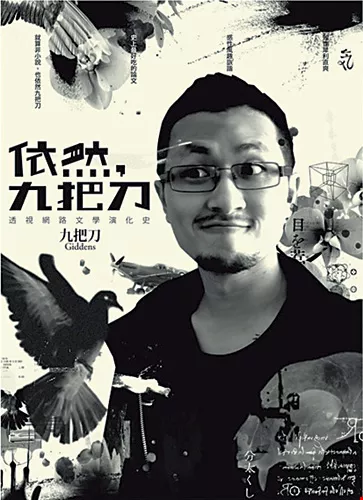
Giddens Ko is often invited to speak on themes like passion, struggle, and chasing your dreams. Even when the listeners are high-school or university students, he doesn’t even think about putting a nice face on things, saying of himself: “I have decided to live a life in which all my flaws are hung out there for everyone to see, and I hope that what you leave with after seeing me is a sense of being encouraged to be yourself.”
He has done it his way, making himself happy, yet somehow has won widespread recognition from society. For this reason he is especially well liked by the students at the country’s most famous schools, who often feel repressed by the competitive and conformist educational system. Lecturing at National Hsinchu University of Education, he felt ill before he went on, and when he reached the podium just said straight out, “I’m very nervous, because there’s something wrong with my stomach, and I feel like I’m going to get the runs any second now!” The people in the packed hall, who all aspire to be teachers, laughed their heads off like preschoolers.
Once a group of high-school teachers collectively walked out on him after 15 minutes because they didn’t like his crude language. Looking back on that event, he isn’t at all apologetic: “It’s ridiculous to think that their students are going to be misguided just by hearing a few off-color expressions!” On the contrary, he thinks that straight talk is just what students need. Recently there was a scandal in which a number of school principals took kickbacks from school lunch contractors, and Ko posted a message on Plurk in which he said: “Let’s face it, what’s so great about you people that gives you the right to be criticizing what I say all the time, while behind closed doors you are doing things that are so far out of line it’s ludicrous!? What’s better, that children be taught by someone like me to be frank, aboveboard, and honest, or by bastards like you who are well-mannered on the surface, but whose words don’t mean a thing?”
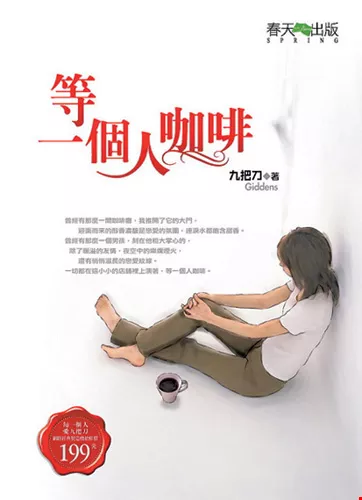
Ko has always been a big movie buff, but he never really dreamt he would be a director—he always thought that what he could do would be scriptwriting. “When I was small I wanted to be a cartoonist. When I was in primary school I used the math homework notebooks [which are printed with six boxes to a page] to draw six-frame comics; those were my earliest storyboards.” He loves to read comic books, and he excels at writing in such a way that the reader can readily visualize the story.
In 2004, a film director asked him to write a script. “Before that I had never even seen what a script looks like! So I borrowed one and looked it over, and three days later I completed the first movie script of my life, for which I got about US$1000.” This was the first time he had some spillover into the margins of the film industry.
In 2005, Ko attended a wedding at which he watched from the sidelines as the girl he had longed for back in high school, Shen Jiayi, married someone else. Besides just being happy for the bride, he also published the novel The Girl We All Wanted All Those Years Ago, preserving a record of what it was like for all of them to be young and in love back in the day. It was this book that would become—with a sharply revised surprise ending—You Are the Apple of My Eye.
Once Ko had made a name for himself as an author, film companies came knocking at the door, and he was asked to make a short film that, along with three others made by novice directors, would be released as a feature film. His university studies were unrelated to film, he had never been a log keeper or an assistant director, never touched a camera, never taken acting lessons, never had any experience with editing, in fact never even been on a set as an observer. But he figured, who gives a damn? What a rush it would be to turn one of his writings into a film!
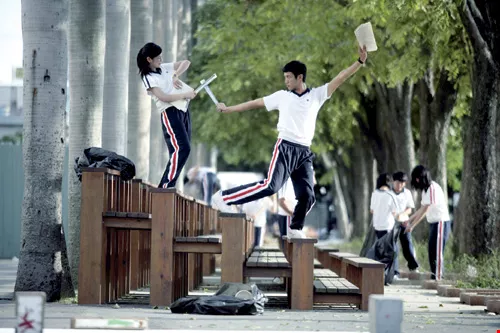
Ko’s film You Are the Apple of My Eye, based on a semi-autobiographical novel he wrote, was both a critical and commercial success. It put the topic of young love onto society’s front burner.
In 2008, the full-length feature, entitled L-O-V-E, was released. In making his segment, Ko got directorial experience of exactly 26 scenes over four days. Despite this, the segment, only a dozen or so minutes long, was praised for its coherent structure and engaging story, giving Ko an enormous boost in confidence.
The following year, a Hong Kong director approached him to talk about turning The Girl We All Wanted All Those Years Ago into a film. But they couldn’t agree on a price. “This is the best thing I’ve ever written, and it’s my favorite of all the books I’ve done.” Although the deal fell through when he and the director remained several hundred thousand NT dollars apart on the price, the whole episode lit a fire inside: “Why not make the movie myself?” His agent, Angie Chai, helped out by finding about NT$20 million from investors, and encouraged Ko to go ahead.
Then Giddens began to tell everyone—on his blog, at more than 100 lectures, via the Internet and through the media—that he was going to make this film. A lot of people began wondering, “Could it be that he has run out of steam with his writing, so he hasn’t got much else to do but switch over to making movies?” Others were less charitable: “Is this some kind of joke? Looks like anybody can be a director these days!”
Little wonder that people thought the project was doomed. Ko had never directed a feature film, his two executive producers had never done anything more than music videos, ads, or experimental films, and the whole cast was a bunch of unknowns—in fact, the male lead had never acted in a film before. What’s more, they had no cinematographer who had ever made a movie before, this was the very first film for their production company, and nobody in the whole group was over 38 years of age.
“None of us had anything to lose,” explains Ko, “we just decided to step up and do it, and before us all we saw was unlimited possibilities.”
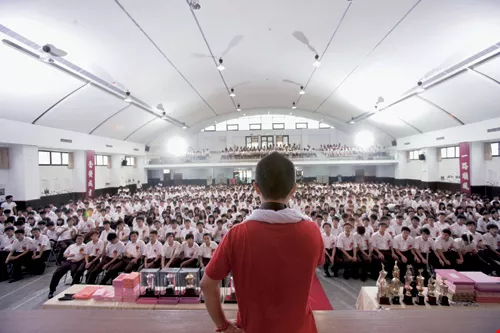
Ko (center of photo at left) was immature and puerile in high school. After becoming famous he returned to his alma mater (oposite page) to share his frivolous youth experiences with the students.
Even before filming began, some investors took one look at the production staff and ran away as fast as their legs could carry them; more than NT$10 million of funding was pulled out. Ko decided to take out his own savings and plow ahead. Although it never got as bad as for some other directors, who have mortgaged their homes and courted bankruptcy, the amounts involved were by no means trivial to him. “You can’t make a life plan around writing bestsellers. The income for professional writers can disappear like dust in the wind. That I even had any money at all set aside for my old age was already a real luxury.” But if he had decided to keep his own money in the bank and postpone production, the film might never have been made.
Of course he could have just gone back to writing fiction and rolling in the dough as before, “But I was always convinced that the film would be a success, because the script was just fantastic, and I have super-willpower.”
Still, it was still a huge gamble. Once he went to the baseball batting cages to let off some steam, and silently prayed: “Lord, if the movie will be a success, let me get ten base hits.” It was a rainy day, with poor visibility, but everything he swung at fell in for a hit, and in his delight he promised: “I will make this movie with seriousness of purpose, with a positive and generous attitude, and with humility. If I do, could you give me a box office of NT$500 million? If you agree, let me get five more hits.”
To save time and capital, he spent 10 months revising the script more than 50 times, trying to refine it so that filming could be completed in 45 days. “We didn’t miss a single day! In two months we didn’t hit a single typhoon, and there were rainbows both on the day we started filming and when we wrapped up. God was one of the main investors in this film!”
Ko could also tap into another resource—the Internet friends he had accumulated over the years. He designed a series of T-shirts to raise money, and as the filming progressed he introduced the actors and behind-the-scenes scuttlebutt, put out want ads searching for extras, and sought out sponsors and enterprises willing to cooperate with the venture. On the set, he explained the story, set the scenes, and provided the emotional tones for the actors, while he left the camera work and acting entirely in the hands of the executive director.
Film critic Dennis Chan observes, “You can see that Ko is very intelligent. He knows how to stick to his guns and get what he wants, but for everything else he trusts the professionals. Half the success of this film is due to the casting of the lead roles, and both the male and female leads give very natural performances. The supporting roles are also aptly cast and acted, and the editing and pacing are so smooth you can’t tell the filmmaker was a novice.”

The earliest previews of the film deliberately focused on the masturbation scenes, which drew negative reactions. Ko immediately apologized and changed the clips. He wanted very much to please his audience, and couldn’t care less if his film was criticized for “pandering to the crowd.” As he says, “After all, films are made for people to come to see them, right?”
After the film opened in theaters, he received over a thousand e-mails that started or ended with, “Thanks, Nine Knives!” This made him very happy to know that the film was not only a way for him to make up for the regrettable mistakes of his own past, but also provided solace to a lot of young men and women who themselves had run aground in the sea of love.
Since the very start of his writing career, Ko has taken the desires of his readers into account, and has carefully “managed” his audience. “I’ve never thrown a single letter away, going back to the very first handwritten letter I ever got from a reader, and I’ve read each one thoroughly before carefully storing it away.”
Why? “I’m an incredibly lucky person, so if people go to all the trouble of sending me a letter, keeping it is the least I can do.” You can’t forget where you came from once you become famous. You have to retain your sense of gratitude.
Before hitting it big, he wrote 3000–5000 characters a day, and once produced a new book each month for 14 straight months. The same year in which he made Apple, he also wrote five books, gave 70 lectures or speeches, and completed two scripts for advertisements.
The persona of dreamy starving artist holds no appeal for Ko. He is a practical, self-disciplined person who is very particular about keeping a sense of balance in life. “I don’t want to get so carried away that my Mom will get worried.” Though he is often seen by “adults” (his term) as rebellious, deviant, and provocative just to get attention, he is in fact very pragmatic.

Very smart and very confident, Ko started out as an Internet writer, then got his books published, and now has turned into a successful film director.
Critics have used terms like “honest,” “true to oneself,” and “unpretentious” in describing Apple. They have generally given a big thumbs-up to the results of this first-time attempt at making a narrative film.
Film reviewer Li Guangjue offered the following analysis: “It’s a classic feel-good film. A group of male classmates all have a crush on the same girl, but they also keep their friendship in mind. It’s a good date movie. There are few new Hollywood films during summer vacation, Ko has a base of fans for his books, they did a good job with post-production marketing and theater placement, and there was good buzz—these are the reasons it has turned into a prominent film.”
Because the film is based on real events, real people, and the things these people actually felt at the time, there are some things that Ko has insisted the film should include that may not be readily understandable for others. For example, he was willing to spend the extra travel money so that filming could be done at the school he actually attended in Changhua, so that everything right down to the school uniforms would be just the way it is in his memory.
“I was reconstructing my life history, like going back in time on a time machine, to make up for things that I regret about the past—like a very extravagant kind of psychotherapy.”
Dennis Chan says: “The story is not that tightly knit. It’s basically a linked-up series of funny or touching vignettes, some of which are over the top and some of which are embarrassing to watch, but on the whole the film works quite well, especially considering that a lot of the scenes are things that no one has ever tried to put on film before. The film doesn’t have any real depth, but that doesn’t mean that the surface is not worth watching.”
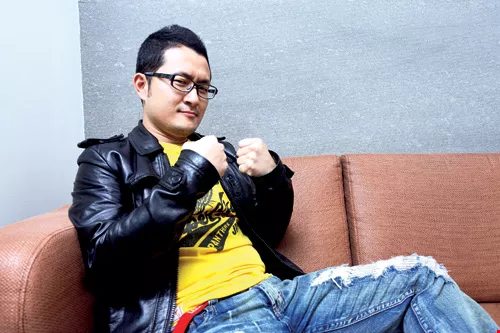
Giddens Ko, pictured here along with some of his books, is an eccentric character. Though some are offended by him, he has an enormous and loyal following for everything he puts out. He seems to be constantly doing something provocative, something out of the ordinary, even when it comes to an action as simple as a photograph.
In the film, Shen Jiayi finally rejects Ko because he is “too immature.” She is far from the only one to think so. Film critic Regina Ho admits: “He’s so childish I can’t identify with him at all.”
Kuo Li-hsin, associate professor at National Chengchi University’s Department of Radio and Television, doesn’t mince words when he describes the film as self-absorbed and self-indulgent, as reflecting a refusal to enter the adult world and a desire to return to a childlike state. “You can reject the problems and values of adult society as much as you like, but showing some kids yelling back at the school disciplinary officer or being obsessed with some girl in your class is a pretty limited display of rebellion.”
Giddens Ko himself had hesitations about the story: “The subject of youth is very revealing, very incisive. It requires the director to come right out and declare what kind of adolescence you had. A lot of directors were artsy kids; they probably spent a lot of their teen years thinking about stuff, and faced a lot more gender taboos and painful moments than I did, so their films look like they have a lot of depth. But a profound kind of adolescence is something that few people experience. I passed my youth happily and frivolously, just goofing around most of the time, and my only regret was that Shen Jiayi and me never became a couple. As for what I wanted to become when I grew up, or what I wanted to do about the state of the world, I didn’t think about that at all.”
Apple is simply a story based on how Ko grew up, hung on the nail of his infatuation with the model-student girl in the class. “I only started to study hard just to be doing what she was doing, and thought that whatever university she went to, I would also go to, and everything would be alright as long as I could stay close to her.” But they went to different colleges after all, and Ko began to spend all his time reading comics, going to movies, and reading all different kinds of books. He began finding himself, groping his way toward a road that would be right for him. Since then, ever more interesting things have appeared along this road—writing, publishing, lecturing, filmmaking—and he has advanced ebulliently toward success and has reveled in the taste of popularity.
During our interview, Ko reveals that after he finished shooting the movie, the real-life Shen Jiayi told him: “If you had just let me know then that you wanted to be with me, I would have said yes.” There would have been no regrets. As he talks on, a smile comes to Ko’s face: “It’s not that I don’t want to grow up, it’s just that my teenage years were so great.”
So does Ko plan to make another film in the future? He says that he is already working up another story, but doesn’t simply want to repeat the same “winning formula” and mechanically reproduce Apple. “I don’t want to make another movie just for the box office. I always want to have that same feeling like it’s the first time—the same sense of purpose and same emotions I felt making my first film.”
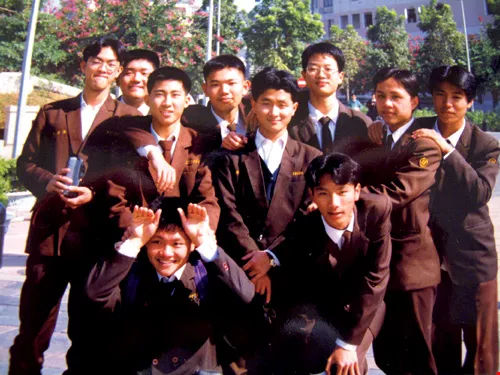
Ko (center of photo at left) was immature and puerile in high school. After becoming famous he returned to his alma mater (oposite page) to share his frivolous youth experiences with the students.
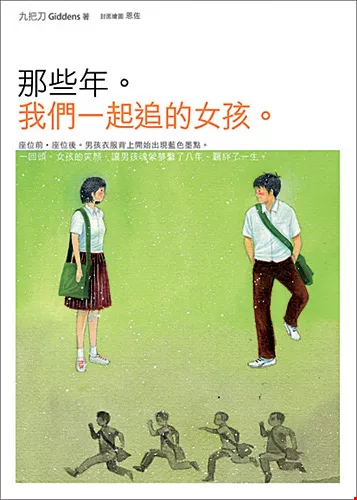
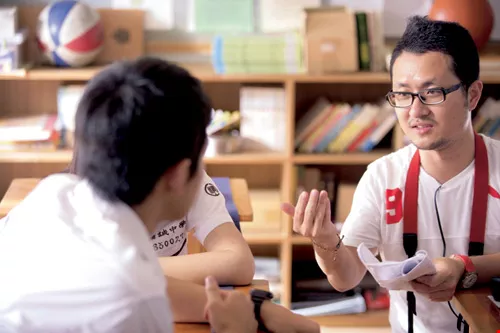
Very smart and very confident, Ko started out as an Internet writer, then got his books published, and now has turned into a successful film director.
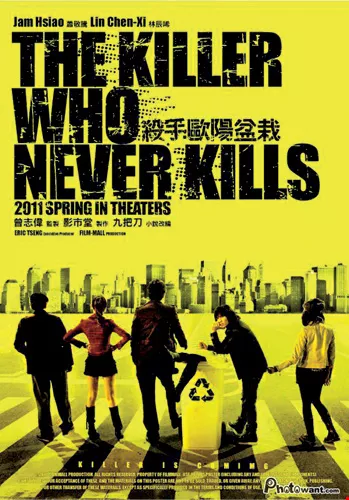


Very smart and very confident, Ko started out as an Internet writer, then got his books published, and now has turned into a successful film director.
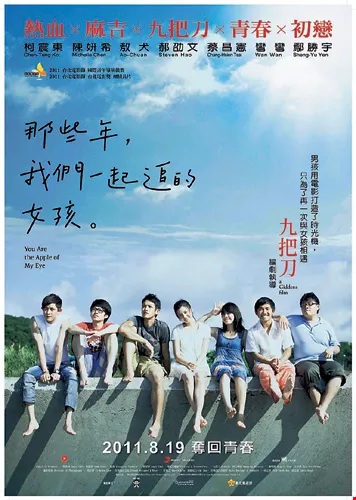
Ko’s film You Are the Apple of My Eye, based on a semi-autobiographical novel he wrote, was both a critical and commercial success. It put the topic of young love onto society’s front burner.

@List.jpg?w=522&h=410&mode=crop&format=webp&quality=80)

@List.jpg?w=522&h=410&mode=crop&format=webp&quality=80)


