The Holiday Season in Italy
Hsu Fen-yuh / photos Hsu Fen-yuh / tr. by Jonathan Barnard
February 2015


In Italy the year-end holidays don’t come to a close until January 6, after Epiphany Eve or La Befana (the witch’s festival). The holiday season in Italy is a lot like the period around Chinese New Year in Taiwan, with Christmas and New Year’s serving as high points of celebration within a longer holiday season.
Siena is a tourist attraction and also a college town. On December 23, the cold is typically oppressive, so that few travelers are visible in the city. One sees instead numerous students pulling luggage and talking to their parents on their cell phones about when they are arriving home. They rush to train and bus stations. It’s absolutely essential for families to come together before December 25. And if people have no family, or circumstances prevent their return home, then local friends or relatives will invite them over. On Christmas, no one could be so heartless as to let someone pass the day alone.... In spirit, isn’t it a lot like Chinese New Year?
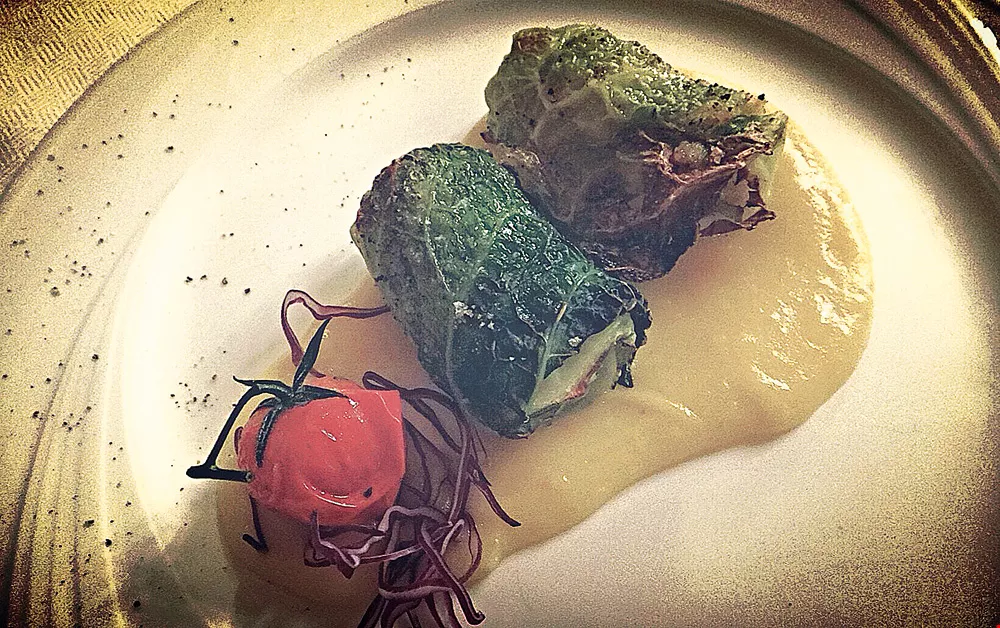
As a rule, Italian Christmas meals have an appetizer, two main courses and finally a dessert.
Western nations all celebrate Christmas. Many of the customs surrounding the holiday are similar, but there are also national and ethnic differences. In Italy the holiday season begins with the Feast of the Immaculate Conception on December 8. On this day some cities celebrate by parading statues of Mary through the streets. Importantly, Italians on this day will tidy up their home living environments, while hanging up their Christmas decorations and setting out their trees. The day is a lot like the “little New Year’s” celebrated on the 23rd day of the 12th lunar month in Taiwan. Plazas, streets and shop display windows begin to look a lot like Christmas. And as an expression of thanksgiving for what the year has brought, people turn their attention to selecting gifts for people close to them.
Italians are epicures. As stores deck themselves with all manner of decorations and Christmas trees to celebrate the holidays, friends and family also come together in groups small and large for celebratory meals. Cooks painstakingly put together traditional meals of many courses, as gourmands at the table open one bottle after another of fine wine or bubbly. By Christmas Eve, people have made their long journeys home, and families are reunited. Christmas is a religious holiday, and that night all is quiet and calm. It’s no crazy party! Family and friends gather together, and at midnight they eat cakes and pastries prepared by the host. They raise their glasses and say, “Merry Christmas!” Of course, they also exchange presents and play cards.
At these gatherings Babbo Natale (Father Christmas) will surely bring gifts to the innocent little ones, who truly believe that Santa received the letters they sent several days before and then assembled their gifts.
As midnight nears, the pious believers have already gathered together in the churches. As a non-believer, I rarely go to church and instead sit at the television to watch the Pope preside over a midnight mass. This year the lights both inside and outside of St. Peter’s Basilica were splendid as an orchestra led by Manfred Honeck, conductor of the Pittsburgh Symphony, played Mozart’s Great Mass in C Minor. The music gives non-believers a chance to partake in the believers’ joy over the “birth of the savior.” Pope Francis emphasized that God is full of love for the people of the world and accepts us no matter how poor or insignificant.... He then made another call for peace and encouraged those who had gathered to maintain a gentle heart in the face of adversity. Finally he said prayers in various languages.
After midnight, my mother-in-law uncovered Baby Jesus in the manger of the family’s nativity scene, kindly announcing his arrival. And then in anticipation of the big Christmas meal the next day, all the mothers and housewives hurriedly washed up and went to bed. Make no mistake: preparing a Christmas meal for guests requires a good night’s sleep!
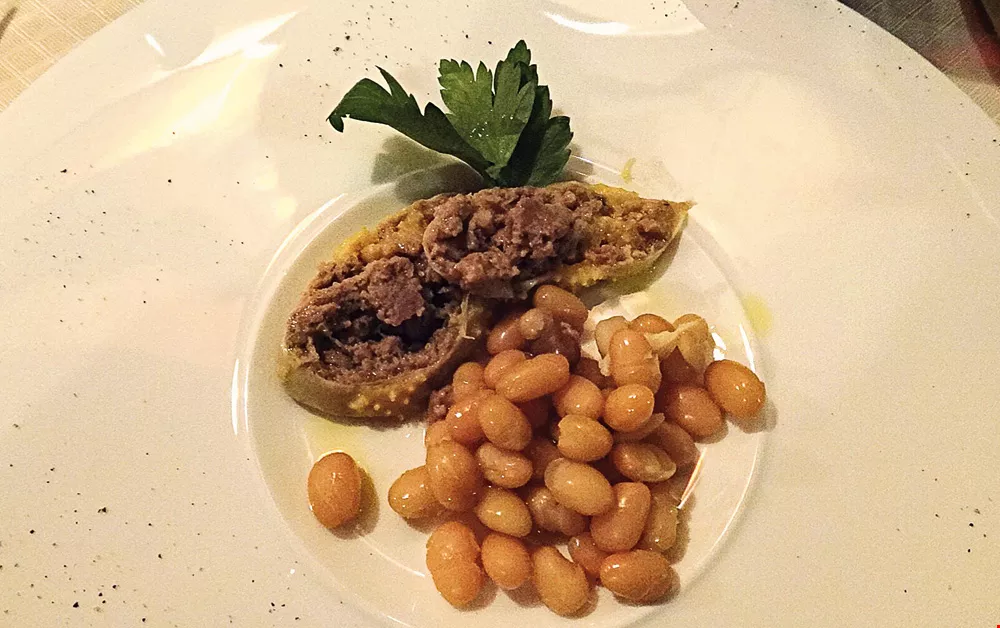
As a rule, Italian Christmas meals have an appetizer, two main courses and finally a dessert.
In Italy, the big Christmas meal occurs at noon on the 25th. Grown children often bring their own offspring to the grandparents’ place to spend the holiday. It’s a lot like the big family dinners that take place in Taiwan on Lunar New Year’s Eve! For fear that they won’t be able to move fast enough the next day, many housewives set their tables the night before. All Italian families have a tablecloth embroidered with festive Christmas red or holly, as well as tableware decorated with snowy scenes or reindeer. The set may only get used once a year, but it lasts a lifetime.
Having lived in Italy for 20 years, I’ve eaten almost every Christmas meal, with only a few exceptions, at my mother-in-law’s. They were traditional Tuscan Christmas meals, and they never wandered too far from script: crostini with a variety of toppings, the best known of which is chicken liver pâté; vol-au-vents filled with a mayonnaise-based salad; or tartine de pesce, which is toasted bread covered with a seafood aspic. This course is followed by tortellini in brodo, which are Italian-style dumplings in a clear beef stock soup. The soup is delicious and the tortellini are slightly firm to the bite (at least by the standards of Chinese xiao long bao). Just as tasty as Chinese dumplings, they are essential on Christmas. Italians really love this dish.
The main course is then brought to the table. My mother-in-law roasts some squab or Florentine steak, and everyone eats some beef, pig’s knuckle, beef tongue, or capon that has been stewed with onions, carrots, celery, tomatoes, parsley and so forth. Then there are roasted vegetables, baked potatoes, and marinated olives, wild mushrooms and pearl onions. There’s a garden salad that no one has any room to eat. At some point my father-in-law pulls out an excellent bottle of wine to go with the meal. Finally there’s got to be a dessert! By now people have been eating the Christmas feast for several hours and their stomachs are fit to burst.
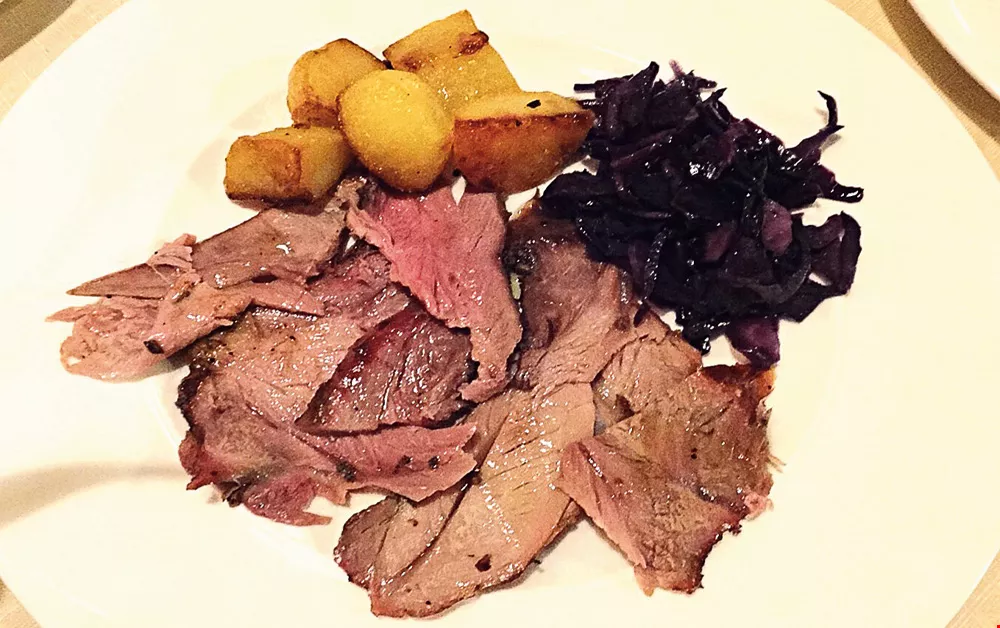
As a rule, Italian Christmas meals have an appetizer, two main courses and finally a dessert.
After the Christmas midday meal is finished, it is of course time to open the presents. This reminds me of my childhood, of how my parents would distribute red envelopes after the family dinner on Chinese New Year’s Eve. Still, thinking what gifts to give takes a lot of time, and people always fear they’ll give something the recipient won’t like. So now some Italians are beginning to give red envelopes of cash too.
Apart from what is consumed at the Christmas feast, there are various other foods associated with the holidays. Among these are the sweets panettone and torroncino, as well as pastries and cakes of every Italian locale. And don’t forget the chocolates. Eating panettone brings to mind Taiwan’s New Year’s cakes, whereas torroncino is quite like Taiwan’s nougat candy.
The day after Christmas, the stores remain closed for St. Stephen’s Day. But the families that had gathered for Christmas now often split up, as many go traveling. Young parents may take their children on ski trips to the Alps, while grandparents might take their grandchildren on cruises in the Mediterranean. Some people go on sightseeing trips to European cities, and others go abroad—to Tunisia in North Africa or even to destinations as far away as Southeast Asia. Those travelers won’t be back home until the following calendar year!
I enjoy traveling to cities. One year, after the family’s Christmas meal, I boarded an overnight bus to Vienna. All European cities get decked up with Christmas lights and decorations. Even if the streets are lined with piles of snow, the cafés are full of people. A cup of cappuccino always provides some comfort on a cold winter’s day.
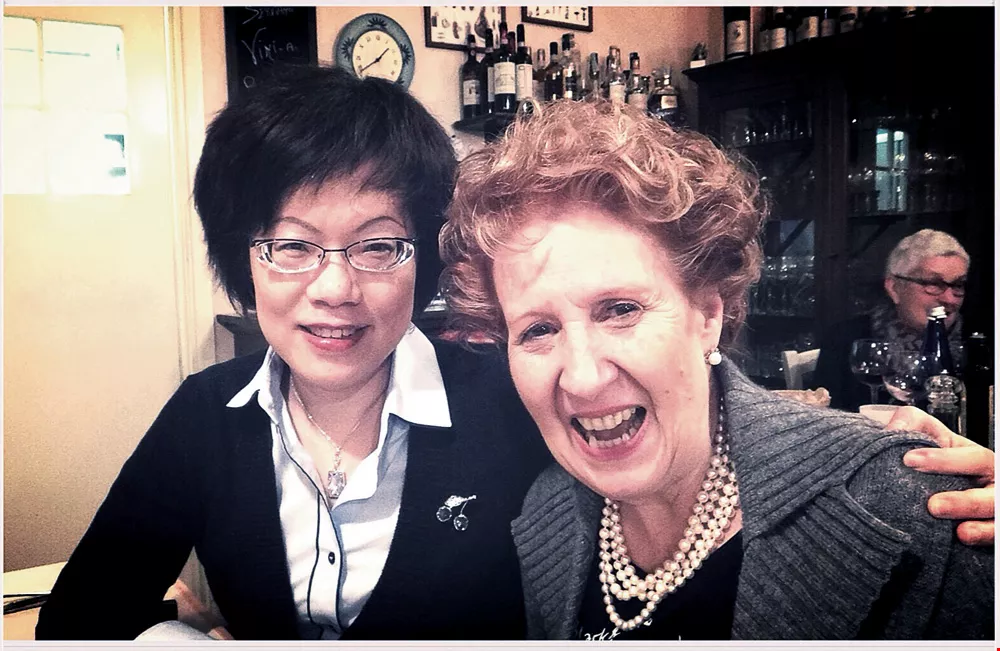
Hsu Fen-yuh learned Italian New Year’s customs from her mother-in-law (right).
Finally, after all the excited anticipation, the 365th day of the year arrives. On this day, no matter where Italians find themselves, many hope to enjoy another splendid feast: the “Cenone di Capodanno.” This elaborate dinner starts on New Year’s Eve and may not finish until after midnight, thus straddling two years.
During the holiday period restaurants offer meals in a range of prices from €35–150. Many gluttons regularly eat out on this night, both to enjoy the fine food and also perhaps the end-of-year excitement created in restaurants. Others invite friends over to celebrate the countdown to the New Year in their homes.
Whether at home or in a restaurant, this end-of-year meal typically runs from about eight or nine until midnight. In preparing the numerous courses for this meal, cooks are not nearly as restrained by tradition as at Christmas. But pig’s knuckle and lentils are de rigueur, and one must also eat bunches of grapes, which symbolize wealth and abundance. Italian women dress up, not sparing the bling-bling even when eating at home. They look as colorful and well ornamented as their Christmas trees. Finally, everyone fills their glasses with sparkling wine and counts down: “5, 4, 3, 2, 1—Happy New Year!” Over the 2014 holiday season, Italians consumed 60 million bottles of sparkling wine.
Needless to say, the end of the year always brings the dawning of a new day, and January 1 has its own program of events. Early in the morning of January 1 this year, the Pope spoke from a balcony facing St. Peter’s Square. The skies over Rome were clear and blue, and the Pontiff prayed for Mary’s blessings: “May this gentle and loving Mother obtain for us the Lord’s blessing upon the entire human family.”
Joyously welcoming the New YearSince moving to Italy 20 years ago, every year I’ve enjoyed the New Year’s concert at the Golden Hall in Vienna, which this year was broadcast to 92 nations around the world, including newcomers India and the Ukraine. Some 30,000 cut flowers were used to decorate the hall this year!
Another concert—just as exquisite, though smaller—is held in the Teatro la Fenice (Phoenix Hall) in Venice. Reconstructed and reopened in 2004 after being destroyed by fire, the hall also holds a 45-minute concert on New Year’s Eve, featuring orchestral and operatic works, solo singers and choruses. Though the space is not nearly as expansive as the Golden Hall, its carved pillars, gold-framed paintings, splendor and elegance make it a site that should not be missed by visitors to Venice. I have serenely enjoyed two concerts here. Of course, for New Year’s the mood should be upbeat. As he conducts Johann Strauss I’s “Radetzky March” in the Golden Hall, the conductor turns to face the audience, who clap along with the beat. Boisterous concerts of this ilk have become a New Year’s tradition, and not just in Vienna. In Venice Verdi’s lively “Libiamo ne’ lieti calici” rings out as people drink champagne in celebration.
On January 2, people go back to work and school, and the shops open. Everything returns to normal. Pulling their luggage, Siena’s college students return to campus. All that remains of the holiday season is the celebration of La Befana (the witch) on Epiphany Eve (the night of January 5). What does La Befana do? She delivers candy to those who have been good and chunks of coal to those who have been naughty! The children all hang socks from the headboards of their beds and believe that La Befana actually delivers the candy. Well, how good have you been? Once the candy or coal is deposited, all of the holidays have been swept away, as if by a witch with her broomstick....
@List.jpg?w=522&h=410&mode=crop&format=webp&quality=80)

@List.jpg?w=522&h=410&mode=crop&format=webp&quality=80)
@List.jpg?w=522&h=410&mode=crop&format=webp&quality=80)


