Lighting the Road Home
The Healing Voice of Zhan Yawen
Kuo Li-chuan / photos courtesy of Yawen Music Studio / tr. by Geoff Hegarty and Sophia Chen
February 2013


Singer-songwriter Zhan Yawen, who records exclusively in her native Taiwanese language, has gained the title “Diva of the South.” Despite the fact that during her entire 26-year career, she has rarely actively marketed her music nor sought television appearances, Zhan’s songs have become an integral part of the life of central and southern Taiwan.
Zhan has a number of “special” fans. Over the years, she has worked as a volunteer counselor visiting prisons across Taiwan, where her deep, distinctive voice has found a role as a powerful healing tool for many inmates of those institutions. A number, in fact, have discovered in her music the strength to begin anew.
Zhan Yawen was the first singing star to be recognized by the Ministry of Justice as a volunteer social worker for prisoners.
Walking slowly towards the chronic diseases ward at a hospital in Shalu District, Taichung City, Zhan is visiting an elderly patient who is in a persistent vegetative state after a car accident. At the bedside, she is unable to restrain her tears. She calls softly: “Papa Chen, Papa Chen, your son asked me to come to see you.” Zhan holds the patient’s hand firmly, hoping to communicate the imprisoned young man’s feelings to his father.
Zhan softly croons one of her popular songs, “Homesick One,” to the patient: “Homesick one / With sad heart / Tears every night / Oh hometown moon / Please light the way home.” The lyrics portray the remorse of a son who has strayed.
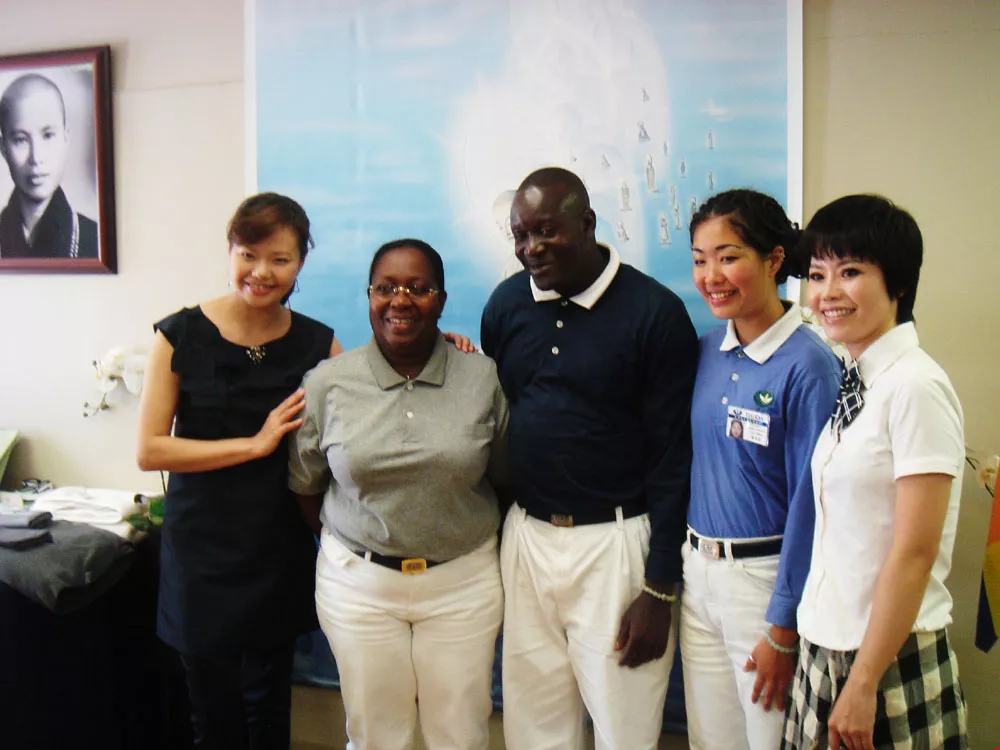
In 2010, Zhan (right) attended a benefit organized by the Tzu Chi Foundation’s US branch to raise money for charity.
Zhan hosted a radio program and over a period of years corresponded with a prisoner named Chen. Mr. Chen was very concerned about his mother’s psychological health, as she was in the distressing situation of having a seriously ill husband and a son in prison. So Zhan decided to do what she could to help. She visited the father in hospital, and consoled his mother with news of Chen’s repentance, and the fact that he had obtained his plumber and electrician license through study in prison. She hoped Chen’s mother would live to see her son released from prison and keen to start a new life.
“Once a terminally ill patient asked me to sing his favorite Taiwanese song, ‘Hope You Return Soon,’ before his life ended. I watched him as he peacefully closed his eyes, and realized that music not only heals people’s hearts, but also provides enormous comfort to those facing the end.”
Since then, creating music and singing have brought the happiest and most meaningful moments in Zhan’s life. And this realization has led her to become a singing volunteer, fulfilling her sense of social responsibility by bringing her music to the prison population.
In 2007, after Zhan had ended her eight-year marriage, she took a trip to Penghu to allay her distress. On disembarking from the ferry in Hujing Island after the trip from Magong City, she heard the crackling of firecrackers; it sounded like there was some sort of celebration in progress—perhaps someone was getting married.
To her surprise, however, the 100-odd residents of this little island had all come to the wharf to welcome her. They even had a chair for her to stand on so everyone could see her clearly. Apparently the owner of the ferry company had informed the village of Zhan’s pending arrival as the ferry departed Magong.
Among the crowds, a woman ex-offender to whom Zhan had given counseling in jail broke into tears when Zhan appeared. She had always remembered the advice Zhan offered her: “Life is a play for which you need to write your own script.” On her release, she had come to live in Hujing, not trying to hide her past. But the locals accepted her warmly—in fact, she found a partner there and started a new life.
A mixture of surprise and emotion filled Zhan’s heart, like the surge of waves on the shore. Deeply impressed by the simplicity and loving attitude of the local people, she suddenly became inspired. Zhan recalled the image of her hardworking father, the ups and downs of her music career, and the many offenders to whom she had offered counseling, many of whom had later found the courage to begin their lives anew.
Under the Penghu sea breeze, “The Road of Life” was created: “Hard work is the capital for people away from home / Determination, the only feeling to trust.”

In 2012, Zhan organized the True Love 100 Charity Concert, donating the proceeds to charity. The photo shows Zhan and other performers at the concert.
Born in 1967 in Changhua County, Zhan came from a working-class family. At the age when a TV set and stereo were becoming essential equipment in almost every home, their family couldn’t afford either in their rented accommodation, so Zhan’s father taught both her and her sister singing.
After Zhan graduated from junior high school, the family was experiencing economic difficulties more serious than usual, so as the eldest daughter, Zhan had to help with supporting the family. She worked in a factory, and later on took on study at Shinmin Commercial and Industrial Vocational High School in Taichung while still working. She was interested in becoming a nurse, so after graduation she found a job as a nursing assistant.
In 1987, a producer at Yalee Records discovered Zhan, along with her sister, who had just won a singing contest, and decided to promote them. The company gave them a stage name—the Sakura Sisters—and released an album of the same name. A number of well-known old Taiwanese pop songs were reinterpreted by the sisters’ soft, affectionate, yet bold and lively voices. These versions became classics for the working class, providing comfort in the many hard times.
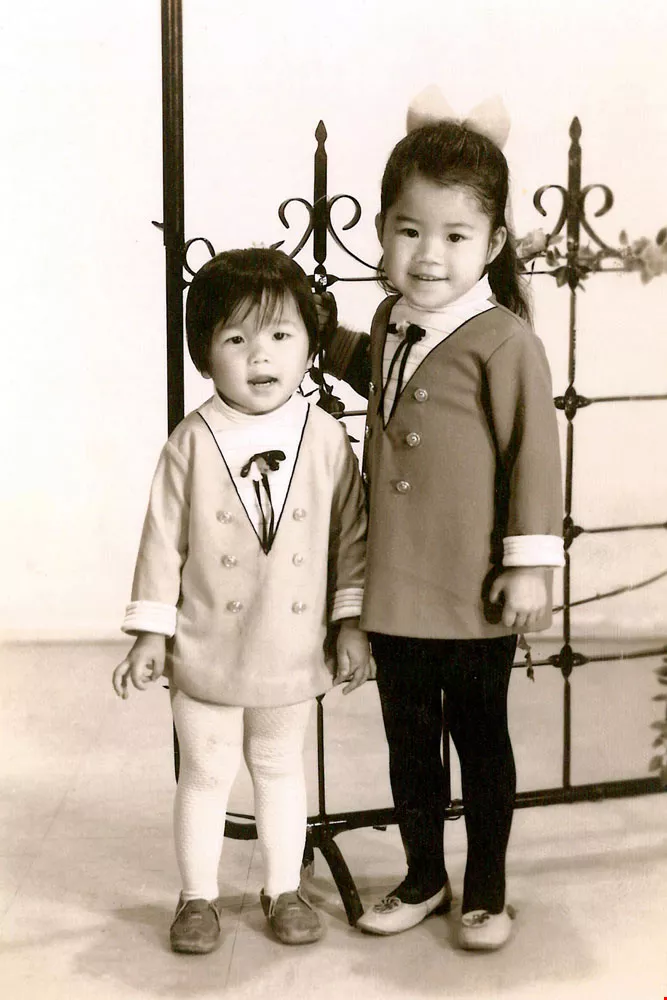
Zhan Yawen (right) and her younger sister have enjoyed singing together since childhood. They released an album called The Sakura Sisters, which became a hit across Taiwan.
In 1991, Zhan released her debut solo album You Break My Heart. Being a lover of great lyrics, Zhan finally had the opportunity to show her writing talent as she wrote all the lyrics on the album—which sold 300,000 copies. If the number of pirated copies were added, the actual figure could well be over a million.
Recording industry experts estimate that more than 70% of the population in central and southern Taiwan have at least one of Zhan’s albums. They became so popular in fact that Zhan became known as “the night market’s Jody Chiang.”
As her popularity surged, fans started writing to her to share their lives. Among them, a fan with terminal cancer expressed his wish to see his ex-girlfriend again, and to hear a song that could express his regrets before he died. He and his girlfriend used to regularly meet at the Puzi Bridge in Chiayi County, but they split up due to a misunderstanding. Zhan used the couple’s story to write “Puzi Bridge Memories.” Writing the lyric brought home to her the fact that musical creativity blossoms when it is addressing real-life stories and emotions.
Zhan married in 1999. But in 2001 she released an album titled Thanks for Your Heartlessness, and then wrote and sang nothing for three years. “The driving force for my work had gone!”

Walking on “the road of life,” Zhan uses her voice to encourage herself as well as others.
During these few years, Zhan became actively involved in volunteer work with the Tzu Chi Foundation, and hosted a program on Taichung Radio. As a radio host, she received a lot of letters from prison inmates, including one in particular who expressed his remorse that he was unable to hold his daughter’s hand when she walked up the aisle. Another told Zhan the story of how he ended up in jail. He was with a friend when the police started chasing them because they suspected that his friend had a gun. He did, but he dropped it as he ran off. Unfortunately, the story teller picked up the weapon with the best of intentions—just trying to help—but he was sentenced as an accomplice, and wasted much of his youth languishing in a prison cell.
Because of the sheer number of letters she received from prisoners, she applied for permission to interview the inmates in person. “Once an extremely remorseful father expressed the hope that his children could hear his feelings through my radio program, and thus perhaps come to forgive him.” Zhan decided to visit the man’s children to have a heart-to-heart chat. A week later, the children visited their father in prison for the first time. Since then, this inmate refers to Zhan as “Bodhisattva.”
Through her contact with prisoners, Zhan came to understand the anxiety and helplessness generated by prison life. So she composed the song “Homesick One,” for which she wrote both the lyrics and the music. And when it was first played on her radio show, it created a sensation.
In 2004, as a result of the persistent persuasion of Chen Weixiang, the owner of Drahin Music Co., Zhan released an album with the same title, for which she was nominated for Best Taiwanese Female Singer at the 15th Golden Melody Awards.
The cover notes to the album include these observations: “Because of my work, I have been blessed with the opportunity to make contact with people who have gone astray. They may look tough and strong, but in private they often shed tears over the loss of home and family. We can never be sure of others’ feelings today. We all try to show how strong we are, and never allow anyone to see our tears. The most difficult road for anyone to travel is the road home.”

Walking on “the road of life,” Zhan uses her voice to encourage herself as well as others.
In 2007, Zhan set up Yawen Music Studio, producing the masterpiece album The Road of Life. However, the prevalence of digital technology had shaken up the record market and, despite the loyalty of her fans, it was becoming difficult to combat illegal music downloading. In order to continue her communication with her audience, Zhan carried on regardless.
With The Road of Life, Zhan won Best Taiwanese Female Singer at the 19th Golden Melody Awards in 2008, a much appreciated reward for the 21 years of hard work that had put her in that position.
Zhan has now settled in Shiyu, Penghu County, and serves as goodwill ambassador for Magong City. She hopes to employ her creative gift for music and singing to portray the lifestyle of modern society, to maintain the traditional beauty of Taiwanese songs, and to continually rediscover the warmth in people’s hearts and the strength to struggle onwards.
Zhan has always been good at connecting with others, a gift especially valuable in her work with prison inmates. She is hopeful that society can show greater concern for those who find themselves on the wrong side of the law, so as to prevent future tragedy from happening. This is also the purpose of her volunteer work. As a “healing voice,” as long as her music has the power to soothe and soften people’s hearts, she will continue to sing.

Walking on “the road of life,” Zhan uses her voice to encourage herself as well as others.
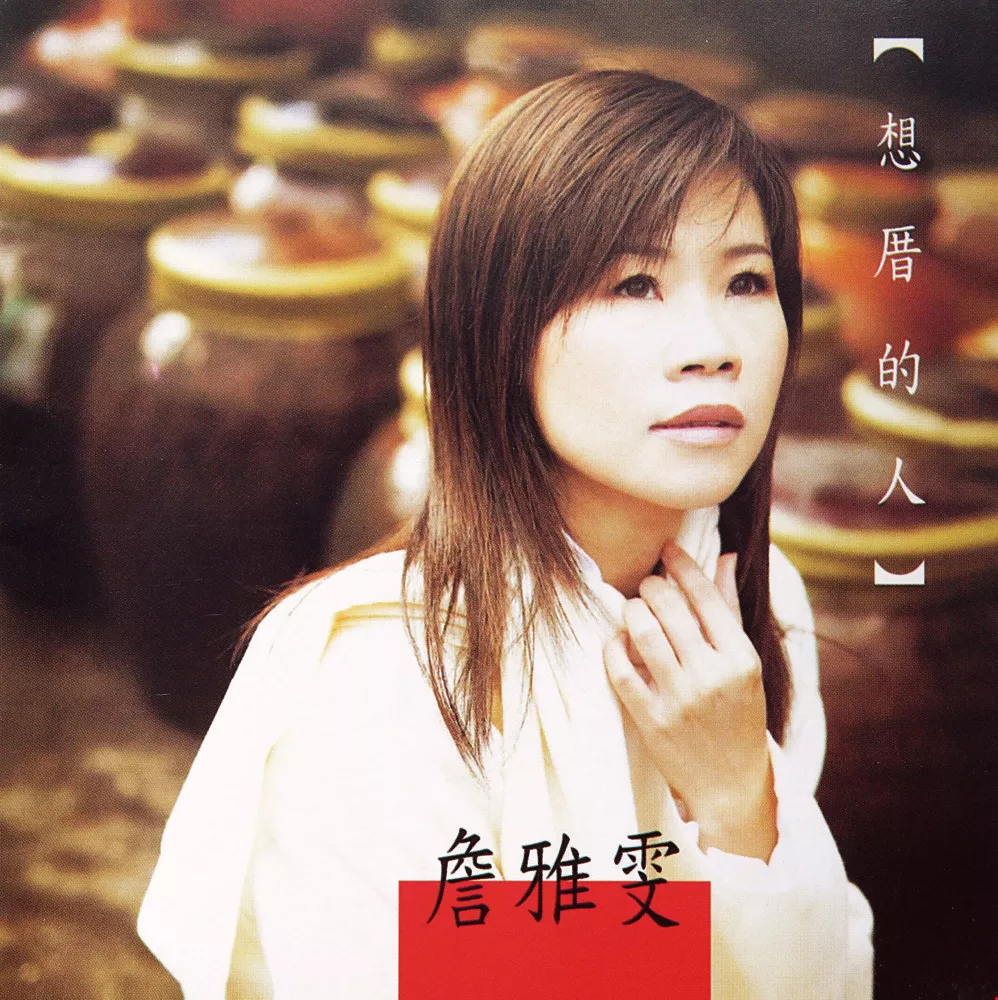
Walking on “the road of life,” Zhan uses her voice to encourage herself as well as others.
@List.jpg?w=522&h=410&mode=crop&format=webp&quality=80)

@List.jpg?w=522&h=410&mode=crop&format=webp&quality=80)


@List.jpg?w=522&h=410&mode=crop&format=webp&quality=80)

@List.jpg?w=522&h=410&mode=crop&format=webp&quality=80)
