Taiwan's Women: Alone, But Not Lonely
Chen Hsin-yi / tr. by Geoff Hegarty and Sophia Chen
November 2011


Recently, a series of advertisements for engagement gifts in the Taiwanese media have caused enormous controversy. All show similar situations: young women are forced to suffer overbearing people either in the workplace or in daily life. A woman is scolded by her boss for no apparent reason; another is badly treated by a salesperson in a boutique; a woman living alone must put up with her landlord's arrogant intrusion into her life. In all of these situations, the three young women are able to just turn their backs on the unpleasantness. Why? They are all planning to marry, and are therefore guaranteed the support of a man in their lives!
The really disturbing part of the advertisements is that they intend to convey a rather bizarre message to the audience: "When a woman gets a husband, everything will be OK."
In reality, however, many women are taking the initiative to break away from the mainstream values of traditional marriage. Why make such a decision? And what changes might it mean for society?
"Asia's Lonely Hearts," the cover story of The Economist's August 20, 2011 issue, discussed the fact that many Asian women of marriageable age are trying to escape marriage.
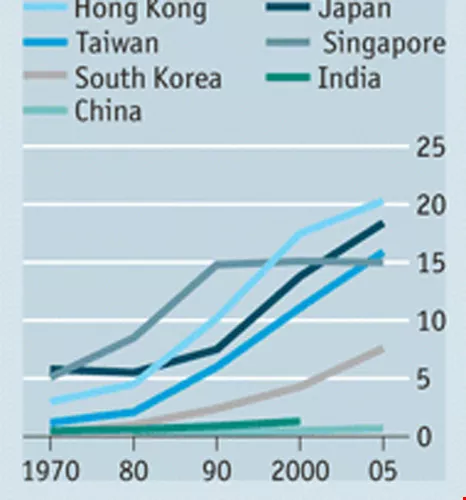
The Economist points out that the percentage of unmarried women aged between 35 and 39 in regions such as Japan, Taiwan and Hong Kong has risen rapidly from a range of 2-6 % to 15-20% in three decades (see Figure 1). The rate is much higher than that for the same age range in the UK and the US (about 13-15%).
There is, in parallel, a trend towards getting married later in life: the average marriage age for women has risen to 29-30 in Asia's most affluent areas (including Japan, Taiwan, Korea and Hong Kong). This figure far exceeds the traditional age for women to marry, and also surpasses that of Western countries; in the US, for instance, the average age at marriage is 26 for women, and 28 for men.
The magazine argues that the main reason for the dramatic change in Asian marriage patterns is that the education level and earning capacity of Asian women have both improved, but their social status hasn't risen accordingly. Unless the traditional concept of marriage can be relaxed, and the system of marriage and childcare can be reformed, the number of women fleeing from marriage will continue to grow.
So how does Taiwan rate in the statistics? According to the results of a survey into Women's Marriage, Fertility and Employment compiled by the Directorate-General of Budget, Accounting and Statistics (DGBAS) in July 2010, the total number of women over 20 is 8,914,000, of which married women (including those legally married, those in de-facto relationships or common-law marriages, and those divorced or widowed) make up 6,666,000 (74.78%), while the number of unmarried women is 2,248,000 (25.22%). Compared with figures from 20 years ago, the current numbers for unmarried women have risen sharply, across all age groups (see Table 1).
In addition, Taiwan's women are today more likely to marry later in life. According to the DGBAS, in 2001 the average age of a first marriage for women was 26.4, but that age had risen significantly to 29.6 by 2010. On the other hand, the average age of a first marriage for men was 31.8 in 2010, only one year later than a decade before.
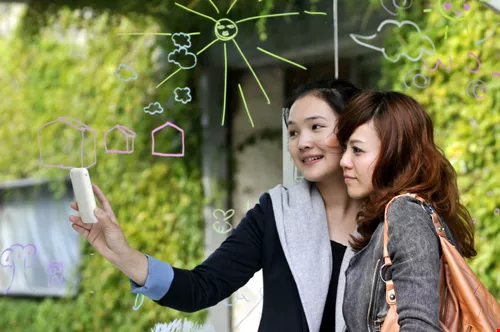
Whether single or in a relationship, all women need the company and comfort of female friends.
Most Taiwanese believe in the stereotypical idea that it's difficult for women with "three highs" (age, education and income) to get married due to their superior station. It's much easier, on the other hand, for men with three highs to marry a young wife. It seems that the older a man grows, the more attractive he becomes.
These concepts have been accepted as common sense in Taiwan society, and it's in line with the statistics. But they lie in stark contrast to marriage patterns in Europe and America.
"Women with three highs in European and American societies have always enjoyed the highest rate of marriage and the lowest rate of divorce. Although they tend to get married later in life, it's not because they don't want to marry." Allen Li, research fellow at the Institute of European and American Studies, Academia Sinica, specializes in the study of changes in family and marriage patterns. Li explains that although the regard for marriage in Europe and America has gradually declined and the divorce rate has risen sharply since the 1970s, at the same time people have put more emphasis on the quality of the relationship when they are looking for a partner. "In general, women with a higher education and better income are thought to be more desirable partners." The reason these women marry later in life isn't because they are too busy with work or unable to find a partner, but because they want to spend more time choosing the best match-one to last a lifetime.
US statistics show that the percentage of unmarried women with three highs at or around age 40 is only 5%, and their low divorce rate, resulting from their good earning capacity and a marriage sustained by their maturity, is so low as to be well beyond the reach of other groups.
In Taiwan, according to a survey by Allen Li and Chang Yi-chuan on the marital status of1women born between 1960 and 1969, women with university bachelor's or higher degrees are the most likely to be unmarried (accounting for 25%), followed by women with junior college qualifications at 16%, women with senior-high-school passes at 11%, and women with only a primary-school education at 5%, showing clearly that the likelihood of remaining unmarried increases with their level of education.
Lan Pei-chia, a professor of sociology at National Taiwan University, points out that the proportion of women in Taiwan receiving higher education has increased, and in fact in recent years has exceeded that of men. So because of their enhanced economic independence, women no longer need to rely on marriage for material support. While women look forward to a relationship based on communication, sharing and equality, in reality marriage often brings the burden of housework and severe limits to their freedom. In addition, the traditional marriage concept that a woman should marry a man with a higher status (in terms of education, age, height and income) has also diminished marriage opportunities for women with three highs.
Senior journalist Wu Dianrong has coined a phrase-"marriage strike"-to represent Asian women's feelings: "Western feminists have tried to change the marriage system through protest, whereas Asian women simply walk away without protest. 'Voting with their feet' may appear on the surface a more diplomatic option. But in fact the situation is made more acute: they don't walk away from bad men to be embraced by good; they retreat from marriage entirely."
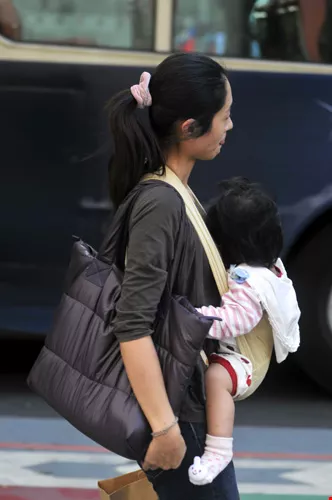
Today, many women are still forced to choose between career and family. This may be one of the reasons for the rise in the number of women who do not marry.
At the same time, some people are consciously determined to remain single. Writer Huang Mingjian, for example, decided when she was only 13 not to marry, but to live an easy and happy life alone. Her book The Single Aristocracy published 22 years ago became the foremost discussion in print about the possibility of remaining single, a insightful work well ahead of its time.
Nevertheless, remaining unswervingly single throughout one's lifetime is perhaps something that not many people are able to achieve.
Popular blogger Mimiko, at nearly 50, has recently published a book titled Just Want to be Alone, OK? She says in the book: "Being able to completely accept the idea that you will never marry may be the result of long-term trial and error, or could be the outcome of sudden enlightenment after a particular event." But even if you have already thought through the idea that living alone would be much better than living with a partner and torturing each other, "at certain sentimental moments, you still wish there could be someone there with you."
Situations that could disturb Mimiko's tranquil mood include things like a scary earthquake in the middle of the night, being prostrated by fever, suffering unfair treatment at work, and so on. "However, when you're emotionally vulnerable, you're suffering physical pain, or you want a shoulder to lean on, all you can do is to deal with your own problems or think of some way around them in order to keep yourself going-and then you find you're not so fragile or useless after all!" But most importantly for Mimiko, she has many genuine friends to share her life, so loneliness is never an issue for her.
However, many unmarried women are still looking for love and have the courage to pursue it. Kristy Chu, a 45 year-old professor in the Institute of Fashion and Communications Design at Shih Chien University, has a philosophy of simply being herself. Recently on a TV talk show she told one of the other guests, a male entertainer, of her feelings for him. She was rejected on national TV. But she wasn't humiliated, explaining that "a single woman shouldn't have to wait for a man to chase her. She should be able to take the initiative to express her feelings." And her self-confident attitude was applauded.
Many unmarried women still have a strong desire to become mothers. Entertainer Pauline Lan (known as Taiwan's Madonna) has enjoyed a successful career and life. But then three years ago, living without a regular partner, she went to Japan to have artificial insemination. Although her pregnancy ended in a miscarriage, it was meant as a gift for her parents at the same time as fulfilling her own dream.
Li points out that there are an increasing number of women with three highs over 40 who want to remain single, but who want to have a baby. "They are mature both physically and mentally, are able to take responsibility for their own actions, and also have the courage to break out of the social straightjacket. Our society should give them as much support as possible."
Whether a woman remains resolutely or involuntarily single, those unfettered by marriage seem to enjoy a relatively carefree life. But such women have to face a lot of pressure from mainstream society with its values that strongly emphasize marriage, and from relatives constantly urging them to tie the knot.
Bella DePaulo, a visiting professor of social psychology at the University of California, Santa Barbara, who is a happy and high-profile single woman, published a book on the topic, Singled Out, in 2006. DePaulo says that discrimination against singles-"singlism"-is evident everywhere in daily life. The flipside of singlism is the mindset that she terms "matrimania."
She points out that in US society, for example, the number of singles (including those divorced or widowed) stood at 87 million in 2003, accounting for 40% of the adult population. Paradoxically, however, in this era of marriage decline, "matrimania" is still very much the dominant philosophy. Marriage is believed to have a thorough and unique power of transformation: whether or not singles believe themselves to be normal happy people, they are in fact "defective" and will eventually suffer terrible lifelong depression because of the silly mistake they have made in remaining single.
The seeming indestructibility of matrimania can be glimpsed in one of America's most popular TV series, Sex and the City. The series' female lead is characterized as enjoying a happy, single life, but in the movie version, she is conquered by the attraction of marriage's luxury items: a gorgeous bridal gown and a wedding ring. The film's plot seems to contradict the nature of the character: her fiance is puzzled by her eagerness to marry (he is scared and at one point runs away). Women who may have been exploring the value of remaining single have expressed puzzlement at what happens.
DePaulo points out that although the myth of the perfect marriage doesn't accord with reality, many still believe that the state of marriage can provide security in this increasingly complex world, and that as long as the old values can be restored, all the troubles and disputes in life will be resolved.
"Taiwan society should be moving towards the democratization of intimate relationships; that is, treating all people with equality and respect, and this is in fact a micro-foundation of democratic politics." Fan Yun, associate professor of sociology at NTU and board member of the Awakening Foundation, points out that relationships in Taiwan society include an amazingly diverse range-unmarried heterosexual couples living together, homosexual couples (who are currently unable to marry), friends living together in a mutually supportive community-but existing legislation is set up to protect only legally married heterosexual families, and it seems unable to cope with the needs of the multi-patterned families of the real world.
The results of a Cohabitation Survey conducted in 2010 by the Taiwan Alliance to Promote Civil Partnership Rights (TAPCPR), which was established by the Awakening Foundation and other civic groups in order to explore the relationship patterns of unmarried people, produced some surprises: An amazing 83% of respondents said that they had friends or relatives who were living together. And over one third of heterosexual respondents admitted to having lived with a partner in at least one relationship.
Since 2009, the TAPCPR has advocated a "partner relationship system," which would operate in parallel with legal marriages.
"There is no doubt that the introduction of a partner relationship system would be a shock to Taiwan's traditional family-based society, and to 'normal' relationships. But it would also be a big step towards the democratization of intimate relationships!" Fan Yun, convener in October 2011 of the first public briefings on a draft bill for a Partner Relationship Act, says that legalized partner relationship systems have been operating successfully in the US and European countries for years. The main difference from traditional marriage structures is that the partner system tends to pay more respect to the wishes of the parties involved, and is generally more flexible.
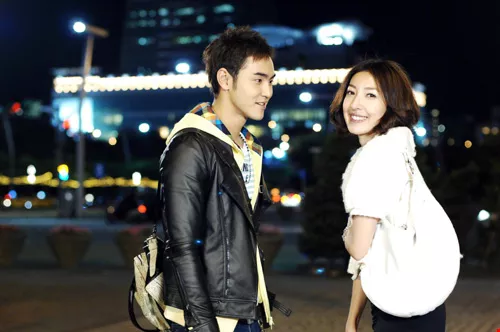
The Taiwan-made idol drama My Queen provides a voice for unmarried women. It sends a strong message that "being single does not mean being a loser!"
Partner relationships would also break down the traditional concept of marriage as an institution for the sake of sex and reproduction. Partner relationship systems have no restrictions on the gender of couples, and a sexual relationship is not a necessary condition. As long as a couple willingly promise to take care of each other and to establish a home together, they are able to register as a partner relationship.
Some people may question how such a system might affect Taiwan's already low birthrate. "Looking at the experience of other countries, the outlook is optimistic." Allen Li points out that currently in the US and Europe, about 40-50% of babies are born to parents who are not legally married, the majority of whom are in partner relationships. "If we continue to insist that only people in legal marriages can bear children, then Taiwan will have to continue to struggle with the problem of low fertility rates."
In fact many single women have already shaken off the demarcation between being married or single, and are bravely pursuing their dream relationship.
Art critic Lee Wei-jing doesn't deny that she has always yearned for marriage, and has never claimed that single life is better. However, after she turned 30, and then 35, she found that family members and friends all one by one got hitched, leaving her the only one never to wed.
Lee describes herself as a "love fundamentalist," someone who expects, even demands, a strong relationship with intense feelings. Although she's still single, she doesn't feel a trace of anxiety. "If we define being single as an ability to get along with one's inner self, being alone is definitely an important source of creative energy!" says Lee. "Singles should know how to make the most of being alone, and at the same time look for a diverse and strong emotional support system. For people with partners, they should sometimes make time for themselves to be alone. After all, in order to escape anxiety caused by being alone, people often find that the cheapest and fastest way is to seek solace from their partners, but this is good for neither you nor others."
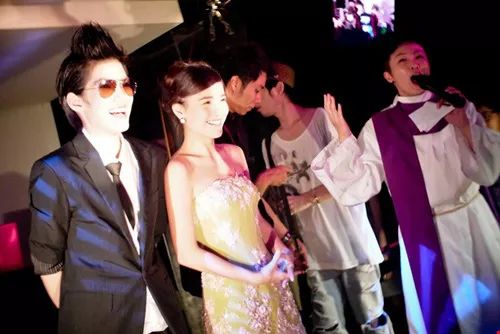
An event called "Barbie and Barbie's Wedding," held in August 2011 in Taipei, attracted hundreds of lesbian couples to join in the festivities. The photo shows a screen couple who have appeared in a well-received Thai lesbian film.
One of Japan's best-selling writers, Chizuko Ueno, in her book One's Autumn Years, points to a common fact-whether you are married, divorced or unmarried, women in their autumn years all have to face time alone. And because single women already have the ability to exist independently, it is generally easier for them to adapt-so they're often happier.
However, in order to enjoy single life, one has to make sure that life is financially and socially secure. In Japan, for example, there are communities of apartments designed exclusively for single women, and some major insurance and trust investment companies have designed products specifically for older women living alone. Women need to know how to take care of themselves, and develop lists of friends and relatives that they can contact for support at any time. Lived this way, single life not only isn't sad, it's full of exciting new possibilities.
Women need to dream big. Whether a woman is single simply because that's what she wants, whether she is perhaps still waiting for a suitable partner to come along, or whether she is divorced or widowed, the single woman is capable of creating a panorama unique to her life!

@List.jpg?w=522&h=410&mode=crop&format=webp&quality=80)
@List.jpg?w=522&h=410&mode=crop&format=webp&quality=80)


