Rainy Taiwan vs. Thirsty Taiwan
Lin Hsin-ching / photos Jimmy Lin / tr. by Jonathan Barnard
June 2013


In mid-May the seasonal “plum rains” brought severe flooding to parts of central and southern Taiwan; yet merely a month earlier many places on the island were in a state of drought alert. The quick swings between flooding and drought in Taiwan seem more pronounced even than those of the stock market!
Oddly enough, Taiwan’s average yearly rainfall of 2500 millimeters is 2.6 times the global average. But because the spread of that rain is far from even, only about 20% of total rainfall can actually be used. That meager figure and the high population density of Taiwan have combined to give the island a ranking of 18th among nations most lacking for water.
Learning to be good stewards of water resources has become a pressing concern for the people of Taiwan.
At 2 p.m. on April 27, a Mrs. Chen, who lives in the Nanzi District of Kaohsiung City, turned on her tap only to discover that no water would come out. She was frustrated but hardly surprised, for it was already the third unannounced suspension of water service in greater Kaohsiung this year. In at least 30,000 other homes people were likewise looking at their taps and sighing.
The Gaoping River, which supplies water to Kaohsiung, was at the heart of the problem. It turned out that there had been illegal dumping of wastewater upstream, which had raised odor intensity to 20 (under three is normal), requiring the water supply to be turned off.
Greater Kaohsiung is the area of Taiwan at greatest risk in terms of water usage. Environmental agencies must maintain a high state of vigilance in inspecting the condition of upstream water with regard to pollution. Water emergency alerts are an annual headache and nightmare for residents of Kaohsiung.
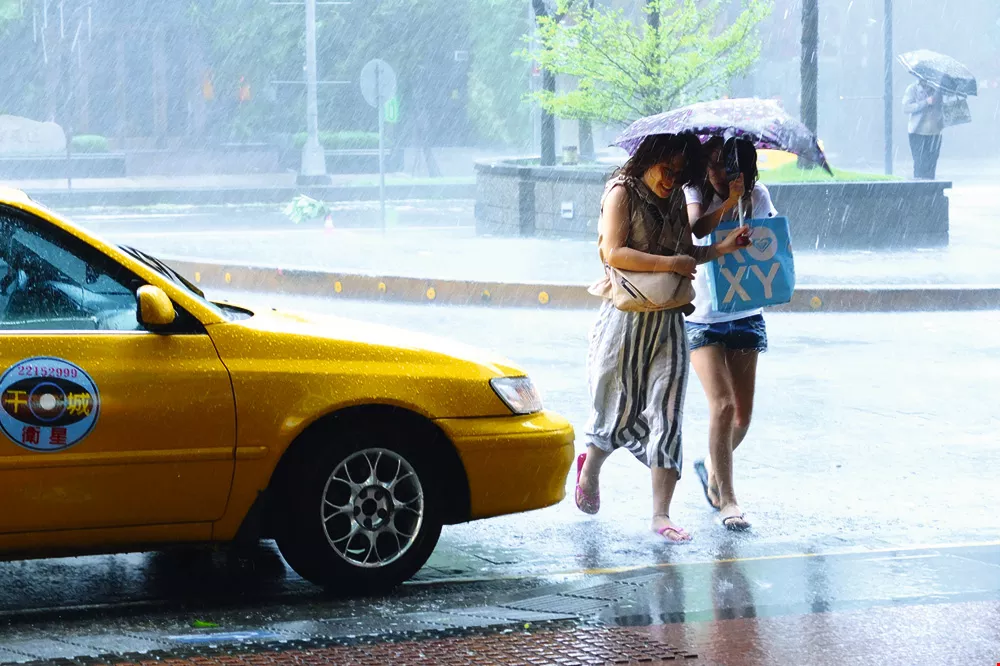
In Taiwan there has been a trend toward fewer days of rain with greater amounts of precipitation each time, which only increases the chances of rapid swings from drought to flooding.
The Gaoping River, with its watershed of 3257 square kilometers, is Taiwan’s largest river and the main source of water for Kaohsiung and Pingtung. Nevertheless, although average yearly rainfall in the Gaoping watershed exceeds 3000 mm, 90% of its precipitation falls in the period from June to September. The ratio of rainfall between the rainy season and the dry season can exceed 100:1.
The Gaoping watershed had already long been suffering drought conditions in late March when flow rates in the river dropped to 12 cubic meters (m³) per second, an all-time low. A raging river had become a trickling stream. Water resource agencies practically had to suck the flow dry (extracting about 11.5 m³ per second) just to barely meet the water-use needs of Kaohsiung.
And Kaohsiungers cannot relax during the rainy season either, because turbidity then is often higher than what is allowed by water treatment plants, thus raising the possibility of suspension of water supply.
The risk of water shortages in Kaohsiung puts water resource agencies frequently on edge. “Kaohsiung’s biggest problem is that it doesn’t have ‘water savings’ in an account that it can withdraw from!” says Lai Chien-hsin, director of the Southern Region Water Resources Office of the Water Resources Agency (WRA), under the Ministry of Economic Affairs.
According to Lai, who holds a doctorate in soil and water conservation from National Chung Hsing University, greater Kaohsiung has only the small reservoirs of Agongdian, Fengshan, and Chengqing Lake to draw from. Even though the Gaoping runs strong during the wet season, without large reservoirs to store the water, there are naturally minimal reserves to draw upon when the dry season rolls around.
In addition to those natural limitations, growth in water use has greatly added to the problem.
Lai points out that current water use in Kaohsiung stands at about 1.62 million cubic meters a day, but the city’s own water supply system can only supply 1.42 million m³. That extra 200,000 m³ comes from various places. “The city government predicts that by 2026 water usage will have risen to 1.78 million m³, so the city will be faced with even greater supply challenges.”
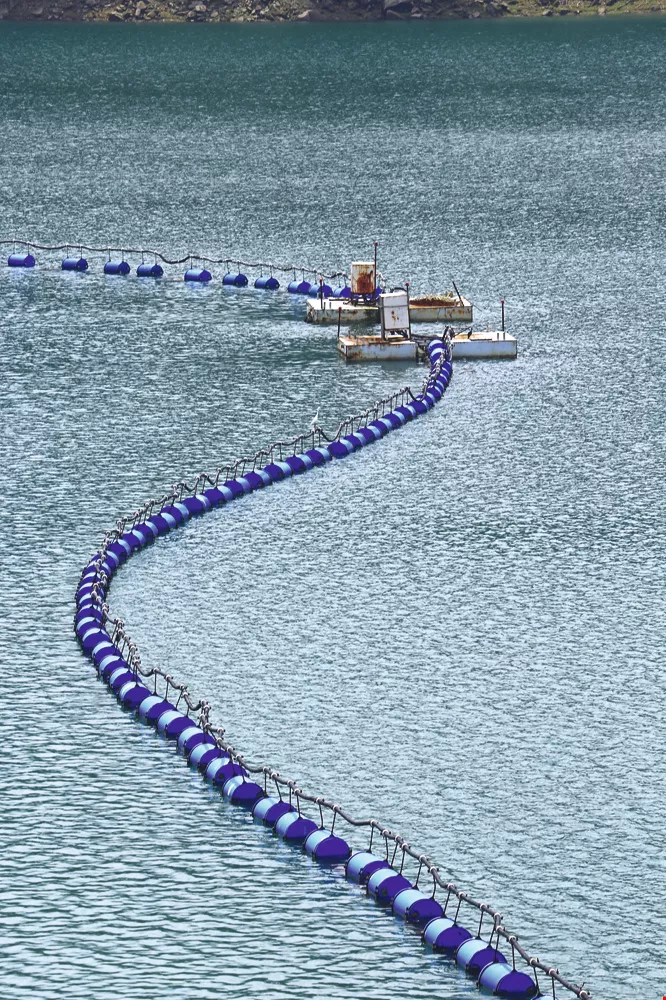
In order to extend the life of the Shimen Reservoir, the Northern Region Water Resources Office has to dredge silt from it every year. The office also plans to add a special channel that will be devoted to removing silt from the reservoir.
Water shortages are not unique to Kaohsiung. Taoyuan and the Jianan Plain also frequently find themselves facing water emergencies. Since 2002, these areas have had seven years when irrigation was suspended, agricultural water was transferred to other uses, or water usage restrictions were implemented. The imposition of drought prevention measures has become a regular springtime occurrence.
Why are water shortages in the spring particularly challenging? The answer involves the unevenness of rainfall in Taiwan.
Although winter is the dry season in northern Taiwan as well, northeasterly monsoon winds still bring it sufficient rainfall during those months. The ratio of rainfall between the wet and dry seasons stands at 6:4. But the farther south you go, the greater the disparity. In central Taiwan it’s 8:2, and in southern Taiwan it’s 9:1.
To guard against water shortages in the dry season, water resource agencies throughout Taiwan usually try to fill their reservoirs before winter arrives. Yet in October of last year, at the end of the rainy season in southern Taiwan, the Zengwen Reservoir was far below capacity at 370 million cubic meters, some 100 million m³ lower than the previous year. On top of that, fall and winter precipitation proved to be sparser than normal, seriously straining water supplies.

Taiwan’s reservoirs can hold 1.91 billion cubic meters of water, but they supply 4.33 billion m³ per year, equivalent to completely filling and emptying them 2.3 times. (For the Shimen Reservoir, the local annual demand is four to five times its capacity.)
The situation in the north is somewhat different. Chien Chao-chun, deputy director of the WRA’s Northern Region Water Resources Office, points out that the Shimen Reservoir was full in November and December last year, the beneficiary of abundant rainfall. But from January to March its watershed received only 10% of what normally falls. With withdrawals but no deposits, reserves dropped to dangerously low levels, spurring the imposition of water conservation measures and the reassignment of irrigation water to other uses.
Ironically, April brought one storm after another, so that northern Taiwan experienced more than 20 straight days of rain. More than 306 mm of rain fell in the Shimen reservoir’s watershed, 2.5 times what’s normal for that time of year. Several storms in early May brought water levels even higher—to 242 meters, just three meters below capacity.
“As the water situation changes, so does our mission: At a moment’s notice we must be able to shift from fighting drought to fighting flooding,” says Chien, highlighting how the whims of Mother Nature force water resource agencies to constantly adapt.
Thanks to April rains, water shortage warnings in Taoyuan were lifted, but the rapid changes—more dizzying than a roller-coaster ride—reflect a trend: Whereas the total average amount of rainfall in Taiwan has been holding steady, the number of days of rain has been declining, so that the rainfall is increasingly concentrated and when it rains, it pours. What’s more, the gap between wet years and dry years is also growing.
Tyan Chau-ling, deputy director-general of the WRA, has studied Taiwan’s rainfall records over the past 60 years. In the 1950s and 1960s, the differential between wet and dry years averaged 1000 mm. But since 2000 the gap between them has reached 2000 mm. Thus, after decades of climate change, although the average yearly amount of rainfall in Taiwan hasn’t changed, the number of years with drought or flooding has increased. (See Figure 2.)
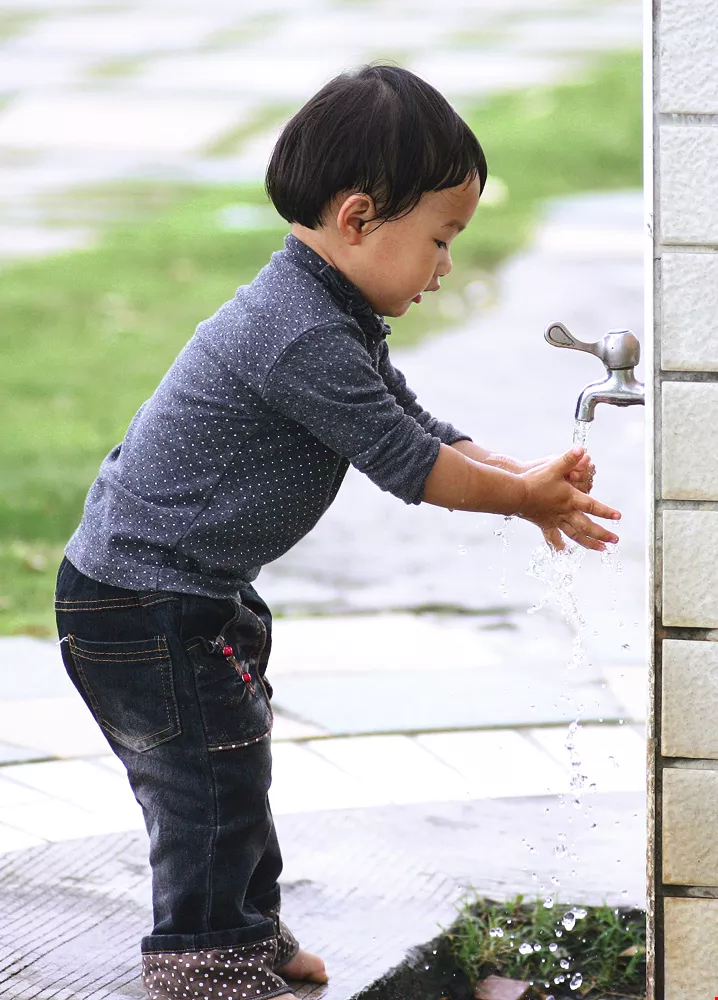
Only by treasuring water resources can the challenges of meeting daily demand be overcome.
Since climatic conditions are beyond our control, figuring out how to use limited water resources to the greatest efficiency is a test of the wisdom of water resource agencies. It’s particularly challenging in areas of southern Taiwan that are frequently scraping the bottom of the water barrel.
Lai Chien-hsin, head of the Southern Region Water Resources Office, points out that agriculture is the biggest user of water in southern Taiwan, accounting for about 90% of total consumption. As early as October last year, the Southern Region Office determined that water levels in the Zengwen Reservoir were lower than in previous years, and they began to coordinate with the Chia-Nan Irrigation Association, in the hope that the two could come to a consensus about what water conservation measures to take.
He explains that this year, on the advice of the Southern Region Office, the association can mobilize its more than 1000 old farmer members to closely observe actual needs in various areas, so as to precisely adjust the amount of water used.
“We hope to use the smallest amount of water to irrigate the largest area of fields. Experience shows that it’s a goal that can be realized.” Lai says that with cooperation to bring about multipronged water conservation efforts, fields on the Jianan Plain never lie fallow as a result of water shortages, and the irrigation association has irrigated 18,000 hectares of wet fields and 44,000 hectares of mixed fields while using 100 million cubic meters less water than in previous years. That attention to detail so as to make the most efficient use of agricultural water can help to meet the needs of households and industry in Tainan.
Nevertheless, the Southern Region Office could not relax its vigilance, since the plentiful rains of April in the north weren’t experienced in southern Taiwan. Fortunately, the arrival of the plum rains in May has somewhat alleviated the situation. As of late May, the Zengwen and Wushantou reservoirs were back up to 37% of capacity.
“Let’s hope we don’t have to go through the same ordeal every year!” says Lai wryly.

Figure 2: Widening extremes of annual rainfall
In the north, although rainfall is more even, reserves can still be too small. As a result, water shortage alerts can still be issued in some areas of northern Taiwan. Taoyuan, which has been undergoing rapid urbanization in recent years, is a case in point.
Taoyuan is home to more than 20 public and private industrial parks that collectively pack an economic punch second only to the Hsinchu Science Park. When you add Taoyuan’s proximity to Taipei, along with its amenities and conveniences, and factor in the lower cost of housing there, it is hardly surprising that Taoyuan has attracted crowds of refugees from the big city in recent years.
And yet Taoyuan, despite the flourishing development of its infrastructure, is facing growing water shortages.
Chien Chao-chun of the WRA’s Northern Region Office points out that the Shimen Reservoir, which supplies water to greater Taoyuan (along with parts of New Taipei City), was completed way back in 1964. After many decades of operation, about 25% of it has silted up. Its effective capacity is now 206 million cubic meters, whereas greater Taoyuan has an annual water demand for 1 billion m³. In other words, Shimen has to be completely filled 4.5 times every year in order to meet demand. A single season of low rainfall can result in serious water shortages.
In order to ease the pressures on Shimen, the Water Resources Agency in 2001 kicked off its “Banqiao–Xindian Area Water Supply Improvement Plan.” Under the plan, the Taiwan Water Corporation and the Taipei Water Department are working together to connect supply lines and expand water treatment facilities so that water from the Feicui Reservoir and the Xindian River can be brought as far south as the Banxin Water Treatment Plant, which previously relied exclusively on the Dahan River and the Shimen Reservoir.
Chien points out that when the second phase of construction under the plan is completed in 2017, Feicui should be able to provide 1.01 million m³ of water per day to the plant.
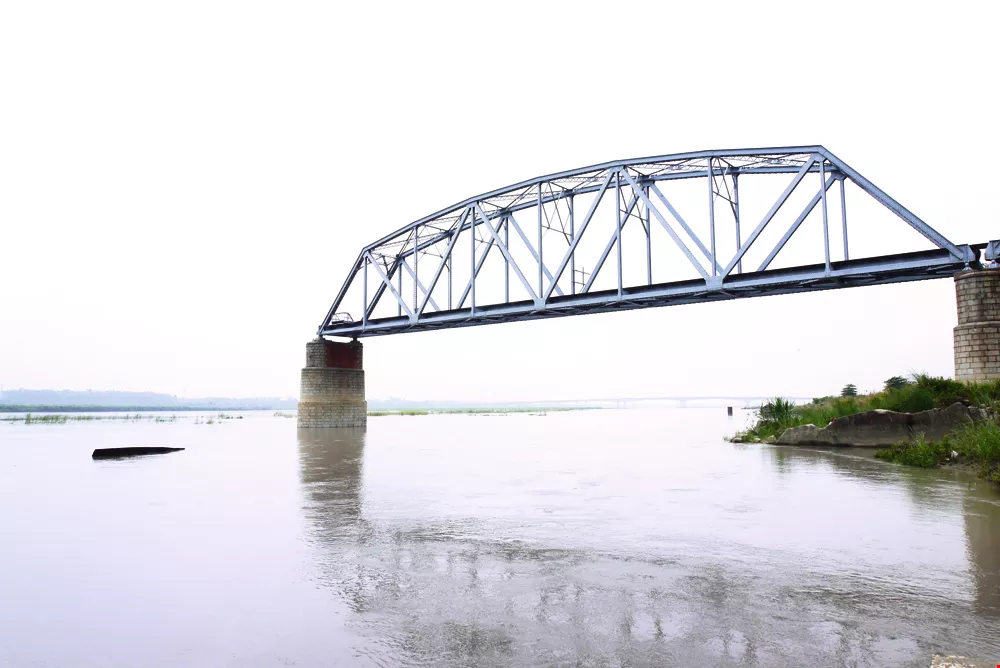
The Gaoping River carries the lifeblood of the greater Kaohsiung region. Yet the dramatic difference in the river’s flow between the rainy and dry seasons only adds to the water supply dangers confronting Kaohsiung.
Confronted with climate change and increasing demand for water, the WRA has looked at various approaches, including fixing system leaks, desalinating ocean water, and treating and recovering wastewater. Among these, a plan for fixing system leaks has been put on a 10-year timetable, with the hope that water wasted through leaks will drop from 19.55% to 14.25% of total system water by 2022. The plan will require an investment of NT$64.5 billion.
The truth is that figuring out how to use limited water resources with greatest efficiency is testing the wisdom of localities throughout the world. Facing tremendous difficulties in developing new sources of water amid growing ecological consciousness, Taiwan needs smart water conservation policies. It’s the only way to solve our increasingly daunting water use challenges.
@List.jpg?w=522&h=410&mode=crop&format=webp&quality=80)

@List.jpg?w=522&h=410&mode=crop&format=webp&quality=80)
@List.jpg?w=522&h=410&mode=crop&format=webp&quality=80)


