Homesick No More—The Amis Life of Suming
Amber Lin / photos courtesy of Suming Studio / tr. by Geof Aberhart
March 2014


A winner of both the Golden Melody Award for Best Aboriginal Album and the Golden Horse Award for Best New Performer, the 35-year-old Suming has taken on many identities over the years, from construction worker to musician to actor.
Having evolved from Jiang Shengmin to Suming Rupi, and having released albums both in his mother tongue of Amis and, now, in Mandarin, Suming has said farewell to homesickness and embraced using Mandarin to express his one unchanging identity—that of a young Amis man born and raised in Dulan, Taitung County.
Suming has been a busy man recently.
Much like the title of the song from his Mandarin-language album Amis Life, “Rushing,” Suming has found his life at the moment a constant rush. Busy traveling the country with his guitar on his back and his agent at his side, he only just managed to get his registration for the Golden Melody Awards in on the final day, rushing to the Ministry of Culture to submit his demo. Once his interview with Taiwan Panorama was finished, he would have to rush off to rehearsals, another stop on his packed itinerary.
Since the inaugural Amis Music Festival held in Dulan in early December, Suming has been going from New Year’s concerts to overseas performances to album launch concerts to celebrations of his new album’s success, always with one eye on the next stop.
“Sorry!” he says, arriving late for our interview. Dressed in a hoodie over a denim shirt from the Aboriginal fashion line Wasang Show, Suming looks more like an overgrown teenager than a 35-year-old artist with eight years’ experience in the music industry and Golden Melody, Golden Horse, and Golden Indie Awards to his name.
After having already released two albums in his mother tongue, Amis, late last year Suming released his debut Mandarin-language album. Questions about whether he can actually sing in Mandarin were conclusively answered in his January album launch concert at Taipei’s Legacy, where in front of over 1000 diehard fans he proclaimed his intent to break into the mainstream music market.
“Language is just a tool,” he says. Those in Taiwan actually interested in Aboriginal culture are a small crowd; only by escaping that small pond and leaping into the mainstream can he really have the influence he wants, while also getting his songs heard by even more people. “I wanted to use a language that everybody understands to invite them into Amis culture and let them hear the stories of my people,” he says earnestly.
And while his new album may be in Mandarin, his roots are right there in the title: Amis Life.

To Suming, the choice to use Mandarin to sing about Amis life was made in hopes that a softer approach in a common language would help introduce more Taiwanese to Amis culture.
With his having been born and raised in Dulan, a small town on the east coast with the lush Coastal Mountain Range behind and the azure Pacific Ocean in front, you might think that Suming’s easy-going nature was inevitable. “Actually I went through my own rebellious phase,” he laughs.
As a child, he was neither a standout singer nor particularly good at baseball. He remembers asking his mother the question that had been eating away at him one day after school: “Why can’t I do anything Aborigines are always good at? Am I even Aboriginal?” His mother’s response? “Don’t be sad! Our family name is Jiang, we’re probably Korean anyway.”
For a time, Suming took this joking response for the truth, becoming a fan of Chinese-Korean singer Jiang Yuheng. He explains that he grew up with all kinds of questions about himself that he couldn’t find answers for. Once he finished junior high, Suming began attending a senior high school in Taitung. He kept his Aboriginal identity on the down-low and rarely mentioning he was from Dulan for fear of mockery from his classmates over the town’s unfortunate homophonous meaning in Taiwanese.
Without an identity to call his own, Suming’s life was mostly one of just drifting through.
While he was in junior high, Suming’s father and paternal grandparents fell seriously ill, and the family had to put their home up as collateral for a loan to cover the medical expenses. This put them under significant financial stress, and in the end they were foreclosed on. His mother left, and his father took to working on fishing boats to pay back their loan. With nowhere to call home back in Dulan, Suming began working odd jobs on construction sites and staying at the homes of some of his old schoolteachers.
With no foreseeable prospects for the future, he came up with an idea. Suming convinced his aunt who he went to stay with in Taipei to sponsor him as he went to cram school, preparing to take the college entrance examinations. He still remembers what it was like attending classes on Taipei’s Nanyang Street for that year, far from the sun and surf of home: “Every day I was stuck in these tiny rooms. What really sticks with me is how cold it felt.”
He spent the rest of his younger days an angry, depressed youth. That is, until he finished his compulsory military service and became part of independent Aboriginal band Totem. There, he slowly began to rediscover his heritage and identity.
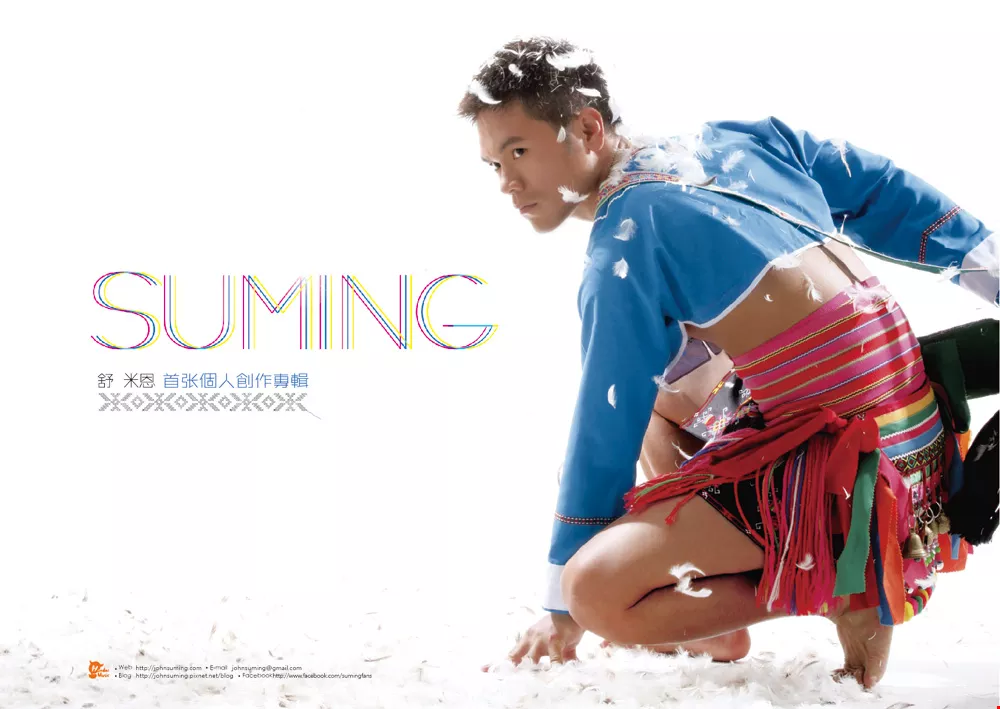
Beginning his creative career at 17, Suming became a kind of “bounty hunter,” participating in any and all singing competitions he could find to try and win money to help his family. In his sophomore year at college, he was discovered by veteran songwriter Li Shouquan and invited to write a song for Chyi Chin. This marked his first entry into the music industry.
Joining Totem was a turning point for his career. With the songs largely written by him, the band felt it only natural that he be the lead vocalist as well.
In 2005, only three years after their formation, Totem—with their characteristic combination of reggae, bossa nova, hip hop, hard rock, folk, and Aboriginal music—won the Battle of the Bands at the Hohaiyan Rock Festival.
But Suming’s talent for performing isn’t just limited to music. In 2008, he played a truck driver in the film Hopscotch, winning the Best New Performer award, albeit under his Chinese name Jiang Shengmin.
This isn’t enough for Suming, though. Having reclaimed his Aboriginal identity after a lifetime of drifting, he wanted to feel like he was part of the Amis tribe. He wanted to give back to his hometown, and more importantly, he wanted to create an album entirely in the Amis language, his mother tongue.
Just then, though, the Great Recession hit. This didn’t deter Suming, who quietly worked to accumulate songs.
“I had to prove I was worth the investment,” he says. To win over record company executives, he began to really pay attention to the kind of music that was most popular. He found that Korean dance-pop was sweeping the globe, and set about trying to create a fusion of dance-pop with Aboriginal music. The result was his debut single, “Kayoing” (Amis for “girl” or “young woman”).
He finally had the chance to release an album in 2010, but first he had to prepare a demo, a task he was given just one month to complete by the label. “I had the entire track list done the next day,” he laughs.
His dabbling with dance music made his debut album stand out among the sea of more traditional Aboriginal albums. When Suming won the Best Aboriginal Album award at the 2011 Golden Melody Awards, the judges commented, “The combination of light electronic elements and folk rock has raised the bar for Aboriginal music.”
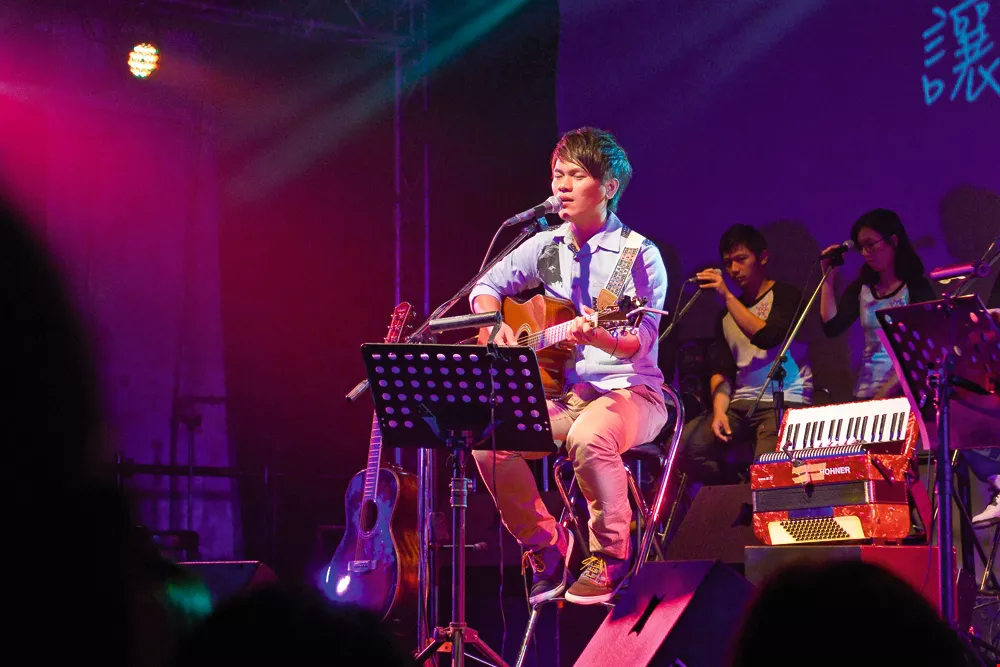
On January 4, Suming held a concert at Taipei’s Legacy for the launch of his new album, drawing a crowd of over 1000 fans. Incorporating folk, classical, and pop elements, Suming’s music has clearly matured.
Renowned music critic Ma Gua has been critical of Suming’s post-Totem solo efforts that have been bringing him closer and closer to the mainstream market, but Suming himself is clear about why he has taken this direction:
“My hope is that we can have Amis-language songs just as catchy as ‘Gangnam Style.’” While he praises Aboriginal singers who work hard to revive the old ways, he has bigger ambitions—going mainstream. “Pop music gives you more influence, and once you’ve made it in, people are more willing to invest in you.”
This focus on the mainstream comes from a lesson learned first hand. In 2008, full of enthusiasm, he organized a concert in Dulan called “Singing for the Tribal Youth.” With Totem’s long-popular “Slipper Party” concerts regularly drawing audiences of over 1000, he figured at the least this concert should be able to attract a few hundred. “In the end, only five people showed up.” But this failure drove home to him that no one buys tickets for someone else’s dreams, and that in terms of the music, he needed to keep it entertaining.
“All those old songs were so nostalgic for home.... Aboriginal music always seems so helpless and sad, but what’s there to be sad about? I go home all the time!” Since completing his military service, Suming has been actively involved in social issues, from the controversy over the construction of the Miramar Resort in Taitung to supporting the Aboriginal people of Sanying Community in New Taipei City as they fight for the right to keep their homes. But even as he has been engaged in these battles, Suming’s songs have shown a softer side of him.
Mandarin or Amis; indie or Top 40; rock, dance, pop, or folk—to Suming, they’re all just tools to help him achieve what he wants to achieve. That’s true independence.
Suming’s openness has also helped him reach beyond Taiwan’s borders. Japanese author Yuka Aoki is a fan, and invited him to perform at music festivals in Okinawa and Kagoshima. Through Suming, Japanese fans have fallen in love with Dulan, and for the launch of his newest album, he even made a special trip to Okinawa to perform again.

On January 4, Suming held a concert at Taipei’s Legacy for the launch of his new album, drawing a crowd of over 1000 fans. Incorporating folk, classical, and pop elements, Suming’s music has clearly matured.
Where once his Aboriginal identity was a source of shame, now it is something Suming embraces proudly.
Over the past few years, he has been thinking about and working on giving back to his hometown. Like a shepherd leading his flock, Suming has hired a group of young people from Dulan to work for him to support his musical career. He even footed the bill himself for five of these young people to travel to Kagoshima with him and observe the proceedings there. “I want to open their eyes, show them how things are done in other countries!”
The rapturous reception he received at Kagoshima and Okinawa also inspired him to organize a real local music festival in Dulan. “Taiwan’s ‘regional’ music festivals rarely have anything to actually do with the region, with the same bands and the same stalls. What we wanted to do was have a music festival that was primarily and genuinely for Dulan.” And thus the Amis Music Festival was born.
Making the most of the opportunity presented by his album launch, Suming borrowed NT$3 million from the bank to cover the festival’s costs, from promotion to equipment.
“Money is both the hardest part and the easiest,” Suming says. The real tricks were figuring out how to communicate the idea with the town, getting people to attend and perform, and ensuring the profits went back to the community.
But this isn’t the end of his ambitions. He’s already planning a uniquely Amis tour itinerary for springtime travelers, including traditional meals, cross-stitch, and tribal village visits. The aim is to not only give non-Amis a way to experience and witness the culture and scenery, but also to create work opportunities that will stem the tide of young people leaving for the big city.
“Dulan’s changed a lot over the past few years,” says Suming, explaining that there’s good reason for the sense of urgency behind his cultural efforts—even as Dulan is becoming more and more commercialized, the local Aboriginal population is seeing little to none of the financial benefits.
He hopes to continue doing what he can for the town over the years to come. Singer, actor, agent, music festival organizer... these titles might sound nice, but they’re not what counts. Throughout, Suming has always remembered who he is inside: a young man from Dulan.
Like a cactus, which thrives despite the challenges of its environment, Suming is nourished by the sunlight of his Aboriginal roots and the water of those that have helped him along his way. Now, after years of continual growth, this cactus is finally entering full bloom.

On January 4, Suming held a concert at Taipei’s Legacy for the launch of his new album, drawing a crowd of over 1000 fans. Incorporating folk, classical, and pop elements, Suming’s music has clearly matured.

Late in 2013 Suming organized the Amis Music Festival in Dulan, successfully getting the locals on board and putting on a heck of a show.

On January 4, Suming held a concert at Taipei’s Legacy for the launch of his new album, drawing a crowd of over 1000 fans. Incorporating folk, classical, and pop elements, Suming’s music has clearly matured.

@List.jpg?w=522&h=410&mode=crop&format=webp&quality=80)

@List.jpg?w=522&h=410&mode=crop&format=webp&quality=80)

@List.jpg?w=522&h=410&mode=crop&format=webp&quality=80)
@List.jpg?w=522&h=410&mode=crop&format=webp&quality=80)

