Jinguashi—Taiwan’s Mother Lode
Liu Yingfeng / photos Chuang Kung-ju / tr. by Chris Nelson
March 2014


In 2013, the Forestry Bureau conducted an online poll of Taiwan’s Top Ten Landscapes. Jinguashi, on Taiwan’s northeast coast, came in fourth after the Queen’s Head at Yeliu, the main peak of Yushan, and Sun Moon Lake.
A century ago, Jinguashi literally sat on a gold mine, and enjoyed the reputation of having Southeast Asia’s biggest. Countless gold hunters sought to strike it rich in Jinguashi, whose gold and copper mineral resources endowed this area with such distinctive landscape features as the Yinyang Sea and the Golden Waterfall.
After all this time, Jinguashi’s legends of gold remain the most alluring selling point of this mountain town.
At Jinguashi, home to Taiwan’s richest veins of gold, the question of how much gold is in them thar hills remains a captivating issue to this day.
The gold deposits at Jinguashi were discovered in the Qing Dynasty. “At Gold Mountain, in the hills behind Keelung’s Sanchao River, the soils produce gold, some as big as a fist, some as long as a ruler. A savage picked one up in his hand, and the thunder roared up above; when he cast it away, the thunder ceased,” recounts Miscellaneous Records of Taiwan, written in 1684 by Ji Qiguang, magistrate of Taiwan’s erstwhile Zhuluo County, describing a large gold nugget dug up in what is now Jinguashi.
This mother lode attracted gold diggers and immigrants in droves. In 1892, the Qing government established the Gold Bureau here, and Jinguashi subsequently became Southeast Asia’s largest gold producing region under the Japanese.
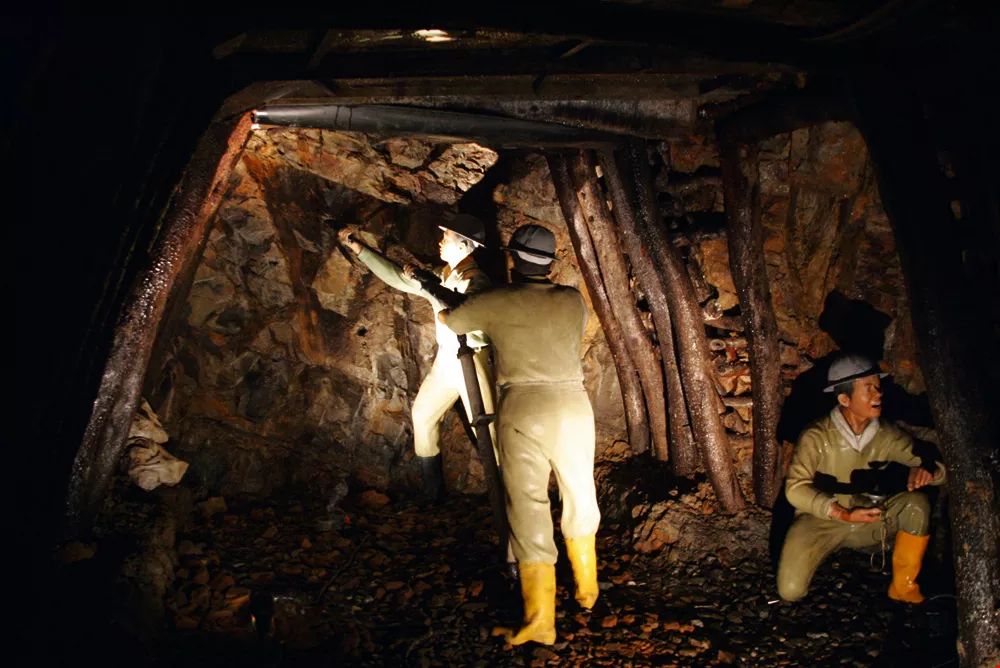
Some of the mineshafts in the Gold Museum are open to visitors so they can experience for themselves what mining was once like in Jinguashi.
Jinguashi’s golden legend
Not long after the mine closed in 1987, the world’s largest mining company, BHP Billiton, proposed to the Ministry of Economic Affairs’ Department of Mining an NT$88 million joint development project, hoping to survey Jinguashi’s mineral deposits.
The project wasn’t approved, however, because of the government’s misgivings about international cooperation. Undeterred, the company commissioned geologists from National Taiwan University and National Cheng Kung University to conduct a survey of Jinguashi’s deposits.
“Jinguashi is well worth mining,” says Yu Bing-sheng, associate professor of materials and mineral resources engineering at the National Taipei University of Technology. Beyond the known ore deposits, there are unexplored strata around Jinguashi that are worth looking at. According to sample drilling surveys by the Central Geological Survey, there are indications of gold ore to the south of the original areas mined in Jinguashi.
The Lepanto Mine in the Philippines has a geological structure similar to Jinguashi. Following decades of mining there, another ore deposit was discovered not far away, with two and a half times the gold content of the original site. Yu speculates there’s a high probability that a huge mother lode awaits in the deepest recesses of Jinguashi.
In the last five years, the world’s five largest mining companies have been engaging with Taisugar, the owner of the land, to re-open Jinguashi’s ore fields. But no concrete mining plans have been made, because the Mineral Industries Act places restrictions on the mining rights of overseas companies.
Gold and copper from deep within the earth
The unique appearance of Jinguashi’s landforms comes from its rich mineral veins. Academic research indicates that Taiwan’s Central Mountain Range, East Coastal Range and Lanyu (Orchid Island) all contain gold ore, but Jinguashi is the only area with both gold and copper ores on a large scale.
Yu Bing-sheng states that gold can be found anywhere on the earth’s surface, but to produce gold in abundance there must be groundwater, a heat source from magma, and strata containing calcium carbonate and coal, which together produce gold ore after long periods of hydrothermal mineral replacement. Jinguashi is one of the few places that meet these conditions.
Yu explains that the sedimentary rock in Jinguashi was formed from what 25 million years ago was the sea floor, which subsequently underwent tectonic motion and rifting at the Okinawa Trough, forming a series of volcanoes. As volcanic lava entered the area and igneous rock was formed, Jinguashi experienced faulting in both the north–south and east–west directions. Hydrothermal solutions formed by heated groundwater mixing with hot fluids in the hot igneous rock seeped upward along fault lines and fissures. After the temperatures and pressures fell, metal ions accumulated in the pores and cracks of the surrounding rock, gradually forming gold ore.
After the mineral veins formed, they were thrust upward by geological forces and subjected to a million years of weathering, gradually exposing them at the surface. At Jinguashi, pumpkin-shaped outcrops of gold-rich rock were formed, giving Jinguashi (“gold pumpkin rock”) its name.
Rich deposits of gold, copper and quartz make Jinguashi a natural geology classroom.
Yu Bing-sheng says that unlike other landforms in Taiwan, even now outcrops of mineral veins can be seen among the abandoned mines of Jinguashi. The green clay mineralization that forms gold ore and the abandoned mine shafts and ore tramways of the bygone mining industry present an overview of the formation and exploitation of the mineral veins.
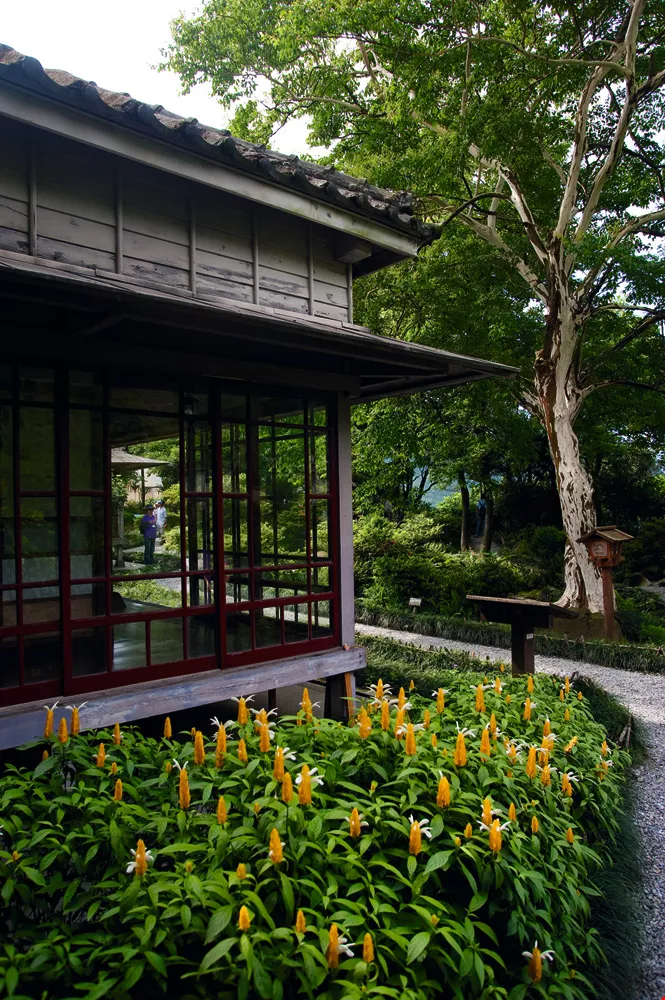
Jinguashi boomed during the Japanese era, where nearly 10,000 residents left their mark. The old Japanese-style houses have become destinations for modern people seeking seclusion and reminiscence. Pictured here is the Crown Prince Chalet.
Yin and yang
“Nature’s slow and complex geological evolution is well summarized at this little place called Jinguashi. It’s like an amazing geological theater,” says Yu. The unique attractions of Jinguashi, including the Gold Geological Park, Xiaojingua Gold Outcrop, Dajingua Gold Outcrop, Niufushan, the Golden Waterfall and the Yinyang Sea, are well worth checking out.
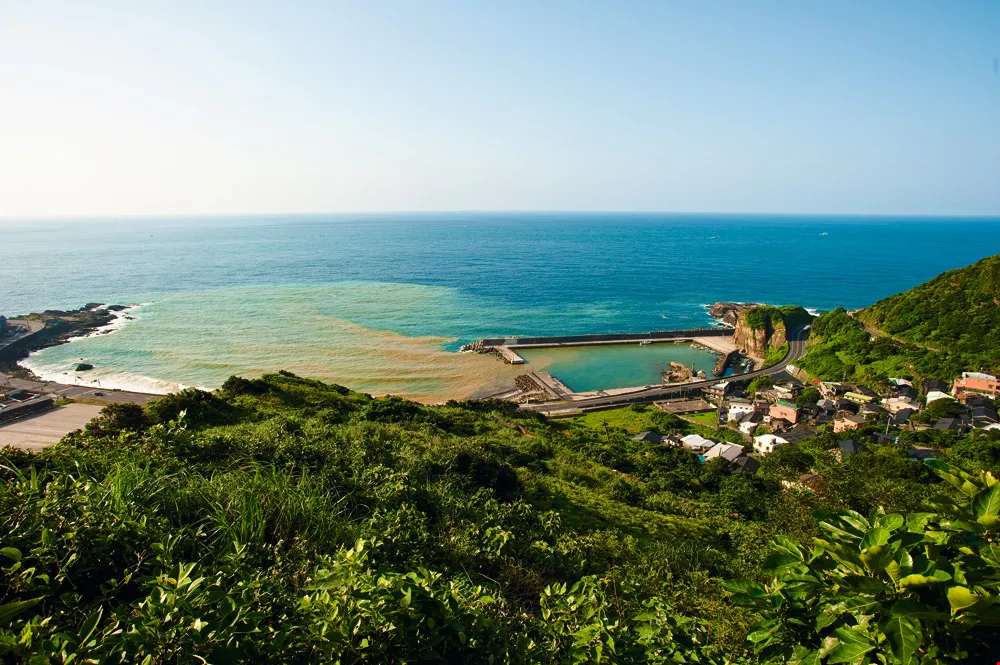
The winding Jinshui Highway, the Golden Waterfall with its gurgling amber water and the distinctly contrasting colors of the Yinyang Sea are all especially eye-catching against the emerald-green mountain backdrop. Visitors to the area may mistake the murky appearance of the Yinyang Sea for waste runoff from the nearby smelting plant.
Lin Jiawei, a guide at Gold Ecological Park’s Environmental Education Center, assures us that the Yinyang Sea looked this way even before the large-scale mining of the Japanese era, and that the sea’s appearance didn’t change after the operations ceased.
According to Yu Bing-sheng, pyrites found in the Jinguashi mining area are the chief reason for the colors of the Golden Waterfall and Yinyang Sea. Pyrites leaching from the strata due to hot water mineralization decompose to release iron ions after long periods of weathering; in the oxygen-poor subterranean environment, these form ferrous ions (Fe2+) that are dissolved in the groundwater. When the subterranean streams well up from the strata, the ferrous ions in the water become ferric ions (Fe3+), which are deposited on the rock face and streambed, creating the rusty colors of the Golden Waterfall.
After the weakly acidic mineral water flows downstream into the sea, it’s neutralized by the weakly alkaline sea water. The rapid oxidation of the ferric ions results in large quantities of precipitates. These turn the water a murky yellowish brown, and local currents keep it trapped in the bay, clearly divided from the blue ocean water beyond. These sharply contrasting colors are the “yin” and “yang” of the Yinyang Sea’s name.
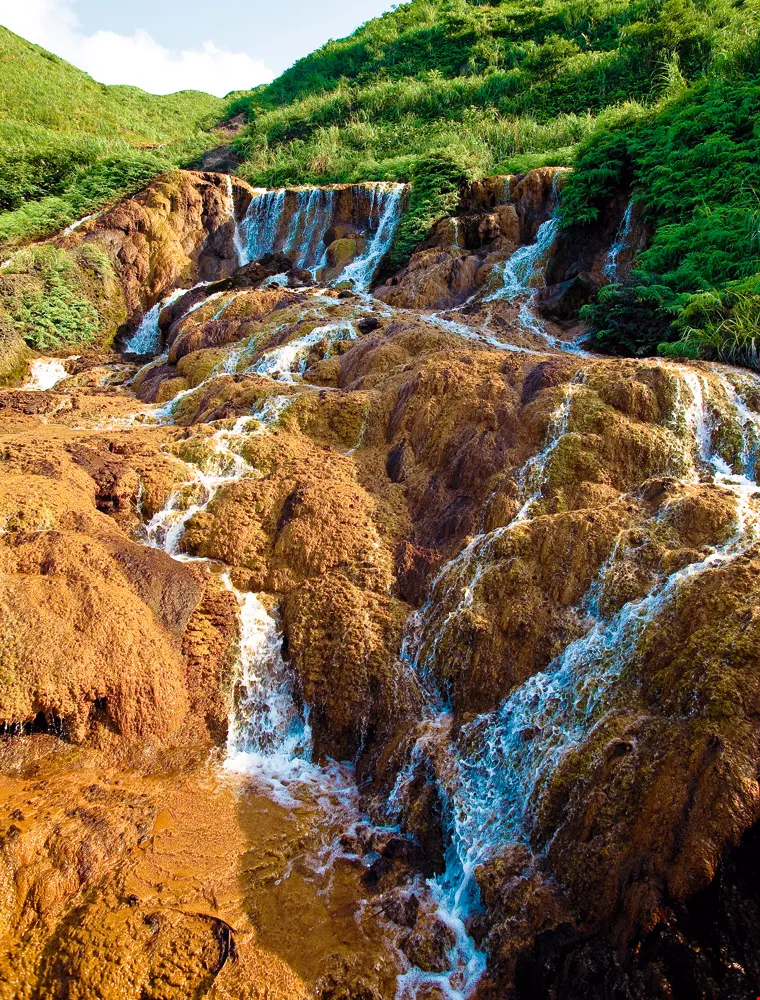
After long periods of weathering and deposition, pyrites in the rock strata of Jinguashi gradually leach into the groundwater, creating two natural wonders: the Golden Waterfall and the Yinyang Sea.
Tug of war between man and nature
It was nature that formed Jinguashi’s unique landscape, but it was man’s struggle against nature that shaped the rise and fall of the town’s goldmining era.
Taiwan’s modern goldmining history started in Jinguashi, and mining rights have passed through several hands over the last century. During the heyday of the mining operations, the prosperity of Jinguashi and nearby Jiufen surpassed even Taipei. With 27,000 residents crowded into this tiny place, the saying “The superior goods go to Jinguashi and Jiufen; the inferior goods go to Taipei” was born.
Most of the mines in Jinguashi were drifts tunneled into the mountainside. In order to mine as fast as possible, the miners engaged in dangerous work, risking cave-ins. Jinguashi’s mine tunnels total over 600 kilometers. Mt. Jingua, the mountain containing most of the gold ore, had nine tunnels, the deepest two of which extended below sea level.
“Every part of Jinguashi, from the public housing to the mine tunnels to the Japanese-style residences, bears traces of a tug of war between man and nature,” says Gold Museum curator Cai Zongxiong.
Jinguashi’s century of mining history can be seen in the Gold Ecological Park, opened in 2004. It’s also Taiwan’s first eco-museum to integrate the culture, history and natural features of the area.
Having fallen from prosperity to ruin, Jinguashi, forged by Mother Nature, still retains its varied landforms and the allure of days gone by. The luster of glittering gold continues to shine in this tranquil mountain town.
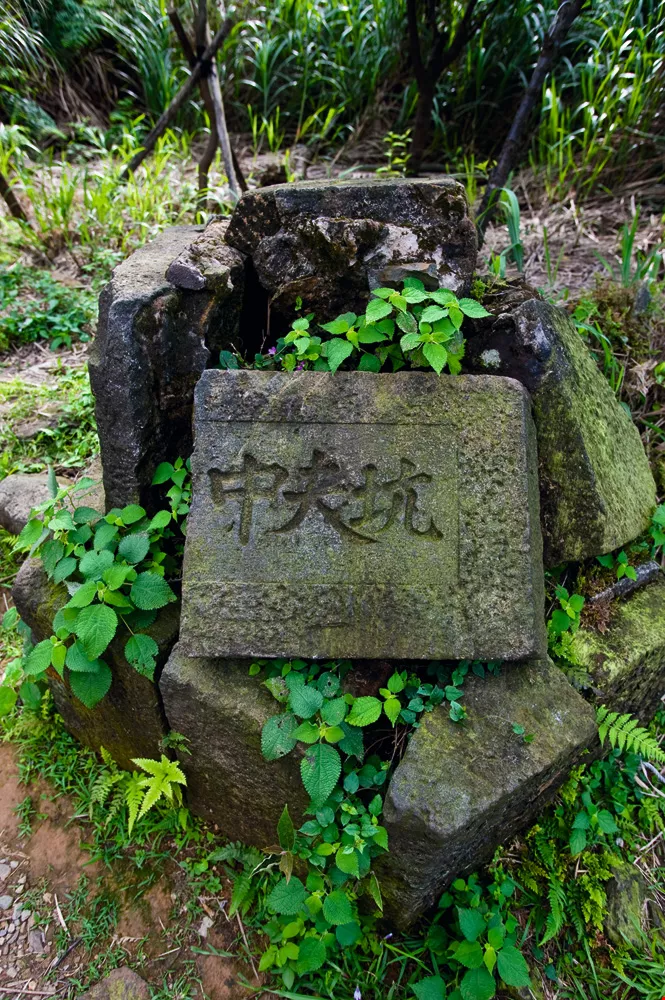
Rumors of vast undiscovered deposits of gold ore at Jinguashi are a puzzle still being worked on.


