Last month excitement ran high in the living-rooms of avid baseball fans from across the Republic of China. Glued intently to their television sets, citizens thrilled to the stirring performance of the Republic of China's Senior Amateur baseball team competing in the 28th World Amateur Baseball Championships, held in Havana, Cuba. Despite the vast ocean of distance separating the two island nations, the wonder of modern technology's live satellite transmission brought the exciting atmosphere of witnessing the game in the stadium into the comfort of the family living-room.
Satellite transmission of this recent athletic event (in which the team earned a second place in the medal round) drew large television ratings for a variety of reasons. Baseball, long a favorite among the Chinese people on Taiwan has continued to improve in terms of international standards. This fact was reinforced this past August when the Republic of China earned a bronze medal in the baseball competition at the Summer Olympics held in Los Angeles (baseball was a demonstration sport). This spurred public interest and support for the team's chances in the World Championships. Television networks, realizing the popularity of baseball, and also aware of the advertising revenue that could be secured, went ahead with transmission broadcasts.
For the past decade the Republic of China's little league, junior and senior little league teams have earned several world championship crowns. This, however, was not so with the senior amateur teams (aged 19 and over), despite their overall potential as seen in the eyes of international baseball experts. So it was with a mixture of pride and hope that loyal fans at home in the Republic of China tuned into the exciting play-by-play action of the match.
To the person who is not a fan of television athletics, the sight of groups of people glued to their sets, following every move intently, expressing words of joy, anger, excitement, may seem strange. However, in the words of Yue Teh-hui, assistant professor of psychology at National Taiwan University, this is quite healthy. Quoting a recent study that appeared in the American periodical, "Psychology Today" watching athletic events on television is a good way to relax and release the tensions of our hectic daily lives. In addition, sports are like a common denominator among countries and cultures. No matter what the country, religion or political system, an exciting soccer match or the spectacle of the Olympics moves people. Sports events seem to break the barrier that separates people--check any restaurant or bar with a television broadcast of sports events and you can witness strangers happily engaged in talks about the events in progress.
The Republic of China has often encountered obstacles in her quest to compete in international athletic events. Difficulties over the name, flag and anthem have led to unfortunate results in such important recent competitions like last year's Asian Junior Basketball Championships held in Seoul, South Korea and the Asian Junior Volleyball Championships in Saudi Arabia. Therefore, the excellent performance of the baseball team was an important psychological lift in terms of international relations.
Somewhat coincidentally, the development of satellite transmission on Taiwan and the popularity of baseball seemed to coincide. In 1969 the International Telecommunications Administration (ITA) established the Taipei Satellite Communications Center. This center installed the Taipei Number 1 Earth Station in the same year (there are now three receiving dishes). The following year in 1970 the Chin Lung Little League baseball team represented the Republic of China at the World Little League Championships in Williamsport. This was the first time that satellite transmission of a live sporting event was broadcast. The results were impressive, in fact countless fans awoke during the early hours of morning to watch the action.
Last month's World Championship provides a good analysis into what satellite transmissions involve. Cost calculations are somewhat complex, involving three different areas: first a rental fee for use of the satellite is paid, secondly a production fee to the Cuban television technicians was paid for their broadcast services, and finally broadcast rights to the games had to be paid to the organizing committee in Cuba.
The rental fee for the satellite transmission was paid to the International Telecommunications Satellite Organization (INTELSAT). This organization was organized in 1964 by the United States to develop international satellite telecommunications between nations. An agreement between participating nations (the Republic of China joined in 1965) established guidelines for rights of use.
The production costs involved a per game fee paid by the networks to the Cuban television network as they supplied the technicians to broadcast the game. The figure agreed upon was US$8,000 for each game.
Broadcast rights proved to be a bit of a problem for local networks. Usually average rights can be secured for a fee of US$2,500 to 3,000 per game. The Cubans, however, knowing the popularity of baseball in the Republic of China asked for US$10,000 a game. After negotiating, the rights were secured for $2,500 per game.
The final costs to the local networks were high. The satellite fees are calculated on a per minute basis and two hours of telecast ran over $25,000.
Broadcast of baseball has seemed to follow a circuitous route in the Republic of China. Formerly popular, little league competitions have seen a big decline in viewing interest, while senior matches have captured the sporting interest and are ushering in a new era of sports telecasts. The growing interest in the skilled style of play in senior baseball has revealed a shortcoming in the broadcast--the lack of expert commentating, or play-by-play analysis which is so enlightening and informative to the viewing audiences in the United States. Securing knowledgeable analysts can only serve to bring a new level of enjoyment to local viewing audiences.
(Gerald Hatherly)
[Picture Caption]
Satellite transmission of the baseball games brought the exciting live stadium atmosphere into the comfort of home.
1. Taipei Earth Station 1 in Yangmingshan picked up the satellite signal. 2. The world telecommunication network is divided into three oceanic regions: the Atlantic, Indian and Pacific Oceans. 3. The final transmission followed a circuitous route across the Atlantic and Indian Oceans before reaching its final destination, the Republic of China.
The numerous commercial breaks made the televised proceedings seem slower, as this cartoon humorously points out. (cartoon printed in the United Daily News).
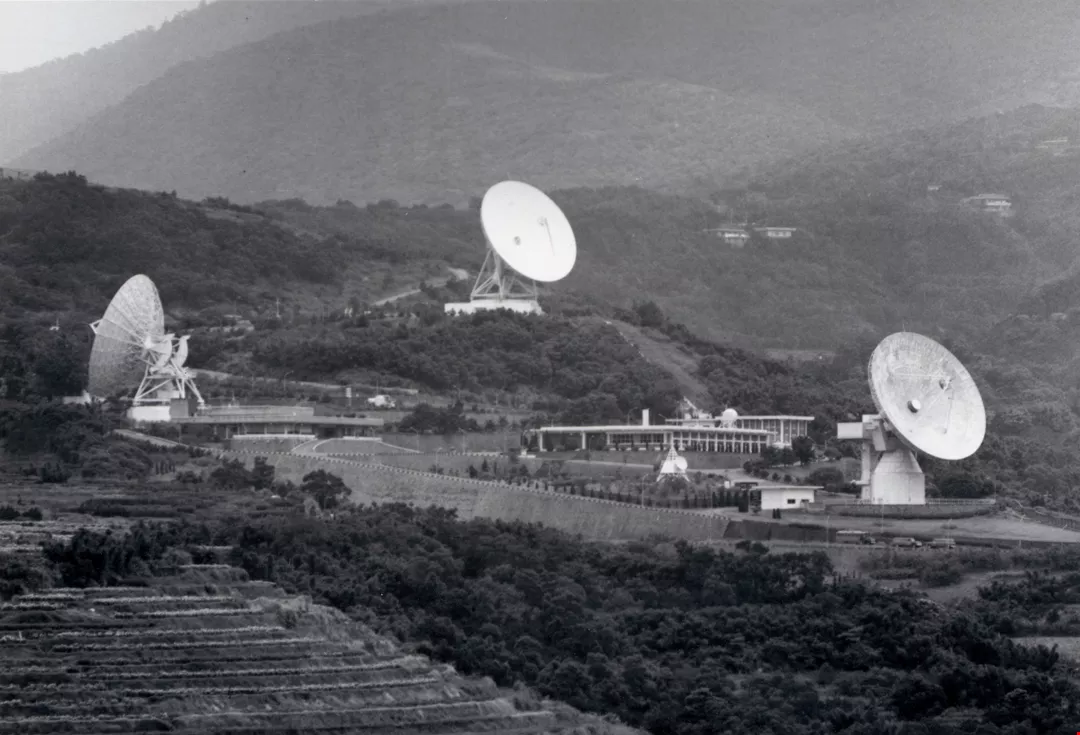
1. Taipei Earth Station 1 in Yangmingshan picked up the satellite signal.



@List.jpg?w=522&h=410&mode=crop&format=webp&quality=80)

@List.jpg?w=522&h=410&mode=crop&format=webp&quality=80)


@List.jpg?w=522&h=410&mode=crop&format=webp&quality=80)

@List.jpg?w=522&h=410&mode=crop&format=webp&quality=80)