Peter Yen and Pinkoi
Connecting Designers with Consumers
Liu Yingfeng and Teng Sue-feng / photos courtesy of Pinkoi / tr. by Geof Aberhart
May 2013


Much like their semi-namesake the koi (ornamental carp), Pinkoi is talented at revealing treasures from the depths, albeit the hidden depths of Taiwanese design rather than a fishpond. Founder Peter Yen, already experienced in the startup culture of Silicon Valley, chose to turn his technical prowess to connecting up with designers through the Internet. Now, in just three short years, Pinkoi has attracted over 7000 designers from Taiwan and abroad selling some 50,000-plus products, becoming a shining example of Taiwan as a design power-player.
Every weekend, the plazas of Taipei’s Huashan 1914 Creative Park become a stage for local designers to show off their wares. From simple T-shirts to detailed artworks and complex leather goods, the variety of eye-catching design work is a powerful exhibition of local talent.
But when the winter cold or summer typhoons hit, exhibitors at this open-air market can’t help but worry that visitor numbers will be affected. Now, thanks to Pinkoi, Taiwan’s first online platform tailored to designers, potential customers don’t even need to leave home to browse and buy the creative fruits of such designers’ labors.
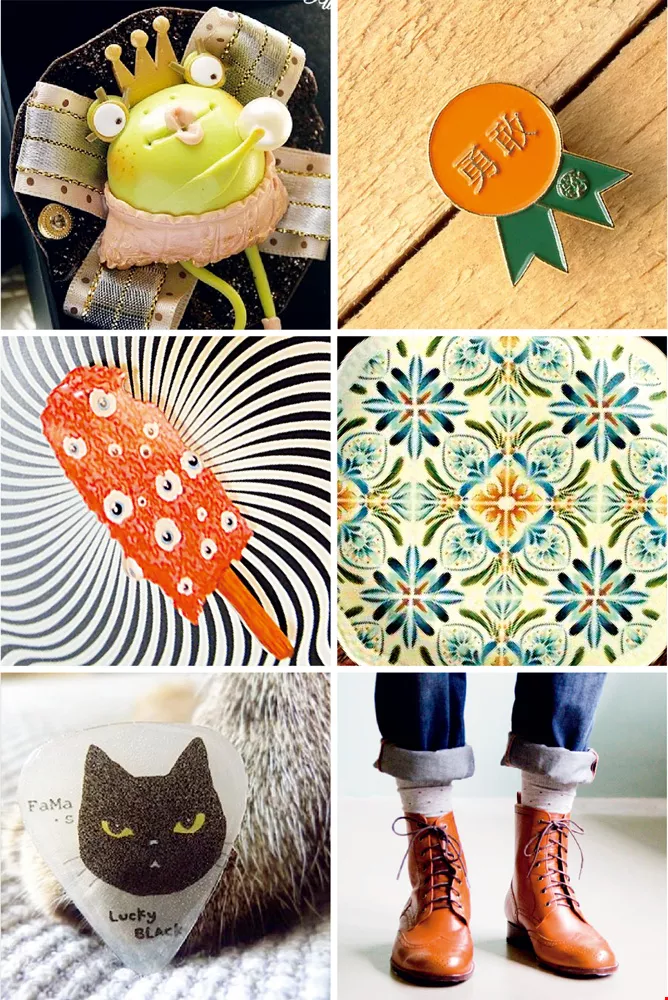
Since going live in September 2010, Pinkoi has attracted over 7000 designers and over 1000 brands with more than 55,000 products. From stickers and coin purses to hanging lamps and storage cabinets, as long as it’s original and well designed, you can probably find it on Pinkoi.
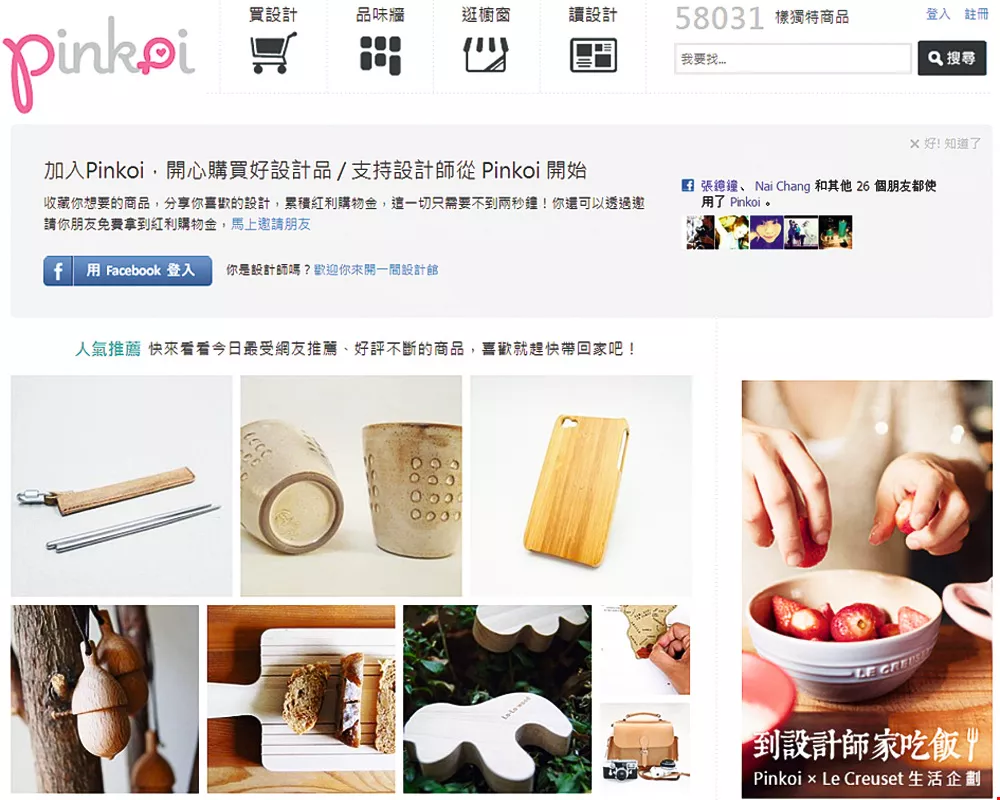
Pinkoi’s crisply designed website currently features handicrafts from over 1000 brands and over 7000 designers, making it a vibrant illustration of the power of Taiwanese design
Pinkoi’s logo, which features a cute pink fish, is an interesting work of design in itself. The fish represents the “koi” (Japanese for carp), which is considered good luck and a sign of welcome, while the pink coloring and the heart aim to symbolize the team’s passion for hunting down treasures in the hidden corners of Taiwan’s design world. At the same time, the fish design brings to mind the idea of fish swimming upstream, a metaphor for Pinkoi’s fight to strengthen the core values of the design industry.
“What I want is for Pinkoi to help Taiwanese designers get international exposure, as well as for it to become Asia’s number-one design platform,” says 35-year-old founder Peter Yen confidently.
Yen may have a passion for design, but he is also something of an outsider to it. After graduating with a degree in civil engineering from National Taiwan University, Yen traveled to the US in 2002 to study for a graduate degree in information technology at Carnegie Mellon University. Then, that qualification in hand, he started a seven-year career in Silicon Valley, first working with Trend Micro, then with Yahoo!
To set up shop in the innovative and vibrant environment of Silicon Valley is the dream of many aspiring entrepreneurs around the world. Working there, though, Yen also saw how many people stumble and fall along the entrepreneurial path, and how an iron will is necessary to dust yourself off and keep going after such slips.
In his second year at Yahoo!, Yen founded Yahoo! Answers via the company’s internal entrepreneurship program. In the blink of an eye, his team went from five people to over 200, and seeing his baby succeed as it did inspired Yen to begin thinking about other entrepreneurial options.
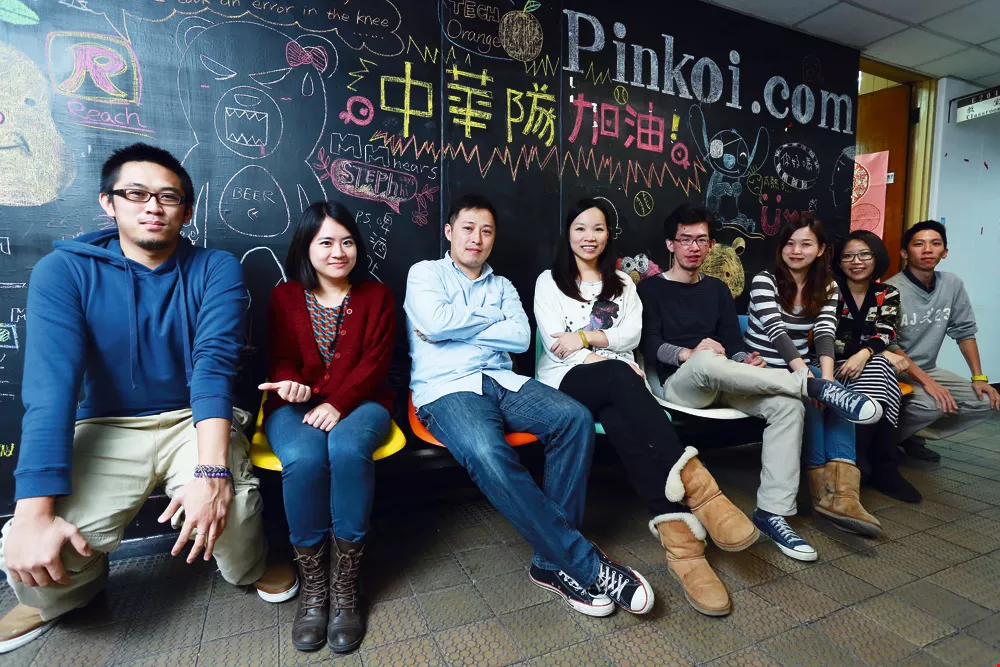
In the three years since its founding, Pinkoi has grown from a three-person team to an eight-person one and anticipates further growth as the business turns its eyes to designers in the rest of Asia and its aim of becoming Asia’s number-one design platform.
But giving up a well-paid job and the comfortable Bay Area lifestyle was a decision not to be taken lightly, and it was only after a year and a half of convincing that Yen was able to talk his family around. In 2009, he, his wife, and their young child packed up and returned to Taiwan.
He asked some friends if they wanted in, but none were willing to give up the jobs they already had, so he turned to the Internet, contacting Mike Lee, a National Chiao Tung University civil engineering graduate he had met on an online forum. Then, through a friend, the pair were put in touch with Maibelle Lin, a graduate of National Chengchi University’s advertising program and Parsons The New School for Design in New York, who was working at WiFiSlam, a company in Silicon Valley.
After the three collected startup funds of NT$500,000, Yen created an office in a seven-square-meter study in his home and began working with Lee on the website’s back end, while Lin worked on the visual design.
Initially, being unfamiliar with the status of Taiwan’s design industry, Yen sought advice from an industry veteran, only to have his parade promptly rained on as his advisor pointed out that the number of established brands that could be suitable partners for Pinkoi was so small you could count them on the fingers of two hands. With no name recognition and no connections, Pinkoi’s biggest problem in those early days was finding designers and products.
But while others were ready to be discouraging, Yen redoubled his efforts, heading out to creative markets, design exhibitions, and even night markets in search of the right products for the site.
Shen Yiyu, founder of Studio inBlooom—which creates printed fabric book covers, pillow cases, and the like—still remembers the day a little over a year ago when Yen first came to her studio.
While their first meeting had no concrete results, several months later Yen and his partners returned to the studio with specifics about how Pinkoi intended to raise the visibility of Taiwanese design, and they talked Shen around.
Shen, a 27-year-old National Taiwan Normal University fine arts graduate, founded Studio inBlooom with two friends in 2008 after being awarded NT$350,000 through the Ministry of Education’s U-Start New Graduates Startup Program. After starting out selling to small stores, the company later got their products into Eslite Bookstores, gradually building word of mouth. In February 2011, they rented a storefront on Taipei City’s Dihua Street, and the team all quit their day jobs to focus on the growing business.
The design industry is one requiring many specialist skills, as Shen explains, requiring not only someone to handle the actual design work, but also people to focus on production and sales. “Most of the design-oriented websites in Taiwan right now haven’t really focused on building a sales platform, creating a niche that Pinkoi fills perfectly.”
Pinkoi has also taken a different tack to other online platforms in terms of commissions and fees, charging no listing fees and sending 90% of each transaction to the designer. They’ve also partnered with convenience stores to make it easier for customers to collect their purchases. To Shen, the decision to allow designers to enjoy more of the profits has helped create a virtuous circle between designers and customers, as well as making Pinkoi unique in Taiwan.
Peter Yen believes that with Taiwan’s design industry still in its early stages and so many designers devoting their spare time to their beloved design work, a website like Pinkoi will be able to connect more and more local designers with the global market—already some 20% of Pinkoi’s business comes from abroad. He also hopes that through such opportunities, they will be able to help more and more designers make a living off their design work.
Connecting Asian designersIn just three short years, Pinkoi has grown rapidly, with over 7000 designers already signed up.
“I never realized there were so many designers and so many brands in Taiwan!” says Yen, sharing the common response to explanations of his work. But the impressive numbers don’t end there! Every day, Pinkoi also sees an average of 30 brands apply for listing on the site.
With over 1000 brands already on the site, Yen has begun thinking about the next step: connecting brands together.
To that end, Pinkoi organizes regular design seminars, teaching designers how to write better copy for and take better photos of their products, as well as suggesting accessory brands to pair with new seasons’ clothing designs. Such sharing of knowledge is already boosting brands’ effectiveness.
Having started out focused on Taiwan, Yen is already looking to the wider Asian design market, aiming to connect designers not only in Taiwan, but also in Thailand, Japan, and China. The first step toward this is helping Taiwanese designers expand their reach beyond their own shores, and already Pinkoi is seeing success in this regard—when the Taiwan Design Center recommended 17 brands last year for inclusion in a design exhibition in Hong Kong, 11 of them were brands working with Pinkoi.
Yen has already done his homework on the global online design platform space. He points to the surprising growth of Etsy, which launched in New York in 2005 and has become the world’s biggest crafts sales website with over 25 million members and 18 million items; already Etsy has helped thousands and thousands of designers realize their dreams of making a living off their love, and the site itself made a whopping US$890 million in 2012. Pinkoi hopes to follow suit and become Asia’s number-one site for one-of-a-kind handicrafts.
After three years of work, today Pinkoi enjoys monthly operating revenues of at least NT$1 million, and currently the team is working on the next step toward becoming Asia’s number one, an English-language version of the website.
Through action and passion, Yen and his team have created a nourishing garden for Taiwanese design to grow and bloom in, and with continued care of these seedlings, Pinkoi promises to dazzle and delight well into the future.

@List.jpg?w=522&h=410&mode=crop&format=webp&quality=80)

@List.jpg?w=522&h=410&mode=crop&format=webp&quality=80)

@List.jpg?w=522&h=410&mode=crop&format=webp&quality=80)
@List.jpg?w=522&h=410&mode=crop&format=webp&quality=80)

