Vitality and Virtue—Building a New Seafood Culture
Chang Chiung-fang / photos Jimmy Lin / tr. by Jonathan Barnard
January 2012


A few flowering peach boughs beyond the bamboo grove / When river water warms in spring, ducks are the first to know / The ground is covered with mugwort and reed buds / It’s time for globefish to come to the market
—Su Dongpo “On Hui Chong’s ‘Scene on Spring River’”
Taiwan has long been known as a “seafood kingdom.” Whether in restaurants, caterers’ tents, or night-market stalls, seafood dishes represent a high proportion of what’s on offer.
The Taiwanese insist upon vigor and vitality from their seafood. In preparing it, they tend to stress simplicity, highlighting the seafood’s inherent flavor. But in recent years, in response to global environmental change, the price of seafood has been rising.
Must gourmet cuisine be at odds with environmental sustainability? An emerging local green seafood culture is answering “no” to that question.
On a cold and blustery early winter morning on the docks of Shicheng Harbor in Yilan’s Toucheng Township, set-net fishing boats are approaching. Their hauls are largely composed of ribbon fish, with some mackerel, yellow tail, cuttlefish and red bulleye mixed in. When the fish are just brought ashore, they are extremely fresh and vital. The proprietors of seafood restaurants and fish stalls scan the piles and take the fish they want, conducting their business quickly.
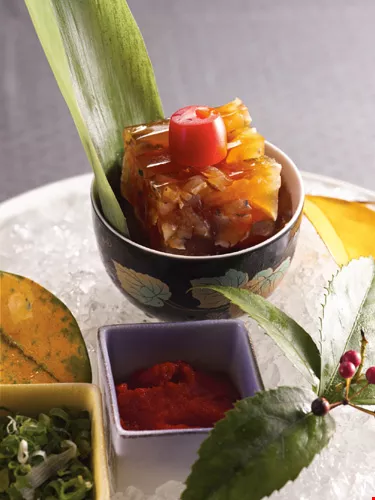
In winter Shin Yeh Japanese restaurants begin to offer tasty and gelatinous “fugu skin in jelly.” Served with sushi that is garnished with sashimi and fish eggs, alongside an old-fashioned crab congee, it makes for a rich and diverse combination that has earned rave reviews.
Toucheng’s Guangrong set-net fishing grounds are located where cold and warm ocean currents merge, a place where migrating schools of fish must pass. Set up during the Japanese era, Guangrong produces 1000 metric tons a year, making it one of northern Taiwan’s top fishing grounds. Its owner Zhang Liren points out that the fishermen there cast their nets to take advantage of the movements of fish schools when the tide changes. “When the flow of water is greater, the fish hide at the bottom. They wait until the tidal movement is calmer before they start to move. At those times your nets will fill up in an instant.”
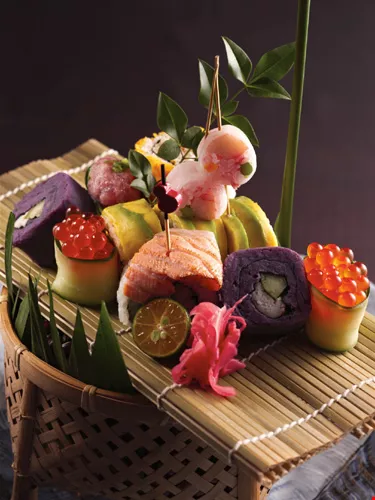
In winter Shin Yeh Japanese restaurants begin to offer tasty and gelatinous “fugu skin in jelly.” Served with sushi that is garnished with sashimi and fish eggs, alongside an old-fashioned crab congee, it makes for a rich and diverse combination that has earned rave reviews.
Taipei’s Liaoning Street is lined with stir-fry places and seafood restaurants. Among these, Xiao Zhang’s Turtle Island is true to its name by cooking seafood that was caught near Yilan’s Turtle Island. Zhang Naiwen, the restaurant owner, who grew up near Yilan’s Daxi Fishing Harbor, arises early every morning and leaves Taipei for Yilan, where he picks from the fish available at Daxi. Then he returns to Taipei to cook what he’s purchased. After seven or eight years, he has made quite a name for himself in the realm of seafood restaurants.
“I sell what’s available,” says Zhang. He uses very simple techniques to prepare fish as his customers like them: sliced into sashimi slices, steamed in a light broth, roasted with salt, sautéed, or boiled. Only rarely does he use much oil or stir fry at a high heat. “When the food is fresh, simple preparation is best.” Zhang says that you should never waste ingredients that could be eaten raw by overcooking them.
For regular customers, ordering the raw shrimp here is de rigueur. It’s a signature dish of the restaurant that is rarely seen at other establishments. “You only dare to let guests have them if they’re 100% fresh,” says Zhang. Recently caught shrimp doesn’t have that fishy smell, and it tastes sweet and succulent—completely different from cooked shrimp. “One 82-year-old lady was brought in by her grandson. It was the first time she had ever eaten raw shrimp, and she thought they were fantastic.”

At dusk the many seafood restaurants at the Liaoning Street night market turn on their lanterns, just opening for the day.
The Taiwanese love to eat fish. At Chinese New Year’s and other holidays, no celebration is complete without them. A banquet lacks gravitas if there aren’t large quantities of meat and fish. And seafood plays an essential part in many classic Taiwanese dishes, such as ang-jim-bi-go (紅蟳米糕/serrated swimming crab and glutinous rice cake), youyu luorou suan (魷魚螺肉蒜/squid, turban snail and leek soup), and mullet roe.
We eat and drink not just to fill our bellies but also to cultivate our spirits.
Zhang Yongjie, a cultural worker in Penghu, has a special love for seafood. Born and bred in Penghu, Zhang says that for her, seafood has a deep and intimate connection with her home town. In particular, during those years when she left to work in Taipei, the flavor of “sow’s soup” would float up into her consciousness whenever she felt homesick. Containing dried squid, edible tree fungus, pork belly, garlic shoots, and tofu, it combines the flavor of meat with seafood and is a traditional dish from her grandma’s era. For Zhang, it’s also the most representative of what she regards as “downhome cooking.” In her book For the Love of Food and Drink, she describes bream noodles and octopus sautéed with brown sugar as two more of her favorite local Penghu seafood dishes.

Migrating mullet return to Taiwan’s coastal waters just at the time when their eggs are maturing. Pictured here are mullet roes set out to dry at Donggang, Pingtung County.
People in Penghu can’t get away from seafood. But as the seasons turn, various activities connected to seafood occur all around Taiwan. In May the tuna season starts at Pingtung’s Donggang. In September it’s time for cuttlefish in Taichung’s Wuqi. And in November it’s swordfish season in Tainan’s Chenggong.
The amount of seafood consumed in Taiwan bears witness to its popularity here.
According to the United Nations Food and Agriculture Organization, over the last decade Taiwan’s seafood hauls, which in 2010 totaled 1.08 million metric tons, have been in the top 20 of the world. Shao Kwang-tsao, a researcher at the Academia Sinica’s Biodiversity Research Center, points out that according to National Geographic magazine, Taiwan consumed 790,000 metric tons of seafood in 2010, which placed it 12th in the world. But on a per-capita basis, its consumption of 34 kilograms ranked fourth.
Of course, Taiwan has historically consumed so much seafood because it is an island, surrounded by the sea. The ocean currents bring ample schools of fish and other oceanic creatures to the Taiwan area, making its waters one of the world’s richest fishing grounds.
Among the world’s 24,000 kinds of fish, Taiwan’s waters are home to 3100, or more than one-tenth of all species. And more than 150 of these have economic value.
“In spring, croaker; in winter, red sea bream.” The Taipei Fishery Marketing Corporation, which sells mostly fish caught by trawlers based in Yilan or Keelung, is highly conscious of the season and about what fish are eaten in which season. Huang Xishan, head of its sales department, points out that in winter hauls are mostly of squid, red bulleye, and ribbon fish, as well as prawns and crabs.

Zhang Naiwen, who grew up in a fishing village, travels every day to Daxi harbor to purchase his restaurant’s seafood. Emphasizing original flavors, he employs only the simplest cooking methods.
“Eating seafood, you gain its vigor,” says Zhang Liren. And freshly caught fish offers the most vigor and vitality.
When you try to offer the freshest seafood, the journey from sea to table is a race against time. Take northern Taiwan: the fishing boats continually stream in all afternoon. After their hauls are unloaded, at 2 or 3 a.m. they are brought to Taipei Fishery Marketing on Wanda Street in Taipei’s Wanhua District to be sold in bulk. By the early morning, fish dealers have already brought the day’s supply to traditional markets and supermarkets throughout the city.
“You want to eat fish within 24 hours of being caught. That’s its ‘golden period,’” says Zhang. Freshly caught fish have a fresh sweetness, texture and vibrancy to which frozen fish can’t compare. “Once seafood hits ice water or is frozen, its texture and flavor becomes entirely different. That’s because the process of freezing damages the cells of the fish, causing them to lose their water content. As a consequence, defrosted fish lacks pliancy.
But since Taiwan has been blessed by nature to have fresh supplies of seafood, Taiwanese cuisine tends to use the simplest methods of seasoning and preparing fish.
Sashimi is a restaurant’s toughest test of seafood freshness.
Zhang points out that most sashimi from frozen fish must be cut in thick slices, for it will break apart if thinly sliced. But raw fish is tougher, and it needs to be sliced thinly in order to break down its cellular structure and create a tender and delicate mouthfeel.
Another technique is simply to apply some salt before steaming. It’s an excellent way of highlighting the seafood’s original flavor.
“Salt is best able to reawaken the original flavors of food,” writes Zhang Yongjie in For the Love of Food. In the book she clearly explicates the role that salt plays in preparing seafood and how that seemingly small addition of a simple seasoning can make all the difference: “People who live by the sea understand well that salt, which is derived from the sea and from the sun, is the best seasoning for drawing out food’s original flavors.”
Salt undisputedly has the effect of bringing out flavor, but the lemon slices that commonly accompany seafood are much more controversial.
Zhang Liren and Zhang Naiwen, both of whom are fish suppliers, alike say that lemon has the effect of reducing a fishy smell, but truly fresh seafood doesn’t have that smell to begin with. What’s more, once fresh seafood is doused with lemon, its delicate sweetness will be obscured.

Lobster, abalone, sea urchin, fish… the sashimi platter at Amimoto restaurant in Yilan’s Toucheng is full of oceanic flavor and vitality.
What seafood tastes best? Opinions vary.
The ranking among the seafood gourmands of Taiwan is: first threadfin, second croaker, and third sea bream.
Mackerel and white pomfret have also long been popular with consumers and are quite expensive. These fish all have unique sweet flavors, along with soft flesh and bones. “Even the stupidest chef can cook them well,” says Zhang Liren.
“Yet you needn’t be picky about which type of fish to cook,” says Zhang. “So long as it is fresh, it will taste good.” His favorite fish is bonito (the kind used to make fish shavings after dry roasting), because there are large quantities of it, and it’s cheap. It’s sweet and fragrant and is regarded as the tastiest fish among fishermen. “It tastes just as good as bluefin tuna.”
Li Jialiang, chairman of the Fish Culture Social Enterprise, who is known as “Taiwan’s fish maven,” is effusive in his praise of the marble goby. “It has delicate flesh, is sweetly fragrant, and is full of gelatin. In the mouth it has a pliant but tender firmness similar to that of a chicken leg.”
In addition to good taste, nutrition is another factor that has earned seafood the affection of Taiwanese.
“Eating fish is a healthy and smart choice.” Such is the deeply held opinion of Taiwan’s people. Li Jialiang, who is a promoter of reducing carbon footprints and creating a healthy and sustainable fish culture, points out that fish holds abundant animal protein while lacking the cholesterol of other kinds of meat. And its high quantities of EPA and DHA spur children’s brain development and lower rates of cardiovascular disease.
But Li is worried that fish culture in Taiwan is moving backward: “The experience of eating fish is not being passed along. Many people don’t understand or know fish.”
He cites the examples of mackerel and giant trevally. Taiwan boats take about 100,000 tons of those fish a year. Inexpensive, they are mostly exported to Turkey, Egypt and other African nations. “But the fact is that these shallow-water fish have abundant omega 3 oils, including DHA, EPA, and ALA. They’re great fish for the brain.”
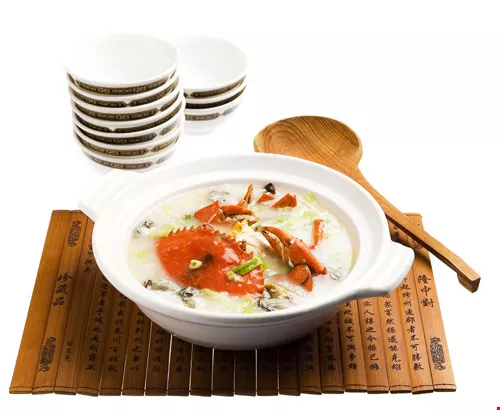
In winter Shin Yeh Japanese restaurants begin to offer tasty and gelatinous “fugu skin in jelly.” Served with sushi that is garnished with sashimi and fish eggs, alongside an old-fashioned crab congee, it makes for a rich and diverse combination that has earned rave reviews.
Eat smaller rather than larger fish, as well as fish caught locally rather than from far away. Besides promoting good health, these rules of thumb make good environmental sense at a time when global fish stocks are being depleted.
As early as the 1990s hauls of cod and other large fishes began to decline globally. Taiwan’s takes have been no exception.
Shao Kwang-tsao points out that over the last 20 years only a dozen or so of the 100 types of fish harvested by Taiwan have come to be taken in larger quantities. Most have seen significant drops in hauls. Take bluefin tuna, which is called “black tuna” in Chinese and known in the industry as “black gold.” In 1999 Taiwan ports hauled in more than 10,000 of the fish, but in 2011 only 900 were brought ashore. That’s not even one-tenth of the former amount.
Huang Xishan, head of sales for Taipei Fishery Marketing, explains that even by moving steadily northward and thus spending more on fuel, Taiwan’s fishing fleet still isn’t catching as much fish. Consequently, wholesalers have had to make up the difference by importing foreign fish. Daily consumption of 1000 metric tons is split roughly evenly between local and imported fish.
Huang doesn’t conceal that over the last decade plus, Taiwan has been relying on mainland Chinese production, but over this period internal demand on the mainland for fish has exploded. Prices are as high there as here. Consequently, apart from farmed yellow croaker, red sea bream, and brown croaker, which have seen rising supplies and dropping prices and are being exported to Taiwan, little other fish marketed in Taiwan is coming from mainland sources. Taiwan instead has had to import from South Africa and elsewhere.
With the supply of fish contracting, some believe that farmed fish offer a potential solution.
But farmed fish have an unpleasant earthy taste. And for picky Taiwanese, that’s a problem that’s hard to overcome. The fishing industry in recent years has continually tried to replace the white pomfret, which is now rarely seen in the wild, with farmed golden threadfin bream. Yet, according to Huang Xishan, although they may look alike, they taste totally different. “You can’t pass one off as the other!”
Farmed fish is also split between carnivores and herbivores. Those farmed species consuming fish meal result in much waste.
Shao Kwang-tsao points out that 40% of the global fish haul is ground up into fish feed. But five to ten kilos of small fish ground into feed can only produce one kilo of a large fish. It’s neither environmental nor economical. “Why not just directly eat the little fish?”
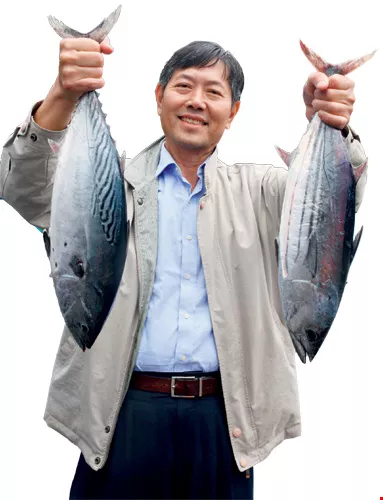
For 30 years Zhang Liren has engaged in set-net fishing in the waters off Yilan’s Shicheng. Loving his work on the sea, he has a deep understanding of the trade, and also knows how to take pleasure from eating seafood.
Figuring out how to eat good-tasting seafood without harming the environment is an issue that the whole world must tackle.
“When eating fish, the concerns have long been: Does it taste good? Is it healthy?” notes Shao of the Biodiversity Research Center. “Very rarely do we ask: Are we eating the right species? Are we acting in accord with ecological principles?” He explains that with the effects of overfishing, pollution and global warming, scientists estimate that in 50 years humanity could have very little fish left to eat.
Shao points out that among these factors, overfishing is having the biggest impact. For half a century, the capacities of fishing boats, fishing equipment and fish tracking devices have steadily grown, to the point where practically no fish is spared. Facing this potential catastrophe of oceanic resources, more than 10 nations have launched “Seafood Choice Guides.” In 2011, Shao likewise began promoting “green seafood” and created a guide of seafood choices in Taiwan in the hope that consumers would eat lower on the food chain so as to protect the sustainability of oceanic resources.
What qualifies as green seafoods, which can be consumed without reservation? These include clams, which play the role of filterer and maintain the clearness of water; inshore fish like trevally and amber-striped scad; and farmed tilapia and milkfish. All of these are on the recommended list. As for overfished wild grouper, mullet, and bluefin tuna, all are “to be avoided.”
A concern for both taste and sustainability needs to be a salient feature of our “new seafood culture.” If you are still uncertain about which fish to eat and which fish not to eat, then look for those that are low on the food chain, in season and caught in large quantities.
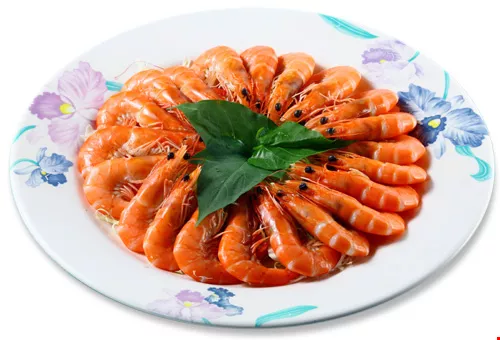
Fresh, sweet-tasting sand shrimp need only the simplest of cooking to bring out their delicious flavor.

@List.jpg?w=522&h=410&mode=crop&format=webp&quality=80)


