"When unmarried, a girl should obey her father. Once married, she should obey her husband. Once widowed, she should obey her son." Women in traditional society had to rely on men-the families they were born into were only temporary lodging, and the families they married into were their permanent places in life. When families' financial situations became dire, women even became commodities for sale. Life was cruel. But after a century of change, women's lives now extend beyond family life. Women now have a place in the workplace and society at large. Women have broken gender barriers in the military, the priesthood, and politics.
"Her History in Taiwan," an exhibit at Academia Sinica's Institute of Taiwan History, looks back at the twists of fate women have seen since Qing rule and the Japanese occupation-from the end of the practice of foot-binding, to receiving education and smashing the old notion that "for girls, it's a virtue to be unlearned," to entering society and the workplace. Through a variety of old, yellowed photographs and historical sources such as contracts, letters, and diaries, the exhibit shows the hardships women went through to achieve independence and dignity. It is hoped that visitors will be inspired to build a society with greater respect and equality between the sexes.
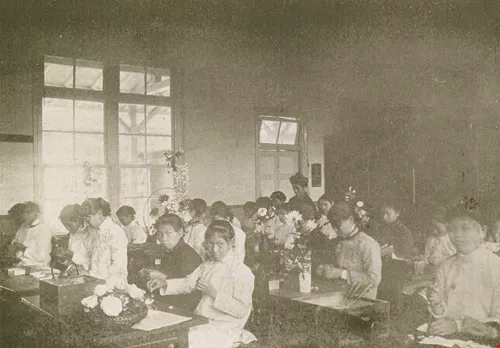
With the liberation of the body, women could exit the home and receive an education. During the Japanese era, in addition to the Japanese language and general knowledge, education also emphasized cultivating female virtue and Japanese nationalistic values. Pictured here are students learning flower arranging at a school for Taiwanese girls. There were also classes such as moral cultivation, sewing, knitting, and singing.
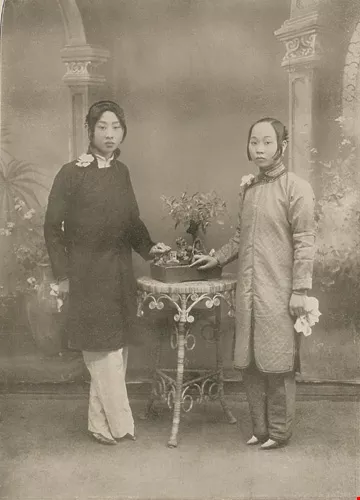
During the Japanese colonial era, the official position was that foot-binding hindered women's mobility and was a waste of the labor force. The Taiwan Governor-General's Office sent members of the Taiwanese gentry to Japan to observe how women could support their husbands at work and in business, in order to change the prevailing attitudes. In 1915, official campaigning brought about the abolition of the practice. Pictured are the daughters of a prominent doctor, both of whom have natural feet.
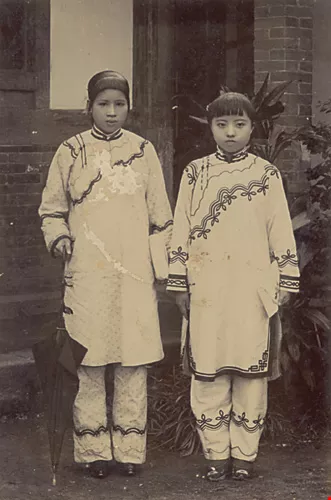
"Bound feet are for ladies; big feet are for slave girls." To ensure their marriageability, girls of four or five would have their feet bound by their mothers. The smaller and more delicate the feet, the more desirable the girl would be on the marriage market. Foot-binding was common in Taiwan, especially among Hoklo families.
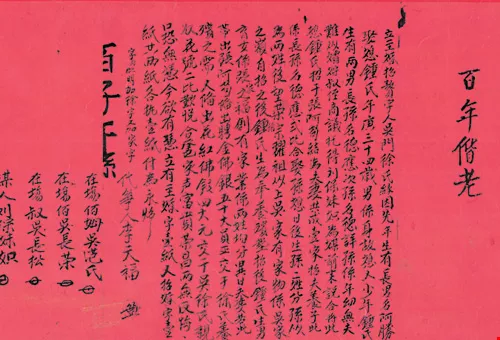
It was common for women to be treated as commodities for sale up to the Japanese colonial era. This Guangxu-era (1881) ransom shows that after the second son of one Chen Zhong passed away, his mother sold his wife back to the wife's father for 50 yuan as there were no children.
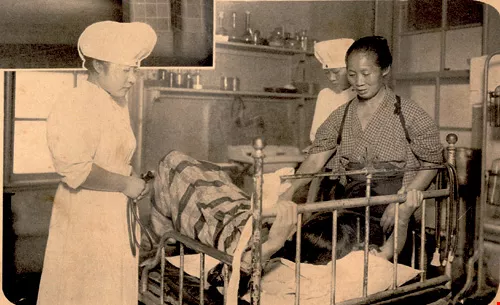
As education became more commonplace, women gradually entered the workplace. In the early Japanese era, productivity was derived mainly from labor. Many women worked in tea production, as bus conductors, or as public servants. Eventually, women received specialized training in fields such as medicine, nursing, music, and the arts. Pictured are nurses at Taipei Hospital caring for expectant mothers.
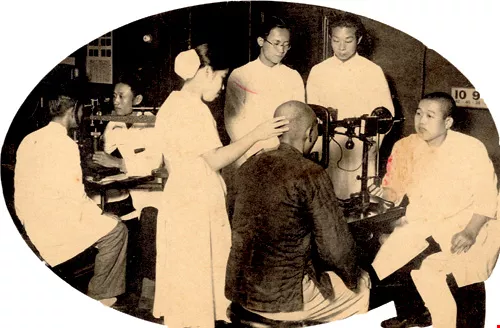
Pictured is a nurse at Taipei Hospital assisting an ophthalmologist in an examination. Nurses from town halls and schools in the mid- to late- Japanese colonial era also worked in public health and in battlefield care.
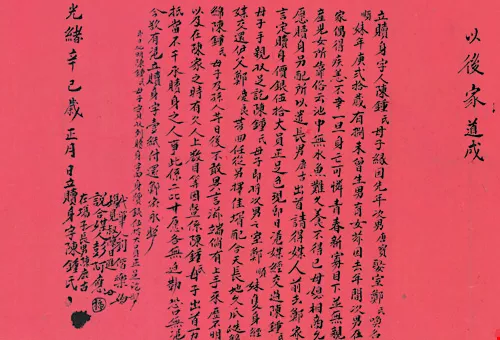
One's fate could be sealed with a contract! After one man passed away, his parents brought in a man surnamed Zhang to provide for his wife and children. The contract explicitly spells out the familial roles of the children, the way property was to be inherited, and funeral arrangements. Women had no say of their own.
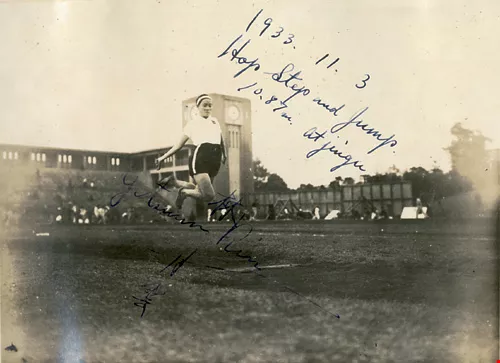
After Lin Yueyun graduated from Changhua Girls' High School, she studied at a physical education vocational school for girls in Japan. She is pictured here participating in the triple jump event at the Meiji Jingu Games, in which she jumped 10.87 meters. In 1936, Lin was selected to represent Japan at the Olympics in Berlin, but she unfortunately had to withdraw due to illness and missed the opportunity to become the first Taiwanese woman to take part.




@List.jpg?w=522&h=410&mode=crop&format=webp&quality=80)


