The Women of Dulan--A Travelers' Scrapbook
Chen Hsin-yi / photos Hsueh Chi-kuang / tr. by Scott Williams
March 2010


Dulan Village, located in Donghe Township, Taitung County, is an Amis village nestled between mountains and sea. Quirky, free-spirited women abound, some of them mature women born in the 1950s and 1960s, others young women born in the 1980s. Some are residents, while others are just passing through.
Dulan is filled with women who are stimulating and connecting with one another. The lyrics to A-mei's "Sisters" are apt: "I remember your tenderness, remember your cleverness. How could I ever forget? When I learn to fly, fly beyond the sky, I want you to see...."
That women find their way to Dulan is a matter of both chance and inevitability, something both beautiful and sad. Come listen as women of different generations tell of their ties, their vibrant dreams, and the light they shine on one another.
Over the New Year's holidays, the Moonlight Inn is unusually busy. Located near the forestry station in Dulan, Taitung County, the inn sits amidst a verdant forest at an elevation of 256 meters. Caressed by gentle breezes, the inn offers a stunning view of the development taking place along a portion of the East Coast National Scenic Area (ECNSA). A petite Japanese-Western hybrid, the inn once belonged to the Land Bank of Taiwan, which used it as a guesthouse for employees before abandoning it. Nowadays, its second floor houses the retro main set from the film The Moon Also Rises-its preservation funded by the ECNSA administration-while the first floor is home to the Other Woman Gallery.
The Other Woman Gallery is Taiwan's only art space established by artists expressly for the purpose of fostering "an upwelling of energy from women and those who self-identify as women on the inside." It has been operating in Dulan for seven years and is celebrating the new year with a solo show entitled "We, Women."
While visitors mull the significance of one of the photographs at the exhibition-it shows a naked woman leaping with joy as she makes her way down a small track by the sea-the artist, Susu Shih, is off with her boyfriend Ruud, a Dutch printmaker who lived in Greece for many years, combing the nearby countryside for their dream home. Susu, a world traveler fed up with teaching in studios, explains that she and Ruud plan to buy a piece of land and spend the rest of their lives there. "Ruud says the sea off Dulan is even more beautiful than that around Greece, whereas I really enjoy the artistic energy that flows around here."
That evening, a group of Dulan's "mature women" chat in a living room, taking turns throwing cold water on Susu's plans. "Susu, you love too passionately," says A-yang, an analytical woman who is a planner by trade. Woodcarver Dou Dou also half jokingly lays it on the line, "Men don't do a damned thing. They just act a little cool, and you fall for them!" Susu has been tossed by the storms of romance in the past. Half interpreting and half explaining, she responds, "I just love that his pursuit of art matters more to him than love."
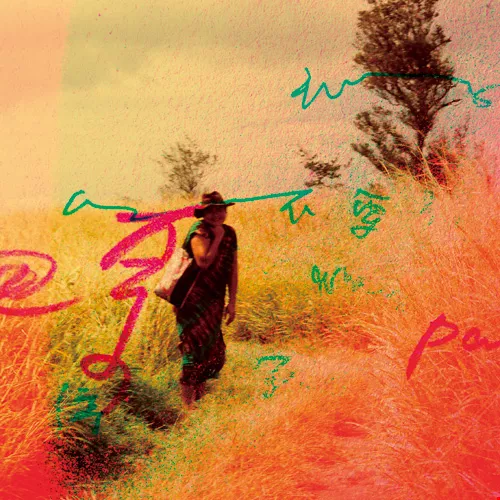
Several years after the release of Panai's first album, fans discovered that after returning home she'd changed her tune from angry and melancholic into something more open and warm. What didn't change was her straightforward personality and her occasionally revealed "lioness's tenderness."
Why have so many women from such different backgrounds thrown themselves into Dulan's embrace? Some say it's because Dulan sits in Amis territory, and the matrilineal Amis have a long tradition of respecting the individuality of women. Others say it's because Taiwan's excessive pursuit of wealth and status has left the kind of men and women who yearn for freedom and closer ties to nature with nowhere else to turn. Such people are naturally drawn to this secluded, pristine town by the sea where they can develop their long-repressed "feminine yin side."
A Taitung native who left home at a young age, A-yang has experienced this for herself. A graduate of National Taiwan University's Graduate Institute of Construction and Planning, A-yang was drawn back to Taitung at the age of 30 by her love of diving and surfing. A near-10-year veteran in community development, she uses space design to explain the insight she gained from the "Taitung model": "On this remote piece of coast, all the so-called expert, capital, market, media, and academic organizational systems are totally useless; instead, it's all about the basics. Unchecked by the forces of domination, human and structural relationships are more free and unbounded."
Lee Yun-yi, the founder of the Other Women Gallery and an artist-in-residence at National Kaohsiung University, has felt an inexplicable connection to Dulan ever since her work nine years ago on her graduate thesis, for which she studied gender and ethnic identity in the work of the Bunun artist Ebu. She has also observed that Dulan's female artists find it easier to shake free of notions of worldly success and fully harmonize their lives and work than do its male artists.
"This is even more true in the relationship between Aboriginal women and their handicrafts. Their woven fabrics and pearl embroidery aren't 'art objects' that exist independent of their daily lives." The act of creation is for them as simple and straightforward as eating, sweeping, or playing. "The female artists here live happier lives than their male counterparts," says Lee.
But the concept underlying Dulan's "women's art space" actually originated outside the area-with artist Dou Xiaohua's experience of loss and transformation.
Dou, who used to work in theater, and her spouse, theatrical genius Chen Ming-tsai, had formed the Witches Troupe, a theatrical troupe that addressed sexual autonomy, marital fetters, and even real-life divorce through comedy. Though it violated taboos and social conventions, their work was true to who they were as people and drew passionate responses from the arts community.
In 2000, the couple moved to Dulan. There, they participated in the East Coast Arts Renaissance that grew up around Dulan's sugar mill and continued to work on their art. In the summer of 2003, Chen, a long-time victim of bipolar disorder, shocked everyone by killing himself in an effort to halt the development of an amusement park on Dulan Point. Faced with the sudden loss of the person on whom she most depended, Dou suffered both grief and anger before embarking on a harrowing journey of self-healing to Bali, where the two had honeymooned.
In her confessional Honeymoon Sacrifice, Dou mentions being mysteriously stricken with sexual desires on awakening one morning. The idea of a "women's space" came to her while she was meditating on and attempting to sublimate those desires. "It was like being reborn. Desire and an upwelling of life transformed into a real-world possibility." The richly artistic atmosphere of Bali and its women's art galleries were an even more powerful source of inspiration.
After returning to Dulan in 2004, Dou invited a few local women artists to join her in opening a gallery in her living room. The group gathered there periodically to meet and show their work.
Lee, who had just completed her graduate studies in art at National Cheng Kung University, took over the following year. She first relocated the gathering to a corner of the coffee shop at the sugar mill, then moved it again, this time to the Moonlight Inn. "No matter where we move our meeting place, our gatherings always retain a simple, homey, 'living-room' vibe where everyone feels comfortable sharing," says Lee with a smile.
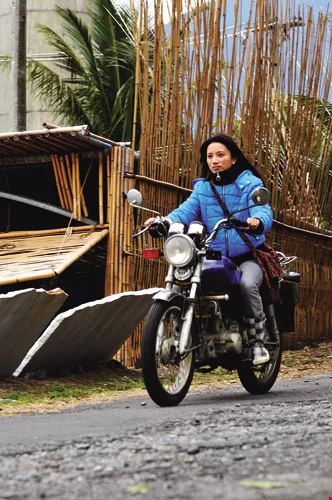
Luanne's mottos are: that all her decisions should reflect her true passions and be acted on with a will, that she should spend her youth traveling, and that she maintain her freedom of choice.
Time passes quietly in Dulan, and later arrivals have found it easy to pick up the cultural habits of the village's first settlers.
Inspired by the story of Dou and the "witches," You Lichun and her partner, writer Wang Jiaxiang, moved to Dulan from Kaohsiung five years ago to take up the simple rural lifestyle for which they'd been yearning for years.
You, who was born in 1968, and the previously divorced Wang, who is two years her senior, have never formally married, but have enjoyed a long and stable relationship. They call themselves "hippies" to distinguish themselves from Dulan's "yuppies" and the retirees who've moved here from the city.
"The hippies here are cultured, bookish people who've consciously and deliberately moved out to the countryside to live the kind of non-mainstream lives they want to lead. There aren't any jobs here, but most of the hippies here manage to scrape together some kind of small living, enough to cover their basic expenses for cigarettes, booze, and rent," explains Wang, himself no stranger to the literary life. Then he adds, "We're pretty well off compared to most folks here, and our lifestyle is more ordered and healthy."
At first, the two just wanted to live a quiet, low-key life, but they soon had a steady stream of family and friends traipsing through. To make things more comfortable for themselves and their guests, they tidied up their spare rooms. They also began charging everyone a symbolic NT$300-per-night fee to stay, never guessing that word of their "wonderful hostel" would spread far and wide. These days, the two not only earn a portion of their living operating a hostel known to be friendly to poor backpackers, but also use the hostel to promote hippie ideals: sharing and helping others.
"Our way of doing things doesn't earn any money, but we sincerely hope that we can act as a check on the expense and superficial flashiness of the Taiwanese travel and lodging industry," says You. She observes that three to four times as many women as men travel to Dulan on their own, coming here to relax, create art, or enjoy a spiritual retreat. "Women really are much more interested in personal growth than men," says You.
Because Wang is still a writer-in-residence at National Taitung University and takes occasional speaking engagements, You handles the chores associated with rural life on her own. She keeps very busy, but she's "busy in a very down-to-earth way."
You reads people's fortunes with Tarot cards and often plays the role of a counselor. She says she's always thought of herself as a bit of a weirdo, someone who liked to contemplate the philosophical questions surrounding birth, aging, and death. As a teen, she even pledged never to marry or have children, the better to remain completely "autonomous." But she was also the child of a civil servant, and until the age of 30 was an obedient daughter and ordinary office worker. Her life changed when her father was diagnosed with cancer, an event that prompted her to quit her job and spend a year at his bedside.
"That year, I led the same kind of 'living dead' life my father was leading," she recalls. "I couldn't bear to see his decline or his anxiety and confusion. But I'm also grateful to him. Before his death, he mustered the strength to tell me: if you have a dream, give it your all. He didn't want me to be like him, realizing on his deathbed that his life had been without any color or interest."
This marked a major turning point in You's life. She began knitting to express herself, and opened an arts boutique in Kaohsiung's Xiziwan. In her free time, she and Wang did volunteer work in environmental education. Recently, she's become more determined to march to the beat of the "hippie drum"-her greatest desire now is to "travel the world until every bit of savings is gone."
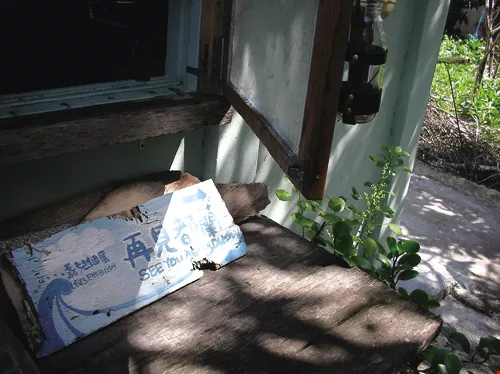
Guesthouse founder "Worm" gently warns that enjoying Dulan requires learning new things. It's like singing, like the play of light and shadow, like just going for it....
To seasoned travelers, Dulan is more than just scenic; it's also home to a vibrant music scene. Saturday-night performances at the sugar-mill coffee shop have become something of a tradition, and you might very well end up rubbing shoulders with one of Taitung's pop stars while strolling around town.
In 2005, Aboriginal singer-songwriter Panai gave up her urban wanderings and settled down in her hometown in Taitung. Her musical life has since taken on a unique, easy-going-but-focused character. She has collected Aboriginal songs, planned music festivals along the east coast, and organized songwriting workshops in Dulan. Her most recent CD also went in a new direction. Unlike her previous CD, a solo effort, all the tracks on the new CD, A Piece of Blue, were written by Taitung friends, most of whom were writing songs for the first time after more than 100 hours of collective exploration in workshops.
The CD invited listeners to let go of the hustle and bustle and tension of the city, and ride the music back to Dulan: "Here in this poetic town, you can enjoy some time alone, luxuriate in the leisurely pace, feel the pulse of the islands and the distant past in the rhythm and song of the sea. As you explore, you'll collect fragments of people's inner and outer lives, piecing them together into a song of coastal life. Moonlight, silvery rivers, teardrops, swaying skirts, snails, memories, evening breezes, beer, Dulan Bay...."
Music certainly has the power to touch people's hearts. Luanne, who was born in Taichung in 1983 to parents who were both teachers, says that the first time she heard Panai sing live, the songs made her heart pound. "They were bold and intrepid, but also had a maternal warmth," she says. "It was amazing to me that someone could distill life down into something so rich and beautiful." The songs made her both yearn for and feel a part of Taitung.
Luanne majored in economics and minored in sociology at National Taipei University, and easily tested into graduate school. But after doing so she found herself asking: "Do I really want to follow the standard path through academia to establish a stable identity and status?" She hesitated only a moment before deciding to start over by coming to Dulan to study in the school of life.
Having been coddled growing up, she gained invaluable real-world experience ordering bottled gas, getting a roof repaired, and becoming acquainted with traditional Aboriginal culture for herself. Luanne has "steeped" herself in Dulan's culture for three years and currently works as a curriculum assistant with the rural village revitalization program of Taitung's sustainable development association. Her most recent projects involve learning to create mosaics with the artist Rao Aiqin and consulting with village teens about how to "read" the patterns in driftwood and create her own carvings.
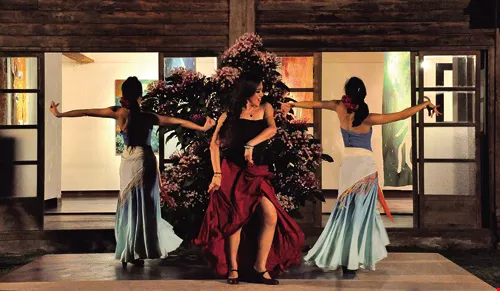
He Lianhua's Genio Dance Company performing at Dulan's Moonlight Inn in early February 2010.
A lot of fresh, exciting things are happening in Dulan, among them, discovering that young women born in the 1980s have a lot to teach us.
One ordinary azure-skied afternoon in the spring of 2009, two young women from the city sat on some scaffolding outside the sugar-mill coffee shop, finishing up painting a small building that used to be a truck scale house. Xiao Fang, who had proposed the project, had insisted on doing everything with her own two hands and had been working on the project intermittently for two years.
As summer arrived, the Little House quietly opened for business, serving tasty breakfasts to customers. Her mission accomplished, after finding someone to take over the cooking, Xiao Fang packed her bags and headed back to Taipei. So it was that Liu Chung-feng began her own "traveler-resident" experience in Dulan, supporting herself with a grant she had received from the National Youth Commission's youth travel program.
Born in 1982, Liu is a veteran traveler. She toured the east coast on a motorcycle many times while a student in the Chinese Department at National Cheng Kung University, camping out in a tent at night. After her graduation, she traveled along China's borders for six months with a companion, and went on to write a book about it (Stories Like Songs, published by CommonWealth Publishing). She came to Dulan 18 months ago at a friend's invitation and was intending to write, but once here she got so caught up in the life of the village that her writing plans went out the window.
After taking over Xiao Fang's cozy little space, Liu got permission from her Amis landlady to turn the old three-bedroom, one-bathroom place into a little hostel. She also wrote a 500-word set of guidelines for "self-service living," the core principle of which is: "If you want something, get it yourself. Treat this place like your home." In practical terms, this means that visitors have to change their own sheets, sweep, and take out the trash. When they leave, they toss NT$300 into a cash box to help keep the hostel afloat.
Too impractical? How about this: Where most backpacker hostels at least have a desk and a "host," Liu's little inn doesn't distinguish between hosts and guests. The "inn resident," who refers to all the guests as "roommates," simply facilitates communications. Sometimes, when the "resident" is out, first-time visitors even get instructions telling them to find the key and let themselves in.
Liu laughs and says that she got the idea in part from her unforgettable experiences in backpacker hostels around China. "The cost per night there was never more than NT$100, and you got to meet people of all kinds from all over the world." Her reasons for pushing such an extreme "self-service" model include the fact that while she likes to meet people, she isn't very good at hosting or cleaning up after them. And then there's the culture of Dulan itself. "The people here are very unsophisticated and hospitable, and they also enjoy sharing," says Liu. "I often go out without locking the doors, and don't worry about someone breaking in."
Since opening last April, the six-person-capacity hostel has averaged 20-30 mostly female visitors a month. Guests have responded to the setting even better than Liu had hoped. In addition to taking care of themselves, they have also helped sustain and add to the inn's amenities. For example, one guest brought a portable music player and favorite CDs. Others guests have created a bulletin board, repaired a broken faucet, and built a chair. One visitor even put together a group to help with a big cleanup.
"The hostel is kind of like a school," says Liu. "The people who come here learn to really trust one another and not to haggle over the effort they put into things." Liu adds that the most joyfully surprising thing she's seen was a woman who gained the courage to realize her dream of traveling through Yunnan after staying at the hostel.
After three months "running" the hostel, Liu passed the baton to "Little Sugar," a woman born in 1984 who sang her way to Dulan. Liu relocated to Hualien to hole up and pursue her true vocation: writing. "Leaving this place behind, not trying to own it, was a way to allow even more people to taste a moment of freedom, to use their own strength to create new possibilities and realize dreams," says Liu.
Your sisters are calling. Whether you've wandered the world or not, you're welcome in Dulan.
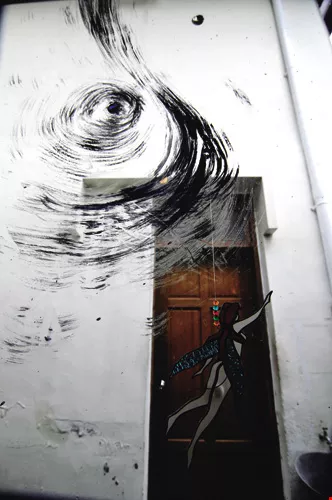
Lee Yun-yi, owner of the Other Woman Gallery, says that "the other woman" represents the awakening of the fires of creativity in people's hearts; it's not about biological gender. This photo was taken in a coffee shop attached to the gallery; everything in the coffee shop, including the lamps and window paintings (facing page), was created by the Amis artist Yiming and his wife Rao Aiqi.
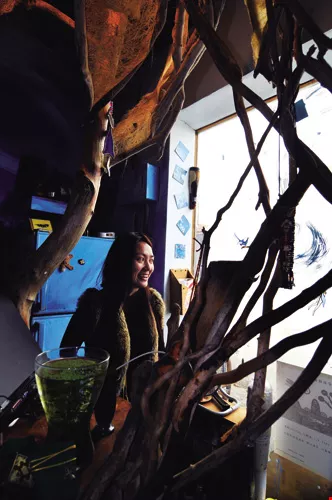
Lee Yun-yi, owner of the Other Woman Gallery, says that "the other woman" represents the awakening of the fires of creativity in people's hearts; it's not about biological gender. This photo was taken in a coffee shop attached to the gallery; everything in the coffee shop, including the lamps and window paintings (facing page), was created by the Amis artist Yiming and his wife Rao Aiqi.

The vast and beautiful vistas of Taiwan's east coast nurture a wide-open, liberated atmosphere and have made it a great place for "feminine power" to coalesce and blossom. The photo shows the Dulan Mountains, as seen from the coastal highway, Provincial Highway 11. Go past the bay and you're in Dulan Village.
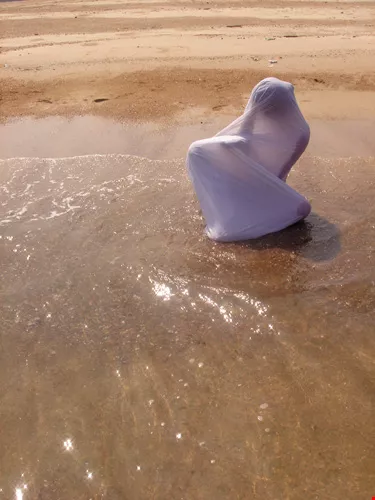
The generous, outspoken Susu Shin and her Dutch boyfirend(like her an artist but of a different temperament) have fallen in love with Dulan and have no desire to leave it. (bottom) Susu's Wrapped on display at the Other Woman Gallery.(courtesy of Susu Shin)
The generous, outspoken Susu Shin and her Dutch boyfirend(like her an artist but of a different temperament) have fallen in love with Dulan and have no desire to leave it. (bottom) Susu's Wrapped on display at the Other Woman Gallery.(courtesy of Susu Shin)
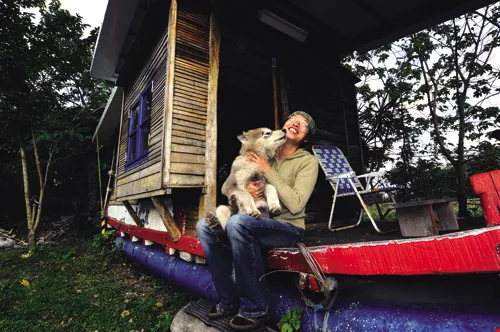
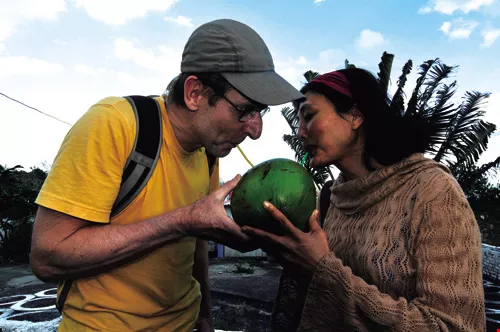
(below) You Lichun and her partner Wang Jiaxiang have grown up together and continue to find their lives together ever more interesting. (facing page) To allow the four-legged members of the family to enjoy a carefree living environment, the two actually live in a mobile houseboat placed in the wilderness.
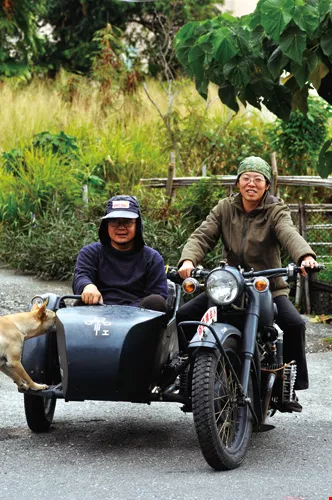
(below) You Lichun and her partner Wang Jiaxiang have grown up together and continue to find their lives together ever more interesting. (facing page) To allow the four-legged members of the family to enjoy a carefree living environment, the two actually live in a mobile houseboat placed in the wilderness.

@List.jpg?w=522&h=410&mode=crop&format=webp&quality=80)

@List.jpg?w=522&h=410&mode=crop&format=webp&quality=80)


