Mr. Rhinoceros:
Eswatini Royal National Conservation Advisor Ted Reilly
Esther Tseng / photos Jimmy Lin / tr. by Scott Williams
January 2026
“Our wild places are disappearing. If you don’t protect them now, they’re gone forever.”
—Ted Reilly, conservation advisor to King Mswatii III.
“I’ve never seen a white rhino that big, never. He’s really big!” exclaims Terence “Ted” Reilly, royal national conservation advisor to HM King Mswatii III of Eswatini.
“They can’t look like that if they’ve been not well treated. Good weight, good condition, good temperament.” Mr. Reilly, a rhino conservation expert, complimented Taiwan for its wildlife conservation success while viewing the rhinos at the Leofoo Safari Park’s rhinoceros breeding center.

Eswatini Royal National Conservation Advisor Ted Reilly complimented Leofoo Safari Park on the care it provides its rhinos.

On behalf of the Taiwanese government, Foreign Minister Lin Chia-lung donated SZL1 million to Eswatini’s Big Game Parks in April 2025 to support rhino conservation. (courtesy of MOFA)
A model for rhino conservation
Reilly has also served as a consultant for the World Wildlife Fund (WWF) and the International Union for the Conservation of Nature and Natural Resources (IUCN), and remains a member of the IUCN’s African Rhino Specialist Group. He was visiting Taiwan for the first time in late October 2025.
The 87-year-old Reilly previously accompanied former Presidents Lee Teng-hui and Tsai Ing-wen, as well as current Minister of Foreign Affairs Lin Chia-lung, during their respective visits to Eswatini wildlife conservation areas. Acting on behalf of the Taiwan government, in April 2025 Minister Lin donated SZL 1 million (roughly US$58,000) to Big Game Parks, Eswatini’s largest rhino conservation organization, to support the kingdom’s wildlife conservation efforts.
Eswatini’s rhino conservation provides a model for other African nations. Reilly proudly notes that Eswatini has the most successful conservation record in Africa, having lost only three rhinos to poaching in the last 30 years. In contrast, he says, aggressive poaching coupled with the vast size of neighboring nations have made it more difficult for them to protect the animals, resulting in losses averaging as many as three rhinos per day at their peak.
He stresses that drought and habitat loss represent even greater threats to rhinos’ lives than poaching, making habitat conservation a crucial part of rhino conservation.
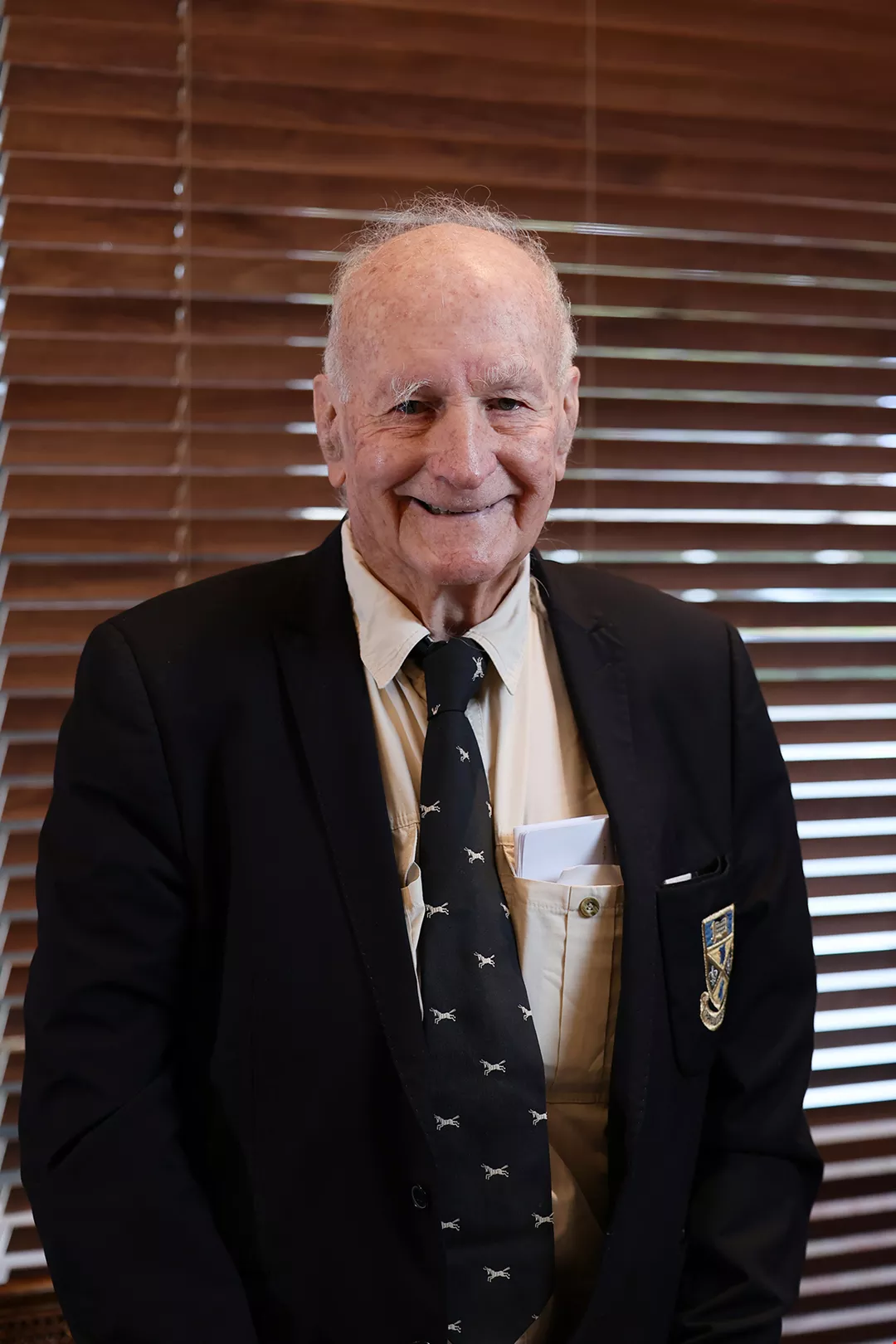
The biggest threat to wildlife and nature is the uncontrolled spread of human sprawl. As far as it spreads, nature dies. And so we’ve got to keep microcosms of the different habitats intact for people to visit and for animals to survive. —Eswatini Royal Advisor Ted Reilly
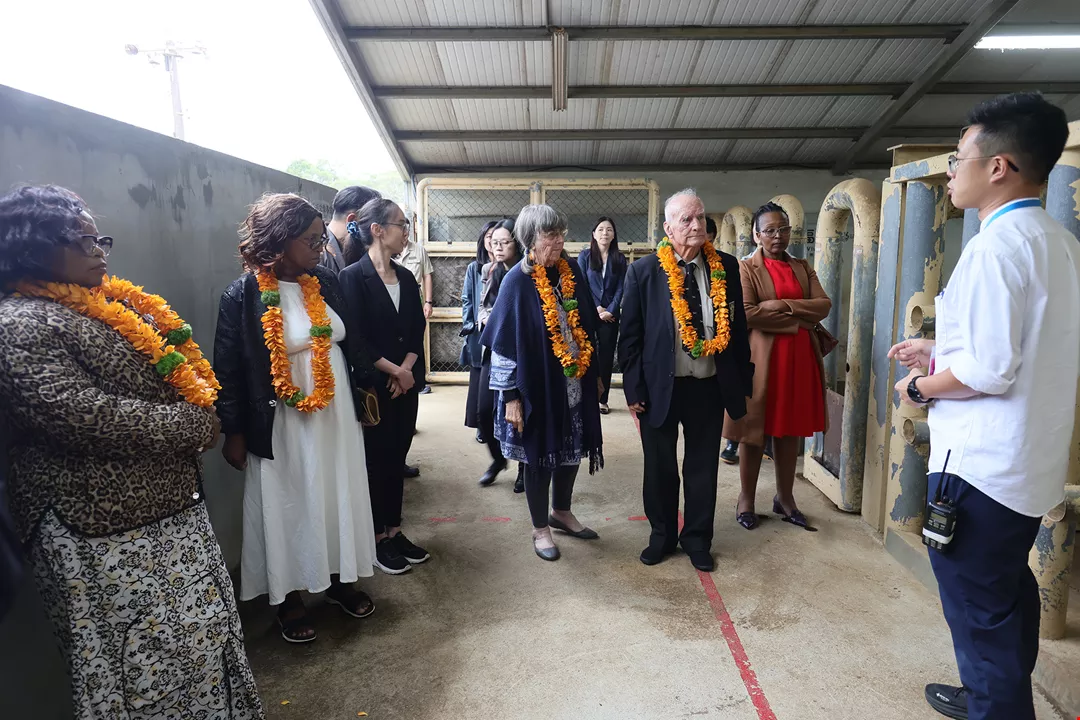
The Eswatini delegation visits the breeding center at Leofoo Safari Park and praises Taiwan’s conservation successes.

Commercialization
When asked how many rhinos Eswatini has, Reilly smiles, but declines to answer. It turns out that the number is kept secret in the interest of conservation.
A pioneering advocate for rhino conservation, Reilly mentions his own conservation “idol,” a South African named Ian Player (1927‡2014). When, as warden of the Umfolozi Game Reserve (now part of the Hluhluwe‡iMfolozi Park) in KwaZulu-Natal, Player launched Operation Rhino in the 1960s, there was only one remaining southern white rhino habitat in the whole world and the subspecies was at serious threat of extinction.
Reilly believes that Player’s policy of commercialization saved the southern white rhino from extinction. He explains that protecting rhinos is very expensive—US$30,000 per year per animal—which raises the question of how to make conservation economically sustainable rather than a liability.

The Eswatini delegation visits Leofoo Safari Park.

Leofoo Safari Park, the only rhino conservation park in Taiwan, is one of the few parks in the world able to breed rhinos and provide them veterinary care. It also has a successful record of exporting rhinos.
Deepening Taiwan-Eswatini relations
The Eswatini delegation visited the Jane Goodall Institute Taiwan during their stay, and Reilly shares with us Goodall’s comment about doctors now prescribing time in nature to treat certain illnesses.
Reilly goes on to argue that wildlife parks provide a great place for people to get close to nature. He invites people to visit such parks not only to help support the animals and keep rhinos alive through the payment of admission fees, but also because being in nature is good for the visitors themselves.
Reilly also tells us that in addition to Taiwanese ecotourists, Eswatini’s Big Game Parks recently hosted a Taiwanese graduate student who came to study natural habitat management. Reilly says, “We’d like more Taiwanese students to come for internships.”
“Eswatini is a landlocked country, smaller than South Africa’s Kruger National Park. It has limited resources, but is very rich in culture, very rich in agricultural potential, and we grow some of the best sugar in the world.” Ted Reilly welcomes Taiwanese investment in Eswatini, which he believes will form the basis for a deeper relationship.

The Ministry of Foreign Affairs arranged for the Eswatini delegation to visit the Jane Goodall Institute Taiwan.

Eswatini Royal Advisor Ted Reilly endorses Jane Goodall’s conservation philosophy.

Squid Ball, a baby rhino at the Leofoo Safari Park, sticks close to his mother, Flower.
