

When it comes to developing and producing premium bicycles, Taiwan is the world leader. The twin titans of the industry, Giant and Merida, are the best of the best, creating hundreds of millions of NT dollars in export value for the country.
Compared to the flashy Giant, second-place Merida is a more low-key operation, rarely drawing the media spotlight. In the past couple of years, however, they have achieved results that have set them hot on the heels of their top-ranked competitor.
Not only did Merida’s stock price at one point pass Giant’s last year, that same year the company also made its first appearance in the Industrial Development Bureau’s Branding Taiwan Top 10. How has Merida gone about giving their four-decade-old brand a new shine and the means to climb to the top of their industry?
A monumental event happened in Taiwan’s bicycle industry in 2013, as Merida claimed the coveted top spot by stock price. While Giant reclaimed their title soon after, perennial number two Merida proved that they have what it takes to stand toe to toe with Giant, a company that has become all but synonymous with Taiwanese bicycles. In fact, for the past three quarters Merida has posted earnings per share as high as NT$7.92, surprisingly passing Giant’s NT$7.05.
One of the core factors in Merida’s rising fortunes is the company’s involvement not only in producing globally well-received premium bicycles under their own brand, but also in doing so for other brands. In 2013, the company shipped some 2.5 million units, with the bicycles valued at an average of US$537 each, the highest average value for exported Taiwanese bicycles and 150% of the overall average.
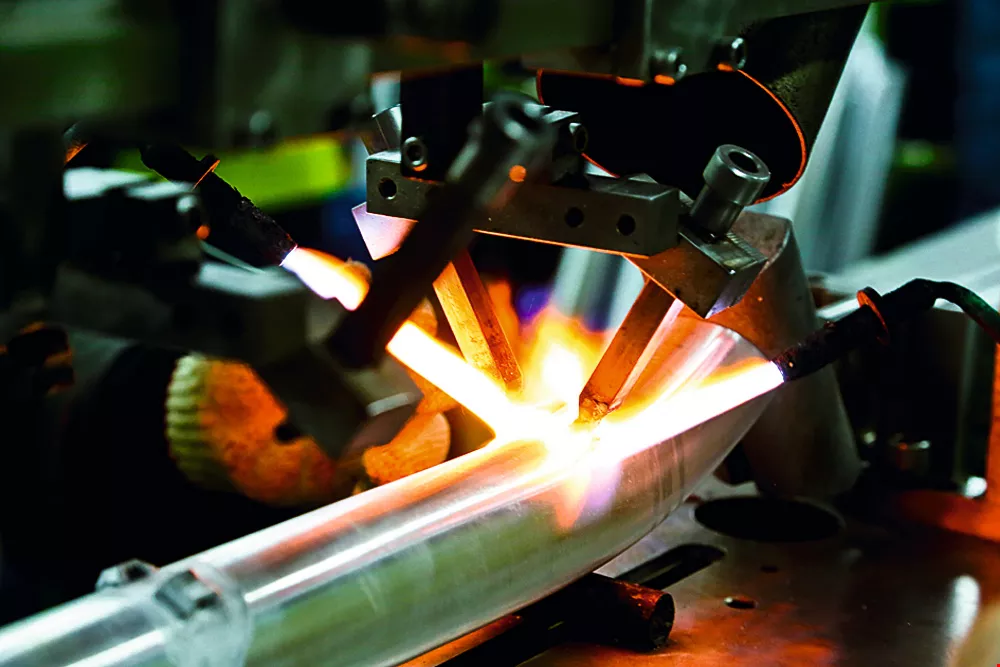
Welding, painting, assembling... every stage in the production of Merida’s high-end bicycles is done in Taiwan, which has created more than 1000 jobs in the Taichung–Changhua area.
Merida’s founder Ike Tseng, who passed away in 2012, began his career as a young man in the motorcycle and scooter parts business. On a business trip to the US in the early 1970s, Tseng spotted a note on the door of a bicycle shop stating that they would not repair Taiwanese-made bicycles due to their poor quality. Feeling insulted, he knew what he had to do: get involved in the bicycle business.
In 1972 Tseng established Merida Industry. Inspired by the Japanese, Tseng placed a premium on ensuring that both the company’s technology and its products were of the highest standard. Although Merida gradually broke into contract manufacturing for Western companies, it was their manufacturing work in the 1980s for then-booming British brand Raleigh that truly transformed the company.
The very model of the bold entrepreneur, Tseng was also a driving force behind Merida’s move into developing premium bicycles, which he saw as the only way to successfully boost the company’s profits. To that end, in 1996 Tseng developed an automated welding technology he named “Robotwelded,” making Merida the first bicycle company using robotic welding of their aluminum frames. Tseng was dedicated to trying new materials and methods, including leading Merida into the electric bicycle market, making it the first Taiwanese company to make this move. Under Tseng’s leadership, Merida also became the first company in the world to mass produce magnesium alloy bicycles.
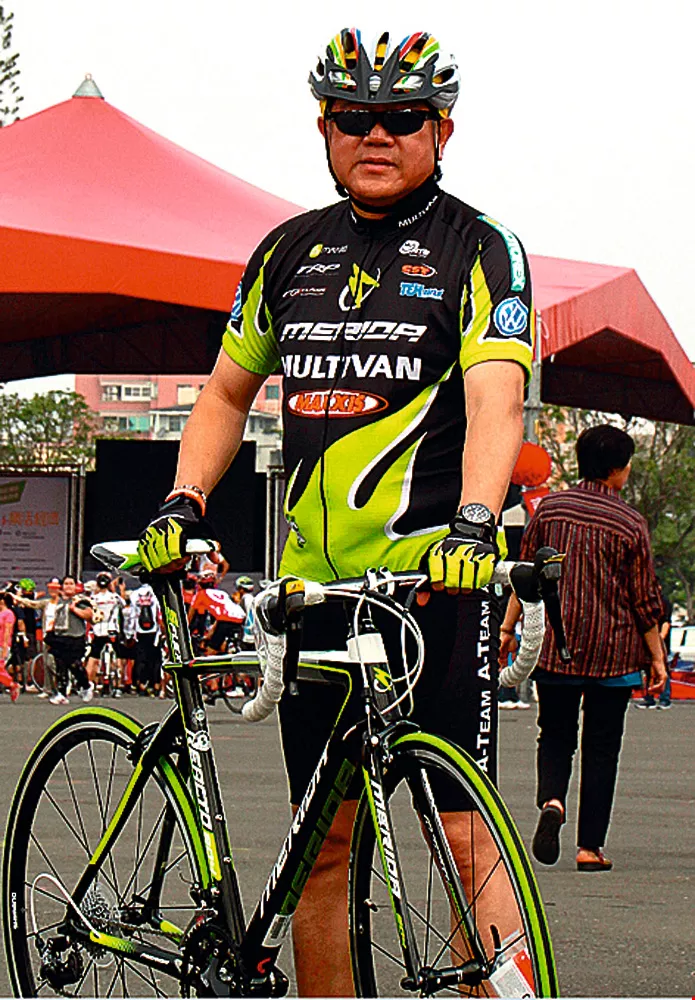
An avid cyclist himself, Merida president Michael Tseng believes that Taiwan has become synonymous with bicycles.
When Merida’s house brand launched in 1988, the company specifically chose to start selling the bicycles in Norway before moving into the major markets of the US and Western Europe. In the early days of the brand, though, the company was still wavering between contract manufacturing and a house-brand focus. For his part, Tseng was dedicated to strengthening the Merida brand, but he was also concerned that if he did so, contract manufacturing clients would start pulling their orders. At the time, the company’s revenues largely came from contract manufacturing for three major Western companies—Schwinn/GT, Specialized, and Scott—while the house brand, primarily focused on Europe, then accounted for 10–20% of Merida’s revenues.
As the dot-com bubble burst in 2000, Schwinn/GT, Merida’s largest client, announced a restructuring plan. This led to Merida losing some 35% of their pending orders—and, with them, hundreds of millions of NT dollars of revenue—in an instant. The company faced the biggest losses in their then-28-year history.
Little did they know that an even bigger challenge lay ahead. In 2001, Merida’s second biggest contract manufacturing client, Specialized, announced they were having financial trouble. Rather than twiddle their thumbs and let events unfold, this time Merida leapt into action, purchasing 49% of Specialized, thus gaining not only a say in the brand’s decision-making process, but also securing sole production rights. In exchange, Merida committed to keeping its own brand out of the American market.
This strategic investment has had a lasting impact on the company. Once Merida had established its “twin engine” strategy, with the Specialized and Merida brands both driving the company, Tseng was able to wave goodbye to the days of worrying about clients pulling their orders. And with Specialized already an established leader in premium-price bicycles, the investment also proved to be a light in the darkness for Merida, furnishing them with the knowledge and skills needed to build and market their own brand. This partnership has been a crucial element in the tremendous growth in revenues Merida has enjoyed over the past ten years.
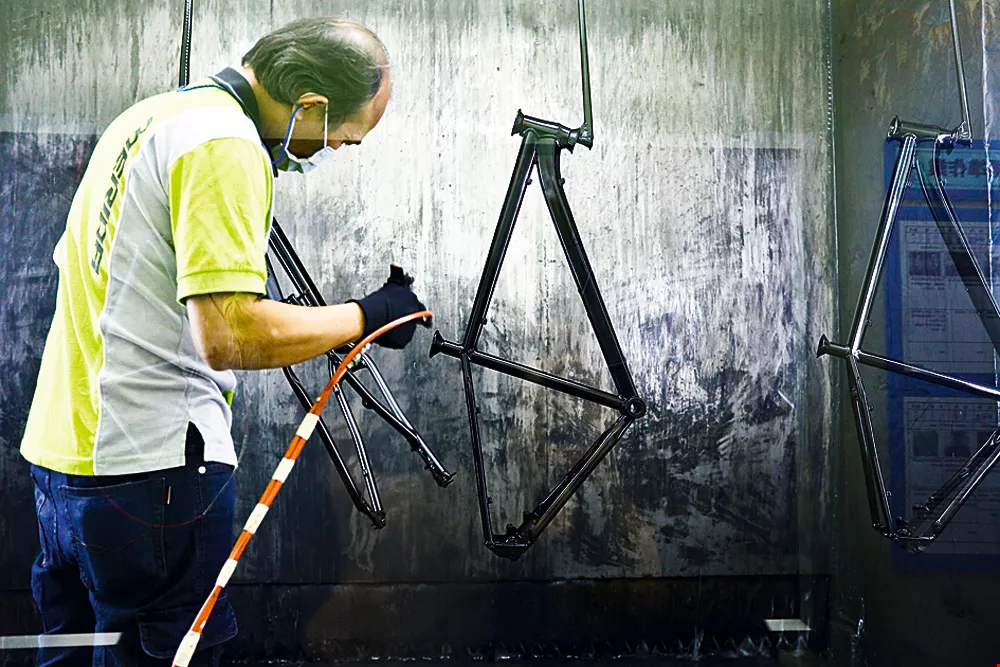
Welding, painting, assembling... every stage in the production of Merida’s high-end bicycles is done in Taiwan, which has created more than 1000 jobs in the Taichung–Changhua area.
Many have wondered why Merida purchased a minority shareholding in Specialized rather than simply acquire the company outright. As it turns out, this was a carefully calculated decision on Merida’s part.
“Look at what happened to IBM’s laptops. Once Chinese brand Lenovo purchased IBM’s PC operations and put their brand on the laptops, a lot of die-hard IBM loyalists just refused to buy Lenovos. If the California-born Specialized was suddenly swapped out for a Taiwanese brand, there’s no guarantee that wouldn’t impact the brand’s stable sales in the US market,” says Merida spokesperson and senior vice president William Jeng.
This strategic investment has also proven to be the secret behind Merida’s successful expansion into the global market. Unlike Giant, which spun off a 100% Giant-owned subsidiary to build their house brand, Merida chose to either engage in joint ventures with long-term partners or follow the Specialized model and invest directly in well-established brands. Merida has also chosen to leave the controlling interest in such investments in the hands of the other party, instead being satisfied with a maximum holding between 30% and 49%.
The logic behind this position is simple—if Merida were to take a controlling interest, the other party would simply become like another staff member, with no incentive to give their all to the operation. If, on the other hand, Merida leaves those more familiar with the local market in charge, that other party will work harder to promote and sell Merida’s products, which is key to long-term profitability.
Currently Merida has nine subsidiaries in Europe, eight of which are joint ventures. Of these, the most important to the company is the German-based Merida Europe, which serves as the driving force behind Merida’s bicycle design.
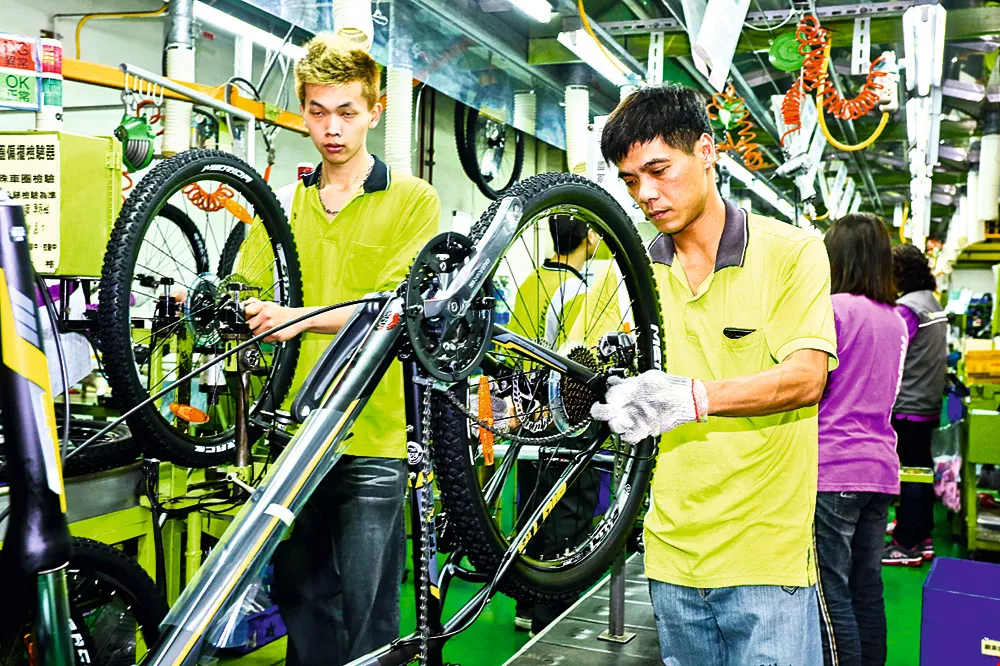
Welding, painting, assembling... every stage in the production of Merida’s high-end bicycles is done in Taiwan, which has created more than 1000 jobs in the Taichung–Changhua area.
In addition to their joint investment and cooperation strategy, another key element in Merida’s sustained competitiveness is the company’s choice to keep key technologies for the production of their premium bicycles based in Taiwan.
In 2003, with Taiwan’s bicycle industry facing the threat of an industrial exodus to mainland China, industry leaders King Liu, founder of Giant, and Merida’s Ike Tseng put aside their differences and worked together to create a comprehensive supply chain of component suppliers. This network became known as the A-Team.
Michael Tseng, current president of Merida and son of company founder Ike Tseng, explains that the A-Team operates in a spirit of mutual sharing and exchange. For example, when representatives from Giant and Merida visited Japan to learn about the Toyota Production System, upon returning to Taiwan the companies generously opened their production lines to each other for observation. Such efforts have helped make Taiwan a global hub for premium bicycle manufacture.
Currently Merida exports bicycles for sale in 77 countries and operates four production plants in mainland China and Taiwan. The group’s total revenues for 2013, including the Merida, Specialized, and Centurion brands, were over NT$25 billion, of which some NT$16 billion is the result of one plant, based in Dacun Township in Changhua County.
King of the Mountains, Queen of the RoadsA strong product needs an equally strong marketing strategy, and Merida found theirs in sports marketing, becoming the sponsor of professional cyclists and cycling teams. Working with cyclists has provided the company with priceless expert recommendations, which has helped Merida further improve their bicycles, while the support of these well-known competitors has also given consumers added faith in and loyalty to the brand.
Currently Merida sponsors three professional teams: the mountain-biking Multivan Merida Biking Team, or MMBT; the road racing Team Lampre-Merida; and the mountain-bike trial team Merida Velo Team. MMBT has proven itself a force to be reckoned with, not only being considered best mountain-biking team in the last ten years, but also taking gold and silver at the Athens Olympics and winning over 30 World Cup titles, ten World Championships, and 11 European Championships.
Team Lampre-Merida, though, is a much newer addition, added to the company’s quiver in January 2013. William Jeng explains that while Merida currently sees only 15% of their sales come from road bikes, in the next few years they hope to build on that, adding the title of “Queen of the Roads” to their “King of the Mountains.”
This year, Merida was also selected by the Industrial Development Bureau for a Taiwan Mittelstand Award, a feat previously accomplished by Giant. That both of the giants of Taiwan’s bicycle industry have earned this honor speaks to just how essential that industry is viewed as being to Taiwan.
“When people think of cars, they think Germany; fashion, France; watches, Switzerland. We set out to make Taiwan similarly a synonym for bicycles, and I think we’re already realizing that dream now,” laughs Michael Tseng.
@List.jpg?w=522&h=410&mode=crop&format=webp&quality=80)

@List.jpg?w=522&h=410&mode=crop&format=webp&quality=80)
@List.jpg?w=522&h=410&mode=crop&format=webp&quality=80)


