Rebel Without a Pause: Singer-Songwriter Lo Ta-yu
Chang Meng-jui / photos courtesy of Rock Records / tr. by Julius Tsai and PhilNewell
September 2011


Lo Ta-yu is an iconic figure in the world of Chinese-language popular music. Last February he completed a world tour of more than 50 concerts as part of the group SuperBand that he organized along with Jonathan Lee, Wakin Chau, and Chang Chen-yue. More recently he has launched a solo concert tour in mainland China entitled "Love Song 2100: Stories of the Passage of Time."
Why choose the date 2100 and not 2010?
Lo Ta-yu explains that he went through a lot between 1999 and 2010 and was unable to write even a single love song in that time. Since time carries us all along, he says, we can instead, from the perspectives gained in those years, look forward to the future.
At the end of this year, Lo will return to Taipei Arena for a concert. This reformer who has always dared to challenge the old, this singer with his broad musical vision, has been embraced by old, middle-aged, and young alike. His ability over his nearly 30 years in the profession to retain a group of fans of such breadth and depth is truly a miracle in the world of Chinese-language music.
In 1981, a young man with a demo tape was searching for a record company who would sign him. After many rejections, Lo Ta-yu was signed by Rock Records, then just established. The next year, his solo album Thus It Is was issued, with 10 songs that included "Little Town of Lugang," "Love Song 1980," and "Childhood."
The album cover for Thus It Is broke new ground: It showed a young man with frizzy hair standing tall, dressed in black and wearing dark glasses. Lo wanted to draw a clear line between his own music and the syrupy-sweet pop music of the day: "There are no lukewarm songs on this album. If you don't like it, go back to that [mainstream] sound, because I make no compromises here." Lo Ta-yu had arrived.
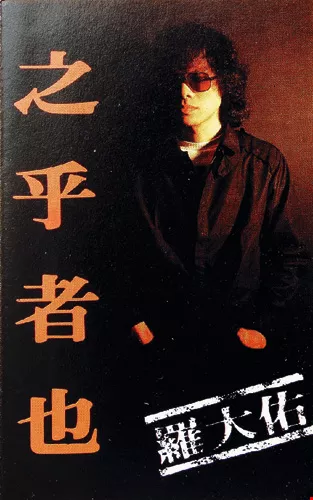
No one could have imagined how successful this young man with the raspy voice and contemplative lyrics would be. Within a year, Lo's album had sold over 140,000 copies. Thus It Is radically altered the public's stereotype of Chinese pop as being simply fluffy soft rock, and opened up a new chapter in Taiwanese pop music.
Lo Ta-yu was serious about his music, and accordingly acted differently from other musical celebrities. He refused to appear on frivolous variety shows and tended to shun the media. Aside from a single solo concert at the Sun Yat-sen Memorial Hall in 1984, he refused to hold any special activities for his fans. His chosen image conveyed the message: "I walk alone."
The image of an unyielding, rebellious, and angry young man sometimes overshadowed the music itself. Lo became the ideal for a whole generation of young people, including longstanding admirers such as Wu Bai, David Tao, and others.
In May of 2002, Lo returned to the Taipei musical stage that he had for so long left behind. Then almost 50 years old, he performed in front of throngs of diehard fans, and seemed to have grown into a warmer person, just a bit more humorous and a bit less rebellious and angry. What he wanted to do at that time was to take his fans back to "the 20th century, to a time that felt like home."
Lo, dressed in black and pumped with energy, against a backdrop of pounding drums, made his entrance through the audience seating, often stopping to shake hands with audience members, who erupted in wave after wave of shouts and cries. The drums suddenly stopped, and he sat down in front of the piano, accompanying himself as he sang from "Proverb of Love": "I gave you all my heart but kept back the sorrow for myself / I gave you my springtime but kept back the passing years for myself." Softly singing, Lo created a dream-like atmosphere, taking the audience with him down a passageway to another time.
Veteran lyricist Chen Le-jung later commented, "Lo Ta-yu, the 'prophet of rock,' has not only given us back the golden days of our youth, but also has shown us the humdrum days of middle age. Even while performing he kept poking fun at himself for being an old man and an 'elderly uncle.' It's almost as if he was taking pity on himself. I don't think that he did this to evoke the pity of the audience, but to serve as a reminder that life passes on mercilessly and stops for no one."
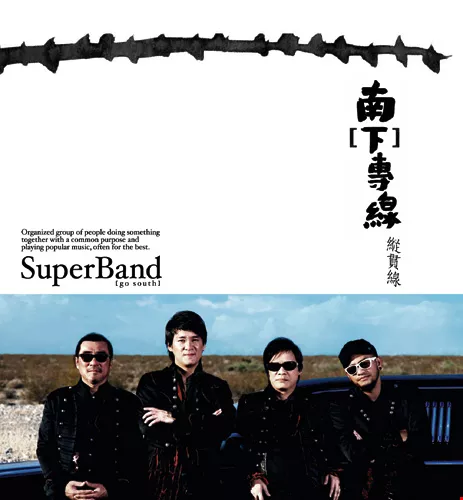
Lo Ta-yu, Jonathan Lee, Wakin Chau, and Chang Chen-yue formed SuperBand in August of 2008. The Chinese name of the band, "The North-South Trunk Line," comes from the fact that their only common experience was that they all, at some times in their lives, rode the cross-island train. They released one album, held a global tour, then called it a day.
The theme of time has appeared often in Lo's oeuvre, as in the song "Story of Time": "In the song the windmill rotates across the four seasons / Day after day it turns / In the poem evoking passion, tenderness, and romance / My growth from year to year to year. / Flowing water carries away the story of time / Changes us / In my mind, my sentimental youth returns to me." There is in the song a certain nostalgia, a sense of loss, but also a feeling of optimism, a generosity, that comes from having seen the ups and downs of life for what they really are. It's a pretty thought-provoking contradiction.
To most observers, Lo is "wise beyond his years," and has experienced life in all its sorrows and joys, storms and turmoils. And yet, once at the press conference for his new book Lo Ta-yu: Childhood, he offered up a different perspective of himself: "Many feel that the strong flavor of rebellion in my songs must reflect something in my own personality, and try to find its roots in my childhood. Frankly speaking, however, not only was I not rebellious, I was the kind of child that always followed the rules."
Lo recounted how he had grown up in a well-to-do household with loving parents. He always got good grades, and was even a medical student! If pressed, he might recall that during tumultuous moments as a high-schooler, he would sometimes grow melancholy when reflecting on the passage of time, a sentiment later captured in his song "Story of Time."
While Lo's melodies are lovely, even elegant, it is his mastery of imaginative lyrics that is his real forte.
Songwriter Lee Shou-chuan, who made his mark in the music community with "The Same Moonlight," recalls that the lyricist, writer Wu Nien-jen, continually tinkered with the words, unable to complete them to his satisfaction. One day Lo saw the lyrics, and to the words "When did my friends of childhood get so far away from my side / When did the people who surround me become strangers..." promptly added the line "The tide of people packed together draw us farther and farther apart," thereby immediately enriching the imagery of the song.
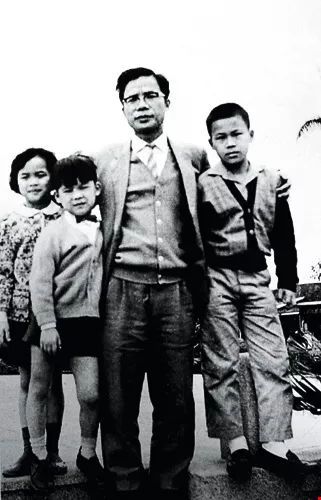
Lo Ta-yu (above, second left) with his siblings and father. Although Lo came from a long line of doctors, his father supported his musical education 100%.
Lo was born in Taipei on July 20, 1954. When he was five, his father became director of internal medicine at the Yilan Provincial Hospital. Even though he lived in Yilan for only a year and a half, Lo has always held a special place in his heart for that place. In his song "Childhood" we hear him sing: "On the banyan trees by the pond could be heard the cicada calls of summer / On the swings by the playing field there were only butterflies." Only the image of the pond has been added; all the rest comes straight from his childhood days in Yilan.
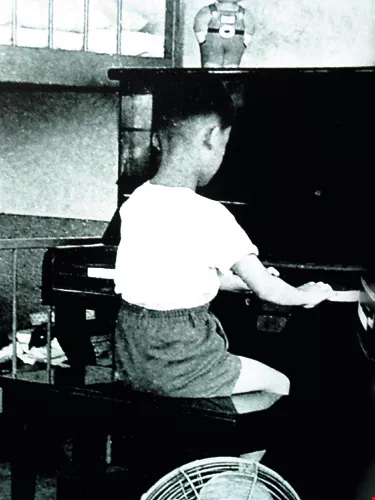
To understand Lo Ta-yu, one cannot neglect the influence of his father, a man who placed great emphasis on his children's education. When Lo was six-and-a-half years old, his father hired a piano teacher for the three Lo children. The piano teacher held Lo to high standards, and often corrected his technique by placing a coin on the back of his hand as he played to prevent excessive rolling. To a young child, this kind of training was no doubt a bit strict, but looking back, Lo is thankful to his father for his indispensable role in forming who he is today.

From angry youth to middle-aged man, Lo Ta-yu has gained a reputation as a rebel, but his lyrics and melodies actually have a good deal of warmth and sentimentality.
The song "Little Town of Lugang," written in 1980, propelled Lo into the select ranks of "singer-songwriters," pop artists expressing their own ideas with their own voices. At the time, he had just graduated from school and entered society. Big-city alienation and political instability made a big impression on him.
Lo once said that the title "Little Town of Lugang" was actually metaphorical, since he had been raised in Taipei and had never actually been to Lugang. This does not detract from the fact that lyrics such as "Taipei is not my home / For there are no neon lights back home" capture the authentic feelings of countless migrants from small towns all over Taiwan to the capital.
To reflect upon themes of "home" and a "sense of belonging" in "Little Town of Lugang," is to discover questions Lo has been asking through his music for many years now. On his album Home, he says that home is "a place to escape from, a place toward which tears flow." Whether describing pre-1997 Hong Kong, that "Pearl of the Orient," or looking back on Taiwanese history, as in his album Homeland, Lo has been a constant sojourner, searching for a place to call his own. The resigned tone of his lyrics "I can't find my homeland, and the whole world seems to hem me in" pierces the heart.
As a rebellious singer, Lo's music consistently walked the edge of censorship in the days of martial law. His song "The Orphan of Asia," adopting the style of a dirge and accompanied by the strains of the suona (a traditional reed instrument with a high-pitched, plaintive tone), is just such a case.
He recalls, as a child, seeing on his father's desk a stack of books, first editions of Wu Chuo-liu's The Orphan of Asia, with its cover design in black. The novel had been banned not long after being published, and in order to support the writer, Lo's father had bought up 20 copies. The novel, about Taiwan during the Japanese occupation, influenced Lo to no small degree. When he would later write his song "The Orphan of Asia," Lo was obliged to add the following subtitle in order to meet broadcasting regulations of the day: "For the refugees of the Indo-Chinese Peninsula." In fact, the meaning of the song was plain for all to see. In this case, Lo chose to avoid the strictures of political protest and instead view the song from a more universal perspective.
Lo's love life is one area in which, while he has been able to evoke a universal resonance through his music, one senses a kind of resigned quality to his real-life experiences. In "Love Song 1980," Lo softly sings, "You don't belong to me, and I don't own you / Girl, in this world, no one has the right to possess another." This unflinching honesty blazed new trails in the writing of love songs, up till then characterized by a certain phony superficiality. Lo's complicated love affair with actress and director Sylvia Chang, many believe, provided the impetus for many of his love songs. His divorce after less than two years of marriage with actress Li Lie, with whom he had previously shared a decade-long love affair, also caused his fans heartbreak and regret.
In 1993, a student publication at National Taiwan University called NTU Cultural Digest organized a special event on Taiwan's pop music. They invited around 200 guests, including singers, record industry executives, radio personalities, and other figures from the entertainment community to select the "Top 100 Pop Albums from Taiwan" of the previous 15 years. The organizers screened out 150 albums from a field of over a thousand, and these were then presented to the judges to rank. When all was said and done, Lo Ta-yu's records won the most awards of all, with Thus It Is garnering first place, Master of the Future winning the ninth spot, and Lover and Comrade taking 42nd place in the rankings.
In 1985, Lo moved to the United States and left the book Yesterday's Will as his angry farewell. He wanted to start over, begin at zero. He took off his dark glasses, cast off his black garments, and said goodbye to the wild days of his youth, seemingly leaving Taiwan's music scene without looking back.
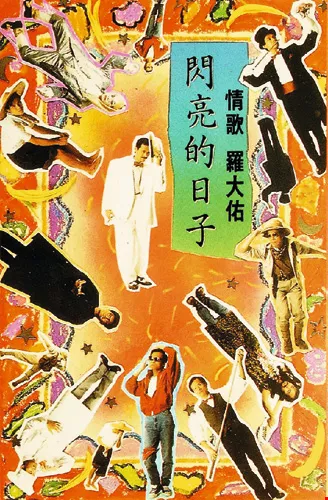
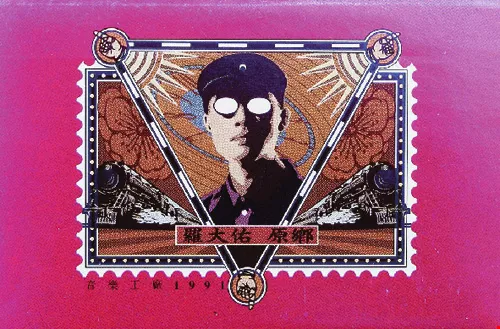
Not long after his move to the States, Lo went on to take up residence in Hong Kong, and there his creativity found even freer expression. In 1991, he recorded "Queens Road East" in Cantonese, creating a sensation in Hong Kong. Even as a sojourner, Lo managed to become the voice of Hong Kong. In that same year, his album Homeland collected many of his Taiwanese-language songs, recording the Taiwanese people's seafaring life and bitter experience of suppression under colonial and then authoritarian rule. Every word was saturated with the blood and tears of the people.
These albums span 5,000 years of history, thousands of miles of distance, and with an expansive style of "writing history through song," are considered among his masterworks.
Some have said that Lo has written all the music that is in him to write. Indeed, while in the past decade he has come out with a number of excellent works, his output has lessened considerably. The idea that his best days are behind him casts a definite shadow over him.
Lo maintains that in continuing to make music he is simply "keeping a diary through songs and lyrics." He has declared confidently, "I have faith in myself, and know that I will be making music all my life." To countless fans, Lo Ta-yu has already left behind an enduring legacy. In moments of quiet, one can sit back, pour out a glass of wine and, through his desolate and forthright songs, return again to those golden days gone by.
A Chronicle of
Lo Ta-yu
1979
Composes the song "Love Song 1980," taking only 30 minutes from start to finish. Taken on as an intern at Jen-Ai Hospital, Taipei.
1982
Releases his first solo album, Thus It Is. Holds a concert at Sun Yat-sen Memorial Hall in mid-May, ushering in a fad for solo performances around Taiwan.
1983
Releases the album Master of the Future.Holds Taiwan's first New Year's concert at the Chunghua Stadium.
1984
Releases the album Home. Travels to the US after his year-end concert, taking temporary leave from the Taiwanese pop scene.
1985
Releases Taiwan's first live album, Dance Songs for Youth.
1988
Releases the album Lover/Comrade. Publishes a book of short essays entitled Yesterday's Will.
1991
Bursts onto the Hong Kong scene with his Cantonese-language album Queen's Road East. Also releases Homeland, which includes several of his own songs in Taiwanese.
1994
Releases Love Song 2000, to a lukewarm response from critics.
1995
Releases Goodbye, Sulan. Holds a 13-date concert tour of temples throughout Taiwan.
2000
Starts a concert tour of mainland China.
2001
Starts work on a new album.
2008
Forms SuperBand, goes on world tour.
2011
Starts Love Song 2100 solo tour.
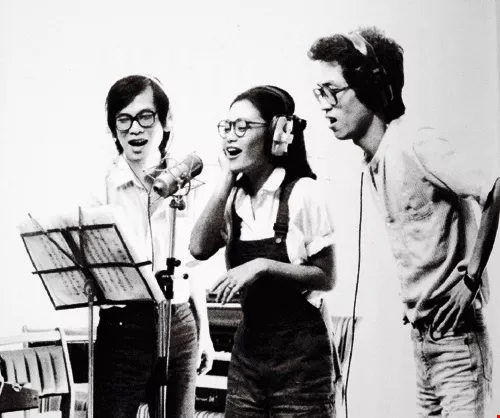
Lo Ta-yu met Sylvia Chang (center) at the time he wrote the title song for the film The Golden Age. The photo shows Lo in the recording studio along with Chang and Hou Dejian.
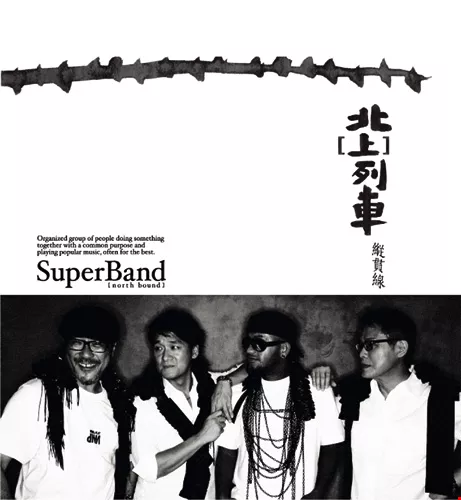
SuperBand brought together four of the doyens of the Chinese language pop music scene. Their collective EP Northbound Train included new compositions by all four, and covers a lot of different ground in terms of rock and roll styles.

@List.jpg?w=522&h=410&mode=crop&format=webp&quality=80)
@List.jpg?w=522&h=410&mode=crop&format=webp&quality=80)


