Urban Oases: Convenience Stores Transform Taiwan
Wang Wan-chia / photos Hsueh-Chi-kuang / tr. by Phil Newell
July 2010


Bing-bong! The automatic bell over the door rings as another customer enters. "Welcome!" call out the employees.
Strolling the streets of Taipei, even if you just stop at random and look around, you will surely see several convenience stores just a short walk away. The huge number of convenience stores in Taiwan is not only a source of wonder to foreign visitors, it is also one of the things that Taiwanese who go abroad miss most about home.
As of May 2010, there were 9255 convenience stores in Taiwan, or one per every 2500 people, the highest number per capita in the world.
According to a survey conducted early this year by Nielsen Taiwan, the average consumer in Taiwan made use of a convenience store 17 times per month, or roughly once every two days, a 30% increase over the same period last year.
You can't help but wonder what lies behind this astounding phenomenon. Why do Taiwanese consumers so love convenience stores? How do convenience stores affect the lifestyles and habits of Taiwanese? How have they changed our cities?
Convenience stores have become indispensable supply depots for modern life. Who hasn't at some time or other felt, as the corporate slogans say, "7-Eleven, Just What I Need" or "Family Mart, Your Family"?

Open-chan, mascot of the 7-Eleven chain.
"Nomads decide where to stay by following the water and grass, and we are nomads of the Taipei Basin, but we don't follow water or pasture, we stop where there are convenience stores," writes blogger wangchingyu, adding: "From condoms to white funeral envelopes, from procreation to death, the convenience store covers the whole life cycle; you really can't get around them."
Open 24/7 all year round, scattered to every corner of Taiwan, and always there to make you feel safe and comfortable, convenience stores also reflect deep layers of the Taiwanese character.
National Taiwan University sociology professor Tseng Yen-fen says, "Convenience stores are like the bells of the modern city, faithfully reflecting the chronological rhythms of the lives of Taipei residents. Or perhaps even better, they are mirrors, reflecting the intense work ethic of Taiwanese society."
She points out that Taiwan ranks first in the world in per-capita terms for both convenience stores and mobile phones, reflecting an obsession with "immediacy"-Taiwanese hate to wait. Because time is a scarce resource, convenience stores can be seen as a "revolution in time," giving time a kind of uniformity. No matter what hour you come in, the shelves are fully stocked, the lights all on. You can pick up or send packages, get cash from the ATM, pay bills, photocopy documents, grab a pre-packaged fantuan that could just as easily be breakfast or a bedtime snack, or simply buy a latte and sit in the shop flipping through a magazine. There is no distinction between day and night. Without your even realizing it, the scope of your day is expanded and you have broken free of the restraints of the clock.
Moreover, in contrast to the "early to bed, early to rise" constraints imposed by the nine-to-five society, in post-modern society the boundary between work time and play time is blurred, and demand for night life is high. People in Taiwan already commonly use the term "7-Eleven" as a metaphor for a working pattern on which the sun never sets. And when everything becomes dark and quiet deep in the night, you can still see city life carrying on at the convenience store, making it the standardized image of the city that never sleeps.
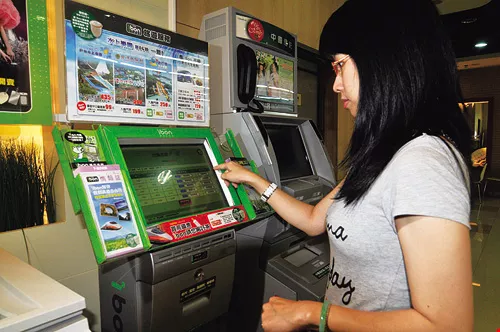
At the convenience store you can make photocopies, pay bills, buy tickets, arrange package deliveries.... Combining flows of goods, cash, and information, the scope of services offered by convenience stores is constantly expanding.
Looking back over the history of convenience stores in Taiwan, it all started back in 1979 when Taiwan's President Corporation brought in the 7-Eleven brand and operating model from the US. That was a simpler era, with Mom-and-Pop dry-goods stores that were friendly places-you knew the owners and they knew you-but also cramped, musty and dark. Suddenly in comes a shopping environment that is bright and spotless, so much so that when the stores first opened, more than a few customers assumed they had to take their shoes off before entering!
Trying to get a foothold in Taiwan, hoping to meet a wide variety of customer needs, in the early days the stores not only stocked pots and pans, plates and saucers, hardware goods, and even paper "money" used in religious ceremonies, but employees had to go to the farmers' markets first thing in the morning to buy ingredients to make their own luwei (simmered vegetable potpourri), which they would cut and weigh to order in the store. The company went so far as to get cooking advice from the famous TV chef Fu Peimei. But seeing as employees ended up throwing more away at the end of the day than they sold, the firm discovered that convenience stores are really only suited to simple, fast, standardized operations.
7-Elevens may have come from the US, but in fact Americans have never relied heavily on convenience stores; the US is a big country, with a more scattered population. Most convenience stores are located in gas stations and serve just as a place to do a little supplementary shopping for daily-use products. The development of convenience stores in Taiwan has followed, rather, in the footsteps of Japan. Convenience stores today are defined by a continuous expansion of geographic locations; by development of new products for consumers (sometimes before demand even exists); by "systems integration" incorporating flows of goods, money, and information; and by deep penetration into neighborhood life. They have evolved into complex "hybrid" operations.
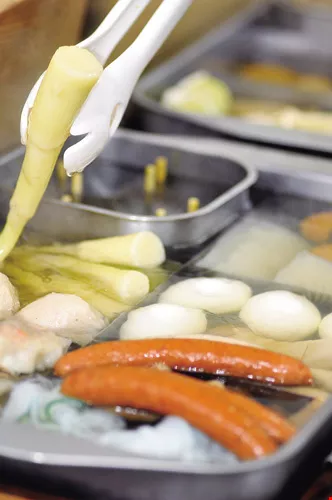
From tea eggs and "slurpies" to rice congee, Japanese oden, boxed meals, and fresh-brewed coffee, each new offering by convenience stores has set off a consumer frenzy, transformed the eating and drinking habits of people in Taiwan, and driven changes in the food and beverage industry. Now stores have installed seats for customers to sit and relax, marking yet another new departure.
During the first two decades of their development, convenience stores mostly dealt in the basic material ingredients of modern daily life: drinks, newspapers and magazines, instant noodles, junk food, frozen foods, cigarettes, and the like. Though they did offer hot food, this was limited to easily heated-up items like hot dogs, baozi (stuffed steamed buns), and the omnipresent pot of hard-boiled "tea eggs."
In 1995, President made the strategic choice to sell fantuan (glutinous rice, usually in triangle form, packed around meat, fish, or veggies, and then wrapped in seaweed leaf and packaged in plastic). Not only were more than 300 million bought within a decade, the sales figures have continued to rise, and last year alone more than 90 million flew off the shelves. Other convenience stores followed the lead, proffering sushi, sandwiches, chilled noodles, baked goods, and other fresh foods prepared in centralized kitchens and then shipped to stores. Ultimately they moved on to biandang (prepared full meals, precooked and ready to microwave), containers of fresh or pickled veggies or fruit, and other entrees or side dishes.
In recent years, 7-Eleven's "railroad biandang" (nostalgically imitating boxed meals formerly served on trains) and "citizen biandang" have been selling like wildfire, allowing office workers who have put in hours of overtime to grab a hot, microwaved meal even at 10 p.m.-much to the chagrin of the traditional biandang industry (usually centered on family-owned restaurants or individual street vendors).
Interestingly, 7-Eleven only began turning a profit after being in Taiwan for seven years. Its eventual success attracted in the island's number-two convenience-store chain, Japan's Family Mart, which came ashore in 1988.

During the early stage of Family Mart's development, it enjoyed little name recognition, and the fact that its store designs and product lines were virtually identical to 7-Eleven's led to a lot of confusion among consumers. Even when it advertised unique core products, these were often mistakenly taken to be new 7-Eleven products. In 2000 Family Mart came out with the slogan, "Family Mart, Your Family," hoping to create an image of warmth and intimacy and to strengthen and differentiate the brand name.
Family Mart also introduced banking and bill payment services. As early as 1998, Family Mart led the way in taking bill payments. Since then the kinds of bills you can pay in a convenience store have multiplied into a dizzying variety over the years, to today include public utilities (water, electricity, telephone, parking), school tuition, taxes, insurance, and credit cards.
Taiwan Family Mart public relations manager Esther Lin says that, compared to Japan, where bill payment services were first offered, although Taiwan didn't start until five years later, development here has been more robust because of greater liberalization in the financial sector and fewer restrictions. At present Family Mart's 2485 shops accept payments for over 100 million bills per year, with transaction fees of NT$2-15 per bill. This high-volume low-margin method has not only increased revenues, customers also get into a routine of stopping into the store each month to pay their bills, so the number of people crossing the threshold has increased 20-30%.
Convenience stores have further extended "life services" by moving from bill payments to accepting and receiving packages and express mail. The dense network of convenience stores has stimulated rapid movement of goods, and the entire spatial sense of Taiwan has been altered.
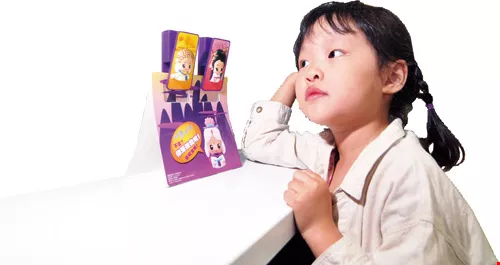
Let's hear it for free figurines! Promotional schemes offering dolls and peripheral products in exchange for accumulated points from previous purchases have proven to be enormously seductive to consumers.
Since 1999, convenience store corporations have also crossed over into "non-store shopping," offering catalogue purchasing and direct-order services. Items for sale include New Year's specialty foods, Mother's Day cakes, cosmetics, travel packages, and more. Taking advantage of the convenience store network, customers can place an order online, then go to an outlet to pay and pick up their stuff; or they can order in one outlet-say, using their lunch hour to place an order in shop A near their office-and pick up at another (outlet B, just a few steps away from home).
In particular, the New Year's foods-which each year inevitably attract a media storm of "taste comparisons"-have proven to be lifesavers for many an urban "office lady" who is less than stellar in the kitchen, and have spared professional women the chore of standing around the stove all New Year's Eve. Although "convenience-store New-Year's food" that is frozen and then microwaved has never gotten very good culinary reviews, by selling complete sets of a whole range of New Year's dishes and playing up the fact that these have been created in cooperation with famous chefs or famous restaurants, the convenience stores have accurately targeted the habits of many modern people who crave speed, convenience, and brand names. This is why future prospects remain bright.
In 2004, the number-three chain in Taiwan, Hi-Life, introduced their "Life-ET" multimedia kiosk (MMK). Using a touch-sensitive computer screen, consumers have access to even more commercial choices, further expanding the range of markets that convenience store can lay claim to.
Hi-Life marketing director Zhao Kunren relates that MMK platforms have long been essential in all convenience stores in Japan, but most of them mainly sell tickets for shows and the like. After bringing them to Taiwan, and considering the local culture here, Hi-Life added new functions, which allow customers to do things like use credit-card bonus points to purchase in-store products, print out bills and pay them on the spot, and download ringback tones.
In 2006, 7-Eleven and Family Mart followed suit, installing their "ibon" and "FamiPort" devices with functions like those in Hi-Life. With the FamiPort, for example, since starting the sale of high-speed-rail tickets this year, Family Mart can sell upwards of 10,000 HSR tickets per day, turning these small shopfronts into transshipment centers which can seemingly do it all.
Convenience stores have set off one consumer frenzy after another. Right now the most notable is fresh-made coffee, for which you will even see people lining up early in the morning.
7-Eleven, which failed in its first attempt to sell fresh-brewed coffee in stores back in 1986, went back to the well in 2004 and came out with the low-priced "City Cafe" line. Following a successful 2007 marketing campaign featuring actress Guey Lun-mei, 7-Eleven has been selling 30 million cups of coffee a year. Not surprisingly, in 2008 Family Mart and Hi-Life announced that they too were jumping into the fresh-brewed-coffee market.
With President Corporation (owners of 7-Eleven) also owning Starbucks in Taiwan, and Family Mart having the backing of Mr. Brown Coffee, Hi-Life set to work building on the assets of Kuang Chuan Dairy Company. Struggling against two powerful rivals, Hi-Life came up with a series of baked goods, ready-made breakfasts and simple meals. The company also began stocking selected bestsellers. The baked goods alone have increased revenues in stores by NT$10-20,000 per day, and a Hi-Life shop can sell four or five times as many copies per day of a particularly popular book as can an ordinary bookshop.
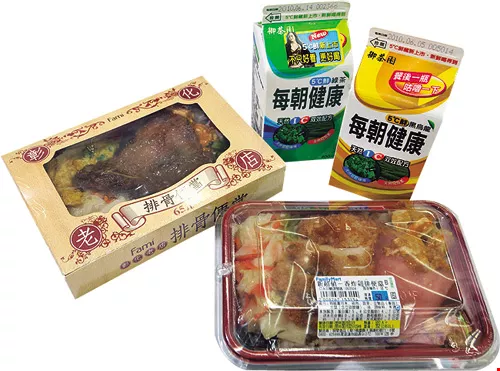
From tea eggs and "slurpies" to rice congee, Japanese oden, boxed meals, and fresh-brewed coffee, each new offering by convenience stores has set off a consumer frenzy, transformed the eating and drinking habits of people in Taiwan, and driven changes in the food and beverage industry. Now stores have installed seats for customers to sit and relax, marking yet another new departure.
Convenience stores have wormed themselves deeply into consumers' lives, helping meet every daily need. Indeed, they even offer ways to alleviate boredom and urban alienation.
In 2005, 7-Eleven Taiwan, copying a model used in Hong Kong 7-Eleven stores, began Taiwan's first ever convenience-store-centric promotional activity-if you spent NT$77 in any one visit, you could get a Hello Kitty magnet. With heavy reporting in the media, the promotion became a nationwide craze. The company not only gave out over 100 million magnets in 10 weeks, there were even moments when the supply of magnets could not keep up with demand, causing frustrated customers to stamp their feet and fly into a rage. There were also stories that some individual stores were hoarding magnets, causing the corporate headquarters to threaten "severe punishments for those who break the rules." This should give you some idea of just what a feeding frenzy was generated.
Hsu An-chi, an associate professor in the Department of Public Relations and Advertising at Shih Hsin University, says that the success of the promotional campaign was astounding, and indeed the fervor for figurines and dolls of iconic characters has yet to fade even today. Besides the immense popularity of Hello Kitty herself, the fact that the magnets were given away "free" with every purchase of NT$77 or more really struck a nerve with the consumer psychology of "It's free, why not take it?," so that people blithely ignored that were spending very real money in the stores.
Appetites for the trinkets were also whetted by giving them away in packages that hid what was inside, so there was an element akin to prize drawing. This bought out in many consumers a "never-say-die" attitude in which, combined with the logic "if you're going to collect, you might as well get the whole set," they would feel compelled to go back again and again to get what they wanted. The magnets even became focal points of social interaction and networking, as people began exchanging magnets with each other or giving them as gifts. These transfers became "rituals" affirming relationships among friends, allowing parents to dote on their children, and bringing co-workers closer together.
Esther Lin observes that since Family Mart does not have pockets as deep as those of its main rival, and can't afford to acquire the rights to major international animated characters, they have opted to position themselves as offering home-grown culture by offering cute figurines based on traditional deities (designed in cooperation with DEM Incorporated). With this single stroke, the amounts spent by people coming into the stores increased 30%. Moreover, the firm has also been working with the venerable Pili Puppet Theater to come out with action figures of characters from the theater's long-running television program; the dolls themselves are now in their seventh generation, and there are even 40 spin-off items produced under license, generating an extra NT$100 million in revenues per year.
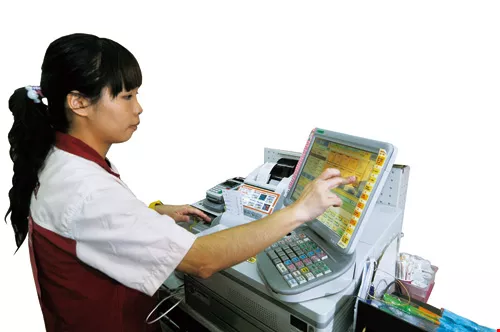
At the convenience store you can make photocopies, pay bills, buy tickets, arrange package deliveries.... Combining flows of goods, cash, and information, the scope of services offered by convenience stores is constantly expanding.
In 2005 7-Eleven came out with its own mascot, a "space dog" by the name of "Open-chan." Designed by Japan's largest advertising firm, with a rainbow of the 7-Eleven corporate colors on its head, it aims to make the "Always Open" slogan even more memorable to consumers. It is even said to have therapeutic powers!
7-Eleven sets aside an annual marketing budget of NT$50 million for "Open-chan." There are now more than 300 peripheral spin-off items, and a complete set can fetch as much as NT$3000 in online auctions. There are even Open-themed shops and hotel rooms, and a music album.
However, it must also be noted that these point-collecting promotional activities (more elaborate items require points collected over several visits) are very similar in nature, and sometimes even cause a backlash of complaints when supplies of figurines are short. If they continue to be used for a long time, can they retain their attractiveness to consumers?
An amused Zhao Kunren of Hi-Life admits that these events are like a "Pandora's box"-there's no turning back once you open the lid! Even though general interest waxes and wanes, there will always be a hard core of people who are "point collecting freaks." Given that competing firms will not give up, everyone in the industry just has to keep the promotions going, making for an incessant contest of "one-upmanship" in which each is always trying to get one step ahead of the others.
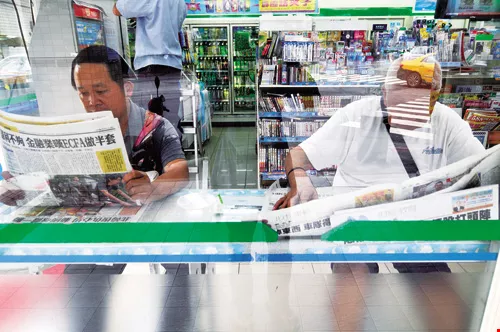
From tea eggs and "slurpies" to rice congee, Japanese oden, boxed meals, and fresh-brewed coffee, each new offering by convenience stores has set off a consumer frenzy, transformed the eating and drinking habits of people in Taiwan, and driven changes in the food and beverage industry. Now stores have installed seats for customers to sit and relax, marking yet another new departure.
NTU sociology professor Tseng Yen-fen observes that convenience stores testify to the complexity of the feeling created by many city spaces: they are there but hardly ever thought about, substitutable but indispensable, meters away physically but a universe away psychologically. They fall into the category of spaces that French anthropologist Marc Auge calls "non-places," spaces that exist only for transient passage. Yet at the same time, from the rapid flows of people and goods through them they produce intersections, and although any given individual is in the space for only a few minutes and people just brush past each other, each also has a sense of belonging, a feeling that "we are all on the same trail."
Although convenience store firms hope that the maximum possible flow of people and goods will pass uninterruptedly through their narrow spaces, they also hope to offer nooks where people can pause for breath: a table and chair in the corner, a linoleum counter with stools facing the window, a stand with magazines. All call out to people to stop for a moment, raising the "human feeling" of the space.
Tseng Yen-fen adds, by way of elaboration, that the US urban theorist Jane Jacobs has written that city life is "largely made up of small, sensitively managed details, practiced and accepted so casually that they are normally taken for granted." In convenience stores, typically less than 100 square meters in size, there is both a "sense of flow" and a "sense of place." They allow people hurrying through their day to shop, take care of errands, and go, while they also give people who pause in them a sense of familiarity almost like home. These miraculous spaces have generated new whirlpools of activity, the pull of which has become nearly inescapable.
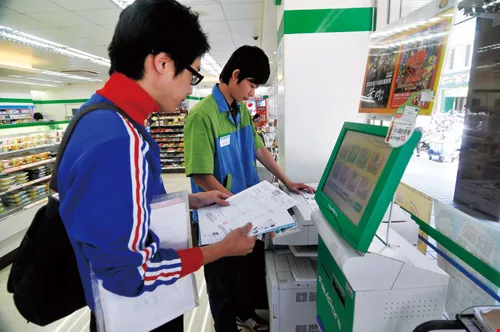
At the convenience store you can make photocopies, pay bills, buy tickets, arrange package deliveries.... Combining flows of goods, cash, and information, the scope of services offered by convenience stores is constantly expanding.
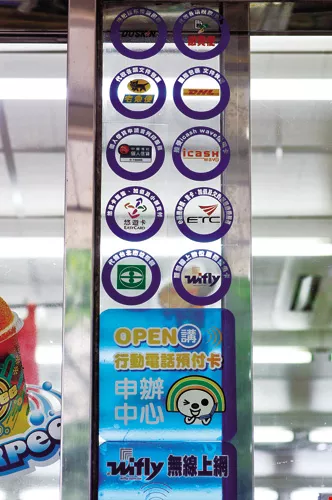
At the convenience store you can make photocopies, pay bills, buy tickets, arrange package deliveries.... Combining flows of goods, cash, and information, the scope of services offered by convenience stores is constantly expanding.
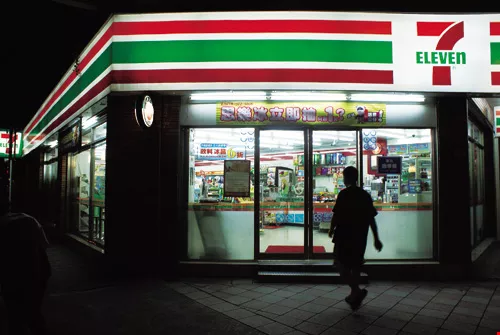
Open 24/7, 365 days a year, convenience stores have become an indispensable part of modern life.
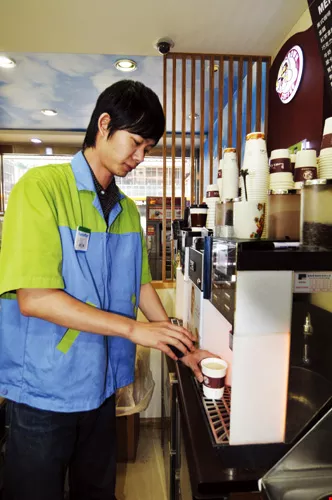
From tea eggs and "slurpies" to rice congee, Japanese oden, boxed meals, and fresh-brewed coffee, each new offering by convenience stores has set off a consumer frenzy, transformed the eating and drinking habits of people in Taiwan, and driven changes in the food and beverage industry. Now stores have installed seats for customers to sit and relax, marking yet another new departure.
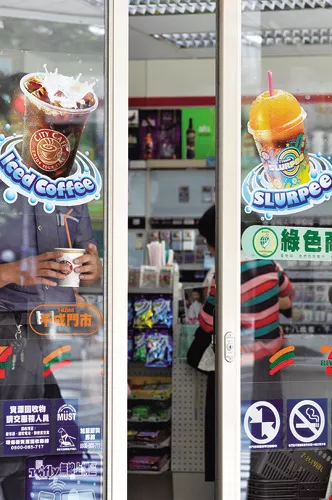
From tea eggs and "slurpies" to rice congee, Japanese oden, boxed meals, and fresh-brewed coffee, each new offering by convenience stores has set off a consumer frenzy, transformed the eating and drinking habits of people in Taiwan, and driven changes in the food and beverage industry. Now stores have installed seats for customers to sit and relax, marking yet another new departure.
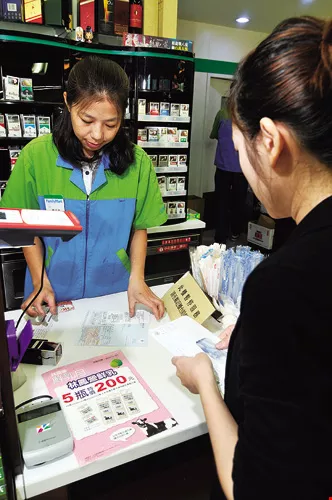
At the convenience store you can make photocopies, pay bills, buy tickets, arrange package deliveries.... Combining flows of goods, cash, and information, the scope of services offered by convenience stores is constantly expanding.
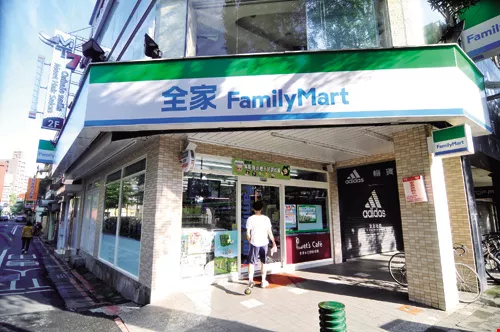
Open 24/7, 365 days a year, convenience stores have become an indispensable part of modern life.
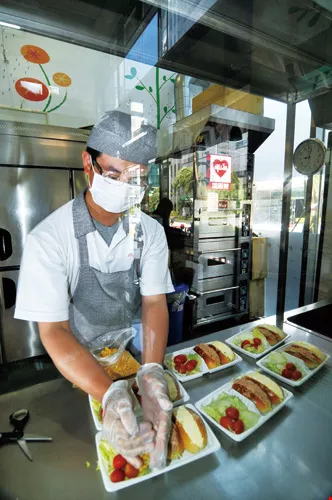
Hi-Life has launched a line of baked goods for sale in selected convenience stores. Initial preparations are done in a central kitchen, but final baking is done right on the spot by a professional baker assigned to each shop. Currently, about 160 Hi-Life outlets have this feature.

@List.jpg?w=522&h=410&mode=crop&format=webp&quality=80)

@List.jpg?w=522&h=410&mode=crop&format=webp&quality=80)

@List.jpg?w=522&h=410&mode=crop&format=webp&quality=80)
@List.jpg?w=522&h=410&mode=crop&format=webp&quality=80)

