A Foreign Affair:
The Diplomatic Achievements of Francias Lee
Lee Shan Wei / photos Jimmy Lin / tr. by Scott Williams
December 2019


The son of a general, Francias Lee has an innate sense of justice. He served all over the world with great merit during his 30-plus years as a diplomat. Having retired at the age of 60, his time is now his own, and he looks back at his long career with no regrets.
Lee’s first posting as a mission head was to Australia, where he made a name for himself by greatly improving our economic and trade relationship. Later, his research into historical documents helped the ROC make a strong case for the return of Fort San Domingo without the need to pay compensation. Lee went on to end a stalemate in Taiwan‡Korea aviation negotiations, spurring a resumption of direct flights with far-reaching effects on tourism.
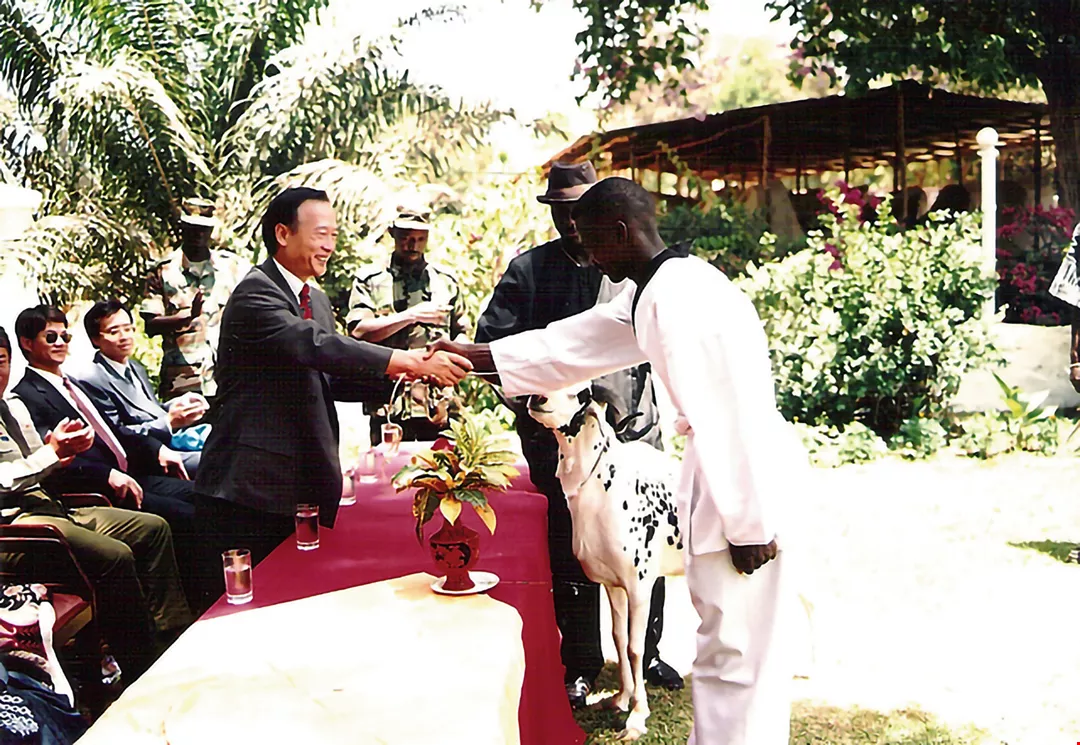
Taiwan used to help the Gambia train special service personnel. When then Gambian president Yahya Jammeh hosted the first graduation ceremony for such personnel in 1997, Lee attended as Taiwan’s ambassador. (courtesy of Francias Lee)
A look back at the past
The gorgeous vermilion Fort San Domingo is particularly eye-catching against the blue sky and white clouds. The ROC flag on the roof waves in the wind as it did for the first time one morning 40 years ago.
Lee recalls: “At the time I received the brief, I was a section chief in the Department of European Affairs at the Ministry of Foreign Affairs.” Located partway up a hill at the mouth of the Tamsui River, Fort San Domingo occupies a strategic position, and in former times was always garrisoned with soldiers. The nine flags that now stand at its entrance document its changes of fortune over the years.
The original Fort San Domingo was built by the Spanish in 1628, but was soon destroyed. The Dutch built another fort on the site in 1644, named Fort Antonio. The Dutch fort was occupied by Zheng Chenggong (Koxinga) in 1661. Wang Qian, the Qing-Dynasty governor of Danshui Subprefecture, renovated it and added an outer wall in 1724. The British government began leasing the fort in 1867, using it as a consulate and adding an adjacent consular residence. The Japanese seized it in 1941 during the Pacific War, but returned it to the British when the war ended. The British remained there until 1972, when they turned it over to Australia and the US to manage. Historically significant objects had remained sequestered behind its locked gates, quietly collecting dust for decades. The fort’s dilapidated state pained Lee from the standpoints of both historical research and tourism.
Lee explains that when Taiwan was negotiating with Britain for the fort’s return, Britain asked to be reimbursed for the cost of the consular residence it had built on the site. But when he read through the Qing-Dynasty documents covering the history of the fort, he learned that Britain never paid the rent on the land it had ostensibly leased. With this valuable information in hand, he had a strong counterargument to the British request. On June 30, 1980, acting on behalf of Britain, Joseph K. Twanmoh, an internationally renowned lawyer who was then the president of Soochow University, turned the fort’s keys over to a delegation led by Hu Shih-hsun, then the director-general of the Department of European Affairs at MOFA, and the ROC flag was raised over Fort San Domingo for the first time.
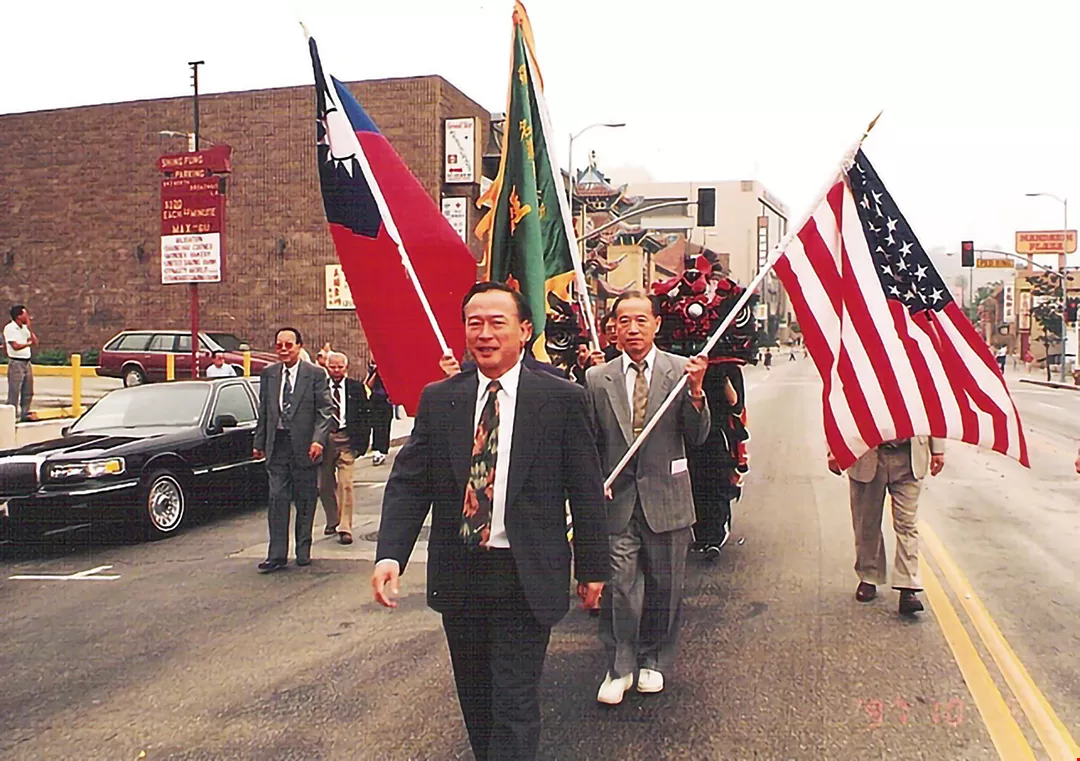
The Los Angeles area is home to more than 1 million overseas Chinese, and its Chinese Consolidated Benevolent Association has supported the ROC for a century. In the photo, Lee, then the head of the Los Angeles TECO office, joins in the 1997 Chinatown Double Ten celebrations. (courtesy of Francias Lee)
Venturing south
“Our relationship with Australia was very distant when I was first posted there.” Lee was assigned to Melbourne for his first stint as a mission head. The ROC mission to Australia, an office then known as the Far East Trading Company, consisted of just Lee and a secretary. Lee soon realized that Australia’s thinking was ready to change, that it was becoming interested in forging ties with Asian nations.
“I think I was very fortunate to be assigned there at that moment.” Lee’s sincerity and diligence enabled him to gradually develop a relationship, building it bit by bit into close ties with Australia’s parliament. In his second year there, he won permission for the mission to relocate to the Australian capital of Canberra, and to change its name to the Taipei Economic and Cultural Office.
The Australia‡Taiwan Parliamentary Group was formed and forged a solid friendship with Taiwan. Over the course of two short years, the group grew to have 90 members, making it larger than the country group for the UK (84 members) and nearly as large as the one for the United States (102 members).
This spurred then Legislative Yuan speaker Liu Song-pan, deputy speaker Wang Jin-pyng, and legislator Tina Pan to visit Australia, where they were received by the speaker of the House of Representatives. MOFA took note of Lee’s achievement, and in 1993 sent him to New York for one month to support Taiwan’s first opportunity to participate in a United Nations working group.
Closer ties to Australia also excited investors, who wanted to know which way the wind was blowing. The Australian government was aware of Taiwan’s economic might, and demonstrated its view of the importance of substantial ties between our two nations by gradually raising the seniority of its diplomatic representative to Taiwan.
When Lee left Australia three years later to take up another post, 35 members of parliament arranged a sendoff for him in one of the parliament’s dining halls.
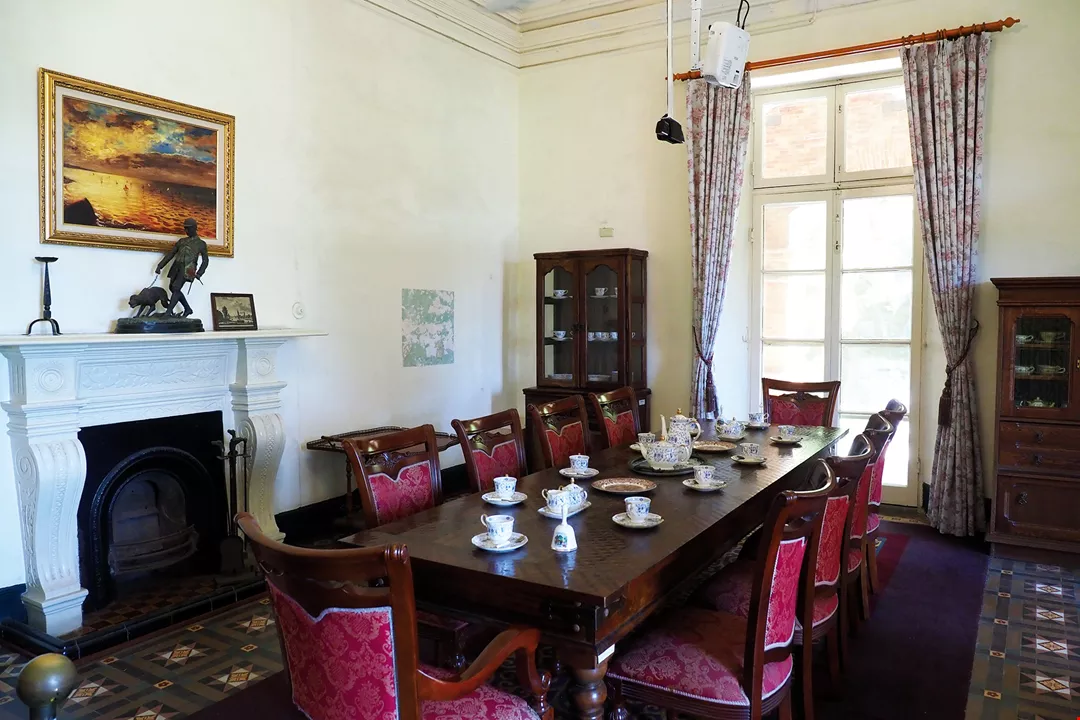
Docents regularly lead tours of the historically important Fort San Domingo and the objects it contains.
Warmer Korean relations
“My final overseas posting before I retired was in South Korea.” As a young man, Lee had dreamt of joining the Air Force. He got his chance to contribute to aviation in this posting by helping reestablish South Korea’s air links with Taiwan. He worked tirelessly during his two years in Korea, liaising with 177 legislators to build relationships and establish support for bilateral cooperation.
Even when we lack formal diplomatic relations, diplomatic personnel are duty bound to enhance economic and trade ties. When Korea and Taiwan broke off diplomatic relations in 1992, it not only halted direct flights on national carriers, but also caused Taiwan’s trade deficit with Korea to grow to US$3.4 billion by 2001. This state of affairs finally prompted the Taiwan External Trade Development Council to establish the Taiwan Trade Center, Seoul. The center has been of great help in reducing the deficit, cutting it to just US$500 million by 2015.
When Lee arrived in Korea in May 2001, he learned that Korean Air was already flying to more than 20 cities in mainland China. Meanwhile, travelers wishing to fly between Taiwan and Korea had to travel on Cathay Pacific or Thai Airways. This state of affairs was causing Taiwan‡Korea relations to become ever more distant. Lee used the media to build interest in reestablishing flights. He achieved a measure of success in December 2002, when Taiwan and Korea reopened charter flights, and a more complete success when the two sides inked an agreement formally resuming flights on national carriers in September 2004.
In 2003, fewer than 100,000 Korean tourists visited Taiwan. In 2018, more than 1.02 million visited, an increase of more than ten times over 15 years. In fact, Taiwan is now the third most popular destination for Korean tourists.
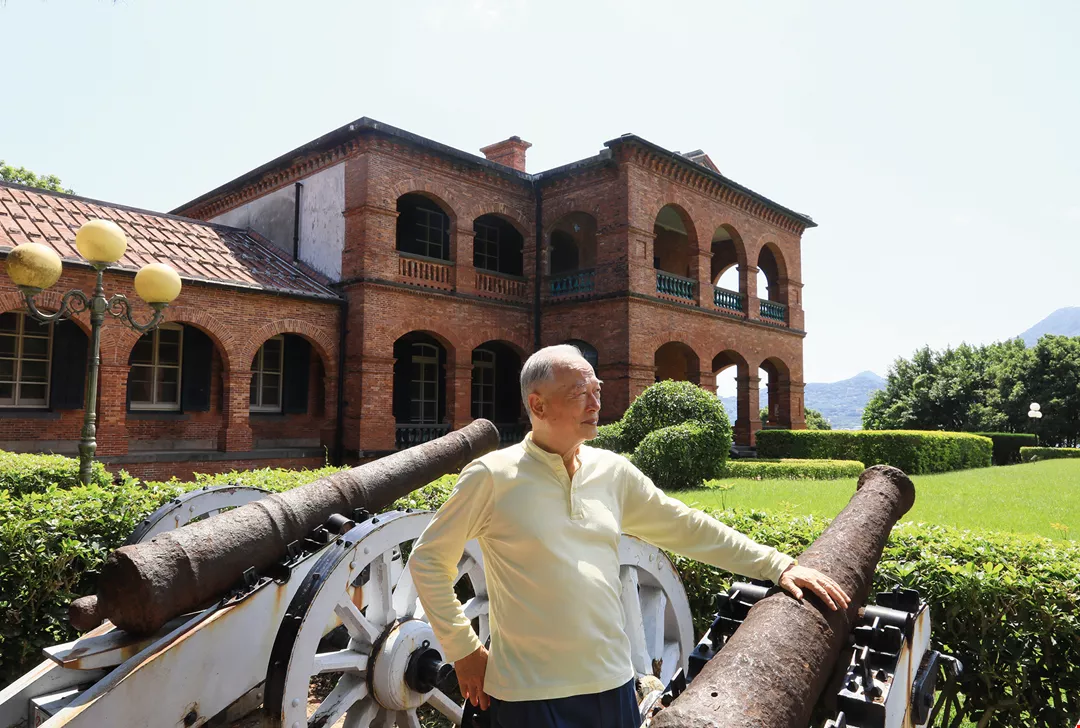
Standing in front of the former British consular residence at Tamsui’s Fort San Domingo, Lee is glad that visitors from around the world are able to share in the fruits of his labor.
A knight leaves the field
“During my previous posting, in Los Angeles, I had 16 meetings a day.” Even Lee’s iron constitution couldn’t hold up under the abuse of that kind of nonstop work, and he fell ill. Bowing to fate, the selfless diplomat began to think about hanging up his spurs. “I still treasure this mug.” A gift from the staff of the Los Angeles office, it reads “The Best Leader in the World.”
Lee takes even his hobbies seriously. As the president of numerous MOFA sports clubs, his goals were not only to put the clubs on a sound organizational footing, but also to make them competitive. The amiable Lee was MOFA’s Mr. Popularity. “I got along well with the drivers and janitors, too.”
“Historical objects hold a fatal attraction for me.” When a canceled postage stamp sparked his interest in Chinese postal envelopes from Mongolia, he immersed himself in study and went on to make an important contribution to the field of Chinese postal history with the book Chinese Postal History in Outer Mongolia.
“I also love ancient jades, the kind etched with the spirits of our ancestors.” He poured his years of accumulated knowledge into two studies that he shared with other jade aficionados. His playful, conversational presentation makes each piece of jade he discusses sparkle. At peace in the quiet retirement that has followed his magnificent career, Lee enjoys chatting and sharing jokes. The world’s storm clouds blow away on the wind, leaving behind a selfless and loyal servant of the state.
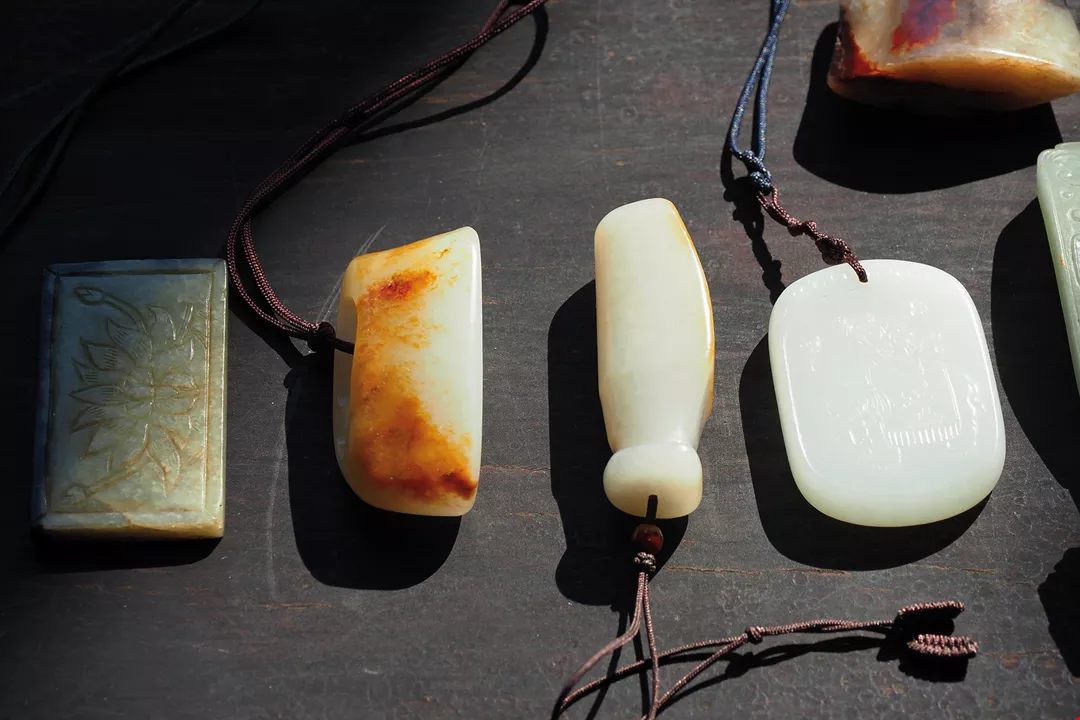
Lee loves the lovely okra-yellow coloring of old jade.
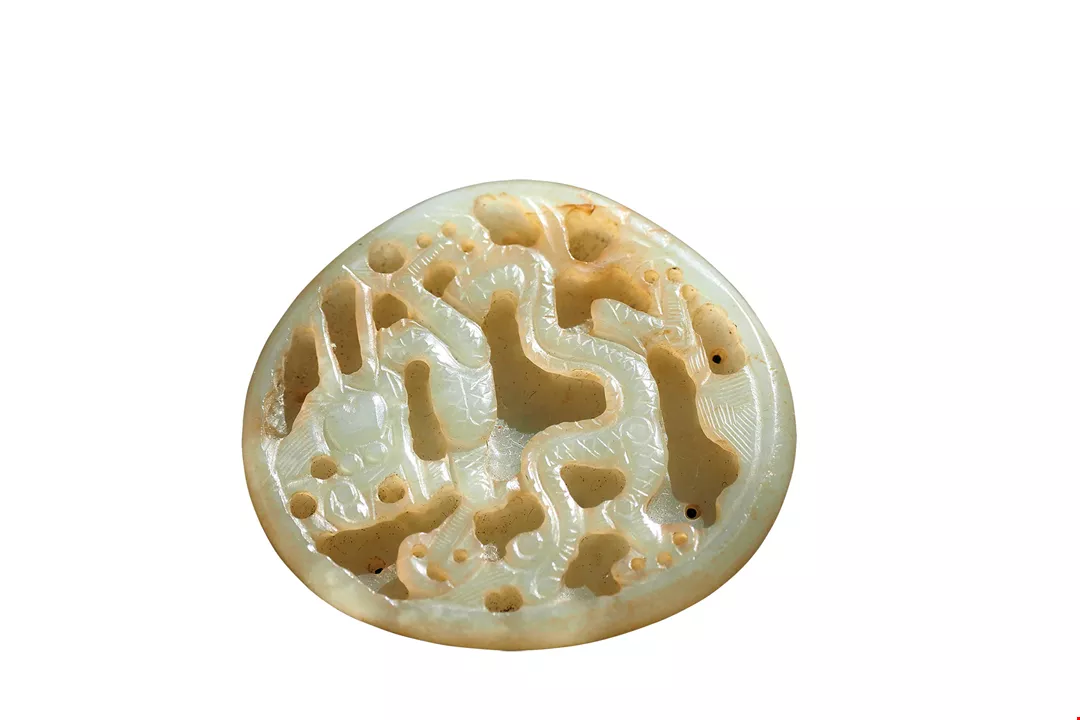
A Ming-Dynasty jade belt plaque evokes time’s transformations.
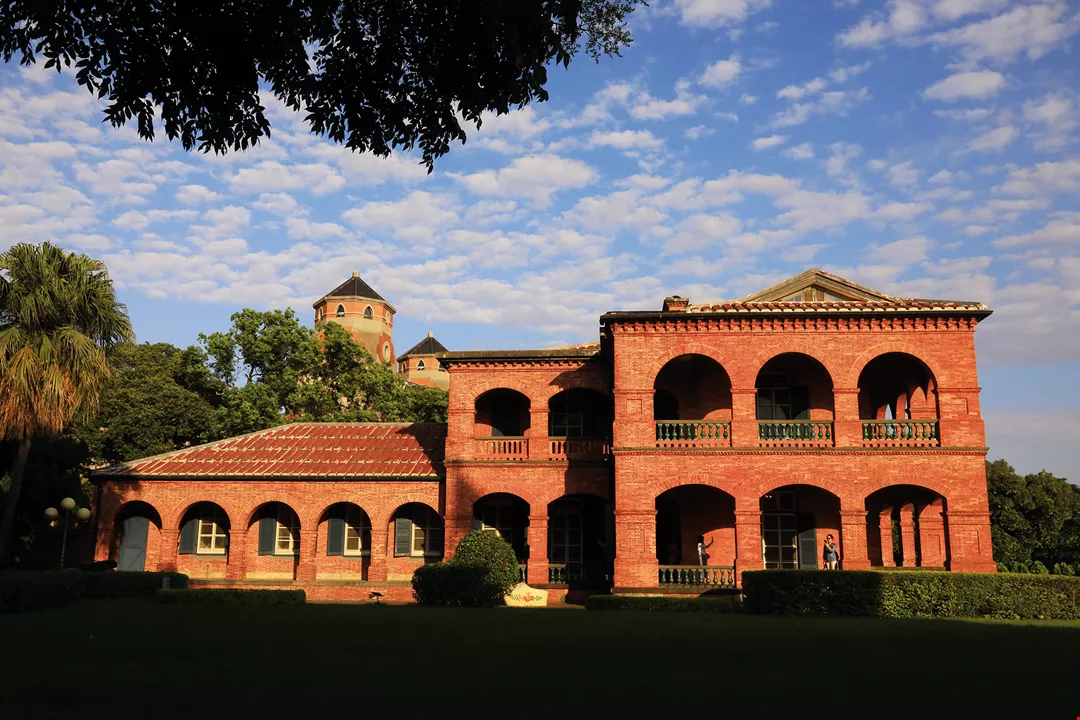
The lovely, world-renowned Fort San Domingo hosts a steady stream of visitors. (photo by Jimmy Lin)


