Is anyone listening?
Though they have yet to gain the right to vote, these high-school students are concerned about their voices being heard. The previous generation feared “being silenced,” but they fear “speaking out without anyone listening.”
Weng Shuochen says: “I care about whether what I say has any impact, and worry that if we constantly speak out without ever getting a response, over time people might come to feel that there’s no point in saying anything, and will lose the will to express themselves.”
Xie Shiyun suggests: “There’s a ton of freedom in the internet community, but very little tolerance. I care about whether what I say has any effect, but I am even more concerned about who is listening.”
Despite this, they have not given up on self-expression. Weng personally experienced the joy of free speech on the streets when he took part in a gay pride parade for the first time. Meanwhile, Huang Qianhang states that although flame wars are exhausting, he is still willing to engage strangers in debates time after time. This is because he believes: “If one day everyone is ready to calm down a little and talk, perhaps the world will become a better place.”
This may well be how democracy appears to the younger generation today, 30 years after Taiwan’s first direct presidential election: They have no doubts about the value of freedom, but amidst the clamor of opinions they are striving to find more possibilities for dialogue and communication.
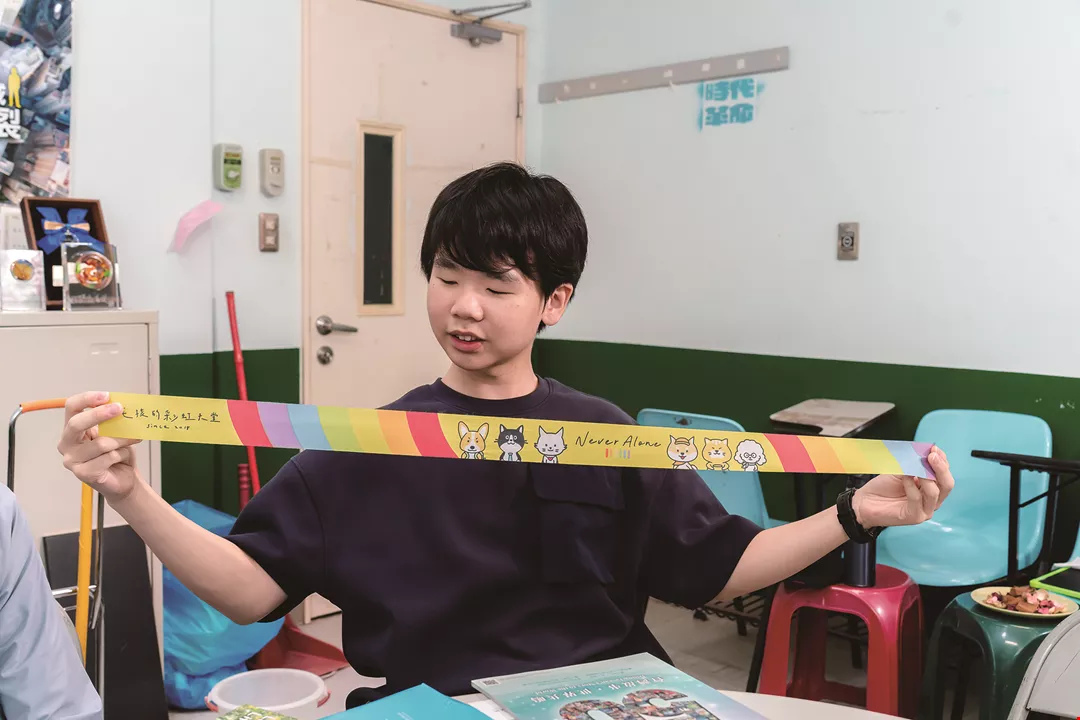
Weng Shuochen displays a ribbon he got when he joined a gay pride parade, recalling how moved he was by the joy of voicing his opinions freely in the streets.



.jpg?w=1080&mode=crop&format=webp&quality=80)


@List.JPG?w=522&h=410&mode=crop&format=webp&quality=80)

@List.jpg?w=522&h=410&mode=crop&format=webp&quality=80)
@List.jpg?w=522&h=410&mode=crop&format=webp&quality=80)


