

The international efforts of Taiwan’s Wowprime restaurant group continue apace, with Singapore recently becoming the third overseas market to host one of their restaurant brands, after mainland China and Thailand. The group owns a dozen brands, including 12 Sabu, Tokiya, and their latest, the vegetarian Sufood. It is this last brand that has been at the forefront of Wowprime’s move into Singapore and an important part of their plans for international expansion.
The Singapore branch of Sufood opened its doors in May, a moment which Wowprime chairman Steve Day announced as the start of a new era in the group’s international efforts. After Singapore, the group now have their sights set on the US, and plan to speed up their moves into the global market.
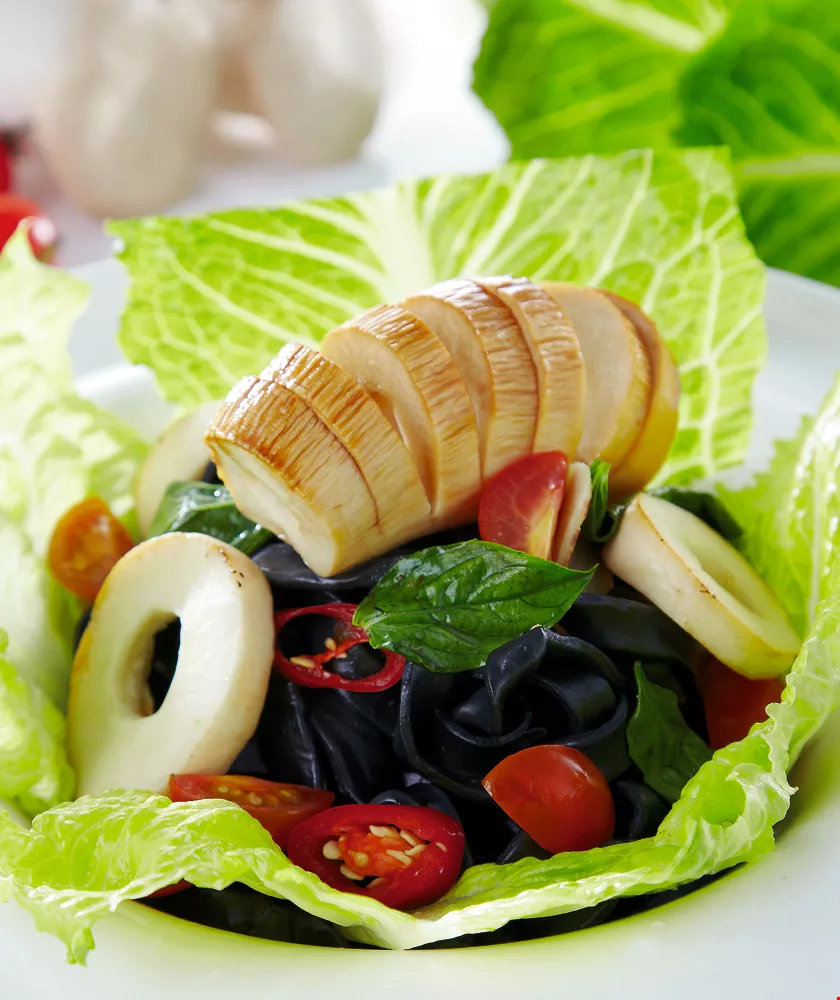
The creative vegetarian dishes on Sufood menus first have to pass through six months of trials before being ready for diners.
Wowprime have already established contacts with entrepreneurs in America, Malaysia, Thailand, and other countries—seven countries, at their peak—for negotiations. “Of all our brands, the one people ask most about is Sufood,” says the group’s vice chairman Endy Wang.
Most of Wowprime’s other brands are focused on Western or Japanese cuisine, markets that are already highly competitive. Sufood, meanwhile, is a vegetarian brand characterized by vibrant, Italian-inspired cooking, and aims to shatter the stereotypes of vegetarian cooking. Wang notes that many people associate vegetarianism with religion, culture, or a generalized Orientalism, pigeonholes that Sufood has flown from to find its own position in the market.
In 2013, Wowprime entered discussions with Singapore’s Pu Tien Holdings and their chief executive C.C. Fong, with Sufood at the top of the menu. In November that year, the two sides signed a contract, and in just six months Sufood Singapore was ready to go. In the four months since then, their daily customer numbers have tripled from their original 100, making Sufood Taiwan’s first vegetarian restaurant brand to succeed abroad.
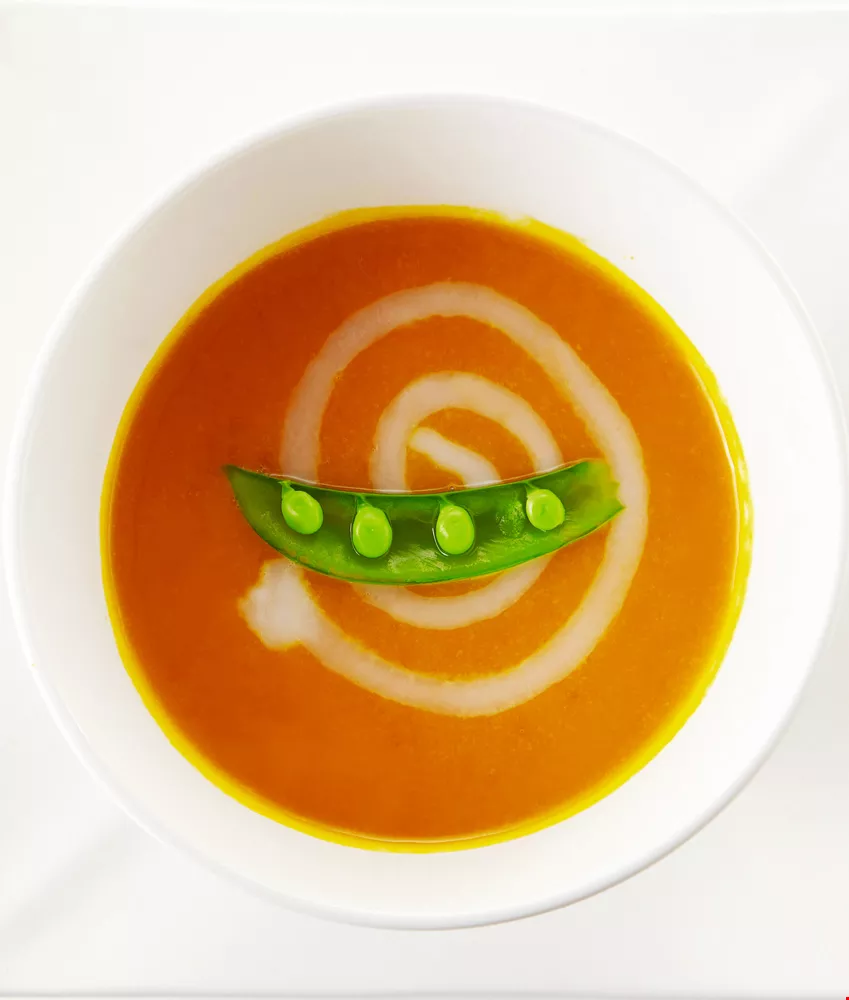
The creative vegetarian dishes on Sufood menus first have to pass through six months of trials before being ready for diners.
“For us, this move into the Singapore market is very significant,” says Wang. Singapore is a leader in Southeast Asia, with a population made up of ethnic Chinese, Indians, and Malays, the Malays being predominantly Muslim. This means that if Wowprime is successful, not only will they have their first opportunity to get experience with Indian and Muslim customers, they will also have a secure foothold from which to break into the broader Southeast Asian market.
To ensure that success, Wowprime has not only exported everything from cutlery and table accessories to deck out their Singaporean outlet, but also entrusted the training of the local Singaporean staff to an experienced store manager from Taichung. In this way, they aim to preserve the essence of Sufood in its transition to this new market.
And to meet the expectations of their high-end target market, Sufood has raised its prices by 20% and prepared all-English menus, as well as hiring a renowned Japanese architect to design their store. All of this combines to give the restaurant a truly international image.
Cultural differences have been the biggest stumbling block for previous attempts by Taiwanese food and beverage brands to break into the international market, says Wang. For Wowprime’s efforts this time, the company also underwent an internal restructuring, transforming the Brand Department into the “International Brands Office,” to bring all their brands under one umbrella and so facilitate international cooperation. “As well as pushing forward Wowprime’s international plans, we’re hoping to consolidate our business experience and the know-how we’ve gained during our other international operations,” he continues.
Part of that know-how concerns brand image and positioning. To ensure control over everything from logos and uniforms to promotional materials in the franchising process, Wowprime have written up a manual over 80 pages in length. In the future, as international partnerships increase, Wowprime will be better prepared to ship out their other brands as a complete package.
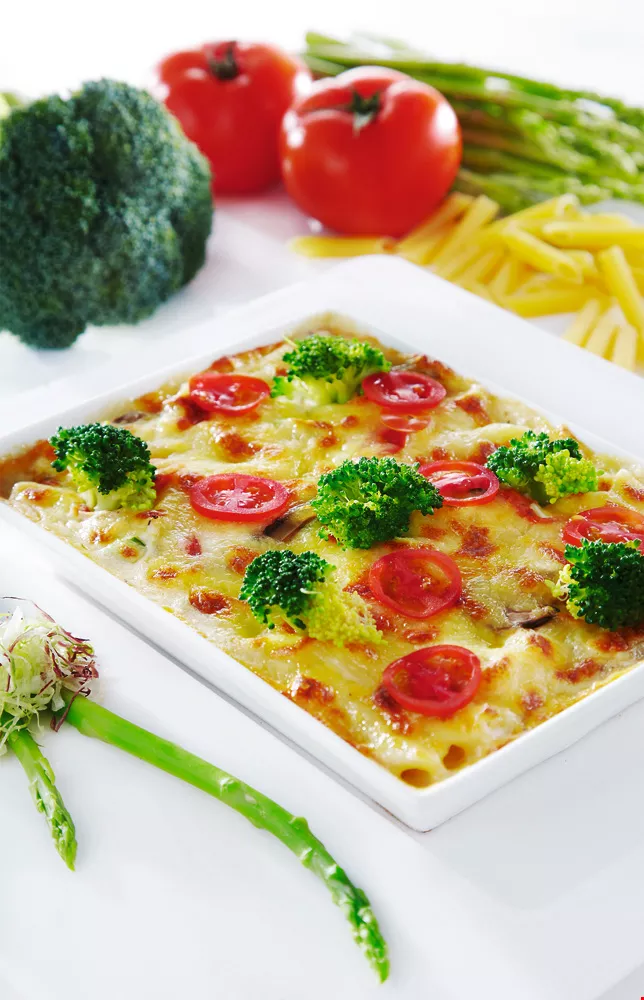
The creative vegetarian dishes on Sufood menus first have to pass through six months of trials before being ready for diners.
Wang, who is also responsible for the group’s international brands, adds, “This is the result of our past failures and the lessons learned.”
As far back as 2000 Wowprime was looking to expand internationally, with Lobo Lee—now general manager of their mainland China operations—at the head of their move into the US market with Porterhouse Bistro in Beverly Hills.
This was the group’s first international operation, and they dispatched a team to run the 100%-owned new restaurant using Wowprime resources exclusively. From menu planning to pricing and market positioning, they handled everything. However, despite the fact that Wowprime’s leading brand is a steak house chain known as Wang Steak, they made a major error with their new steak house. To adapt to local tastes, Porterhouse Bistro changed the focus of their dishes from the specially produced steak fillets of the Taiwan operation to cuts more preferred by American diners. However, the market was already flooded with similar restaurants, and combined with the pressure of wages and operating costs, expenses went up. After seven years, Porterhouse had racked up over NT$100 million in losses, finally prompting Wowprime to admit defeat.
In 2011, Wowprime decided to try again, launching the Tokiya brand in Thailand. This time they sought a local franchiser, leaving operation of the Thai restaurant in the hands of local management, with Wowprime just offering support in the form of advice and staff training.
This time, Wowprime thought, would be different, for they had learned from their past mistake. However, when the local partner decided to reorient from “Japanese restaurant” to “Japanese-style steak house,” the restaurant’s brand positioning was muddied, and by the time Wowprime found out, it was too late. But these two failures taught the group much, and for their next attempt they struck a balance between the two modes of operation, finding a partner in Singapore willing to engage in a joint venture.
Their 2003 move into the mainland Chinese market was also part of their effort to prepare for a wider international expansion.
Group vice chairman Endy Wang explains that other global brands have built from a sizable local foundation—Starbucks, for example, already had 3,000 stores in the US before opening its first overseas location. Issues of scaling and manpower were already well and truly sorted out.
Taiwanese restaurant brands looking to expand abroad, however, don’t have foundations of such scale, and thus lack the necessary experience. When Wowprime moved into mainland China, they initially faced familiar issues around staff training and venue development, but after ten years of persistence, their efforts finally began to bear fruit.
The mainland operation saw a rise in turnover of some 45% last year. In 2014 the company expects to see further growth of 50%, and is seemingly set for more exponential growth. But as Wang notes, success in the mainland hardly makes a Taiwanese company “international.” “Only once you’ve made it in the American market have you really gone international,” he avers.
With their mainland operation on a firm footing, Wowprime decided to set up another group to look into further overseas expansion and to prepare a two-pronged assault on the global market. While the mainland team focused on becoming self-sufficient, the international team began actively seeking out potential partners.
Last year, Wowprime saw turnover of NT$14.89 billion, of which their international operations accounted for 38%. “We’re actually six years ahead of the chairman’s goal, achieving by 2014 what was planned for 2020,” says Wang.
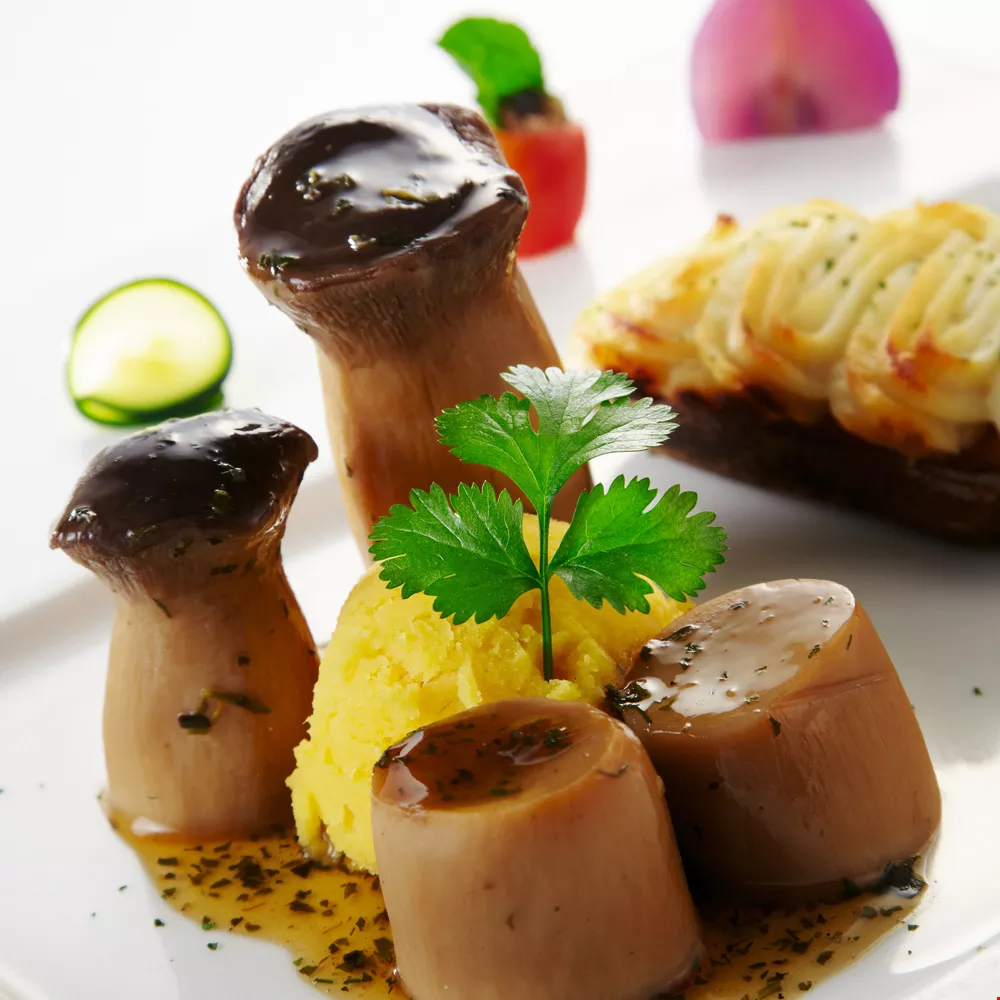
The creative vegetarian dishes on Sufood menus first have to pass through six months of trials before being ready for diners.
Without a powerful innovative force behind them, though, there would be nothing to fuel this new drive to go global.
Each year the group holds a competition to get new dishes on the menu for a trial run, and every year Wowprime brands are expected to go through two rounds of R&D, with a two-week team-based contest involving chefs from Wowprime’s head office and from the individual restaurants, to develop something new.
The winners get to choose one branch each in southern, central, and northern Taiwan. If the diner response isn’t positive, the head chef will make adjustments to try and improve the dish. If this initial trial is successful, the dish then hits menus islandwide for a further six-month trial before it can officially become a fixture on the menu. But even those that pass that trial aren’t guaranteed a place; for example, any that use ingredients subject to significant seasonal price fluctuations, which may impact costs too much, are also eliminated. “It’s not easy for a new dish to make it,” says Wang.
With this third attempt to set out into the wider world, Wowprime is aiming to raise the visibility of Taiwan’s food and beverage sector and give people around the globe a taste of that renowned Taiwanese hospitality.
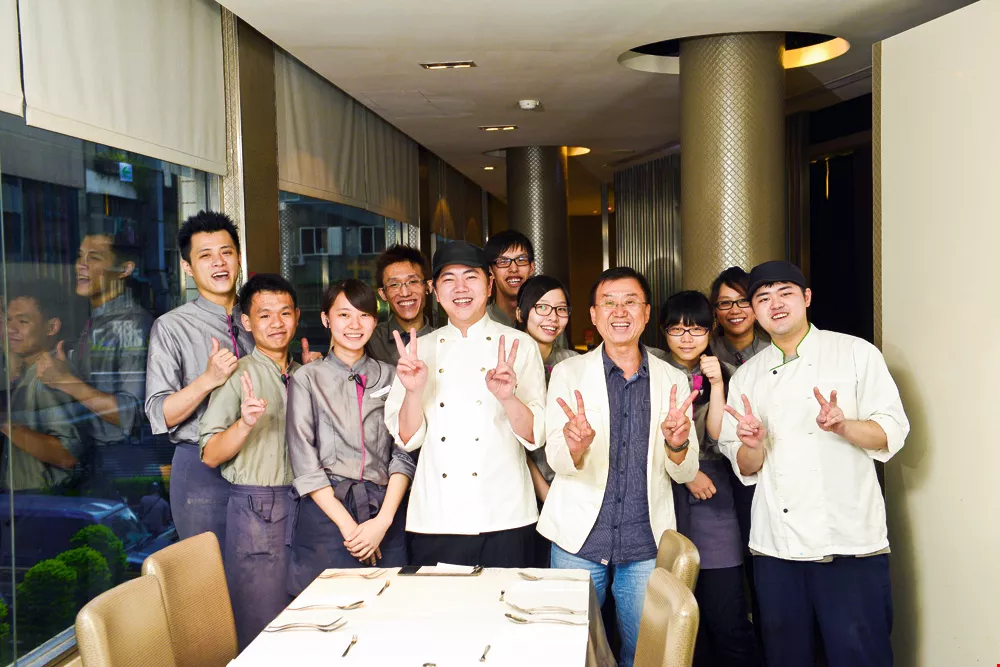
Wowprime Group vice chairman Endy Wang (fourth from right) has been at the head of the group’s efforts to take the Sufood brand into Singapore.

@List.jpg?w=522&h=410&mode=crop&format=webp&quality=80)
@List.jpg?w=522&h=410&mode=crop&format=webp&quality=80)


