Alternative Artistry-The Rise of Subversive Streetwear
Chang Chiung-fang / photos Hsueh Chi-kuang / tr. by Geof Aberhart
January 2010


Just a couple of years ago, foreign leisurewear brands like Bossini, Giordano, Hang Ten and so on had taken over the streets of Taiwan-if you saw a young person without the two-feet logo of Hang Ten, then they were most likely sporting the Giordano frog. But in the brief time since, stores for those brands have begun disappearing, with some brands even leaving Taiwan altogether. In their place are springing up stores for local streetwear in a variety of styles. Not only have the youth of Taiwan begun fixating on local brands, this tide of streetwear brands has become a tidal wave flooding the mainstream islandwide.
"Today, a good eight out of 10 young Taiwanese are buying local urban streetwear brands," says Kevin Chang, the brains behind the brand Jay and a leader in this new trend.
Underlying the rise of these local brands and fall of foreign ones, on the face of it part of the cyclical nature of fashion, is a rising youth consciousness that cannot be ignored.
In youth mecca Ximending lies Lane 96, Kunming Street-also known as "Fashion Street" for the veritable forest of trendy fashion stores that have popped up along it. Come the weekend, Fashion Street is thronged with fashionistas in curious, decidedly personal styles.
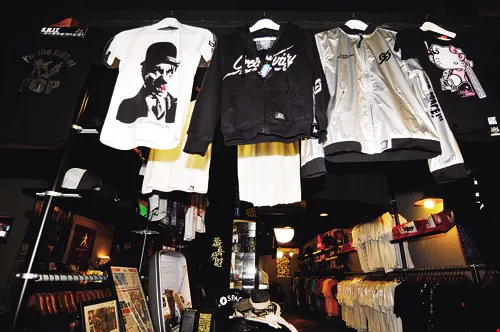
The alleys and lanes behind Tonlin Department Store on section four of Zhongxiao East Road in Taipei are another such spot. Many famous brands have set up their flagship stores here, and within a kilometer you can find 50 or 60 fashion stores. Local label Jay is no exception.
Jay is not only a hot brand in and of itself, but also a sales channel for other Taiwanese urban streetwear brands.
In March 2009, the opening of Jay's store in Taipei's "East District" was attended by local celebrities like Kan Kan, Vincent Fang, and Jay Chou, helping the brand hit the stratosphere-in less than a year, the company has made over NT$10 million in turnover and opened up eight stores: ones on Dunhua South Road and in Huashan Culture Park (both in Taipei), in Eslite in Banqiao, and in Hualien, Keelung, Hsinchu, and Kaohsiung. Now there are even plans to set up shop in Shanghai.
Thirty-five-year-old "mastermind" Kevin Chang explains that Jay was born from the minds of himself and two of his good friends, Vincent Fang and Jay Chou. They saw that Taiwan lacked its own youth-focused fashion brands, and even if there were any, there were no places to sell them, so they decided to open their own such store.
Fang, who made his name writing songs with a distinctively Chinese flavor, became the brand's creative director, while Chou, already an established music and film star and aspiring sports shoe entrepreneur, had to minimize his involvement due to already being contracted to endorse other brands. Nevertheless, Chou's part in the company is evident from it sharing the same English name as him.
In addition to their own brand, Jay also sell over 60 other local brands, with nary an imported label to be seen.
"We stick to Eastern elements and local demands," says Chang. He explains that Jay is a cultural creative platform, developing its own brand and providing local brands the best offline sales platform available.
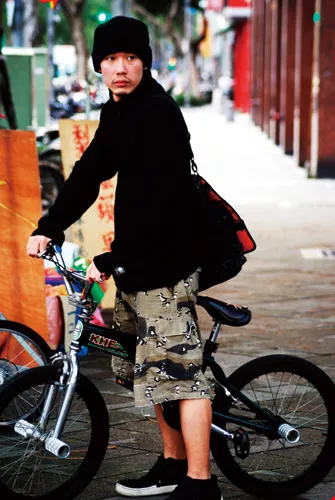
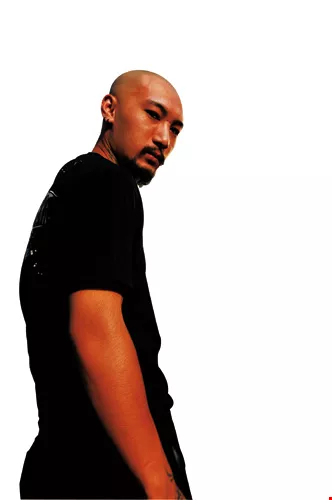
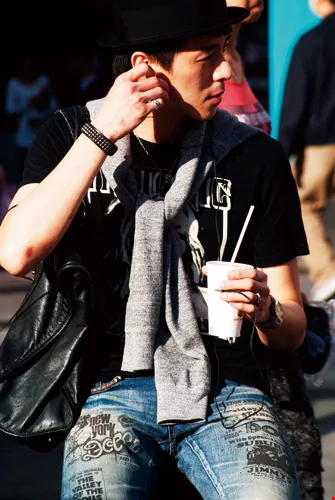
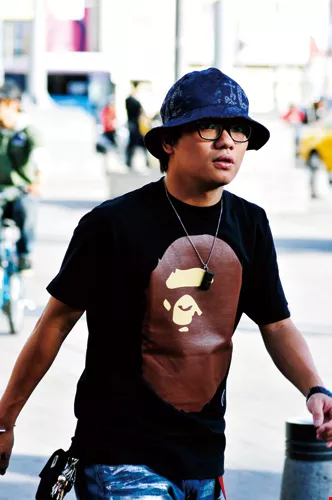
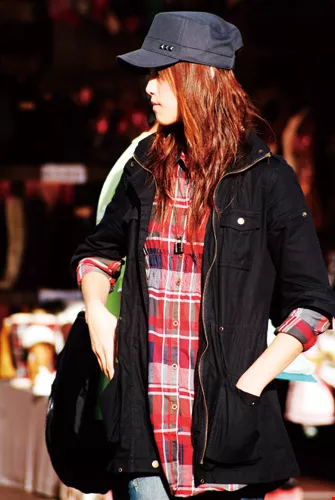
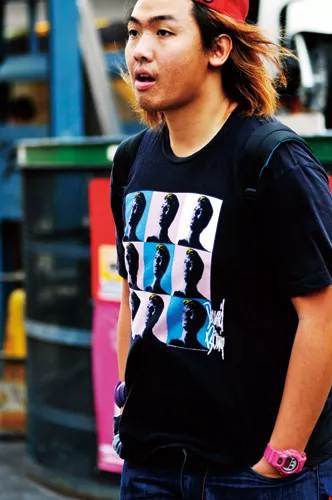
Taiwan's streets are being swept by a wave of subversive streetwear, but what is subversive streetwear? It is trendiness, creativity, personality.... It is a subversive statement of identity.
Twenty-something staffer at fashion magazine Beauty Wang Junwen is a fan of one brand called Pet Shop Girl. This brand, based out of a store in the alleys of the East District, is made up of clothing entirely from the mind of one 32-year-old woman. Not only are the fabrics and designs on these NT$3-4000 T-shirts exaggerated and interesting, their asymmetric cuts make them stand out from the crowd, as do their myriad different ways of being worn or accessorized.
While these brands are aimed at a younger demographic, they've proven to have even broader appeal than anticipated, with even people in their 30s and 40s turning out in droves.
Subversive urban streetwear is all about personality and identity.
"Wearing subversive streetwear brands can help reduce the odds of showing up with the same thing on as someone else," says Issa Chen, design director for Pizza Cut Five. In the past, he notes, he could bump into three people dressed virtually identically to him just between Tonlin Department Store and Sogo. The "limited edition" clothes offered by these brands-usually limited to about 200 pieces-greatly reduce the chance you'll ever run into someone dressed the same as you on the street.
And just as the fashionistas wearing these brands are young, so are most of the people behind the brands.
"It's rare to find something that really speaks to the youth mind," says the 30-ish Issa. Compared with the home of these streetwear brands, Japan, where most of them rely on classical ukiyo-e ("floating world") picture styles or retro looks, in Taiwan there is far more variety and creativity on display.
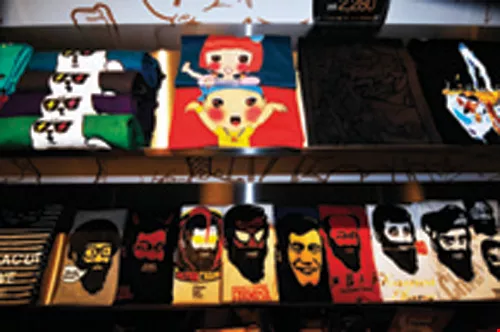
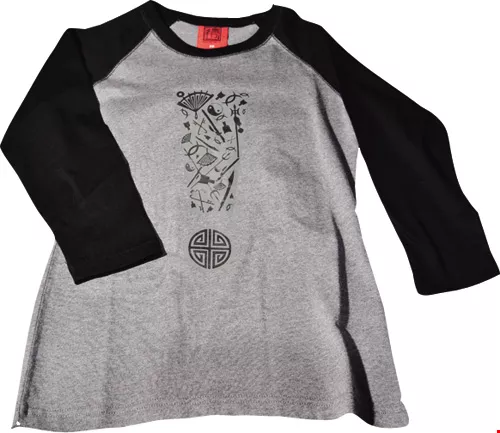
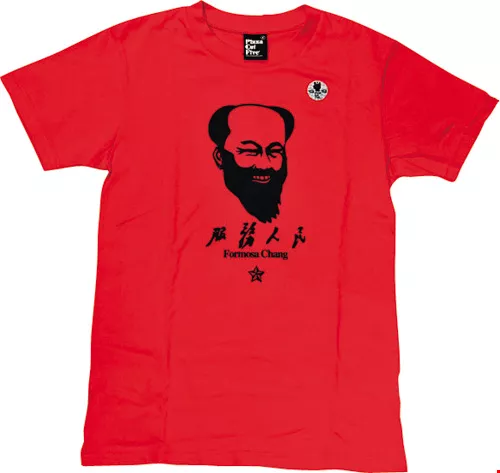
Take for example the Formosa Chang series of T-shirts from Pizza Cut Five: with a range of over 30 different styles already, and with the iconic Formosa Chang logo reimagined to resemble Chiang Kai-shek, Mao Zedong, Ultraman, or even 70s manga characters, the variety and imagination is astounding.
And in addition to goofy designs that appeal to Taiwan's youth, designers also-even more so-try to keep comfort in mind.
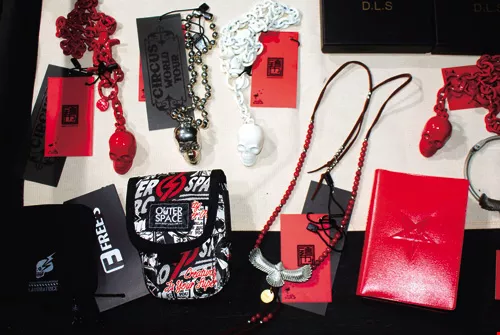
As an example, Kevin Chang of Jay points out a line of women's T-shirts from the brand Outer Space called "kangaroos"; every design boasts a small pocket on the abdominal area. These offer a little pouch for the wearer to use to warm them up and help with menstrual discomfort.
Pizza Cut Five have also developed a coat with a pouch in the back for cyclists, giving them a place to stow their cellphones or MP3 players where their headphone cord won't get in the way.
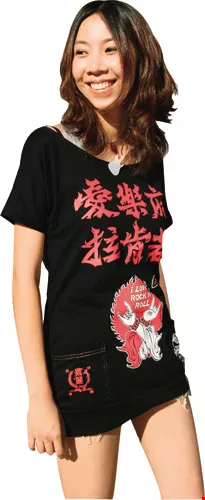
Nong-Li's creative director Liao Jin-feng has combined tradition with trendiness, creating a brand with a fresh, Taiwanese style. Here he holds his original hand-painted design for the "Hard Neck" line of shirts.
Third-place winner in the 2009 Taiwan Design Center and British Council International Young Creative Entrepreneurs Awards Taiwan Region, and invited guest to the Edinburgh Fringe Festival in Scotland and the Bangkok Design Festival, Nong-Li is an instantly recognizable, fresh part of Taiwan's subversive streetwear scene.
Established in July 2008, Nong-Li produces a range of leisurewear-including T-shirts, hats, scarves, and backpacks-that emphasizes the "rustic" character of the brand (the nong of the name means "agricultural" in Chinese), right down to the shirts being packaged in resealable bags like dried plums, as though they were farm produce.
Nong-Li's creative director, the longhaired, yuppie-looking 34-year-old Liao Jin-feng, explains that the bags not only fit with the brand's image, but are also a little touch to make things easier for travelers.
Nong-Li's defining characteristic is its combination of fashion with tradition. Having previously worked in advertising and design for the CommonWealth Group, Liao has moved on to manage his own brand. Liao's designs depict Taiwanese themes with clear strokes and fine lines, expressing his deep feelings for the land. Liao believes that because of differences in culture and lifestyle, imported brands with their English or urban themes may have trouble connecting with Taiwanese youth. "Just how many Taiwanese have actually even studied abroad? Much less fired a gun on the streets of New York or done drugs?" Only those things that actually happen around us carry any emotional weight, any cultural significance, says Liao.
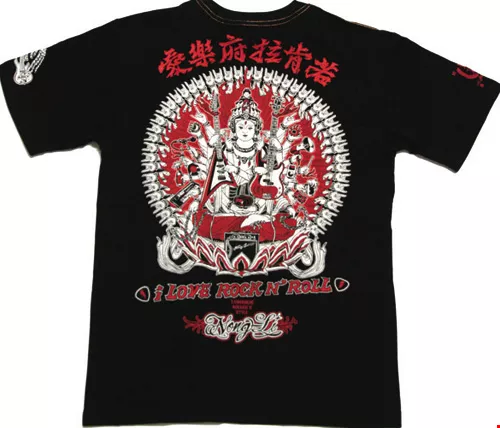
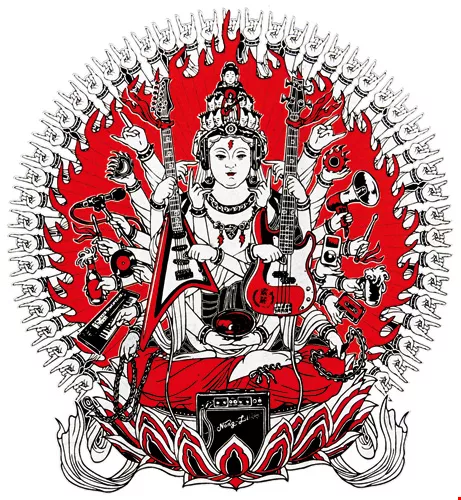
However, this alone is not enough to hit the heights of fashionable appeal. You still need to make something a bit "street," as exemplified by Nong-Li's iconic design, "DJ General Clairaudient." Inspired by Tang poet Liu Yuxi's "Song of Bamboo Twigs," Liao reimagined the "dharma protector" of the goddess Mazu, Shun Feng Er, as a modern-day DJ. Shun Feng Er, a mythical figure renowned for his ability to hear the slightest sound clearly over thousands of miles, is traditionally depicted in a pose that, Liao says, is reminiscent of the poses and movements of DJs today, hence the transformation.
In order to find the most iconic image of Shun Feng Er he could, Liao scoured temples across Taiwan, pored over historical information, and ultimately settled on an image found at Tainan Grand Matsu Temple, which he felt was "stronger" and "most like a dharma protector."
For the "Guan's Band" design, Liao chose three figures from Romance of the Three Kingdoms well known as icons of justice, courage, and loyalty-Guan Yu, his subordinate Zhou Cang, and his adopted son Guan Ping. The three were then, with a subversive spin, assembled into a rock band, with Guan Yu's customary blade replaced with a drumstick, Guan Ping's jade seal replaced with a guitar, and Zhou Cang singing lead vocals. With this, these warriors renowned for their commitment to justice are transformed into a powerful rock supergroup.
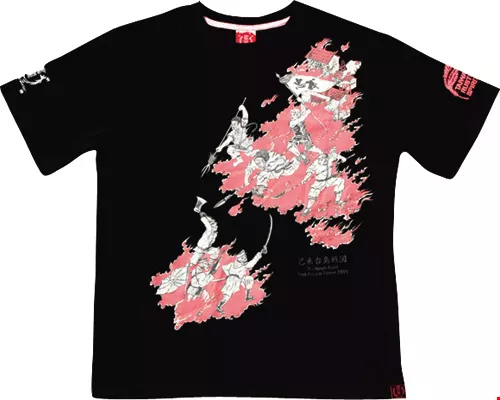
"Hard Neck," meanwhile, employs an image of the Liutui Hakka Militia taking on invading Japanese soldiers at the beginning of Japan's invasion in 1895. Their pitched battle and gruesome casualties aptly illustrate the "hard-neck" spirit the Hakka are known for, and at Liao's brush great battles like the Battle of the Burning Village and the Battle of Buyuelou come back to vivid life.
The brand's other designs, including ones making use of the image of Guan Yin, the traditional "double happiness" wedding blessing, and even the Formosan salmon, have also become successful examples of Liao's subversive approach.
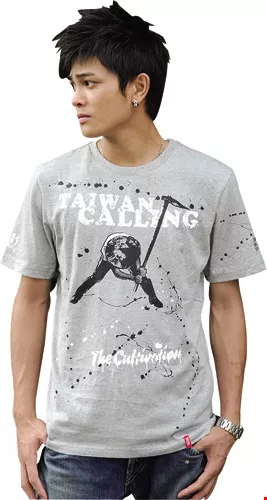
Nong-Li's creative director Liao Jin-feng has combined tradition with trendiness, creating a brand with a fresh, Taiwanese style. Here he holds his original hand-painted design for the "Hard Neck" line of shirts.
"What subversive streetwear brands sell is concepts and creativity," says Issa Chen of Pizza Cut Five.
Post-modernist deconstruction, collage, and border-crossing, along with creative methods, designs, and "remixes" are what draw young people to subversive streetwear.
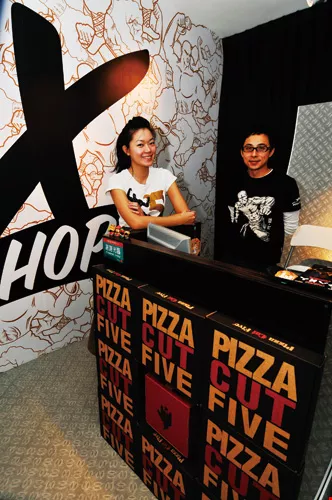
Brand director Wu Zheqi, a fan of Japanese shibuya-kei band Pizzicato Five, founded Pizza Cut Five inspired by the band. The company got its start selling online in 2005, finally opening its first brick-and-mortar store in 2007.
"Having a physical store has given us more room for imagination, and we've started wanting to mix it up and take it to the next level," says Chen. In addition to the creative approach of packaging their shirts like pizzas, initially they even delivered shirts just like pizza delivery at a phone call. In the first month their first store was open, Pizza Cut Five pulled in turnover of NT$600,000. They continued their free delivery service for another year before cost considerations meant they had to stop, but their sales haven't taken a hit, and have even continued growing steadily.
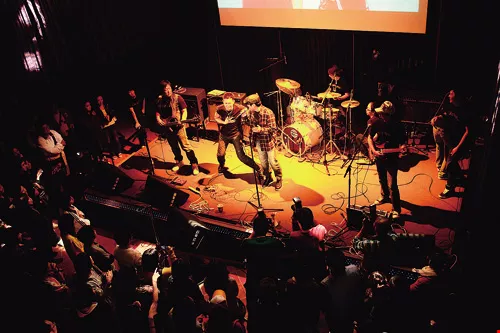
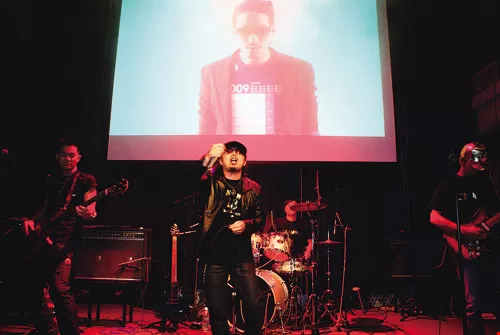
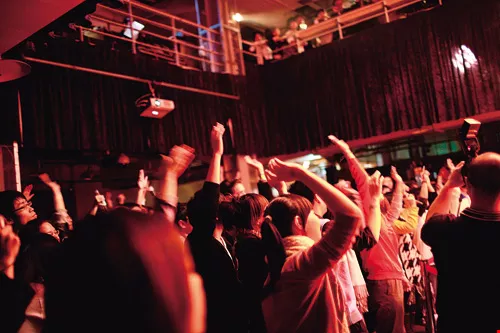
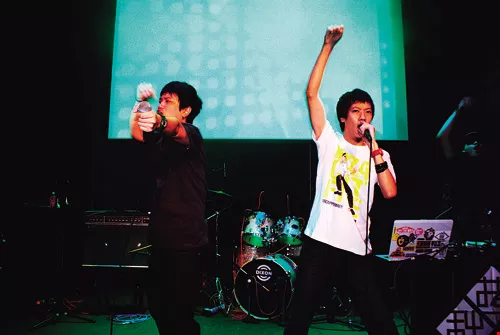
Local urban streetwear brands have begun aligning themselves with popular musicians and traditional industries, bridging the gaps and developing a broader range of possibilities. In this photo, we see November's 18 Copper Men Concert at Riverside Live House, organized by Pizza Cut Five.
Some subversive streetwear brands benefit from the reflected glory of celebrity. If a celebrity is spotted wearing their products, these brands can expect business from fans specifically seeking them out. One example is AES, a brand started by celebrity Alien Huang. After he wore a pair of jeans that looked particularly good on him, flocks of people queued for the chance to buy a pair of the NT$4200 jeans, despite their looking fairly ordinary, down to the deliberately made holes in the thighs.
Scarcity creates value, and limited editions have become the hallmark of these urban streetwear brands. Kevin Chang of Jay explains that such brands try and aim for the more refined, thus being careful to call these runs "limited editions" and not just "shortages of product." Generally one design will be produced first in a 200 to 300-piece test run, and if the market responds well, the design may be revised and issued for a second generation. Chang points to Nike's Air Jordan shoes, which were so warmly received initially that you couldn't get a pair for love nor money. A pair of shoes from this first run can go for over NT$100,000 today, while Nike have thus far continued to milk it, releasing over 30 different runs.
Just recently Hong Kong singer and actor Edison Chen launched his own brand of jeans in Taiwan, kicking off with a limited run of only 100 pairs, each valued at NT$12,000. Several lucky punters, who'd been queuing for two days, walked out of the store and immediately began calling for NT$20,000 for their pair. Those pairs sold virtually immediately.
Trendy imported brands and brands started or designed by celebrities aim for the high-price end of the market, but the majority of local streetwear brands sell at ordinary prices. Nong-Li, for example, sells T-shirts at NT$880 each, while Pizza Cut Five recently began a promotion selling two T-shirts for NT$1680. Jay offered a limited edition Valentine's shirt for just NT$520 (roughly homophonous with "I love you" in Taiwanese) or two for NT$1314 (a homophone suggesting "together forever"), offering high quality without the high price.
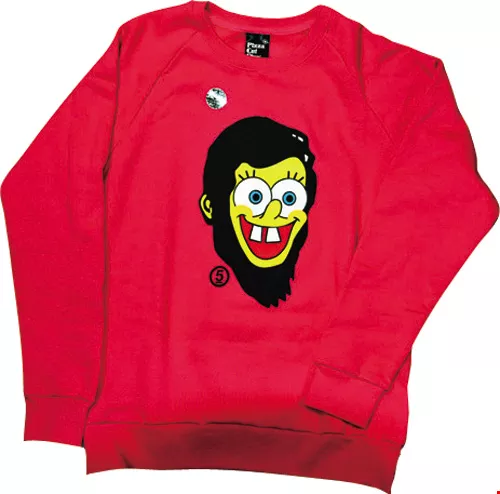
Issa Chen, creative director for Pizza Cut Five, designed the "Formosa Chang" line, which includes over 30 different T-shirt designs in an astonishing variety of offbeat and imaginative styles.
One particular marketing method loved by subversive streetwear brands is alliances, which can create a synergistic effect. Popular partners for these brands are singers, bands, concerts, charity events, and businesses.
In 2006, Pizza Cut Five worked with 7-Eleven to develop a unique mechanical pencil and other imaginative stationery products, as well as giving 7-Eleven's slurpee machines and cups a makeover to give them a more eye-catching, cooler look. The cute polar bear mascot for 7-Eleven slurpees also began appearing on Pizza Cut Five shirts during this time, and Pizza Cut Five even offered their T-shirts in slurpee cups for the duration.
More recently, more traditional, older brands have jumped on the bandwagon, working with these subversive brands to reinvigorate themselves and break into the youth market.
Working with local streetwear brands has proven a winning formula for these traditional brands. "Younger consumers are shopaholics for clothing at the moment, so why not use that as a chance to ally with traditional brands and introduce them to the youth market?" asks Issa Chen.
In the summer of 2008, Pizza Cut Five began a partnership with stewed meat restaurant chain Formosa Chang, not only creating whimsical interpretations of the iconic Formosa Chang logo, but also designing takeout boxes and the like, subverting the image the public has of streetwear brands. They even created a new design for the restaurant's sour plum juice bottles, which sold as much in three months as the juice used to in an entire year.
"The original Formosa Chang logo looks an awful lot like the logo of Japanese clothing brand A Bathing Ape. Tons of people have already written about the resemblance," says Chen, "and so we figured why not just get Formosa Chang on board as a partner?"
"People said it was a big risk, and a lot thought trying to reinterpret something old like that would probably just be rejected," she says. They were still nervous even just before the products were ready to go, but the partnership has turned out to be an astonishing success. Now no-one's quite so ready to write off such untested ideas.
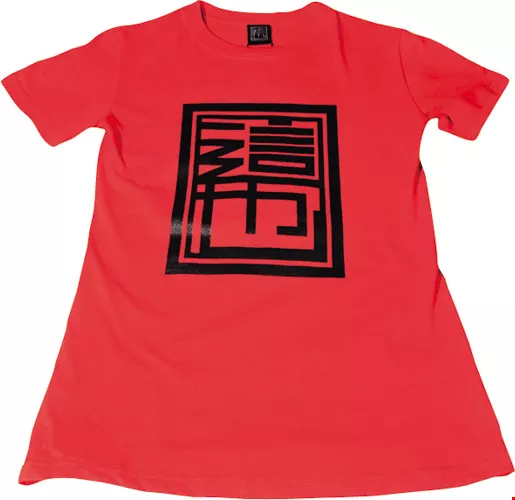
Kevin, mastermind behind the brand Jay, has managed to put his finger right on what the youth market wants, and by creating a retail platform for local subversive streetwear brands, he was able to rake in an astonishing NT$10 million within his first year.
"These alliances don't just stop at products-they can even involve entire rebrandings," explains Chen. By coupling with subversive streetwear brands, traditional enterprises hope to give the sense that they're in on the whole "everything old is new again" style, helping them more precisely target the youth market.
Most Taiwanese are more comfortable with good old local stewed meat rice than they are with Western hamburgers and fried chicken, but everything about Formosa Chang, from storefronts to furniture to product presentation, screams traditional. Similarly, the 30-year-old Her-Chi Pharmaceutical product 18 Copper Men, an energy drink, has long been aimed at teenagers and young men doing their military service, but over the years a massive gulf has opened between the company's image and their target demographic.
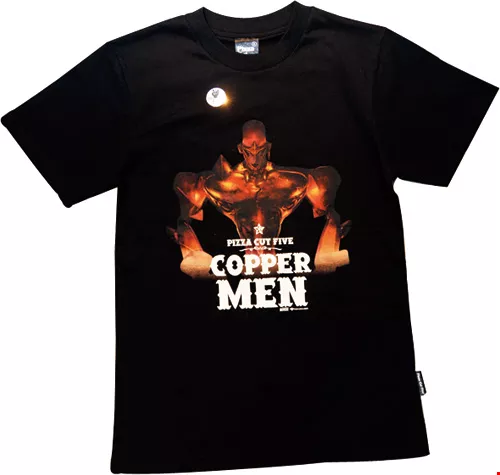
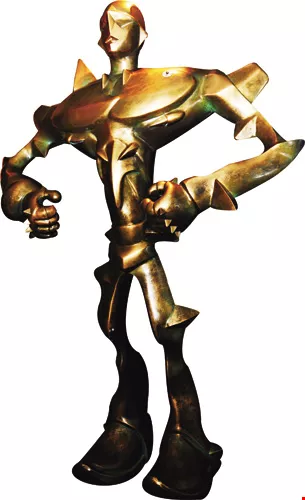
To give the brand a new spirit, one focused on being "strong of body, strong of imagination," Pizza Cut Five produced a new raised 18 Copper Men T-shirt print, the thick lines and glittering golden color giving a strongly futuristic feel. From there, they also produced 18 Copper Men dolls and even a throat-lozenge version of the product. All of this effort gave the brand a much more fashionable image in the minds of young consumers.
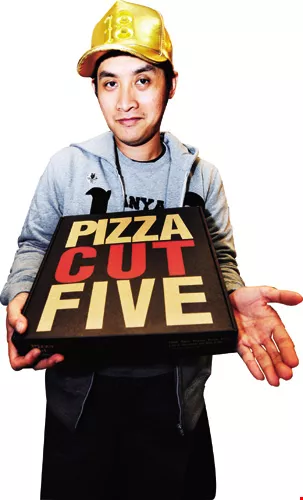
Issa Chen, creative director for Pizza Cut Five, designed the "Formosa Chang" line, which includes over 30 different T-shirt designs in an astonishing variety of offbeat and imaginative styles.
Because of their refined, limited-run designs, Taiwanese streetwear brands can't order their clothing from Chinese factories, so most of it is produced in Taiwan, which has also helped those smaller Taiwanese textile firms that can't handle massive orders. Nong-Li currently has plans in place to use straw from Dajia and Aboriginal fabrics from Houbi, thus bringing in even more of Taiwan's twilight enterprises.
As well as supporting local businesses, the distinctive Taiwanese flavor of these clothes has drawn interest from no shortage of foreign tourists, leading streetwear brands to become inadvertent marketers of Taiwan.
Jay, which specializes in Taiwanese urban streetwear, has a tourist clientele that makes up almost half their total business. "Lots of tourists from overseas come in with their travel guides looking for us," says Kevin Chang of Jay. The Taiwanese style of Nong-Li's display in Taipei 101, next to the English Books section in bookstore Page One, has caught the eye of a number of visitors, with many asking if the store carries extra-large sizes.
In January 2010, Nong-Li plans to open a store in Tainan, a city brimming with history and culture. "To be setting up in a place with such history is a meaningful move for us," says Liao Jin-feng. The old buildings and houses of Tainan are a great fit for Nong-Li's products, given their historical feel and Taiwanese flavor.
Liao, who has been astonished by the unexpectedly large sales and customer recognition of the brand, says that since the finely worked "traditional paintings" they use are so uncommon he's not only not afraid of knock-offs, he's actually looking forward to more young people getting into his line of work.
Whatever subversive streetwear may signify to "grown-ups," be it alliances, subversion, personality, identity, or simple whimsy, it has clearly become a significant part of the life and culture of modern Taiwanese youth.
Issa Chen, creative director for Pizza Cut Five, designed the "Formosa Chang" line, which includes over 30 different T-shirt designs in an astonishing variety of offbeat and imaginative styles.
Nong-Li's creative director Liao Jin-feng has combined tradition with trendiness, creating a brand with a fresh, Taiwanese style. Here he holds his original hand-painted design for the "Hard Neck" line of shirts.
Issa Chen, creative director for Pizza Cut Five, designed the "Formosa Chang" line, which includes over 30 different T-shirt designs in an astonishing variety of offbeat and imaginative styles.
Issa Chen, creative director for Pizza Cut Five, designed the "Formosa Chang" line, which includes over 30 different T-shirt designs in an astonishing variety of offbeat and imaginative styles.
Local urban streetwear brands have begun aligning themselves with popular musicians and traditional industries, bridging the gaps and developing a broader range of possibilities. In this photo, we see November's 18 Copper Men Concert at Riverside Live House, organized by Pizza Cut Five.
Taiwan's streets are being swept by a wave of subversive streetwear, but what is subversive streetwear? It is trendiness, creativity, personality.... It is a subversive statement of identity.
Taiwan's streets are being swept by a wave of subversive streetwear, but what is subversive streetwear? It is trendiness, creativity, personality.... It is a subversive statement of identity.
Kevin, mastermind behind the brand Jay, has managed to put his finger right on what the youth market wants, and by creating a retail platform for local subversive streetwear brands, he was able to rake in an astonishing NT$10 million within his first year.
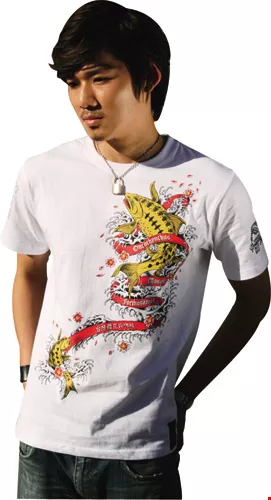
Nong-Li's creative director Liao Jin-feng has combined tradition with trendiness, creating a brand with a fresh, Taiwanese style. Here he holds his original hand-painted design for the "Hard Neck" line of shirts.
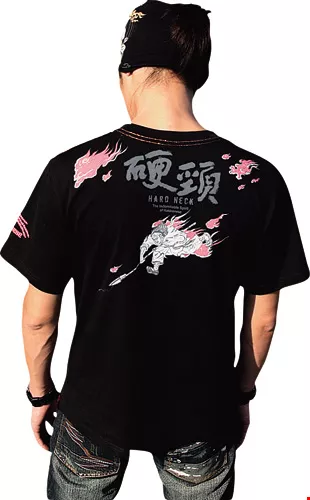
Nong-Li's creative director Liao Jin-feng has combined tradition with trendiness, creating a brand with a fresh, Taiwanese style. Here he holds his original hand-painted design for the "Hard Neck" line of shirts.

Taiwan's streets are being swept by a wave of subversive streetwear, but what is subversive streetwear? It is trendiness, creativity, personality.... It is a subversive statement of identity.
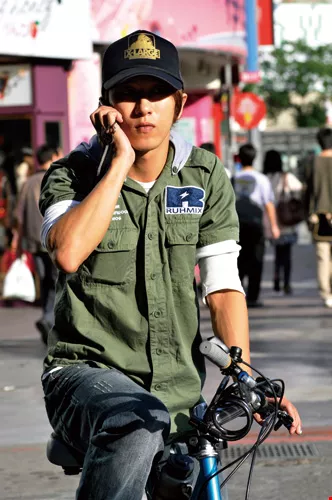
Taiwan's streets are being swept by a wave of subversive streetwear, but what is subversive streetwear? It is trendiness, creativity, personality.... It is a subversive statement of identity.
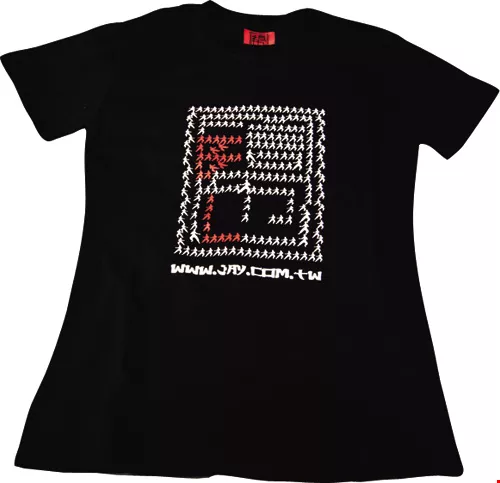
Kevin, mastermind behind the brand Jay, has managed to put his finger right on what the youth market wants, and by creating a retail platform for local subversive streetwear brands, he was able to rake in an astonishing NT$10 million within his first year.
Kevin, mastermind behind the brand Jay, has managed to put his finger right on what the youth market wants, and by creating a retail platform for local subversive streetwear brands, he was able to rake in an astonishing NT$10 million within his first year.

Nong-Li's creative director Liao Jin-feng has combined tradition with trendiness, creating a brand with a fresh, Taiwanese style. Here he holds his original hand-painted design for the "Hard Neck" line of shirts.
Taiwan's streets are being swept by a wave of subversive streetwear, but what is subversive streetwear? It is trendiness, creativity, personality.... It is a subversive statement of identity.
Nong-Li's creative director Liao Jin-feng has combined tradition with trendiness, creating a brand with a fresh, Taiwanese style. Here he holds his original hand-painted design for the "Hard Neck" line of shirts.
Nong-Li's creative director Liao Jin-feng has combined tradition with trendiness, creating a brand with a fresh, Taiwanese style. Here he holds his original hand-painted design for the "Hard Neck" line of shirts.
Issa Chen, creative director for Pizza Cut Five, designed the "Formosa Chang" line, which includes over 30 different T-shirt designs in an astonishing variety of offbeat and imaginative styles.
Taiwan's streets are being swept by a wave of subversive streetwear, but what is subversive streetwear? It is trendiness, creativity, personality.... It is a subversive statement of identity.
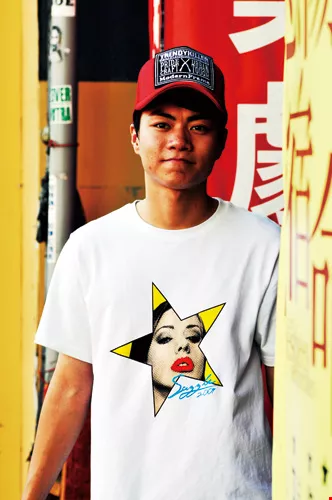
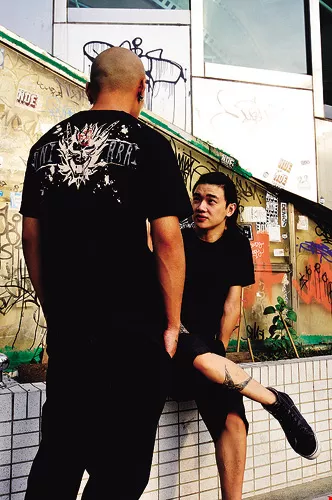
Taiwan's streets are being swept by a wave of subversive streetwear, but what is subversive streetwear? It is trendiness, creativity, personality.... It is a subversive statement of identity.
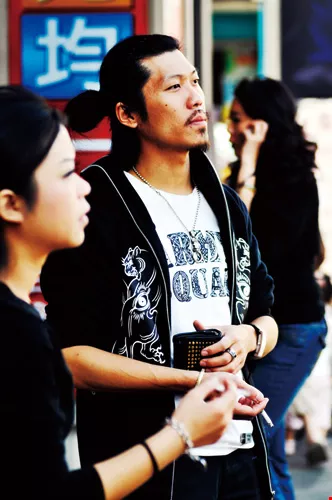
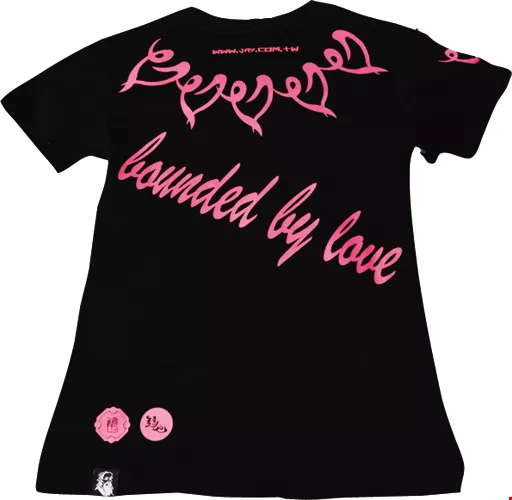
Kevin, mastermind behind the brand Jay, has managed to put his finger right on what the youth market wants, and by creating a retail platform for local subversive streetwear brands, he was able to rake in an astonishing NT$10 million within his first year.
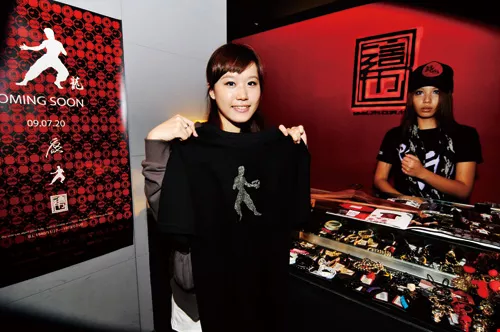
Kevin, mastermind behind the brand Jay, has managed to put his finger right on what the youth market wants, and by creating a retail platform for local subversive streetwear brands, he was able to rake in an astonishing NT$10 million within his first year.
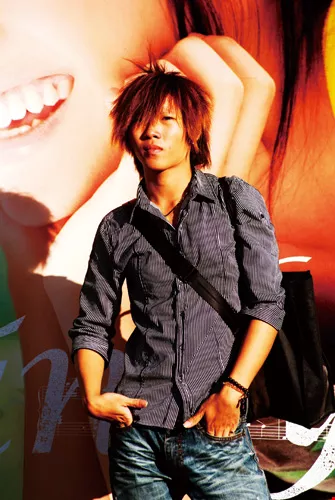
Taiwan's streets are being swept by a wave of subversive streetwear, but what is subversive streetwear? It is trendiness, creativity, personality.... It is a subversive statement of identity.
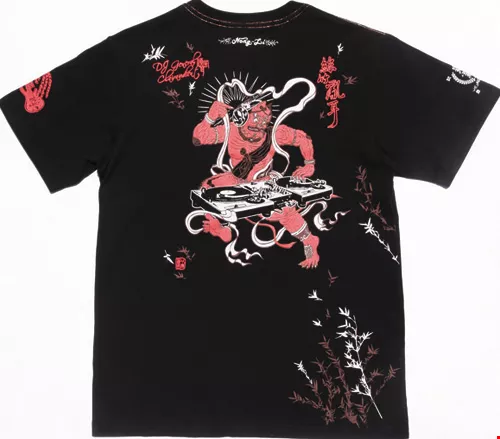
Nong-Li's creative director Liao Jin-feng has combined tradition with trendiness, creating a brand with a fresh, Taiwanese style. Here he holds his original hand-painted design for the "Hard Neck" line of shirts.
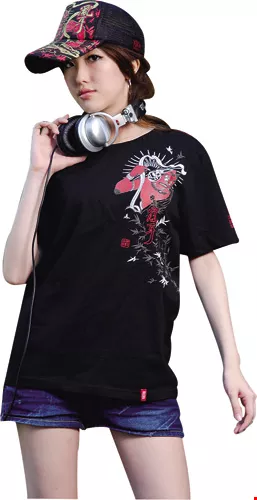
Nong-Li's creative director Liao Jin-feng has combined tradition with trendiness, creating a brand with a fresh, Taiwanese style. Here he holds his original hand-painted design for the "Hard Neck" line of shirts.
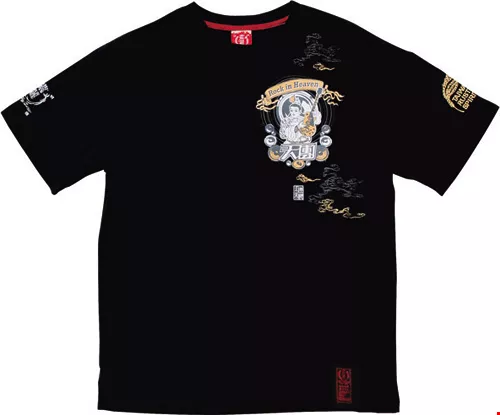
Nong-Li's creative director Liao Jin-feng has combined tradition with trendiness, creating a brand with a fresh, Taiwanese style. Here he holds his original hand-painted design for the "Hard Neck" line of shirts.


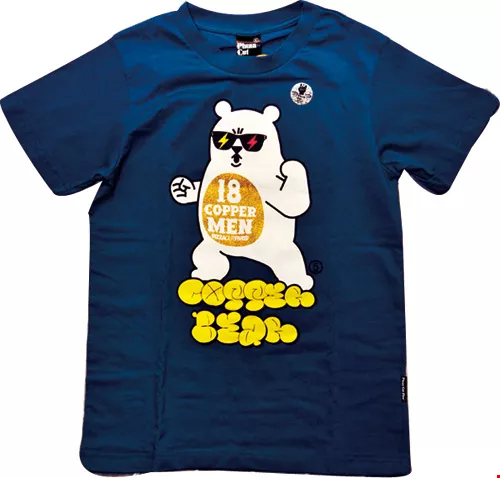
Issa Chen, creative director for Pizza Cut Five, designed the "Formosa Chang" line, which includes over 30 different T-shirt designs in an astonishing variety of offbeat and imaginative styles.
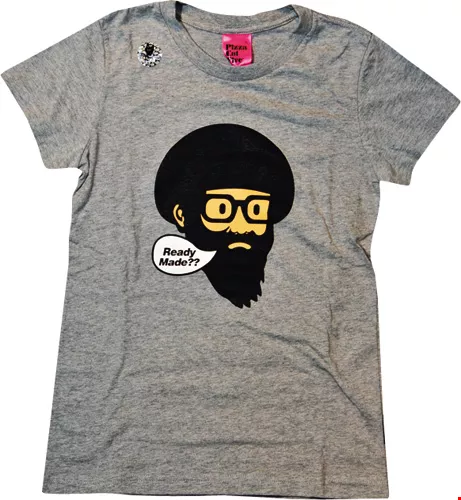
Issa Chen, creative director for Pizza Cut Five, designed the "Formosa Chang" line, which includes over 30 different T-shirt designs in an astonishing variety of offbeat and imaginative styles.
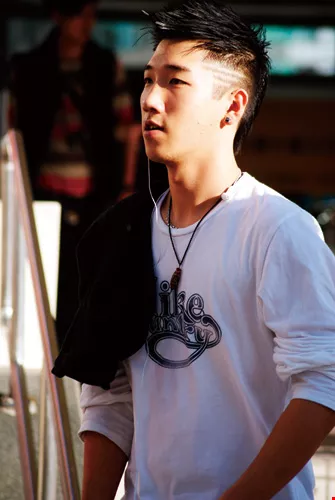
Taiwan's streets are being swept by a wave of subversive streetwear, but what is subversive streetwear? It is trendiness, creativity, personality.... It is a subversive statement of identity.
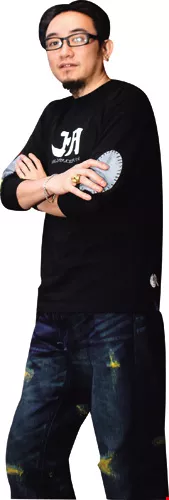
Kevin, mastermind behind the brand Jay, has managed to put his finger right on what the youth market wants, and by creating a retail platform for local subversive streetwear brands, he was able to rake in an astonishing NT$10 million within his first year.
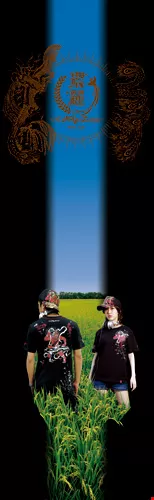
Nong-Li's creative director Liao Jin-feng has combined tradition with trendiness, creating a brand with a fresh, Taiwanese style. Here he holds his original hand-painted design for the "Hard Neck" line of shirts.
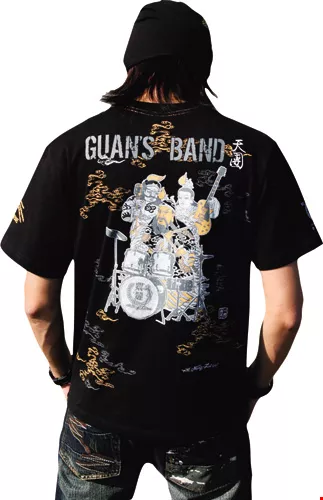
Nong-Li's creative director Liao Jin-feng has combined tradition with trendiness, creating a brand with a fresh, Taiwanese style. Here he holds his original hand-painted design for the "Hard Neck" line of shirts.
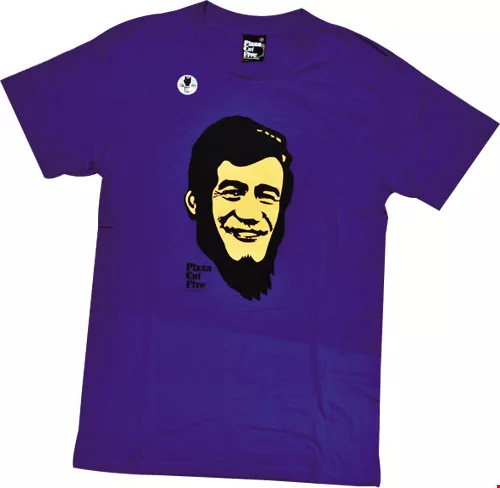
Issa Chen, creative director for Pizza Cut Five, designed the "Formosa Chang" line, which includes over 30 different T-shirt designs in an astonishing variety of offbeat and imaginative styles.
Local urban streetwear brands have begun aligning themselves with popular musicians and traditional industries, bridging the gaps and developing a broader range of possibilities. In this photo, we see November's 18 Copper Men Concert at Riverside Live House, organized by Pizza Cut Five.
Kevin, mastermind behind the brand Jay, has managed to put his finger right on what the youth market wants, and by creating a retail platform for local subversive streetwear brands, he was able to rake in an astonishing NT$10 million within his first year.
Local urban streetwear brands have begun aligning themselves with popular musicians and traditional industries, bridging the gaps and developing a broader range of possibilities. In this photo, we see November's 18 Copper Men Concert at Riverside Live House, organized by Pizza Cut Five.

Issa Chen, creative director for Pizza Cut Five, designed the "Formosa Chang" line, which includes over 30 different T-shirt designs in an astonishing variety of offbeat and imaginative styles.
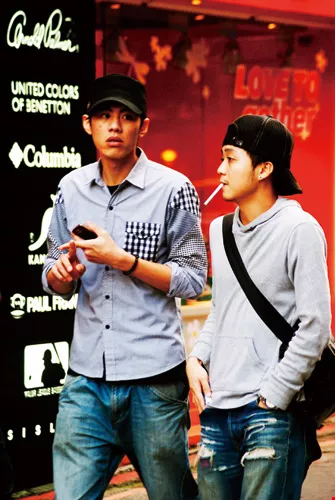
Taiwan's streets are being swept by a wave of subversive streetwear, but what is subversive streetwear? It is trendiness, creativity, personality.... It is a subversive statement of identity.

@List.jpg?w=522&h=410&mode=crop&format=webp&quality=80)
@List.jpg?w=522&h=410&mode=crop&format=webp&quality=80)


