After the Handover:Taiwan-Macau Relations in the New Millennium
Jackie Chen / photos Diago Chiu / tr. by Christopher MacDonald
January 2000


Last year, nearly one million travelers from Taiwan passed through Macau Airport, heading for mainland China or visiting Macau itself, and accounting for 80% of passengers using the airport. Around 1,000 of Macau's civil servants have studied in Taiwan, and every year some 30,000 people travel from Macau to Taiwan for business or work, along with more than 400 students. But against the backdrop of continued proclamations from the PRC about how "Macau's 'one country two systems' arrangement sets an example for solving the Taiwan problem," these figures, along with the Taiwan-Macau exchanges that they represent, have been willfully neglected by Macau's mainstream media.
Macau and Taiwan: so near and yet so far. What are the connections that bind these two places, and what are the opportunities for new developments in the wake of the 1999 handover?
On December 19, 1999, the eve of Macau's transfer of sovereignty, the China Times in Taiwan published a survey on the Taiwanese public's views about Macau's return to Chinese control. According to the survey, 31% of people in Taiwan weren't even aware that Macau was about to be handed back to China, while 53% answered that they didn't know whether the handover would be beneficial or harmful for Macau's development. But when asked whether the "one country two systems" formula, as used for Hong Kong and Macau, was acceptable for Taiwan, 59% responded "No," while 27% said that they didn't know.
As these results clearly indicate, the people of Taiwan still know little about Macau, in spite of existing exchanges, and more than half of them flatly reject Beijing's "one country two systems" formula-so readily taken up in Macau-as a solution to the Taiwan question.

The Portuguese flag comes down, and up go the flags of the PRC and Macau SAR. What will the new era bring for Taiwan-Macau relations? (photo by Chang Chia-ming)
Conveniently connected
It takes just an hour and a half to fly from Taiwan to Macau. As Macau University professor Wong Hon Keong says, "You can get there and back in a day. You catch the first flight to Macau in the morning, stop at the Westin for a coffee and to talk business, head to one of the outlying islands in the afternoon for a round of golf, take a stroll downtown, and return to Taiwan that evening." But in spite of the convenience for travelers, ties between the two places have been practically invisible for several decades. What path will the relationship follow now that Macau has returned to China?
As you pass through the offices of the Macau government's directorate of administration you notice the relative youth of the staff, most of whom seem to be in their thirties. Rosa Tam, who heads the recruitment and selection division of the di-rectorate's human resources department, introduces many of her colleagues with the remark that he or she "studied in Taiwan too." Tam herself graduated from the department of educational psychology at National Taiwan Normal University in 1985, and joined Macau's department of education in 1987, before eventually moving to the directorate of administration and rising to the post of division chief in just 11 years.
Tam is just one of the many Macau civil servants who have studied for degrees in Taiwan. The Macau government's directorate for administration says that around 200 Macau civil servants have academic qualifications from Taiwan, but according to Taiwan's representative office in the territory, the figure is closer to 1,000. This may not represent a very large share of Macau's 17,000 civil servants, but given that many of those who graduated in Taiwan hold senior ranks, it adds something of a "Taiwan flavor" to the government of the Macau SAR (Special Administrative Region). In contrast, Taiwan alumni are noticeable by their absence from the SAR government in Hong Kong. At present, the most senior government official to have studied in Taiwan is Ou Wenlong, who graduated in mechanical engineering at National Taiwan University (NTU). Ou is Macau's secretary for transportation and public works, and has been appointed by Chief Executive Edmund Ho as one of the SAR government's five administration secretaries.
Amid all the hype surrounding Macau's incorporation under the "one country two systems" formula, the sensitive issue of the "Taiwan connection" within the Macau government is little discussed. As the clearest example of this connection, Ou Wenlong is one official that many journalists from Taiwan have tried to get an interview with, but their requests have all been turned down on the grounds that the secretary is "too busy." He did nevertheless find time to do an interview with Hong Kong's Phoenix TV, during which he discoursed freely on the subject of Macau's development. Sinorama applied, in line with official procedure, for a press pass to the handover ceremony, but the application was eventually rejected as "unapproved by the security department." On the eve of the handover, the signboard of the Taipei Trade and Tourism Office in Macau was quietly taken down, after the office had been privately warned to remove the sign before the transfer of sovereignty. Office director William Li was subsequently reprimanded by the Mainland Affairs Council for his handling of the affair. None of the above were problems at the time of Hong Kong's handover in 1997, which goes to show how cautious the Macau SAR government is regarding Taiwan.
When senior Macau officials are asked about having studied in Taiwan, they are always quick to add mention of other academic qualifications obtained in Macau, Lisbon, or mainland China. "It's called sanitizing your record!" quips Tan Zhiqiang, Hong Kong and Macau bureau chief for the China Times, who was born and raised in Macau and wrote his doctoral dissertation on "The Question of Macau's Sovereignty."
The more senior a government official is, the more defensive he is likely to be on the subject of his studies in Taiwan. "It doesn't matter where you studied and where you graduated," says Chen Mingying, a senior official in the Macau government's news department. Competence and professionalism are what the government requires from its personnel. Another graduate of a Taiwan institution declares bluntly that he only spent four years in Taiwan getting his degree, and the place had virtually no effect on him at all.
Nevertheless, there has been a steady stream of students from Macau to Taiwan ever since 1955. According to statistics from the Overseas Chinese Affairs Commission, around 6,000 have come in the past ten years, and Professor Wong Hon Keong of Macau University's Macau Research Center says that 30% of middle school graduates in the territory have sat the overseas enrolment test for college in Taiwan. Around 600 candidates passed the test last year, and there are on average 1,600-2,000 students from Macau at university in Taiwan at any one time.
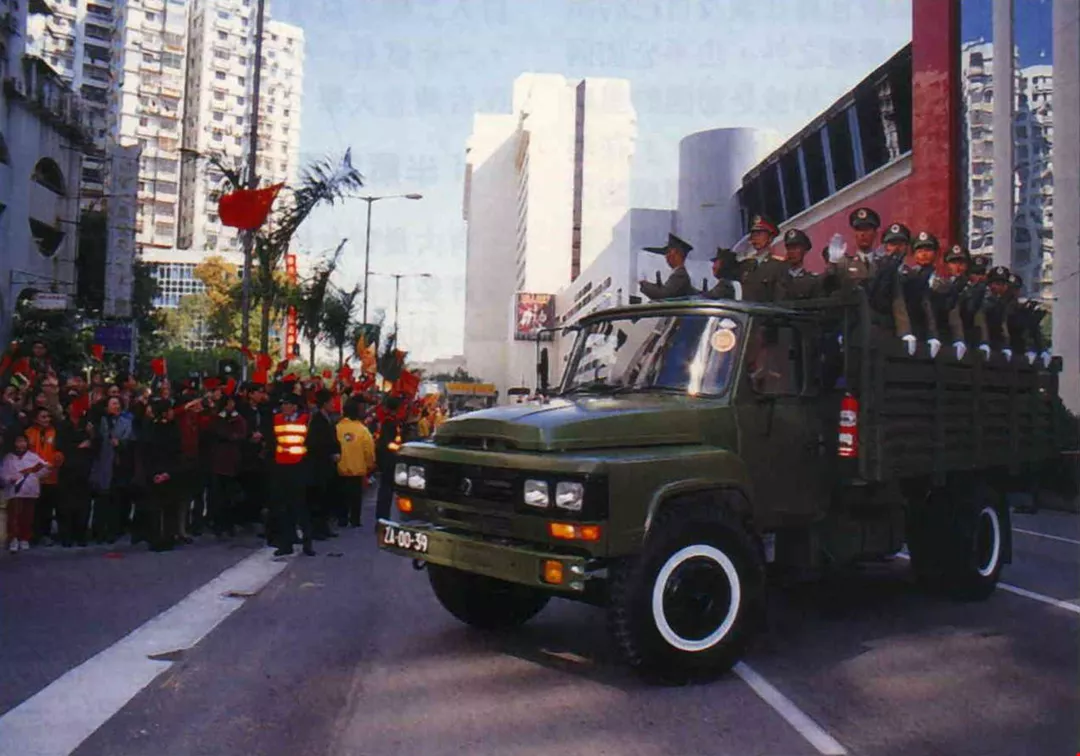
Troops haven't been seen in Macau since Portugal withdrew its forces in 1974. At midday on December 20, soldiers of the PLA entered Macau from Zhuhai, receiving a rousing welcome from the local people, who hope that their presence will put a stop to gang violence in the territory.
"Semi-liberated area"
Perhaps the reason for the apparent lack of attachment to Taiwan among the many returned Taiwan alumni can be traced to historical factors.
In 1966, Macau was convulsed by rioting in which several people were shot and killed by Portuguese security forces. The enclave's left-wing groups, which were closely allied with Beijing, took advantage of the situation to get KMT organizations in Macau shut down and their people expelled. Ever since, Macau has been regarded in certain circles in Taiwan as a "semi-liberated area."
But if Macau's pro-Beijing forces are that strong, how come so many students come to Taiwan to get their degrees? "There are historical reasons for this too," says Ou Jinrong, former president of Macau's Taiwan Alumni Association and a member both of the Macau SAR's first Selection Committee, and its Preparatory Committee. Prior to the 1980s, Macau lacked its own colleges, and students had to go overseas for higher education. Also, colleges on the mainland didn't start enrolling overseas students until the mid-1980s, while it was difficult to gain admission to university in Hong Kong. Under these circumstances, Taiwanese universities, which actively recruited abroad, were a natural choice for many Macau students.
"In terms of the return you get on your investment, taking your degree in Taiwan is well worth it," says Wang Yun, acting head of the sanitation and environment division of Macau's urban administration office, who graduated in civil engineering from National Cheng Kung University (NCKU) in Tainan. Taiwan's universities have good teachers and decent facilities, says Wang, and students from Macau can learn much in Taiwan that will benefit them in their careers.
Unlike the colonial administration in Hong Kong, the government of Macau under the Portuguese recognized academic credentials issued by Taiwanese institutions. It was only in the mid-1980s, once the timetable for the handover of Hong Kong and Macau had been agreed, that the government began to localize the civil service in preparation for the transition to "Macau people running Macau." A number of graduates who had returned from Taiwan to work in the private sector then shifted to government jobs, and have come to form an influential part of the administration.
"Little prawns grow into big lobsters if there are no fish in the sea," smiles Leong Kam Chun, who graduated in business administration from NTU in 1973. Compared with the many Macau students who went to the mainland to study from the mid-1980s onwards, those who graduated in Taiwan returned and joined the civil service earlier, and seem to have made faster progress in their careers. "There's no denying that Taiwan universities have given us a good education," smiles Leong Hong Sai, secretary of Macau's Taiwan Universities Alumni Association.
In addition to the government officials who studied in Taiwan, many returned graduates have become influential in Macau through their success in the private sector. Leong Kam Chun, for instance, one of the territory's first group of professional accountants, has also served on the legislative council and is a member of the Macau SAR Selection Committee. Leong Man Io, current president of the Taiwan Universities Alumni Association, who graduated in civil engineering from NCKU, is one of Macau's most prominent civil engineers. He has supervised several major projects such as landscaping Macau's Maritime Museum and setting up venues for the handover events.
Unlike neighboring Hong Kong in 1997, there was no public backlash in Macau on the occasion of the handover, and no exodus of emigrants. Everything seemed smooth and orderly. But the people's primary concern was whether or not the incoming SAR administration would be capable of tackling difficult problems left behind by the Portuguese, particularly economic recession and declining public order.
The three "localizations"-of civil administration, the law, and official language-have become a focus of public discussion. Concern has been expressed that responsibility has been passed to local administrators too late, and that they are too young and inexperienced-statistics from the department of civil service reveal that 61% of government officials are 40 or under-to deal effectively with problems facing the newly established SAR.
Leong Kam Chun says: "Hong Kong began nurturing local administrative talent in the mid-1970s, whereas Macau only started doing so ten years later, in the mid-1980s."
Several problems have already begun to emerge, such as the question of "legal localization." Gary Mei, executive director of the Sino-Latino Foundation of Macau, points out that during their four centuries in Macau the Portuguese never attempted to build up the Portuguese language ability of the local people. Few Chinese have ever mastered Portuguese, and there are not many people who understand both Western law and the Chinese language. This presents enormous difficulties for the localization into Chinese of Macau's mass of colonial era laws.
Due to the chronic dearth of qualified personnel among Macau's judiciary, much of the work of legal localization depends on experts from the mainland. But according to Gary Mei, "The socialist law that they are used to on the mainland is out of synch with the capitalist-type law of Macau, in terms both of attitude and spirit." But legal professionals who have studied in Taiwan, where legal concepts are closer to those that hold in Macau, can play an important role in this localization process.
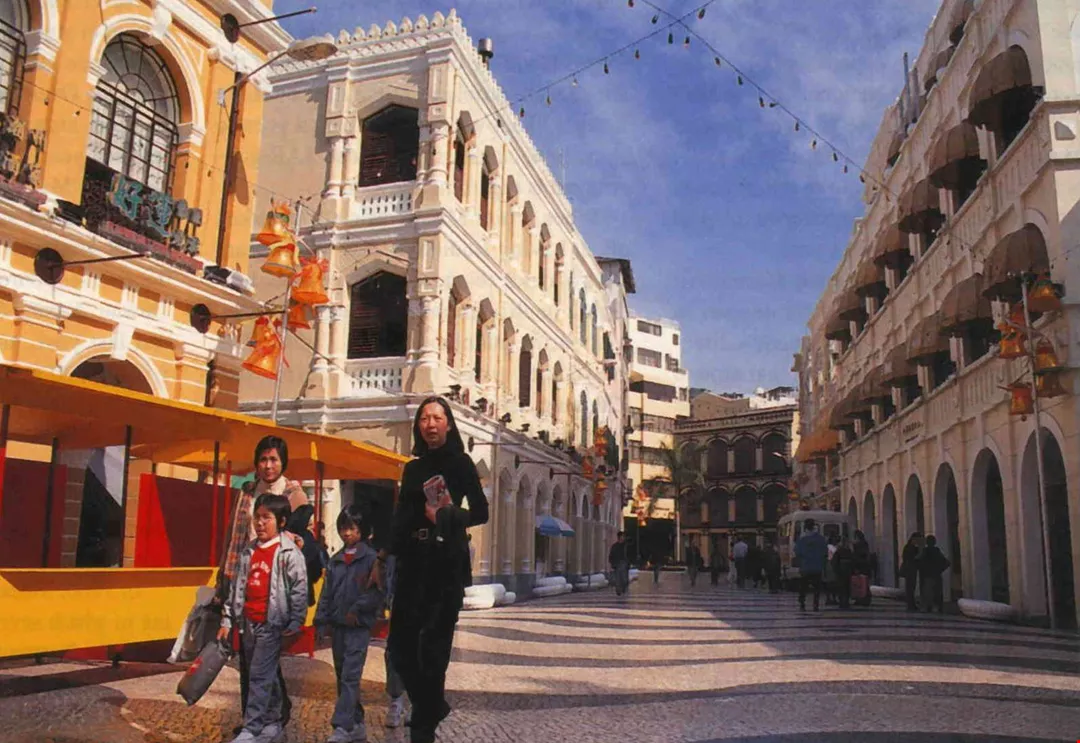
Macau's architecture has a recognizably Southern European flavor. This picture shows Senate Square, paved in Portuguese style with mosaic tiles.
Communication bridge
From Taiwan's perspective, how can these Taiwan alumni benefit the Taiwan-Macau relationship? As one of the alumni explains, this is an issue that doesn't need to be addressed too directly: with a network of personal connections, the right kind of communication follows naturally. Ou Jinrong frankly notes that Yue Meizhen, former vice-director of the Taiwan Affairs section of the Hong Kong branch of Xinhua Agency, once encouraged the alumni to "do more to be a bridge between the two sides." And in April, Taiwan's Mainland Affairs Council invited members of the Taiwan Universities Alumni Association on a visit back to Taiwan, "to hear our views on Taiwan-Macau relations," says Leong Hong Sai.
Wong Hon Keong, deputy director of the Macau Research Center at Macau University, says that the presence of these Taiwan alumni in Macau "makes it easier for the Taiwanese to get things done," and he feels that this is an asset for Taiwan in terms of developing relations with Macau. William Li, director of the Taipei Economic and Cultural Center in Macau, also testifies to the benefits that the alumni bring for Taiwan: "If they're not too high up in the government, we generally have no problem contacting them by phone, providing information, and getting together for things like social events."
But Tan Zhiqiang, himself a returned alumni, points out while it's fine having dinner together, if it ever came to it, none of the alumni would want to actively "align" themselves with Taiwan, given the pro-Beijing political climate in Macau. "Which is closer, Taiwan or the mainland?" asks Tan.

The lights of Macau get brighter as the night darkens. The Hotel Lisboa is a local landmark and also the biggest casino in town. Over one half of government expenditure is funded from gambling taxes, which even Stanley Ho, owner of the Lisboa, admits is "unhealthy.".
Friendly factions
On the other hand, political divisions are not as sharply defined in Macau as they are in Hong Kong, and people are not so uptight about who they come into contact with. After all, Macau covers an area of just 23 sq. km (roughly equivalent to the Nankang district of Taipei) and has a population of 430,000. As Leong Kam Chun says, Macau "still has the feel of a rural society." You bump into the same people all the time in Macau, and if you're too strict about factions, you only make things difficult for yourself. "Unlike Hong Kong people, Macau people don't like to talk politics," says Leong. "They're more interested in the economy." Leong describes himself as belonging to the pragmatic "making-a-living" faction.
Although pro-Beijing elements prevail in Macau, the former Portuguese administration didn't seem too bothered about PRC pressure when it came to the issue of ties with Taiwan, perhaps because their only concern was for people's livelihood.
Visa-free entry to Macau for Taiwanese is a case in point. Explains Wong Hon Keong: "Macau offers visa-free access to residents of over 40 countries with which it has consular relations, but Taiwan is the only place for which it provides visa-free access without there being diplomatic ties." Moreover, Taiwanese officials have always had an easier time going in and out of Macau, compared with the fuss involved in getting to Hong Kong. For example, P.K. Chiang, chairman of the Council for Economic Planning and Development, visited Macau shortly before the handover, and even figures such as mainland democracy activist Wu'er Kaixi have been admitted to Macau on their way to the mainland-though the mainland authorities of course refused to allow Wu'er to cross into the PRC.
Taiwanese businesspeople in Macau form another group that is usually thought of as only concerned about "making a living." Chen Chung-yung, chairman of the Taiwan General Chamber of Commerce is a typical example.
Chen arrived in Macau ten years ago, and ran air-tours by light aircraft until the enclave's international airport opened, after which he moved into the liquor trade. When he travels to the mainland he takes his Macau Resident's Permit, but when he comes back to Taiwan he uses his ROC passport. As part of his efforts to attract more Taiwanese investors to do business in Macau, he helped introduce President Group CEO Kao Chin-yen to the territory, and in order to build better ties with the mainland Chinese, he helped the Xinhua News Agency in Macau to install satellite TV. But when he found that his elementary-school-age grandson was speaking Cantonese all day he quickly sent him back to school in Taiwan, fearing that the boy was losing his mother tongue.
A consensus among the Taiwanese living and working in Macau is that "you can't use ideology to decide what's right and wrong." Another point they agree on is that not enough was done in the past to develop ties between Taiwan and Macau, but that with Macau's change of status, and the corresponding change in atmosphere, things should be different from now on.
Chen Chung-yung points out that rents in Macau are about 25% less than rents in Hong Kong, while Macau's connections with the European Union means that it enjoys tax concessions and generous trade quotas. "Taiwanese businesspeople never notice these benefits. All they see is gang violence and assume that law and order has broken down," says Chen. His own account of the situation is that the gangs are fighting it out over casino profits, but that this doesn't affect the lives of ordinary people. Chen encourages people not to worry, and hopes that they won't hesitate to invest in Macau.
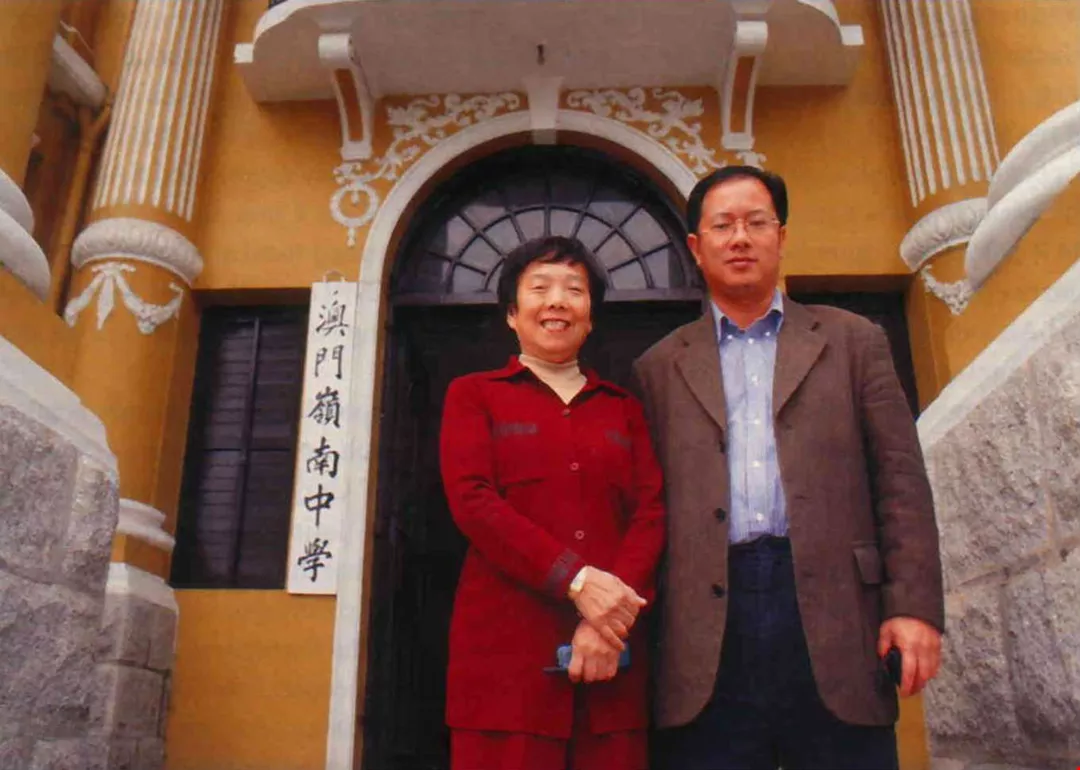
Students from Macau have been coming to universities in Taiwan for several decades, and alumni of Taiwanese academic institutions now play a central part in the life of Macau. Leong Man Io (right), current chairman of the Taiwan Universities Alumni Association, is one of Macau's top civil engineers. Ou Jinrong (left), principal of Lingnan Secondary School, served on the Preparatory Committee for the Macau SAR government.
Economic dwarf, cultural giant
But there are also those who think Chen Chung-yung's attitude is over-optimistic. Chen Ming-chih, a Taiwanese businessman based in Dongguan, points out that wages in Macau are not particularly low and there's very little spare land, no deepwater harbor and no natural resources, which explains why firms remain more interested in investing on the mainland than in Macau. Wong Hon Keong gives a telling analysis: "What Macau can offer is a service base, with visa-free access, convenience of travel, and open channels of information. With Taiwan for R&D and Zhuhai as the manufacturing base, Macau can provide a window to foreign trade, through which companies can increase their exports to the EU."
Wong's comments pinpoint the intermediary role that Macau plays between Taiwan and the mainland. As Leong Kam Chun notes: "Because Macau is so small and sits rights next to mainland China, its economy is always vulnerable to external factors." As soon as the Asian financial crisis hit Hong Kong, the Macau economy was similarly affected, and unemployment reached 7%. Moreover, the contribution made by Taiwanese businesses to Macau is even less than the spillover from Hong Kong firms investing in neighboring Zhuhai.
Apart from economics, what other forms of possible interaction can Taiwan and Macau share?
Macau has been a contact point between East and West ever since Portuguese ships first arrived in the 16th century. As Gary Mei points out, the enclave was opened to the outside world more than 300 years before Hong Kong. During much of the Ming and Qing dynasties, when maritime trade was officially banned, Macau was the shipping hub for the "Silk Road of the Sea," which extended as far as South Asia, Africa and Europe in one direction, and Japan, Southeast Asia and South America in the other.
Says Mei: "This is where the Jesuits established the first Western-type university in the Far East, while Chinese scholars such as Hong Xiuquan, Lin Zexu, Liang Qichao, Kang Youwei and Cheng Guanying spent time here absorbing Western learning." Macau emerged unscathed from WWII, and many of its original Portuguese-language documents have been preserved intact, providing an invaluable resource for research into cultural and religious exchanges between East and West. In recent years, these archives have attracted particular attention from Taiwan scholars, notes Mei, driven by interest in the history of East-West exchanges and the influence of maritime culture on their island
Furthermore, Macau also serves as an academic and cultural key to the world of the Romance languages. As Mei explains, there are plenty of old Portuguese texts preserved in Macau, and the university has a sizeable contingent of Portuguese-speaking professors. Most of the territory's 10,000-plus Macanese (locally born Portuguese) have elected to remain after the handover, and there are several cultural groups dedicated to the work of translating Portuguese literature and preserving Portuguese culture. "Taiwanese who wish to study Portuguese don't have to go to Europe," says Mei. "It's enough to come to Macau." Though it occupies a tiny spit of land, the former Portuguese colony is home to 12 museums of art and history, more than Hong Kong. "As economic entities go, Macau is tiny," says Mei, "but as a store of culture it's huge. So don't look down on the place."
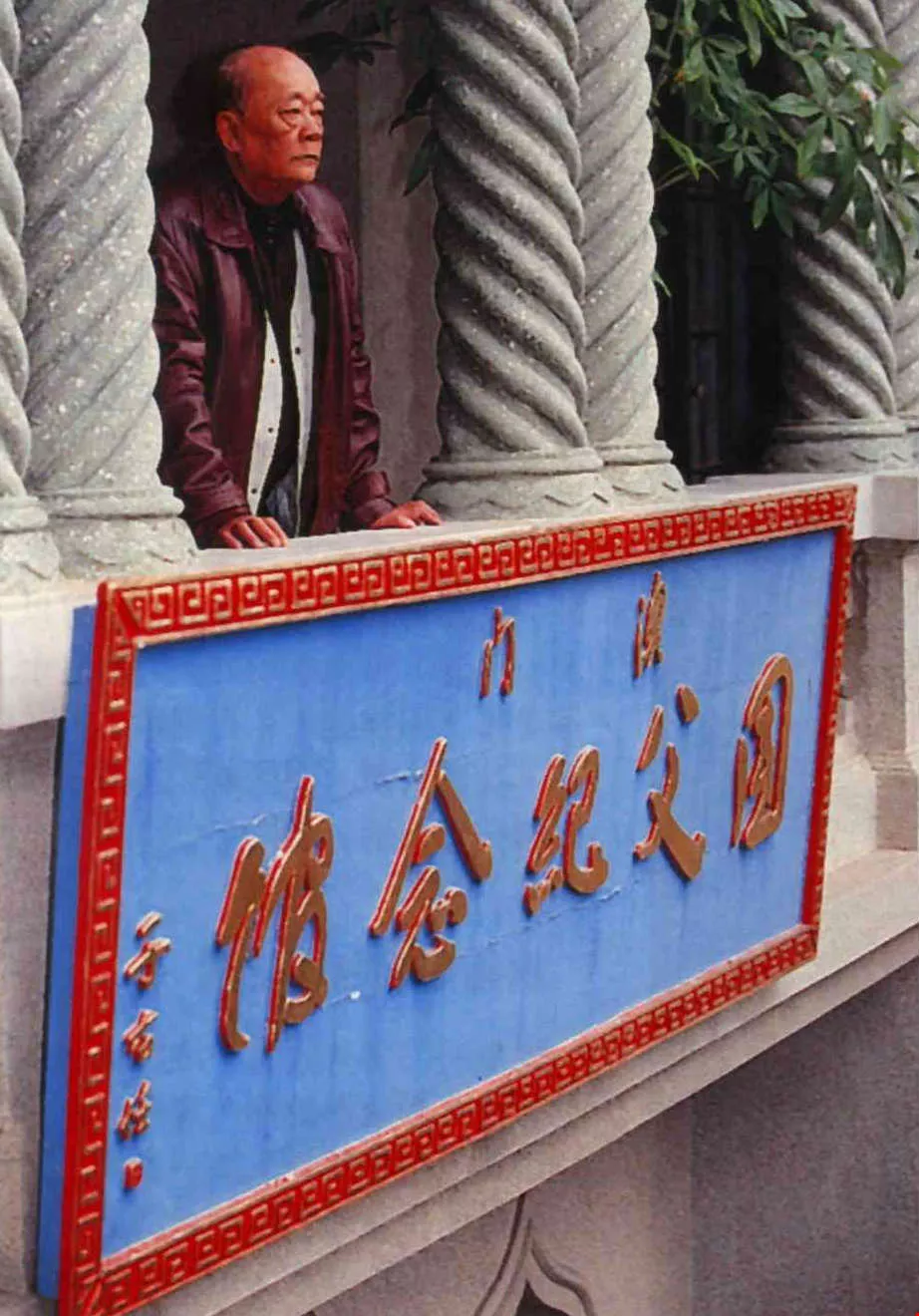
Apart from the ROC's representative office, the Sun Yat-sen Memorial Home is the only place in Macau where the blue-and-white flag of the KMT can be seen. Despite the overwhelmingly pro-Beijing slant of politics in Macau, retired memorial hall employee Zhang Rong still comes to pay his respects and place flowers before the picture of Sun Yat-sen every October 10, ROC National Day.
Matsu bridges the gap
Ngan In Leng, president of Macau's Fujian Association, explains that the traditional three-way ties between Macau, Taiwan and the Southern Fujian region remain to this day, and Taiwanese visitors to Macau can still see traces of Fujianese culture at locations such as Lin Fong Temple and the area around Barrier Gate. And indeed it was Fujianese fishermen who several centuries ago built the first Matsu temple here-the A-Ma-Gau from which Macau takes its name.
Ung Choi Kun, deputy chairman of Macau's Fujian General Chamber of Commerce, says that 100,000 mainlanders have moved to Macau in the past two decades, almost all of them from Fujian Province. At present, around 30,000 people from Macau travel to Taiwan every year for work, many of them ethnic Fujianese taking advantage of family connections to the island. "When you talk about Matsu and about hometown bonds, it's not hard finding topics that link Taiwan and Macau," remarks Ngan In Leng. "We have many points in common in the field of academia too, such as Sun Yat-sen and the colonial experience," adds Wu Zhiliang, director of the Macau Foundation.
In the realm of politics, suggests Wong Hon Keong, Macau can also serve as a "catalyst and lubricant for relations across the Taiwan Strait." The international airport, where flights between Taiwan and the mainland make a stopover, allows for "one-plane" travel between the two sides. Also, the continued provision after the handover of visa-free entry for Taiwanese, along with the relative ease with which Taiwan officials can visit the SAR, testifies to Macau's flexibility in these matters. "Macau will help to boost cross-strait relations," says Wong Hon Keong.
But as Tan Zhiqiang points out, nearly a quarter of the residents of Macau have arrived from the mainland during the past ten years. Unlike the British in Hong Kong, the Portuguese colonial administration always tried to minimize conflict with Beijing, promoting compromise and dialogue. As a result there was little "anti-China" sentiment among the people of Macau at the time of the handover, in contrast to the pro-democracy mood that swept Hong Kong in 1997. "When Taiwanese are confronted with Macau's 'pro-Beijing' slant, they should try and be more understanding." says Tan.
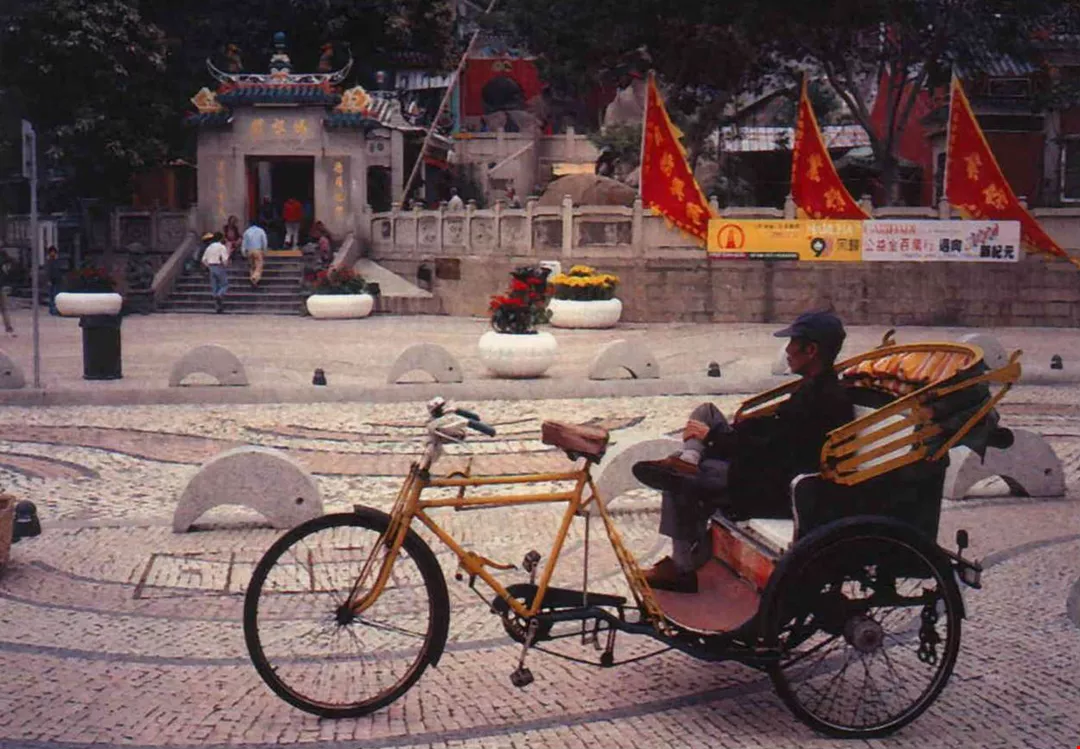
The A-Ma Temple, Macau's oldest. When the Portuguese arrived in Macau 400 years ago, they came ashore on the promontory in front of the temple and asked what it was called. The reply, "A-Ma Gau" was the origin of the name Macau.
Breaking down fences
In fact, the people of Macau aren't necessarily as ecstatic about the handover as they are made out to be, and after more than 400 years of rule the Portuguese have left behind more than just European-style buildings, Portuguese food, and churches. Macau University set up a "Handover Workshop" a few years ago, and it has proved highly popular. Also, a number of books have been brought out by the government and by private publishers, exploring the enclave's history and identity. Indeed, "identity" is precisely what the people of Macau have been looking for.
The presence of mainland China is what bonds Taiwan and Macau, yet it is also what keeps them apart.
The spectacular handover ceremony, which took place in the global spotlight, is already over and done with. Strolling through downtown Macau one notices prominent signs advertising popular Taiwanese snack-stops, like Dingtaifeng Dumpling Restaurant and Quickly Iced Drinks. Business seems to be thriving at Margaret's egg-tart bakery, whose brand name is known throughout the region and probably defines "Macau" for many in Taiwan. For businesspeople, there seems to be little evidence of obstacles in the way of better Taiwan-Macau relations.
The excitement surrounding the handover has died down, and life in Macau goes on much as before. The artificial boundaries and obstacles that people set up between each other, must ultimately be removed by people themselves.
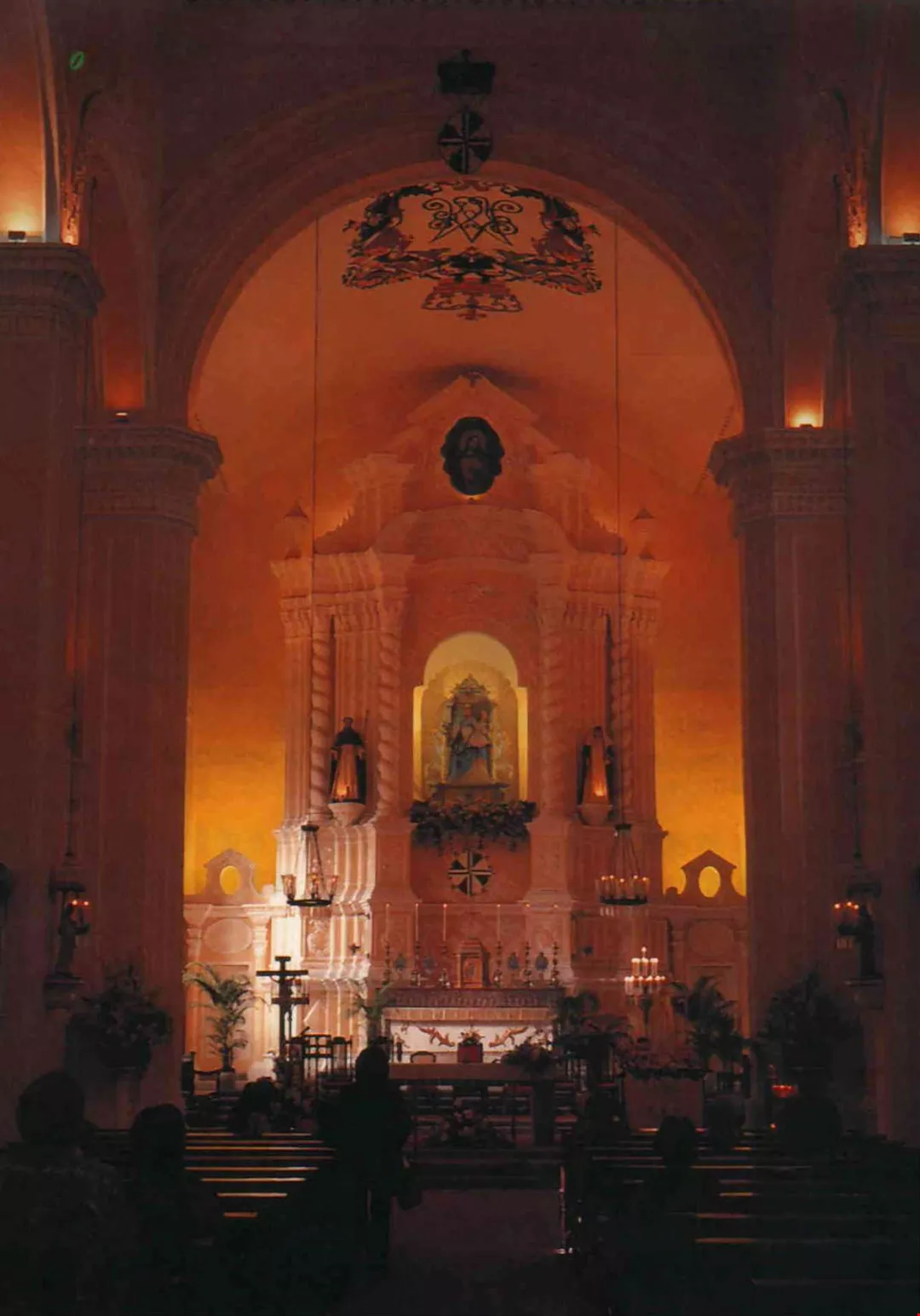
St. Dominic's Church was built in the 16th century and dedicated to Our Lady of Fatima. Catholic missionaries of the day always stopped in Macau on their way to China.

@List.jpg?w=522&h=410&mode=crop&format=webp&quality=80)

@List.jpg?w=522&h=410&mode=crop&format=webp&quality=80)


